Raised Eyebrows

There have been many times when people looked upon me with raised eyebrows, if not utter disbelief. I am, of course, not only accustomed to it but somewhat proud of it, being an artist. If I never surprised or seemed a little off-kilter to anyone I would think it called into question my credibility as an inventive person altogether. So I’m happy to report that my assessment by others has been heavily salted and peppered with expressions of doubt, disdain or possibly, diagnoses of delirium.oil pastel drawing 1988The artwork above (four feet high, for your contextual reference) came from a period in my artistic development wherein I might have been forgiven for thinking there was a form of communicable facial paralysis among my contacts that left them all perpetually wearing masks of such disbelief. I had meandered through the three years following my undergraduate commencement, while working for my uncle’s construction company, barely producing a discernible body of small artworks the while, and still had opted to go off to graduate art studies. I had made a pitiful showing in my first quarter of work there, simply extending the slow, unproductive approach I’d had during the previous three years to cough up a tiny handful of pleasant but utterly unimpressive artworks without any particular evidence of having been changed or challenged by my reentry to the educational environment. But after the embarrassingly lackluster critique session that closed that quarter, I was perhaps uncharacteristically motivated to break out of the doldrums and sail in a new and more daring path, in hopes of visiting uncharted territories of worth.

Changing my approaches to media, techniques, subject matter, scale and speed, I found, all contributed to my discovering new sides of my artistic self. I became in some ways quite the opposite of the person I’d been previously in the studio, and while I never lost my love for the various characteristic media, techniques, etc, etc, that had defined my former self, I certainly never regretted having broken the mold I’d set that self in so firmly. An inordinate number of options and opportunities previously hidden from me by my insular fear and ignorance and self-imposed narrowness of intent and expectation suddenly seemed both possible and appealing, and I have continued to gallop around after them with abandon, sometimes with a hint of obsession and often quite tangentially, so I’ve grown to simply expect the raised eyebrows around me and relish the thought that they mean I’ve not settled too far into my former predictably fixed self again.

That, I think, is encouragement enough to keep me moving forward.

Not Just Another Pretty Face

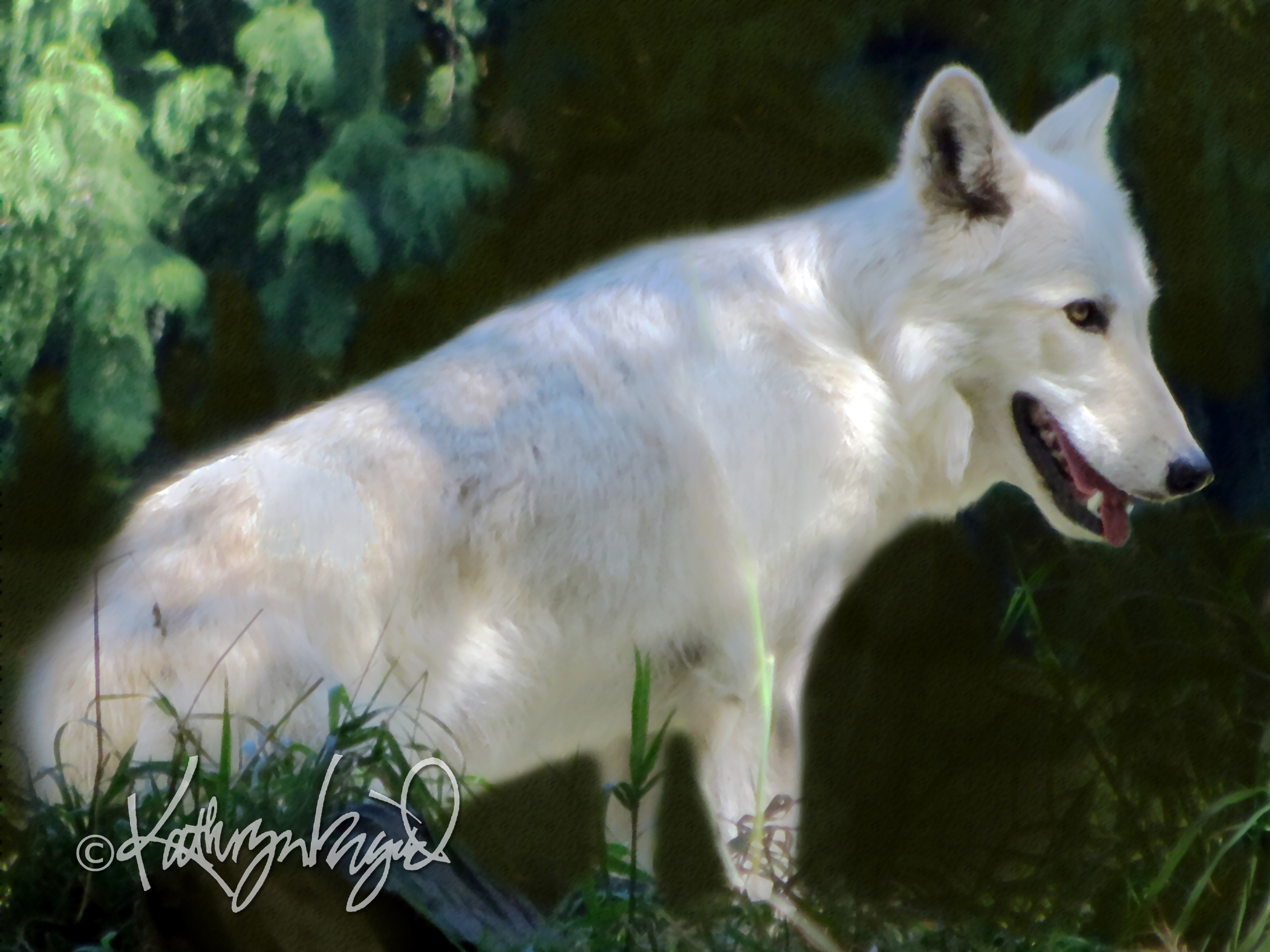
At some level, most of us—no matter how disdainfully we might pretend to look upon those Others who obsess over appearances—wish to be thought beautiful. We want to fit in with others, to belong in the pack, to be loved.photoOf course, we know that even those who do fit in do so if and as the hierarchy of the pack allows. We are put in our places and told who we are, where we belong, what we’re supposed to be doing, and why we should accept that fate as though it were a natural law. After all, we tend to believe that nature is fact-driven and therefore we, who are mere specks in its vastness, must play our little roles as prescribed in the absolutes of existence. We sit here and take it. In many ways, that’s a useful approach to life, because, well, nature does drive a lot of what is and what happens, and bucking that can be counterproductive or even quite dangerous. And worse, perhaps, such refusal to accept the norms others have agreed upon as right and correct and natural puts us on the fringes and at risk of rejection. Someone along the way is sure to reject the rebel or misfit. Someone will think I’m unfit or, yes, Ugly.photoIt’s a wonderful thing to remember that besides all of the weird and dangerous and unpleasant and otherwise negative possibilities in stepping outside of the normal and expected course of events or refusing to be other than myself in order to seem to fit in better where I really don’t, there are also a vast array of glorious and splendid maybes waiting out there for me to dare to reach for them. Much of what is good and beautifully new in the world happens because one person dared to think, do, and exist differently from the pack, the mass of ordinary people, and brought about an increment of change. How wonderful if I can shed my fears, my need for conformity borne of desire for universal acceptance, and become ever so slightly more notable, one little nth more dazzling, than I was when I was only hoping to be like all the other creatures that I knew.

Foodie Tuesday: Does this Seem Corny to You?

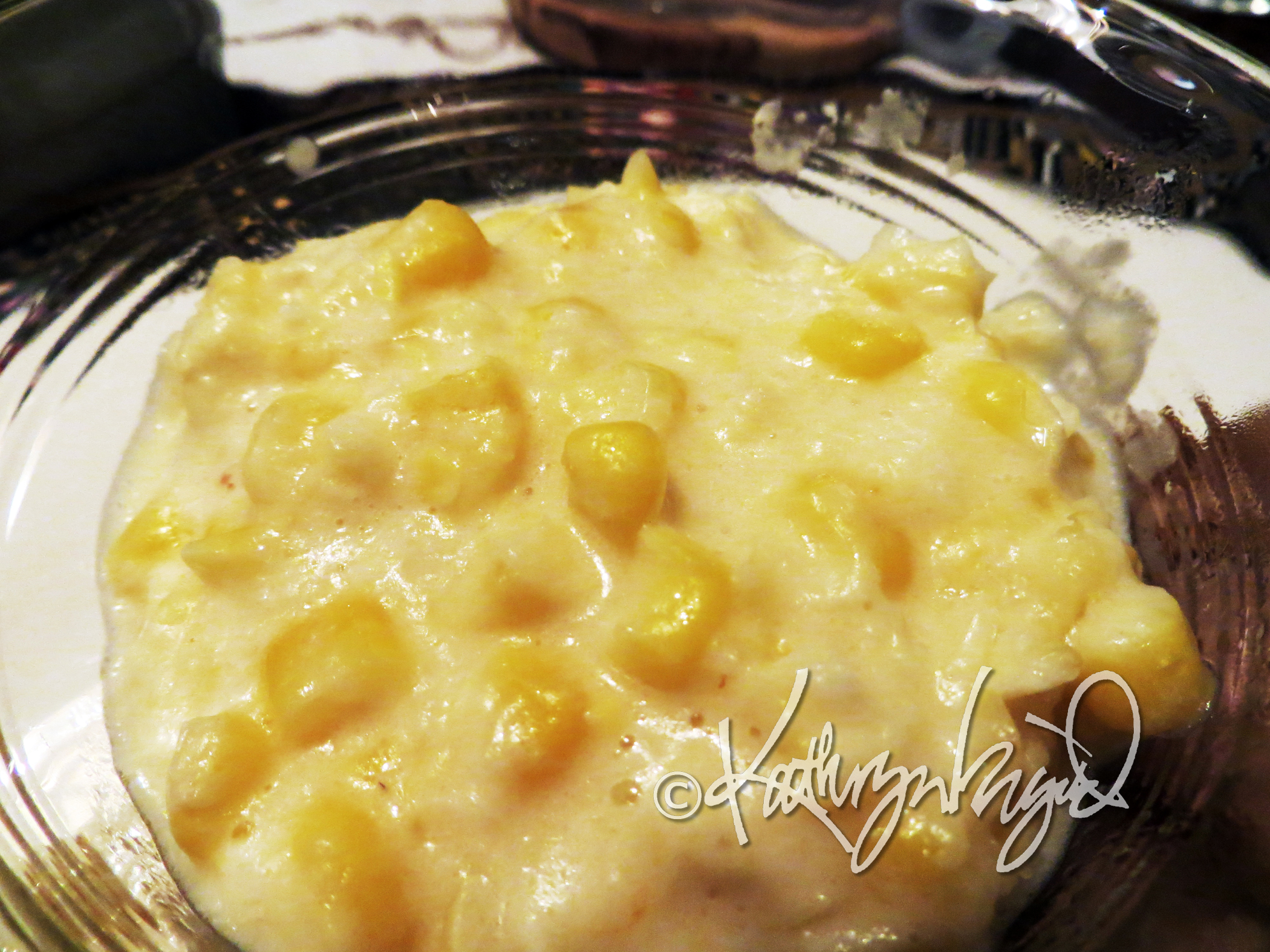
photoMy big sister hates corn. Things made with cornflour or cornmeal are acceptable, but sweet corn in all of its forms disgusts her delicate palate. While I, too, in my sisterly fashion may have disgusted her delicate sensibilities from time to time, I do not blame it on my admiration for corn in nearly all of its edible forms. (Surely my two younger sisters have had equally ample opportunity to be mortified by me over the years, despite their sharing my appreciation for corn.) But I do love corn. Perhaps I am just a corny person.

photoIt’s a little surprising that I find the texture appealing, given that among the very few foods I don’t enjoy are berries or fruits that have an arguably similar texture, with tight skins that burst open to soft insides, but there it is, I’ve never claimed to be logical. It could also be argued that corn has little flavor, being fairly bland if sometimes quite sweet, but this is of course one of its attributes that I particularly like. After all, I am very fond of foods that can be enjoyed in a wide variety of ways and many sorts of dishes or meals. Corn is exceedingly versatile in this sense, able to be incorporated in both sweet and savory dishes without competing with other ingredients, and capable of being processed in a huge range of ways to create yet more uses for it. You can dry it, soak it, pound it, puree it, pop it, use it as a whole kernel or even a whole cob, roast or fry or boil or steam it. It’s hard to think of many ways you can’t use corn.

Still, I’ll admit that my favorite treatments for it are usually the simplest. A garden-plucked ear of sweet corn is so delicious that I will not only eschew my normal craving for twenty pounds of butter per meal and eat it plain when it’s so fresh, I will happily gnaw it uncooked from the cob in that state. I’ve probably mentioned here before that when I was young and Gramps had his garden in its grand proliferation, there was that harvest time of year when the greatest treat was to have a meal of nothing but corn straight from the patch.

photoI also love kernel corn, hot and buttered, and newly baked cornbread. Mom used to make corn cakes on the griddle for an occasional breakfast, and despite my preference for my pancakes to be thin and moist, I happily made exception for those corn cakes’ thicker and cakier character because their toasted cornmeal flavor and sweetness made them much more like slim slices of cornbread or even a piece of celebratory cake than like any typical pancakes. Come to think of it, they would be a perfect dessert cake if made larger in circumference and stacked with some fabulous penuche or chocolate or cream cheese frosting between. Uh-oh. Dessert alarm is going off noisily in my head (stomach).

Corn clearly makes a wonderful and uncomplicated addition to all sorts of casseroles, soups and hot dishes as well in its cut-kernel form. It’s good to remember, though, that corn is also lovely cold. Added to salads, whether as a part of a mixed, dressed kind of salad or simply added to any combination of mixed greens that make up your favorite tossed salad, corn is a wonderful jot of sweetness and light color in the blend. I’m particularly a fan of corn added to salads of ingredients common to hot-weather climes: avocado, black beans, tomatoes, olives or capiscum pieces; citrus, mangoes or peaches can add a dash of brightness; dry, salty cheeses grated in, cilantro or mint or basil snipped on, and sweet or savory spices sprinkled over the dishes can all help to customize the dish, and corn is friendly with all of them.photoAnd me, I’m pretty friendly with nearly anything that has corn in, on or with it.

Like a Spiritual Rinse Cycle, If You Will

photoWash Over Me

What this wild elixir, flown, delivers

By plunging from the heights to break below,

What icy, fearsome, awe-inspiring rivers

Will do to quench my spirit, I don’t know–

Except I look from indigo abysses

And faintly, I discern in blinding mist

What splendid existential bathing this is

That leaves me breathless, battered, cleansed and kissed–

What sense is left when all the course has thundered

And crashed over my head and hands and heart

Keeps in its wake the beauty left unsundered,

A seed to germinate and grant a start–

For nothing’s as renewing as a shower:

What pours out will remake me, hour by hour.photo

Leave the Lights On!

digital illustrationWhile I’m closing out an old notebook that I kept in blog form a number of years ago, I found yesterday’s post and this companion one. So what the hey, I’ll share this one with you, too.
It’s Thanksgiving Day [2005!] and I am particularly thankful this year for having celebrated a whole year of emergence from clinical depression. For anyone out there who has been mired in it, or still is, I send out a fiercely made wish for your recovery and new joy in life, along with this meditation I wrote after realizing not only how far and how long I had been away from my true self, but the cultural setting in which it is possible to get there without realizing it or even having others see it clearly.And with deep thankfulness that it is possible, with help, to be revived.* * * * * * * * * * * * * * * * * * * * * * * * * * * * * * * * * * * * * * * * * *

Let’s stop all this rubbish about Depression as a romantic notion.

The myth of suffering being necessary to ennoble the spirit or, more commonly, to shape creativity and artistry and the personalities that foster them, is an inaccurate and unhealthy construct that belies the potential power of sanity and contentment. The idea that much of the great art that has sprung from the work of troubled or diseased artists throughout history would have been impossible, or the artists Not Themselves, if they’d been well or happy is simply a gross assumption of the inflexibility of the human spirit at best, and an insult to mortal intelligence, invention, and character at worst.

In a telling moment of literal as well as figurative turning-on of the lights, participants in a 2004 Canadian study on Deep Brain Stimulation as a possible treatment for otherwise-untreatable depression noted that the world became a visibly, physically brighter place when “area 25”, or the central zone of depression response in their brains, was stimulated to relieve depression. Many of the patients described a distinctive, even poignant, instant of pleasurable shock when the electrode stimulation, suitably placed, flooded them not only with unaccustomed sensations of contentment and ‘rightness’ in their world but also a clearly discernible brightening of their visual perception. It was as though, one commented, he had suddenly remembered a whole range of colors and values and sensory impulses and emotions that had been locked away for decades.

Nowhere in this was there any indication that the participants in the study experienced a negative change in their self-concept when their depression was eased. No mention is made of the patients losing their creative impulses or intellectual depth. Not a note of regret or sense of personal diminution.

The breezy optimist, on the other hand, is not by definition dimwitted or shallow or uninspired. While cultures that have embraced a darkly Romantic mythos of the suffering genius tend to dismiss brilliance that emerges from happier sources as a fluke or as slick, glib cheapness that won’t withstand the value-test of time, many stars and their accomplishments defy those definitions.

Yes, depressed, manic, even twisted and tortured souls with the deepest of psychological, physiological, or chemical-addled warps and wounds have been the vessels and sources of high art and equally high drama, but they are far from alone in that. To say that they only achieved their greatness because of their damaged state is a cruelty, an insult, and a cop-out that says we all could not be greater than we are, if not equally “gifted” with darkness. If being let off the hook ourselves is what we seek, then let’s just be honest and say we don’t relish the burdens of effort and experimentation and get on with other things. I have a suspicion, as it is, that if there’s a notably higher percentage of mental illness among persons who could be classified as particularly ‘creative’, then the cause/effect relationship is one of persons being used to having to problem-solve their way out of unusually difficult circumstances on a regular basis, and so developing stronger problem-solving (read: creative) skills.

Meanwhile, cheer up! Look at the dazzle that being joyful brings. See the energy and wit that, when not wasted on grief and moroseness and morbidity, can be devoted to pursuing greatness instead, and run after it with childlike delight.

The Ordinary Romantic

I’ve not re-posted anything from my own blogging before that I can recall, but happened upon this (admittedly lengthy) piece I wrote a number of years before I even started this present blog and was reminded of a few things I’ve said here but in quite different ways. So I share it with you now, lightly edited to update it, just because it piqued my own interest once again. Cheer up, my friends: I love that this is written from something like an outsider’s view of the experiences of depression and deep melancholy, after all these years!digital illustration from a photoI highly recommend reading the book I just finished reading [when I originally wrote this post], Peter D. Kramer’s ‘Against Depression‘. He’s the author who wrote ‘Listening to Prozac‘ – a book that, surprisingly, wasn’t really about depression or even Prozac, per se, but due to its bestselling status raised those two specters so frequently that he finally had to respond with this book. He has some sections in it dealing specifically with the effects of depression on arts and creativity, intellect and education, and vice versa. But there’s also a ton about the physiology and pathology of depression, the affect and effect and the impact on self and others. Very thought-provoking for me.

If you want a really scary companion-piece before, during or after the reading of that book, one that for me confirmed the urgency of wellness by any–no pun intended–sane means, look up ‘My Lobotomy‘ – it was a presentation on NPR that horrified me more than umpteen war- and disaster-stories (including true ones) and makes stories by Edgar Allan Poe and Stephen King sound like skipping through a copse picking violets. ‘Lobotomy’ is the harrowing memoir of a lobotomized man who, at 56, finally got up the courage to investigate and explore what happened to him when he was operated on at 12, why it happened, who else was affected, and much that followed. Incredible. Terrifying. I can barely even think about it. But it did make me feel all the more intensely that I want to stay in charge of my own mental health just as much as I should my physical health.

For the moment, since I’ve so often been asked, I will say that when I call myself Ordinary, what “ordinary” means to me is wide-ranging and a bit variable, but in the sense I’m using here in the land of my blog, it covers all of what seems possible, believable, normal or otherwise expected in the universe of human experience. More significant, perhaps, is defining what it doesn’t mean for me: things found at the extremity of experience: brilliance or genius or unearthly, once-in-a-lifetime skills, talents, and insights. Me, I’m not interested in being a supernova. They tend to burn out fast anyway.

What I really pride myself on is taking the simple raw material of being a middle-of-the-road mortal and managing to pull out of that clay my own few moments of dazzle – an outstanding artwork here, a worthy kindness there, and a few sprinkled bon mots or glorious deeds in between – these shine all the more in the setting of my ordinariness. People take note of them precisely because they are deserving of note–because coming from a typical luminary or wunderkind they would be the expected thing, no matter how exciting, and from me they are not. There’s no intrinsic negative value to ‘ordinariness’ for me, no implication of self-abnegation or false modesty, just the sense that only a few in history are genuinely set apart as spectacular examples of either desirable or undesirable traits and gifts, and we in the main herd can still go on and live rich, full, complete lives just as we are. With maybe a little less pressure to perform, too, so that anything extraordinary we do actually shines that much the brighter. Surprise! Aren’t I fabulous!

Why do we see ten tortured geniuses for every happy one? I think it’s primarily a function of taste: the culture that covets over-the-top emotion isn’t interested in supporting and reporting anything that doesn’t have that dangerous gleam. Good news is no news. If the artwork is upbeat, it must be tacky and shallow. If the artist is happy, she must be an air-headed clown. Prettiness and simplicity and everything that pleases the mainstream must, by definition, be playing to the lowest common denominator.

I’m actually a dyed-in-the-wool Romantic myself, but I have been contemplating that old adage “write what you know” and decided that it lends itself to far too tiny a concept of possibility. In the first place, if taken strictly it would mean that we should automatically dismiss as useless falsehood any attempts at empirical or even historical writing, because practically everything that has been once believed absolute has taken on different shadings over our cultural lifetime, if not been disproved. Never mind how we should treat the authors of murder mysteries and crime novels! The aphorism may be a needless dictum or even a myth: one doesn’t necessarily have to BE suffering to appreciate what suffering is. And perhaps anyone who has suffered in the past can be considered to have earned the stripes of exactitude anyway and can rely on recollection rather than continuing to wallow.

There is certainly a bit of truth when people insist that others can’t know what they’re going through; in its most complete sense, I’m sure that’s accurate. But anyone with a little life-experience and the ability to sympathize or even–if imperfectly–empathize, can puzzle out in his or her own way an approximation that makes communication of it possible in art. And, frankly (this goes back to that idea of an Ordinary person doing something Extraordinary), if I can make someone slap his palm to his forehead and go, “YES! That’s what I’m talking about!” when they recognize a shared feeling or insight, then I think it’s all the more memorable and impressive, not the predicted brilliance of some savant.

So thanks to the perpetual discussions of such topics with colleagues and friends and given my understandable interest in depression and its effects as well as more strictly Romantic artistic concepts, focus on the impressive influence and hold of Romanticism on all our lives, I continue to search. If Romantic ideals glorify and sympathize with a dark world-view, with sorrow, cynicism, pain, suffering, and so on, and if arts and beliefs that support those ideals are valued, then how can we respond to things that defy or fail to uphold them? How can we wish to be happy and healthy if what we love is, really, decidedly neither? Since the prevalent taste for Romantic qualities has been in vogue for a number of generations, and cultural memory is dangerously short, few recollect that being In Love with Darkness is a relatively new trend in recorded human history; an externally imposed one at that. As with so many of our beliefs that we take not only for granted but as eternal, immutable fact, all is not necessarily as it always has been or will be. There are larger patterns in the life and development of art, history, healthcare, personal experience, politics, and religion that act and cycle broadly, often inducing in each other significant change as they intersect along the way.

As Dr. Kramer notes in his excellent polemic against depression, even tuberculosis used to be idealized. People who had Consumption were presumably consumed by the unusual intensity of their inner being: larger than life passions, intellects, artistry, love and spiritual astuteness were all attributed to these dramatic sufferers. When it was finally seen that that oh-so-sexy tuberculosis was in fact not only a genuine physiological disease but also a degenerative, communicable, and difficult to treat pathology, and that it would not only kill the patient eventually but also deprive the rest of us of those idols, the tide began to turn toward the desire for palliative care and cure. Depression, also arguably a disease of at least equally destructive dimensions, and demonstrably damaging to such physical attributes as brain tissue and adrenal glands, not to mention to social structures surrounding the patient, is certainly deserving of the same considerations.

So what do we do with our Gothic worldview? Give up our love for the dark? Hardly. Strip it of its value and depth? Not likely. Perhaps, though, we can rebalance the scales a little and say that it’s no longer chic, let alone necessarily accurate, to assume that all things pretty and pleasant and uncomplicated and cheerful are stupid, dull, vacuous, or shallow. Realistically, we’ve all seen attempts at art that cling to the Romantic ideal and yet manage to be stupid, dull, vacuous, and/or shallow. And, as I constantly remind[ed] my beginning art students, one of the hardest things to accomplish well is simplicity. When you take on the task of making a work that appears simple, you make yourself vulnerable to every would-be critic who can find the tiniest flaw as it stands out against that backdrop. Because you have tackled the familiar, it takes far more sophistication and subtlety and inner resource to make the work distinct and worthy, not just a good imitation of what has been done before. Anything can be badly executed, art or otherwise. Anything has the potential to be scintillating and brilliant.

The difference should lie not in one element alone, especially not some preset element like whether the theme is Dark or Light, but in the miraculous confluence achieved of content and intent, medium, methods, and moment. Is it beautiful? Is it successful, deep, lasting, influential, meaningful? We will, and should, continue to make value judgments and assessments and be willing to revisit them from time to time. Because beauty and meaning, whether you believe they’re strictly in the eye of the beholder or not, can change as the beholder’s eyes are changed by a life full of adventures, by time and tide and every nuance of history that washes over us. It should be equally visible in full, bright Light or in cavernous Romantic darkness.
Imitation Flamingo

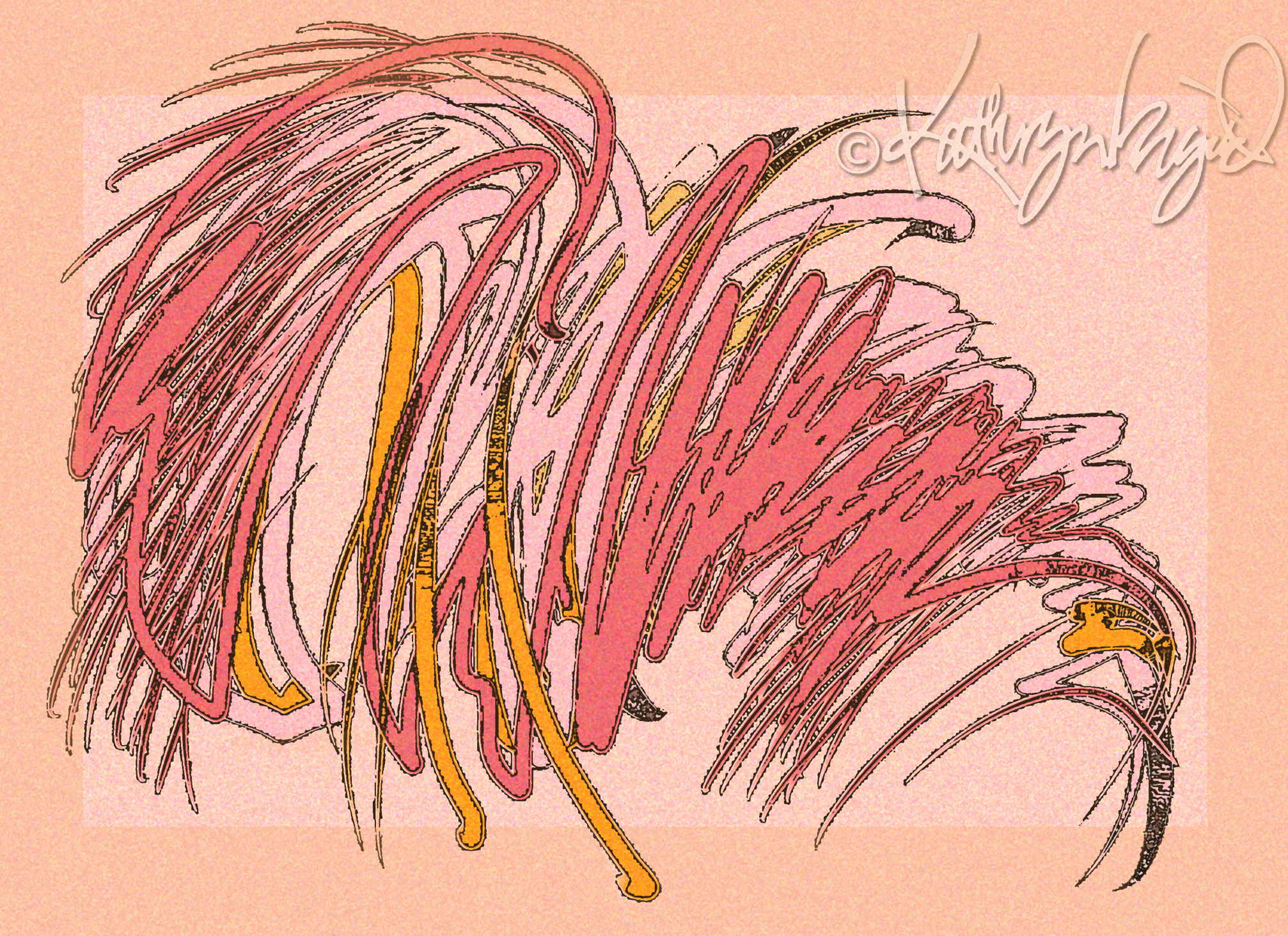
digital illustrationHere’s the thing about flamingos: they’re living contradictions. They’re some of the least altered descendants of the dinosaurs, yet in the twentieth century they became icons of modernism in art and design in large part for the very strangeness that ties them so closely to their ancestors. In the span of that surge of popularity, they also had both the high-cultural cachet of favored subjects in Art Deco’s glamorous creations and the lowbrow delights of trailer park plastic lawn decorations. The elegant long necks, graceful broad wings, and that magical coral hue of their plankton-painted plumage are counterbalanced by rather gawky squawking voices and oh, my, what an unattractive smell.

Here’s another thing: we human-types tend to have a certain ambivalence about many things in our lives and appreciate that the world is far from simple. So it’s not surprising that many of us should find flamingos fairly intriguing and compelling. They’re kind of weird. They’re sort of good metaphorical stand-ins for us.

I’m fond of and amazed by birds. I’m particularly drawn to raptors and songbirds, but truth be told, I wasn’t so taken by flamingos, and when I got to spend a tiny bit of quality time in their presence in zoos or parks, I was amused by their seeming clumsiness and more than a little taken aback by their stink and noise. Guess you won’t be surprised, then, to know that when I had a little time to reflect on it–well, it was my own reflection I saw. I’m still thankful I’m not an actual flamingo, since people mostly don’t laugh openly at my foibles when in my presence, and hardly ever tell me to my face that I’m stinky. All the same, having that little picture stored in my mind is useful. I may still be slightly ridiculous, in my stumbling, silly way and with my imperfect voice and showy but eccentric ways, but I guess if flamingos can be such wonderful and iconic beings with all of their oddities, why shouldn’t I, too? Flawed and goofy I may be, but I’m an amazing creature of my own kind.

A Glimmering of Sweetness Exceeding All that has Gone Before

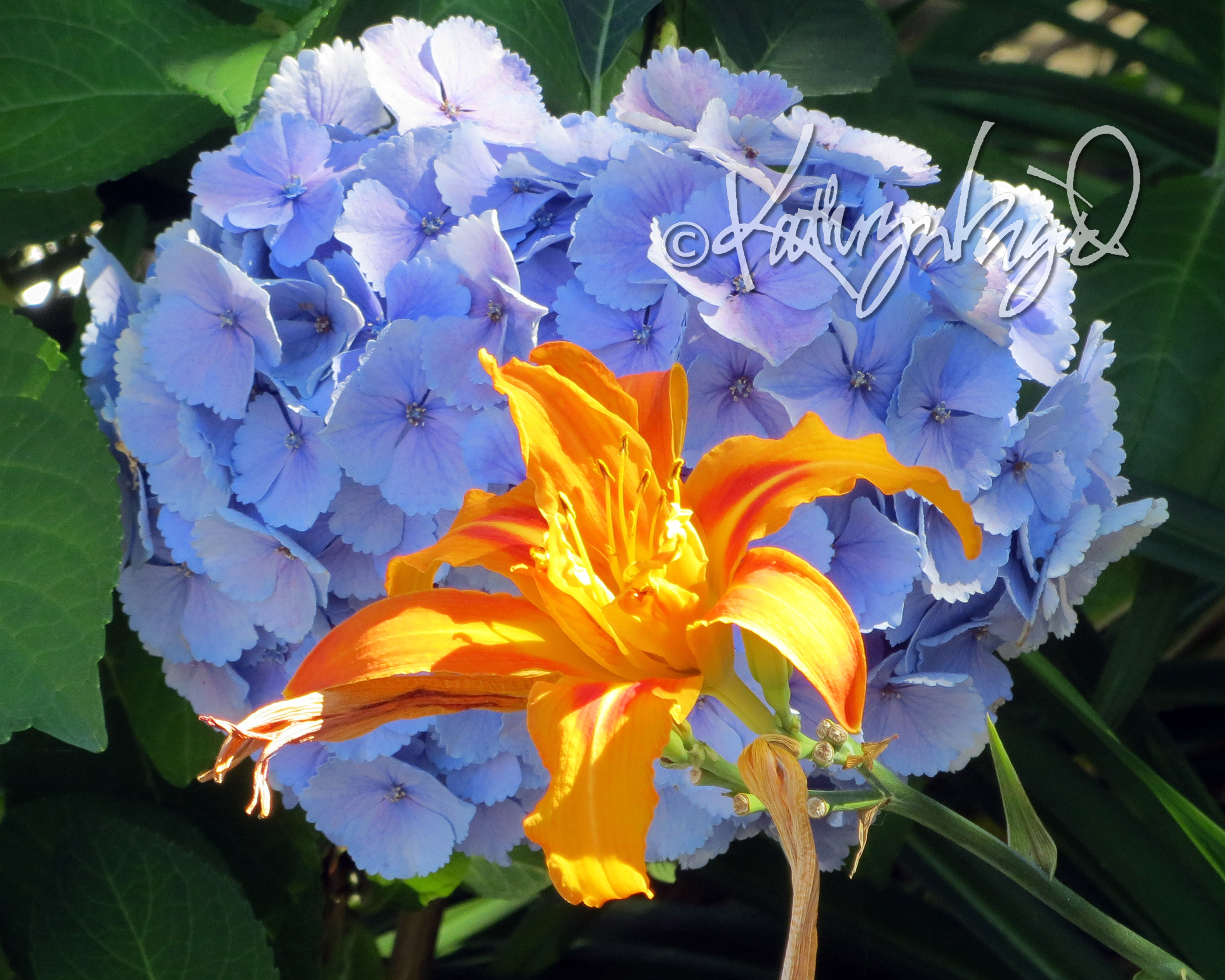
This is my wish for all of you as the new calendar year begins. May you find goodness and contentment all around you, and may you in turn share and propagate it everywhere you go in 2014. Peace and abundant happiness, my friends.photoI rarely have an actual Plan for the upcoming year, but this time around I do want to move toward a few specific things. First and foremost, I want to be more deliberate about finding ways and excuses to be an even happier person, and to leverage that happiness to spread it as far and wide as I can to other people. Call it intentional optimism, call it doing random acts of kindness, call it whatever you want, but I think it’s more likely to be good for the overall tone of the year than not, and that alone is worthwhile.photoIn addition, I intend to start making money this year again, however little it may be. I have no delusions of getting rich, but would love to put my own tiny dent in our family expenses, savings, and/or retirement. It’s been a long time since I got any actual dollars for anything other than a present, and I know that, however unlikely a choice I may be on paper for anyone who’s hiring, I will find a way. Or two. It may not be a regular job, or it might be a conglomeration of tasks and sources. I’ll keep you posted, friends, but if anyone happens to have any brilliant insights before I do, chime in; I’m listening! Meanwhile, I’m happy to keep working on increasing the happiness quotient however I’m able. That’s Job #1.

Hope, as Emily* has Said…

Welcome, 2014!

This may be the first time I’m posting anyone else’s writing on my blog, but don’t worry, I’ll start with my own poem. New Year’s Day is a good time to both do a new thing or two and affirm our traditions, so here goes. Happy New Year’s Day, all!photoOn Wide Wings

By the frigid light of morning, by the pale edge of the sky,

In the whispers of the gloaming waits a hawk that, by and by,

Stretches up his head and perches, keen eye searching on the lake,

Where the echo of the church’s bells call out: Awake! Awake!

Wings sweep wide, then, of a sudden, take him soaring to the heights

Where sunrise is turning golden, burnishing the hawk with lights

Bright as gilt, his feathers flashing as he darts across the chill-

Watered lake, and quickly splashing, snares a fish, and what was still,

Silent, peaceful, secret-keeping in the dark vault of the night,

All bursts from that quiet sleeping, with the hawk called by the light–

Now the day is fully opened, like a daffodil in spring,

Brought to bloom in joy and hope and shaded by the hawk’s wide wing–

As he soars and daylight blazes, my heart, too, begins to rise,

Knows how sweet this best of days is, that would raise me to the skies.digital artwork from a photo* Emily Dickinson:

Hope     

“Hope” is the thing with feathers—
That perches in the soul—
And sings the tune without the words—
And never stops—at all—

And sweetest—in the Gale—is heard—
And sore must be the storm—
That could abash the little Bird
That kept so many warm—

I’ve heard it in the chillest land—
And on the strangest Sea—
Yet, never, in Extremity,
It asked a crumb—of Me.

2013 in review

The WordPress.com stats helper monkeys prepared a 2013 annual report for this blog.

Here’s an excerpt:

The concert hall at the Sydney Opera House holds 2,700 people. This blog was viewed about 17,000 times in 2013. If it were a concert at Sydney Opera House, it would take about 6 sold-out performances for that many people to see it.

Click here to see the complete report.