The Intersection

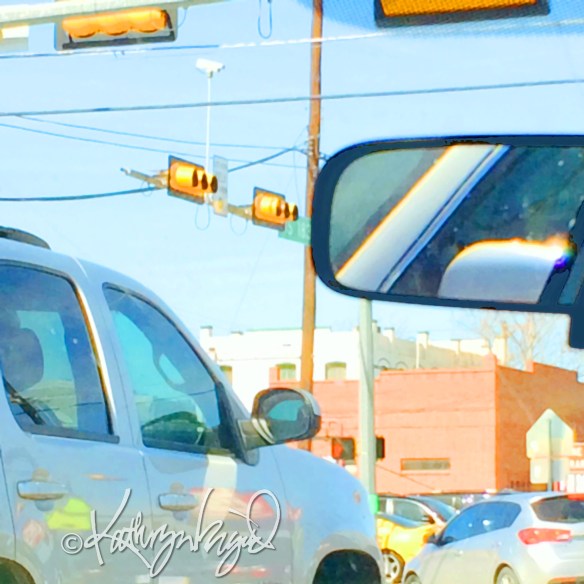
Lacking, as I do (see yesterday’s post!) any real sense of direction, physically or otherwise, in my life’s journey, I kind of live it in the middle of the intersection. You know, when the traffic slows down and the smog clears, it’s kind of exciting and always interesting here at the crossroads.digitally doctored photo

There are not only all of the events and incidents that brought me to the place where I stand at any given moment, but so much more that enriches life in the intersection. All of the peripheral things that I didn’t do—yet, anyway—lie somewhere nearby, should I change course or take notice and choose to move accordingly. There are all of the other people who come and go up and down the same roads and walkways, and there are all of those who cross my path at any given intersection, and all of their lives and adventures are influences on my own travel, even on my moments of standing absolutely still there.

And then I move on, often without any greater sense of direction than before, but also, often enough, with an optimistic sense that I will soon find myself having yet another unexpected, very unplanned trip through yet another unknown intersection.

Bland Like Me

photo montageThe marvelous Diana of A Holistic Journey has been writing posts asking about the influences of race, culture, national origin, education, and so forth and the ways that they shape who we are and how we perceive ourselves. This series of hers is proving an outstanding eye-opening and thought-provoking exercise for me, too. I have spent most of my life living amid and being part of The Majority—middle-class, white, English speaking, native-born, educated, boringly predictable, etc, etc. There were a few touches of diversity around me here and there, of course, this country of the so-called United States being what it is, but those were relatively small and isolated, so mostly I grew up sheltered and unchallenged in nearly all ways.

Yet as an individual I came to know myself as being different in one way or another from most of what I thought of as the ‘norms’ of my own environs, and even learned over time that what I thought was my Majority milieu was mostly just my very narrow path through it in life. While a lot of my classmates, immediate neighbors and friends when I was a kid, for example, were also little pasty white critters like me, the friends I remember best as seeming most interesting to me were ones like Eha, the Estonian girl, or Karen, one of my few black classmates, or the Japanese friends who shared exotic treats from their lunches and who performed classical Japanese dance in a miniature celebration of the Cherry Blossom Festival at school. I have hardly any memories so suffused with longing as that of watching the girls flutter their fans, while dressed in exquisite kimonos and dancing their stately, courtly dance to the strains of the tune ‘Sakura’, which melody in turn still fills me with delicately melancholy love.

My ideals of human physical beauty, as my husband and I have often noted musingly, are nearly all attached to non-whites or mixed-race people, not something I think of as a conscious or intentional choice but a persistent reality for me ever since I can remember. My superficial list of Most Beautiful People would probably have a paucity of caucasian members among its top fifty. While I have never been either very adventurous or flexible in my choices and tastes and experiences, I suppose I have always been fascinated by what seemed different or even exotic to me. I am a fantasist and a romantic in the cheap, popular versions of those ideas, I guess.

I have even wondered, in a broader sense, if part of my very nature is simply to feel like an outsider for no very specific reason. I was always shy, and learned as an adult that this expressed not only a naturally introverted character on my part but also demonstrated lifelong social anxiety and probably the incipient state of my developing depression that didn’t come to full fruition until later. Those, along with undiagnosed dyslexia, tremors, the dysphonia that came into play in my forties, and who knows what other quirks of my unique persona and biological makeup, could perhaps explain why I never felt I fit in with any particular group or was especially central to its character. But I still can’t say I felt consciously sad or was overtly unhappy or removed or, certainly, ostracized for any of this.

What was odder was that as I reached adulthood and gradually began to find a more comfortable sense of self and direction, I have a feeling I may have chosen to put myself into groups where it was plain that I didn’t quite match the norm, specifically because, if I knew there was no possibility of my being an exemplar in its midst of the highest standard, I might unconsciously feel safe from being expected to be so by anyone else. This might be complete nonsense, but it gives me pause. In any event, I spend a great deal of my ‘quality time’ nowadays in the company of people who are immersed in and even expert at music, pedagogy, administration, and a number of other topics in which I have no training whatsoever and only a very little observational knowledge, and I am very happy in this environment.

Conversely, I tend to keep my company of good visual artists and writers and others with training or knowledge more likely to be similar to mine at the seemingly safer arm’s-length of cyberspace, and that probably doesn’t reflect well on my personal fortitude. I never did, at least, make any claims of being any better than a big ol’ chicken. Being a scaredy-pants is probably not race-specific. Or attached with any particularity to culture, social stratum, nationality, educational accomplishment, religion, language, income level, or anything else in question. Being a scaredy-pants is just part of being myself, and the unique combination of qualities and characteristics that make up the wonderfulness of Me.

On the other hand, being attracted to, frightened by or otherwise connected to or dissociated from people who are Not Like Me is a central consideration of understanding how the human species works. Or doesn’t. And there’s no doubt that all of those things influenced by proximity (physical or metaphorical), the aforementioned race, culture, social strata, and so forth, are very potent indicators and influencers of how we will experience the concept of Self and Other at any level.

So what does that ‘solve’ about me, about how I feel about those who are or seem in any way different from me? I’m still not at all sure. Perhaps the best I can say is that my feeling of being, in a value-neutral way, unlike those around me makes me unwilling to assume much about them, in turn. I would generally rather let personalities and individuality be revealed to me and my understanding of my surroundings at the moment unfold in their own sweet time than that I jump in and make any precipitous assumptions. I’m perfectly capable of finding lots of other ways of being wrong and making a fool of myself without constantly worrying over whether I’m being judged, rightly or wrongly, as a stereotype of either the majority or the minority on hand.

Most of my blogging friends and acquaintances are significantly different from me in nearly all of the aforementioned identifying categories, and yet I feel remarkably at home among you. So I’ll let you decide if sameness or difference affects how you see me. I feel at home, and that’s good enough for my part of the bargain.photo montage

Röda tråden (The Red Thread)

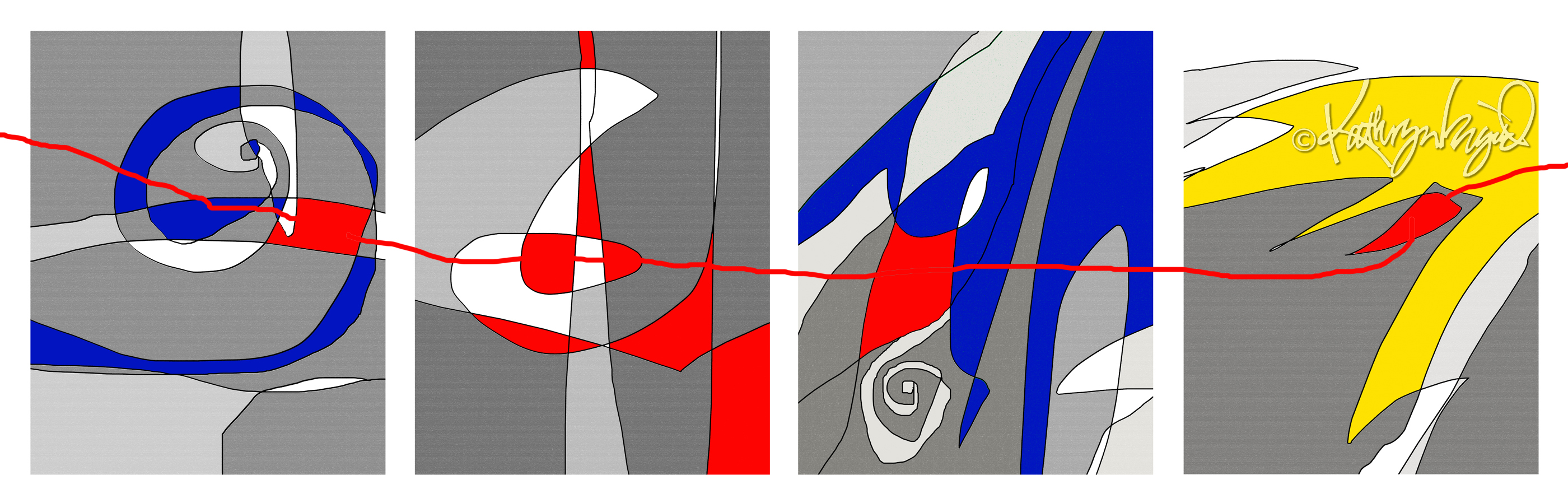
Röda tråden is the Swedish phrase for connectivity. I learned it from my husband, who in turn learned it during his dissertation studies on modern Swedish choral history, and in a way it’s the perfect encapsulation of what his research revealed: that the astonishingly deep and broad influence of such a small country, in such a short time, on such a large field as Western choir singing and music came about primarily because of the remarkable and unique confluence and joining together of a huge number of events, people, ideas and resources in that little land at the end of the Second World War. As unimaginably terrible as war is on any scale, it’s all the more a testament to connectedness that at the end of one of the largest we’ve known, such good and meaningful and positive elements were all drawn into one significant, beautiful growth spurt in the art of singing together.digital illustrationAs a miniature of String Theory in the arts, this surge of the choral art in Sweden is notable (no musical pun intended) not only because it posits a reasonably substantial explanation for the larger choral sector’s modern expansive development amid the general devastation and struggle following the end of WWII, but also because in doing so it illustrates wonderfully how the intertwining of all sorts of seemingly disparate elements such as safe havens from political unrest and postwar reevaluation of norms, personal and professional relationships and experimentation with new media could come into contact and interact to create a new mode of thinking, acting, composing, teaching and singing. In turn, this is a striking model of how people from distinct cultures, educational backgrounds, economic resources and political systems and of widely varying personalities, unified by the one tiny thread of choral music, could be pulled together into a complicated system that, though still colorfully messy and imperfect, led to a potent common end that has had lasting and marvelous influence for long and fruitful decades since.

I am, of course, grateful on a personal level because this Swedish postwar influence on Western choral culture has not only enriched my husband’s professional and artistic endeavors–not to mention was the basis for his award-winning doctoral dissertation that in turn opened a lot of friendly doors to us both in Sweden–but because it produced so much spectacular music and inspiration for so much more.

digital illustration

Röda Tråden is the Swedish version of the idea that–indeed literally–fascinates so many of us: the connecting thread–that which binds one thing to another. I can think of nothing greater than to spend life seeking the Red Thread that shows us our commonalities and binds all people together as well.

Further, though, I am grateful that such an otherwise inexplicable event as the ‘Swedish Choral Miracle‘ seems to me ample proof that all things and people really are connected. And that through recognizing and making good use of those connections, however, odd or tenuous they may appear, there is hope for new and better songs to be sung everywhere.

If I needed further proof of this, last night’s concert gave it amply. My spouse conducted the combined forces of the Chancel Choir of the church where he’s currently interim choirmaster plus their excellent hired pro orchestra in performing Haydn and Dvorak’s two settings of the Te Deum text as the concert opening and closing, respectively, bookending the extraordinarily lovely and moving Missa Brevis of Kodaly. I came in to sit for the concert among strangers and acquaintances from the church and discovered a friend from another parish sitting across the aisle from me, then learned from one of the choir administrators that a friend of hers in attendance turned out to be a long-ago colleague of my husband’s from another state, and finally went up to greet my guy after the concert and found him speaking with a group of ladies in the front row, one of whom was the wife of a former US president. What brought all of us divergent people together in this moment? Music. Beautiful singing and playing. Chance, kismet, divine intervention. Call it what you will, the slender but unbreakable thread that connects us all drew us into one place for a time of basking in the inscrutably beautiful harmony that is beyond craft, beyond art. That is a concert without peer.

Foodie Tuesday: Hospitality as Apotheosis

photoBeing good and doing well make us just a little bit more like angels. Making good food and treating guests well is just that much better. It’s a feeding not just of the stomach but also of the spirit. It puts one in a state of grace that can be earned, but at the same time is the richer for being given without thought of such recompense. A simple cup of hot coffee proffered with kindness becomes through this transubstantiation the elixir of joy.

Today I woke up thinking of such hospitality as I was remembering a time thirty years ago when I was the fortunate beneficiary of it. I was a recent college graduate, working for my uncle’s construction company while I paid off undergraduate loans and contemplated the prospect of taking out more for grad school, and I was sent out with a couple of fellow workers to spend a few days laboring on the repair and renovation of a hundred year old farmhouse out in the country. The weather was pleasantly warm and the house only moderately shaggy for its vintage, and the owners were friendly on our arrival.photoThe work, still, was dirty enough–removal of and repair from exterior dry rot and moss that was encroaching on the northerly upper story window frames and trim, and some interior rebuilding that the lead carpenter on the team would start framing in as a new arch between living and dining spaces as soon as the group effort of tear-out was finished on the second story outside. It was a pretty and classic old farmhouse, with a wraparound porch hugging it so that we were able to set up on the porch roof’s venerable cedar shakes to do our second-story work without having to run our ladders the full height from the ground. But therein lay the problem: by the end of the first day of demolition, the aforementioned carpenter was almost demolished too when the footing he’d installed on the roof for his ladder gave way, the ladder went flat with its top end spearing through an upstairs window and its base making a perfect slide for said gentleman to go shooting straight, if uncomfortably, off the roof.

The other guy and I were close by on either side of Chuck, but neither Jake nor I could, in the split second it took for this to happen, stop the ladder or him from going straight down into the gloom below. There was a terrible moment of near-silence while we scrambled over to the gutter to see whether we could get to him; the first thing we could see was the steel post of the truck bed spearing upward menacingly right about where he’d fallen, so we were breathless with horror as we peered over the edge into the dusk. To our immense relief, Chuck was lying in the spiny shrub next to the truck bed, where he’d slid instead, and though he had some impressive bruises afterward, he’d neither been impaled nor broken a single bone. Needless to say, there was a different wrap-up to the day than we’d planned, what with boarding up a broken window for the night and assuring the owners of the house, who’d come running at the crash, that all was going to be fine. No deaths, no lawsuits from either side, and an even better-repaired window, since we’d now rebuild the thing and re-glaze it rather than just scraping and painting.

Perhaps it was a bit of bonding brought about by the emergency that made them adopt us afterward, the homeowners, but whatever the cause, our next few days were among the most pleasant I ever spent on the job (along with those spent working in the house of the lady who afterward became another uncle’s life partner!), and the sweetness of it lingers in my memory. The second day was such a benevolent spring day that I opted to stay on the roof and eat my lunch while reading an Agatha Christie novel. That worked out remarkably well, for when the man of the house came out to see why I hadn’t come down with the others, he chatted me up about my enjoyment of British mysteries, disappeared, and reappeared later with a grocery bag crammed with said delicacies. It turned out that he was an English professor at the University and taught a course in this very topic, and that along with the house’s ‘issues’ for which we’d been hired there was one of steadily decreasing bookshelf space thanks to his and his wife’s reading habits.

The next day, there was to be no reading on the roof. All three of us workers were summoned into the house at lunchtime and seated at table. While the Professor expressed his kindliness in the gift of books, his wife expressed hers in culinary largesse. I had already thought her a very beautiful woman, with her elegant and mysteriously foreign-looking features, deep-set warm black eyes and smooth brown skin and all, her patrician carriage that belied a gentleness of manner, and her sleek black hair, but I think I fell in love with her more than a little when she put the food in front of us. It wasn’t terribly complex, perhaps, this meal, but it was heavenly. She served us robust bowls of satin-smooth potato-leek soup with slices of dark pumpernickel bread covered in rich Brie. When we thought we might be entirely filled up, we made room for more, because she came back to the table with a freshly baked, perfectly spiced apple pie.

It may be that these things have long since disappeared from the minds of all of the other players (though I find it hard to imagine Chuck has forgotten his scary adventure entirely), but the beauty of that meal so suffused me with happiness that I find it coming to me intermittently still, after all these years. I have no idea who the Lady and the Professor were and don’t even know precisely what became of Jake and Chuck, so I can’t check my facts let alone repay the kindness. I can only hope to pay it forward. I do have some of my home-brewed chicken broth in the fridge; might have to fix someone some soup soon.

Potato-Leek Soup (as remembered)

Boil a few medium-sized potatoes in enough well-seasoned chicken broth [vegetable broth, if you’re not a meat-eater] to cover them fully. While the potatoes are cooking, saute a bunch of sliced leeks in butter with a little bit of salt until melted. Deglaze the pan with a hearty splash of dry Sherry or brandy or whatever dry white wine happens to be handy.

(If you have to open the bottle for the occasion, why then you’ll probably have to have a sip whilst you cook. This is all the better if you have a friend or acquaintance standing by for the meal; you’ll enjoy the visiting all the more.)

When the potatoes are cooked and softened through, add the leeks to the pot, along with (optionally or–if you ask me–optimally) a splash of cream. Using a stick blender, puree the lot until as smooth as possible, adjusting the thickness with any of the three previously introduced liquids as desired, and tasting for seasoning. If you don’t have a stick blender, a regular blender will do as long as you take the necessary precautions against blending hot foods–or just use a potato masher and have a more rustic soup. This soup won’t lend itself perfectly to chilling like a Vichyssoise, because the butter and cream can curdle or separate, but warm or hot it should certainly be filling and definitely warm the spirits.

Cook. Share. Polish your halo. Enjoy.photo


On New Year’s Eve: 2012 in Review

The WordPress.com stats helper monkeys prepared a 2012 annual report for this blog. I, as proprietress and perpetrator of this site, THANK YOU all from the bottom of my humble heart for your kind and gracious and astonishingly friendly support here. It’s a joy to meet with you here and share our lives and loves so happily. May each and every one of you be gifted with a sweet, magically wonderful 2013!

Here’s an excerpt:

4,329 films were submitted to the 2012 Cannes Film Festival. This blog had 35,000 views in 2012. If each view were a film, this blog would power 8 Film Festivals

Click here to see the complete report.