Places, Beginners

photoWhether it’s only on my mind as a continuation of its recent theatrical theme is debatable, but I do think a great deal about location. More likely, perhaps, because whatever minute remnant of my Viking heritage remains in me is expressed in waves of desire to go, to be at or in, other places. It needn’t be out of dissatisfaction with my present; I’m simply aware at one level or another of how much great magic is Out There everywhere, luring me.

In any case, one of those relatively few things that will often set my heart racing is the image of a setting for some new act on my part. It may be quite specific–the upper room, reached by improbable set of impractical stairs, in an old clapboard chapel where I used to sneak away to daydream in the dust-glittering beams of attic light, perhaps. Other times, it might be more general, like that vague yet insistent itch to be at some glorious outdoor place defined more by its unsullied native air, free of any human-made flaw and full instead of the intimate stirrings of the natural world. Sometimes my soul inclines toward places known, and others, to something that may not yet even exist.

Perhaps the latter is my cue to see that there are places I myself should be inventing and shaping. Mayhap there is a scene–is an entire tale–yet to be writ, precisely so that I can be the first actor on its stage. Do you suppose that this is how we must address Life to fully inhabit it?

Places, everyone!photo

‘On Pouvait Dire . . . ‘

‘Ah! non! c’est un peu court, jeune homme!
On pouvait dire…Oh! Dieu!…bien des choses en somme…’

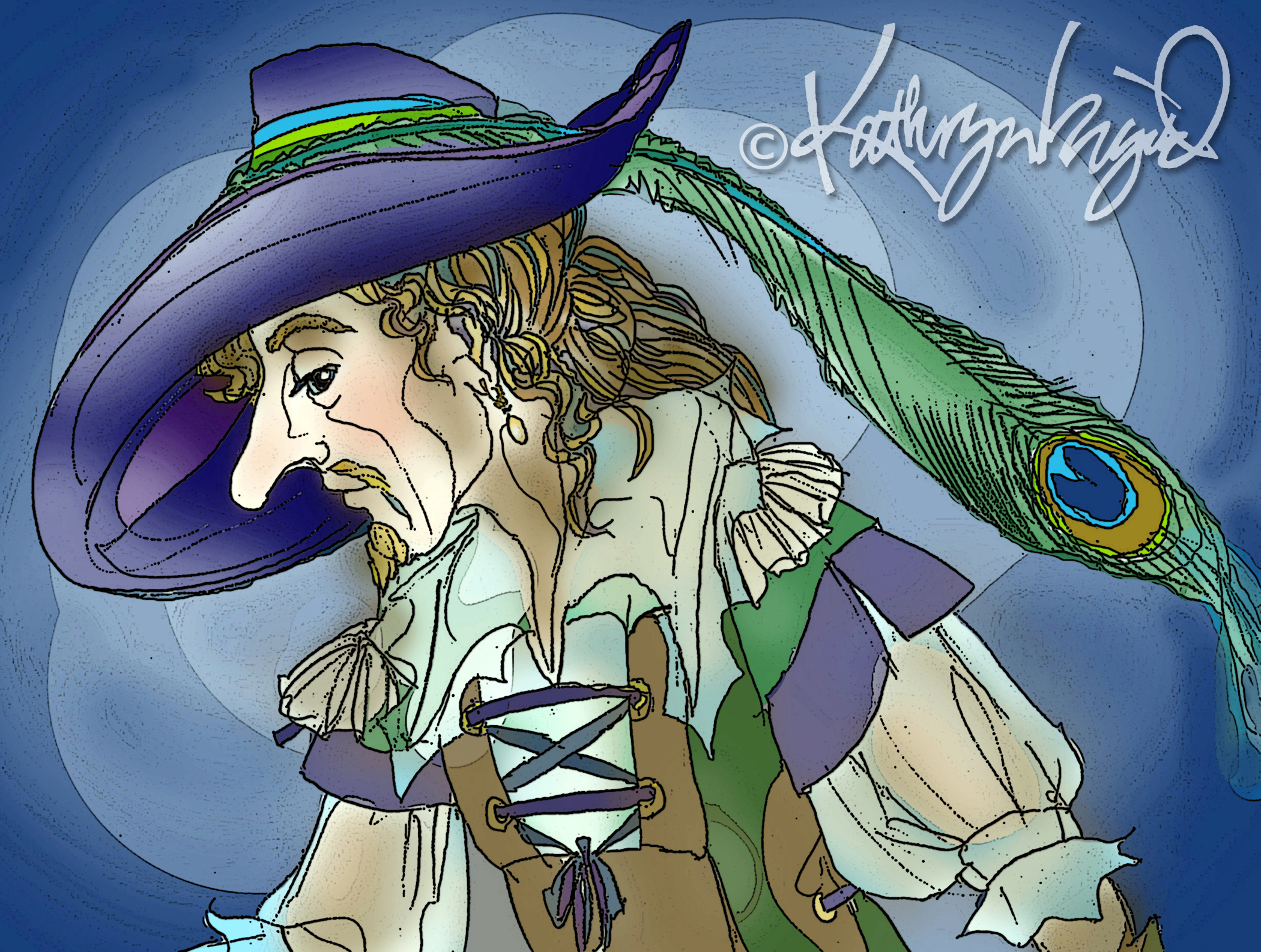
digital artworkWould that I had the miraculous gift of the silver tongue–it’s said that the genuine Cyrano de Bergerac, the writer and duelist enshrined in fiction as some sort of demigod of dramatic speech, was in life something quite near to it as well. As a youthful admirer of the romantic dream, I memorized Rostand‘s most famed soliloquy of Cyrano’s (in English, naturally), but what remains after so many years have passed is not so much the poetry of his slick speech; it is instead a deeper sense that for all my staring at his nose along with everyone else I managed to miss the point.

The story is told in fictional form to so exaggerate the majesty of his nasal promontory that all we see in most readings and performances onstage is a caricature or cartoon man, led by a nose of bowsprit proportions and foolish improvidence to oversized action and wildly improbable joys and sorrows as a result. These kinds of things do happen to real people in real life, of course; even the real man behind the character was larger-than-life in both nose and existence, according to what we know. He did, if his contemporary portraits are anything near the truth, have a substantial prow, and we have his writings–satirical pieces to classical tragedies–to prove that his wordplay was quite substantial too.

But what perhaps ought to be said of him–whether real or imaginary–is that he was a bit of an outsider by virtue of looking Different, and his response was to fight for respect, both with his rapier and his rapier wit. [Given the historical man and the possibility that he was (not surprisingly, given the era and culture and his reputed exploits) syphilitic, he may well have experienced life completely without a nose if he lived long enough.] It’s easier to label and classify others on the basis of unpopular appearance or differing from the currently decreed norms than it is to cultivate what we have in common. Yet we can learn from some of our outlier counterparts if we will stop, for a moment, being so mesmerized and distracted by what makes them seem unlike us, what it is that we have and value in common. Best if we do that before losing the duel.

Though at least, if the duel is purely verbal, there can be some entertainment inherent in getting taught a lesson. I can live with being the unarmed woman in a battle of wits, as long as I get to keep living long enough to laugh about it. I may not be a genius, but that, my friends: c’est mon panache!