
 People often speak of the person ‘behind the power,’ the right-hand associate who always plays a large role in making the boss look good or the spouse who remains relatively unseen in the shadows while his or her partner is the well-known face of the duo, but I rarely hear anyone mention the full benefits of this kind of relationship. There are, of course, plenty who abuse such an arrangement as purely a platform for self-aggrandizement and advancement and treat their faithful supporters as unseen and unacknowledged slaves. An image comes to mind of the great old Jean Cocteau film ‘La Belle et la Bête,’ wherein the prince’s entire household was condemned by the curse he’d earned and continued to serve him, but even more abjectly, as virtually invisible helping hands. Even in the case of spouses and assistants and supporters who are treated with fairness and generosity and given regular recognition, however, there remains the probability that in normal circumstances, one is more visible and probably more publicly compensated than the other.
There can be, though, a handful of fine, if unexpected, benefits to this arrangement for the person behind the scenes. I think I can speak with a certain amount of authority, having been in this position both by default and willingly in various ways all of my life. I have always traveled in the slipstream of the leader, the marquee character in the act; I fly somewhere behind the lead bird in the V formation, hunt behind the chief lioness, swim behind the flashing silver of the strongest swimmer in the school of fish. I live in the slipstream of those wiser, braver, and more skilled than I am. And I like that very much. It allows me to see at close range where I am headed, led by the example of someone better prepared, while maintaining a sense of safety in my innate introversion and fearfulness from having to set the example or blaze the trail myself It offers me opportunities to find ways to help showcase those I admire in what they are and do best. It puts me on the periphery of events I would never, on my own, have had access to and often gives me the awestruck feeling that my privilege extends, through those I love, respect and admire, beyond any level I could hope to achieve or acquire alone.
I started early: as the next sibling born to a first child who was, and is, extremely bright and wide-ranging in her interests and accomplishments and unabashedly her own opinionated, funny, clever and challenging self—and admired by a great many others for it—I could easily have been, or felt, eclipsed by her. Instead, I tended to feel shielded and guided from the start; others (along with me) generally found her a more interesting focus for their attentions, so she bore the brunt of any critical scrutiny before I would ever feel any, and if there was any entertaining to be done, she managed quite effectively to keep the occasion afloat intellectually and/or with her trademark smart-alec witticisms. That she did all of this shielding of me and leading the way without my hearing much complaint or entitlement either one from her remains a marvel.
On top of that fortuitous training of mine in playing a willing and contented behind-the-lead role, I had parents who were the leaders in their community, too, and in a particularly exemplary version of this star + supporting player arrangement. Dad, the natural extrovert, led active congregations in his primary work role as a pastor and later, bishop, but always had parallel roles as chairman of this, board president of that, and consultant or advisor to the other; Mom, as his one-woman entourage, managed the household so that he was both free to do all of this stuff and looked after enough to be healthy, fed, rested and prepared as well as possible to do so to the best of his abilities. She was also his sounding board at home for anything of import that was underway in his life away from home, helping him to find his way to tough choices and decisions and think through all of the permutations of those situations that anyone tends to carry outside of official work hours. She stood as his consort for official functions, his representative when serving on committees and boards and doing community work as well.
Besides that my father’s work and status allowed me, again, to be quietly in the shadows while attending and participating in all sorts of events and occasions I’d never otherwise have had opportunity or reason to do, my mother was equally quietly setting an example for how to take advantage of all of that in a way that was mutually beneficial. During and through all of those years, I saw Mom come into her own as an equally respected leader among their community, a person looked to for influence and inspiration and committed, intelligent work, but all in her modest and unfussy way. When I finished graduate school and started working at my undergraduate alma mater as a teacher, it was near enough my parents’ house that I simply moved back in with them and paid the cheap rent that put me close to work affordably and, it turned out, in a position to train as the next-level behind the scenes person. Living there, I could keep the household running when they were on the road for work, be assistant-to-the-assistant when they were home by helping to set up for a few of the social obligations or special events tied to their work, and even get assistance from them when I was beginning to have such obligations of my own. By the time that I first went out with the man whom I got to marry, I was remarkably well-versed in the ins and outs of this sort of partnership.
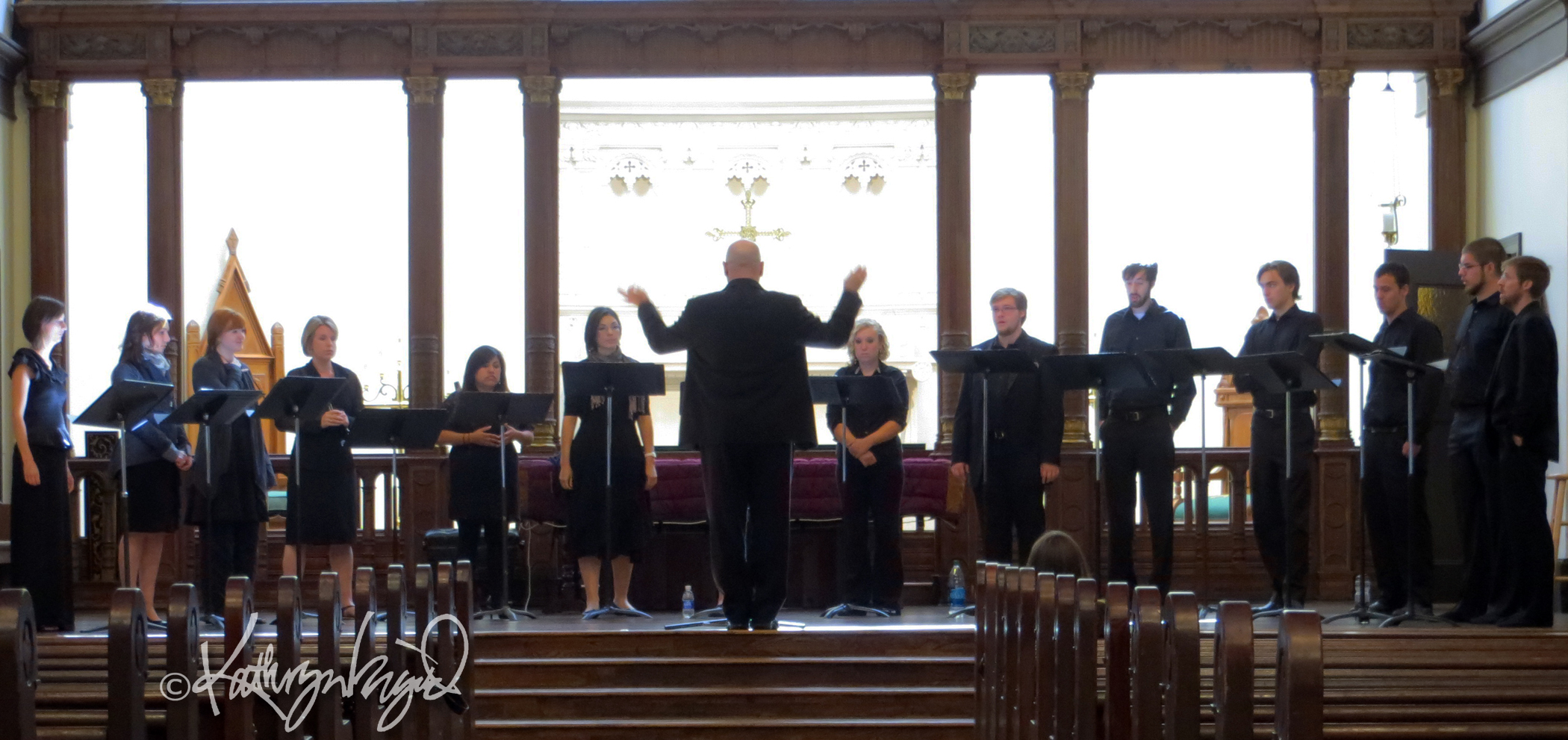
I did, of course, have to learn new variations and nuances to the operation when he and I got together. My spouse is a music conductor. He teaches classes, like I did, but beyond this similarity of standing in front of classes and the variety of preparatory work that gets teachers ready for the classroom time, he had, and has, a much more publicly visible leadership role when he is in conductor mode. I am very glad to stay out of the limelight at those times!
The administrative and preparatory work, the selection of literature, score study, negotiations with guest performers, board interactions, service in the community, publicity commitments, writing program notes, collaborations with commissioned composers—these and so many other aspects of backstage life remain hidden from the public yet can’t be accomplished without time and concentration that are harder to afford if I’m not there to keep him in clean clothes and check that he’s had a meal or two, to chauffeur him to and from places where there’s no parking close enough to get him to a rehearsal on time, and yes, to be a sounding board for him when tough choices or decisions loom. I’ve learned a few things about music along the way, but not so much that I fancy myself anything like a musician or music scholar. But it’s the other parts of his life that I consider the arena for my contributions and participation. It’s the stuff that gets him to the podium that I think I can do best.
When my husband is conducting singers and/or instrumentalists in a concert, my role is to happily sit in the audience and bask in the music along with everyone else. My vocation, my modest part in earning our living, is to slide along in his slipstream and do what I can to keep impediments from holding him back or dragging him down, and whether that happens because I stand near him and shake hands with his bosses and supporters after a concert or because I took the car in for service while he was in administrative meetings doesn’t matter. I’m happy to be a small fish in the big pond as best I can.


 Art-Colored Glasses