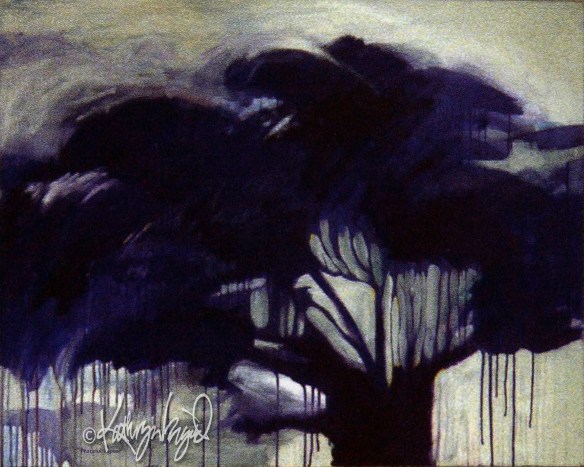
A Choral Symphony

Listening in on rehearsals for the new Jake Heggie Ahab Symphony a companion to his opera Moby-Dick), I wrote. Tonight (24 April 2013), if you’re not able to attend in person, you can watch and listen to the live streamed performance of the world premiere at 8 pm CST at this link, featuring tenor Richard Croft, the University of North Texas Symphony Orchestra and Grand Chorus and conductor David Itkin: http://recording.music.unt.edu/live. In the meantime, from me:digital artworkCharacteristic Frequencies

Light, to begin, as though it were the dawn,

And whispered voices breathed themselves awake,

And sentience would rise and fall and make

A storm, turn faint again, scarce moving on–

On lyric waves these messages were sent,

Foretelling danger and the pangs of grief,

Then, gentler, sing of comfort and relief,

Follow each graceful passage where it went–

This, while the song comes lapping up at me,

Comes pulling like the most insistent tide,

Whether the sound grows deep or thin and wide,

Draws me on deeper in this sonic sea–

Seek me no more, but let me run aground,

My soul sunk in these waves, and listening, drowned.digital artwork

My Baroque Gesture

The first time I heard Early Music performed in period-appropriate style I experienced, not surprisingly I suppose, a full mixture of amusement, bemusement, mild horror and deep curiosity. It was in a performance of Claudio Monteverdi’s seminal opera Orfeo at the English National Opera; I was a mere college stripling who had probably not even heard the phrase Early Music at the time let alone known what it might mean, and ‘performance practice’ was in something of a time of transition. Anthony Rolfe Johnson sang the title role with, if I remember properly, a rather nice overall sound, but a straight-tone and senza vibrato style and a strangely stuttering kind of ornamentation that might well have been an authentic recollection of the opera’s original character and an accurate and historically informed version of the way it would have been presented by its composer and first performers. I, having never been taught such things, merely heard sounds quite foreign not only to my ear but to my concept of skilled and artful performance, let alone prettiness. I do remember thinking that either this was all far over my head (entirely possible) or it was a pointless and poor imitation of what the ENO imagined the average amateurish opera company of Monteverdi’s day must have been capable of doing (less likely), or poor Mr. Johnson, who later went on to receive his OBE, just plain wasn’t up to the job despite a naturally pleasant voice.

Years later, I may not be much smarter than the young squirt of those days, but I’m far more experienced and have heard worlds more music, both the great and the terrible and, of course, a massive quantity in between. And I’ve been taught a thing or two about the fine points of what is beautiful and magical when it comes to singing or playing with any amount of vibrato–or none–and the many elements that combine to create tone and color and variety and character in a performance. I’ve learned some useful stuff that changes how I perceive both the level of virtuosity in playing or singing and its aesthetic appeal, two aspects that do not always coincide in my ear, mind and heart but when they do, that combine to create a kind of joy that is virtually unattainable in any other way.

When my husband conducted a production of Orfeo over a quarter century after the first one I’d heard, I had a whole different understanding and appreciation for what the many performers were doing and why the stage director would expect them to do so both from a visual standpoint–training them, along with other coaches, in appropriate ways of moving and posing and gesturing as well as in those of vocal ornamentation, since she is a superb and well-trained Early Music singer herself–and an historically suited musical one. Just as there are countless styles and types of music known to us nowadays, which you can multiply by the number of individual teachers, performers and audience members to get a rough sense of the variety you’ll encounter, there were historical strictures and structures and stylistic trends and ideas that shaped earlier generations (centuries) of music and musicians and listeners, and while some have perhaps remained relatively unchanged since their inception, many more evolved over the ages. Our expectations of music have certainly changed, and our guesses as to how it was first conceived and perceived are only as good as the lines of scholarly inquiry and oral tradition can attempt to make them.

In all, it makes rich fodder indeed for both the ear and the imagination, and I for one am mightily pleased that I have had the opportunity to live a life immersed in all kinds of music and to learn along the way. I still like much of what I heard, whether ignorantly or not, in my younger days, and much of what I like now I learned to love along the way. While my form may be far from historically accurate or artistically impressive, I will still happily bow and curtsey to all the musicians who have shared their gifts with me in my life, and to all of those who work and are inspired to play more, to sing onward.graphite drawing

Good Conduct Medal

graphite sketchesEvery season of music has its marvels, masters and moments. In my life of following a conductor and his fellow artists around, I am privileged to be on hand for more such fine pleasures than most, and I never forget that this is a great bit of good fortune indeed.

Still, not every instant is guaranteed to be a glowing example of the highest and best of the musical arts. After all, there is all of the practice that must come first, and to be fair, no amount of practice can assure us of perfection. Mistakes happen; if  we’re lucky, learning happens as a result. But the distance between first-try and performance may be a long one indeed, and sometimes the distance isn’t quite long enough.

So I am grateful all the more when I attend a performance and hear something magical and meaningful and magnificent. I know that it took the performers a lot of concerted effort to come from wherever they started the process to this peak, and I am all the happier and richer for it. I know and appreciate, too, that it takes massive amounts of effort and energy and other resources on the part of organizers, managers, fans, logistics handlers, boards, angels, financiers, educators, ushers, ticket dealers, audience members, and all of those other assorted friends of the arts needed to make this work pay off in any way beyond the artists’ own satisfaction in the process, and that’s yet another level, another realm of generosity entirely that makes my little spot in the aural universe fuller.graphite sketches

Most of all I give my fervent thanks to all of the singers, players and conductors who strive to make this miracle happen again and again. Without your dedicated pursuit of the musical muse, there would be no such happy task for all of the friends of music who are not musicians ourselves. And unquestionably, the world would be a far less beautiful place.graphite drawing

Musick has Charms

The charms of music can, indeed, soothe the savage breast–and it can bring the terrible savage right out of the calm breast just as well. It’s a power that few can resist, love the music or not; it gets under the skin and slides on into the soul. The marvels of music are not, as you know, unknown to me and yes, I have been both incited and soothed at various times by it.

But I haven’t lived the life of total immersion. That is, as are most fully engulfing passions, left to the titans of the art. Not necessarily people known and celebrated by a large and laudatory world, indeed, but those who, whether in that pop-culture celebrity way or from deep in the dark of the behind-scenes action or somewhere in between have shaped history in whatever bold or subtle way their particular art could do.

I said I was going to be a bit dark and Halloween-ish these days, but I was reminded that this day deserves a different kind of recognition, being a memorable date of another kind altogether: the birthday of one of those titans of musical arts aforementioned. So you get a break from my grimmer humors while I bow to a great musician and a lovely man.pen & ink drawing

My husband, you ask? No, I would surely call him both as well, but I refer just now to one of the musicians who helped pave the way for my spouse, inspires him in his work, and befriended him both professionally and personally in ways that made it more possible for my partner to be quite the accomplished musician and artist that he himself is. I’m talking about the man sometimes known as the godfather of Swedish choral music, Eric Ericson.

He is celebrated by far more than just his family and friends, more even than his numerous choirs’ members and his almost countless students, because he stood at the center of an almost unbelievable burst of musical art flowering in the little Scandinavian nation of his birth and spreading throughout and beyond Europe quite immediately after World War II, sooner than it should have happened by rights except that his own country remained neutral and mainly untouched by the physical depredations of the war, and enough so that a number of outstanding leaders in culture took refuge there during and after the war, creating a remarkable hothouse where those fertile minds could put their restless art to work, and often did so together.

He is celebrated also because, as one of the central figures in this new bloom of music, he helped to shape the whole modern state of choral music, both in the church and in secular circles, in Sweden and to foster its wide spread via his own work and travels, via that of his artistic and intellectual partners and rivals and colleagues, and especially via the many, many young musicians that between them they all trained and sent off into the wide world. Their collective influence, expanding at the virtual rate of plant cell division and sending tendrils around the globe, is a rich and vital gift that will long outlive them all.pen & ink drawing

Thankfully, Eric Ericson, for one, is going to give that theory a run for it, as he has attained more than ninety years already himself. And his artistic offspring will undoubtedly keep the music sounding and growing for a very long time too, and for that I am happy and grateful indeed. We who love choral music today owe him thanks.

With that, I will say that the gracious and generous kindness that he and his dear wife have shown on a personal level to both my husband and me makes me as glad as anything to think of him on this day with great admiration and fondness. I hope that every note I have seen him conduct, heard him play on the piano while conducting and discussing the finer points of music or listened to him hum under his breath as he recollected another bit of his own fascinating and incredibly complex history as a musician will linger in the atmosphere for many years yet to come, and that in turn, no matter where on that spectrum of artistic or intellectual accomplishment any one of the rest of us happens to perch, we too will make our own kind of music echo happily in the hearts of all those whose lives we touch.

Happy birthday, Eric Ericson, may the music you hear always soothe and delight you.pen & ink drawing

The Sun Always Returns to the Sky

digitally doctored acrylic painting on canvasThis week that is far from a fatuous statement, even from a happy-go-lucky bit of fluff like me. I am always well aware that my life is, was and (I hope) ever shall be a dance party, a dessert buffet and a self-indulgent lounge-by-the-pool compared to most others’ lives. I am grateful to be such a spoiled, blessed or insulated–depending upon your definition; I would admit to all of them in vast quantities–person and like to think that I would never take such wealth for granted.

There are always sharp reminders for me in the family, friends and friends-of-friends who are doing valiant daily battle just to be alive, and if able, to maintain a modicum of quality and dignity in that life, when they are the unwilling hosts of those unwelcome shadow companions of chronic illness–physical, mental, and/or spiritual. I do wish that there were some magic wand I could wave that would miraculously lift away all of those torments and remove the dense dark clouds of them forever, from all people. That is simply a dream, and I know it. But this week I have particular reminders quite close by, and in many ways, of how fortunate I am, and yet also how resilient and remarkable the people and the world around me are as well.

I mentioned yesterday’s storms: the tornadoes that shredded roofs, trees, tractor-trailer trucks and neighborhoods as though they were so much tissue paper. The hail that shattered shelters and windows and destroyed crops. The rain that immersed the already open wounds of the storm-beaten regions in additional water damage. And of course the early high temperatures in the area that will contribute to faster decay and more difficult cleanup and repair work to follow. And not one little iota of the damaging aspects of that touched our home or us personally. Even my tiniest dainty garden sprouts are still thrusting their green leaves upward today. In brilliant sun.

As oversized as All Things Texan can be, the moods of the weather at its wildest are for the most part quickly forgotten by the broad Texas sky, which today is intensely blue and dotted with the mildest of cotton-wool clouds and polished with blazing warm sunlight. The trees, following a light pruning by the winds that mainly took off deadwood and weak twigs in our neighborhood, are lifting their green crowns in thirst-quenched pleasure once more. Barring nuclear winter, it seems that the sun in north Texas always tends to return rather quickly after the darkest and angriest of nights.digital painting of acrylic painting on paper
The thunderclap that affected me more directly this week was not from the stormy skies of a tornado system but via a telephone call from ‘home’: Mom’s recovery from her pair of spinal fusion surgeries hit a serious setback. Her pelvis cracked in a stress fracture. What does it mean? Many more weeks of immobility and pain for someone who has already endured years of it. Another surgery–tomorrow–for the installation of yet more hardware to stabilize her fragile frame. Total bed-rest for what must seem an eon to someone who has been a virtual shut-in for a long time, the woman famous for a lifetime of being out and about taking care of all the rest of the world before her stenosis, scoliosis, Parkinson’s, and joint inflammation all combined to beat her into submission. But whose telephone calls have never ceased to be mainly aimed at reassuring those around her that she maintains her love and concern for themus–and is bracing for whatever the next phase of her fight brings. I hang up from the call and rather than going to pieces in sadness, frustration and anger over the cruelties that her health has dealt her incessantly in these last years, I am weirdly comforted that her doctors are keeping a close eye on her and have a plan for dealing with the current circumstances; that she and my father are, however nervously it may be, committed to seeing through yet another surgery and recovery process; that my sisters and relatives living nearby are keeping a close eye on them and my aunt yet again stepping in willingly to assist with Mom’s care. And that across the world we have a collective host of family and friends who are all cheering them on, willing her well, hoping and supporting in the one way that we can when we are not physically on hand or trained surgeons either one.

In the midst of all of this, the choir-conducting member of my household has the particular and specially challenging time of year that so many western musicians find mighty intense: Holy Week. Never mind that my spouse is in rehearsals for several major upcoming concerts with his and other groups at the university: yesterday afternoon he had rehearsal at 2 pm for next week’s concert with his Collegium Singers (early music choir) that will join them with the university’s Baroque Orchestra, so at the end of that rehearsal he went straight to conduct the orchestra’s rehearsal; when that one finished at 6 pm, he dashed straight over to conduct a rehearsal of the Grand Chorus, which is a combination of his Chamber Choir and Dr. Jerry McCoy’s A Cappella Choir for a major concert on the 25th of this month. Amazingly, he still made it (just) in time to meet me at 8 pm to attend A Cappella’s own concert with Dr. McCoy.

And, oh yes, I was talking about Holy Week. Because of course as my husband is still the interim choirmaster at the Anglican church, he had last weekend’s Palm Sunday services (and Evensong) to conduct, tonight’s Tenebrae service (a ‘service of darkness’ that may have special meaning for many after yesterday’s intense weather slamming the region), tomorrow’s Maundy Thursday evening service, these all interwoven with the usual things musical and administrative continuing at the university; midday and evening services on Good Friday, Easter Vigil to fill with music on Saturday evening, and Sunday morning Easter services. And all the while, day becomes night, night passes, and the sun takes over the Texas sky once more. That’s how it goes.

I merely follow in the wake of all these events and life dramas, taking up the slack in the sails of our little boat as I’m able, and keeping us provisioned with food, clean clothes (keep plenty of black shirts laundered for concerts and services!), and my numerous and sundry checklists of what to do, where to go when, and things we mustn’t forget to bring along. It makes me tired to think of doing what everyone else around me is doing; I’m just glad if I can keep fairly close as I follow them. But I suppose I’m just a little bit like the elephant-following sweeper who is reluctant to ‘leave show-business’, as I wouldn’t trade this Job, however modest it may appear, for anything else on earth. Because the sun, when it shines on me, is so incredibly life-affirming and bright and joyful that I can’t say no to its urgings to come out of the dark and Do things, however small they may be.digital + mixed media