Maybe I should buy myself a big tall red conical hat (possibly made of concrete). Because I am not exactly the most useful object, not the most decorative, nor even perhaps the most whimsically amusing, in a garden. But I give it my best from time to time, really I do. And generally, the earth is pretty forgiving and responsive to my fumbling efforts.
The wildflowers hereabouts have continued to delight, with waves of Showy Evening Primrose bordering the roadsides and ditches, and Vervain spiking up out of the meadows . . .
For once, I paid attention to the promises of today’s rain; it’s not been terribly impressive thus far, but it has rained a teeny bit, so it was good to get things a little better in order out there and ready for some watering the day before the rain arrived. Not that I didn’t water it all thoroughly myself, at the end of my stint, since even if the plants hadn’t been so thirsty after all of my brash ministrations on a toasty afternoon, I needed a bit of rinsing too. Besides turning into a human saltwater fountain and being bespeckled by the colorful bite-marks of a seething mass of varied insect pests, I also collected plenty of bits and bobs of garden detritus in my hair, a nice thorough coating of fresh brown dirt all down the front of my clothes (with special emphasis on my mud-capped knees), and the handsome assortment of plant stains reaching up to my elbows, not to mention the weird black stain my cheap metal watchband makes on my wrist when its gets all slippery with sweat. I considered just turning the garden hose on myself full blast but opted for the slightly less neighbor-frightening method of going indoors and showering, after all. They’d suffered enough if they’d just seen me transforming myself into a living blob of nature-gone-bad while gardening.
A sweet mockingbird sat surveying the front yard from the mailbox, but dashed off long before I came closer to tuck some sturdy, spiny agaves around its base . . .
Meanwhile, I did enjoy discovering that besides the blizzards of unlovable bugs gone rampaging on the heels of a warm winter, there are the lovely sorts as well: I was almost constantly surrounded by clouds of butterflies that were attracted to the plants I was tending and the nice little drinking fountains I was making with my sprinkler for them. It was as though the flowers woke up and took wing around me. The birds around here are certainly loving the feast of fresh insects, so at least I can tolerate the biting brats if I know that they may soon, in their turn, be Cardinal Chow. Which reminds me, I’ve heard tell that the hummingbirds are back in town, so the feeders should go back up today. How quickly things change in Spring!
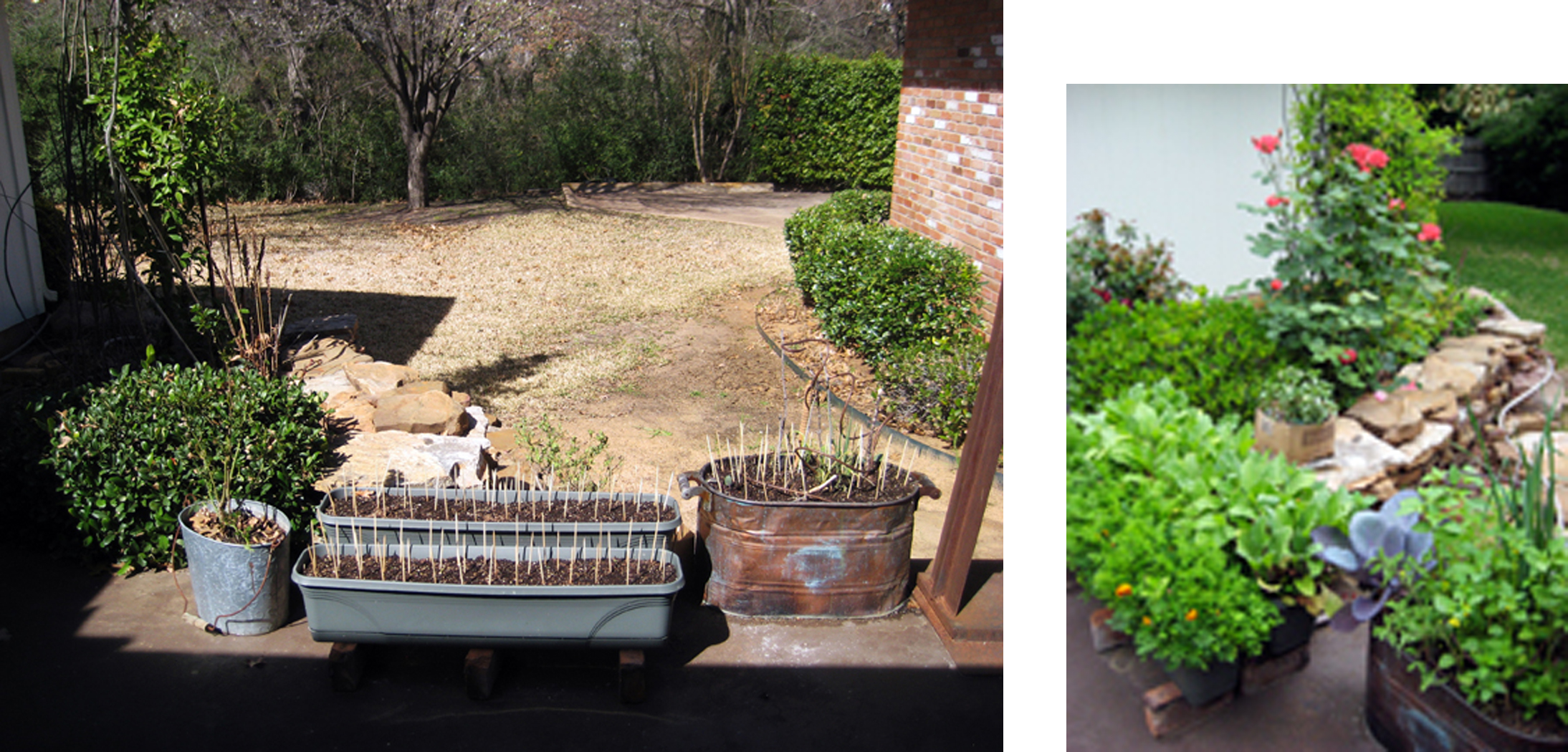
Less than two months of time, and what a difference on the patio and in the yard!
Both the ornamental and the edible is swiftly springing up, and thankfully, many of the latter sort of plants are very much the former too. Along with their other benefits of beauty and entertainment and insect-control, the birds have evidently gotten involved in the garden design work around here, planting a number of sunflowers in serendipitously amusing and even rather unexpectedly apropos spots. I’ll leave them all in place and see what seem to be propitious locations for next year’s crop of sunflowers. Meanwhile, I’ve got lots of other things beginning to come fully into bloom that need deadheading and trimming and fertilizing and watering.
The dainty blooms on the capiscum plants promise sweet bell peppers to come, and the little wild rose is smiling broadly . . .
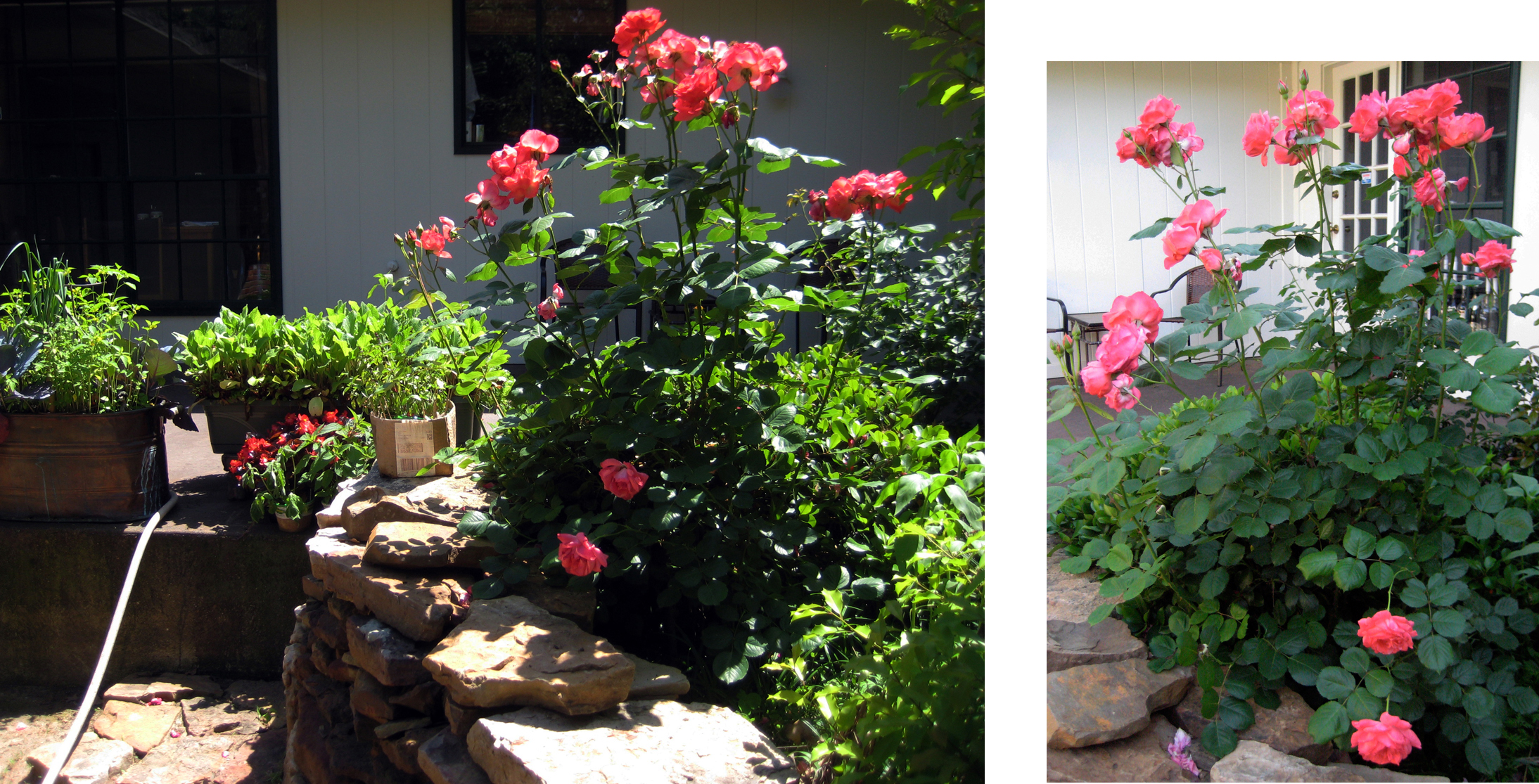
The roses have–not too surprisingly, given the kindly weather–been great show-offs already this season. The little old-fashioned straggler that I dug up from its hidden spot by the back fence last fall and tucked into a pail is thriving and throwing off a fair number of its small but deeply velvety dark red blooms. The coral colored rose that I moved to a more visible place in the raised bed by the patio has probably already fired up close to a hundred of its bold blossoms, bringing its own dazzling light to the little ‘courtyard’ enclosed by the house’s wings.
The detonation of the roses in bright sunlight is impressive even if only from two plants . . . but should I add more, I wonder, when they're all so lovely? Hmmm . . .
That holly tree that I intended to kill, or at least cruelly constrain (someone planted it much too close to the house’s foundation for either’s good) was stripped to its trunk not much more than a year ago but is not only covered with those charmingly soft new leaves that have their pointy edges but no bite yet but is simply a mass of bloom as well, and now that I’ve seen how adored it is by the bees I know I won’t kill the tree but will just keep it as a sort of vertical bonsai, pruning it vigorously but leaving it to stand as a bee haven, a vine post–I loved having my cobalt-blue morning glory glowing from it last summer and have planted that and other colors this year–and a berry farm for birds and winter decor.
Apparently, the birds and butterflies, not to mention the bees, are going to have a grand dance around the holly tree Maypole this year . . .
The herb-and-vegetable planters are well underway, and there’s not only plenty of borage leaf, despite the marauding munching bugs who try to turn them to lace, for a nice tisane long before they will be tall enough to bloom. The marigolds have opened their brilliant eyes to have a look around, and the carrots and beets are shooting upward (and, I hope, downward). The parsley and other, daintier herbs will have to fight their way up through the jungle a little more slowly, perhaps, but should be strong enough by the time they do that they will outlast the root veg and the annual flowers.
Packed with, very likely, too much, these planters are still cheerfully chipping in to do their flaming floral part . . .
The peppers, tomatoes, tomatillos and red cabbages are all quite happy and healthy looking right now, and as long as the garden pests can’t get ahead of the birds and me, there may be a nice little bit of produce before too long. In the meantime, it’s sweet just to look at the plants and measure their growth by the day, if not by the hour. One of the perpetual delights of gardening, of course, is the unplanned element that invites itself into the flowerbeds and borders. I was elated to find, among the dozens of baby oak and elm tree sprouts volunteering on the property (and many of which I will transplant, when they’re big enough, to other parts of the yard), a seedling which I quickly identified as a mulberry tree. This, too, will have to relocate eventually, but I thank the bird or squirrel that kindly donated it, as it will also become a great wildlife feeder on the back-forty one day. In the right-hand photo, it is balanced on the left by a seedling soapberry that I’ve been nursing along for just such a purpose, and together they frame a wonderful volunteer that apparently forgot it was supposed to be a tender annual plant, a brilliant orange Gerbera daisy from last year.
Gifts from the garden to the gardener: a mulberry seedling, a wintered-over annual flower, and lively green growth galore . . .
Along with the Survivor Daisy there are hints of the wildflower seed I threw nearby beginning to assert themselves. The first tiny cosmos has peeped out from the pathway, and there are promising leaves and stems among the sunflowers and cosmos that say we’ll soon enough be seeing nasturtiums, corn (sweet and ornamental), blanketflower and Echinacea and a whole host of other charmers. If you want to know more specifics of what we’re, ahem, expecting, check back to my plant-list post.
Grandpa Gerber Daisy, meet little Miss Cosmos . . .
I was certainly not confining my attentions to the back yard, and am pleased to say that both the surprises given to me by the garden and the things I’ve done myself and with goodness aforethought out front are also paying off in lovely dividends. The area in front of my beloved’s office window was particularly shabby and is not so easy to suss out, as it’s victimized by bad drainage because of the contours and conditions of our property and also is quite heavily shaded by one of our big beautiful post oaks out there. So if you set these characteristics up in combination with naturally hot and over-dry Texan weather, there are what might charitably be called Conflicts of Interest. I’m experimenting, to say the least. But I’m getting a fair return at the moment and will enjoy it while I can. Among the humorous and pleasant surprises I would count that of having celery in bloom there. Yes, celery. I had a very ancient bottle of culinary celery seed sitting in my kitchen for so long that I was quite sure it had no flavor left at all, but being a thrifty mad scientist, I tossed the contents out in the front flowerbed and behold, a year later I have flowering celery. If it’s biennial like some of its cousins, who knows what next year may bring!
Outside the office window, hope is arising in its green and tenacious way . . .
Between the front walkway and the porch, the flowerbed is cut into yet another poorly drained (but sunnier) spot and is too narrow for its own good. But I’m getting a number of things, mostly perennial, to pop up there and even had a happy re-visitation from last year’s annual sweet potato vine (the fluorescent-green leafed sort) that will probably now give me yet another year of excellent fill-in wherever I haven’t yet solved the bed’s Issues. I’ve tucked in a few herbs besides the front door rosemary that’s thriving–far more than expected–and am working to have a broad mix of textures and colors and seasonal change-ups that I hope will continue to mature and fill in the naked spots until any non-flowery weeds will just feel unwelcome to even visit.
Though the tulips are long gone from the planters, there are all sorts of new things coming in and many possibilities yet to sprout . . .
Along with the porch-side plantings there is also another shady stretch, this one less plagued by poor drainage but still overshadowed by one of our big flowering pear trees, so that too is getting an experimental blend of trial-and-error plantings to withstand the vagaries of seemingly opposing growth needs. One of the particular pleasures of yesterday was finding a Bonus Plant tucked into the pot like some sort of vegetal conjoined twin with one of the agaves I laid in yesterday, so now I have this vigorous ‘baby’ to choose a good home for as well. These specific agaves are a variety (Agave parryi) I’ve long admired for their good looks and was thrilled simply to locate, let alone in a size I could afford, but doubly so on learning that they are supposed to be relatively hardy plants–and then on top of all that, I got a big, handsome extra among them. Surely the garden gods were smiling on me yesterday. Or at least the garden gnomes.
Last year's Beautyberry has burst into full bright green leaf, the New Zealand Flax is spiking up its burgundy spears, and the variegated leaves of their companion flax lily lights up the shade with its fine stripes. And where will bonus baby Spike go to live? Stay tuned . . .
Aside from things like my having been chewed upon ungraciously by a bunch of skeeters and having very indelicate and unladylike rivers of sweat inundate my poor little eyebulbs, the inside of my glasses lenses, and every single item of clothing upon my personage, an afternoon of gardening like today’s is a very welcome thing. I finally got after some of the weedier segments of the flowerbeds, planted some of my sprouted babies, moved a plant or two, and did some watering, and by golly, the place looks a tad more presentable.
In honor of that, herewith: a little Texiana and a Garden Fairy for your delectation and/or amusement. Tomorrow, perhaps, a batch of garden update photos. Just to prove I did something, don’t’cha know.
Once Upon a Time in Texas: the Genesis of Big Hair & the Ten Gallon Hat . . .
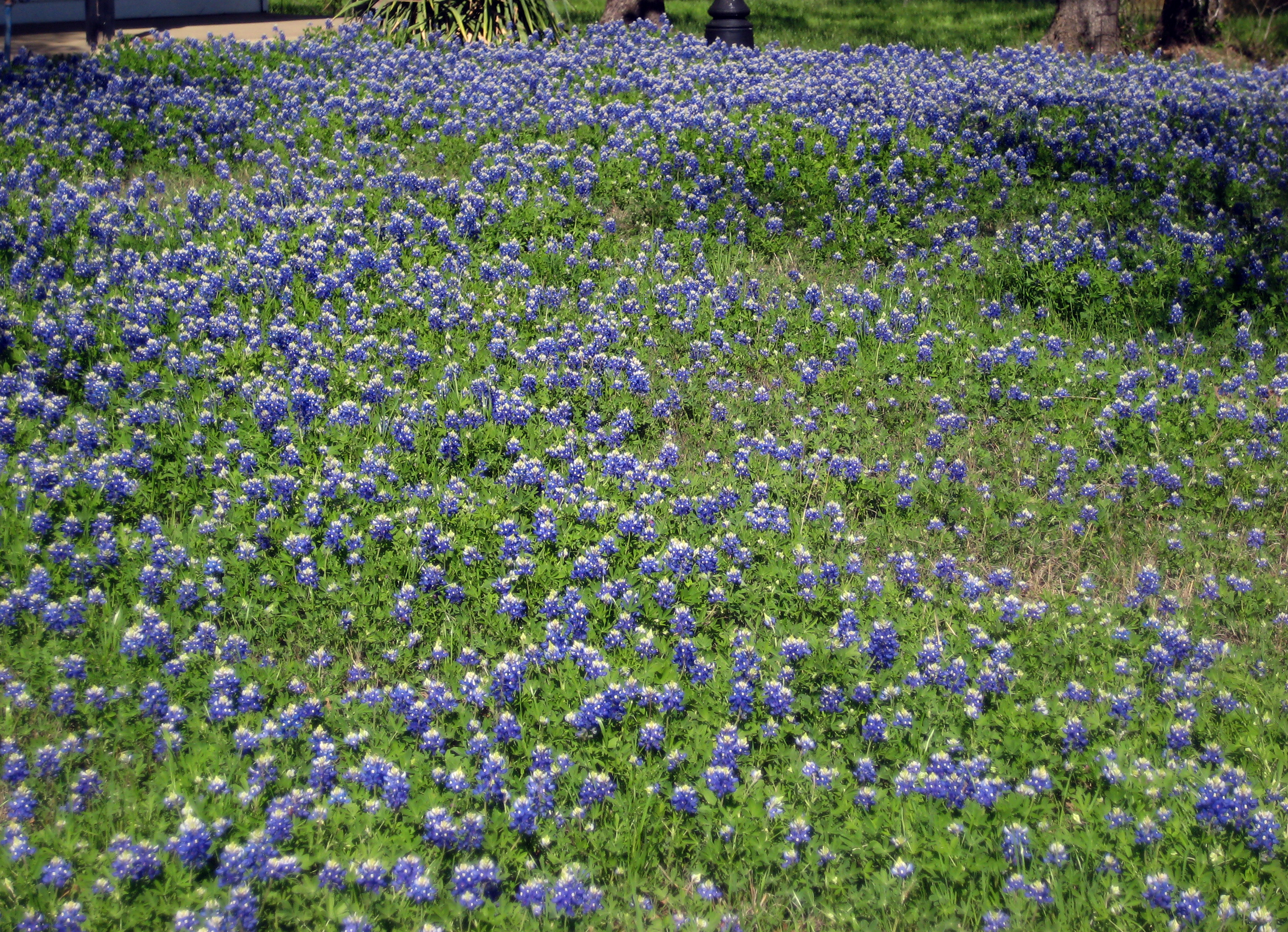
Spring in Texas is a highly variable thing. Like most regions where I’ve lived or visited, north Texas can rightly claim (any day, any part of the year) that if you don’t like the weather, all you have to do is wait five minutes. Ma Nature is that sort of fickle filly. She treats us mighty differently from moment to moment, season to season, and from year to year, too. So while last year, the drought and excessive heat both started early enough that we saw virtually nothing of the vaunted swaths of Lupinus texensis, the state flower, the Texas Bluebonnet, this year’s mildness and largesse of rains has kissed the sullen banks of the highways, the pastures and prairies, and not a few lawns, with a brilliant return, as if our nature-mistress apologized with flowers for running off and abandoning us to sere and lonely brownness all of last season.The extravaganza began with a wild froth of yellow sprayed over nearly everything–it’s a wildflower form of mustard known by many names and perhaps most commonly here as bastard cabbage, that nomenclature derived from the rosette at its base that resembles a false cabbage, but Texans probably embracing the less kindly interpretation of its first name because it has spread so widely as to be an invasive and predatory plant whose tough rosettes block out the bluebonnets‘ rise. While I would hate to see it usurp the blue beauty of the state flower, the wild mustard‘s foam floating over the rolling grasslands is a very pretty herald of the return of spring’s wildflowers.
Following the arrival of the mustard, in quick succession, the verges are airbrushed, in turn, with the purples of several vetch-and-clover-like wildflowers I don’t yet know after moving to this region, then the red hues of Texas Paintbrush (Castilleja indivisa), then the sea of bluebonnets, punctuated by handfuls of the pale pink-and-white tissue of Lady Bird Johnson‘s favorites, the Showy Evening Primroses (Oenothera speciosa).When you’re just moseying along, running errands and minding your own business and an explosion of living color appears before your very eyes, it’s not something you just ignore. If you’re me, you ask your husbandly chauffeur to be so kind as to pull over in the empty lot across the street from the biggest mass nearby so you can hop out and ogle, and take a few pictures. See, there’s this little bit of tension in the romance with wildflowers. As easy on the eye as nearly all of them are, they are, ahem, wild. People don’t really like wild very well, a lot of the time: everybody wishes in his or her secret heart to control the world–at least, to believe they can do so. Wildflowers grow and bloom when and where they are wiling and able to do it, and in many cases they’re not all that cooperative when we try to grow them on purpose. Never mind when the weather patterns of the moment aren’t as particularly conducive to their happiness, health and vigor as they could be. When the blossoming wild does decide to make a grand entrance, however, it can create these impressive and celebratory masses of glory right across the most inhospitable-seeming acres of dirt and weediness. Because, after all, wildflowers are weeds; weeds, wildflowers. As witness the aggressive behavior of the deceptively dainty-looking bastard cabbages, sweeping right over the top of the other spring blooms like a vegetable horde of Huns or Visigoths and laying siege until the smaller, weaker plants succumb and yield their ground.Like humans and animals and plants of all kinds, every living thing in fact that populates the earth, wildflowers are essentially invaders and will happily fill in any available space when they’re good and ready to do so. A plague upon the earth! Thankfully, unlike most species, wildflowers, whether annual or perennial, tend to repay their carbon debt rather quickly, subsiding into glorious compost almost as quickly as they arrived on the loam of last year’s dead. So I say, three cheers for the Texas Bluebonnet, which survives drought and depredation, bad seasons and bad gardeners, and gives us a massive dose of grand color virtually for free, then turns around politely and sacrifices its glories for the good of next year’s, or next decade’s, wild display.
It’s so often the littlest details that have the most unexpectedly impressive impact. We just don’t expect too much from small stuff. But where would we be without those tiny crystals of salt and jots of freshly ground spices? Without the tiny seeds that become minute sprouts and in turn, lush plants that give life to our favorite fruits and vegetables, and that feed the animals that grace our tables sacrificially?
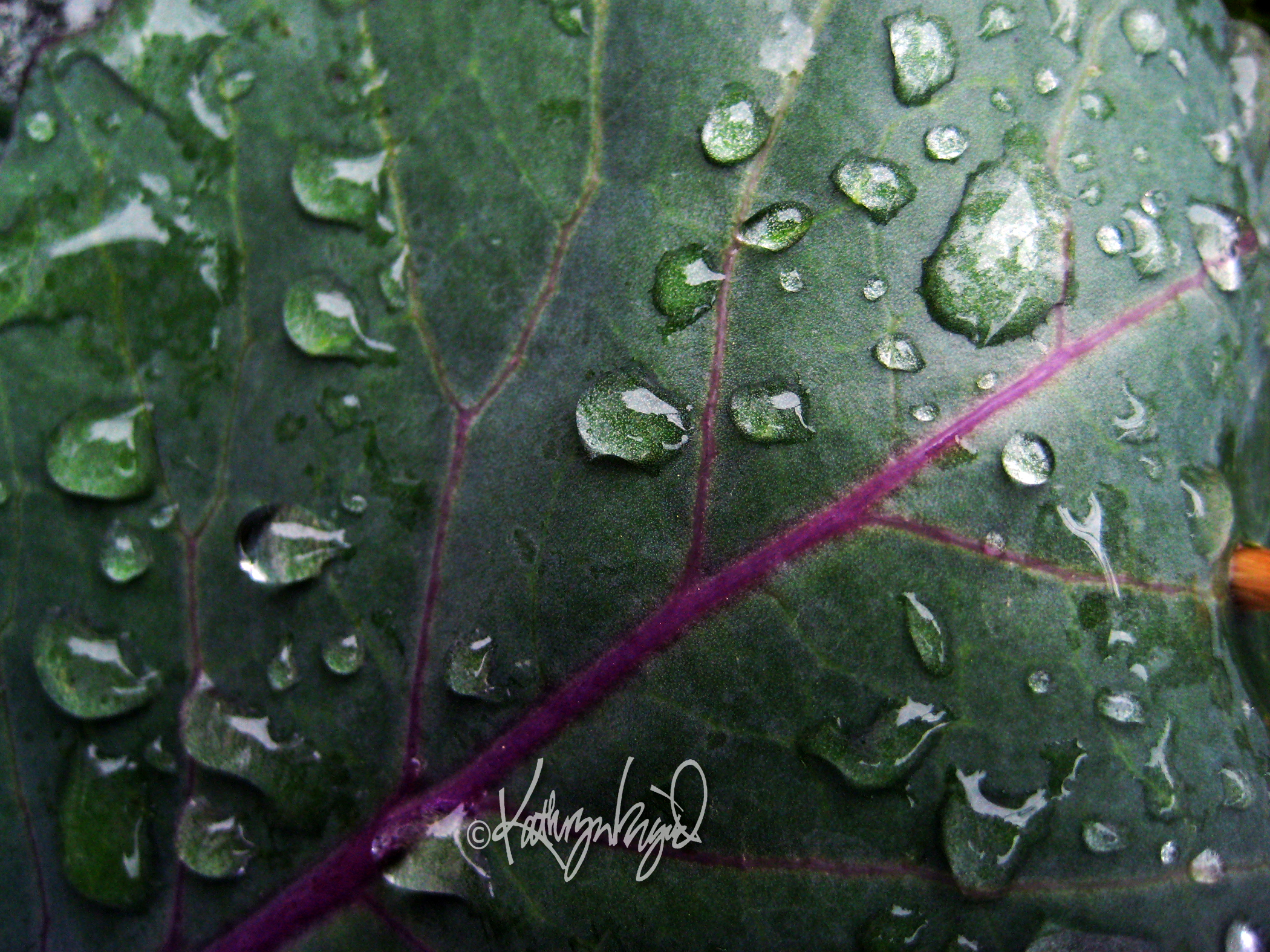
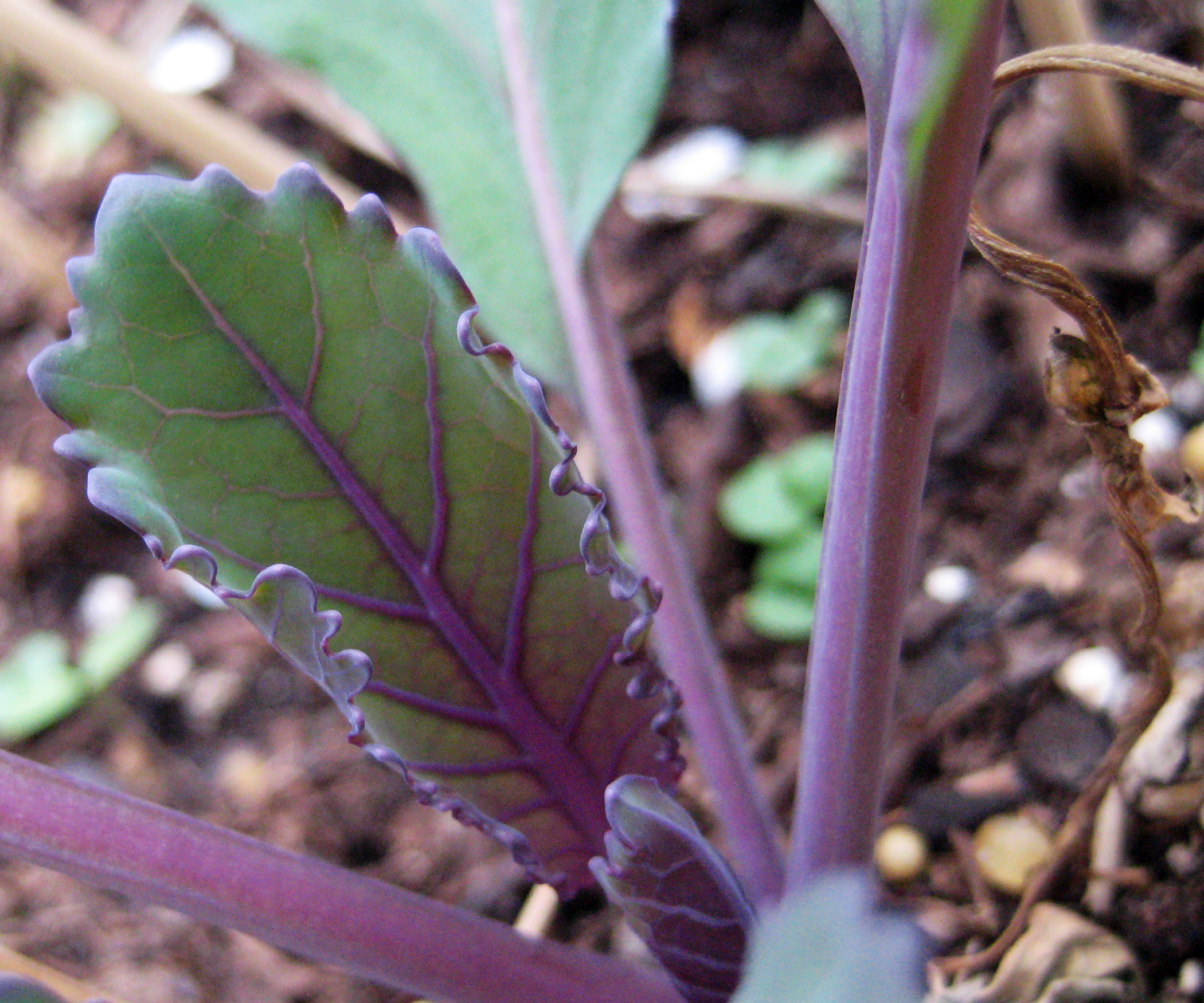
Red cabbage, well watered . . .
My tiny mite of a farm is bursting with promise. It won’t be all that long before I’m harvesting cut-and-come-again salad greens, herbs and baby carrots and beets. My patience is an equally miniscule thing, so I hover over their beds and fuss as though my attention would do anything other than attract more insects to come and flit around my head. Meanwhile, I can always raid the grocer’s stock of edible things to keep the table well decorated, no matter how plain or fancy my edible desires.
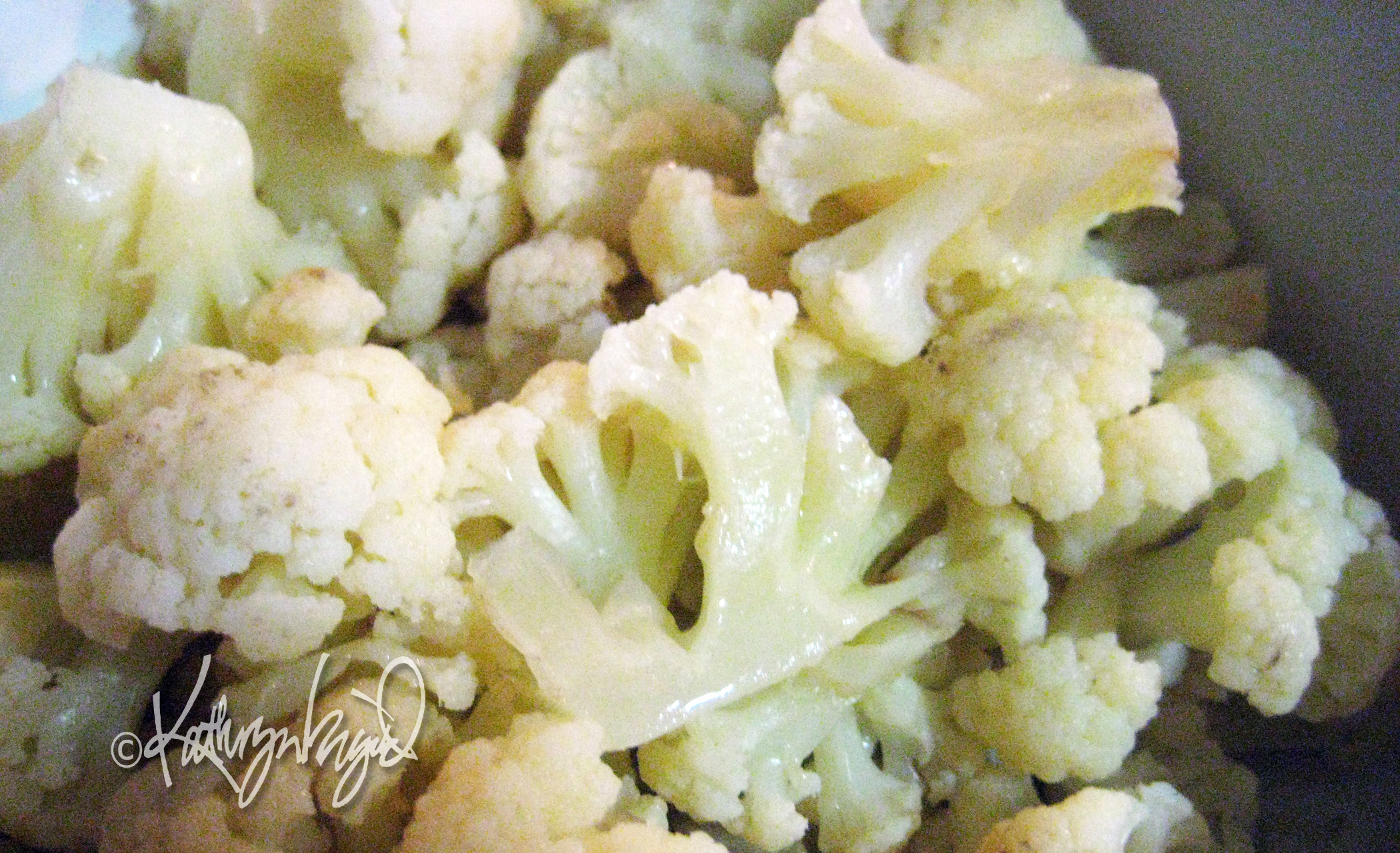
Cauliflower, admittedly no less delicious if I have to snag it at the market than if it came from my own private patch of dirt . . .
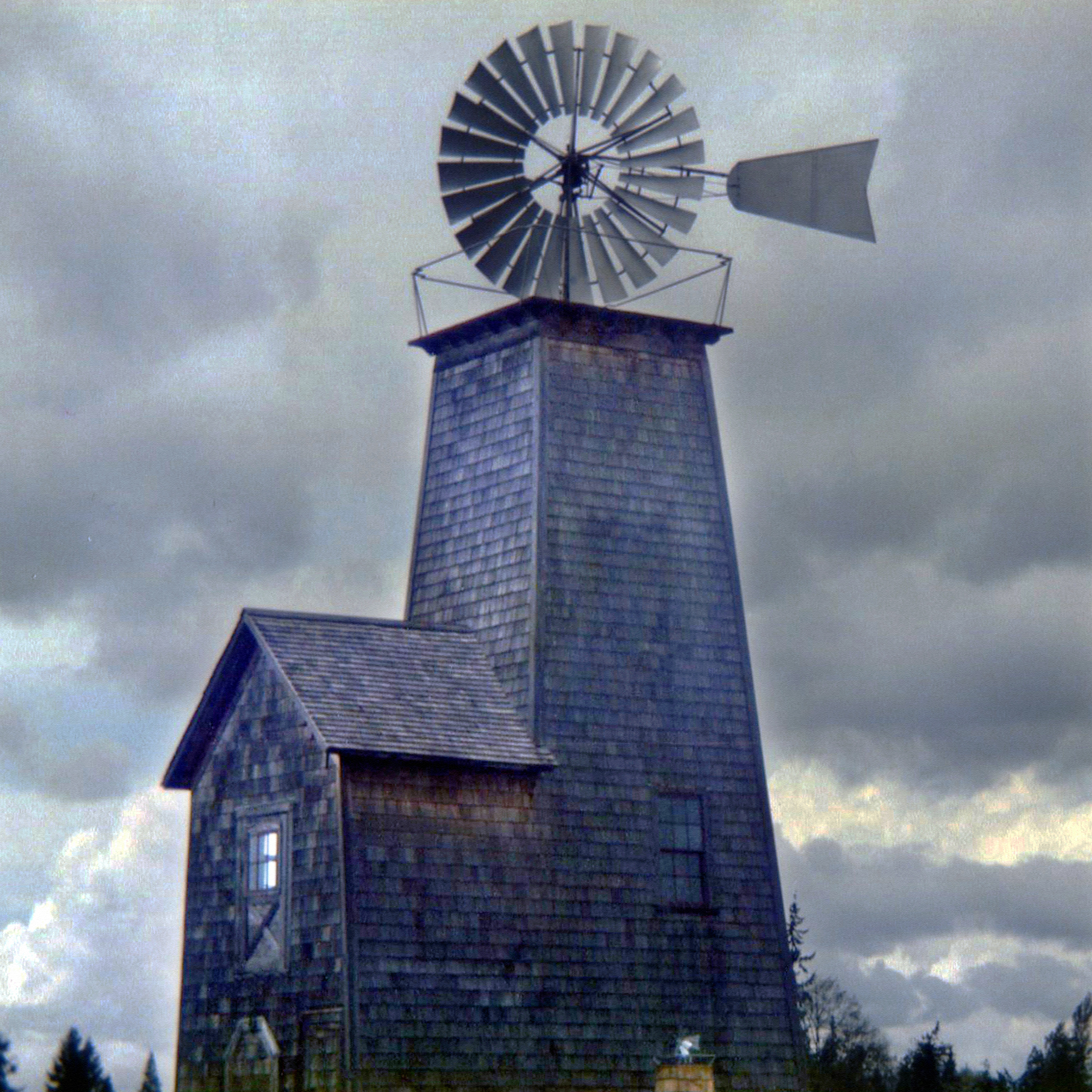
Another highly welcome Little Thing is a raindrop. Lord knows we’ve dreamed of them with something verging on the unseemly in our drought of recent past. But like the seasoning of a dish, what is desirable in a little may be wildly inappropriate if given with too much exuberance. Today it’s looking a little iffy in that regard: we’ve been told in the last couple of weeks that thanks to the new year’s rains, most of Texas has already bypassed the borders of drought and headed right into surfeit territory. Outside is a pounding rain, accompanied by beautiful flashes of brilliance slicing up the sky and shouts of thunder pounding down right along with the cataracts of rain. Not thirty minutes away there are reports of a tornado and baseball-sized hail. There are expectations that this storm system will throw off a few more tornadoes and lots more wind and rain and hail before it’s done. Me, I’m keeping a good thought for all of the people, animals, houses, and cars being blasted by the wind and pelted with rocks of ice, and hoping against hope that none of that nonsense wanders over this way too. We have plenty of friends in the area whose roofs have been demolished or cars totaled by that sort of thing before.
My little item of great happiness at the moment is that not only am I cozily dry under a roof out of the lashings of rain, but our car is in the safest place it could possibly be to hide from the storm: on a mechanic’s lift at the place where we bought it. It was merely due for its periodic checkup (taking inspiration, perhaps, from my own recent annual visits to the doctor and radiologist and such), but couldn’t have been timed better in terms of dodging the fiercest part of the storm. I hope. Not to mention that the mechanic discovered that the two tires not replaced following our recent road-debris encounter are worn down to replacement status as well. If I’m going to drive around in this kind of flash-flood-inducing waterfall, I may as well have good tires. After all, it’s only money. Sigh.
Which brings me back ‘round to my original point (and I did have one). Life is just too short to be spent without savoring all of the minor triumphs, moments of good luck and serendipity, and all of the tiny treats that we can find or are handed to us. And by that, I mean of course that I will continue to eat snacks and desserts with a certain amount of regularity if not abandon, because they are seriously happiness-inducing items in my life. Who am I to refuse to attend when the last fridge stash of guacamole and the tuna salad from yesterday’s sandwich get all friendly and decide to get married and become a cracker spread? I would have missed a great party!
Cheese and choccies--where could you go wrong?
On the 17th of March we had a friend visit for dinner. Since she’s of partially Irish descent, I thought it incumbent to include an item or two with at least a hint of Irish pedigree in the meal, though I didn’t quite go all-in, so I incorporated a few tasty tributes to the Emerald Isle. It was ‘specially easy to do at the end of the meal. I’d happened on an inspiring sounding cheese, so dessert was a little plate of cheese and chocolate. I served my little homemade chocolate-nut truffles with the loveliest Guinness-infused cheddar cheese that, at room temperature, tasted buttery, the tiniest bit sharp, and had that mellow veining of stout bringing another nice layer of complementary flavor to the collation. Needless to say, this combination goes down quite smoothly with a tot of good Irish whiskey (well, what doesn’t?) or of course would be appropriately paired with a crisp Guinness, if it’s on hand. We had it with a bit of bubbly because I’m certain that St. Patrick would approve of our saying a fond thank you to and well-wishing a certain great—-grandniece of his who has been a fine colleague and a good friend and is soon off on a new adventure in an altogether more Irish-rooted American city.
I leave you without a real new recipe today, I guess, but sometimes the moment presents itself when something that requires no new preparations at all but is just as delicious as can be is just the bite or sip to be enjoyed on the spot. There are times when the company is so grand, the bottle cracked open is so perfectly aged, and the slant of the sun so perfectly angled in the proper window that whatever we take to eat is a tiny taste of heaven. It’s like being visited by a butterfly that comes and takes its rest right at my feet and sits patiently to have its portrait taken before fluttering away, for no apparent reason other than to bring its own miniature glint of perfect beauty to the day.
. . . and just so you know, no tornadoes or monstrous hailstorms have ventured into our town today. Another nice little plus for the occasion!
We are, I am told, going to have a big, I mean BEEEEEEG, year for bugs here in last year’s drought country. And by bugs, I mean insects of the pesky and biting and stinging and flitting and I-won’t-even-post-pictures-of-them (you may thank me now, John, Teri, et al.) varieties, the ones that descend on the garden and leave it as a small quivering heap of dusty tendrils that give a last shudder and fall to the ground, dead. The ones that swarm around my head and ankles in grim, itch-inducing clouds of biblical proportions and leave me wanting to explode into equally lifeless dust.
First we had a dry, hot year that sent a whole lot of bug-dom into hibernatory hiding. (Along with a whole lot of humanity ’round here.) Then there was this thing that purported to be winter but, in its temperate reality, was a very mild-mannered and brief cooling-off period during which the parched local world relaxed and the bugs began to feel quite welcome to reappear mighty early: mosquitoes bit me when I should have been wearing long underwear–though thankfully, not in my long-underwear regions, which would have been just too cruel for words. The return of rain here, which now to our astonishment puts much of Texas back on the plus side of normal precipitation levels and well out of drought status, was a regular engraved invitation to come and goof off at the spa, as far as the local insect population was concerned. Suddenly, flies are humming around in a leisurely landing approach to put their nasty feet and probosces on every morsel of goodness that appears, whether it’s a deliciously pretty bit of food on the table where I do not desire their company or the addition of their delicious crunch and protein to the dish, or it’s insecti-goodness of the garbage and compost varieties. Grubs and mandible-gnashers rolled out their equivalent of the heavy equipment and got down to serious work devouring tender green things left and right. And my quick walk across a grassy area acted like a strafing run in a bomber, sending up masses of craneflies like so much blasted, spiky shrapnel.
I have a special hatred for craneflies, I’ll admit, and for bugs that eat my plants or nip at my personage. I may be truly enamored of all sorts of crawly things as intriguing subjects at least when I’m safely insulated from actual contact with them, say with them in a nice tidy case in an insectarium at the zoo, or pinned on walls as magnificently weird and wonderful specimens in their pretty shadowbox frames. But when it comes to having them looping through the air in apparently aimless cartwheels that I happen to know are really going to have them fly directly down my windpipe or into my defenseless eye-bulbs or up there to nest in my hair or to burrow into my carotid and have a suck-fest on my life’s-blood (have I read too many outlandish horror stories? You be the judge)–well, I’m just not that live-and-let-live and forgiving a character, am I.
So I am arming myself with all sorts of anti-insect remedies, or things that purport to be so, and while I’m attempting with a certain modicum of ecological sensitivity to limit them to entirely natural and inoffensive and not widely toxic treatments, I can’t make any promises when I happen to see the first wave of evil bugs zeroing in on me and mine. It’s a matter of the hunter and the hunted, kill or be bugged. My general pursuit of happiness may have to take a backseat to pursuit of feisty insect vermin. There may be a few small detonations of either disturbed craneflies rocketing out of the lawn as I stroll, or of me spraying them with some wicked-sounding oil-soap-hot-pepper-nuclear-weapon spray intended to mortify and murder them in turn. There will certainly be skirmishes of all sorts. We are at war, sirs and mesdames, and I am not going to sit back and be antennae-whipped into submission without a fierce fight. My fight instinct is slightly higher than the flight one at this moment, so be prepared for bloody messages from the front. Here’s hoping that the message of victory isn’t delivered from Bug-topia. That would just be too tragic. Run for your lives!
Anticipation makes me itch. The weather forecast promises something rainy, maybe even a bit of a storm. The air is thick with it. The humidity hovers portentously and the breezes ruffle the small and silky leaves overhead and ripple around ankles, kicking up eddies of smaller kinds.
But no rain.
Will it come again? Of course it will. I say of course, but know that last year gave us drought. When do the mills begin to turn again? I listen, I watch. I wait. I go out and water the garden under a darkling sky, feeling in my heart if not on my skin a delicate moth’s-wing skim as though from mist. Not a drop on a leaf, my dears. Not a speck, not a butterfly’s tear. It seems . . .
The barometer will surely relent; the sky will weep; the mills will spin their tales once more. It will find me when it comes: I will be bent over garden beds, walking the front path out to the mailbox just to see. I will smile in the rain–just as I smile in the grey-cloud sun–waiting is something we all must do from time to time. I think it might not be so long before it rains again.
Since several people have asked, I’m posting a list today. No, it’s not one of those house-fixing lists I mentioned full of projects. But related, in a way, as it constitutes my contract of To-Do fun with my yard, garden, flower beds, and planter pots. It’s my seed and plant list–what I’ve put in thus far, and some of what I intend to add, the latter being primarily a larger batch of the listed Wildflower Sowing Mix. It’s my own blend, by the way, concocted from reading up on and observing what is native and/or simply adapts well in our part of the landscape. Starred (*) items are known natives or very long established growers here in north Texas, and items marked with two plus signs (++) are ones I’m emphasizing in placement or quantity because they’re particular favorites of mine.
For the Front Yard Flower Beds:
Blue-Eyed Grass (Sisirynchium)* ++ I’ve long been attracted to the tiny-orchid flowers of this miniature lovely, and was thrilled to discover the plant is native here. A surprise bonus when moving to a place that has a generally less easy climate than my place of origin in the Pacific Northwest.
Chives, Garlic (Allium tuberosum)
Coneflower (Echinacea purpurea)* ++
Garlic (Allium sativum) I don’t cook with a whole lot of garlic since marrying a Supertaster, but since they’re beautiful plants, I figure I’ll get what little garlic I need for cooking and have the garden attraction besides.
Lavender (Lavendula angustifolia)
Nasturtium(Tropaeolum ‘Milkmaid’)
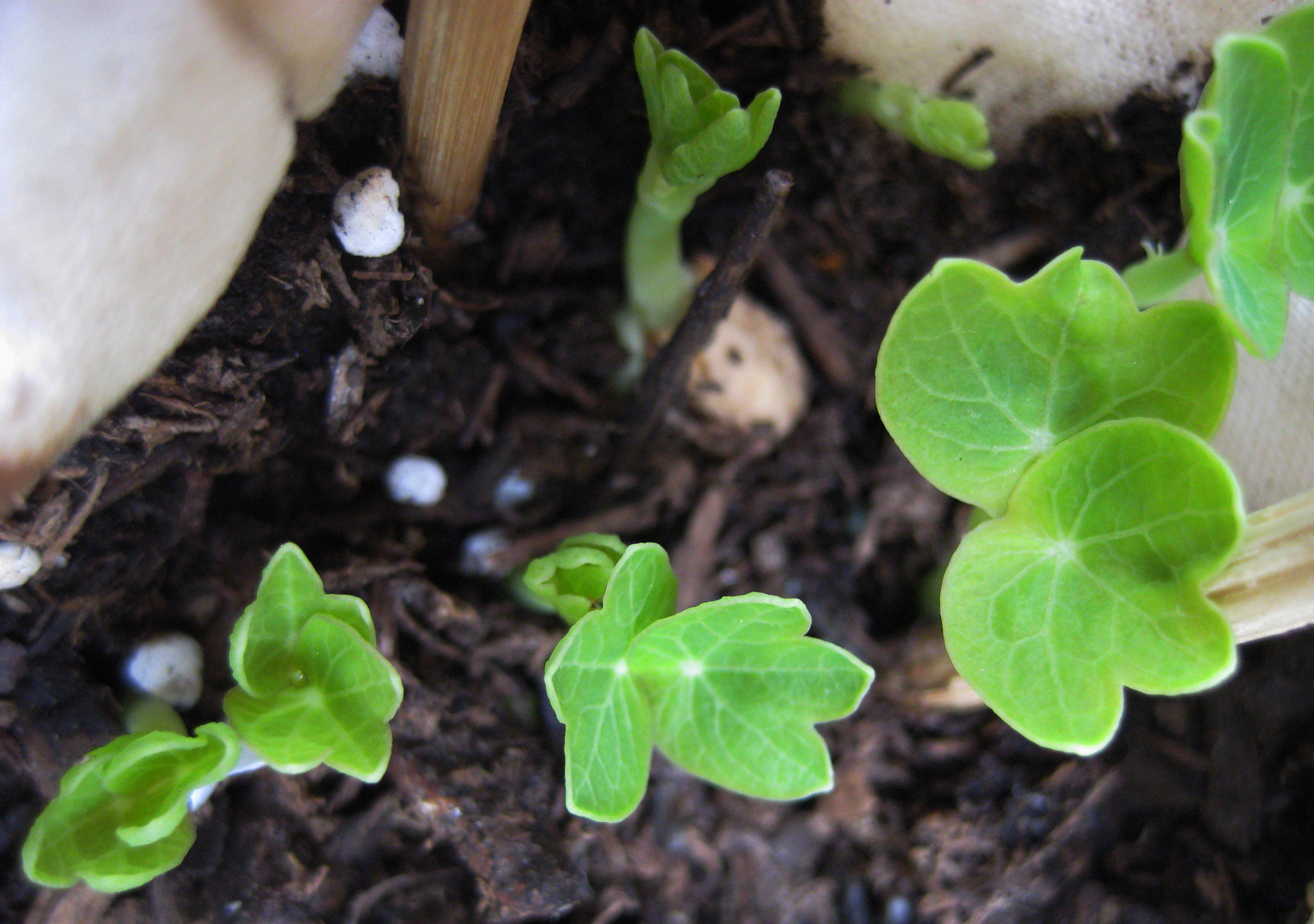
I have to admit I enjoy plants whose babies I can recognize early and so chart their progress a little more accurately. Nasturtiums are a very easy one to spot . . .
Spreading Petunia (Petunia x hybrida ‘Purple Wave’)
Texas Bluebonnet (Lupinus texensis)* ++ Seriously, how could I not put in any of this classic when I’ve moved to Texas? Not to mention that I’m a sucker for blue flowers. And things that will self-perpetuate once established.
Herbs (Planted front, back, indoors and out)
Basil, Sweet (Ocimum basilicum)
Borage (Borago Officinalis) ++ A rather magical herb, in my estimation, with its refreshingly cucumber-like flavor and exquisite bright blue flowers.
Chives, Onion (Allium schoenoprasum)
Marigold (Tagetes)
Parsley (Petroselinum hortense)
Curled
Italian Flat-Leaf @ John: I’ll try to have it fully in leaf when you show up here!
Rosemary (Rosmarinus officinalis) ++ I have one healthy plant going, and since it seems to thrive in this yard and I love the plant and its culinary qualities, I have a feeling it will get siblings eventually.
Vegetables (Mostly integrated into the flower beds, for fun)
Beetroot (Beta vulgaris ‘Tall Top Early Wonder’)
Kale (Brassica oleracea ‘Dwarf Blue Curled Vates’)
Bright blue like that of this Salvia gives such pizzazz to the garden . . .
Blueberry(Vaccinium corymbosum ‘Biloxi’) ++ You may recall that I really dislike eating blueberries–but I know the birds and creatures will like them if I leave them, and I think the plants are beautiful!
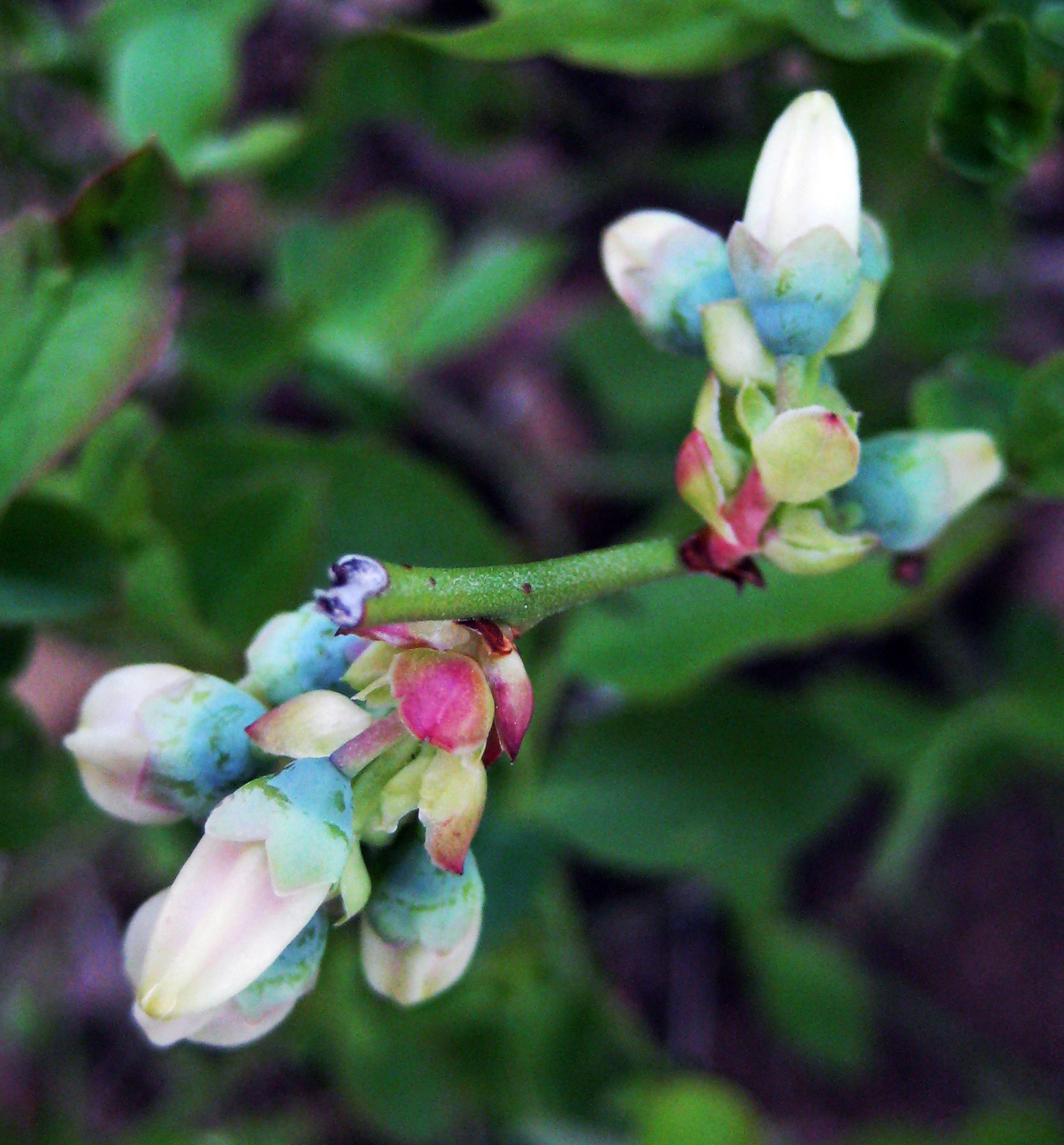
Irresistible little blooms on the blueberry . . .
Clematis(Clematis, var.) I’ve put in several varieties, and the first leaves are beginning to appear, so I think I had better give those little green pretties something to climb up soon or risk their meandering in the underbrush.
Peering out from under oak leaf-mold and purple tradescantia that's already shown its first bloom of the season, the clematis leaves are beginning to crawl forward . . .
Columbine (Aquilegia ‘Origami Mix’)
Corkscrew Rush (Juncus effusus ‘Spiralis’)
Eastern Redbud(Cercis canadensis) The first of our little city give-away adoptees appears to have survived the winter, but won’t yet show its bud growth.
Fig Tree (Ficus carica ‘Brown Turkey’) I found a sturdy fig tree rooted in a three-gallon pot for four dollars. How could I refuse? Even if it turns out to be only semi-productive (though I’m told they grow well enough here), the leaf will be a nice variant in the yard.
Forsythia (Forsythia x intermedia) A good shot of early color is always welcome.
Horsetail Reed(Equisetum hyemale) Strangely for a place that verges on drought, the yard here has one or two water-collecting spots! So wet-footed plants should do fine.
I find it strange that there is a place--ANYWHERE in this north Texas garden--that can stay wet for so long, but it's a handy spot to put water-tolerant plants like the Corkscrew and Horsetail reeds, after all . . .
Lamb’s Ear (Stachys byzantina)
Mexican Plum(Prunus mexicana)
The Mexican Plum tree just planted this last fall has wasted no time in putting out dainty little white flowers . . .
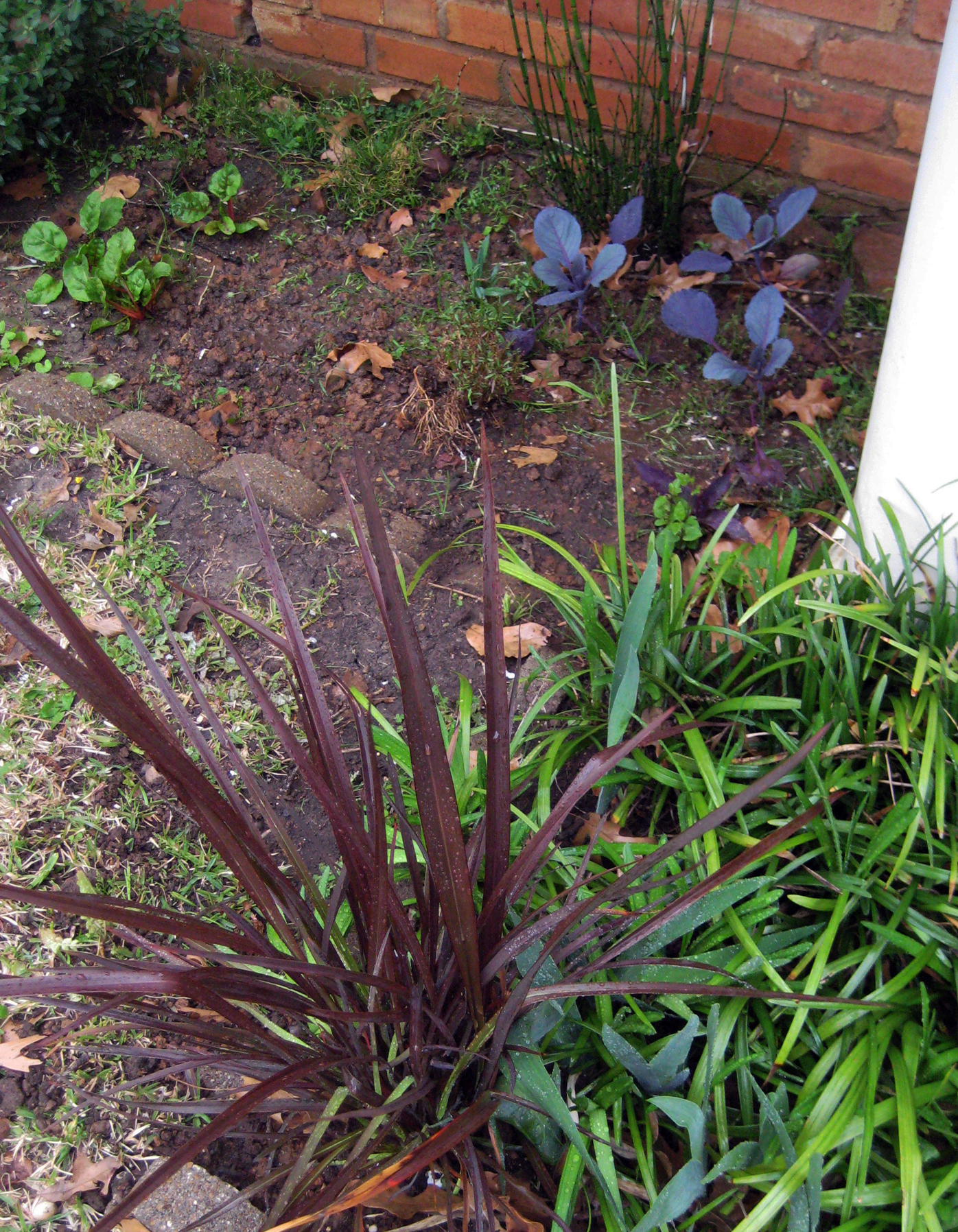
New Zealand Flax (Phormium tenax) Going for a bit of large-scale drama, here. (You can see the NZ flax’s big burgundy swords in front of the wet growing bed above.)
Red Cabbage(Brassica oleracea var. capitata f. rubra)
When it's on sale, why not use the bedding plant! And I got a half-flat of red cabbage babies, so they went out front for their ornament as well as in hopes of good eating . . .
Soapberry (Sapindus saponaria)
Even the six inch tall Soapberry tree seedling from last year is swelling into bud . . .
Tulips (Tulipa spp.) Of a white unnamed variety; oh, yes, I did succumb. I put just a dozen in my front porch planters. Half of them were soldas orange, but buying a generic handful of bulbs, one gets what one gets, no? And white tulips are beautiful too, so I shan’t complain.
A splash of orange might have been showier, but there's no classic like an elegant white flower . . .
Ha! You thought I was talking about some girlfriend of that guy who lurked in the tree outside Grandma’s window. You may be excused for thinking I’m the equivalent of my own imaginary friend, in fact, but yes indeedy I did climb a tree today. Sometimes it’s good to be a crazy old bat. Here’s why I did it:
The backyard tree was calling my name . . .
I mean, really. If you had this Bradford flowering pear tree glowing at you through the kitchen window, could you have resisted? Granted, there was also a squirrel-decimated finch feeder glaring from its branches, and removing the skeletal remains from sight seemed like rationalization enough, if I needed any, but the pear trees are unsure we actually had a winter, and so both our front and backyard pears are not only bursting into bloom a tad early they are starting to leaf before the blooms are even fully open, and getting just a little ahead of themselves, as I often do too. It’s not especially sunny today, but pretty warm, and who wants a ladder when it feels like springtime? It may be apropos that from up there I had a nice view of the sweet cedar bat house I’d mounted in the adjacent red oak, but I think a tiny bit of tree-climbing may also have cleared a few of the bats from my own belfry, or at least knocked out a cobweb or two.
You might even wonder why I’d be looking out the window all that much when it’s grey and overcast and kind of, well, lackluster in the great and brown-grassy out of doors here in the first place. Here’s why I did that:
The little patio nursery is awakening . . .
You could ignore this? Me, I just have to look every few minutes or so just in case the sprouts are suddenly eight inches taller. It could happen. See those adorable little fine-haired leaflets? The dainty little red stems on what I will assume are the sprouts of beetroot plants?
The charmingly incorrect way I have of throwing everything in together and planting at the same time, same depth, same channel ought to at least entertain me . . .
No one who hangs around this blog for the briefest length of time will mistake me for an orderly, proper, or logical gardener. But I love my mad-scientist fun in yard and garden and the often profligately rewarding things the dirt gives back without regard for my deserving. I was going to say, “my deserts”, but you might easily mistake me in this instance for plotting an entire property full of nothing but cacti, given last year’s Texas drought, my stated intent to move toward a fairly solidly xeriscaped property, better water management, prairie-native plants, succulents, and all of that sort of thing. And I do plan all of that in the long term. But it won’t stop me from, say, planting a few things here and there that mightn’t be strictly ideal for the situation, because I do have that experimental urge and my wildly impractical loves. So yes, I did go ahead and put in a few orange and white tulips in the planters out front, thank you very much. And here’s why:
The yard--front and back--thus far boasts some fantastic trees (and the two little sticks, one of which you can barely discern here centered on the porch, that I intend to raise into trees eventually), but there's not a lot more to commend it . . . yet . . .
I have my ambitions. Not least of them is to get proper drainage around the house perimeter and evict the hopelessly useless and rarely attractive lawn in favor of paths and planting beds and places that would invite the local bees and butterflies and birds and the greenbelt denizens from out back to come and linger, and the eyes and hearts of visitors to find pleasure. All of this, in place of dull hard St. Augustine “grass”; having lived in temperate climates I find I can’t quite call this scratchy variegated-brown stuff by the honorific reserved for something a lot kinder underfoot and a lot more able to thrive on its own than what we’ve got now. I like to believe I can make a bit of a change for the better! It’ll take a lot of resources, but I have hope. Here’s why:
In an earlier time and place I went from a similarly "low maintenance" yard (don't you just adore Realtor Speak!) of mostly unhealthy grass and stumpy evergreen shrubs yard to something nicer in only a couple of years . . .
I think you can get a hint of the Why, no? Granted, that was a west-coast climate very friendly to all manner of plants from just this side of tropical (I did grow a banana tree as an annual out back) to alpine. But I’m optimistic that with the right ingredients, a bit of effort and plenty of imagination, I will be able to transform, if slowly, this place too. I may not achieve the lushness of my temperate garden, but I look forward to something a bit more dramatic and inviting. Here’s why:
The neighborhood wasn't honestly the most upscale, but given the growing climate, I finally decided Parkland wasn't *entirely* a misnomer for it either . . .
This photo was taken less than two years after the whole property had been bulldozed. I dug up and salvaged a number of the rhododendrons and other shrubs, and of course the magnificent Douglas-fir off camera to the right held its ground (after the arborist gave it some tender loving care following its attack by lightning!), but the rest was a big scraped-off dirt pile. So I’ve seen what dirt can do. I’m going to go on believing in what it’ll offer until and unless it proves otherwise. Then you can all say I was just out of my tree.
Having grown up in western Washington, where the largest bulb growers in the US have their fields, and spending my youth in the ‘Daffodil Valley’ where I attended school with tulip and daffodil farmers’ kids–and our town celebrated an annual Daffodil Parade with daff-covered floats and yellow-gowned princesses–I might be excused for having a penchant for bulb flowers, Tulipomania of my own sort. With a climate fairly similar to their old home’s in the Netherlands, it’s no surprise that the van Lierops and others of my classmates’ ancestors found the rich volcanic soil and temperate weather of the Pacific Northwest very welcoming as an environment for restarting their bulb-growing life stateside. The Skagit Valley, set in between where I spent the majority of my growing-up and the place where I did my grad-school growing, is one of the most fertile and spectacular places to go tulip-viewing in peak season outside of the fabled Keukenhof gardens.
All the more reason that it shouldn’t shock you that I have a teeny little meltdown of adoration when the Valentine’s Day displays of tulips appear in all of the shops. Here in Texas, however, and particularly with what I’m learning is typically a pair of widely separated and very short viable growing seasons, and only with a lot of attentive care, I’m skeptical that a large investment in tulip bulbs would be the smartest way to spend my gardening money. I think I shall devote more of my time, dollars and attentions to water control systems and hardy prairie and semi-desert plants hereabouts. But I’ll never stop enjoying tulips when and where I can. Knowing my eternally optimistic streak, I won’t say absolutely that there won’t be tulips in this transplanted Texan’s garden anyway.As you can see from today’s set of pen and ink drawings, it’s not only the brilliant colors and satiny textures of tulips that appeal to me, but also their form, and the graceful graphic beauty they lend to their environs. The first drawing above was made for the cover of the service programs for my sister’s wedding, when she very thoughtfully married a man whose parents ran a wonderful florist shop and supplied their Spring nuptials with a gorgeous rainbow of bright pastel tulips that burst with brilliance for the occasion and for many long days after. Thankfully, there was and is ever so much more to her man-of-choice and his family, but the tulips sure didn’t hurt! The second image came from a set of sketches drawn for a series of greeting cards meant to raise funds for a church group, and since I knew that the cards were very often sent as get-well wishes, condolences, congratulatory notes and other quite personal greetings, it seemed to me that there were few images that could supply the right note of kindness, cheer and gracious care than a bunch of tulips.
All of this is a rather roundabout way of saying that, though I did not (as yet) plant tulip bulbs, that vision in yesterday’s errand-running expedition all over town of all the shops being inundated with the life and joy of tulips got me salivating for garden goodness, so I wandered out to our back-forty (.04?) and, basking in another round of wildly inappropriate-for-February warmth, planted a bunch of seeds. What will become of them, I cannot tell, but I’ll keep y’all posted. Meanwhile, I am happy at just having stuck my fingers in the dirt with some positive purpose for a little bit and planted my little measure of hope.I’ve a fondness for so many growing and blooming things, but no particular mastery of helping them along that path, so I will fumble along with what I can. In the next few days I’ll tackle the spring grooming of some of the other parts of the garden, including the bed of irises I transplanted when I found them last year under the paving stones so nicely placed by our house’s previous owner and was astonished to see that they had refused to die there. Whether they can thrive enough to bloom after however long they were interred, I have yet to see, but they are already leafing out in their new digs happily, and if they don’t drown in one of our brief outbursts of heavy-duty rain before I can redirect the brunt of it off of them, they will at least provide their small oasis of green glory to the garden until the Texas sun beats them back into the hard clay ground they wrestled so innocently to escape. Not to mention that my lack of Master Gardener status means lots of things must fend for themselves bravely. That’s just the way things go here: plants must be as tough as they are attractive to get the green-thumbs-up from Mother Nature de Tejas. Or me.





















 Art-Colored Glasses