
Foodie Tuesday: Swim for It

If left to my own devices to raise or, more difficult yet, forage and hunt for all of my food, I’d soon enough be a non-meatatarian. I haven’t the patience or the skill for any sort of animal husbandry, nor the remotest chance of outsmarting anything sentient in order to catch it. But despite my pitiful showing as a junior fisherman alongside Gramps in days of yore, I think I could pull myself together enough to learn how to fish and forage the sea enough to keep my love of seafoods at least occasionally treated. Good protein, too.
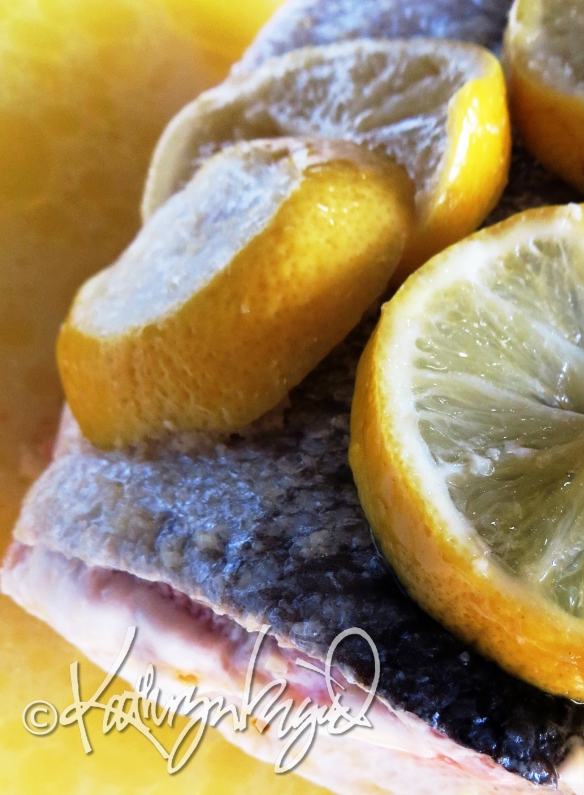
Photo: Salmon Champagne Evening

Sometimes I am happy enough to have a rather plain fried, roasted, baked, steamed, raw, or poached piece of fish. When it’s pristinely, spankingly fresh and sweet, fish should probably not be made too fancy. Why mask perfection? At most, a dash of fresh herbs or a little zip of some lovely masala ought to be plenty of interest to vary the day’s meals. Even I have been known to identify and safely pick and consume wild sorrel, which is an excellent companion to fish in modest amounts. And of course, there’s nothing friendlier with a piece of salmon than citrus or ginger root or plain black pepper, if the foraging can extend as far as a grocery store. One thing I do think well worth the [negligible] fuss if I’m preparing salmon with its skin is to sear it, lightly salted, in butter or a high smoke-point oil before I cover its pan to finish cooking it through on cooktop or in the oven, because crispy salmon skin is delicious and its crunch a wildly beautiful complement to the velvety tenderness of the flesh. Once my palate was introduced to this marvel, I wondered how I had managed to enjoy salmon so much, so often, without having known what I’d been missing. Salty, slightly fat, salmon-flavored, and crispy? How could I not love it!
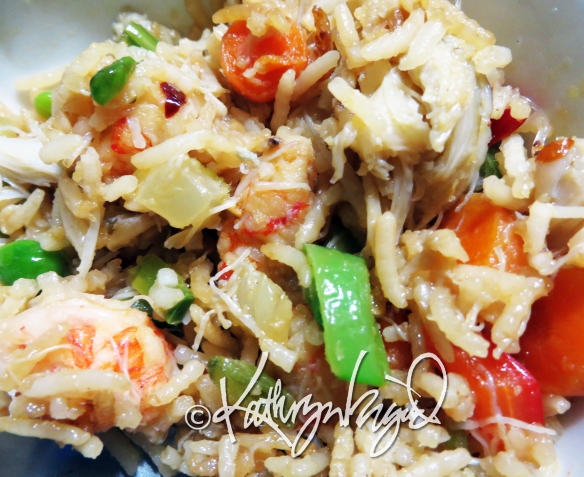
Photo: See Food

Of course, there are innumerable other outstanding ways to enjoy and indulge in seafood, if one does happen to have access to plenty of other ingredients. Seafood fried rice is one very flexible, quick to fix, and reliably delectable way to enjoy such things. Salmon in bite sized pieces, for one seafood treat, goes quite well with the contrasting grains of rice, lovely with rich that’s been cooked in either broth or coconut water or milk and filled with a delicate confetti of diced celery, carrots, onions, bell peppers, or peas, whether shelled or in sugar snap or snow pea form. But as you can see in the accompanying photo, I enjoy, along with salmon or other kinds of fish, those admirable insect imitators the crustaceans. Hardly anything, sea-based or otherwise, is more enticing in fried rice than crab (naturally, I vote for Dungeness first, every time), lobster, langoustines, or shrimps of various sizes. I would guess that some tiny, tender clams might be more than acceptable in this sort of dish as well, but truthfully, I doubt I’ll ever get quite that far, as long as any of the usual suspects are available. Never say never.

Meanwhile, back at the fried rice, I am still an old Occidental renegade when I make it, cooking it much too slowly for a wok-master’s taste and throwing in whatever I have on hand and am in the mood to eat, from the aforementioned vegetable ingredients, crisply sautéed, to seasonings like Tamari or soy sauce, citrus juice, fresh or candied or pickled ginger or ginger syrup (or all four, as I am an unregenerate ginger fiend), honey, shallots, and/or chile pepper flakes. All of these cook in gently, over low heat, while I’m stirring in an egg to scramble into shreds, and then letting the rice slowly develop a good crust amid copious lashings of fat—coconut oil, avocado oil, ghee, whatever I have on hand. All of this, until I can’t quite wait any longer. Must keep that seafood delicate and fresh. Until I can devour it, anyway.
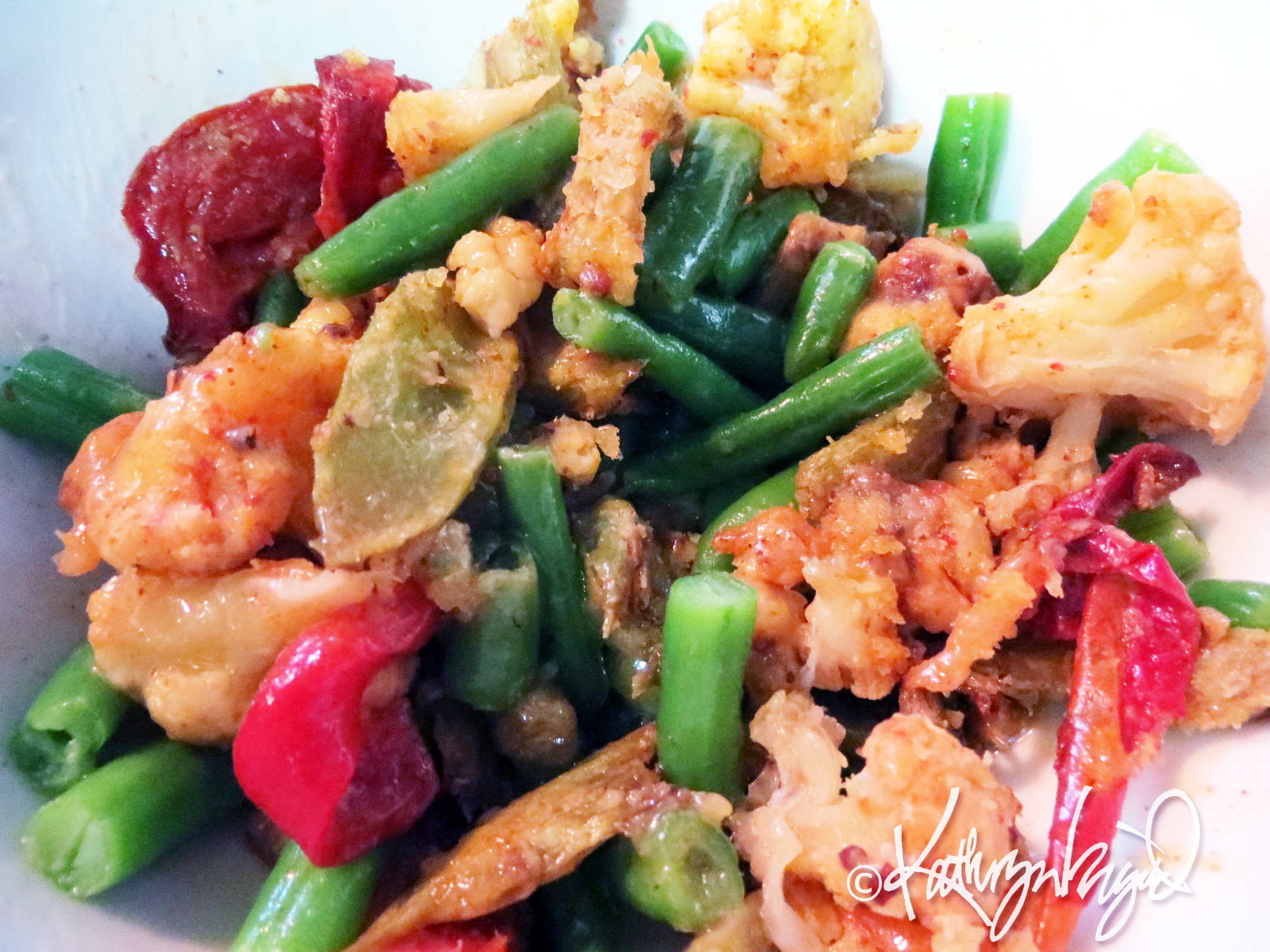
Foodie Tuesday: Once Cooked for Eight Equals Four Times Prepped for Two

photo

Roasted cauliflower and red capiscum, sautéed celery, steamed green beans–what do they have in common? A new ‘recipe’ for dinner’s vegetable dish, apparently . . .

The complication, if there is any, of having a household of two (or one) is that so many foods, dishes and meals are easier to prepare in larger quantities than are appropriate or even desirable for a single meal. It’s very easy, if planning isn’t finely tuned, to have things spoil and go to waste before we’ve plowed through them at our own pace. The upside of this very problem, though, is that if I do plan reasonably well (and have a little luck as a side dish) I can make several meals out of little more than one prep.

I do this, in part, via the method of complexification and conglomeration. The one or two elements remaining after one meal get combined with each other, with some new element or ingredient from the next meal’s intended menu, or both. Yes, it’s quite possible and even sometimes preferable to simply repeat a dish as-is, especially if it’s already its own elaborate concoction. But often, things seem a little less tired and tiresome if they appear in new guises each time so as to stimulate the palate, if not the imagination. So the small amounts of leftover vegetables from lunch and dinner the last couple of days may find themselves married in a new mixed-veg medley with a little sauce or seasoning that helps them play together as nicely as possible and suddenly, they’re not just two spoonfuls of This and a handful of That but an actual, sort of, recipe.

photo‘Mains’–the central or focal items on the meal’s menu–are seldom hard to incorporate into some new iteration of a main dish. Even when they have already been prepared with a hard-to-ignore or -disguise sauce or presentation, they can find new playmates on the plate next time they head to the table. Roasted chicken, for example, whether homemade or grabbed ready-roasted on a busy day as one flies through the grocery store, is a truly marvelous ingredient when it comes to flexibility. Once seasoned or sauced distinctively, it can pose a slightly more complicated puzzle for renewal, but even then, if the dish is well liked once it’s pretty likely to be popular on a second visit.

So the chicken, whether it was already dressed in the satay-like peanut sauce–I took a shortcut with a pre-made one this time–or not–we liked it well enough to use the same pre-made sauce at the second meal even though it was not already on the chicken–can be reincarnated as a different dinner altogether simply by changing its context. One day, it’s served with a very simple wedge salad dressed with citrusy vinaigrette and a tangle of Pad Thai style rice noodles seasoned lightly with rice vinegar, a squeeze of lime juice and a splash of soy sauce and sprinkled with black sesame seeds.

photoNext day’s ‘satay’ is served with butter-steamed green beans, fresh cold apple slices and fried rice made from–yes, you guessed it–the fridge stash of jasmine or Basmati rice previously cooked up in broth and now pan-toasted until almost crisping with Persian lime olive oil, soy sauce, a touch of raw honey and a handful of chopped sushi gari (pickled ginger, if you somehow haven’t yet noticed, is one of my favorite seasonings for practically everything!). A sprinkling of white sesame seeds, just for a little visual contrast with yesterday’s offering, and there’s Chicken Pseudo-Satay 2.0 ready to be eaten.

And while there’s certainly nothing that says dessert is a required part of every meal, some of us kind of think of it as a specific food group, so even for dessert it’s nice to have some fine ‘recyclable’ ingredients for whipping up something to finish the day’s eating nicely. One of the things that very regrettably can go to waste far too often in a small household is fresh produce, and when I’ve a beautiful batch of fresh fruit on hand I can’t bear to think it will spoil before we can reasonably eat it all. So a large ‘find’ of sweet fresh strawberries, though it was far too great a quantity for two people on the day it was at its peak, got cleaned, sliced and frozen until the other day when it beckoned to me, siren-like, and I blended it thoroughly with a little whole-milk yogurt, splashes of vanilla and rosewater, a tiny pinch of salt and a bit of honey, poured it into a flat sealable container and froze it until it became a brightly fruity semifreddo or granita of sorts for later consumption.

photoNo matter what the small tidbit, most leftovers that are not on the edge of spoiling really do beg for a kindly reinterpretation before we give up on them. Once I get fully in my Friendly Frankenstein mode and think hard about how to zap new life into worthwhile remaindered ingredients, it’s only a matter of letting the locals trade their pitchforks for dinner forks and we can all remain good friends without fear of monstrosities. Good eating!