As is usual, I’m learning, at this point in the year here in north Texas, though I do have a tolerably alive outdoor property (thanks to probably over-watering it), it looks a bit tired and stressed. Everything plantlike is wilting gradually before the season-ending genuine drop in temperature will give it a short revival. Assuming everything continues to go as usual.
In the meantime, I will let our mowing crew change their usual routine this week and dig up some of the lawn they ordinarily mow, putting in a stone-lined gravel path from porch to road so that guests don’t have to traipse quite so far out of their way in the dusk when heading from their cars on the street to the dining table on a visit. But I’ll still feel a little bit wistful when I look at my fainting ‘nursery’ of clearance-sale plants, where they huddle in stolen bits of shade and get thirsty for their next watering an hour after the last one because of the continued high temperatures.
So I will cheer myself up with a little imagined wandering through the garden at earlier and cooler times by sharing with you a few vignettes of some of our plants in happier, hardier moments. If I can’t quite ‘stop and smell the roses’ without them or me getting roasted to a crisp, I’ll inhale the memory of their sturdier selves and hope to nurse them back for a smaller second-coming before winter actually arrives.
Joy has a funny way of residing in our hearts: it’s never completely untouched by sorrow or the knowledge of trials and struggles. It requires a measure of trouble, in fact, for joy to exist. How else can we begin to know and appreciate the depth and breadth of true joy?
I was reminded of this today by one of my little hummingbird friends. They are frequently identified, these tiny flying powerhouses, as being most strongly attracted to red flora, to bright red and orange and sometimes yellow flowers. But they’re not that exclusive, really. They are aggressive and territorial and mercurial, all colors we tend to happily equate with so-called ‘hot’ colors, of course, but it hardly proves that red flowers are actually the best available attractants for hummingbirds.
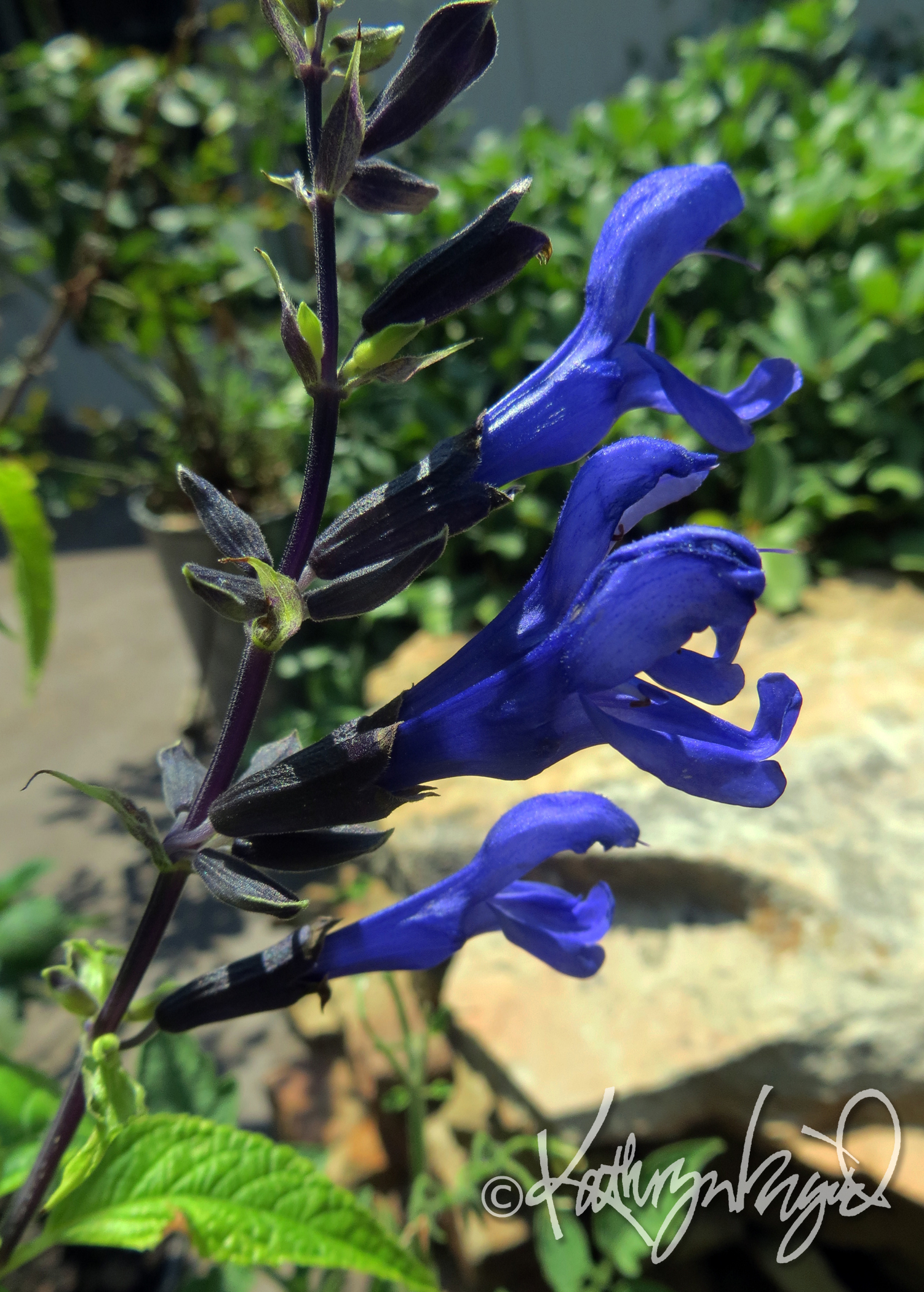
The hummingbirds that hang around my back patio have other ideas. Not least of all, that their pleasure, and their urge to imbibe a grand zing of energy-booster, can come from what is presently their very favorite treat back there: the blue-blooming sage. It’s a hot color too, that it is; the blossoms on the lovely Salvia ‘Black and Blue’ practically scream for attention from amid the bold lime-green foliage of the plant, so nobody with a modicum of visual acuity, hummingbird or human or otherwise, is going to buzz by without giving it a good, longing look of admiration.
With what do we credit the boldest of blues? ‘Cool’, we call them. But just like the wildest, hottest of reds and yellows and oranges, intense blues are attention grabbers. They grip us by the heart just as easily as any other high-hued beauties. But the existence of both is necessary for us to understand the differences between them, and the power each has. Is ‘cool’ the metaphor for melancholy and The Blues a name for sorrow? Perhaps. Are red and those other ‘hot’ colors present in warming flames, in sunlight, in the brilliance of joy? Possibly.
Do all of them enrich our lives? Absolutely. Ask a hummingbird.
There’s always the possibility, when one is Out and About, of meeting a kindred spirit moving through the dimension with something like a parallel purpose. No matter how often this might happen, I don’t remember it very often when I embark. It takes that sudden moment of recognition in the presence of one to reawaken the spark of companionship and adventure that these confluences allow.Today my fellow traveler and I were both in search of tall grass, it seems. I’d gone to the home improvement store to buy cabinet latches, but having discovered recently that it’s the end of the main plant season at many such places here in north Texas, I always make room if I can for a few minutes’ perusal of the mark-down racks of plants; having determined that there’s no room in the budget for major garden renovation, I’m equally determined that I won’t leave the current yard completely untouched. The one-dollar bonanza becomes a greater than ever enticement.Last time I did that sort of shopping I was lucky enough to find a batch of half-dead baby crape myrtle plants marked down to almost nothing and in just a few days of careful and shaded watering and pruning I’ve managed to revive them to a surprising degree. With that encouragement, I dove back into the store’s leafy aisles and found, today, a half-dozen pots of scrawny native grasses. Hurray! Just what I’ve been seeking lately, once again. These, too, were far past their peak but potentially rescuable.
Some fellow travelers don’t even seem to mind hanging around with an old bag on a shopping trip . . .
It was when I got up to the cashier’s counter that I looked down at my shopping cart and saw a big grasshopper gazing back at me. Whether with curiosity or challenge, I wasn’t quite sure: it had obviously grown ‘attached’ to the grasses I was carrying and mightn’t have been too well pleased that I rudely stole them from the shelves like that. But the bug wasn’t so awfully put out, after all, because it clearly enjoyed its new landing spot on my old carrying bag and enough so that it plainly didn’t want to let go when I tried to encourage such a move. It took me some serious effort to pluck the thing away from the bag, and I must admit I was moved to contemplate whether I might not have felt exactly the same had our positions been reversed.Yes, I still flicked the creature away. Our mild-to-nonexistent last winter here has left us with enormous populations of all sorts of insects, not least of all grasshoppers that in parts of Texas are reaching fairly near to Biblical plague proportions. I’ve seen plenty of evidence that while our grasshoppers haven’t yet reached such an outlandish census level, they’re in large enough forces that they’re lunching and munching exuberantly on our property as it is, so I didn’t see a great need to import yet another diner to our all-you-can-eat buffet.Now we shall see whether I can get these past-prime grasses I captured to revive enough to settle in thoroughly to their new home here. I don’t doubt there will be plenty of insects right on hand, not least of all more big, hardy grasshoppers, munching away on them as they grow here too. We’re all really on this big journey together, after all.
Here we are, back in Denton, Texas, county seat and home of the lovely old Denton County Courthouse and bold blue skies and ridiculously high temperatures . . .
Yes, we are (sing with me, now:) Back in the Saddle Again. The world does not stand still while one is away from her ‘normal’ realities, nor does the stack of Stuff to Do cease to pile up in its mountainous heaps of glory. Plants continue to grow (and/or die, given the return of NTX to triple digit temps), mail to back up into its magnificent conglomeration of surreal junk plus business to be addressed plus about two pieces of personal mail per month; dust settles in its accustomed murky corners and masks the presence, temporarily, of new dainty cobwebs, and meetings and get-togethers that have been held in abeyance until the return home are now on the immediate horizon, lest they get missed altogether.
In short, life goes on, and we need to trot at speed to catch up with it again.
So in the great tradition, I spent much of today doing laundry, unpacking everything I didn’t unpack on arrival yesterday, sorting through some of the mail that my husband had kindly presorted to remove the things that were only his to deal with, and beginning to schedule the numerous activities that need to happen in short shrift. There’s the clearing of drawers, cabinets and rooms that I need to do tomorrow and Friday to prepare for our bathroom reno, the lunch meeting Friday with my weekly lunch-partner, the skylight installer who is now set to come on Saturday afternoon, the retired friends who will come for dinner Saturday before they move to Pennsylvania, the Sunday schedule at the church and then coming home to finish whatever prep I need to finish before the reno crew’s arrival, and Monday those dears will show up to wreak short-term havoc on house and home and (ultimately) make our lives better.
I am trying to keep the Big Picture in mind as I plow on into and through all of the things that need to be tackled, but you know me, I am always prone to be sidetracked by every interesting little thing that comes my way, catches the periphery of my view, or beckons me to take off on the next tantalizing tangent. Which, of course, is in turn additionally tiring and requires more frequent and longer naps and whenever possible, and a nice piece of chocolate to nourish me upon awakening. Okay, that last pair of doings will have to wait until I’ve at least crossed a few necessities off the long and ever-growing lists, or I’ll never get finished.
Meanwhile, you never know what will show up directly in my path as I do my duties . . .
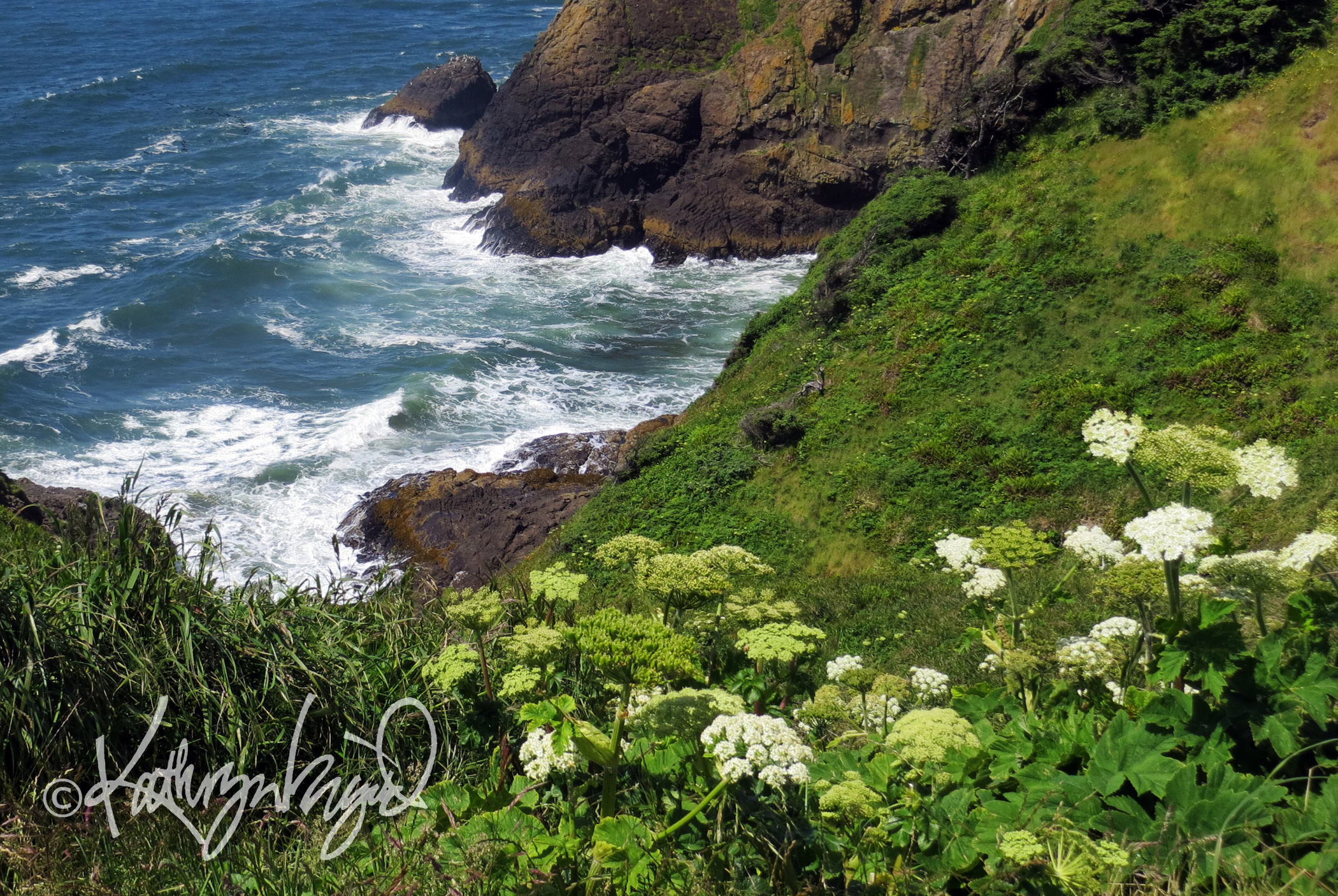
It takes very little time upon returning to the Pacific Northwest for me to be reminded of one of its central characteristics that became so imprinted on my heart and mindset through my many years of dwelling there as to be interchangeable with my entire concept of wholeness and well-being: the color green. The millions of colors that can be called Green, to be more precise. Having been born in the Emerald City of the Evergreen State, I can confirm that they have earned their titles both the hard way (rain–sometimes seemingly endless–rain–oh, and snowpack and glacier runoff in the spring) and entirely honestly. The city and the state are genuinely, deeply, exquisitely green.Other places may be green with envy. Yes, there are certainly other spectacularly green places on earth, some of which I have visited, among them to wit: Ireland, Allgäu, and the jungle that straddles the Panamanian border with Costa Rica (a tropical cloud forest) all rife with verdure and also with all of those forms of watery nourishment that bring about such burgeoning beauties in their respectively green-glorious regions. Each green place is unique in the character and flavor of its glowing, growing vegetation, and each gains its place in my heart as much through its variations of verdancy as by any other means.What it all comes down to is that these things grow on me as much as on the face of the earth, filling my senses and my emotional center in ways that few other things can. This recent return to my mossy, leafy, grassy, graceful green roots merely reminds me of what lies deep within me all of the time. The west coast is so rich in tints and hues and tones and shades and variations of green that I cannot imagine an existence without them and know that green will always be the color against which completeness and contentment and ecstasy are best measured.Mourn the tiresome persistence of the rain at times, if you must, but once you have been drawn into the corridors of the green world you will likely find it irresistible, too. It bursts with the presence of renewal and strength, lures you with the dappled dream-world light that only a leafy and towering tunnel of trees can create, and makes the heart ache with that yearning form of delight best found in things that sing of secrets, promises and hope.
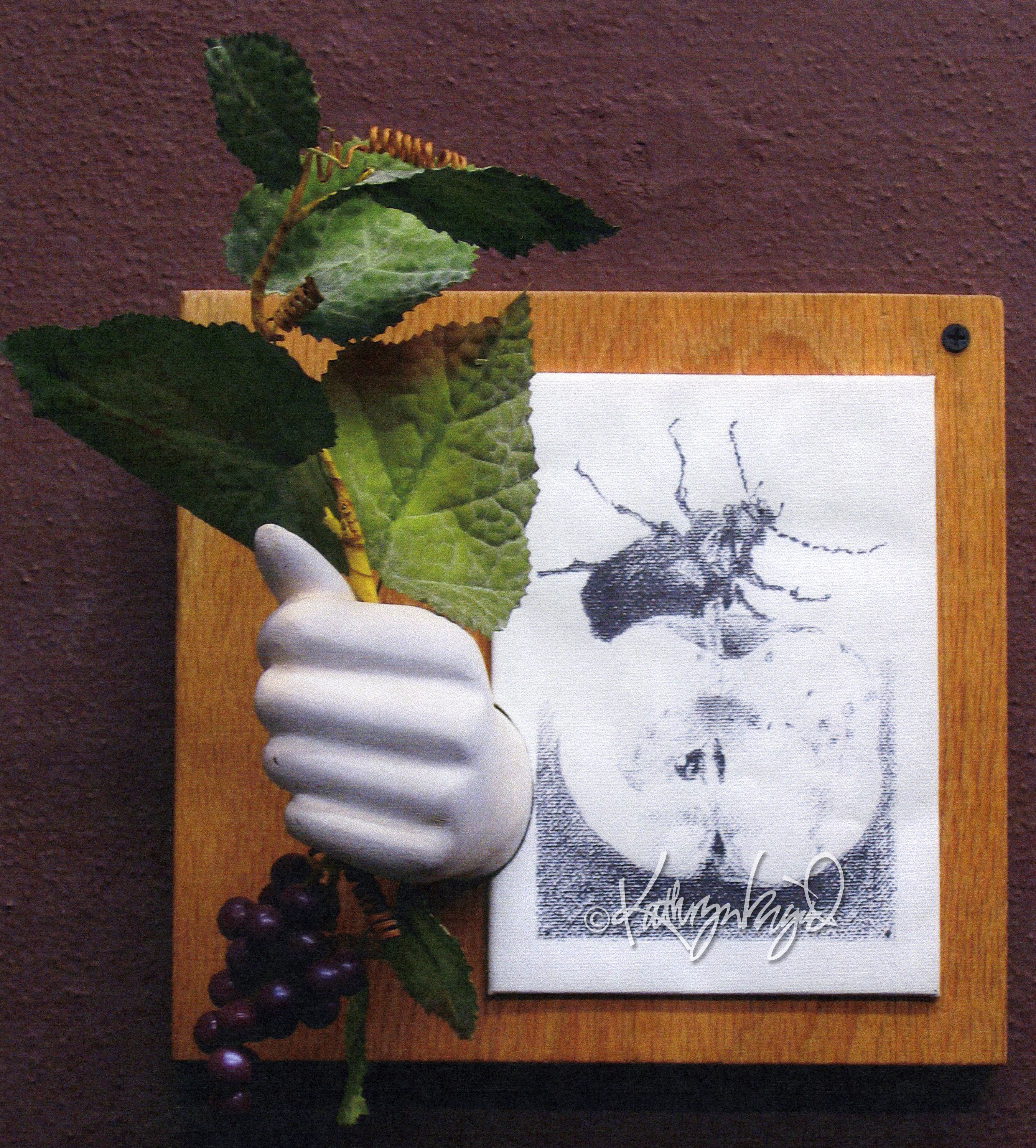
Some while ago I made this little mixed-media wall piece that I think still represents my style of gardening pretty well. I am the virtual avatar of all things bumbling and ignorant and serendipitous and goofy when loosed upon the back forty. Off I go on a ramble, grabbing what is decidedly a weed but managing to yank out a perfectly healthy portion of the adjacent flowering or fruiting plant in the same fistful, backing away sheepishly only to go stepping sideways in a hole, twist over onto my elbows and land face to face with a giant unidentified insect that clearly thinks I have arrived not just to gape at it but to invite it into my open mouth. Gnashing my teeth shut like a portcullis in the event, I bite the inside of my cheek, rocket upward and hop around on my one un-twisted foot, brandishing my shabby bouquet of mismatched greenery at the bug as it whizzes away, dancing around as spasmodically as a broken marionette, and muttering imprecations not appropriate for any sort of garden party under my gasps of breath. Meanwhile, the beetling object has settled quite contentedly on a nearby pristine piece of fruit and begun munching it to smithereens placidly, not needing to bother degrading the bit of fruit I’d already accidentally killed.
And yet despite incidents very like this occurring on a regular basis in my peregrinations through the green world, somehow I usually end up mistress of quite the cozy and inviting little patch of paradise. I’m fairly certain that I have something very near to the best karma in the universe–the finest possible friends and family, fabulous adventures wherever I go, and by golly, I keep finding pretty things in my gardens no matter how boorish and buffoonish I manage to be as a gardener. I shall neither apologize nor excuse such unwarranted, unearned good fortune. There’s nothing I can do that would explain why, when I consistently do exactly what the garden experts say will Never Work, it consistently rewards me with much lovelier results than I could possibly deserve, and frankly, I’m glad to just wallow in my happiness.
So come on over for a nice sweet tea under the shade of one of my many marvelous trees, gazing upon the phantasmagorical collection of improbably, ridiculously happy plants that really shouldn’t be thriving so, and we’ll just pretend I’ve done all of this by virtue of my hard work and genius. No, it’s not a flourishing haven and (in Realtor-Speak) a Park-like Setting quite yet, but in my blustering, blundering innocence I always believe that soon it will be. And I betcha it will, too.
This coming week I get to have consultations for bids on redoing our yard landscape! As I’ve plotted the Q&A lists extensively over time, I have been more and more recollecting my mother’s gardening style and values, and beyond that, returning to her father’s–Gramps’s. Their influences remain deeply embedded in my own ethos of gardening, to be sure.
I won’t be able to strictly replicate either of their styles or efforts, nor should I, since neither the climate and conditions of my current home nor my own personal imprint would make it useful or meaningful to do so. But what was truly valued by both of them in the general sense was upheld in their methods and the lovely and personal and hospitable outcomes of both because it was about combining the sensible and practical with the sort of building and design that would enable them to do more of the tasks of gardening that they each enjoyed, and fewer of those that they didn’t. In short, they were both ‘sustainable’ garden advocates long before there was such a popular trend, and they still both chose plants and arrangements and additions to the yard that suited their sentiments and likes.For Gramps, of course, there was a strong influence of frugality that came from being first an immigrant (and even before that, presumably, from being raised by typically scrupulous Norwegian savers) and then a hard-working General Motors employee (he worked on the crew that produced the first amphibious vehicles). After all of that he was an independent farmer, mainly of sheep, and then also a longtime carpenter and home builder. He was never in any get-rich business, and he appreciated old-fashioned things and earthy things, so it wasn’t a stretch for him to look with his carpenter’s eye and see in his shed the makings of all sorts of fine pasture fencing, outbuildings, picnic tables, benches and more.
Gramps's compost bins, quite beautiful in their own right and certainly very practical, as well as the models for Mom's own bins later . . . and, perhaps, mine yet to come . . .
His idea of plantings began with the practical as well, so if there was any space at all there was always a beautiful kitchen garden with corn, raspberries, potatoes, carrots, tomatoes, rhubarb, and all of that sort of loveliness, and between that and his fishing trips and raising lamb there was a lot of good eating. But beyond raising fine fruit and vegetables on his property, furnished with rich home-cooked compost from his lovely row of hand-built bins, Gramps did have a graceful nature-inspired aesthetic sensibility, capitalizing on the canopy of majestic Douglas-firs and filling in with the native understory treasury of dogwood and trilliums (the source, of course, of Mom’s first ones), azaleas and rhododendrons, ferns and primroses and bleeding hearts and yellow and fuchsia-colored wild violets. For a person who gruffly eschewed frivolity in the main, he had a mighty tender, bleeding heart of his own when it came to the beauty he saw in nature, and he capitalized on that very well in his garden.
His daughter learned from it, and being more overtly sentimental, added yet another layer of appreciation for those marvels and jewels of the natural world that she could nurture to their fullest expression in her own garden and yard, wherever she lived. She adopted her father’s practical and often laborious attentions to getting the most out of the existing landscape and quickly put her own imprint on it and enriched it over time to the degree that her yard was always rightfully an enviable small park for visitors’ delight. By the time I finished college and then spent three years working near to and therefore boarding with my grandparents, thanks to the ridiculously affordable living there–then finished grad school and started working near my parents’ place and moved back to take advantage of the ridiculously affordable living there (anybody sense a theme? I blame the genetic link to Gramps’s frugality)–I had a much greater appreciation myself for both what it took to create and maintain such glorious properties and how much respecting nature’s own local inclinations would be a value-added approach to healthy, sustainable, logical, creative and gorgeous design.I had the bonus, while living at my parents’ again, of not only the privacy and flexibility afforded me by their frequent travel for his work, but the opportunity to practice my own incipient garden design skills both while following Mom around and learning the names and natures of things and while taking things into my own hands whenever they went out of town for any length of time. First of all, having learned a couple of useful things about how to treat some of their plants, I practiced my sculptural pruning skills on them, opening up the lacy umbrella of a laceleaf maple, making faux bonsai out of some of their smaller evergreens, and limbing up tree trunks to clean and open up the space for all of the pretty understory things Mom had brought in as starts from relatives’ gardens, from her trading with friends, and from various nursery expeditions over the years. It was during this time that I especially fell in love with trees. The craggy Garry oaks native to that area are a fairly uncommon yet extraordinarily lovely and impressive variety and I nurtured a seedling or two myself along the way in hopes that sometime long after I’m dead they too will be magnificent and grand old trees sheltering their homes and their denizens like the massive ones already in town.Here in Texas, it’s the two stately post oaks and that lithe red oak in back that endeared our home to us at first notice, along with our two splendid Bradford pear trees. There’s quite the community of sweet oak seedlings sprouting in their shade, and I hope very much that I can manage (with lots of help and advice from the local experts, of course) to relocate a number of them to foster a natural-style mini-grove in a back quadrant of our property over the many years to come. That will help create a fitting foundation for the whole wild, native and well-adapted collection of plants intended to fan out from all of that into the rest of the property. Fun times ahead!
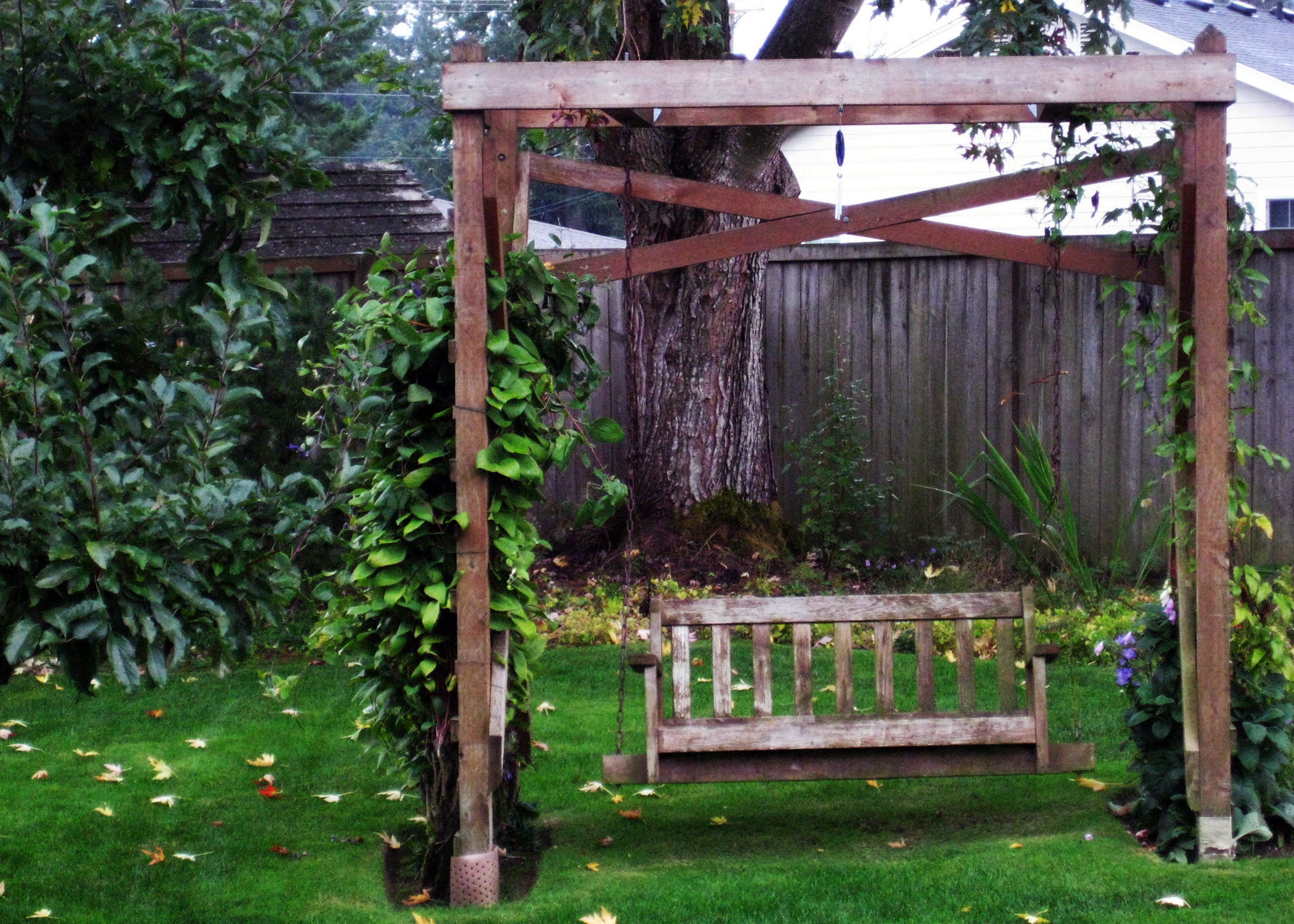
In addition, I love to incorporate some traditionally indoor materials into my gardens so they feel a little more like an extension of the house and invite leisurely visits. I’m thinking of things like the burnished brass chandelier you’ve seen tiny glimpses of in previous garden photos, a little cozy kitchen-style seating on the patio, and a bench or chairs for shaded stopping on the front porch as guests arrive for a gathering. But although I see lots of lovely yard swings around town and love them, I never see people sitting in them–it’s almost always too terribly hot and often very bug-pestered here–so there won’t likely be an investment of money and labor to create a swing like the arbor swing (above) that I designed and my brother-in-law built with my semi-able assistance, to surprise Mom with a little long-fostered-wish fulfillment, while she and Dad were off on one of their longer expeditions.
Still, I do want our yard to invite exploration and to be particularly attractive from all angles inside our air-conditioned house, year round. So many possible ways to accomplish that, that I am excited to see what I can learn and be inspired by, even from a first conversation with each of the landscapers who will visit here this week. I suspect I’ll need to be getting out all of the tools I have, and then some, and it’ll take a bit of a while to get the whole project well and truly underway. I know I’m a little rusty at some of this, having lived with tiny yards for quite some time before buying this house, and will have to relearn much and discover many new things in my new climate. But oh, how invigorating to begin!
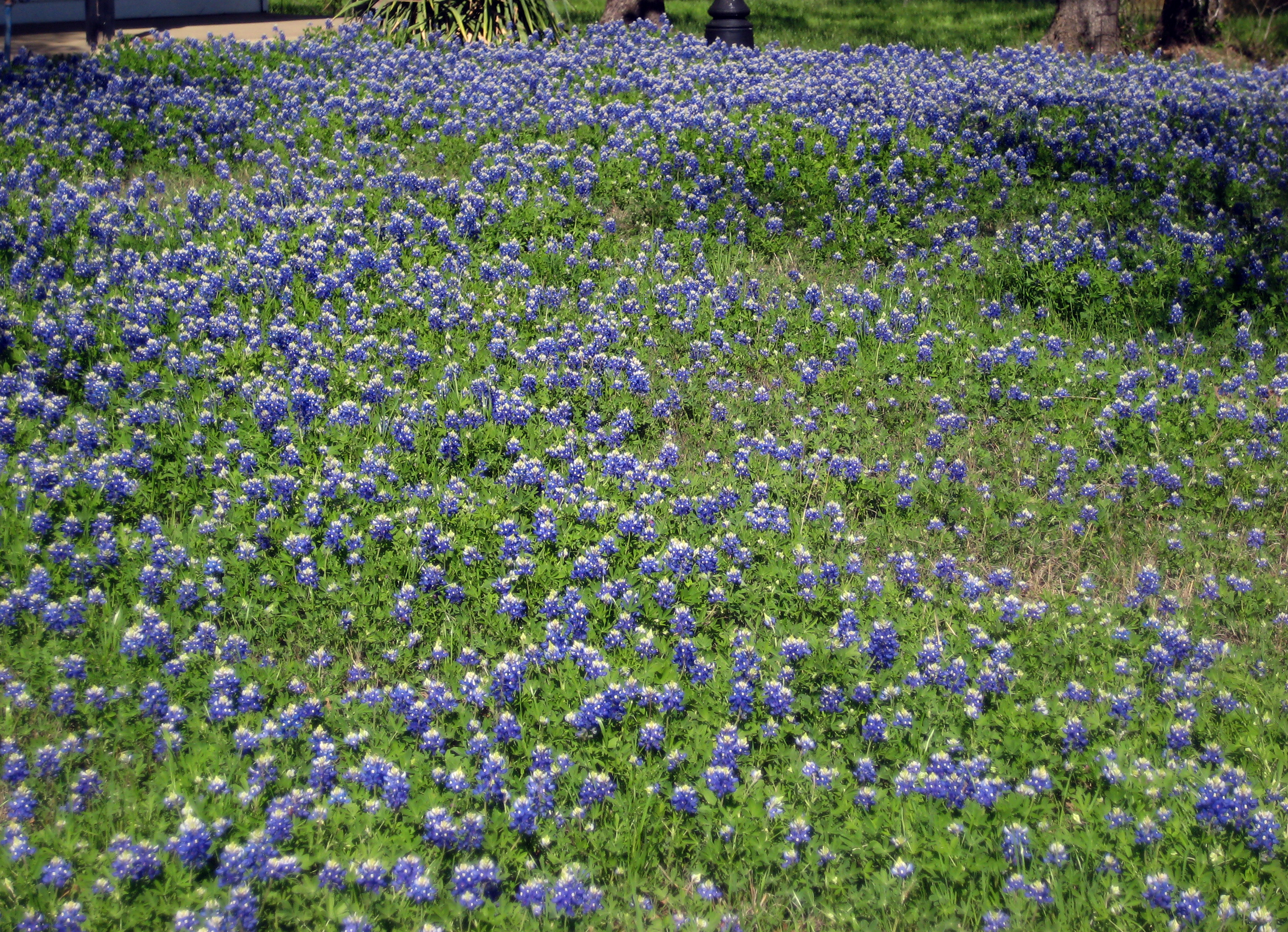
Spring in Texas is a highly variable thing. Like most regions where I’ve lived or visited, north Texas can rightly claim (any day, any part of the year) that if you don’t like the weather, all you have to do is wait five minutes. Ma Nature is that sort of fickle filly. She treats us mighty differently from moment to moment, season to season, and from year to year, too. So while last year, the drought and excessive heat both started early enough that we saw virtually nothing of the vaunted swaths of Lupinus texensis, the state flower, the Texas Bluebonnet, this year’s mildness and largesse of rains has kissed the sullen banks of the highways, the pastures and prairies, and not a few lawns, with a brilliant return, as if our nature-mistress apologized with flowers for running off and abandoning us to sere and lonely brownness all of last season.The extravaganza began with a wild froth of yellow sprayed over nearly everything–it’s a wildflower form of mustard known by many names and perhaps most commonly here as bastard cabbage, that nomenclature derived from the rosette at its base that resembles a false cabbage, but Texans probably embracing the less kindly interpretation of its first name because it has spread so widely as to be an invasive and predatory plant whose tough rosettes block out the bluebonnets‘ rise. While I would hate to see it usurp the blue beauty of the state flower, the wild mustard‘s foam floating over the rolling grasslands is a very pretty herald of the return of spring’s wildflowers.
Following the arrival of the mustard, in quick succession, the verges are airbrushed, in turn, with the purples of several vetch-and-clover-like wildflowers I don’t yet know after moving to this region, then the red hues of Texas Paintbrush (Castilleja indivisa), then the sea of bluebonnets, punctuated by handfuls of the pale pink-and-white tissue of Lady Bird Johnson‘s favorites, the Showy Evening Primroses (Oenothera speciosa).When you’re just moseying along, running errands and minding your own business and an explosion of living color appears before your very eyes, it’s not something you just ignore. If you’re me, you ask your husbandly chauffeur to be so kind as to pull over in the empty lot across the street from the biggest mass nearby so you can hop out and ogle, and take a few pictures. See, there’s this little bit of tension in the romance with wildflowers. As easy on the eye as nearly all of them are, they are, ahem, wild. People don’t really like wild very well, a lot of the time: everybody wishes in his or her secret heart to control the world–at least, to believe they can do so. Wildflowers grow and bloom when and where they are wiling and able to do it, and in many cases they’re not all that cooperative when we try to grow them on purpose. Never mind when the weather patterns of the moment aren’t as particularly conducive to their happiness, health and vigor as they could be. When the blossoming wild does decide to make a grand entrance, however, it can create these impressive and celebratory masses of glory right across the most inhospitable-seeming acres of dirt and weediness. Because, after all, wildflowers are weeds; weeds, wildflowers. As witness the aggressive behavior of the deceptively dainty-looking bastard cabbages, sweeping right over the top of the other spring blooms like a vegetable horde of Huns or Visigoths and laying siege until the smaller, weaker plants succumb and yield their ground.Like humans and animals and plants of all kinds, every living thing in fact that populates the earth, wildflowers are essentially invaders and will happily fill in any available space when they’re good and ready to do so. A plague upon the earth! Thankfully, unlike most species, wildflowers, whether annual or perennial, tend to repay their carbon debt rather quickly, subsiding into glorious compost almost as quickly as they arrived on the loam of last year’s dead. So I say, three cheers for the Texas Bluebonnet, which survives drought and depredation, bad seasons and bad gardeners, and gives us a massive dose of grand color virtually for free, then turns around politely and sacrifices its glories for the good of next year’s, or next decade’s, wild display.
It’s so often the littlest details that have the most unexpectedly impressive impact. We just don’t expect too much from small stuff. But where would we be without those tiny crystals of salt and jots of freshly ground spices? Without the tiny seeds that become minute sprouts and in turn, lush plants that give life to our favorite fruits and vegetables, and that feed the animals that grace our tables sacrificially?
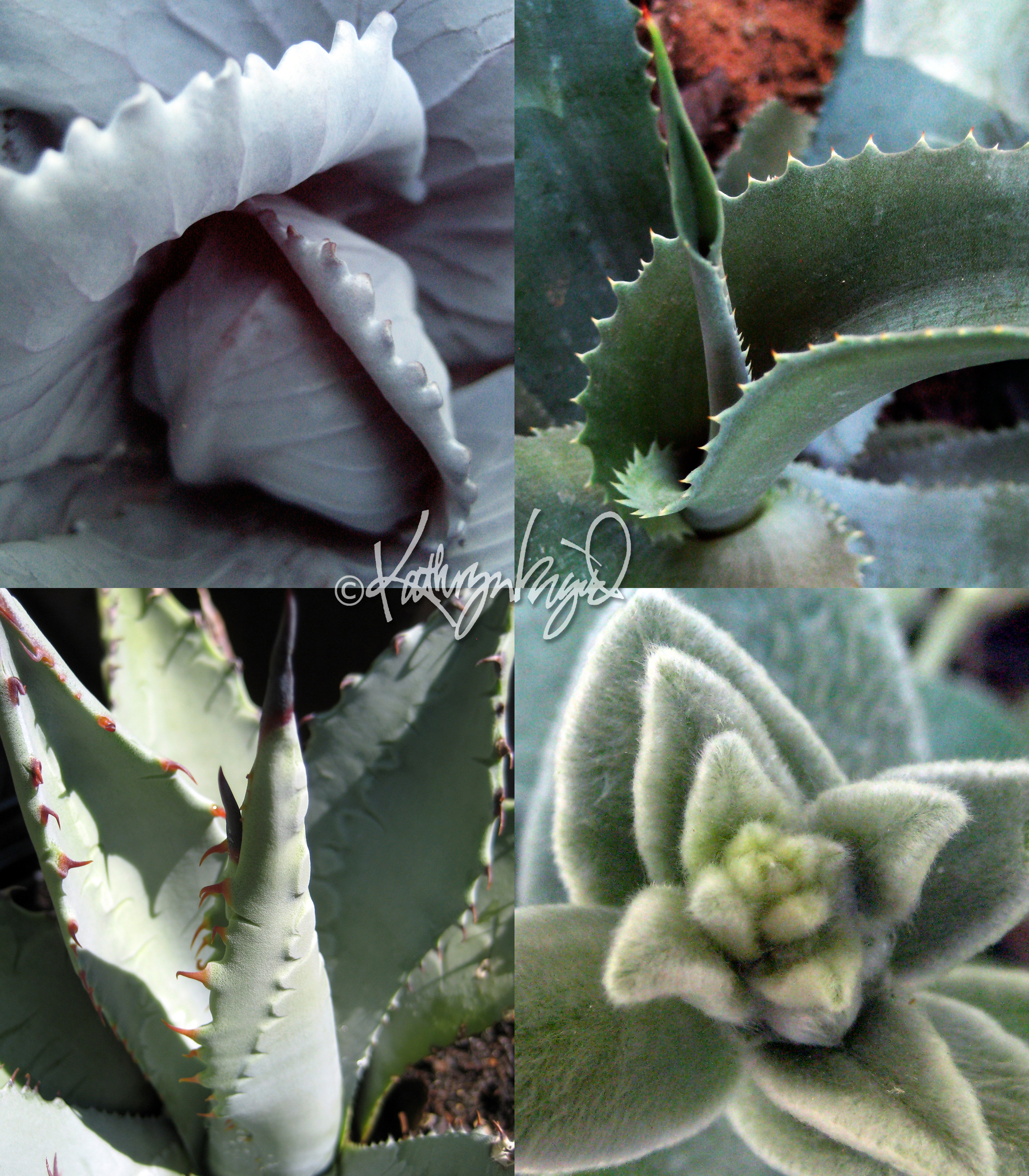
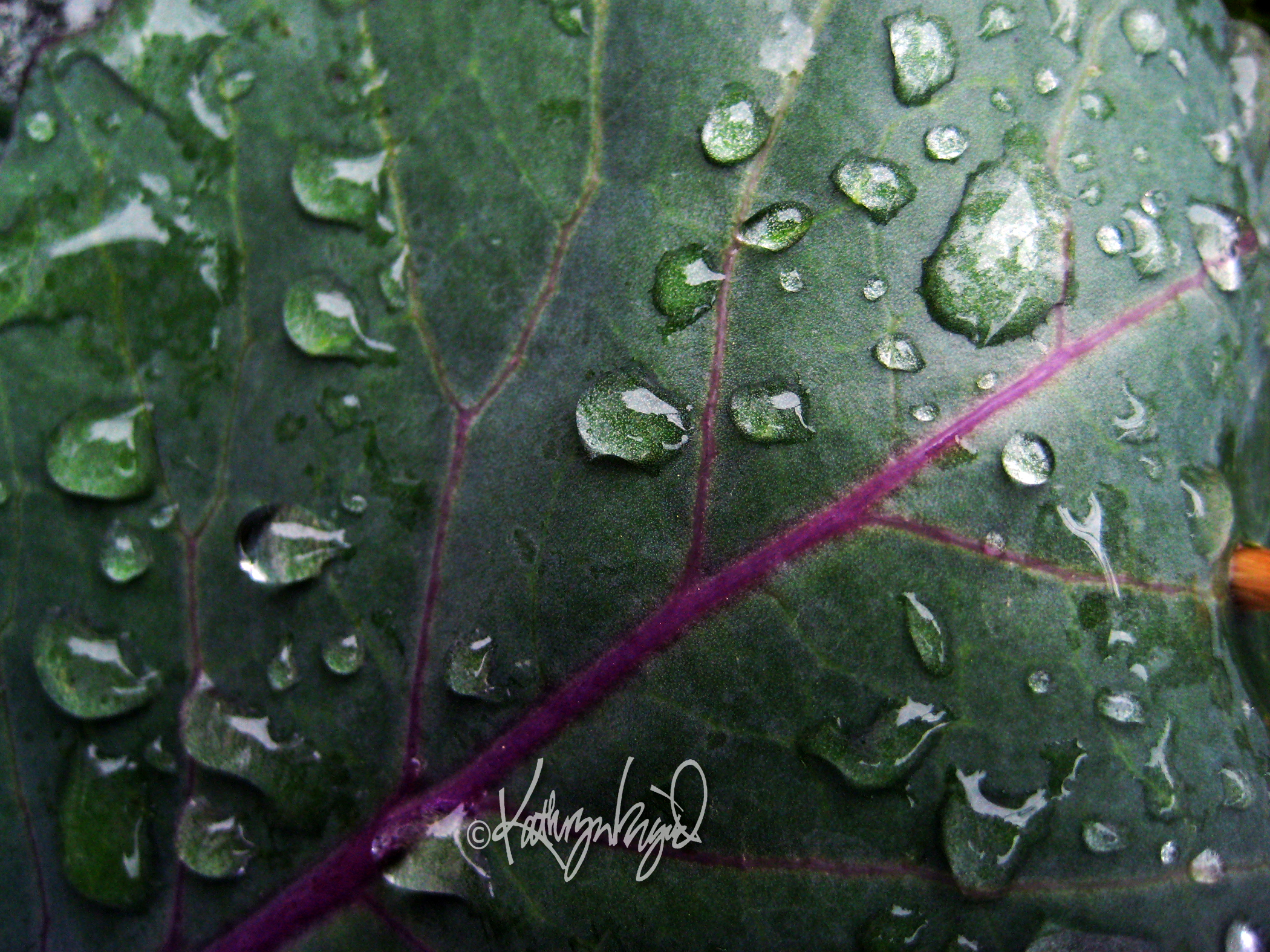
Red cabbage, well watered . . .
My tiny mite of a farm is bursting with promise. It won’t be all that long before I’m harvesting cut-and-come-again salad greens, herbs and baby carrots and beets. My patience is an equally miniscule thing, so I hover over their beds and fuss as though my attention would do anything other than attract more insects to come and flit around my head. Meanwhile, I can always raid the grocer’s stock of edible things to keep the table well decorated, no matter how plain or fancy my edible desires.
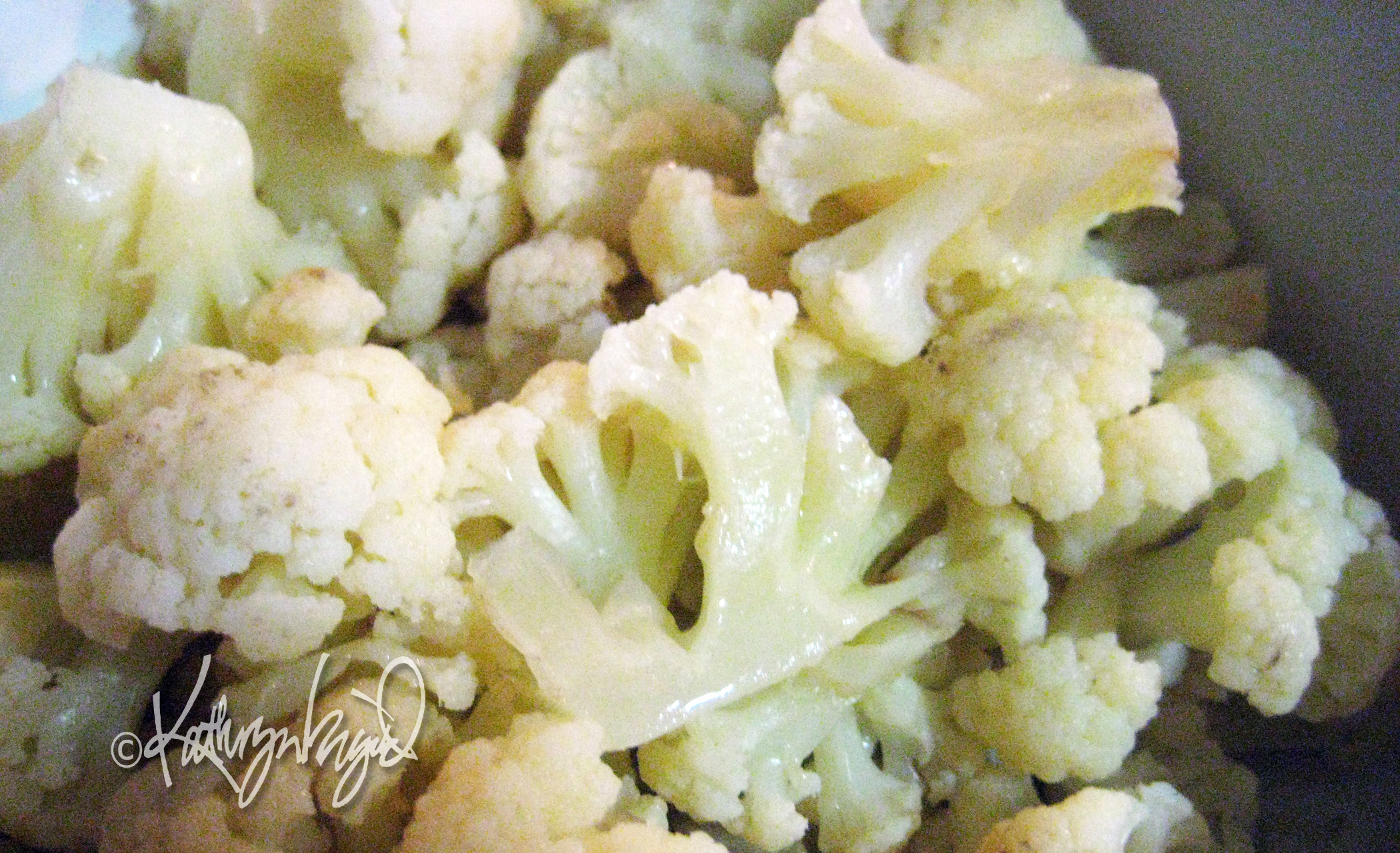
Cauliflower, admittedly no less delicious if I have to snag it at the market than if it came from my own private patch of dirt . . .
Another highly welcome Little Thing is a raindrop. Lord knows we’ve dreamed of them with something verging on the unseemly in our drought of recent past. But like the seasoning of a dish, what is desirable in a little may be wildly inappropriate if given with too much exuberance. Today it’s looking a little iffy in that regard: we’ve been told in the last couple of weeks that thanks to the new year’s rains, most of Texas has already bypassed the borders of drought and headed right into surfeit territory. Outside is a pounding rain, accompanied by beautiful flashes of brilliance slicing up the sky and shouts of thunder pounding down right along with the cataracts of rain. Not thirty minutes away there are reports of a tornado and baseball-sized hail. There are expectations that this storm system will throw off a few more tornadoes and lots more wind and rain and hail before it’s done. Me, I’m keeping a good thought for all of the people, animals, houses, and cars being blasted by the wind and pelted with rocks of ice, and hoping against hope that none of that nonsense wanders over this way too. We have plenty of friends in the area whose roofs have been demolished or cars totaled by that sort of thing before.
My little item of great happiness at the moment is that not only am I cozily dry under a roof out of the lashings of rain, but our car is in the safest place it could possibly be to hide from the storm: on a mechanic’s lift at the place where we bought it. It was merely due for its periodic checkup (taking inspiration, perhaps, from my own recent annual visits to the doctor and radiologist and such), but couldn’t have been timed better in terms of dodging the fiercest part of the storm. I hope. Not to mention that the mechanic discovered that the two tires not replaced following our recent road-debris encounter are worn down to replacement status as well. If I’m going to drive around in this kind of flash-flood-inducing waterfall, I may as well have good tires. After all, it’s only money. Sigh.
Which brings me back ‘round to my original point (and I did have one). Life is just too short to be spent without savoring all of the minor triumphs, moments of good luck and serendipity, and all of the tiny treats that we can find or are handed to us. And by that, I mean of course that I will continue to eat snacks and desserts with a certain amount of regularity if not abandon, because they are seriously happiness-inducing items in my life. Who am I to refuse to attend when the last fridge stash of guacamole and the tuna salad from yesterday’s sandwich get all friendly and decide to get married and become a cracker spread? I would have missed a great party!
Cheese and choccies--where could you go wrong?
On the 17th of March we had a friend visit for dinner. Since she’s of partially Irish descent, I thought it incumbent to include an item or two with at least a hint of Irish pedigree in the meal, though I didn’t quite go all-in, so I incorporated a few tasty tributes to the Emerald Isle. It was ‘specially easy to do at the end of the meal. I’d happened on an inspiring sounding cheese, so dessert was a little plate of cheese and chocolate. I served my little homemade chocolate-nut truffles with the loveliest Guinness-infused cheddar cheese that, at room temperature, tasted buttery, the tiniest bit sharp, and had that mellow veining of stout bringing another nice layer of complementary flavor to the collation. Needless to say, this combination goes down quite smoothly with a tot of good Irish whiskey (well, what doesn’t?) or of course would be appropriately paired with a crisp Guinness, if it’s on hand. We had it with a bit of bubbly because I’m certain that St. Patrick would approve of our saying a fond thank you to and well-wishing a certain great—-grandniece of his who has been a fine colleague and a good friend and is soon off on a new adventure in an altogether more Irish-rooted American city.
I leave you without a real new recipe today, I guess, but sometimes the moment presents itself when something that requires no new preparations at all but is just as delicious as can be is just the bite or sip to be enjoyed on the spot. There are times when the company is so grand, the bottle cracked open is so perfectly aged, and the slant of the sun so perfectly angled in the proper window that whatever we take to eat is a tiny taste of heaven. It’s like being visited by a butterfly that comes and takes its rest right at my feet and sits patiently to have its portrait taken before fluttering away, for no apparent reason other than to bring its own miniature glint of perfect beauty to the day.
. . . and just so you know, no tornadoes or monstrous hailstorms have ventured into our town today. Another nice little plus for the occasion!
Since several people have asked, I’m posting a list today. No, it’s not one of those house-fixing lists I mentioned full of projects. But related, in a way, as it constitutes my contract of To-Do fun with my yard, garden, flower beds, and planter pots. It’s my seed and plant list–what I’ve put in thus far, and some of what I intend to add, the latter being primarily a larger batch of the listed Wildflower Sowing Mix. It’s my own blend, by the way, concocted from reading up on and observing what is native and/or simply adapts well in our part of the landscape. Starred (*) items are known natives or very long established growers here in north Texas, and items marked with two plus signs (++) are ones I’m emphasizing in placement or quantity because they’re particular favorites of mine.
For the Front Yard Flower Beds:
Blue-Eyed Grass (Sisirynchium)* ++ I’ve long been attracted to the tiny-orchid flowers of this miniature lovely, and was thrilled to discover the plant is native here. A surprise bonus when moving to a place that has a generally less easy climate than my place of origin in the Pacific Northwest.
Chives, Garlic (Allium tuberosum)
Coneflower (Echinacea purpurea)* ++
Garlic (Allium sativum) I don’t cook with a whole lot of garlic since marrying a Supertaster, but since they’re beautiful plants, I figure I’ll get what little garlic I need for cooking and have the garden attraction besides.
Lavender (Lavendula angustifolia)
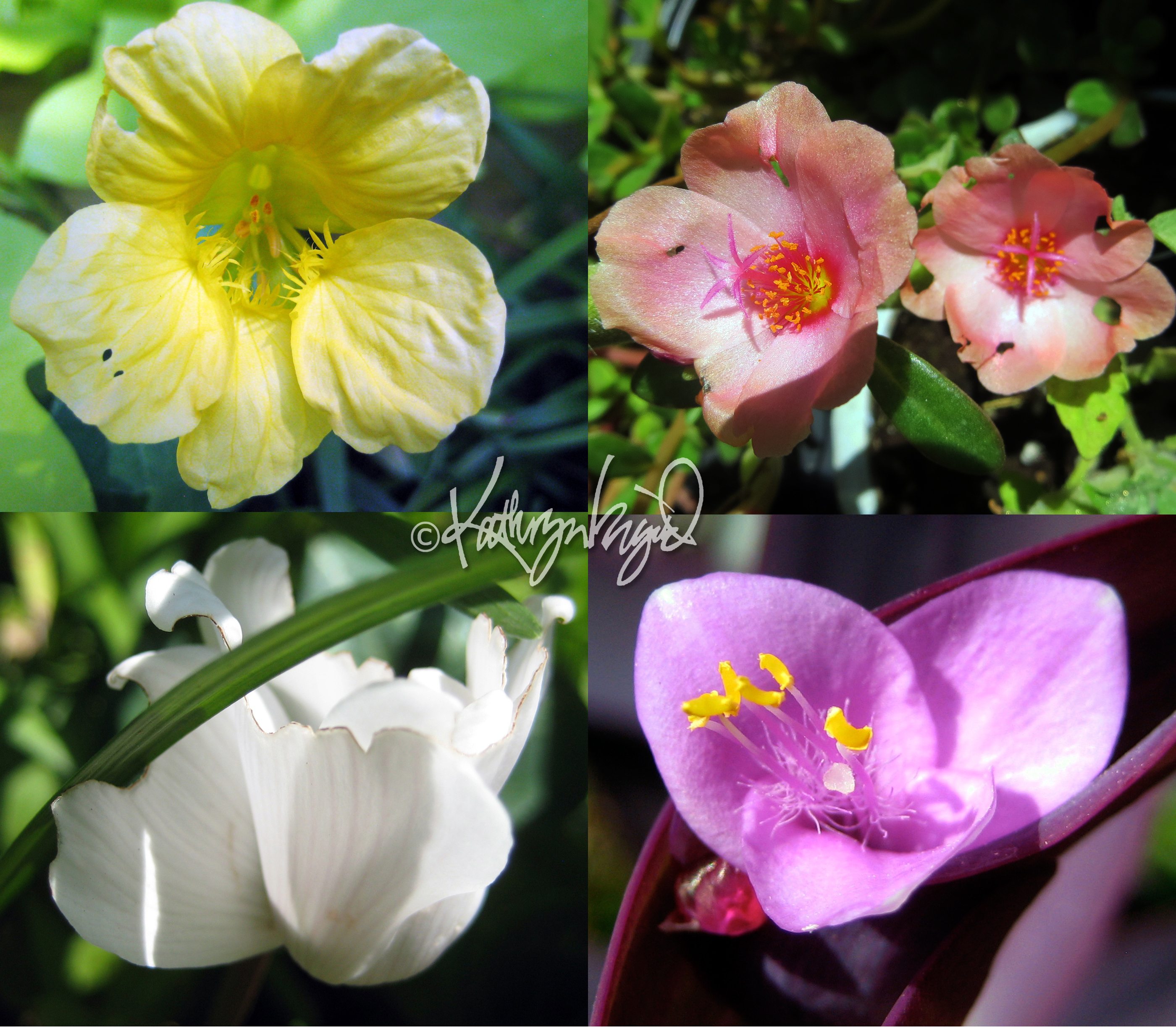
Nasturtium(Tropaeolum ‘Milkmaid’)
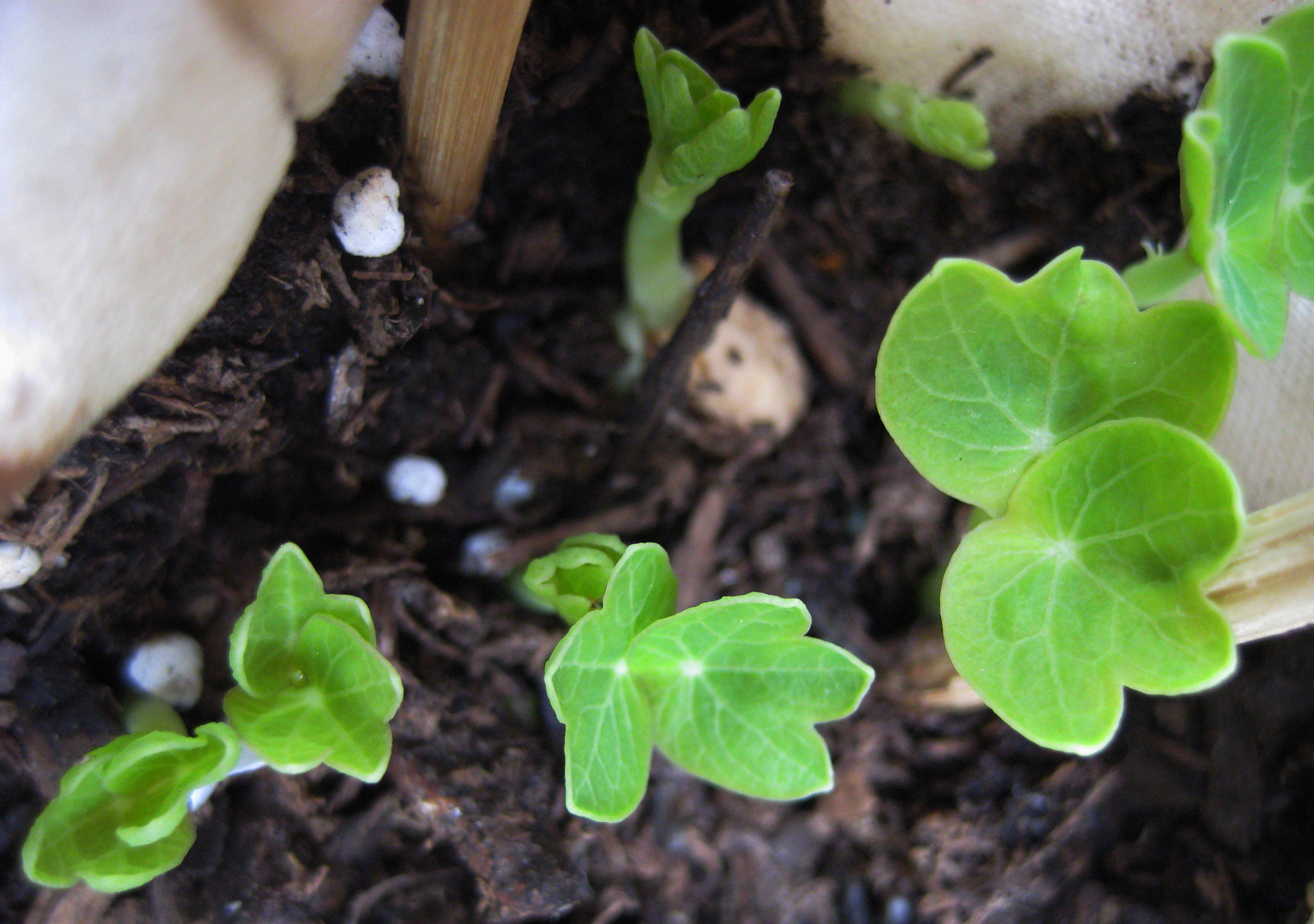
I have to admit I enjoy plants whose babies I can recognize early and so chart their progress a little more accurately. Nasturtiums are a very easy one to spot . . .
Spreading Petunia (Petunia x hybrida ‘Purple Wave’)
Texas Bluebonnet (Lupinus texensis)* ++ Seriously, how could I not put in any of this classic when I’ve moved to Texas? Not to mention that I’m a sucker for blue flowers. And things that will self-perpetuate once established.
Herbs (Planted front, back, indoors and out)
Basil, Sweet (Ocimum basilicum)
Borage (Borago Officinalis) ++ A rather magical herb, in my estimation, with its refreshingly cucumber-like flavor and exquisite bright blue flowers.
Chives, Onion (Allium schoenoprasum)
Marigold (Tagetes)
Parsley (Petroselinum hortense)
Curled
Italian Flat-Leaf @ John: I’ll try to have it fully in leaf when you show up here!
Rosemary (Rosmarinus officinalis) ++ I have one healthy plant going, and since it seems to thrive in this yard and I love the plant and its culinary qualities, I have a feeling it will get siblings eventually.
Vegetables (Mostly integrated into the flower beds, for fun)
Beetroot (Beta vulgaris ‘Tall Top Early Wonder’)
Kale (Brassica oleracea ‘Dwarf Blue Curled Vates’)
Bright blue like that of this Salvia gives such pizzazz to the garden . . .
Blueberry(Vaccinium corymbosum ‘Biloxi’) ++ You may recall that I really dislike eating blueberries–but I know the birds and creatures will like them if I leave them, and I think the plants are beautiful!
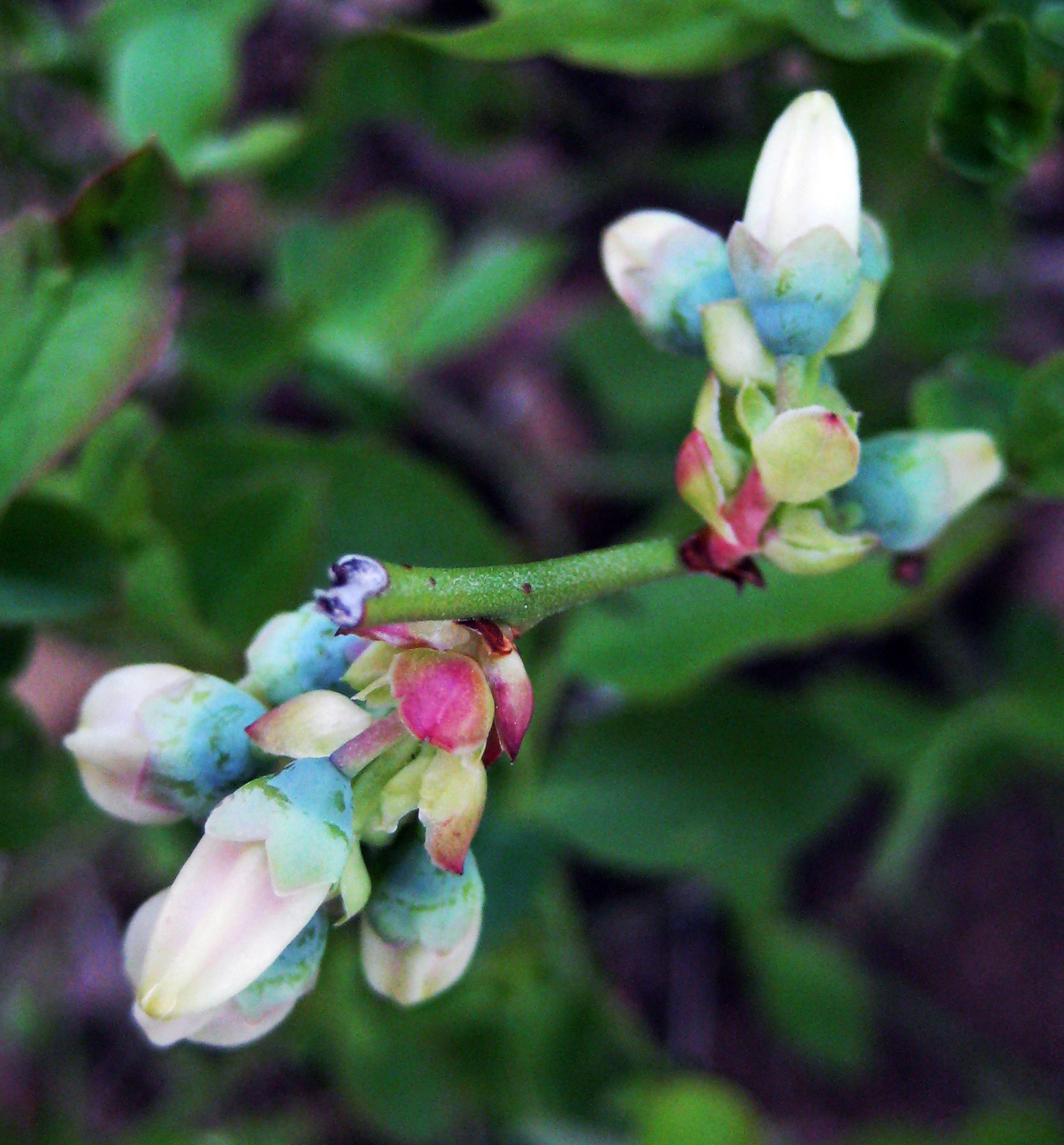
Irresistible little blooms on the blueberry . . .
Clematis(Clematis, var.) I’ve put in several varieties, and the first leaves are beginning to appear, so I think I had better give those little green pretties something to climb up soon or risk their meandering in the underbrush.
Peering out from under oak leaf-mold and purple tradescantia that's already shown its first bloom of the season, the clematis leaves are beginning to crawl forward . . .
Columbine (Aquilegia ‘Origami Mix’)
Corkscrew Rush (Juncus effusus ‘Spiralis’)
Eastern Redbud(Cercis canadensis) The first of our little city give-away adoptees appears to have survived the winter, but won’t yet show its bud growth.
Fig Tree (Ficus carica ‘Brown Turkey’) I found a sturdy fig tree rooted in a three-gallon pot for four dollars. How could I refuse? Even if it turns out to be only semi-productive (though I’m told they grow well enough here), the leaf will be a nice variant in the yard.
Forsythia (Forsythia x intermedia) A good shot of early color is always welcome.
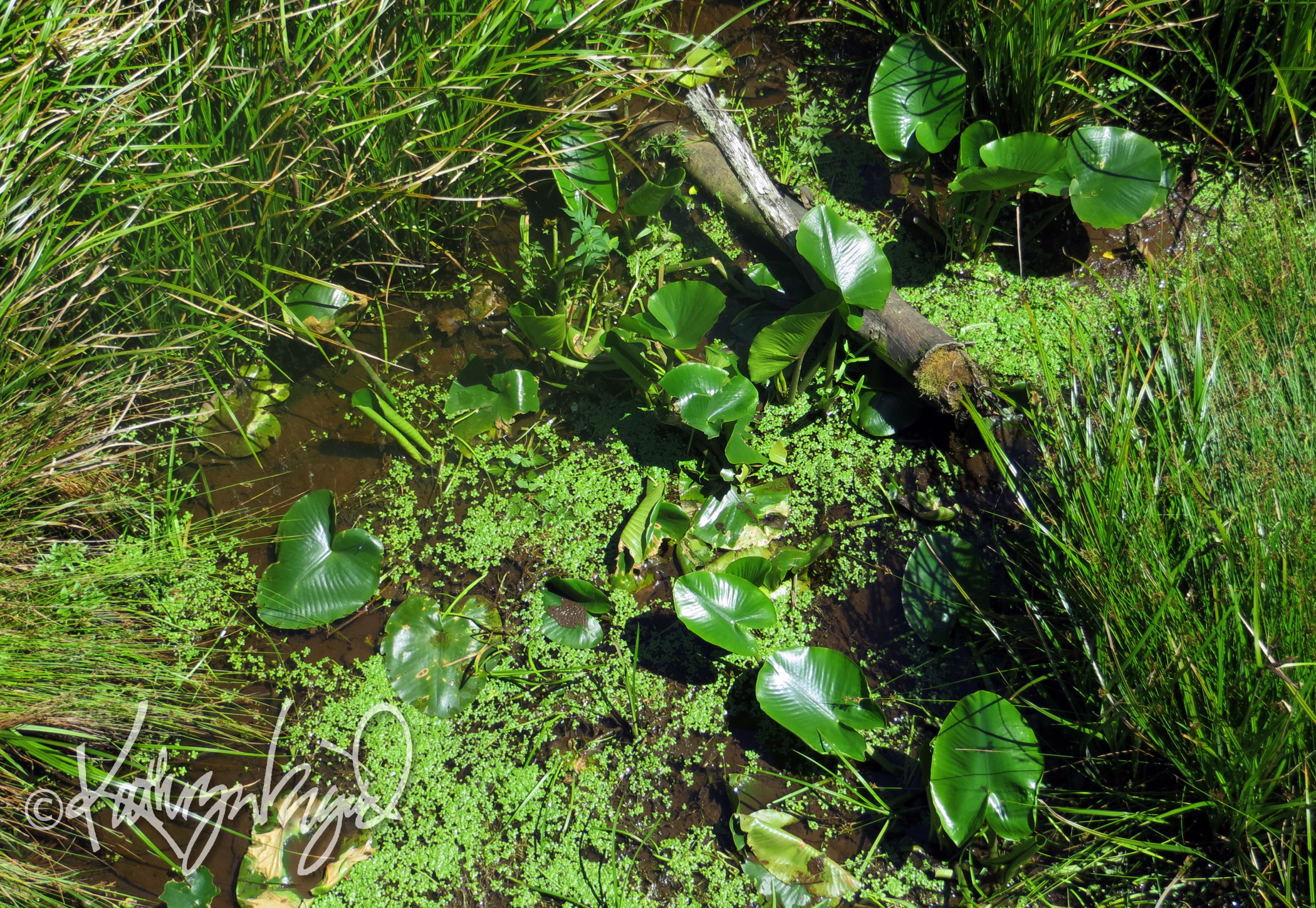
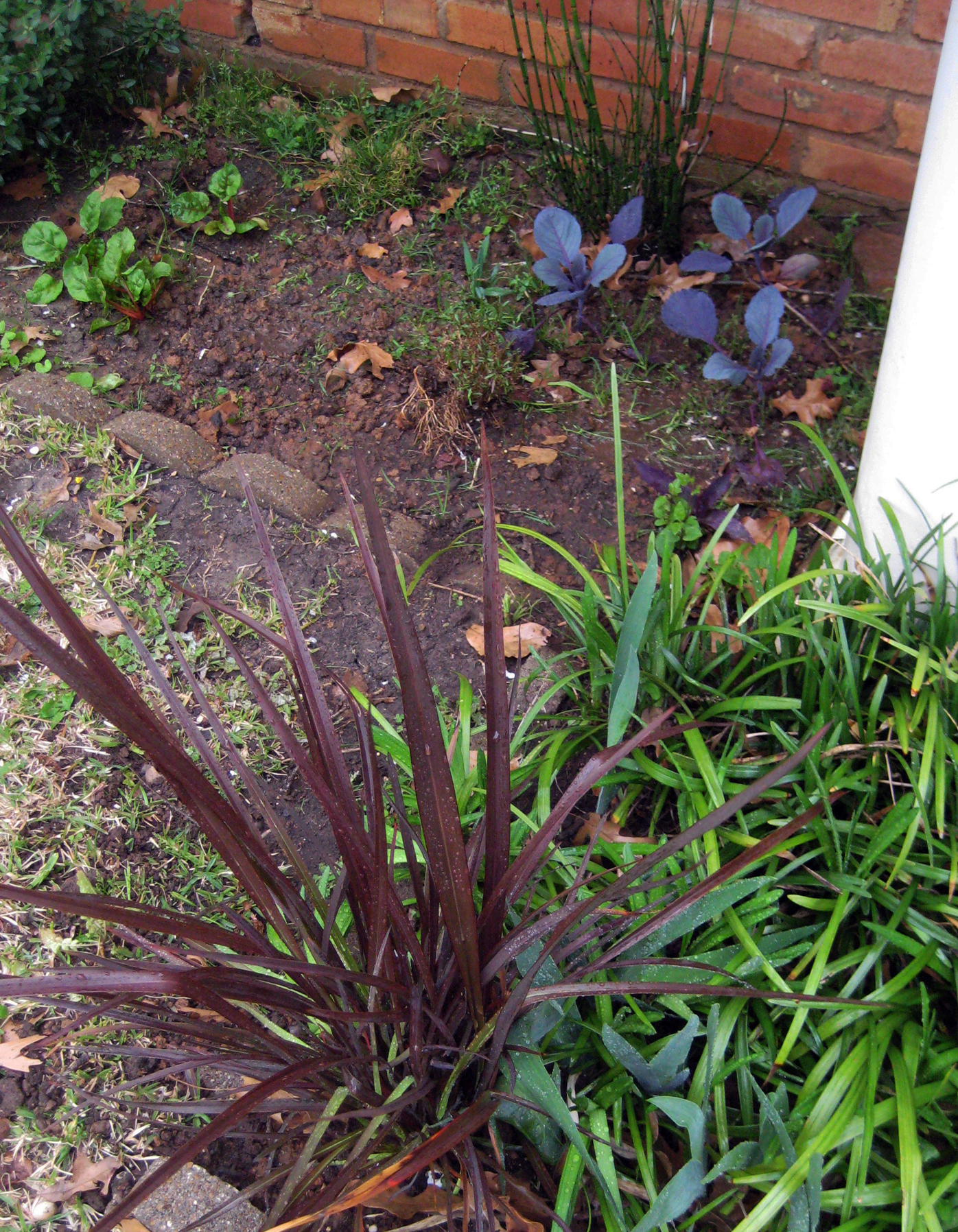
Horsetail Reed(Equisetum hyemale) Strangely for a place that verges on drought, the yard here has one or two water-collecting spots! So wet-footed plants should do fine.
I find it strange that there is a place--ANYWHERE in this north Texas garden--that can stay wet for so long, but it's a handy spot to put water-tolerant plants like the Corkscrew and Horsetail reeds, after all . . .
Lamb’s Ear (Stachys byzantina)
Mexican Plum(Prunus mexicana)
The Mexican Plum tree just planted this last fall has wasted no time in putting out dainty little white flowers . . .
New Zealand Flax (Phormium tenax) Going for a bit of large-scale drama, here. (You can see the NZ flax’s big burgundy swords in front of the wet growing bed above.)
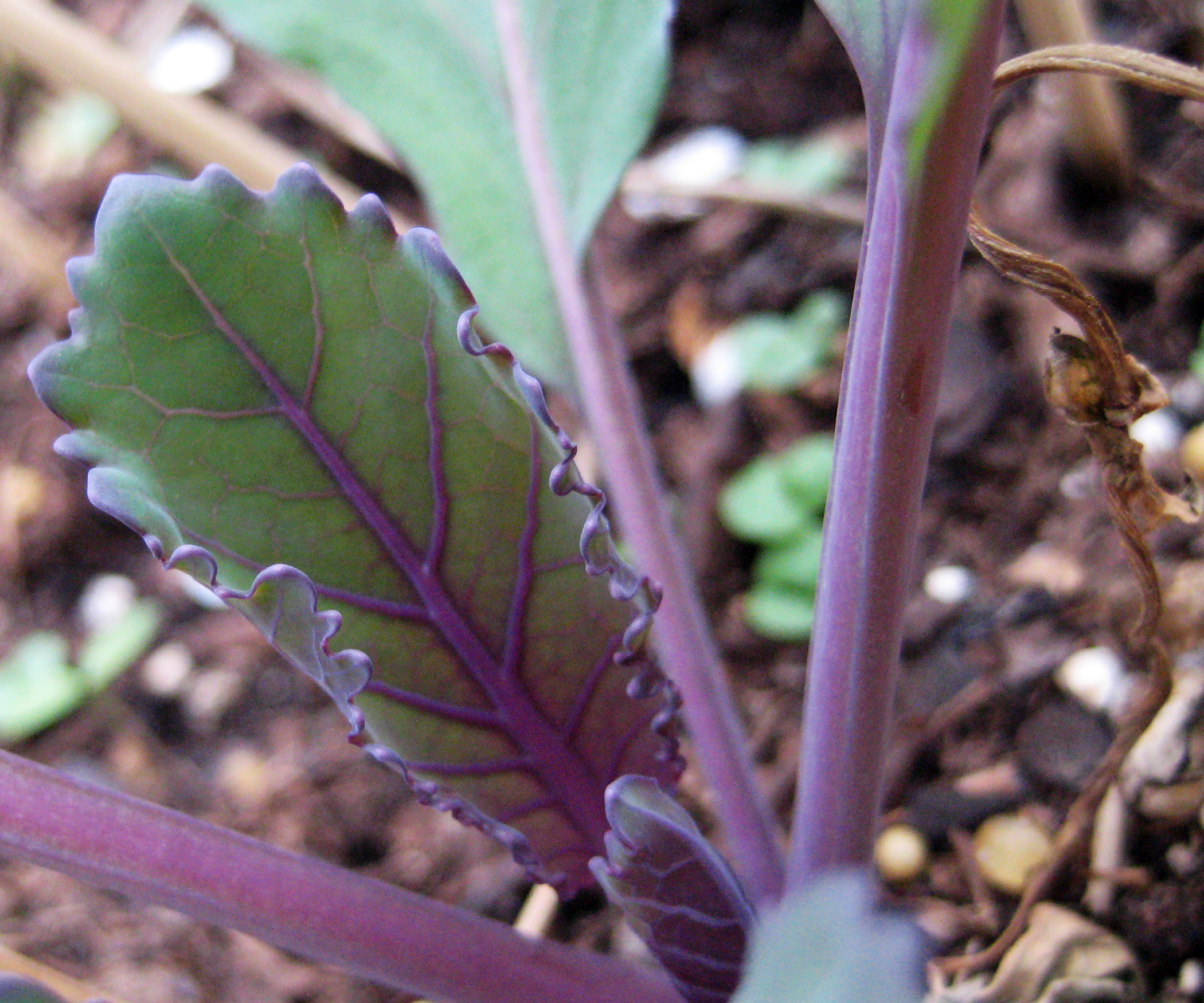
Red Cabbage(Brassica oleracea var. capitata f. rubra)
When it's on sale, why not use the bedding plant! And I got a half-flat of red cabbage babies, so they went out front for their ornament as well as in hopes of good eating . . .
Soapberry (Sapindus saponaria)
Even the six inch tall Soapberry tree seedling from last year is swelling into bud . . .
Tulips (Tulipa spp.) Of a white unnamed variety; oh, yes, I did succumb. I put just a dozen in my front porch planters. Half of them were soldas orange, but buying a generic handful of bulbs, one gets what one gets, no? And white tulips are beautiful too, so I shan’t complain.
A splash of orange might have been showier, but there's no classic like an elegant white flower . . .






















 Art-Colored Glasses