If You don’t Like the Weather, Wait a Minute

photoHave you ever seen a pigeon flying backward? I did today. This phenomenal occurrence was not because I spotted a mutant genius helicopter pigeon; that really might be a matter for tales of magic and fantasy, given the modern pigeon’s brain.

It was that windy. The pigeon was making a valiant effort to take off from the edge of a roof and, blown instead straight backward, finally saw the same edge directly under him and came right back in for a landing. What’re you gonna do?

The wind is giving us a good whack here in north Texas today. Two days ago, it was over 80°F/27°C, brilliantly sunny, and calm as a sleeping cat. Tonight, we’re told, we can expect freezing temperatures and should cover all of our tender plants in the garden. A couple of days before our balmy pseudo-summer day, we had a storm pass through. Parts of our town had a little thunder and lightning and a fair amount of rain with a little bit of hail mixed in it, but nothing extravagant by local standards. Our house was in that lucky sector, and so was our car while we drove home in The Weather. Just across town, others were not so fortunate: some had hail the size of golf balls or larger, and tornado-like gusts, and among the downed trees and limbs there were homes where the roofs were destroyed or caved in, cars were damaged or totaled by metal-dimpling all over and glass smashed through, and interiors soaked with the rain and debris thrown in through the broken windows.

We’re torn, in more ways than strictly the physical, around here.

We crave every drop of H2O that we can squeeze out of the sky; even after a relatively mild number of months, our lake levels continue to be well below their norms, some still fully in drought status. It’s not considered a plus if you can drive directly to where your boat is moored, in case anyone wondered. All the same, if the moisture is dumped all at once as though shot through giant firehoses, it doesn’t always stay where it’s needed but instead causes flash floods, undermines foundations, uproots vegetation and breaks down buildings and roads left and right.

Doesn’t matter what you call it—climate change, global warming, a thirty-year cycle, or evil pixies run amok—the weather all around this wonderful, messy planet is more extreme than it had been for much of recent history. The extremes are more extreme, the heat and cold, the wind and dead stillness, the flooding and droughts. Only the inconsistency of the weather seems to be more, well, consistent.

All somewhat amusing, if the worst one experiences is the occasional sighting of a pigeon flying backward. But of course, that’s the least of it. Ask our neighbors who sustained major damage to house, car and property all at once last week. Ask the people—the peoples—displaced by tornado and typhoon, those who have lost home and family to the floods and famines that massacre everyone in their paths throughout whole regions.

I don’t much care about whether we’re partly to blame for the seeming extra intensity of nature’s capriciousness and fury at this point. It’s not all that different, in my mind, from all of the displacements, distortions and destruction in history that we can absolutely attribute to human invasion, conquest, greed, prejudice, ignorance and evil. As horrible as that stuff all, genuinely, is, it is: it exists, already. What matters is what we do now in order not to perpetuate the ills, and better yet, to mitigate them as best we can. We can’t undo history, and we can’t control nature. But we can and should change our attitudes, practices and beliefs (and the governing processes needed to support those societal improvements appropriately) in whatever ways will support a far better world, one where wars, rape, murder, slavery, thievery, violence and all sorts of other horrible human actions are not only universally condemned but undesirable to enact.

And, since we expect that we, and those generations who succeed us, will continue to need to live on this specific planet and its resources, hadn’t we better think up some less selfish and more practical ways of easing the effects of nature just as much as our effects on it? We won’t likely figure out how to stop the wind from blowing with great intensity, floods from filling valleys, hail from pelting like rocks out of the sky, or lightning from searing and exploding whatever it can lay its fiery fingertip on, but if we put our minds to it, maybe we can think up some reasonable ways to protect more people, and care for those who are affected, better.

I didn’t really start out with the intent of rambling on about this stuff, but it’s on my mind. Probably not so different from the pigeon’s reaction when he discovered his original flight plan wasn’t viable. Can I fly backward? I don’t know. But I’ll bet it’s worth trying, if I find myself needing to make an emergency landing. No matter how the wind is blowing.photo

One Stormy Day…

digital illustration from a photoApologia

Bleak indigo and velvet was the sky

That hung above that cold portentous noon

More chilling than the goddess of the moon

If she had bowed her sorrows down to die—

My own, I could not grief so sharp withhold

But wept as though the torrent ought to drown

Me in the rivers of her velvet gown

And leave me breathless on the stones and cold—photoBut blue is not my cloak, or yet my skin

As much as dark the tenor of the day

And when the storm had lastly passed away

I felt the night might swallow up my sin—

Now sorrow’s misery that spoke you grief

Forgiven falls in sunset’s sweet relief.photo

The Garden Rejoices

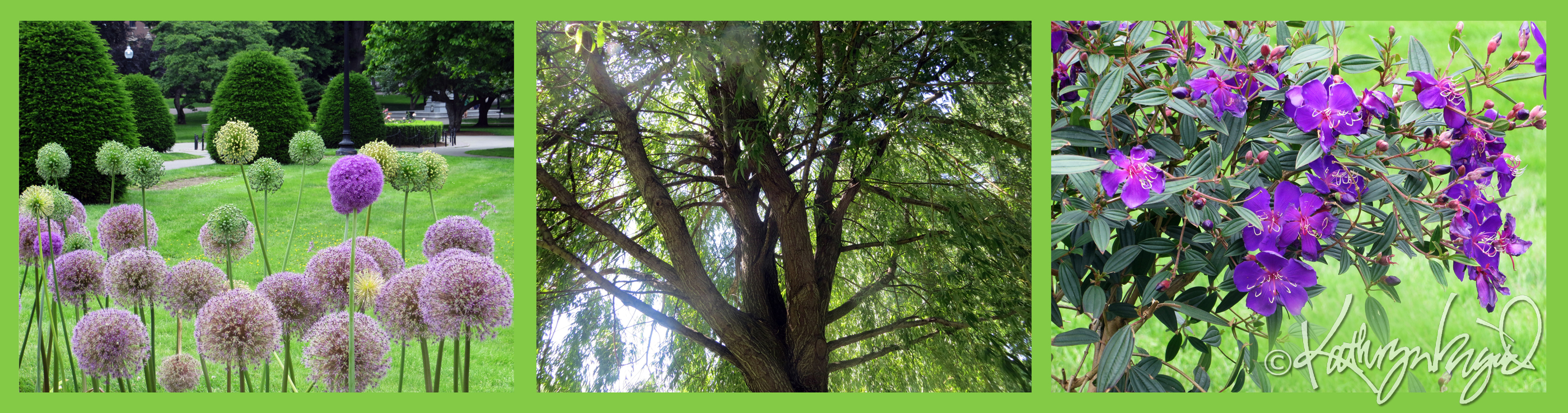
photo montageRespite is the thing we all crave at times. Too much of a good thing is still, when all’s said and done, too much. Having spent the majority of my life in climes of plentiful cloud and rain, I was quite pleased to experience the practically perpetual sunshine of north Texas, but learned that with it can come garden-blighting and spirit-dampening heat and even drought, so when it rains, as much as it might make a few things more inconvenient or messy, it can also make my heart glad.

And the way that the leaves plump up, flowers loosen and uncurl their fists and stalks and stems stretch instantly taller toward the sky, it’s also easy to see that the garden rejoices. It’s as though all of nature around me is sighing and relaxing every tensed-up, coiled tight thing with grateful relief.

A moment of quiet in the heart of a rushed day or a busy week is rain for my spirits as well. Whatever the cause of the busyness, however pleasurable the things that do clamor for my attentions, I find that a brief pause to lower the speed of thought, to quiet the relentless insistence of life’s siren calls and cool the heat of its demands–this one small thing–has wonderful power to relieve and renew me, too.

This is how I remember the kindness of the rain in the midst of unyielding heat, the shelter of low clouds that break the relentless glaring sun. And I look for my tiny bits of solace in a meditative mode, feeding my roots and encouraging me to let go, expand, release the tensions I am in and carry on, better able again to bloom and grow.

Clouding My Thoughts

As a cloud-gazing aficionado, I know I’m in good company. It’s hard not to be intrigued by the astounding amount of information, meteorological and otherwise, that one can read and guess and even predict from close observation of clouds; it’s easy to become rather obsessed with watching them and seeing what’s found in them beyond the mere factual.

And you know I am drawn to all things that invite invention.photoOur summer peregrinations offered vast quantities of opportunity in this lovely form. As passenger on 99% of our 6000 mile road trip (just as I am in our everyday life) I was free to stare into the sky whenever I wasn’t on intensive watch duty for a specific exit or landmark, and the sky when seen from the vast American plains is a grand theatre indeed. While ‘Big Sky Country‘ is one state’s nickname, and Montana is indeed a region of wide open views of the sky, even from the rugged-not-flat high plains, the US has millions of acres of land that lies relatively flat under the heavens and allows views across the miles that rival the telescopic.

I would be hard pressed to agree with those who find extensive mid-country travels boring from a viewing standpoint. The landscape may, in places, be no more varied than one kind of wild grass giving way gradually to another over wide sweeps of seldom changing topography, one tumble-down farm very much like the next, but besides that even these have their subtle differences, they are all capped by this apparently limitless height of sky. Mostly, I find this mesmerizing, even meditative. When the weather is cloudless, the intensity of the hot blue depths above, looking as though they never did and never could have anything in them change, have a kind of cobalt stolidity to them that can be oppressive but, when broken by the least irruption–a crop dusting plane coughing out its own skinny clouds, a crow chasing a hawk straight up out of a stand of mowed weeds–suddenly becomes backdrop for high drama. Indeed, as one who grew up before the special effects masters of film took to using the more popularly familiar green screen to allow the insertion of infinite inventions in CGI, I was accustomed to chroma key blue screens, so now the sky has become mine.

Still, as much as I love the clear beauty of a bold blue sky and the endless space for spectacle that it represents, when clouds come into the picture the possibilities are multiplied exponentially.

Not only do they serve as messengers of what sort of travel conditions lie ahead when I’m on the road–especially when observed from so many miles away as is possible in an open landscape–they tell stories and evoke romances tirelessly, keeping my mind a-spin with the permutations and portents I read therein. Much as I find driving in the most intense storms, day or night, a stressful challenge to my technique, never mention my eyes, the colors and textures and patterns in the clouds rarely cease to amaze and delight me, even in the center of the maelstrom. And when things settle down and the clouds begin to part and thin and allow through them those fugitive rays that remind me more truly of both the size of the clouds that it takes to fill such a hyperbolic height of sky and of the power that mere collations of mist can have when they converge for battle? Then I see again the beauty of clouds altogether, and I am on cloud nine.photo

Way Out Back

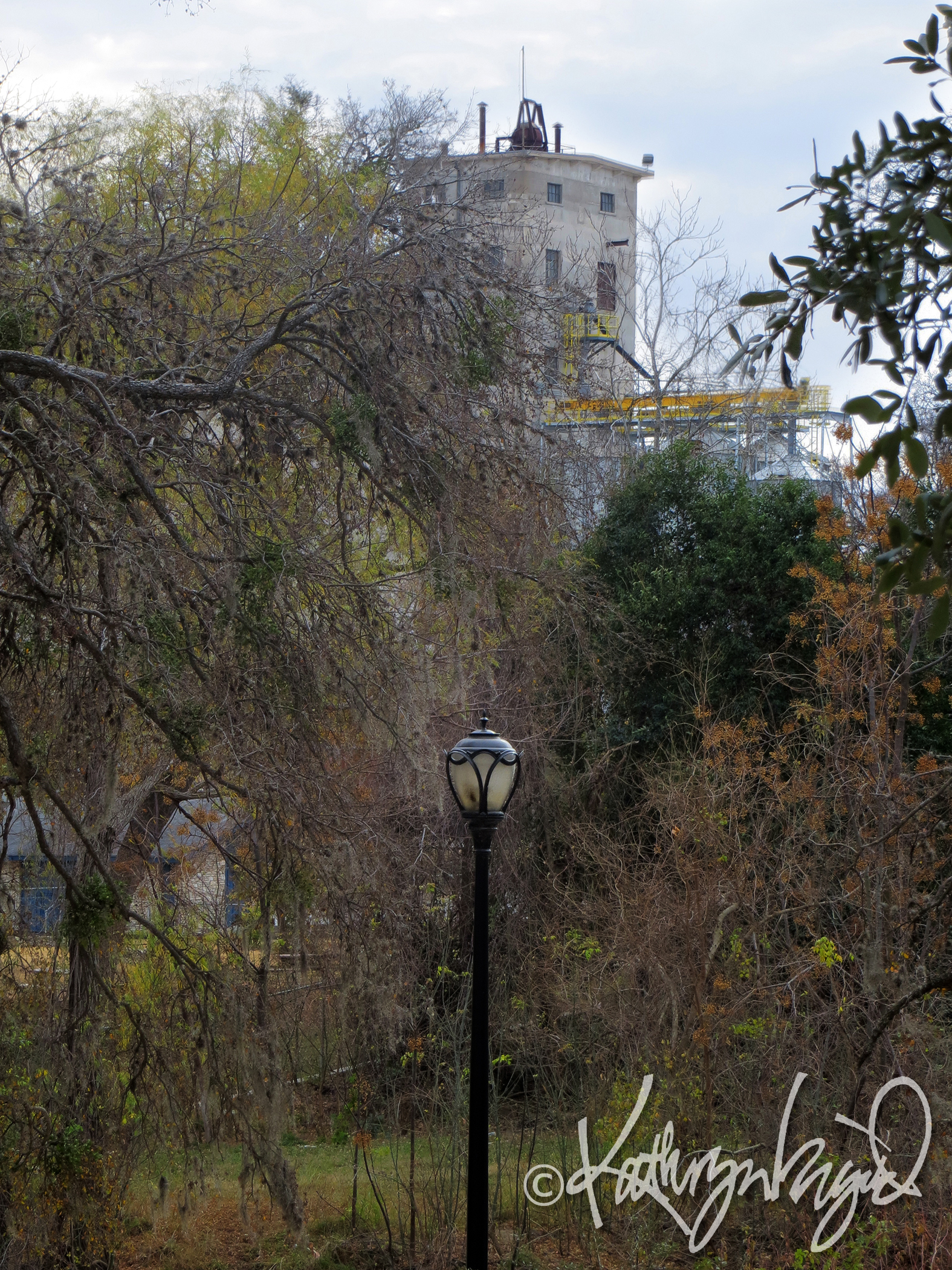
The ever-marvelous Celi, she of the sustainably-farmed wonders at The Kitchens Garden, challenged all of us to share what we see from our back porch, patio, stoop, door, window or patch of land, and the images pouring in have been a delight. Each so different, each from some other far-flung locale around the globe–but each seen from the home turf of a person joined together in this fantastic community of blogging and readership that makes the otherwise disparate styles and locations seem we are all next door neighbors. What a superb thing, to shrink the world down to a size that can easily fit into a single embrace!photoSo I give you a glimpse of what I see behind my home, too. Our house is situated on a city lot (about the typical suburban US standard of 50 x 100 feet), but it feels both less like a suburban place and much bigger because it backs on an easement, a small ravine for rain run-off and city/county service access. The ravine’s seldom wet (this is, after all, Texas) or used for services, so it’s mainly a tree-filled wild spot and a refuge for local birds, flora, insects, and an assortment of critters that have at various times included not only squirrels and raccoons but also rabbits, opossums, armadillos, deer, foxes, coyotes and bobcats. There have certainly been, along with the delightful bluejays and cardinals and wrens and chickadees, doves, grackles, hummingbirds and killdeers and all of those sorts of small-to mid-sized birds, plenty of hawks and vultures and, I suspect (since I know others not so far from here who have had visits from them) wild turkeys, though I’ve not seen the latter.photoWhat I have seen recently that is infrequent if not rare, is some very welcome rain pouring down on us here, so I’m showing you slightly uncommon backyard views today. The second picture is taken from our raised patio, but the first is the view as I most commonly see it: through the kitchen window, where I can stand safely out of the lightning’s reach (as on the day shown) and more comfortably in air-conditioned splendor than in the 90-105ºF (32-40ºC) we experience so often here. Believe me when I tell you that the intense green of this scene as shown is rather unusual for this time of year, when we would more often have much more brown and bedraggled plants all around us. But we also have the luxury of a sprinkler system, so if the ravine begins to droop in dry hot weather, we’re generally protected from terrible fire danger and can still be an inviting spot for the local wildlife to take its ease. To that end, and because I generally prefer the beauties of the more native and wild kinds of landscapes to the glories of the manicured, I have my new wildflower swath in place and it’s just beginning to show a variety of the flowers and grasses I’ve planted there; seen to the left of the grey gravel path in the second picture, it stretches from the patio all the way back to the ravine.

The Wearin’ o’ the Green

There is, of course, one overriding, excellent reason that Ireland should celebrate the remembrance of her patron saint with a vivid display of everything-green. Ireland is the Emerald Isle. I’m not Irish, but I suppose I can pretend to a certain level of affinity on the strength of two excellent reasons of my own, the first being that my Viking ancestors (if any of my Norse forebears were actually so intrepid and aggressive) had a pretty good chance of crossing paths somewhere along the line with their counterparts in the British Isles, Norwegians having gone on various exploratory and marauding forays in that direction. My patronymic (Wold), after all, sounds suspiciously more Anglo than Nordic to me, no matter how many in Norway do share the name.

The second and far kindlier tie I feel to Ireland is because I was born in the Emerald City (Seattle’s nickname) in the Evergreen State (Washington’s), surrounded by every known flavor of green and a few yet undiscovered, and I think it was anything but coincidental that on my one visit to Ireland thus far I felt remarkably at home even in the middle of the winter, when the chill and snow still couldn’t entirely subdue the exquisite greenness of the land. It may not have hurt this sense of connection that some of the locals on that trip asked me what part of Ireland I came from, given that my accent apparently wasn’t heard by them as being wildly different from some in the UK. In any event, as green and growing things resonate so deeply in my heart and soul, I can’t help but celebrate the beauty of Green while millions are wearing, spending, planting and drinking it, and otherwise rejoicing in the character seen as protector of the great green land of Eire on this most Irish of days.photoHere in this Emerald Land

Because there is no sapling in the earth

But that springs out when water wakes its seed

And sunlight calls it up in urgent need,

I think the rain and sun of equal worth–

Yet all the riches of a blooming world

No greater shine than that most humble weed

Whose leaf invites the passing deer to feed

Because its banners, sweetly green, unfurled–

No flower can surpass, exotic bloom

Outdo green’s living beauty or exceed

Its life-affirming sweetness when we heed

The subtler potency of its perfume–

And so I bow my head, ecstatic–sing

The joys of every green and living thing.photoMuch as I adore sunshine, I am willing, too, to be showered with the rain, for it slakes the thirsty earth and brings forth all of its green glories.

Rain Dances

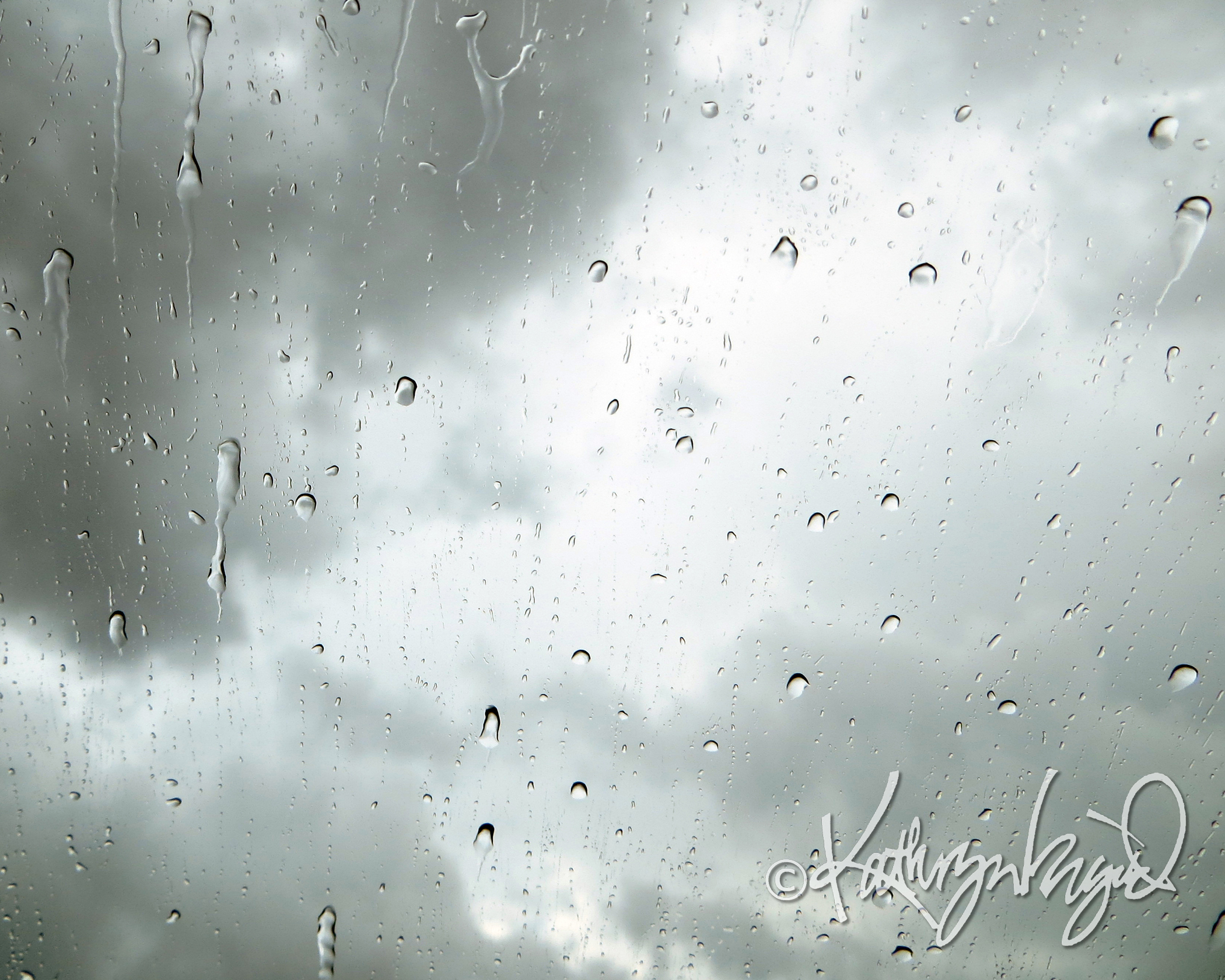
It dances across my imagination, rain. It is flowing and musical and magical and, most of all, it catalyzes cleanliness and growth that reawakens the graces of the living world in ways that very few other things can possibly do.photoIt is what I think of as the soundtrack to my dreams, rain. The softly bubbling, rippling, tuneful and prayerful sound of rain in the background, after even the slightest dry spell, is as lovely in its way as a kindly lullaby, as the warbling of some exotic winged thing in a  woodland on a magical evening, perhaps even as a gentle reminder that the creative spirit of the universe weeps both with sorrow and with joy in harmony with all her creatures.photoOn every greensward, in every park in Spring, the land smiles with contentment even while the rain still falls, when rain is in its right place. This is a gift happily awaited by all who thirst–every creature and all the sweet, sweet growing things that fill our garden world. Whether it is thought of as saving for a rainy day or being saved by a rainy day, as much as I bask in the sun at every opportunity, there will always be a part of me that relishes and desires the generous presence of a kindly rainfall.

(I’m pleased to say that it has been raining here for the last number of hours. Life is good.)

Naturally

Along with all of the other, perfectly legitimate and obvious, reasons that I celebrate every year when I am remembering the arrival of my next-younger sister on her birthday–the first one remembered mostly anecdotally given my tender years on the occasion, and all of the subsequent ones fitting days for delighting in the gifts with which her continued presence graces me and all of her circle of influence so consistently–I rejoice in the greater sense of appreciation for nature that she has given me.photoShe is something of a bouquet herself. Indeed, she is beautiful in the way of pretty things throughout nature, and also filled with liveliness and energy and purpose and growth that inspire me and amaze me regularly. I look on her as an enhancement of the world a little like a human bloom in its garden, unfolding each day and year with new surprises and joys that reinforce the very image of goodness in life.photoIn a more concrete way, with her love of the outdoors and its grand presents, pleasures and promises she has taught me and continues to teach me to appreciate the natural world as well. As much as our garden-genie mother shared her love of interacting with the created spaces in nature and even getting outdoors appreciatively on day hikes, in parks and on strolls wherever we could, the number-three sister in our quartet has given me yet greater love and sympathy for the breadth and depth of possibility in all those realms of nature and more. I will never keep up with my sister’s skill and prowess when it comes to being physically ‘outdoorsy’ as athlete, gardener or explorer, but every time I step out any door into the untrammeled world, I do and will see much of it as a living bouquet paying tribute in return to one of nature’s loveliest flowers.photoHappy birthday, my dear sister, and I send you these little pictures and words in token of my love that spans from your first blooming in the world to the end of my seasons.

Hot Flash Fiction 2

digital artwork from a photo

Though bleary, psychedelic and portentous dreams had haunted him into a knot by daylight it was neither dark nor stormy that morning. Tarryble Slye was in such a grim and grimy mood when he finally wrestled awake that he decided not to get out of bed until it was darker, for his business with Methden Gartinen was ugly enough to require at the very least a whiff of midnight, better yet a night gripped by a walloping storm. Whether the requisite pelting of rain and blasts of lightning came or not, Slye was determined to drag himself out of bed as late as he possibly could, and put off tonight’s assigned meeting as late as he could get away with it too. That rat Gartinen had made the whole thing sound as innocuous as he could and even offered to pick up the dinner tab beforehand, but there was no mistaking that once he was out of bed Slye was going to be sorely sorry he’d ever crawled out at all. He was already sorry he’d committed to showing up, and backing out of it wasn’t an option; maybe he ought to accept the proffered payoff: a paper-wrapped catch of fish and chips was probably the best thing he could hope to get out of this lousy, evil-tinged day.

Man, how he hated doing taxes.

digital artwork from a photo

Rainmakers

Now that super storm Sandy is mostly past, those in the wake of the destruction are left to dig out from under all of the mayhem. As all natural disasters do, Sandy left behind not only massive damage brought on by the high winds, flooding, snow, fire and explosions that were part of the storm and its immediate effects but a whole swath of financial, social, political, logistical and definitely not least of all, emotional and personal damages that will take years to be mitigated, let alone resolved. Besides the losses of life and health that are such obvious costs of a massive storm ripping through, we all know–those who have been through this grinder before, anywhere in the world most especially–that there are innumerable other things once held dear that have been slashed away in a few hours’ time and many of them will never be recovered.digital painting from a photo

The homes blown down, stripped away by violent waters, or burned were filled with people and lives and the Stuff of those lives–in many cases, all gone. The businesses closed for a few days, often in crucial periods of their peak season, are eclipsed by those whose doors, if they still physically exist, will close forever and by the many owners and employees and customers who will have to find other resources for making a living or acquiring the services and goods they count on to shape their ordinary lives. They will all find, as my spouse said very quietly to me when I came down the stairs to find him waiting palely on the 11th of September in 2001, that ‘the world as we know it has changed.’digital painting from a photo

But we also know from long experience that disasters, whether natural or human-made, can bring unexpected goodness trailing in their wake. The immediate selflessness and generosity and heroism shown by those who rush into the maelstrom to save others and who pull the stricken into their waiting arms of safety and warmth and shelter and healing are, when we others take a lesson from their shining examples, only the first wave of light and hope to follow the darkness and despair. If we all, whether by the nebulous but potent means of offering support in our hearts, minds, prayers, and invention or by the more concrete ways of donating, digging, driving; of building stronger buildings to replace those lost, remembering those who have died with forward-looking perpetuation of their virtues, and taking up whatever tools we have to recreate a more closely knit community that can expand exponentially to bring in every person with every need and every gift that can fill that need–then every storm is not an irremediable horror and every battle is not the one that will end safety and sanity forever. We are bigger than the storms. We can be the rainmakers who rise up out of ordinariness and even destruction to build something real and new and extraordinary.