I’ve not re-posted anything from my own blogging before that I can recall, but happened upon this (admittedly lengthy) piece I wrote a number of years before I even started this present blog and was reminded of a few things I’ve said here but in quite different ways. So I share it with you now, lightly edited to update it, just because it piqued my own interest once again. Cheer up, my friends: I love that this is written from something like an outsider’s view of the experiences of depression and deep melancholy, after all these years! I highly recommend reading the book I just finished reading [when I originally wrote this post], Peter D. Kramer’s ‘Against Depression‘. He’s the author who wrote ‘Listening to Prozac‘ – a book that, surprisingly, wasn’t really about depression or even Prozac, per se, but due to its bestselling status raised those two specters so frequently that he finally had to respond with this book. He has some sections in it dealing specifically with the effects of depression on arts and creativity, intellect and education, and vice versa. But there’s also a ton about the physiology and pathology of depression, the affect and effect and the impact on self and others. Very thought-provoking for me.
If you want a really scary companion-piece before, during or after the reading of that book, one that for me confirmed the urgency of wellness by any–no pun intended–sane means, look up ‘My Lobotomy‘ – it was a presentation on NPR that horrified me more than umpteen war- and disaster-stories (including true ones) and makes stories by Edgar Allan Poe and Stephen King sound like skipping through a copse picking violets. ‘Lobotomy’ is the harrowing memoir of a lobotomized man who, at 56, finally got up the courage to investigate and explore what happened to him when he was operated on at 12, why it happened, who else was affected, and much that followed. Incredible. Terrifying. I can barely even think about it. But it did make me feel all the more intensely that I want to stay in charge of my own mental health just as much as I should my physical health.
For the moment, since I’ve so often been asked, I will say that when I call myself Ordinary, what “ordinary” means to me is wide-ranging and a bit variable, but in the sense I’m using here in the land of my blog, it covers all of what seems possible, believable, normal or otherwise expected in the universe of human experience. More significant, perhaps, is defining what it doesn’t mean for me: things found at the extremity of experience: brilliance or genius or unearthly, once-in-a-lifetime skills, talents, and insights. Me, I’m not interested in being a supernova. They tend to burn out fast anyway.
What I really pride myself on is taking the simple raw material of being a middle-of-the-road mortal and managing to pull out of that clay my own few moments of dazzle – an outstanding artwork here, a worthy kindness there, and a few sprinkled bon mots or glorious deeds in between – these shine all the more in the setting of my ordinariness. People take note of them precisely because they are deserving of note–because coming from a typical luminary or wunderkind they would be the expected thing, no matter how exciting, and from me they are not. There’s no intrinsic negative value to ‘ordinariness’ for me, no implication of self-abnegation or false modesty, just the sense that only a few in history are genuinely set apart as spectacular examples of either desirable or undesirable traits and gifts, and we in the main herd can still go on and live rich, full, complete lives just as we are. With maybe a little less pressure to perform, too, so that anything extraordinary we do actually shines that much the brighter. Surprise! Aren’t I fabulous!
Why do we see ten tortured geniuses for every happy one? I think it’s primarily a function of taste: the culture that covets over-the-top emotion isn’t interested in supporting and reporting anything that doesn’t have that dangerous gleam. Good news is no news. If the artwork is upbeat, it must be tacky and shallow. If the artist is happy, she must be an air-headed clown. Prettiness and simplicity and everything that pleases the mainstream must, by definition, be playing to the lowest common denominator.
I’m actually a dyed-in-the-wool Romantic myself, but I have been contemplating that old adage “write what you know” and decided that it lends itself to far too tiny a concept of possibility. In the first place, if taken strictly it would mean that we should automatically dismiss as useless falsehood any attempts at empirical or even historical writing, because practically everything that has been once believed absolute has taken on different shadings over our cultural lifetime, if not been disproved. Never mind how we should treat the authors of murder mysteries and crime novels! The aphorism may be a needless dictum or even a myth: one doesn’t necessarily have to BE suffering to appreciate what suffering is. And perhaps anyone who has suffered in the past can be considered to have earned the stripes of exactitude anyway and can rely on recollection rather than continuing to wallow.
There is certainly a bit of truth when people insist that others can’t know what they’re going through; in its most complete sense, I’m sure that’s accurate. But anyone with a little life-experience and the ability to sympathize or even–if imperfectly–empathize, can puzzle out in his or her own way an approximation that makes communication of it possible in art. And, frankly (this goes back to that idea of an Ordinary person doing something Extraordinary), if I can make someone slap his palm to his forehead and go, “YES! That’s what I’m talking about!” when they recognize a shared feeling or insight, then I think it’s all the more memorable and impressive, not the predicted brilliance of some savant.
So thanks to the perpetual discussions of such topics with colleagues and friends and given my understandable interest in depression and its effects as well as more strictly Romantic artistic concepts, focus on the impressive influence and hold of Romanticism on all our lives, I continue to search. If Romantic ideals glorify and sympathize with a dark world-view, with sorrow, cynicism, pain, suffering, and so on, and if arts and beliefs that support those ideals are valued, then how can we respond to things that defy or fail to uphold them? How can we wish to be happy and healthy if what we love is, really, decidedly neither? Since the prevalent taste for Romantic qualities has been in vogue for a number of generations, and cultural memory is dangerously short, few recollect that being In Love with Darkness is a relatively new trend in recorded human history; an externally imposed one at that. As with so many of our beliefs that we take not only for granted but as eternal, immutable fact, all is not necessarily as it always has been or will be. There are larger patterns in the life and development of art, history, healthcare, personal experience, politics, and religion that act and cycle broadly, often inducing in each other significant change as they intersect along the way.
As Dr. Kramer notes in his excellent polemic against depression, even tuberculosis used to be idealized. People who had Consumption were presumably consumed by the unusual intensity of their inner being: larger than life passions, intellects, artistry, love and spiritual astuteness were all attributed to these dramatic sufferers. When it was finally seen that that oh-so-sexy tuberculosis was in fact not only a genuine physiological disease but also a degenerative, communicable, and difficult to treat pathology, and that it would not only kill the patient eventually but also deprive the rest of us of those idols, the tide began to turn toward the desire for palliative care and cure. Depression, also arguably a disease of at least equally destructive dimensions, and demonstrably damaging to such physical attributes as brain tissue and adrenal glands, not to mention to social structures surrounding the patient, is certainly deserving of the same considerations.
So what do we do with our Gothic worldview? Give up our love for the dark? Hardly. Strip it of its value and depth? Not likely. Perhaps, though, we can rebalance the scales a little and say that it’s no longer chic, let alone necessarily accurate, to assume that all things pretty and pleasant and uncomplicated and cheerful are stupid, dull, vacuous, or shallow. Realistically, we’ve all seen attempts at art that cling to the Romantic ideal and yet manage to be stupid, dull, vacuous, and/or shallow. And, as I constantly remind[ed] my beginning art students, one of the hardest things to accomplish well is simplicity. When you take on the task of making a work that appears simple, you make yourself vulnerable to every would-be critic who can find the tiniest flaw as it stands out against that backdrop. Because you have tackled the familiar, it takes far more sophistication and subtlety and inner resource to make the work distinct and worthy, not just a good imitation of what has been done before. Anything can be badly executed, art or otherwise. Anything has the potential to be scintillating and brilliant.
The difference should lie not in one element alone, especially not some preset element like whether the theme is Dark or Light, but in the miraculous confluence achieved of content and intent, medium, methods, and moment. Is it beautiful? Is it successful, deep, lasting, influential, meaningful? We will, and should, continue to make value judgments and assessments and be willing to revisit them from time to time. Because beauty and meaning, whether you believe they’re strictly in the eye of the beholder or not, can change as the beholder’s eyes are changed by a life full of adventures, by time and tide and every nuance of history that washes over us. It should be equally visible in full, bright Light or in cavernous Romantic darkness.
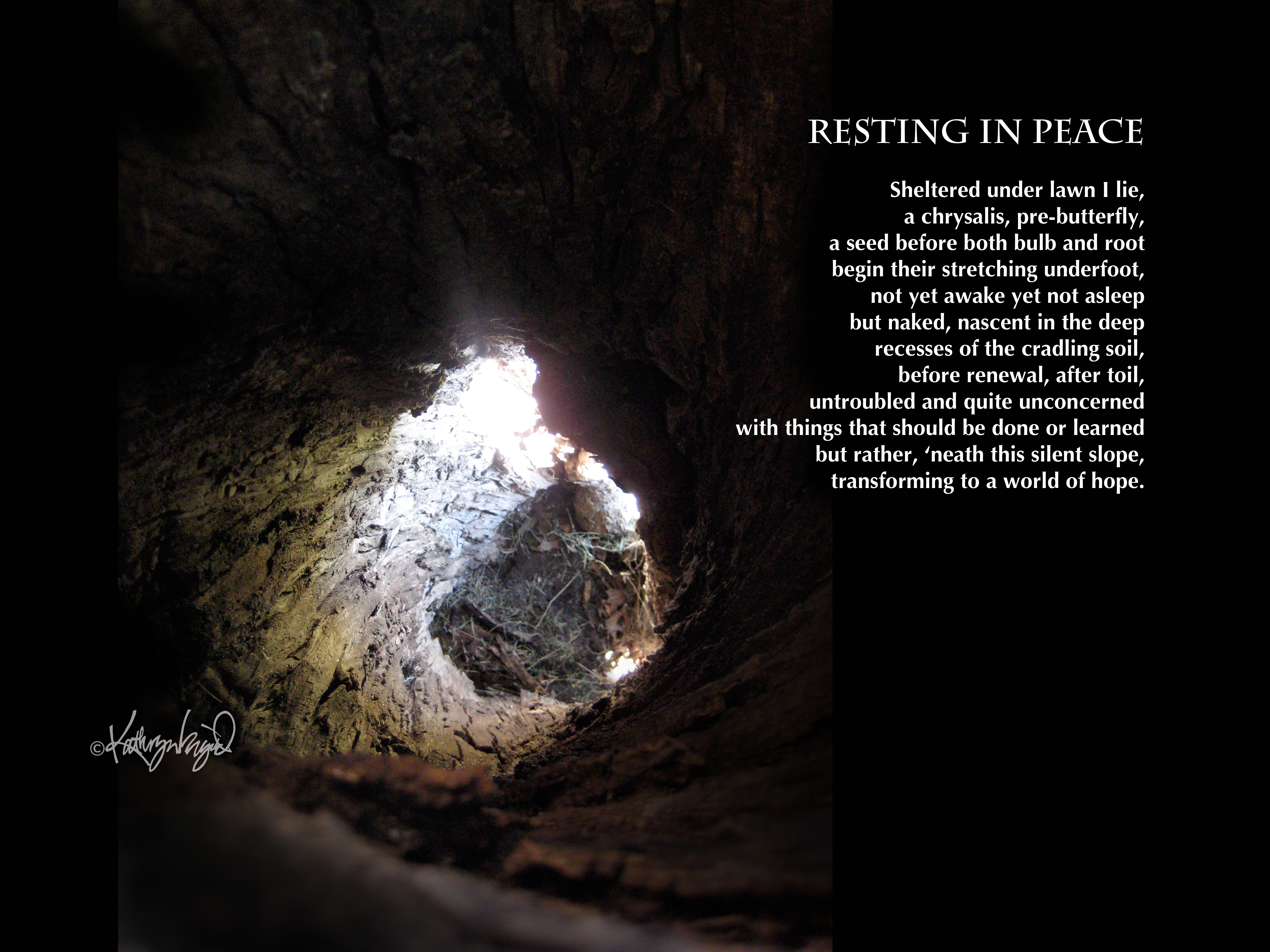
 While I’m closing out an old notebook that I kept in blog form a number of years ago, I found yesterday’s post and this companion one. So what the hey, I’ll share this one with you, too.


 Art-Colored Glasses
