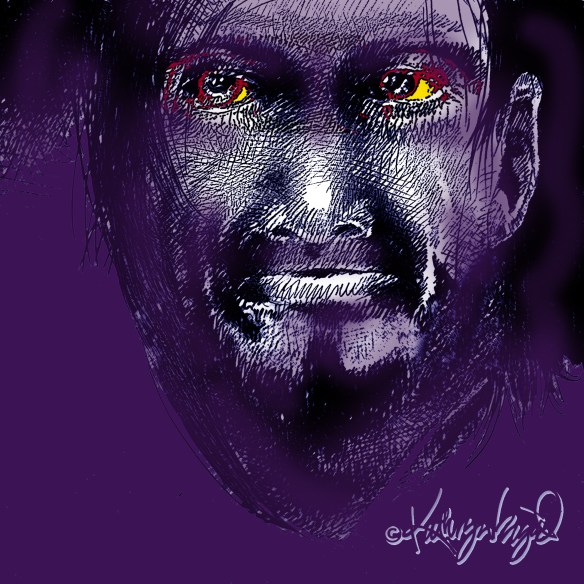
Another Totentanz

digital illustrationTo Rest in Peace

Alas! for shadows carve my collarbones

and misery is lapping at my heels;

Death’s machinations turn, wheels within wheels,

and grind me for its grist between cold stones–

And yet, as dust-dry as I turn, breath blooms

persistently, a torture to my soul

when I had rather be devoured whole

and go on into Peace’s empty rooms–

Still, here I stay, lie atomized, forlorn,

forgotten on the fringes of what life

and loves I knew once, when my days were rife

with possibility as a new morn–

Let me die now, not live without a chance

of altering this endless Totentanz.

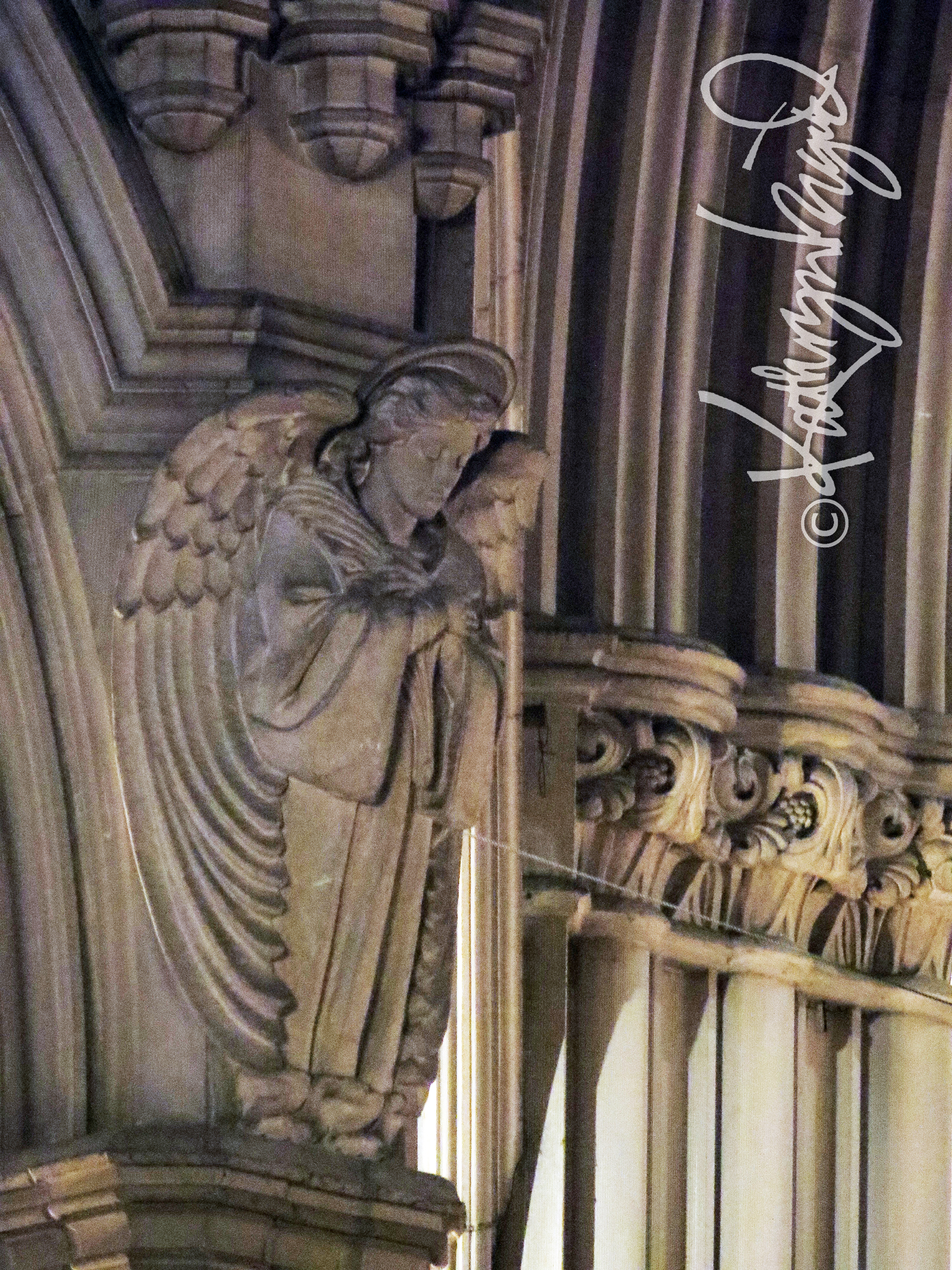
Lest you think me suffering myself, or pessimistic, I assure you I am alive and well. It’s just that I have seen many others struggle with prolonged and pitiful end-of-life dramas and was reminded this June when I saw the beautiful antique gravestones in Boston of how different things are now, when we have such nearly unbelievable powers to keep ourselves alive for tremendously long lives but have lost touch with when it’s acceptable or even desirable not to do so. If our skills for ensuring or encouraging genuine quality of life are far outstripped by our skills for lengthening it, what does that say about us? Generations removed from our forebears, whether in Boston or elsewhere, who knew much more primitive medicine, greater physical dangers, irreparable injuries and the concomitant shorter lifespans we have apparently long since forgotten, do we know how to accept death as a natural end to life and treat dying as a passage to be eased to the fullest extent instead of forbidden?

The End of Us is Not the End of All Things

photoHer Bones are Glass

Her bones are glass; the diamonds in her eyes

Now shining dust, yet still and otherwise,

Though time says that she must, she still decries

The need, opposes it by effort, will

And awful grief and rage at what would kill

Her body, spirit, mind and heart, until

She mounts the ridges of that final hill,

‘Til battle’s over and the victory won;

So while she harries them, Age sets her sun

A-fade, Time lets her hourglass empty run,

Approach the space where sleep and she are one;

The sands thin silently, passing to less-

Than-empty, right to utter nothingness,

In view but fading, to her pale distress,

Her winding-sheet already worn for dress,

‘Til battle’s over and the victory won;

Comfort she needs, yet I can offer none

‘Til battle’s over and her victory won.photo

Back from the Brink

photoBurnout. Tension. Stress. Exhaustion. Doesn’t matter what I call it, the unfriendly truth of that state of being is the same. Distraction. Aching and malaise. Irritability, withdrawal, collapse. The dramatic drops in life participation and wholeness all come together in equally unpleasant responses.

What are the causes, catalysts and triggers? As many and varied as the moments of any lifetime, of a million lifetimes, can allow. How is it that I–or anyone else on this madly spinning globe–can survive such stuff assailing us, let alone prevail against it and win?

Why, in a number of ways, we all do it pretty much all of the time. That’s how our species can even continue to exist; if we didn’t have a whole arsenal of defenses and strategies for the cosmic battle, it would’ve taken little more than a moment’s stray breeze to blow us all to oblivion. But vulnerable and weak as we are, we do have our ways, and we survive.

Faith. Whether it’s the belief in something as grand and benevolent as a Supreme Being that will rescue me or in something as small and ephemeral as the offer of a stranger’s hand to grasp mine and pull me up, faith can overcome many an obstacle.

Hope, too. If not utterly confident of it, as long as I can summon a sense that there’s some probability or even possibility of better things ahead, I have a chance of mustering just enough strength, patience and will to wait for the good to come to me. I may not be able to reach for it myself any longer, but I can hang on, however thinly, to a promise of change and renewal. For the return of the light.

And love. When all other resources are at their lowest ebb, even faith and hope having withdrawn in the impenetrable distance, love can carry me through. I have a greater store than most, being surrounded as I am by not only the encouraging affection and support of spouse, family and friends but also the remarkably kind uplift I’ve received at the hands and words of a wide array of acquaintances and strangers buoying me in my life over every would-be catastrophic wave. Beyond even this, there is another love that serves me well, when I can remember it: the love inside me that, however pale and faint it’s grown in my weakened state, recognizes a need to care for and comfort others in their time of need. The moment I can step outside of my own need, my hunger, despair, anger, longing or sorrow, just enough to recollect the existence of anyone else, I tend to draw back, however slowly, from the brink myself.

I can look around again with eyes less inward-focused and with a heart more willing to keep living, hard as it may seem at the time, and crawl back toward more gracious and sanguine days. My fellow survivors show me how to do it all the time. In this, I am once again truly at peace.digitally enhanced photo

Hijacking Happiness

digital artwork from a drawingTrouble, as we all know, is highly contagious. I was reminded of this recently both by a television character and by a couple of real-life incidents involving real live people (who shall here remain nameless), and all of them, real and fictional, have a number of similarities, the chief one being their apparent unshakable belief that their suffering is greater than anyone else’s, is incurable, and is probably the fault of everyone else too.

My life is pretty fantastically good, when you get right down to it, so to people who don’t know me very well it might appear that I have no business criticizing anyone else’s way of handling sorrow and pain. But that’s just it: even the most wonderful of lives is touched by trials now and then, and struggle or strife isn’t fairly measurable in the moment. My paper cut seems as dire as your childbirth pangs when I’ve just gotten paint thinner on my hand. I know this to be logically ridiculous in the extreme, but don’t tell me the paper cut doesn’t hurt like boy-howdy at that moment. That would be tantamount to me telling you that since your labor pains will probably be over in short shrift, they don’t compare in any way to another’s battle-for-life with esophageal cancer, so you should just get over yourself. Whatever agony each of us is undergoing is more than enough and not to be belittled. And frankly, since each of us has a history that is tinged here and there with darkness, we do all have a sense, however small, of what it means to accept our griefs and cope with, live with, and go forward with them still present. Real sorrows never truly go away.

And for all of us who can feel empathy, or even more than that, can feel sympathy without having experienced the fulness of another’s troubles, life after infancy (when memory, like the lifespan thus far, is short) can be a perpetual bombardment of such troubles even when they’re not entirely our own.

I, of all people, will readily grant you that some people are far better equipped than others to find ways to survive pain and suffering and to continue living a full life without resorting to out-and-out acting. But that’s just it, isn’t it: barring full mental incapacity, don’t we owe it to ourselves, anyway, to try every possible avenue of becoming whole and happy (and of course I don’t mean that superficial kind of happiness that is either fully false or simply stupid); don’t we? When my personal apocalyptic horsemen appeared at the intersection of a group of the classic stressors (job-related problems, health challenges and the sudden death of a close friend converging on me at the same time) and plunged me into clinical depression, I was fortunate to not only have some of the significant tools (support from family and friends, a great doctor and a good therapist, and ultimately, medication that worked for me) for doing battle with those monsters but also the sense that there was no other acceptable option but to try to do that battle.

I won’t lie; there were times–and will probably be more of them over the years–when I did have to take the tack of that ‘fake it till you make it’ mode, when I simply wanted to quit and lie down and just hope it would all miraculously fix itself, or when I was as sulky and whiny and crotchety and pessimistic and tedious as unhappy people can be. We humans are good at all of that stuff, better than at being sunny and charming. But finally, even in my worst state I knew that was no way to live, and that the important people around me would suffer at least as much as I did, if not more. Thanks to the aforementioned helpers, I am here to tell the tale. More importantly, I don’t dwell in that darkness, even though there’s not much I could prevent or even fix about the troubles that led to such a state of existence. Things just happen. It’s how I deal with them that’ll likely make or break me.

That television character–and the many real-life imitators I referenced–stays so focused on how traumatized and maltreated she feels (albeit by genuinely distressing events and problems) that they become her one-note existence. She has a hard heart because it seems less trouble to close it to others than to be vulnerable to further hurt, but of course the actual effect is that she treats everyone around her like dirt, riding roughshod over their feelings and regarding any trauma or maltreatment they may suffer, often at her hands, as inferior or nonexistent. In turn, after being stomped on repeatedly by her seeming egotism, narrow-mindedness and refusal to set her hurt aside, the people around her disperse as speedily as that unlucky drop of water hitting a sizzling skillet explodes into mist. Those who tolerate her constant vituperation, impatience with their perceived stupidity or lack of sympathy, and her seeming wish to continue forever wallowing in her fury and self-pity, those characters ultimately become uninteresting or even unsympathetic themselves to me; after the ninety-ninth offense anyone sits back and takes without a fight, they tend to my eye to look like either enablers or equally fixed in victim mode.

I think we all have the power to steal others’ health and happiness, at least as much as the reasonably healthy among us should make every effort to take charge of our own. Doesn’t mean perfection is expected, but c’mon, people, if there’s really no going forward with life, perhaps a retreat to a very quiet hermitage would be more apropos than imposing our worst on the rest of the world. Yeah, I said it: get over yourself, Kathryn. Even if it might occasionally require brief periods of kindly deceit, times of returning to fighting off the dark singlehandedly, and the ordinary moments of being a jerk. It’ll mean equal demand on me for repentance, amends-making, and getting back on the wagon. There’s too much life left ahead, I hope, to spend it mired in a grim and terrible past, let alone impose it on others.

The upside of all this is that there is a possibility of turning this kind of thievery to good. Very simply, if I have to I can borrow my equilibrium and contentment from others. Put myself in proximity to saner, happier people than me until I can manufacture my own, and quietly absorb what I can of their good graces. I, at least, don’t want to be the one who steals the joy of anyone else; that only becomes the reason for new sorrows all ’round. Happiness and health can be contagious, too, if we let them. And so we all should, my friends. So we should.

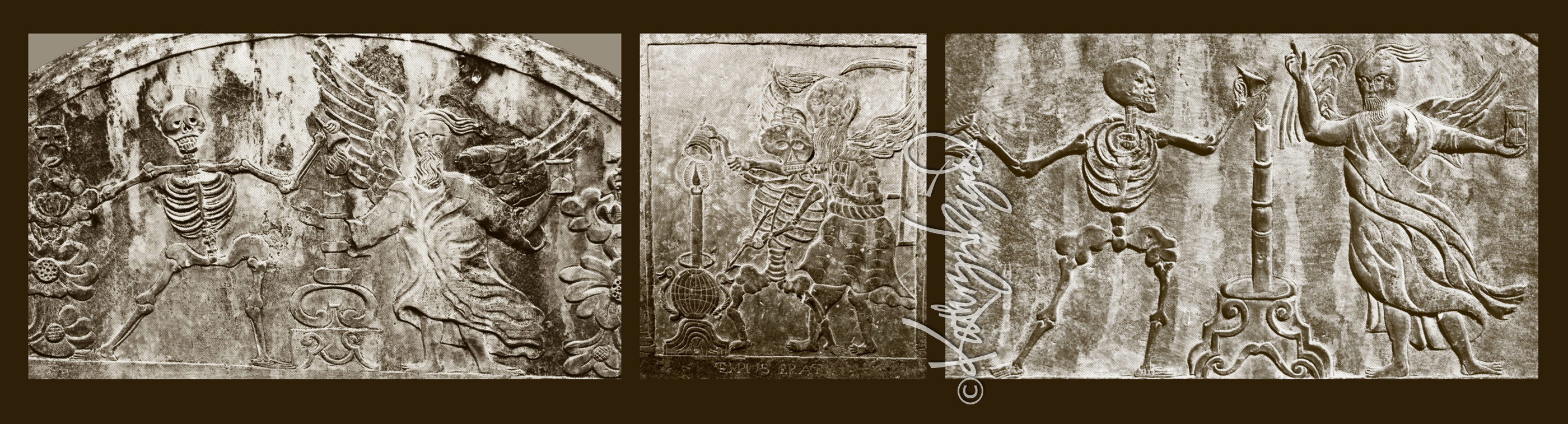
Under the Shawl

digital artworkShrouded

What is the measure of sorrow’s depth? A mile, a fathom? Soullessness?

Is it a silent suffering or screaming agony? Or less

Than nothing? Is true sorrow deep as midnight? Is it fiery? Cold?

Is’t a return to youthful helplessness, or falling instant-old?

Who knows the grief in its extreme that tells how deep sorrow can grow?

Only the ghosts of doubt can guess at this: I hope I never know.

Damaged

photoFortresses

Wars build walls

On a foundation of

Corpses–

The evil and

The innocent alike–

And what do the walls

Keep in?

Keep out?

How is it that

Battles can be declared

Won or Lost?

For both sides die,

Both parties always

Somehow

Lose land and goods

And certainly, soul;

Starve in the snow or

Roast in the heat,

All the while watching

The world they knew

Reduced to ugly

Holes and rubble and

Its storied walls replaced

By a fortress that

Is really

Only a new prison

poem

Sorrow, Begone! Morning will Come Again

photo diptychTo Rest in Peace
The night is long and still I cannot sleep
For fear the dawn will steal what I would keep
When hope and restlessness have wrestled till
The willow near my bedroom windowsill
Bends nearer down to say she’ll weep with me,
One generation to the next, poor tree–
The night will surely pass, and so will sorrow,
Yes, just as death’s outlasted by tomorrow,
So let me sleep, O grief, or let me fly now,
Over the willow tree, rise up and die now–
For what’s this aching but forewarning cold
That what’s ahead is neither dross nor gold
Except it brings me closer by its cost
To endless morning, healed of what I’d lost.photoMy dear friends, this post was prepared some time ago because I knew it was going to be a busy day: a travel day for my husband and me on our return home from TMEA (the Texas Music Educators Association’s annual conference of well over 20,000 musicians, students and teachers). Not at all surprisingly, being surrounded by this musical ‘cloud of witnesses’ has made our thoughts turn to Eric Ericson and the many gifts he brought to the choral world over his long and storied career, and to my spouse’s and my lives as well, so we were talking about him as we walked home from a TMEA event late last night. So somehow, despite the sadness of it, it was not so shocking to waken this very morning to the news that he has died. He was, after all, 94 years old. But it seems to me that he was escorted out of this world on a wave of music, and that is only fitting for such a titan of choral culture. He will be missed by uncountable choirs of his musical offspring–and he left a song that will never stop resounding in our midst. Farewell and peace, Eric.

Will You Sing in My Stead?

graphite drawingWhen I can Sing No More

When I am weary, worn beyond all reckoning,

My breath is gone and voice has ceased to sound,

The darkness draws me in, its silence beckoning

And luring me to lie down on the ground–

To fall asleep; perhaps to melt there into death,

Because I can no longer coax my throat

To speak of joy, or yet to longer draw a breath,

To sing a song as long as one fine note–

Beloved Friend, how sweet if you will stand for me

And draw the air that lifts the lark to wing

Its way across the sky–if you will kindly be

My voice, and raise your own aloft and sing–

For in my silent darkness I shall never die

Long as your voice goes on and in your song I lie.

All I Can Do

photoMy Dearest,

I know that your day is dark. Your illness is proving incurable and your pain is chronic. Financial ruin is staring you and your family in the face. The season has turned harsh, your lover has betrayed your faithfulness, your longtime animal companion has died, and your heart grows heavy and your eyes dim with weary tears. War rages just outside your door and grips you by the soul as well.

I know all of this and yet I am thousands of miles from where you are. I can’t step over the threshold and take you in my arms and silently cry with you until the bitterness ebbs. It’s so far that I can’t just bring a basket of hot food and a bottle of wine to sustain you and slake your thirst. My words, even when I try to shape the letter that will ease your suffering one moment’s worth, are too small and sere and frail to make an inroad–and the letter will undoubtedly arrive too late. There is a faint echo in that digital delay when we speak on the phone, and all I can hear in it is our own choked breathing, no sounds of the deep solace really required.photo

All I can do is leave the gash in my own heart open and ask you to take up your residence in it. Know that my thoughts are reaching across the miles to you at every moment, awake and asleep. Let me shift some of the terrible burden from your shoulders to mine; I know it isn’t real, and doesn’t solve your troubles one small bit. But I hope that you can find some comfort and hope in my desire to carry you while you are too weak to carry yourself one small step further. All I can do is love you.

And so I do.photo

A Touch of Blue


photoJoy has a funny way of residing in our hearts: it’s never completely untouched by sorrow or the knowledge of trials and struggles. It requires a measure of trouble, in fact, for joy to exist. How else can we begin to know and appreciate the depth and breadth of true joy?

I was reminded of this today by one of my little hummingbird friends. They are frequently identified, these tiny flying powerhouses, as being most strongly attracted to red flora, to bright red and orange and sometimes yellow flowers. But they’re not that exclusive, really. They are aggressive and territorial and mercurial, all colors we tend to happily equate with so-called ‘hot’ colors, of course, but it hardly proves that red flowers are actually the best available attractants for hummingbirds.photo

The hummingbirds that hang around my back patio have other ideas. Not least of all, that their pleasure, and their urge to imbibe a grand zing of energy-booster, can come from what is presently their very favorite treat back there: the blue-blooming sage. It’s a hot color too, that it is; the blossoms on the lovely Salvia ‘Black and Blue’ practically scream for attention from amid the bold lime-green foliage of the plant, so nobody with a modicum of visual acuity, hummingbird or human or otherwise, is going to buzz by without giving it a good, longing look of admiration.

With what do we credit the boldest of blues? ‘Cool’, we call them. But just like the wildest, hottest of reds and yellows and oranges, intense blues are attention grabbers. They grip us by the heart just as easily as any other high-hued beauties. But the existence of both is necessary for us to understand the differences between them, and the power each has. Is ‘cool’ the metaphor for melancholy and The Blues a name for sorrow? Perhaps. Are red and those other ‘hot’ colors present in warming flames, in sunlight, in the brilliance of joy? Possibly.

Do all of them enrich our lives? Absolutely. Ask a hummingbird.photo