Building Dreams

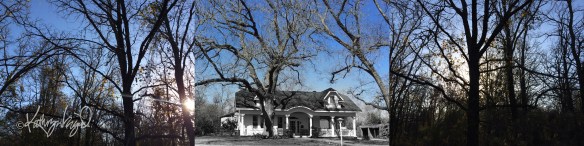
Dollhouses were for other girls. I preferred to design my fantasy floor plans and build them out of cardboard and found objects in the built-in bookshelves in the upstairs bedroom. I built them for dolls if those happened to be handy, but since I wasn’t ever a huge fan of dolls except as handy models for my model homes or as fashion models for my clothing and costume designs, my time and energy were more happily spent on the architectural fantasies and the drawings that led to them.

There was never any hope of building the real-world, full-scale versions of any of these, since I started as a young squirt whose whole bankroll comprised a few allowance installments, then grew up (a little) into an arty type, yet another iteration of the sort never meant to have large hunks of cash lying around. I never stopped loving buildings and the magnificent, marvelous pleasures of dreaming up all of the different ways to make interior and exterior spaces work beautifully for all of the different people and purposes I imagine in them. As I grew, my methods leaned less toward bookshelf usurpation and more toward drawings and particularly, toward inner design: one of the ways to soothe myself to sleep when my brain is too hyper for relaxation is to choose a specific kind of building, close my eyes, and try to work out every tiny detail of it in my mind. Eventually, that usually leads to the perfect combination of dozing off and waking up with some new inspirations, often enough ones that can be applied to other things than mere mental building construction.

Just because I’m realist enough to know how unlikely it is that I’ll ever afford to build a dream house in reality doesn’t mean that there’s nothing purposeful in my fantasizing. I’ve invented all sorts of dandy details that would make the constructions more ecologically sound, longer lasting, easier to change and update over time, simpler to construct, more affordable, energy-efficient, attractive in a number of styles, and flexible for multiple users’ needs. All in my head, with the exception of a few on paper and a few in the old bookshelves in Mt. Prospect.

Anybody who has a pile of money just sitting around all unloved and unused and wants to contribute to the construction of my living-&-arts community complex should feel free to give me a jingle. Barring that, I will happily continue sharpening my mental prowess as a developer of mental real estate. Come on inside, if you can figure out how to join me here.photo

An Extremely High Note

I’m like that guy who can very nearly hit his high B-flat.digital illustration

I’m reasonably useful in my little bitty part of the world, but my imperfections are both ever-present and well known to me. I have learned, long since, that as in real (physical/aural) life, in the metaphorical sense I am far better used as a chorister than as a soloist. My ego is neither too big nor too fragile for me to know that I make much better Filler in either setting than I do star material. Anybody with any sense knows that it takes a whole bunch of us to sing backup for the marquee artists, to act as support staff and cheering section and general-dogsbodies for the persons who are better designed for leadership roles. There are rare occasions when I’m the most experienced or skilled in the necessary ways for the task at hand, but as that’s mostly by default and by dint of the odds, I take no cue that it should become the norm.

I’d much rather stick contentedly to my supporting roles, humming along quietly as best I can, and perform no unintentional solos. If I ever get up that high B-flat, I’ll let you know; until then, I’d appreciate if those of you with the proper pipes carry on, and you can count on me for that low undercurrent of pretty-fair tones to fill in around your excellence. I’m excellent enough at my own, non-flashy, kind of stuff.

If You don’t Like the Weather, Wait a Minute

photoHave you ever seen a pigeon flying backward? I did today. This phenomenal occurrence was not because I spotted a mutant genius helicopter pigeon; that really might be a matter for tales of magic and fantasy, given the modern pigeon’s brain.

It was that windy. The pigeon was making a valiant effort to take off from the edge of a roof and, blown instead straight backward, finally saw the same edge directly under him and came right back in for a landing. What’re you gonna do?

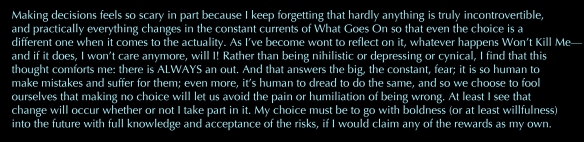
The wind is giving us a good whack here in north Texas today. Two days ago, it was over 80°F/27°C, brilliantly sunny, and calm as a sleeping cat. Tonight, we’re told, we can expect freezing temperatures and should cover all of our tender plants in the garden. A couple of days before our balmy pseudo-summer day, we had a storm pass through. Parts of our town had a little thunder and lightning and a fair amount of rain with a little bit of hail mixed in it, but nothing extravagant by local standards. Our house was in that lucky sector, and so was our car while we drove home in The Weather. Just across town, others were not so fortunate: some had hail the size of golf balls or larger, and tornado-like gusts, and among the downed trees and limbs there were homes where the roofs were destroyed or caved in, cars were damaged or totaled by metal-dimpling all over and glass smashed through, and interiors soaked with the rain and debris thrown in through the broken windows.

We’re torn, in more ways than strictly the physical, around here.

We crave every drop of H2O that we can squeeze out of the sky; even after a relatively mild number of months, our lake levels continue to be well below their norms, some still fully in drought status. It’s not considered a plus if you can drive directly to where your boat is moored, in case anyone wondered. All the same, if the moisture is dumped all at once as though shot through giant firehoses, it doesn’t always stay where it’s needed but instead causes flash floods, undermines foundations, uproots vegetation and breaks down buildings and roads left and right.

Doesn’t matter what you call it—climate change, global warming, a thirty-year cycle, or evil pixies run amok—the weather all around this wonderful, messy planet is more extreme than it had been for much of recent history. The extremes are more extreme, the heat and cold, the wind and dead stillness, the flooding and droughts. Only the inconsistency of the weather seems to be more, well, consistent.

All somewhat amusing, if the worst one experiences is the occasional sighting of a pigeon flying backward. But of course, that’s the least of it. Ask our neighbors who sustained major damage to house, car and property all at once last week. Ask the people—the peoples—displaced by tornado and typhoon, those who have lost home and family to the floods and famines that massacre everyone in their paths throughout whole regions.

I don’t much care about whether we’re partly to blame for the seeming extra intensity of nature’s capriciousness and fury at this point. It’s not all that different, in my mind, from all of the displacements, distortions and destruction in history that we can absolutely attribute to human invasion, conquest, greed, prejudice, ignorance and evil. As horrible as that stuff all, genuinely, is, it is: it exists, already. What matters is what we do now in order not to perpetuate the ills, and better yet, to mitigate them as best we can. We can’t undo history, and we can’t control nature. But we can and should change our attitudes, practices and beliefs (and the governing processes needed to support those societal improvements appropriately) in whatever ways will support a far better world, one where wars, rape, murder, slavery, thievery, violence and all sorts of other horrible human actions are not only universally condemned but undesirable to enact.

And, since we expect that we, and those generations who succeed us, will continue to need to live on this specific planet and its resources, hadn’t we better think up some less selfish and more practical ways of easing the effects of nature just as much as our effects on it? We won’t likely figure out how to stop the wind from blowing with great intensity, floods from filling valleys, hail from pelting like rocks out of the sky, or lightning from searing and exploding whatever it can lay its fiery fingertip on, but if we put our minds to it, maybe we can think up some reasonable ways to protect more people, and care for those who are affected, better.

I didn’t really start out with the intent of rambling on about this stuff, but it’s on my mind. Probably not so different from the pigeon’s reaction when he discovered his original flight plan wasn’t viable. Can I fly backward? I don’t know. But I’ll bet it’s worth trying, if I find myself needing to make an emergency landing. No matter how the wind is blowing.photo

In a Very Hot Place

digital illustration

Not to shed crocodile tears, but don’t you feel sorry for my pain?

In the humid human jungle, there is a rapacious beast that cheerily attacks and devours the happiness of many a poor body.

Menopause. Yessiree, I’m sufficiently past the mid-century mark to be personally acquainted with the joys of middle- and slightly past middle-age. I managed, thanks to magical genes or good luck or some jolly combination of the two, to enter into the mysterious temple of Menopause well ahead of the dull-normal average age of 51. I guess my body just couldn’t wait for the fun. Forty years old? Yay! Sure, I can go right ahead and get on that crazy train.

My doctor thought I might just be a fanciful young’un, imagining I was wandering into menopausal territory at the tender age of forty. Until I described my hot flashes. She already knew about my newly accomplished slide to the bottom of a depressive slope, a thing that (while it is seldom developed in complete isolation from other qualities or characteristics of health issues) can sometimes also be a symptom of menopause. She was not one of those dismissive, demeaning doctors who would’ve opted to imply that I was some kind of hysteric or stupid person. So she did a little checking into my state of being in other ways and lo, what I was experiencing was indeed early onset menopause. Or perimenopause, to be more medically precise.

Anyway, I’m now well past a dozen years of this fun and am still here to tell the tale. What’s particularly interesting to me is that it’s not wildly improbable that I’m, well, okay. I think I might’ve bought, at least a little, into the popular mythology that makes menopause universally into a horror of monstrous proportions. I will never minimize the true suffering that some women experience during menopause, a very real horror. But me, I’ve spent over a decade in the strange land of menopause, and I’m still ticking along.

One thing that I have working in my favor, besides that I have relatively few symptoms and lots of blessed good luck, is that I have great support. I have always existed in the midst of a family, friends and acquaintances where topics of real and everyday importance are generally discussed in real and everyday ways. No big deal. Imperfections, illness, death, human failings, and yeah, menopause. These are all realities and unavoidable. Sometimes painful, sometimes inexpressibly difficult, ugly, terrifying, awful. But in all of that, normal. So why would we be so foolish as to pretend otherwise, to let them loom, magnified, as the sort of thing we can never name, let alone discuss, with others who are statistically likely to have shared the experience and might even have wisdom to share in how to survive?

I’m trying to be smart about protecting myself from the bone density loss that is typical of many women in menopause, taking supplements and keeping active as my doctors have recommended. As an exercise hater, this one isn’t easy for me. I do keep current with monitoring and treating my depression so that I am sad only what seems to me a pretty normal amount and about pretty average things, not depressed in extreme and unhealthy and perniciously persistent ways as I was before I began finding the right health regimen of counseling and medication to keep me on a better path. I use extra skin moisturizer and the occasional application of hair creme rinse because despite having been an almost magically oily youth (and having had to battle high-grade acne as a result) I do find that in my advancing years I now have fairly dry skin and hair.

The big annoyance that remains for me is that my internal thermostat broke when I turned 40. My body forgot how to regulate its own temperature, so now I can go in a matter of seconds from the freezing Undead-body temp I was so long accustomed to experiencing in pre-menopausal years to the miracle of my torso becoming a microwave oven and right back again in a few minutes. Sometimes many times a day. This fun, for thirteen years and counting. And yet I am not a wreck.

The best defense I’ve found thus far is a simple little device that is a hybrid of that grand old invention, the hot water bottle, and the slightly newer iteration of the athlete’s curative bag of ice, a flat water-filled-sponge-containing rectangular envelope thingy that goes by the euphonious rapper-appropriate name of Chillow (trademark registered) and can be laid across my overheated midriff when I can’t seem to get my inner temperature moderated. It’s no cure, but it helps, and help is far better than misery. Even a good old fashioned accordion-folded fan fluttered southern belle-style beats undue discomfort.

I would never be so self-indulgent or ridiculous to call my sufferings massive or anything nearly as important as those of women who endure the real pain possible with menopause and its related conditions. That would be both silly and hypocritical. I’m average, plain and simple and normal, in this experience, even when I’m not exactly on the middle line of the statistical charts. But I can assure you that if you are heading into menopausal territory or someone you know is on her way, there is a path through this particular jungle and you need not be devoured by the beasts met along the way.

See you on the other side of the [very sweaty] swamp.

digital illustration

If the jungle is ruled by a hippo, is it a hippocracy?

Lesser Lights

digital illustration

The major stars are always more visible than those around them. It’s demonstrably true not only in the galaxies but in the more modest constellations of humanity. Our attentions are naturally drawn toward those who shine most impressively and dramatically—for good or ill; those more modestly gifted or less showy mostly find their own lights muddled or even eclipsed by the intensity nearby, and as a result we seldom spot and take note of them.

Even those of us who are not only accustomed to, but also aware of, being humbled and diminished by comparison to others’ flashier character can easily forget how this applies to others. Just because I might feel neglected doesn’t necessarily mean I notice others being equally shortchanged; indeed, it’s more likely that if I’m feeling under-appreciated I get too preoccupied with my longing to be Special and resentful navel-gazing to think that I’m probably in the majority rather than otherwise.

Still, there’s hope. Just as a supernova will someday burn to nothingness, human stars tend mostly to flash into the general notice, burn however brightly for however long, and be dimmed by eventual inattention or death. They, too, will eventually be outshone and/or replaced by other stars whose time has come.

And if I, or any other, should in the meantime feel unreasonably hidden from sight, we are still free to seek our own bit of gleam. For some folk, that seeking comes in ambitions for accomplishment and fame. For the rest of us, the surest way to kindle the blazing fire that gives off sufficient heat and light to be noted by anyone else is to turn our focus outward. Devoting energy, attention and love to causes and works outside of our petty selves, and especially to other persons, is the spark that, when kindled in their spirits, creates the steadiest, most lasting kind of light. Even the smallest and weakest among us shines brightly in this tiny act of selfless will.digital illustration

I’m a Multilayered Person

Being complex doesn’t in any way guarantee that I’m special. But not being special doesn’t prove I’m meaningless, either. I have my uses.text + photo

…and Don’t Forget, I Tell Myself, These *Other* Things…

photo

digital illustration + text

photo

digital illustration + text

photo

I Tell Myself These Things, Too…

text

text

text

photo + text

One Simple Self-Improvement Tool: Live Among Your Betters & Keep Your Eyes Open

text + images

digital artwork

text + image

Bland Like Me

photo montageThe marvelous Diana of A Holistic Journey has been writing posts asking about the influences of race, culture, national origin, education, and so forth and the ways that they shape who we are and how we perceive ourselves. This series of hers is proving an outstanding eye-opening and thought-provoking exercise for me, too. I have spent most of my life living amid and being part of The Majority—middle-class, white, English speaking, native-born, educated, boringly predictable, etc, etc. There were a few touches of diversity around me here and there, of course, this country of the so-called United States being what it is, but those were relatively small and isolated, so mostly I grew up sheltered and unchallenged in nearly all ways.

Yet as an individual I came to know myself as being different in one way or another from most of what I thought of as the ‘norms’ of my own environs, and even learned over time that what I thought was my Majority milieu was mostly just my very narrow path through it in life. While a lot of my classmates, immediate neighbors and friends when I was a kid, for example, were also little pasty white critters like me, the friends I remember best as seeming most interesting to me were ones like Eha, the Estonian girl, or Karen, one of my few black classmates, or the Japanese friends who shared exotic treats from their lunches and who performed classical Japanese dance in a miniature celebration of the Cherry Blossom Festival at school. I have hardly any memories so suffused with longing as that of watching the girls flutter their fans, while dressed in exquisite kimonos and dancing their stately, courtly dance to the strains of the tune ‘Sakura’, which melody in turn still fills me with delicately melancholy love.

My ideals of human physical beauty, as my husband and I have often noted musingly, are nearly all attached to non-whites or mixed-race people, not something I think of as a conscious or intentional choice but a persistent reality for me ever since I can remember. My superficial list of Most Beautiful People would probably have a paucity of caucasian members among its top fifty. While I have never been either very adventurous or flexible in my choices and tastes and experiences, I suppose I have always been fascinated by what seemed different or even exotic to me. I am a fantasist and a romantic in the cheap, popular versions of those ideas, I guess.

I have even wondered, in a broader sense, if part of my very nature is simply to feel like an outsider for no very specific reason. I was always shy, and learned as an adult that this expressed not only a naturally introverted character on my part but also demonstrated lifelong social anxiety and probably the incipient state of my developing depression that didn’t come to full fruition until later. Those, along with undiagnosed dyslexia, tremors, the dysphonia that came into play in my forties, and who knows what other quirks of my unique persona and biological makeup, could perhaps explain why I never felt I fit in with any particular group or was especially central to its character. But I still can’t say I felt consciously sad or was overtly unhappy or removed or, certainly, ostracized for any of this.

What was odder was that as I reached adulthood and gradually began to find a more comfortable sense of self and direction, I have a feeling I may have chosen to put myself into groups where it was plain that I didn’t quite match the norm, specifically because, if I knew there was no possibility of my being an exemplar in its midst of the highest standard, I might unconsciously feel safe from being expected to be so by anyone else. This might be complete nonsense, but it gives me pause. In any event, I spend a great deal of my ‘quality time’ nowadays in the company of people who are immersed in and even expert at music, pedagogy, administration, and a number of other topics in which I have no training whatsoever and only a very little observational knowledge, and I am very happy in this environment.

Conversely, I tend to keep my company of good visual artists and writers and others with training or knowledge more likely to be similar to mine at the seemingly safer arm’s-length of cyberspace, and that probably doesn’t reflect well on my personal fortitude. I never did, at least, make any claims of being any better than a big ol’ chicken. Being a scaredy-pants is probably not race-specific. Or attached with any particularity to culture, social stratum, nationality, educational accomplishment, religion, language, income level, or anything else in question. Being a scaredy-pants is just part of being myself, and the unique combination of qualities and characteristics that make up the wonderfulness of Me.

On the other hand, being attracted to, frightened by or otherwise connected to or dissociated from people who are Not Like Me is a central consideration of understanding how the human species works. Or doesn’t. And there’s no doubt that all of those things influenced by proximity (physical or metaphorical), the aforementioned race, culture, social strata, and so forth, are very potent indicators and influencers of how we will experience the concept of Self and Other at any level.

So what does that ‘solve’ about me, about how I feel about those who are or seem in any way different from me? I’m still not at all sure. Perhaps the best I can say is that my feeling of being, in a value-neutral way, unlike those around me makes me unwilling to assume much about them, in turn. I would generally rather let personalities and individuality be revealed to me and my understanding of my surroundings at the moment unfold in their own sweet time than that I jump in and make any precipitous assumptions. I’m perfectly capable of finding lots of other ways of being wrong and making a fool of myself without constantly worrying over whether I’m being judged, rightly or wrongly, as a stereotype of either the majority or the minority on hand.

Most of my blogging friends and acquaintances are significantly different from me in nearly all of the aforementioned identifying categories, and yet I feel remarkably at home among you. So I’ll let you decide if sameness or difference affects how you see me. I feel at home, and that’s good enough for my part of the bargain.photo montage