Röda tråden (The Red Thread)

Röda tråden is the Swedish phrase for connectivity. I learned it from my husband, who in turn learned it during his dissertation studies on modern Swedish choral history, and in a way it’s the perfect encapsulation of what his research revealed: that the astonishingly deep and broad influence of such a small country, in such a short time, on such a large field as Western choir singing and music came about primarily because of the remarkable and unique confluence and joining together of a huge number of events, people, ideas and resources in that little land at the end of the Second World War. As unimaginably terrible as war is on any scale, it’s all the more a testament to connectedness that at the end of one of the largest we’ve known, such good and meaningful and positive elements were all drawn into one significant, beautiful growth spurt in the art of singing together.digital illustrationAs a miniature of String Theory in the arts, this surge of the choral art in Sweden is notable (no musical pun intended) not only because it posits a reasonably substantial explanation for the larger choral sector’s modern expansive development amid the general devastation and struggle following the end of WWII, but also because in doing so it illustrates wonderfully how the intertwining of all sorts of seemingly disparate elements such as safe havens from political unrest and postwar reevaluation of norms, personal and professional relationships and experimentation with new media could come into contact and interact to create a new mode of thinking, acting, composing, teaching and singing. In turn, this is a striking model of how people from distinct cultures, educational backgrounds, economic resources and political systems and of widely varying personalities, unified by the one tiny thread of choral music, could be pulled together into a complicated system that, though still colorfully messy and imperfect, led to a potent common end that has had lasting and marvelous influence for long and fruitful decades since.
I am, of course, grateful on a personal level because this Swedish postwar influence on Western choral culture has not only enriched my husband’s professional and artistic endeavors–not to mention was the basis for his award-winning doctoral dissertation that in turn opened a lot of friendly doors to us both in Sweden–but because it produced so much spectacular music and inspiration for so much more.
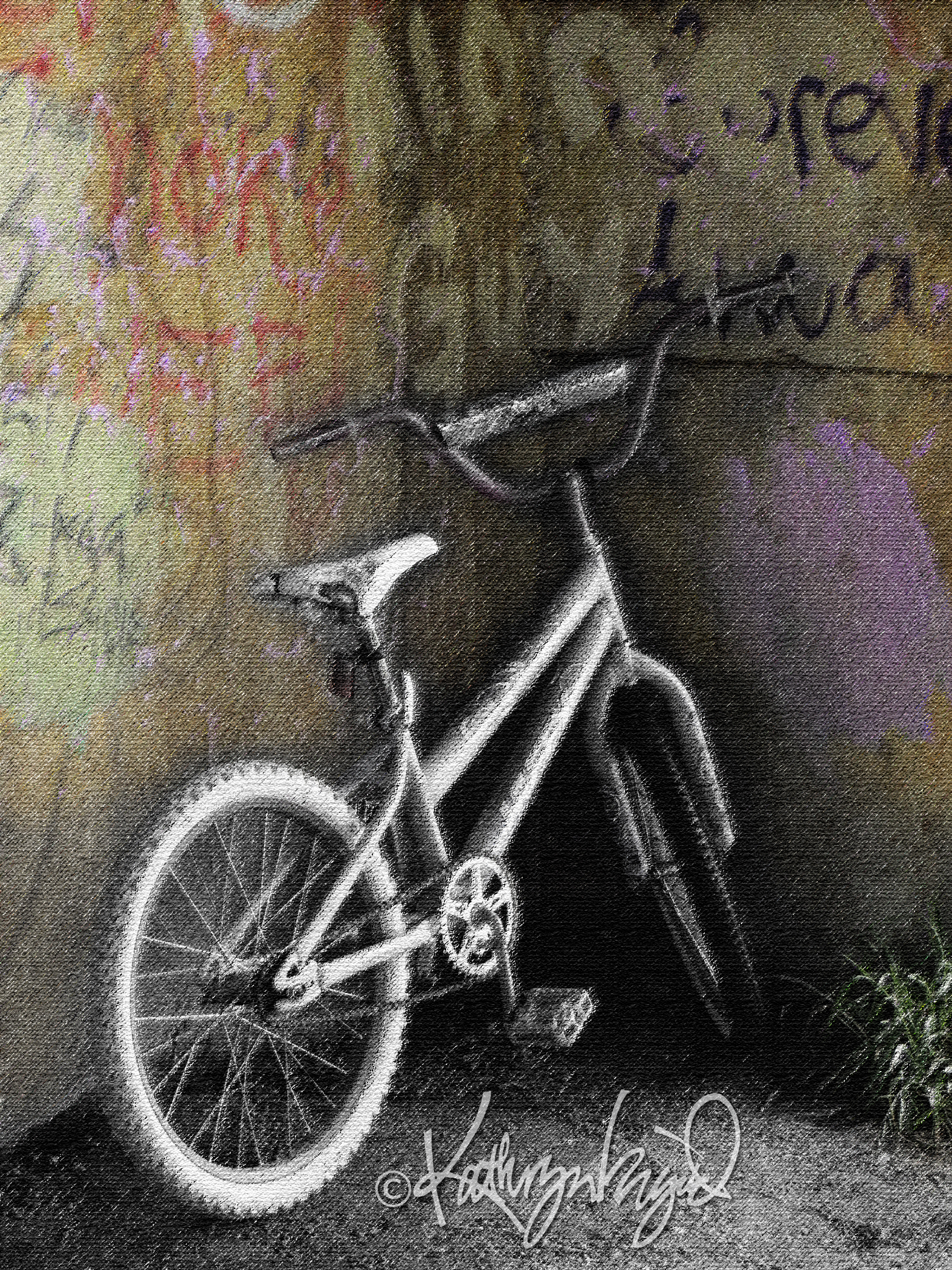
digital illustration

Röda Tråden is the Swedish version of the idea that–indeed literally–fascinates so many of us: the connecting thread–that which binds one thing to another. I can think of nothing greater than to spend life seeking the Red Thread that shows us our commonalities and binds all people together as well.

Further, though, I am grateful that such an otherwise inexplicable event as the ‘Swedish Choral Miracle‘ seems to me ample proof that all things and people really are connected. And that through recognizing and making good use of those connections, however, odd or tenuous they may appear, there is hope for new and better songs to be sung everywhere.

If I needed further proof of this, last night’s concert gave it amply. My spouse conducted the combined forces of the Chancel Choir of the church where he’s currently interim choirmaster plus their excellent hired pro orchestra in performing Haydn and Dvorak’s two settings of the Te Deum text as the concert opening and closing, respectively, bookending the extraordinarily lovely and moving Missa Brevis of Kodaly. I came in to sit for the concert among strangers and acquaintances from the church and discovered a friend from another parish sitting across the aisle from me, then learned from one of the choir administrators that a friend of hers in attendance turned out to be a long-ago colleague of my husband’s from another state, and finally went up to greet my guy after the concert and found him speaking with a group of ladies in the front row, one of whom was the wife of a former US president. What brought all of us divergent people together in this moment? Music. Beautiful singing and playing. Chance, kismet, divine intervention. Call it what you will, the slender but unbreakable thread that connects us all drew us into one place for a time of basking in the inscrutably beautiful harmony that is beyond craft, beyond art. That is a concert without peer.

Urbanity

There is a huge difference between the merely impressive and the expressive when it comes to modern cities. Rotterdam, once one of the glories in the European architectural crown, was bombed to dust in WWII and, given the poverty of post-war resources, was rebuilt in the following decades as a horrifyingly soulless, boxy blot of concrete on the face of the Netherlands. There is no comfort in knowing that the firestorm that destroyed the city was probably not planned as it happened but resulted from a perfect storm of another kind in miscommunications; the horrors of war are a long testimony to the potential for such devastation. In any even, it took Rotterdam ages to be revitalized into the place of energy and beauty that it is today. Why? What made it such a heart-stopping graveyard of a place when it had once been full of life and loveliness, and how could it ever come back to be something gracious and potent again?

There is no obvious single word that can express the massive destructive toll the bombing took on that city; annihilation is perhaps a close approximation, since it’s clear even from faded photos that the thoroughness of the attacks left very little evidence there had ever been a Rotterdam. I find it nearly impossible to imagine even when staring at proof. When my spouse and I visited the city for a conference even less than fifteen years ago it was still a sad shadow of its former glory, still dominated by 1950s-vintage blocks of affordable and utilitarian harshness that made me want to scream when I saw them in juxtaposition to the few tiny remnants of the beautiful architecture that had once filled the place.

The main reason that Rotterdam is beautiful once again, and that many other cities have, and some have never lost, such beauty is simple: architectural thought and distinction. Building what is cheapest and easiest to construct is a poor solution to lack of structure anywhere. Places that have never experienced the ravages of war, urban decay and other forms of damage and neglect in such extremes can retain the beauty and patina of urbane culture in their urban settings far more easily. Take Boston, Massachusetts, a city that has seen its share of ups and downs over time, but as one of the older cities in a young and generally untouched-by-war country, still has many of its older–even oldest–and most prized, elegant, distinctive buildings. Despite the expected problems of social unrest, economic up- and downturns, spots of urban blight and misdirected city planning that Boston has faced like any modern city, the knowledge that the architectural strengths it does have are worthy of protecting and preserving means that it was built as more than mere indoor space in the first place and that the character of the structures has as much value in shaping the city’s identity as do its great denizens.photoIt should be obvious to those of us wishing to see all of the world housed and sheltered in humane and useful structures and towns and cities that simply throwing up whatever is cheapest and most readily available is hardly more useful, in the long term, than just plain, well, throwing up on people. If we want others to live educated, healthy and therefore productive and admirable lives, we can’t stuff them into trash bins of buildings that, even if they don’t collapse under their own flawed ugliness, will never encourage their occupants and users to flourish. If we don’t intend to fill others’ lives with the vomitous garbage we ourselves would reject and flee, we must find ways to make good, practical, appealing design a mandate and not an afterthought or an unaffordable dream.

That approach not only makes living and working in tolerable shelter possible but nurtures the human spirit and pushes us all to better ourselves, our cities and our world. photo

Huntin’ ‘n’ Fission

I’m told that it’s both fun and useful to have hobbies. There are certainly plenty of books, magazines, news articles, classes, clubs and social organizations devoted to leisure-time pursuits, all of them trumpeting the value of such avocations. Some of them are decidedly age-specific: I haven’t seen a large number of free solo rock climbing promotions aimed at senior citizens, for example. There are hobbies considered preferable to persons of certain economic strata, fitness levels, sexes, nationalities and any number of other identifying categories, some active and some quite passive or spectatorial, some of them expensive to learn and requiring extensive training and practice and others free and simple to master. Regional favorites abound, like, say, noodling (catching catfish by hand), which would be hard to enjoy in desert climates unless you happened to be both a big fan of the sport and dedicated enough to stock your own evaporation-protected pond. Some of the more intellectually stimulating hobbies, like competitively designing robotics for cage fights or nuclear plants for home use, are highly entertaining to their practitioners but utterly escape the attentions of us more modest-brained folk as either too highfalutin or just plain incomprehensible. Sudoku, popular with millions of people cleverer than I am, falls into that too-challenging category for me since I’m so mathematically unfit, but I do like some kinds of word puzzles reasonably well if I’m in that rare mood.

Should I take up golf, having decided to move (when my spouse gets around to retiring) to a place on a golf course partly for its–surprise!–affordability and its location in a great town in a great part of the country, and in no small part as well for its great view into the green and leafy first fairway of the course? That would require my learning which end of the club is the grip and which the head, not to mention a whole bunch of other stuff, and on top of that, paying dearly for the privilege.photoWhile I’m still living in Texas I’d certainly be in a logical place to take up hunting, but that doesn’t appeal to me at all, unless it’s with a camera. For that matter, I’m more inclined to practice target shooting with a longbow, something I’ve enjoyed briefly in the distant past, than with a gun as well, being mighty skittish about those things. Being on the fast track to old age, I could probably pick up something more sedentary like knitting and crocheting if I had the patience. My single brief fishing moment post-childhood actually garnered me a cute little throw-back bass (as a kid I never caught anything but one big scary looking White Sucker that even my older boy cousins wouldn’t touch) and was enjoyed in good company while sipping a fine Texas brew; maybe that should inspire me to get busy with fishing.photoThat’s the thing, though: I just don’t enjoy games and sports, puzzles and pastimes much at all. Whether this arose or was reinforced by my longtime social phobias, perfectionistic fear of being seen as incompetent, dyslexic inability to keep anything I’m doing on a standard track, hilariously hideous sporting skills or any combination thereof is probably irrelevant. You see, there’s no separation of church and state in my life. I spend my days and evenings doing the very things that lots of folk can only do on an occasional basis and to fill their free time.

If I took up drawing, concert-going, reading and writing, cooking, DIY projects, gardening, photography or collecting weird bits of Stuff as a so-called hobby, what would I do with my day job? The truth is simply that I’m a fully fledged frivolous person. If eccentric creative activities and ways of thinking are on the periphery of real life, then I am a bona fide fiction, an imaginary character myself. If on the other hand art is, as I’m convinced it should be, central to existence and well-being, why then I’m just ahead of the curve; I won’t need to retire to any old rocking chair or go in a desperate search for something to keep me occupied, because I already have too many fun and pleasing things to do. Either way, I’m keeping busy.

Twists of Fate

It shouldn’t surprise me, as little sense of direction as I have and as seldom as I have an inkling where my path is leading, that I end up in some weird and completely unpredictable spots at times. Take the time I was at a luncheon with the queen and king of Norway. It’s entirely safe to say that they forgot the occasion right about the minute their motorcade zipped off with its Secret Service escort to ship them back to the White House for their next performance. Having lunch with a bunch of foreign academics, even if it’s coupled with getting a doctoral degree (Queen Sonja was receiving an honorary doctorate for her humanitarian work) and having a permanent outdoor sculpture dedicated in your honor is so yesterday. Like that kind of stuff doesn’t happen to royals every day of the week. I, on the other hand, don’t have that sort of thing occur very regularly in my life and found the events of the day pretty memorable.

photo

(Left to Right: King Harald V and Queen Sonja of Norway; Pacific Lutheran University President Loren Anderson; Gene and Esther Grant, donors; the Rev. David Wold, Bishop and university board Chairman; li’l ol’ me, sculpture designer; David Keyes, professor and chief fabricator of the sculpture; Frank Jennings and other assorted faculty and board representatives. That’s the sculpture, Generations of Oak, behind me.)

It was amusing to take part in the bizarre hoopla that takes place when an assembled group of citizens in a country that takes itself far too seriously as being above such things as royal-worship (erm, Have you not looked into the mirror, O nation of celebrity-slavish fools?) gets a chance to suck up to the high and mighty of another nation. To experience the hilariously artificial and probably pointless stiltedness of security instruction from our friends the Feds; to shake hands with other humans who have been designated super-important and wonder why they would bother to shake hands with me–or, admittedly, I with them–and to hear all of the earnest speech-making and watch the well-meaning maneuvers; all of this was really educational indeed. That it was so for me in the context of the university where I taught was certainly not lost on me. I almost felt like I should get some undergraduate credit in sociology or anthropology for being involved in my little way.

But I’ll admit that most of all, it was entertaining to realize that through no particular virtue of my own I had once again stood in a spot that others might envy and reaped unearned rewards that would remain in my memory-book for a long time to come. Just call me Lucky.

Life Cycles

digital illustration from a photoSo Much Happens in a Few

So much happens in a few

Stray days, cells changed and borne along

Eternally, while growing strong

And old, and yet, too, growing new,

Dividing in their bubbling streams

The wind and sun of yesterday

And all that with it passed away,

From what are tomorrow’s dreams.

So, too, notes dashed off in haste

And then recalled with cool regret

Or penciled into kind words, yet

Not guaranteed to mend the waste,

Join in the fragile and the small,

Still, pale, inconsequential space

Where in the cycles of our race

So much can happen to us all.photo

Enlightenment

photoGetting smarter is a lifelong thing, in and out of school–for the fortunate and attentive.

Me, I’m sad at the end of every school year. Those students and colleagues of my husband’s who have become such a big part of our lives and are now graduating or moving on to other jobs or retirement are about to disappear from immediate view. Even the ones who remain close with us after relocating are now to be infrequent contacts rather than the people we happily run into in the hall on a casual basis. I get lonesome for them even before anyone leaves.

The lovely inverse of this, happily, is the ingathering of ongoing and new compatriots as the school year is once more underway. New faces, new voices and new personalities are integrated into the weave of the community and once again it becomes the rich underlay of the year, the pleasant buzz of the bass line, the light up ahead growing ever so slightly brighter as the weeks and months pass and we travel through them.

It’s funny that I sort of forget this changing of the guard between times. Between my years as a student myself, the nearly two decades of my own teaching, and the time spent observing my husband and his colleagues at work, you’d think I would be so irrevocably inculcated with the cycles of the academic and concert seasonal years that I would have a sort of song of it playing internally at all times. In real life, though, I am not so consistently observant.

It’s only when I am right in the moment of it that I recognize what is such a piquant part of my emotional life and I mark these transitions. It’s in these times, in fact, that I most benefit from my spouse’s longtime practice of getting his choirs and groups to sing or play through transitions. In music, this helps performers to internalize a multi-movement piece as a whole and not be stuck performing it as a disjointed, choppy conglomeration so that it loses its sense as a unified entity. It helps a song avoid sounding horribly like a bunch of unrelated anecdotal verses interrupted by further disconnected refrains that act more like speed bumps than gateways between the events of the expedition.

In life, I’m working to find the balance between living and operating while fully engaged in the present, letting that part always be led by the best of the past, and moving toward the best of what is yet to come. I know I’m enjoying the present verse immensely even though some of the singers, players, conductors and teachers of the last semester have moved on to other places and joined in other songs, and I expect that the current moment will lead to yet more marvels of music and camaraderie. I just need to pay attention, follow the score, and be ready whenever a bit part is offered, because I keep humming along in the background and every passage tends to be more illuminating than the last.photo

What’s Fast is Prologue

photo

Now you see it, now–hey! Where’d it go???

If everything in our lives that’s already happened is merely setting the stage for what is yet to come, it’s no wonder I sometimes feel like I showed up for a pop quiz so totally unprepared. It all flashes by so danged quickly! How am I supposed to get the hang of any of this stuff when life refuses to go at anything but breakneck speed? I’ve heard people respond to others’ staring with ‘take a picture; it’ll last longer’–but it’s the fleeting joys that really tend to stick with us, little and ephemeral, indescribable and irreproducible glints of pleasure often more than any sort of historic events. I guess I’ll have to settle for my usual method of buckling up and hanging on like crazy while it all whizzes past at life-speed.

photo

No time for nostalgia, everything is going full speed ahead!

Signs & Portents

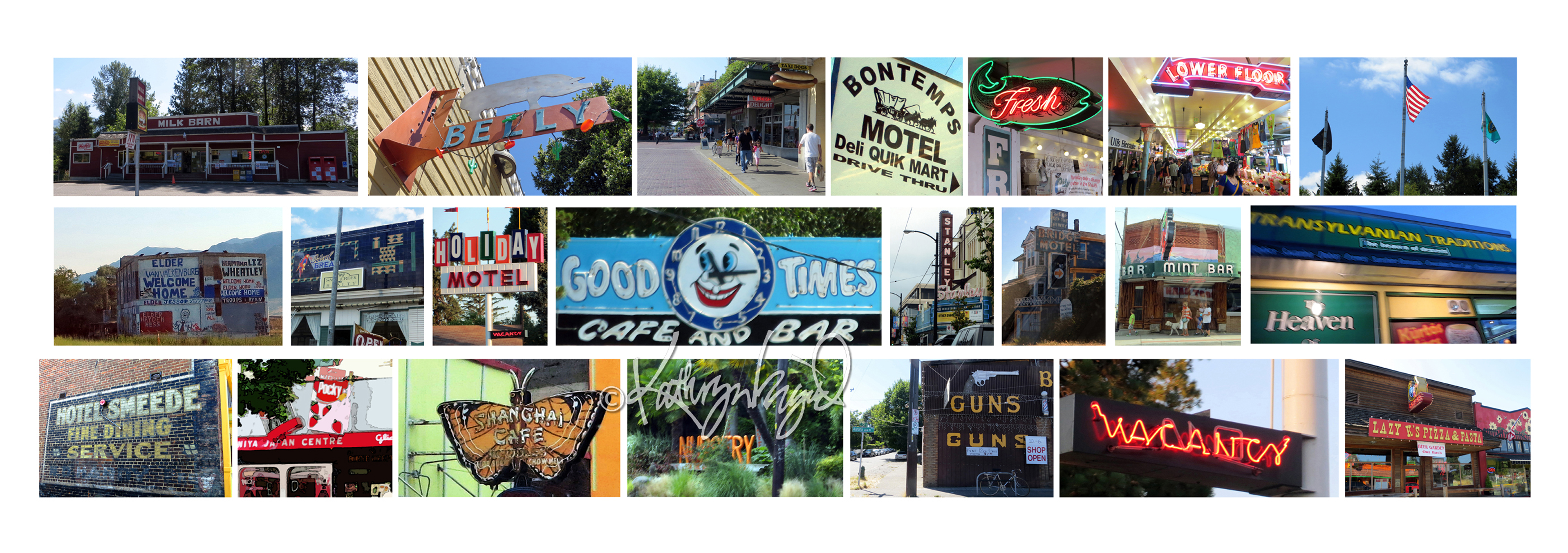
Every trip tends to have its unique interests, but they all share certain qualities, too. One, for me, is the abundance of intriguing, useful, surprising, puzzling, inviting and sometimes downright amazing signs of all sorts that mark the way. Our summer road trip was chock full of them, too; many whizzed by too quickly at highway speed to be commemorated by me with my trusty little camera, but some served well to mark a few of the highlights and oddities of our pilgrimage west and back.

photo montage

Some signs made me wonder if we’d suddenly gone far astray from our intended route, to another state, country or (occasionally) planet. [Remember to click on the images if you want to see them in greater detail.]

photo montage

A few signs were rather provocative, and many simply amused me greatly for one reason or another.

photo montage

Vintage signs often outlive their original purposes by being moved–or read–out of context. Unless, perhaps, the message has a more cosmic meaning…

photo montage

Some of the most welcome signs are those very familiar ones not seen in a very long time. It doesn’t matter so much that I’ve frequented the place or embraced the item as that the sentimental landmark each represents of other persons and places is called to mind.

photo montage

I’m especially fond, though, of those signs that seem to have lives of their own, through age and adventures unknown. I like to imagine what they denote beyond their mere artful decorations and texts.

On this particular escapade of ours, all signs pointed to a grand tour and many colorful memories. And led me, of course, to think ahead to all of the travels and signs yet to come in my life.

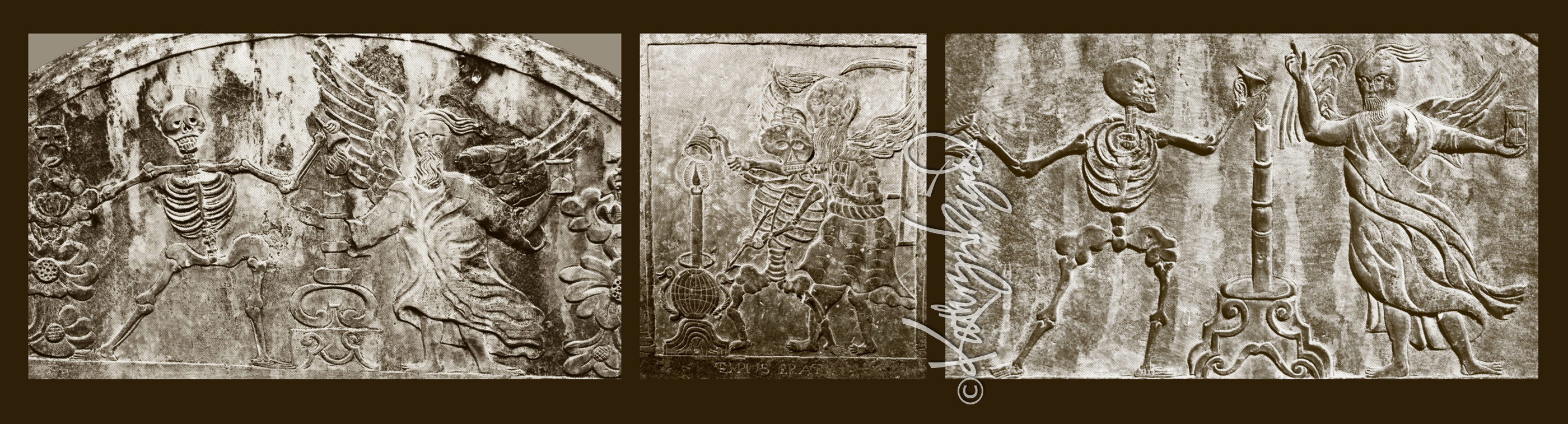
Another Totentanz

digital illustrationTo Rest in Peace

Alas! for shadows carve my collarbones

and misery is lapping at my heels;

Death’s machinations turn, wheels within wheels,

and grind me for its grist between cold stones–

And yet, as dust-dry as I turn, breath blooms

persistently, a torture to my soul

when I had rather be devoured whole

and go on into Peace’s empty rooms–

Still, here I stay, lie atomized, forlorn,

forgotten on the fringes of what life

and loves I knew once, when my days were rife

with possibility as a new morn–

Let me die now, not live without a chance

of altering this endless Totentanz.

Lest you think me suffering myself, or pessimistic, I assure you I am alive and well. It’s just that I have seen many others struggle with prolonged and pitiful end-of-life dramas and was reminded this June when I saw the beautiful antique gravestones in Boston of how different things are now, when we have such nearly unbelievable powers to keep ourselves alive for tremendously long lives but have lost touch with when it’s acceptable or even desirable not to do so. If our skills for ensuring or encouraging genuine quality of life are far outstripped by our skills for lengthening it, what does that say about us? Generations removed from our forebears, whether in Boston or elsewhere, who knew much more primitive medicine, greater physical dangers, irreparable injuries and the concomitant shorter lifespans we have apparently long since forgotten, do we know how to accept death as a natural end to life and treat dying as a passage to be eased to the fullest extent instead of forbidden?

Sometimes No News is Just…No News

I’m not here a second time today to announce I’ve discovered the cure for halitosis, let alone cancer. But I’m back simply to share a link with you because another blogger’s words for today had such a thought-provoking effect on me and I figured you might find them equally intriguing. Jen, the smart and compassionate translator/interpreter for her charming and handsome malamute Rumpy over at Rumpydog, is a committed animal activist. My friends, you know that it’s more likely I should be committed [IYKWIM] than true that I am disciplined, self-confident or wise enough to be an active advocate for much of anything. But today Jen addressed a topic that’s long been nagging at me, to the extent that I know I’ve actually mentioned it to you: it’s not that we as humans are incapable of caring about things enough, too stupid to figure out some solutions, or unwilling to do the hard work to enact them–it’s that we are too self-centered to do so together with anyone who fails to think and care about, and approach, those problems in precisely the way we personally approve.

I’m absolutely certain that no matter how much I liked or admired Jen it would be impossible for me to agree 100% with her on everything, or her with me. But I’m also sure that I do deeply respect her commitment and willingness to act on it and speak her mind. So I encourage you to go and visit her to read her most sensible, cogent piece I’ve seen in ages about what does and doesn’t work in discussing, promoting, advocating for or acting in *any* good cause. I don’t know a solution, because I suspect it’s such a universal ill among humans that it would require Nobel Peace Prize brilliance *plus*. But if we gather around the conference table determined to listen, learn and share the best of ourselves, there just might be some hope for us. The very thought cheers me.Happy days to all of you, and many thanks to Jen for sharing. (Click on the word ‘sharing’ to go to her blog.)digital artwork from a photo