Foodie Tuesday: Thrilled Cheese

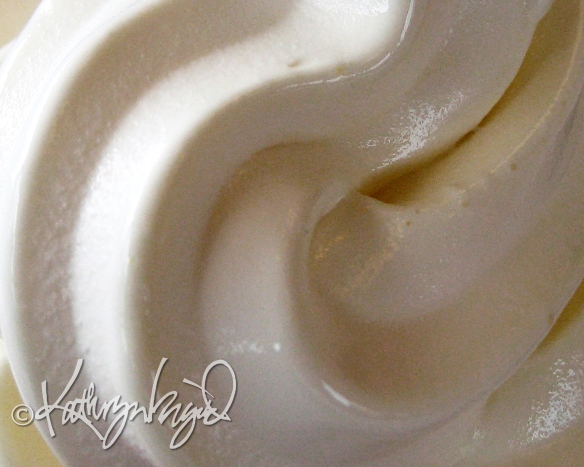
Photo: SwirlyMy name is Kathryn and I’m a dairy fiend.

I sincerely hope there’s no umpteen-step program out there to cure me of my addiction, because I would be ever so sad to part company with butter (pastured butter, sage butter, beurre noisette…), cream (yogurt, ice cream, whipped cream, a drizzle of heavy cream, sour cream…) and all of their cow- and goat- and sheep-produced milky ilk. Among the most dire of those losses would certainly be cheeses. It’s even a remote possibility that in my childhood I mistook various people’s talk about the power and centrality of a certain deity in their lives as completely understandable allegiance to the prepared and aged dairy product, hearing them intone instead, ‘come into my heart, Lord Cheeses.’

All of that is merely to tell you in what high esteem I hold dairy products. I know I am not alone in this. The worldwide fame of the French cheese board, an Italian feast topped with fine curls of Parmigiano-Reggiano, a glorious firework of Saganaki, a rich fondue or heart- and hearth-warming rustic iron cooker oozing with Raclette (somehow fitting is that the compute offers as a ‘correction’ of this name the word Paraclete, for it is both a helper and rather holy in its way)–these are all embedded in the souls and arteries of generations around the globe, along with many others. The land of my birth has been, if anything, impregnated with this rich and robust love by every wave of immigrants who have ever set foot on its shores, bringing along all of the aforementioned and so much more, and gradually adding a multitude of delightfully cheesy (in every sense of the word) American twists to them. Along the way, besides gleefully adopting and adapting all of the aforementioned, we dairy devotees stateside have high on the short list of our national favorite foods such delicacies as cheeseburgers, grilled cheese sandwiches, pizza and macaroni and cheese. [For the latter, by the way, I’d be hard pressed to find a recipe that rivals Amy Sedaris’s death-defying macaroni and cheese for my love; infinite variations of it have become my personal staple when I choose to make the dish.]

I confess that lowest on my personal list of cheese ratings, possibly even below the most notoriously stinky and bizarre of cheeses (yes, Gammelost, I’m looking at YOU) is the one ‘cheese’ named for our country, American Cheese, which I personally think of as purportedly edible vinyl and often has little or no actual dairy contents, though for good or ill there are otherwise reputable American cheese makers currently promoting a new, truly dairy version of this stuff. Yes, I get the whole melt-ability thing, whether for Tex-Mexqueso‘ (an ironic name, to my way of thinking) or for creamy sauces and the like—but I also know there are plenty of ways to achieve that smoothness with what I think of as real cheeses. But I digress. Yet again.Photo: Aging Cheeses
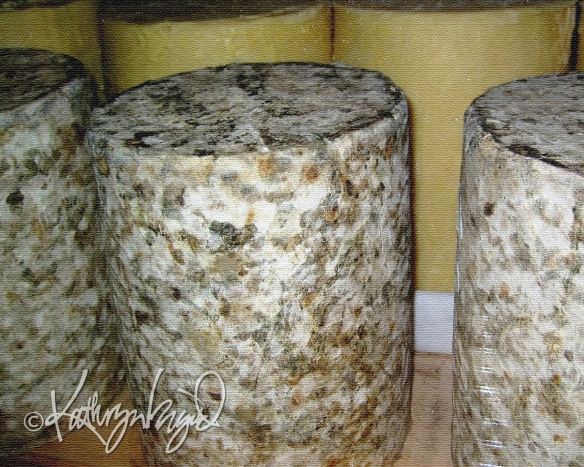
When hungry for grilled or toasted cheese sandwiches I am not averse to tinkering with the most sacred simple versions, as long as the cheese still gets to star in the meal, because after all, the entrée is named after it. Since there are whole restaurant menus devoted to the single item of this sandwich, I needn’t tell you what a wide and spectacular range of goodies goes ever-so-nicely with cheese and bread. Now that I think of it, the stereotype of the French eating nothing but bread, cheese and wine could be excellent reason to pour up a nice glass of red when one is consuming a grilled cheese sammy, but that’s merely a starting point for the whole world of possibilities of course. A cheese and chutney sandwich comprising a sharp white cheddar, Major Grey’s chutney and a lovely dense bread (how about a nice sweet pumpernickel? she asked) is a thing of beauty. A perfect deli Reuben is a great variant of the cheese sandwich. Tuna melt? Why, yes, please! And on we go.
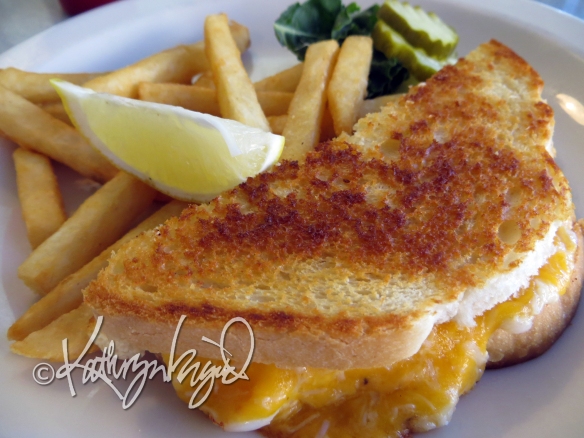
Photo: Dungeness Crab Grilled Cheese

A purist’s dream, amped up: the Bee Hive Restaurant in Montesano, Washington makes a buttery grilled Tillamook (Oregon) cheddar cheese sandwich on sourdough bread, adorned with a heap of sweet Dungeness crab meat. If you can’t find happiness in a bite of that, you’re really not trying.

Sometimes it can be both simple and surprising. I’d be hard pressed to love a sandwich better than the peasant bread grilled cheese from Beecher’s in Seattle with their Flagship in the starring role. But I’ve also discovered that a thick slice of Leipäjuusto (a slow-melt cheese like Saganaki), a few slices of crisped bacon and a generous schmier of ginger marmalade make for a dandy combination, and I would certainly not keep such a stellar combination from you, my friends. Kevin, a Canadian small-kitchen wizard, has published a veritable encyclopedia of grilled cheese sandwich variations on his blog Closet Cooking (a site everyone with cheese in his DNA ought to bookmark, stat), and there are all sorts of other blogs and sites, foodie and otherwise, loaded with such cheesy champions as can make your spirits sing and your capillaries tighten simultaneously. So go forth and chase the cheeses! I’ll be here waiting for you, with the ribbons of some good, fat, stretchy melted mozzarella hanging out of the corners of my loopy grin.

Don’t Pass Me; I’m Going as Fast as I Can!

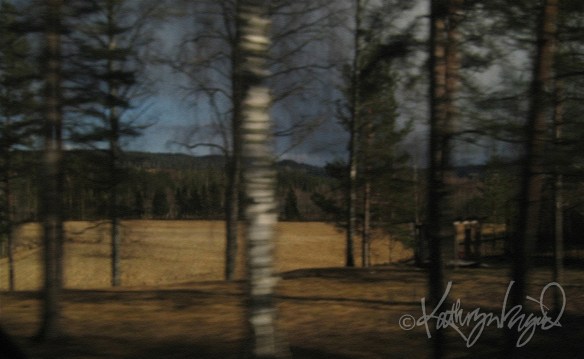
Photo: Seen from a  TrainHigh Speed Chase

The world, my friends, is a fleeting thing, and life, swift passing by

Like silent film outside the train, blurred trees against the sky

And birds, small flecks, shot from the grass to pepper clouds with black,

Yet nothing would I change a whit to veer from on this track;

If hurtling time should slow its pace in this great journey’s run,

There’d be no more such tales to tell, no news under the sun,

No destinations to explore, adventures to be had,

And not one bit of joy that’s new, and wouldn’t that be sad!

So I’ll hang on and buckle up, and hope what’s speeding past

Won’t leave me in a cloud of dust. I’ll get there, too, at last.

I am Ancient History

I know, I know. You already knew that.

But I’m thinking just now of how little I fit into the here and now.

There’s so much that was part of my everyday milieu right up to today that Those Young People I see around now have never even heard of, unless they’re youthful fans of archaeology. Stuff that I thought was hip and cool and fabulous is not only dated, it’s just plain unknown anymore.

I think I might be a science project. It’s just possible that I am being studied by aliens, or at least by the vast numbers of people so much smarter and also younger than me. And they are doomed to be disappointed. Those who study me and my life will plumb the depths of my personal history, kicking up heaps of mouldering dust and struggling with seemingly endless minutiae that could lead to important and fascinating factoids about existentially important stuff, or at least about me, only to wash up, time and again, on an equally dim and arid shore of obsolescence and insignificance.

It’s not that I mind, really. I assume this must be the case, in fact, for most people of every generation. Most of us must feel something like this, whether it’s true or not. We’ll all find there’s a great deal that’s very quickly forgotten as soon as we’ve lived it. If anyone ever delves into my little history, there will be a whole lot that looks, yes, alien to them in its unfamiliar antiquity, even if it is rather recently past in real time. I may not be at the peak of what was hip and cool and fabulous any more than I once was, but I can pretty well rock the role of living dinosaur.

Digital illustration: Artifacts

I am the sole artifact in my own little segment of history.

Foodie Tuesday: Let Me Call You Sweetheart

When you’re good enough, you don’t have to be trendy to have staying power. The classics never go away; a fabulous patisserie is forever in fashion, because well-crafted sweets have endless appeal. They may have waves of popularity over time, like the current euphoria over macarons that belies their long history or the delight of the general public on discovering in latter years that chocolate is not entirely a naughty indulgence. But what is truly tasty will never entirely fade from view, especially in the kitchens or patisseries where the expert practitioners of their making reside.
Digitally painted photo: The Cupcake Trend

My sweet tooth knows few bounds. I love fat in most of its terribly delicious forms. When those two attributes of sweetness and fat combine so fortuitously as they can in desserts and baked goods, in little snacks or large displays of ostentatious celebratory food, I am unlikely to resist, unless I’m having an unusual fit of good manners when there’s not quite enough to go around or my calorie-conscience is working overtime to knit me a hair shirt that squeezes my increasingly well-rounded form.
Digitally painted photo: Patisserie

As a visual artist and prettiness-addict, the moment when my resistance is most likely guaranteed to ebb and to fail is when I am standing, rapt, in front of a pastry case at the bakery. If I had any real moral strength in this regard, I would at least be inclined to pardon the beauties beckoning therein from my ravages for the sake of preserving their great visual appeal as long as possible. But I have none, so it’s more than likely I will excuse myself by reminding any fellow admirers that the visual attractions of food are limited by their shelf life, which is briefer indeed than my own. Even if I have eaten more darling pastries than is remotely good for me.

Farewell for now, sweet readers. If you should grow any sweeter, you might be in danger of being bit by me on a dessert rampage. For now, I’ll choose to take the precaution of stuffing my mouth full of marsipan bløtkake [a favorite, Norwegian marzipan-covered cream cake], if only for your safety.

To Whom Much is Given

For unto whomsoever much is given, of him shall much be required.

That’s a passage from Christian scripture, but it’s a precept that I’ve read, heard and seen in the texts and teachings of other religions, and it’s commonly enough reflected in social policy and proposals for humane and ethical action in all sorts of places that it deserves more general notice and attention, I think. There seems to be an underlying assumption amongst many people of all kinds and cultures that if one of us has more than another and that other is in need, one ought to take some responsibility for her neighbor’s well-being and share the resources. It’s arguably a foundational principle of civility and hospitality everywhere.

Yet it’s practiced so much less often than is possible. For all of my love of time with friends and family, I also crave quiet and reclusive time, shutting out the world and curling into my own self, and that applies to all parts of my life. And I think that’s probably more common than not. Who does not prefer the company of her own self or her very small circle of kin and kind, especially when the workaday world has seemed particularly demanding and rest and retreat as hard to come by as clear water in the swamp? Who doesn’t covet the privileges she feels she’s chosen and earned for herself?

I was reminded of this particularly when we were in Hungary this summer and I had the privilege of going with a number of the touring choir members and my husband to visit the ancestral home of a hereditary Count and his wife the Countess. The Count himself made only a brief appearance at the end of our visit, his wife having participated with staff and supporters in the greeting of our group, speechmaking about their work with orphans and special needs children in the family-sponsored home on the grounds of the residence, and a small but lovely reception in the main public-room of the place, a large parlor filled with art and artifacts passed down through the lineage. The Count was charming and rather cheery when he did appear, but I sensed that he preferred his privacy as well.

The Countess, on the other hand, had a rather regal bearing and while she was generous in hosting us and very willing to share her home and thoughts with the group, I heard some quiet comments aside that she seemed a touch condescending or even a bit put out by our visit. I had been at the back of the room during her parlor commentary about the family history and the work of the orphanage, not able to see her over the number of people in the room, and her tone was very subdued, so I got the gist of the story, but didn’t see any of the expressions that might have influenced the commenters.

What I did hear was probably a fairly common tale among the nobility in Europe during the previous centuries: a privileged kinship, whether by their own efforts or honors conferred upon them by royalty, this family had done as they were both able and expected to do with their wealth, which was to live quite elegantly and surround themselves with art and beautiful landscaping and magnificent homes. At the same time, they saw themselves very much as caretakers of the larger community, responsible for the well-being not only of the people who staffed their private holdings but those living in proximity as well. This is of course the story of noblesse oblige, a practice of good that may have been at its core a defensive move but served the purpose in any event. Like many noble families, the one we visited had essentially founded a town around themselves over the generations, supporting educational or healthcare or other needed resources and, in this instance, building a magnificent basilica where the town could worship and where, not coincidentally, the touring choir were performing on the evening of our visit in a benefit concert for the children’s home.

Also like so many other noble families, this one had gradually seen its fortunes decline in the years between the World Wars, and on advent of German action in the region in World War II, was ousted from their land and holdings and fled for safer places. Their palatial home first became military headquarters during that war (in which the Hungarians quickly and brutally learned that their alliance with Germany was a general pretext for annexation and Nazi rule), and then was used for Communist offices in the years after. It wasn’t until just a few decades ago that the Count and Countess were able to return to his family property and renew their residence in the place. The good news was that there had been no interest on the occupying military’s part in redesigning the buildings, nor any money for the Communists to do so, so the architecture remained for the most part intact. The bad news was born of the same circumstances, though: the military’s disinterest in redesign and the Communists’ lack of funds extended to any concern for maintenance. Naturally, the park in which the palace stood, the palace and outbuildings all fell into a state that even in their heyday the real owners could probably have scarce afforded to mend, and it all added to the sorrow that the art and fabulous book collections had been heavily looted.

This is a long way of saying so, but on the day we visited there, I stayed after the others had left that once-elegant parlor, pausing to thank the Countess and to ask her a couple of questions about what I understood were the Count’s and her attempts to resurrect some of the property, if only for the appreciation of the locals and the young wards and their caregivers now living in closer quarters with these two owners. Her tone, perhaps because she was no longer addressing a whole roomful of people, or maybe because she felt she didn’t have to represent her husband’s whole heritage anymore, not acting in any official capacity at the moment, softened greatly, and I sensed mostly melancholy. There was sorrow for what had been lost, yes, but after we spoke about that and the enormity of the restoration needs for a moment or two, I simply asked her in the middle of that once-glamorous hall if she had a personal favorite artwork in there.

It was almost as if she became for a moment the young bride who had come there with the Count before the war, a little in awe of his family and the wealth that surrounded them, the power and the weight of the name upon her shoulders seeming rather immense even in the midst of her happiness. I can’t say she became suddenly shy, though it seemed to me that there was the slightest hint of it as she walked across the room and, instead of choosing one of the showy ancestral treasures or superb museum-quality portraits but this moderate-sized, unrestored and slightly bleary, painting of peasant girls dancing around in an Impressionistic meadow, and said simply, “This one.” I asked her what made it so, and she did little more than offer a soft comment that it was pretty and it made her happy.

Digital artwork from a photo: The Countess's Favorite

This is my digitally painted version of the Countess’s beloved artwork, which besides being in great need of restoration was under glass and hard to see without much maneuvering. But even in its retouched state here, I think you can catch a glimpse of what filled her with such longing: a sense of sweetly carefree innocence that must seem now like a distant, faded dream.

And I thought that perhaps what had been asked of her, she who had had quite a lot at one time and might even be seen in town nowadays as a bit of a remnant of things past, was her innocence. It must have been a long, sorrowful journey from being a young lady inducted into the nobility by marriage and impressed, if not overwhelmed, by the lavish life and the heavy weight of what was expected of her in her new role, to the life she knows now. However she and her husband might work to regain a place in the community through their labor and largesse, the world has changed, and they with it.

What must it have been like, as she moved through the war and later years in exile, knowing that everything tangible she had known at home might well be gone? On returning long after, though she saw that it wasn’t demolished, her happy ease was clearly broken and irretrievably changed. Finally, settling into her new role as figurehead of a still somewhat nebulous but ambitious attempt to find a way to make all that was left have real meaning again, looking into that painting must have become rather like looking into a mirror at her past self, not as a dancing peasant girl but as a naïf who thought the world was simple and clean and kindly and that all she had to do was make the best of what had been given to her in order to be happy in it.

Foodie Tuesday: What’s *Not* in My Kitchen

I don’t mind simple foods, simply prepared, and I’ve had plenty of pit-roasted and wood-stove cooking that was far better than merely edible. Sometimes there is nothing more delicious than the freshly caught fish grilled over an open fire or fried at lakeside in a worn and well-seasoned cast iron skillet. The smoky goodness of things cooked with live coals is sometimes so far superior to what I could conjure out of a high-tech kitchen with the pallid assistance of bottled liquid smoke (no matter how genuine and unprocessed that might be) that I would rather wait months for the proper weather and occasion to arise.
Photo: Chuckwagon Cookery

But I ain’t no chuckwagon Cookie, if you know what I mean. I was never fond of ‘roughing it’ in the sense of being outdoorsy and happy to labor over the building of my kitchen kit before I can even bother to lug buckets of water up from the stream to have on hand for stifling the coals at need. I haven’t the skills or the desire to do my own butchering, and I barely know a chanterelle from an Amanita, if left to forage anywhere wilder than my own pantry and the grocery aisles.
Photo: Chuckwagon Cookery 2

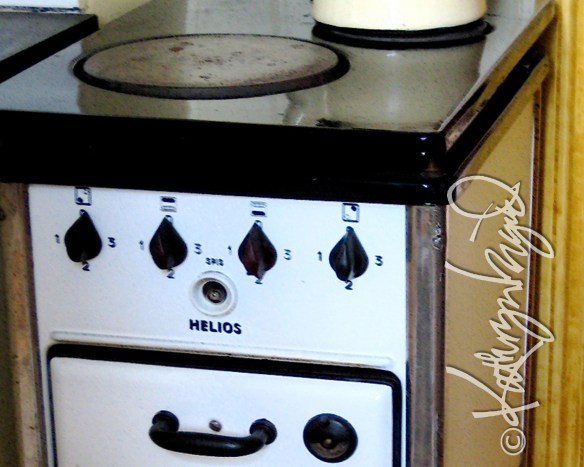
So my kitchen doesn’t sport the assortment of enameled camp cookware and the range of well-weathered cast iron pots and dutch ovens required for real down-to-earth preparation of meals. I don’t even have a clue what I’d do, short of going out in the backyard and having a go at such prairie wizardry, if I were faced with any of the old-school stoves and ovens that my ancestors and predecessors considered modern conveniences in their day. To cook with a wood stove, no matter how much I may have admired others’ mastery of it and the fantastic foods they’ve produced from such contraptions, is beyond my ken and requires subtleties of understanding how recipes and food science converge that I never learned. Even the electric ranges of earlier days have mystical mystery about them that would scare me right off to the local fast food joint for succor. And yes, I’d want fries with that.
Digital illustration from a photo: The Old Swedish Stove

In truth, I am a very limited and unskilled preparer of foods. I have a small palette of familiar ingredients upon which I rely, because I don’t have a clue what to do with many others that will make them safe for human consumption, let alone palatable. I have little patience for the suave or the grandiose in recipes, those techniques and tricks that require grace and keen senses and molecular understanding of the ingredients at play. I’m a reasonably willing eater of new foods and preparations, but not much for trying to make them myself, especially if I think anyone smarter and more experienced is available and willing to fix said dishes in my stead. The exception is mainly to be found in instances when real cooks let me play at being their sous chef without requiring better brains, knowledge of ingredients, or knife skills than I can offer.
Photo: Vintage Cooker

What I do have in my kitchen, most of the time, is fun, and enough decent eating to keep me (and anyone else on hand) from going hungry for long. Thankfully, I do live in a place with good grocery stores close at hand, family and friends to share meals and their preparation, and a kitchen full of my idea of modern conveniences. And if the ovens I got with the purchase of the house have outlived their peak performance by a fair distance and the only mixer I’ve owned for the last couple of decades is a wire whisk or fork, it sure isn’t the same as having to shovel up hard Texas clay to make room for my hand-split mesquite hardwood or having to figure out if those fruits gleaming at me from over there are the euphoniously named Farkleberry or are the similar looking but highly toxic Chinese Privet, so I don’t have to dig a privy, too, in a hurry.

Foreshadowed

There we were in our hotel room in Prague—much more sophisticated and glamorous than the sort we’d have booked for ourselves, to be sure, thanks to the tour organizers—and I looked up and saw this through the curtains on our window:
Photo: Through the Curtains

Isn’t it amazing how just the hint of an image, a fluttering silhouette in the afternoon sun, can promise so much romance and adventure?
Digital illustration from a photo: Shades of Dusk

You know, naturally, that since we were in Prague, any promise of romance and adventure was bound to be fulfilled and, indeed, surpassed. A holiday of any sort is not to be shunned, generally speaking. But when I find myself in a city so marvelously compounded of history, mystery, drama and delight as Prague, I feel from the first glimpse of its thousand towers that frisson, that lovely shiver, presaging wonderful things not yet imagined even by me in my most vivid dreams.

Things to Remember

Apparently I am sucked into the Throwback Thursday vortex, for amid my housework wanderings I stumbled across some dish-drying towels that brought a flood of memories over me. The first thing that came to mind was curiosity about whether there are many others who grew up using tea-towels like these made of flour sacking material and hand-embroidered, often with a small posy or aphorism in the corner, and usually by Mom or some older relative, at least until we ourselves were conscripted for the task.

My mother enjoyed embroidery as a relaxation mode as well as art form, and the last batch of dish towels that I know of her having made were a series of line drawings of local native flora, based (with the author’s permission) on a book of lovely little watercolors of the same plants and flowers. I chose one representing a favorite alpine blossom, even though the creamy white blooms were guaranteed to fade quickly against the pale fabric, and the outline of them remains faintly visible even after many years of hard use. That’s a perfect representation, in its way, of how my memory works. I began to reminisce, seeing this embroidery, on the alpine plants that have always signaled peace and freedom to me as I day-hiked on the flanks of Mt. Rainier. So I meandered over to search online for native alpine plants of the northwest, and as soon as I began looking at the images I was struck with an infusion of the very scent of those hikes, a spicy, earthy, fresh and herbal blend of tree resins—cedar, pine, alpine fir—and sun-baked earth, lightly perfumed flowers, crushed needles and fallen leaves underfoot, the brisk dash of elevated air. What a lot of fine things to be contained, in addition to the treasury of love and family history, within my mama’s embroidered dish drying cloth.Photo: Mama's Embroidery

You might think I’d’ve inherited an embroidery gene, because in addition to my mom’s fine handiwork, I grew up seeing and using Grandma’s embroidered towels and pillowcases and enjoyed them, too. I did not, and since I had these two sources readily available, I didn’t mourn the gap in my skill set. I could always go to one or the other of them and find some new kitchen linens in a time of need.

My father’s mother never got so inventive as to design her own embroideries based on book illustrations like Mom’s were, but Grandma chose for her projects the resource of hand-me-down and found patterns, most of them quite out of date already (hence the ease of her collecting them), and almost all of them much quirkier and tackier than her normally refined taste would have allowed. These were, however, mainly destined to be given to charity or sold for the proceeds that would go to the charity in their stead, so she had no attachment or agenda for showing them at home. I, on the other hand, bought a few not only out of any little do-gooder intentions but because the sheer silliness of some of the designs so delighted me.

This one, for example, that was my inspiration for joining now in the Throwback Thursday brigade, was highly amusing to me in its ridiculously fantastic subject, its period style, and its girly goofiness. I couldn’t resist it. I found no other Days of the Week as companions, so I can only imagine what happened on those days, but it was enough to find this towel that could simultaneously remind me of my grandmother and my youth and make me laugh, all while getting my dishes dried.Photo: Throwback Thursday

Fashions change, and with them, the decor and even tools that fill our lives and homes. Yesterday’s dish towels are probably more often machine-made of some high-tech sort of microfiber or super-absorbent bamboo fiber blend with an artful printed-on design in the proper Pantone colors of the year. But do they do a more artful job, as well, of wiping dishes dry after washing? Can they strain soup broth into crystal clarity? Do they make perfect wraps for ice packs when a sore neck or bruised arm is in want of one? No better than the old standbys of my youth, I imagine. Old as I am, I come from good stock that valued something a bit quaint and very handmade, and if it managed to accomplish the task and carry memories for decades at the same time, why, I suspect I’ll do well to try to be a human imitation of it myself.

Discretionary Fun

Digital illustration/drawings: Mood & 'TudeI get the impression that some people treat non-work times as the only times when they’re allowed to be happy. I do understand the need for income that can drive one to spend time in a job that doesn’t fulfill any other need or desire in life, and many of those are in the least-compensated positions at low-paying employers’ as it is. Been there, done that.

But I can say, too, that the greatest misery in my work life was attitudinal, and the more I did to discover and avoid the things that made me unhappy in my work, the less miserable I was. The more I sought to learn what I enjoyed in work and chose ways to magnify that, the closer I got to contentment both at and out of the workplace.

I grew more cognizant, at the same time, of not wanting to waste precious time on work that challenged my inner playfulness or threatened my general sense of joy and purpose. I was given a great gift in being able recognize the longing and accept and pursue it by choosing a much lower-paying job (on paper, at least) with a great happiness-quotient. I’ve seen, over the years, that many of us are easily misled when we try to calculate what we think we need for our daily expenses, and how much it costs us to earn that. Yes, we get those paychecks, but if the job requires, say, clothes that we wouldn’t wear other than at work, child care, transportation, professional training and memberships, and that sort of thing, how much pay on an annual or monthly or hourly basis does it really cost to go beyond paying for those, at least far enough to keep a roof overhead and food on the table as well?

Nobody knows this awful kind of math better than the working poor. I’ve been in that category more than once in my life, but have always had safeguards others lacked—like friends or relatives from whom I could rent living space more cheaply than I could even a minuscule, run-down apartment in a scary part of town—so I also know that I am luckier than most. Now, when I am married to a person who is not only able to make enough income to support both of us but is willing to do so, I am among the most privileged and fortunate of creatures, and I know that, too.

But one of the best things I learned along the way when I was living on a very slender, sometimes sporadic, income, remains valuable to this day: if I spend so much time and energy on just ‘getting by’ in life and don’t put forth equal effort to enjoy, live, and love my life along the way, all of the pennies I earn are of little value at all. And while I can’t always afford the most thrilling and glamorous ways of keeping myself amused, especially when I do need to be working at any task or job, I had better find the simpler and cheaper ways and the most reliable ones to fill my life with happiness and contentment, I know by now that surrounding myself with people I love, admire, enjoy and respect is the very best solution. And if my job doesn’t allow for that kind of happiness and contentment, then it is costing me more than it pays, in the end.

Chinatown is Everywhere

It was true when the world was much younger, but all the more so in this age of easy travel and speedy communication: the globe shrinks, cultures meet and intermingle, and there’s less and less difference between one city and another. A minuscule part of me is sadder each time I see English plastered across the signs and storefronts of a foreign country that used to seem more exotic and culturally distant from where I grew up and lived my life. Intermingling can easily lead to homogeneity, and that can be mighty boring.
Photo montage: Chinatown is Everywhere

But then I am reminded that even when travel was arduous and communication as slow as molasses in a meat locker, cultures met, mixed and mated, and gradually produced new and fantastic variants of themselves. Where would we be if languages had never borrowed and stolen terms from each other, evolved and changed over time? If nobody had ever crossed a border, learned about another culture, married a foreigner, or learned the way a more advanced or inventive group could accomplish tasks more efficiently and elegantly, would humans even still be around to do that stuff anymore?

My attitude is changing. Now, I really do still greatly appreciate that there are recognizable ethnic neighborhoods in nearly every city, every country. They’re wonderful microcosms of the nations and peoples that immigrated and founded them. But I also love that there’s a regular hurricane of linguistic mash-ups, cultural blending and reinvention of characteristics that comes from our happy meetings on new shores. It’s how we got here; it’s how we’ll move forward and continue to thrive.

Meanwhile, as long as there are those fantastic ethnic-enclave neighborhoods still in action, I’ll know I can follow the locals and find the best jiaozi and sticky rice in town when I get hungry.