Talking at Cross Purposes

digital illustrationMy spouse and I have an intriguing way of discussing our disagreements, and I gather from what I see, hear and read that this is not such an unusual complication but probably more like the norm. We don’t fight about stuff that matters, remarkably, very often at all, being on the same page in our essential beliefs and concerns; if we differ there, we’re pretty comfortable having a rational conversation or two and agreeing, if necessary, to disagree. But the more inconsequential things are where we excel in having our weirdly, even hilariously, convoluted bouts of stubbornly wordy disagreement.

And the vast majority of the time, it’s because of the language barrier. We’re both native speakers-of-English, but it seems we are perfectly capable of saying virtually the same thing to each other in such different ways that each of us hears the other saying essentially the polar opposite. It’s quite miraculous, really. Two seemingly cogent adults, people who know each other rather well after being together for eighteen years and who both know inside that we share the deep core values that make eighteen years together possible, not to mention that we share so many experiences and tastes and interests—and we can’t reason our way out of a paper bag when one thinks the other is remembering something incorrectly or a question has been raised about some puzzling matter of fact.

Of course, I don’t think this is specific to being male-female, age-related, or any other such thing, this is a characteristic of our whole species. It’s a perfect example of how humans talk to each other a whole lot of the time. We think we’re having an epic battle over right and wrong, and both sides of the argument are  looking and hoping for exactly the same outcome, but each of us simply thinks we have put the correct names on the problems and resolutions and the other party is clearly an idiot or heretic until he/she/they will acquiesce and let us superior beings fix everything according to our righteous rightness. Happens in politics and religion and academia and relationships just about equally often. Whether weapons are involved has the most influence over how epic these battles really become, but the basis is hardly all that different.

My beloved and I get in the same ridiculous rut of circular conversation often enough, though neither of us takes it particularly personally or even necessarily sees it as a true argument let alone a danger to our relationship, and it’s easy enough to laugh it off when one or the other of us finally realizes that We’re Doing It Again. But it’s strange that we don’t spot the next episode from afar and simply have a straightforward, rational talk. If the goal or solution is nearly always identical or close enough to it, why do we have to wrestle around so determinedly before coming to that natural conclusion? I can’t guess why we mortal mugs are so quick to waste our energy and peace on pointless posturing, but it’s certainly a collective talent of ours.

I guess I’ll just have to take this opportunity to apologize to my partner for my part in the muddle, and hope I learn to listen—and hear—better. And if anyone with any power or aspirations to power (political, religious, academic, or other) happens to be reading this, would you do me a favor and do the same?digital illustration (B&W)

We All Wear Our Masks

digital illustration (B&W)It’s so much easier to hide behind convention and other convenient facades than to let our true selves be seen and known. Don’t we almost always prefer that sense of safe anonymity or at least ‘appropriateness’—however tenuous or specious it may be—to taking the chance that in our own skins we might not measure up to the occasion or to the  expectations of others?

It is, of course, a foolish conceit. One can rarely cozen anyone else, let alone oneself, by such a means. No matter how hard I may try to appear in the guise of what I think will qualify me for the In Group or make me richer-thinner-prettier or smarter than I really am, if it’s all show, the mask will like any faulty exterior prove too thin to cover my realities. It has always been so, and yet I am far from alone in continuing these futile attempts. I do believe that constant practice can transform us into a nearer semblance to the disguise, but that can work for ill as well as good.

Probably wiser is to recognize that the urge is age-old; that insecurity and an assumption that others will find me inadequate in my natural state are neither new problems nor absolutely decisive. The masks of the past remain, both in those symbolic and ceremonial concrete forms and in the records of our history books and art, to amuse, bemuse or warn us, if we will pay attention. And a close enough, thoughtful enough reading will remind any of us that no mask covers the truth forever—and yet, all the same, that we as a species continue (however astoundingly) to survive. Perhaps unmasking isn’t entirely as dangerous as any of us have feared.

I spent enough years acting the part of a brave, socially mature person, one who was more comfortable hosting a gathering, letting others see my art and writing, lecturing, teaching and doing so many other things that in truth absolutely terrified me to tearful agony behind the scenes that it turns out I am capable of doing all of those things after all. I still fuss and worry, yes, but nothing like the self-flaying horrors that I used to suffer just to get through what were apparently no-big-deal occurrences for most other people, and now I can experience them with fair equanimity. Funny how, when you’ve spent your whole remembered life in the grip of a belief that every second was one degree away from total disaster and death, any tiny bit less becomes magically huge.

And each of those instances becomes a step toward understanding that I have perhaps begun to grow into my mask of wishful improvement and become more like it underneath. Or better yet, that it never did matter as much as I feared, this different reality behind the convention. Best of all, I find that the more I let people see me as I really am, the more kindly they seem to look on me, and in turn, I begin to think the real me is perhaps pretty likable, respectable. Even lovable. Who knew.

digital illustration

Unique doesn’t inherently mean Alone.

Attention to Detail in All Things

digital illustrationI’m far from being the world’s best gardener. I may have the perfect skill set as a lazy dilettante, loving the design process and having a tremendous appreciation for all of the non-laborious joys of a garden, whether it’s well tended or not. A bark-boring beetle or a sculptural skeletonized leaf can be as beautiful as any spectacular, pristine lily or a lilac’s heady bloom. A moss-choked stone path is as glorious as a graceful fountain encircled by perfect tea roses and rosemary. And I have had quite the aversion to trench digging, rock picking and weeding ever since I was old enough to be conscripted by my parents for the purpose.

But I also know that if a garden is to have any hope of continuity and flourishing in flower, it needs occasional attention to such details, at the least, from Nature’s seemingly random hand. The gusts and waterings, composting and tillage performed by her weather and her handyman crew of creatures all do their parts in keeping the landscape in beautiful form. Even better chance of thriving if I do my part, too, having noticed what details might better prosper under my attentions, however slight they might be.

I was reminded of it recently as I watched a family make their valiant attempt at getting a group portrait. Flanked by grandparents, the parents stood holding their two little boys: Dad, in back, held the eight month old and Mom, ahead, wrangled the three-year-old. No one seemed able to get the normally placid toddler in front to hold still for even one quick photo, or to understand why he was so unusually squirmy, until someone finally noticed what I could see better from my side angle: that the baby was cheerily leaning forward at intervals and yanking his big brother’s hair. Detail noticed, problem solved. Had that adorable little scalawag been able to keep up the practice, I have little doubt there would’ve been need, eventually, for an expulsion from that particular little Eden.

I, meanwhile, must try to keep after my own gardens, the real and the metaphorical, and make sure the little buzzing creatures and weeds don’t get too far out of hand.digital illustration

Suicide without a Corpse

digital illustrationMichelle, a writer I greatly admire, just offered a post on her blog, wherein she details some of the characteristics of her daily experiences in life as a person with depression. As always, she makes me think. It’s not simply that I, too, am such a person—albeit one whose version of depression is as unique, individual as hers and everyone else’s—but that there are a few aspects of depression that, if not exactly universal, are amazingly common. First of these is that being sad is not depression. Sadness is to depression about like a paper cut is to getting an ice pick stuck in your eye.

I will not belittle the paper cut, real or metaphorical. Pain of the physical and the psychic sorts will always be relative to our own experiences and our own moments, and pain of any kind is inherently unpleasant and undesirable. That, I think, would be hard to argue.

But I might also say that it’s less accurate to equate sadness with depression than to call being sad, however jokingly, being “differently happy”. Sadness is a passing, ephemeral experience of the sort where the last scoop of one’s favorite ice cream flavor has been dished up and handed to the person just before her in the queue. Depression is when she has the dish of that flavor sitting right in front of her and not only doesn’t have the strength to reach over and take a spoonful of it to eat, she thinks she isn’t a good enough person to do so, if she can form such a solid thought at all, and if there were a super-powered sleeping pill that could put her peacefully to sleep forever sitting right next to the ice cream and she longed beyond words to die, she mightn’t have enough strength to reach over and take the pill either.

Suicide is a hideous thing, if you ask me. It’s tough enough that anyone would hate or fear her life and self to the degree that she sees no alternative but to end it, but of course she either knowingly accepts whatever horrible consequences her death will have on the entire rest of the universe, starting with the people who love her or she is no longer capable of recognizing that there are such people or consequences or caring about them. Beyond that, it inevitably is simply messy in the practical and logistical and legal senses. Someone will have to clean up after the fact, and the suicide doesn’t or can’t care that this will require others to deal with her corporeal remains, the legal messes she’s left behind, the tasks unfinished, and most of all, with the incurable suffering that follows when survivors realize that they couldn’t save her, might indeed have been utterly forgotten by her in the abysmal darkness of her depression.

Every individual’s best response to depression is as different as his or her version of the ailment. I am one of those whose unique combination of depression and other physical and emotional characteristics and components resisted all non-medical interventions until despite my vigorous resistance to the idea of chemical treatment I learned that that was the only useful method for me. Rather than diminishing my sense of self, it allowed me for the very first time in my four-plus decades to experience what I now believe is (and yes, probably always was) my true self. It still required being dedicated to a variety of other forms of non-chemical rehabilitation and therapy; talk therapy, meditation, and my practice of various arts and exercises mentally and physically that please and heal me all contribute to my wellness along with my meds.

I was fortunate in a way that many clinically depressed people are not: I never seriously contemplated committing suicide. I would go so far as to say that I considered it as a rather detached philosophical argument, inwardly, but I never reached the point where I so lost my will to oppose the idea of killing myself that I could let go of all the external reasons not to do so, those messy consequences others would have to undo or survive. If I valued myself so little as to want to be dead, I suppose it could be said that at least this made me think it would be that much worse of me to impose so terribly on those around me for something that wasn’t directly their problem. This sort of tautology clearly says to me that I wasn’t in imminent danger; I was busy arguing myself out of something that I didn’t really have the strength to do anyhow.

What I didn’t recognize in the midst of all of this soliloquizing was that I was committing a form of suicide, if an invisible one. True, there would be no stinking remains turning into human soap and sliming the rubber gloves of some poor janitor, no internecine paperwork to be sorted by attorneys and opportunists. But the burden on the world around me would have been just as heavy, the struggle of my loved ones just as inexorable, if I hadn’t rather literally stumbled into the intervening care that brought me to this lovely resolution where I find myself dwelling so comfortably today. Because, in my depressive brain fog and fear and self-loathing and ennui, I was rapidly forgetting how to be alive. It’s quite possible, I discovered, to die without stopping breathing, without even losing all conscious thought. A walking coma, an animate death is entirely possible in the midst of true depression.

And for that reason, I am all the more grateful that by virtue of being surrounded by people who helped to guide me in that direction, combined with being blessed, lucky, fortunate, or whatever combination thereof you prefer to name it, after my years in the dark I fell into the combination of elements that conferred a kind of wellness on me that I’d never known before. I am among you today not just as a happy and contented person, full of gratitude and amazement at what a good life I have, but also as a testament to the unfathomable differences and distances between existing and living, between something indescribably yet terribly akin to sleepwalking through life and waking up every day a little bit more…alive.

Building Dreams

Dollhouses were for other girls. I preferred to design my fantasy floor plans and build them out of cardboard and found objects in the built-in bookshelves in the upstairs bedroom. I built them for dolls if those happened to be handy, but since I wasn’t ever a huge fan of dolls except as handy models for my model homes or as fashion models for my clothing and costume designs, my time and energy were more happily spent on the architectural fantasies and the drawings that led to them.

There was never any hope of building the real-world, full-scale versions of any of these, since I started as a young squirt whose whole bankroll comprised a few allowance installments, then grew up (a little) into an arty type, yet another iteration of the sort never meant to have large hunks of cash lying around. I never stopped loving buildings and the magnificent, marvelous pleasures of dreaming up all of the different ways to make interior and exterior spaces work beautifully for all of the different people and purposes I imagine in them. As I grew, my methods leaned less toward bookshelf usurpation and more toward drawings and particularly, toward inner design: one of the ways to soothe myself to sleep when my brain is too hyper for relaxation is to choose a specific kind of building, close my eyes, and try to work out every tiny detail of it in my mind. Eventually, that usually leads to the perfect combination of dozing off and waking up with some new inspirations, often enough ones that can be applied to other things than mere mental building construction.

Just because I’m realist enough to know how unlikely it is that I’ll ever afford to build a dream house in reality doesn’t mean that there’s nothing purposeful in my fantasizing. I’ve invented all sorts of dandy details that would make the constructions more ecologically sound, longer lasting, easier to change and update over time, simpler to construct, more affordable, energy-efficient, attractive in a number of styles, and flexible for multiple users’ needs. All in my head, with the exception of a few on paper and a few in the old bookshelves in Mt. Prospect.

Anybody who has a pile of money just sitting around all unloved and unused and wants to contribute to the construction of my living-&-arts community complex should feel free to give me a jingle. Barring that, I will happily continue sharpening my mental prowess as a developer of mental real estate. Come on inside, if you can figure out how to join me here.photo

Remind Me/Rewind Me

For a person who considers herself happily immature relative to her age, I am sometimes caught off guard when I realize how little of my youthful pleasures I’ve continued to pursue with appropriate enthusiasm into the present. Why on earth would I forego standing on a big plank swing, grasping the chains that hold it and me up, and pumping my legs until I feel like I could fly right on over the top steel bar of the swing set with the greatest of ease? Why not kick off my shoes and socks, abandon them in the dirt, and plunge into the cold river’s slippery, rock-strewn flow without regard for getting the legs of my pants all soaking wet? Is there any law that says a 52-year-old is no longer allowed to slurp her fruit punch noisily through a straw just because it’s so wonderfully refreshing and sugary?

Why, indeed, is the common phrase seemingly always about youthful enthusiasm, yet we tacitly agree to let only actual youths embrace it?

Remind me how being childlike and impulsively happy is so dangerous.photo

Despite being of an age where my childhood version of the high swing was of rock-hard rubber on a steel pipe frame and underlaid with gravel-strewn dirt, I am—well—still alive at this age. I never broke a single bone or chipped a tooth, and my only stitches derived from an indoor activity, a school game of floor hockey. Though I wandered recklessly through many a stream and ocean’s shallows, without regard for my pants or my tender soles, and even drank from the occasional icy mountain brook, the worst that ever came of it was a cut from beach glass, soon enough cleansed with stinging but healing salt water. No clothes were ruined, and I got bit by nothing bigger than a sand- or horse-fly or two. I failed to contract Giardia or E. coli from those wild rivulets I sipped. Even the vast quantities of evil cyclamates in my childhood fruit drink binges failed to kill me off.

So how is it that I lost my ability to plunge ahead without caution to where I seemed, nearly always, to find joyful things? Remind me how always being responsible and mature and playing it safe is better for me.

But write it in a note and slip it under my door. I feel the need to go out and look for a little happy trouble.

It’s All in the Mustache…Beard…Eyebrows…Toupee…

I’m neutral about facial hair. Well, on males, at least (sorry, Tante Anna!). My spouse had a short goatee when we got together, and while I thought it handsome on him I not only didn’t mourn its demise when he shaved it but realized afterward that it was light-colored enough that some people were apparently not only unaware he’d removed his beard but that he’d had one in the first place. Guess he didn’t go around kissing and nuzzling just anybody.digital illustrationI’m now so used to his being clean-shaven that I imagine it’d seem outright weird to readjust if he opted to grow a beard again, or a mustache. On the other hand, it is intriguing to see the major resurgence of popularity that all sorts of hair-raising acts are undergoing these days. It’s a great time, in my opinion, that it’s not only quite common to see people in the same place dressed in pants or skirts of all different lengths and heels of widely varying heights but also hairstyles ranging right from shaved heads (men’s and women’s) to dreads or super-‘fros (black, white and brown people’s). Curly or straight, short or not, natural-colored or wildly dyed, it can be anything that suits the heart or the head of the wearer. I like that.

digital illustrationWhat’s probably the most entertaining aspect of all this to me is seeing so many guys of a twenty-ish vintage looking so distinctly like those photos that can be unearthed of my great-great grandfathers and their brethren. I suppose that shouldn’t be entirely shocking in an era where baby names have also trended back to that generation’s. Can the bustle (you’ll pardon the pun) be far behind? Not to worry…I probably won’t be able to see what anyone’s wearing through the thicket of beards by then, anyway.


An Extremely High Note

I’m like that guy who can very nearly hit his high B-flat.digital illustration

I’m reasonably useful in my little bitty part of the world, but my imperfections are both ever-present and well known to me. I have learned, long since, that as in real (physical/aural) life, in the metaphorical sense I am far better used as a chorister than as a soloist. My ego is neither too big nor too fragile for me to know that I make much better Filler in either setting than I do star material. Anybody with any sense knows that it takes a whole bunch of us to sing backup for the marquee artists, to act as support staff and cheering section and general-dogsbodies for the persons who are better designed for leadership roles. There are rare occasions when I’m the most experienced or skilled in the necessary ways for the task at hand, but as that’s mostly by default and by dint of the odds, I take no cue that it should become the norm.

I’d much rather stick contentedly to my supporting roles, humming along quietly as best I can, and perform no unintentional solos. If I ever get up that high B-flat, I’ll let you know; until then, I’d appreciate if those of you with the proper pipes carry on, and you can count on me for that low undercurrent of pretty-fair tones to fill in around your excellence. I’m excellent enough at my own, non-flashy, kind of stuff.

The Longed-for Sound

digital illustrationAwakening

Whose is the voice that speaks my name, Aloud or silently, the same,

In gentle speech or radiant song, Unspoken care, forgiving wrong?

Whose is the loving, laughing voice That makes my waiting heart rejoice,

That wakes my hope and lights the sky With stars, to which my sole reply

Is humble gratitude, delight That such a voice breaks through the night

To search me out, my heart in two, And make it whole?

Your voice. Yes, you.

The Intersection

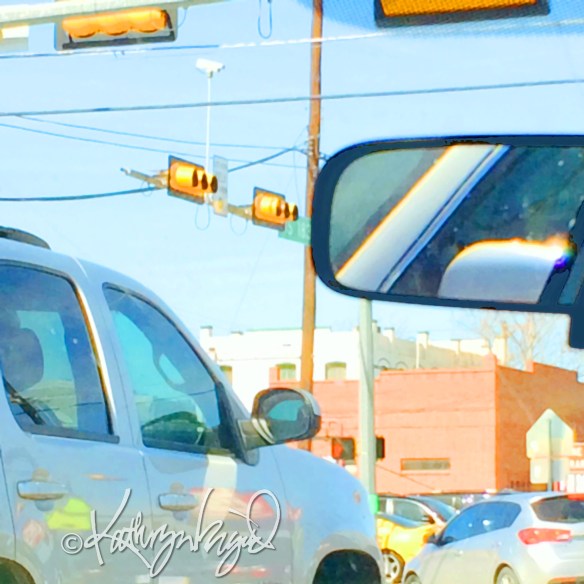
Lacking, as I do (see yesterday’s post!) any real sense of direction, physically or otherwise, in my life’s journey, I kind of live it in the middle of the intersection. You know, when the traffic slows down and the smog clears, it’s kind of exciting and always interesting here at the crossroads.digitally doctored photo

There are not only all of the events and incidents that brought me to the place where I stand at any given moment, but so much more that enriches life in the intersection. All of the peripheral things that I didn’t do—yet, anyway—lie somewhere nearby, should I change course or take notice and choose to move accordingly. There are all of the other people who come and go up and down the same roads and walkways, and there are all of those who cross my path at any given intersection, and all of their lives and adventures are influences on my own travel, even on my moments of standing absolutely still there.

And then I move on, often without any greater sense of direction than before, but also, often enough, with an optimistic sense that I will soon find myself having yet another unexpected, very unplanned trip through yet another unknown intersection.