A Moment of Silence for…

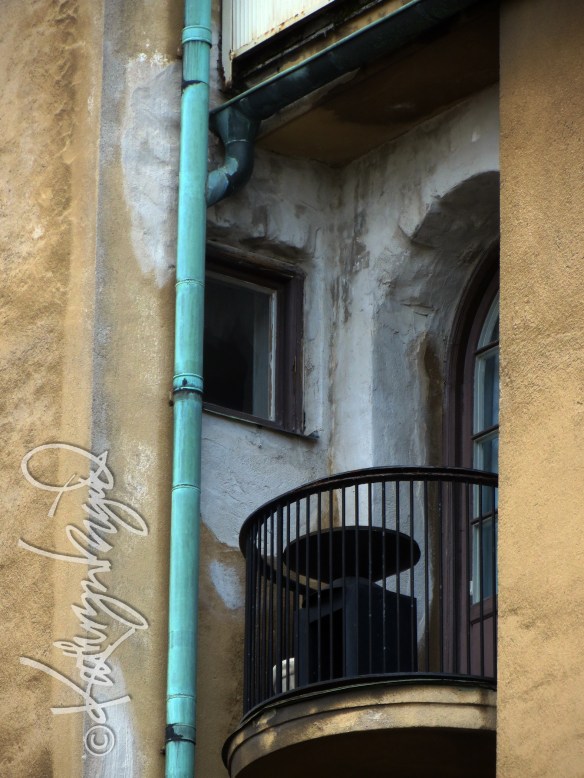
…its own sake. Yes, because despite the huge number of worthy causes these days for which we’re encouraged to meditate for a mere moment, there are few causes more worthy than the good health and well-being that a brief pause for meditation in peaceful silence can help renew in any of us. There is so much need for our attention and efforts to be devoted, and in far larger and more frequent doses than an occasional moment of silence, to vast numbers of those worthy causes.Photo: Hermana's Hideaway

But nobody is fully prepared and equipped for even the least significant observation of those more meaningful causes’ pauses unless we permit ourselves, yes, even require ourselves, to rest and restore our own spirits. Part of my renewal and joy comes, to be sure, from surrounding myself with wonderful people just as I am able to do here. And another, very important, part comes from being able to step back, to lie low for just a little bit, and to be very, very glad that there’s room and time and silence available for me to bask in and be better able to cherish and rejoice in your good company. And to think about what little I can attempt to accomplish before the next such little escape.Photo: Secretive

Reverence for Beauty

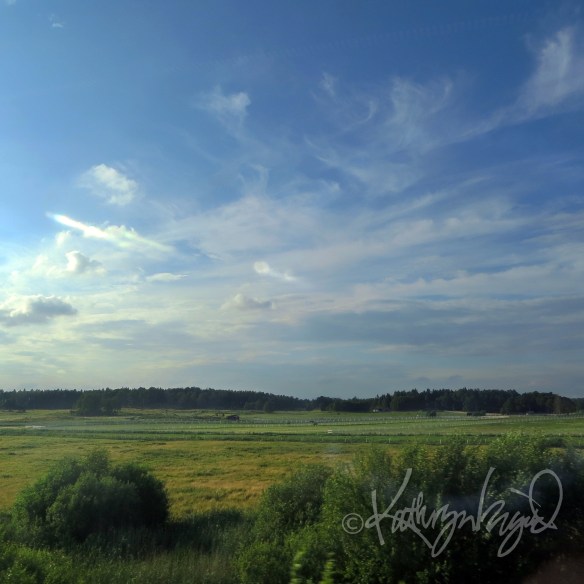
Photo: Blissful NothingnessThe whole of nature has its ways of reflecting perfection, when we take that momentary pause in which we can step back to appreciate such things. Even, as I posted yesterday, in death there is room for new life; out of captivity, freedom. In silence, I come to better appreciate the small and unobtrusive ways, not just the large, noticeable ones, in which sound enriches my world: water burbling down a ditch, breeze-stirred grasses, bees that sing soft love songs to their golden pollen treasures. In stillness, I relish each breath and every tentative movement as the wind kicks up a little and sets the empty park swings in motion again. Out of wintry darkness and overcast days, I more consciously embrace a bright afternoon and its combed, silky clouds.

In a moment of quiet reverence, I, too, can reflect such perfection better and am made more whole and beautiful.Photo: A Brilliant Day

Singing Our Song

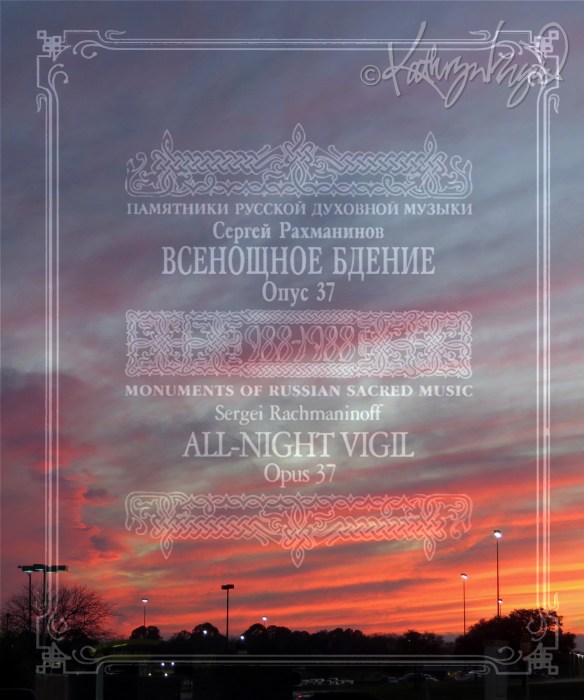
Photo + score cover: Singing Our Song: Rach Vigil

The original ‘our song’ I shared with my true love, because he was in the midst of rehearsing his choir for its performance when we came together—so intensely rehearsing, in fact, that in pretty much the only time I’ve ever known him to talk in his sleep, he whispered dreaming sweet nothings to me in Church Slavonic. Good times!

The expression ‘they’re singing our song’ refers, generally, to recognizing a tune or lyric that carries particular personal weight for a pair or occasionally, slightly larger group of people. It’s our school’s version of Alma Mater, the theme song of our organization, the song that accompanied a memorable first date, first dance, first kiss. Because of its power as a connective tool in communication and in recollection, music is bound to evoke potent responses and pull us into the examination of them, regardless of their current context. I’m one of that lucky class of people for whom music is a pervasive and positive element of my daily life, but I still have some specific favorites not only for what I find appealing about them musically or in their mood, style, and character—and yes, those range pretty widely—but also for the few that stand out in mnemonic and sentimental ways.

There are songs that reconnect me instantly with my childhood, something I suspect is quite a different experience for the younger generations than for mine and earlier ones. Until my youth, childhood songs came not exclusively from radio, films, television, and other distant, anonymous, fixed, or recorded sources but first from the relatives, friends, and teachers who shared them with us and often expected us to sing along. When my family sang in the car on a road trip, it might have sometimes been along with whoever was singing or playing the radio’s pre-packaged tunes, but as often as not it was singing folk songs we’d learned by rote, silly playground songs and game-narrative ones, bits of summer camp songs, rounds, and easily harmonized songs that were popular long before I ever stretched my little pipes to sing. I don’t imagine there’s so much of a lingua franca of family and playground singing not derived from Disney scores and downloads nowadays. There’s lots of delightful and even sophisticated stuff in those, to be sure, but I would guess that there’s a whole lot less that would be in any way distinguishable as historic, traditional, or regional, let along cultural, landmark music that’s just sung for fun anymore unless it’s loaded with undercurrents of market- or message-driven content. Is Mrs. Grady‘s daughter even known, let alone adored, by anyone under a half-century of age anymore?

It’s not strictly old-lady cantankerousness or being prudish, prune-ish, and nostalgic for what may be rose-colored memories that makes me sad for this sort of loss, though there are assuredly elements of those. It’s also a bit of longing for the subtle societal glue that resides in knowing a song: if I spontaneously start to sing an “old familiar lay” under my breath, will there be anybody within earshot who will hear, remember, and join in the song? Are all such endeavors relegated to prearranged flash mobs now? I had a couple of reminders of this urge, recently, and they renewed my quest for an expanded casual-singing culture of the kind that doesn’t require sets, costumes, death-defying choreography, and Auto-Tune.

The first such occasion was, unsurprisingly, in a church setting. Western churches of many sorts are still places where communal singing is common and many songs known to many of the participants by heart. I was at a Protestant church service where, as is typical during communion, the church choir sang anthems and the congregation then sang a hymn or two as well; when the high attendance at the service made communion stretch far longer than expected, the experienced organist got right on the task of keeping the flow going by playing an old hymn. After a few seconds, choristers started softly humming or singing the lyrics along with him, then grew bolder and harmonized, and gradually a number of congregants in the pews were joining in as well. It was really quite sweet, and I certainly thought it perfectly appropriate to the whole concept of a Communal event. But even there, I quickly realized, the truly familiar old hymn couldn’t quite be carried in the old way, because even the choir members clearly only knew one verse by heart, and while it was a lovely bonding experience for everyone, it was fleeting; at the end of Verse 1, a collective dive for hymnals to search for the words (what’s that eponymous first line, again?!), then the resignation to repeat the first verse or fall silent.

Another reminder came in one of the places where such random burst-into-song things do still exist beyond the borders of the performance hall but are perhaps not exercised as often as they used to be: a choral convention. The regional and national gatherings of musicians devoted to choral music—the composing, conducting, rehearsing, singing, performing, and yes, enjoyment of music made for groups of singers—are a great source of education, entertainment, and vivifying energy for me as the partner and follower of a choral musician. And even at these, it’s not as though I hear people breaking into song together, unless they’re rehearsing to perform for each other. Attending an enormous regional musicians’ convention recently, followed ten days later by an equally huge national one, was both exhausting and energizing. And at such events, I don’t often find people gathering to sing together outside of the so-called All Sing sessions, which are of course organized, arranged, led, and regulated nearly as much as any choir’s regular rehearsals.

The point of such conventions isn’t necessarily to build ‘casual relationships’ with singing. But mightn’t it be a fine thing, really? I would guess that the expectation that singing just because, at unplanned moments, with other people, could in fact lead not only to greater interest in and better understanding of more formal choral experiences but also to a more connected social world than social media alone can provide. As the 1971 Coca-Cola advertisement—yes, a commercial jingle—encouraged such idealism and eventually did indeed manage to build into a hugely popular, ex-post-brand-name sing-along song, I [would] Like to Teach the World to Sing. But obviously I can’t do it alone.

Photo + score: Singing Our Song: Nance 'Seal'

This is, in a unique way, truly Our song, because Richard Nance composed it as an anthem for our wedding, and it both became widely popular as an exquisite modern choral piece and remains deeply personal as a gift to my beloved and me from one of our dearest friends.

I Dream the World

I dream the world will learn to sing ‘Til joy suffuses everything—

When peace and happiness abound, I dream a song will be the sound

Most widely heard by every ear Around the globe that longs to hear

A note of kindness, care; of grace, When melody wraps its embrace

Around us like an angel’s wing—I dream the world will learn to sing!


I dream the world will learn to sing And make earth’s darkest corners ring,

Will throw aside all warring ways, Mend brokenness, take up the phrase

That calls to harmony all souls The way a carillon bell tolls,

First, lone and softly, then a pair Joins in, and more, and then the air

Is filled with song, like bells a-swing—I dream the world will learn to sing!


I dream the world will learn to sing And this, the message it will bring:

We must not wait in silent nights, Unsung ’til happiness alights,

‘Til care and kindness, sweetness, peace, Miraculously buy release

And save us from our voiceless state: If we don’t sing, it is too late,

So let our song rise up and ring—I dream the world will learn to sing!
Mermaids in the Conservatory

Isn’t it a little odd that so many of us find it calming to watch colorful fish swim? We don’t live underwater ourselves, generally preferring to breathe oxygen from above water level. I’m quite certain that most people would agree that the very idea of attempting to survive in a fish’s environment without plenty of protective gear or at least an ability to hold one’s breath for great lengths of time is more intimidating than inviting, especially as it would mean spending time rubbing…hmmm…elbows (?) with a fish. (Pectoral fins? Dorsals?)

No matter. When I’m feeling tired, under stress, or otherwise out of sorts, few things comfort me like the peaceful ripple of calm water when a few fish pass quietly by me. I would go on about it further now, but I’m growing pleasantly sleepy just thinking about it and shall go off to bed to dream of orchid beds and fountains, fan palms and a stone-lined pond filled with a silent, painterly array of highly bred carp easing past me. I’ll leave you with this little pond-full for your own moment of uncoiling in calm.Digital illo from a photo + text: Koi

A Touch of Existentialism

Like most people, I suppose, I am an odd collection of contradictions. Having a pretty dandy education and good genes, I’m not entirely dimwitted, in fact, would say that I’m not only intelligent enough to have gotten good grades in school right on up through my graduate studies but even so much so that I get along rather well in my life. But everybody who knows me also knows that I am also almost supernaturally dyslexic, being unable to read with ease or tell left from right, up from down, forward from back, and a host of other handy life skills that others, as I’ve observed, seem to come by naturally. This is not a complaint or bragging, either one, just a statement of fact. I do well, when I do well, because I have found sidelong ways to get the job done, whether it’s by reading any text at least three times through before it falls into sensibility in my quirky brain or by traveling on trust and a fairly reliable eye for landmarks to keep me finding home base despite my utter lack of an inner compass.

I am by nature exceedingly shy and have had from early childhood what I only learned as an adult was an unusually high level of constant anxiety that, with serious therapy and a consistent supply of low-level medicine, turns out to be manageable. So even though it seems incredibly unlikely and counterintuitive to people who meet me now, I appear to be a lifelong social butterfly, an extrovert, and naturally fearless about interactions even though without the meds and training I would be wholly unable to function at this happy level. My vocal cords are irritatingly subpar for regular use thanks to my SD*, but when I’m with someone I really enjoy and trust, I can be counted on to chatter without stopping (*other than when forced to) for great lengths of time.

And I have no magical powers. Again, I think myself essentially ordinary in having no skills or talents, knowledge or gifts, of special note. I am not overly self-deprecating or sad on this account, merely noting that if you’re looking for the person who will end all wars, cure cancer or the common cold, or discover a way to stabilize the planet’s climate forever, you should jolly well be looking at almost anybody else imaginable as a better go-to heroine. Yet I really do think we all exist for some sort of reason or purpose. It might well be that mine is nothing more than to spend a lifetime figuring out what my purpose is, and die slightly more contented than otherwise if I should be so lucky as to solve that puzzle any time before I’m taking my last breath.

You know what? That’s good enough for me.Digital illo + text: Hovercraft

Art in the Middle of Dying

Digital illo + text: Angels DescendingThere’s little in the world that gives more meaningful respite from earthly trials than art. Those sorrows and struggles that range from the brutality of human weakness and evil to the most monstrous of natural disasters have no true cure, no end. Safe to assume that they have existed since long before recorded history, and will outlast the lives of any of us now present. But art—a painting, a dance, a song, a story—in its turn outlasts, too, the horrors and madness of the darkest time. What exists in the background, dwells in the underground, during suffering and oppression, so strong that it cannot be extinguished, and both records the terrible event and defies it? Art.

If we learn anything from our history, it should include the knowledge that any threat to eliminate or suppress art by force or merely by neglect and dissolution is a time when we should most avidly practice our defiance of oblivion. When it is bleakest, we should dance most wildly and gracefully; when dark, sing boldly and sweetly; when empty, we should fill the void with thought and challenge it with beauty. The blank Nothing may not mock us into meek obsolescence if we refuse to silence our passion and surrender our dreams.

Winter in My Soul

Winter lends itself, more than any other time of year I think, to the welcome sort of solitude and melancholy that fills me up with meditative calm. It can feel bleak and beautiful at the same time, as long as I’m not in a particularly dark place emotionally. The kind of cold and emptiness that sear the lungs and sting the eyes can sometimes set the soul on fire with inspiration and, concomitantly, a sort of scraped-clean elation.Photo montage + text: Writing & Silence

Tenderheartedness isn’t for Softies

It takes strength to maintain the goodwill and generosity that creates true bonds between people—individually and corporately. But through that steadfastness is the best path to peace and wholeness, a consummation devoutly to be wished.Digital illustration: Constellation

River of Stars

A river made of silver stars with sapphire deeps below,

The sweet compassion of the heart is ceaseless in its flow—

A font of healing, kindness, care; a waterfall of grace;

A draught to slake the deepest thirst; and with it, keeping pace,

Persistent hope, watered withal, along its banks to grow,

To bloom as peace, compassion’s flow’r, where starry rivers flow.

The Effects of Gravity

It’s wonderfully simple. Physics. Science. Gravity pulls us down. It’s a force that draws everything to it. Living creatures, all of us on the planet, are pulled toward the dense center of the earth just as we go along through our lives toward the time when we will reach the end, die, and be buried in the earth, drawn at last more fully toward its heart.

But along the way, it’s possible to pull against gravity, too. What happens if we choose to resist for a bit in life? How high can we rise? Any one of us rises to our highest point of all, I’ll be bound, when we choose to raise up someone else. It’s in elevating others that we ourselves are best elevated.Digital illustration: Against Gravity

Revival

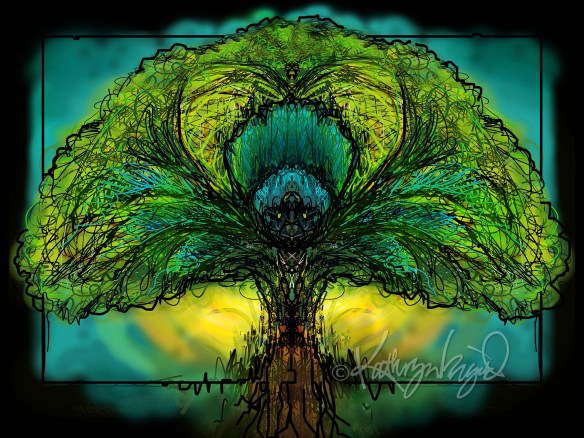
My subject in today’s poem is identified as a woman, but mainly because the pronoun ‘her’ fit the text that was already emerging in the sonnet. In my heart, the subject is meant to honor all of my friends and acquaintances [regardless of persuasion] who have battled, or are still battling, their way up from the abysses of fear, anxiety, depression, abuse, or any form of personal darkness, whether inwardly generated or externally imposed. What you have done, and are doing, is powerful. What you can do may be more than you, or I, or anyone can possibly yet imagine. Continue your journeys upward, my friends. Sing from the branches of the Tree of Life for a change. Newness can be a beautiful thing!

From Her Grave

Arising from the heart of silent night,

the poignant voice of one whose singular

accomp’niment was always, only, her

own shadow, takes the unaccustomed flight—

Ascending, she now meets the morning sun

and hears at last a sound she’d never heard;

the brilliant singing of a splendid bird,

a song that chases shadows, ev’ry one—

And hers, along with all the shadows, flies;

now wakened, she is free to wholly shed

her residence in shade among the dead

and fly up, singing gladly, to the skies—

So freed, she dares to trust her new-fledged wing

to raise up others from their dark to sing.Digital illustration: Yggdrasil, the Tree of Life

A happy, healthy and hopeful New Year to everyone!