


Certainly one of the particular pleasures of this summer’s travels was for a coastal native like me to get back to the water’s edges and indulge in quantities of fresh seafoods of the kinds I have always loved. Not a bad opportunity, either, to develop some new affections in the vast ocean of seafood options. So yes, of course I ate fish, shellfish, seaweed, and other delectable dainties from the depths as often as I could manage. Spending time in the familiar haunts of Stockholm and the Pacific Northwest, I was swimming in deliciousness.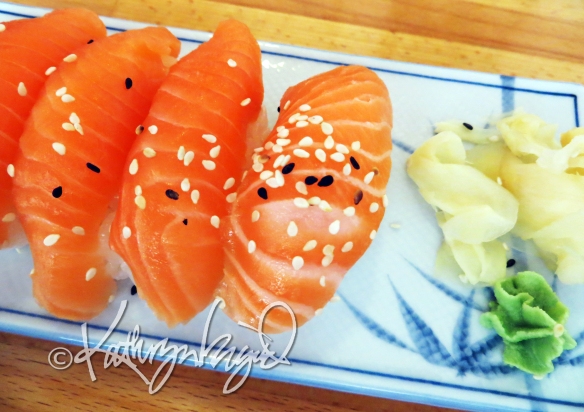
There were, in both locales, a few much-needed refueling stops for Asian seafood treats, since both places are rich in the resources and have long since embraced the influences of those also-rich cultures to make fine use of the wealth, so sushi and Lee’s sweet walnut prawns were on the agenda from the beginning. I can’t think of any kind of sushi that makes me happier than delicate, pristinely fresh salmon—an ingredient introduced to sushi culture by Norwegians, I gather, so I guess I feel a certain genetic impulse to put this meeting-of-cultures on my plate—nigirizushi. So my partner and I devoured salmon nigiri in quantity on the trip, but I also happily tested a few different sorts of makizushi, like Ichiban’s Salmon Lemon Roll, a refreshingly simple kind of maki.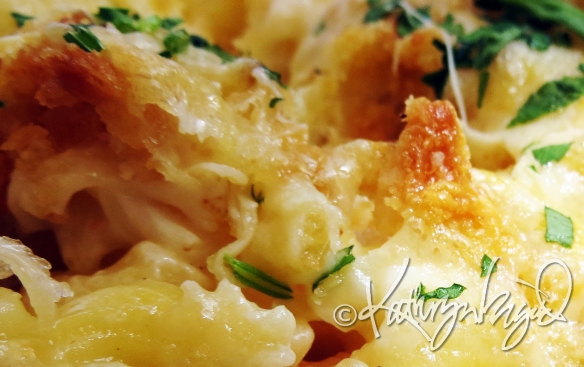
There were those variations on crab mac & cheese I mentioned before, and if anyone puts together two such huge addictions of mine as macaroni and cheese and Dungeness crab had just better get out of my way when I catch sight of the table. The versions I had this summer did nothing to slow me in my pursuit of such treasure, but as the aforementioned components both loom so large in my heart’s and stomach’s affections, neither did they hamper my continued mental tweaking of said dishes, and as I looked upon the photo for this post, I was moved further to contemplate joining my crab M&C lust with that for the classic and justifiably ubiquitous pairing of browned butter and sage, so you can expect to hear some groans of overindulgent happiness coming out of my kitchen sometime in the not too distant future when I get around to embracing that inspiration.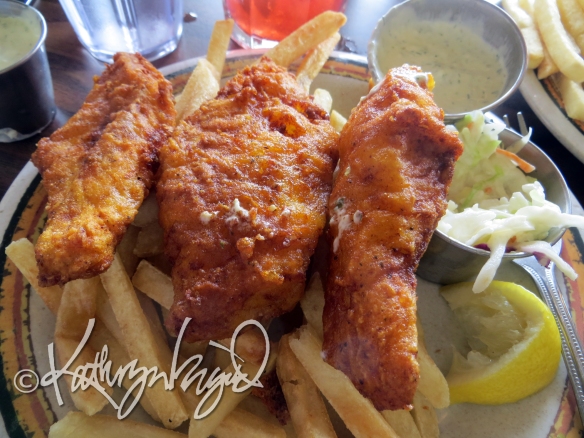
Fish and chips are, of necessity, a part of my seafood pilgrimages as well. As with these other treats, fish and chips have so many fantastic varieties possible, even before you get to the chef-specific fiddling of seasonings and sides, that it’s almost a pity there’s no way to eat every kind on offer. Will it be cod today, pollock or plaice, halibut? Salmon? Smoked cod? So many choices, so little time. I like a good light, crispy beer batter, but most end up being too doughy and heavy-handed in reality for my complete approval, so I’m more drawn to crunchier versions, whether they’re crumb- or cornmeal-based or spring from a dreamily delicate application of tempura. One of the standouts on this journey was when my parents took the two of us to a local shop in West Seattle, where we not only shared massive servings of fantastic, moist and tender and crunchy-coated wild cod but were given cabbage slaw (in a vinegar dressing) as a gift side dish by a beautiful and kind-hearted proprietress. Between that atmosphere of generous hospitality and the snappy-crusted fresh fish, the place won my vote as favorite in this summer’s fish-&-chips derby.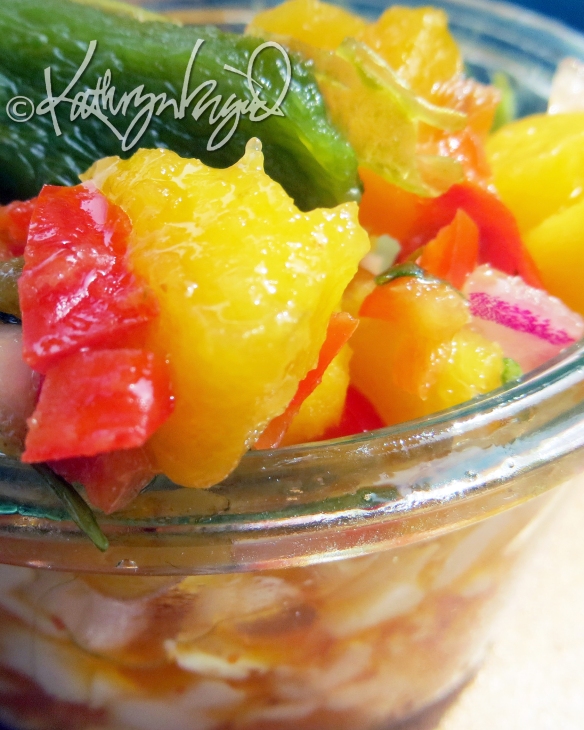
I managed to go in entirely new directions on occasion, as well. Probably the favorite such dish that comes to mind just now would have to be the scallop-mango ceviche my sister and I shared when we went with my husband to a venerable but still terrific restaurant on Alki, that long and lovely public beach in West Seattle where Elliott Bay provides the blue and sparkling underpinning to a grand view of downtown Seattle’s waterfront. Beloved company and glorious weather were guaranteed to make it a worthy event, but the ceviche did its part very well indeed, too. It was a relatively simple melange of diced bell peppers and red onion and scallops and mango in a very light lime-cilantro dressing. If I had any desire to change the dish in the slightest it might be to eliminate the green pepper from the mix since it was just a tiny bit strong compared to the sweet scallops and bright mango, yet not quite piquant enough (as the onion was) to serve as a complementary spark. But let’s be honest. Did that slow down my eating or diminish my enjoyment of that refreshing little appetizer? No, it most certainly did not. If I replicate the dish someday, there will probably be no green bell pepper, and for that matter, I’d be more likely to pop in a sprinkling of red pepper flakes for the spice than to add raw onion, but that combination of tender scallops and juicy mango was just the sunny splash the day required and also provided useful ideas for my future culinary machinations. Enough said.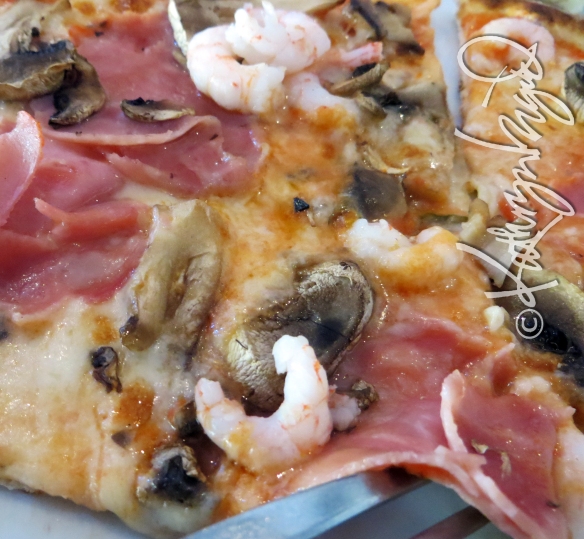
Last among today’s reminiscence revels is shrimp pizza. Americans might not be quite so familiar with this sea creature as a great pizza topping as other nationals have been, but once tried, it’s kind of irresistible in its own way. My spousal person and I derive much of our fondness for the item in question from multiple happy visits in years past to a kind of down-at-heel looking pizzeria in the central train station in Stockholm, where a couple of swell Italian brothers fired up their (too-) well-kept secret wood oven and made the perfect Neapolitan crusts, lightly scorched and melting underneath a little light San Marzano tomato sauce, a nice gooey coating of fresh mozzarella, and heaps of candy-sweet pink shrimp with (unless my slightly lachanophobic husband remembered to forbid it) a dash of oregano over the top. Alas, the brothers have since packed up their oven and gone off to greener pastures, but in a bit of serendipitous sorrow on the afternoon of our discovery, we wandered down the hill from “our” apartment in the opposite direction to a restaurant we hadn’t revisited in quite some time and discovered that they, too, made a dandy version of this pie. Theirs is embellished with a little prosciutto and some mushrooms, which prove to be perfectly friendly companions to their little coral-colored shellfish pals on pizza.
What does all of this prove? Nothing you didn’t know already. I am an avid pursuer of food. Seafoods of many spanking fresh and tasty sorts rank high on the list of favorites among my food loves. And travel combines the increased access to those things that a coastal kid stranded inland in Texas craves at times with the splendors of the travel itself, that immersion in a different culture that suits me as much as it does my taste buds. Ahhh, so.
I have not yet been to Skagen, that Danish destiny so alluring to international tourists, fishermen and art lovers, but I have long since had an imaginary affair of the heart with it, thanks to the popular Swedish concoction known as Toast Skagen. It’s quite a simple thing, really, just toast points with a light shrimp salad on them, but when the shrimp are just-jumped-out-of-the-sea fresh and sweet and the preparation of them done with a delicate hand, it’s just about as good as seafood can get. So between visits to Sweden, I pine for the treat. It’s not that I couldn’t make my own facsimile of that assemblage, for even in the heart of north Texas there are places where one can lay hands on pretty good shrimp (at a price), but since the presence of briny air and piercingly radiant northern light and the lilt of Swedish conversation all around are also key ingredients regardless of their absence from the written instructions one might find for the preparation of it, Toast Skagen is still best savored in Scandinavia, and worth the protracted longings between visits.
That is why, if it appears on an even moderately trustworthy menu in Stockholm and its environs, I am likely to order Toast Skagen without even giving much of the rest of the menu a fair study. On the visit that just ended a few days ago, I did just that. Several times. And I was not disappointed—unless you count each time I ate the last bite.
The simplicity of the combination is key, because it must showcase the freshness of the shrimp, but there is room for subtle difference just as there is in any classic food recipe or combination that has survived the twin tests of time and chefs’ egos. The best preparation of Toast Skagen begins with fresh, perfectly cooked cold shrimp, is seasoned with nothing more noticeable than fresh lemon juice and fresh dill, lest the delicate salty sweetness of the shrimp be overpowered, and is bound with mayonnaise and served with or on bread. That’s about it. The subtleties come in with the proportions in the combination, the type of bread or toast, the presentation, and a few possible additional flavors and garnishes that won’t attempt to compete with the simple perfection of the concept.
On this visit, I managed to taste three slightly different, all delicious, versions within the bounds of our ten days. I’m sure I’d have done more, but I did have to leave room for other favorites, and despite having eaten extensively and often, I did have to accept the finitude of hours in the day. Even though with midsummer daylight, those were admittedly impressive. The version of my shrimp-laden toasty dream that I’d been contemplating for the longest before our recent trip was had on our last day in Stockholm, for we had plenty of other places to go and people to see before then, but we did finally go to Sturehof, a venerable restaurant in a swanky but not stuffy neighborhood only a hop, skip and short T-bana (subway) ride from where we stayed. At Sturehof, I was greeted by lightly toasted points of white bread and a copious hillock of shrimp shaped with the help of a very light coating of mayonnaise. A toss of snipped dill, a mild dash of perhaps Dijon mustard to undergird the squeeze of lemon I’d give it, and a spoonful of Kalix Löjrom (caviar) to give a little snappy texture and sea flavor boosting, and it was a filling but refreshing luncheon to give our last day of play in Sweden a far less melancholy tinge.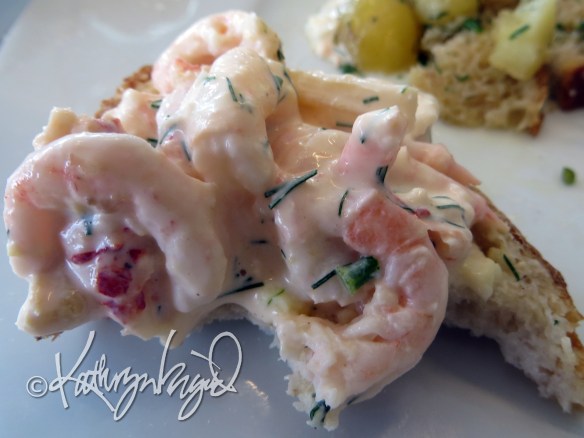
The second version of Toast Skagen was almost an afterthought in the middle of our visit, but far from negligible in the eating. My husband and I went with a dear friend to visit the fantastic Artipelag, part seaside park, part eco-tourist experiment, part art museum and all Swedish brainchild of the inventor of the BabyBjörn line of child care products. Unlike many museum cafes, this place’s eateries are worthy of a visit entirely unrelated to the call to check out all of the other wonders of Artipelag. We didn’t even bother to go up and dine in the restaurant upstairs after having a quick look at the buffet in the less fussy main level. It was an extravaganza of delicious and beautifully prepared traditional Swedish foods and their contemporary companions, and reasonably priced for such a grand meal at that. Among the attractions for me was an early spotting of other visitors parading their plates to the table with enticing spoonfuls of Toast Skagen in their midst, but when I arrived to select my foods at the board, the Skagen bowls were empty. Empty! Thank goodness I noticed that the staff continued to keep most of the dishes there overflowing with fresh batches of food, so I pulled up my fainting spirit and managed to down great quantities of other delectables before going back to find the missing delight replenished.
It was worth the wait, which, given the quantity and quality of everything else I’d been eating quite happily in the meantime, was no small feat. This version of Toast Skagen was either the plainest or the most complex of all, depending upon how one chose to dish it, dress it up, and/or accompany it when choosing from the fabulous array of salmon with baby peas, lovely cool salads, savory sausages, buttery tiny roasted potatoes, and so much more. I opted to keep it somewhat unfussy since it was really the dessert after I’d consumed so much other tasty food. There was splendid chewy, crusty peasant bread to be freshly sliced by my own hand from a warm loaf, so it seemed the obvious thing to merely take a slice or two, give it a slick of good cold butter, because to ignore good cold Swedish butter is very nearly a cardinal sin, and put a fat spoonful of shrimp on top. This variation had the mayonnaise and dill and very little else, but because the shrimp and bread and butter were so fresh and delicious, it was as close to perfect as need be.
The first, and not least, helping of this craved creation that I had on the journey was on a tour boat that we took with other great local friends, while cruising leisurely through the archipelago‘s canals to have a short walking tour in Sandhamn before boarding for a leisurely dinner cruise back to town. The dinner onboard was a very pleasant, well-prepared selection of Swedish favorites, like the Artipelag buffet, but at this sit-down meal one had the choice of two fixed menus, with or without drinks and dessert, and ours had an option for my object of Swedish shellfish lust on it, so that was a foregone conclusion. This was the prettiest plating of the three, and had a couple of good signature tweaks worth mentioning. Besides the creamy, dill-speckled shrimp salad and a scoop of Löjrom for that snappy seaside pizzazz, there was a small stroke of Balsamic reduction brushed onto the plate and its piquancy gave a sweeter buzz to the usual lemon spritz, the latter still perfect in its way. And the garnishing lettuce and cucumber on the plate were so bracingly fresh that I only barely resisted turning Toast Skagen into Vietnamese-style salad rolls for the occasion. I munched the greens as a mini side salad, instead. Great textural contrast in one uncomplicated gesture.
Now, should you think I was so obsessed with this specific dish and with All Things Swedish All of the Time, I can assure you that my euphoric revisitation of beloved Stockholm and environs was filled with beloved friends, too, and yes, lots and lots of non-shrimp-toast-related food. More on that later. For now, be content that you know a plain yet elegant dish worthy of single-minded pursuit, and go forth in search of it yourself.
 Have I matured as much in three years of daily blogging as a toddler does in her first three years of life? Highly unlikely. I was, after all, already a half century old and probably set in many of my ways to a degree that could forestall any large amount of progress toward real change, or at least drag it by the ankles dramatically.
Chances are, I haven’t made a huge number of changes as a person in general during the last three years. But I can lay claim to some growth, after all.
Moving to the wholly new world of life here in Texas in 2009 certainly necessitated some change. My aging corpus may not have made the transition perfectly: being over-endowed with the internal furnace function of middle-aged hormonal fun isn’t entirely compatible with the outdoor temperature norms here, and like many transplanted citizens I’ve done some battle with the local slate of allergens new to my system.
On the positive side, what I’ve found as a blogger echoes the best of what I found in migrating from my longtime home in the Pacific Northwest to the new-to-me frontier of North Texas, an entirely different sort of northern-ness. Entering new territories, both the real and the online ones, presented the possibility of encountering insurmountable tasks and challenges, or worse yet, unfriendly natives. Of course, my being still in Texas after five years and still blogging after three tells you that none of those fears proved true. Quite the reverse, in fact, considering that I’ve had some lovely experiences in both worlds during my brief tenure here, and I’ve garnered a whole cadre of wonderful friends in both, as well.
In short, I would amend my initial statement so far as to say that anything leading to such an exponential increase in the size and variety and quality of my circle of compatriots seems to me the very best kind of growth possible. Happy blogiversary to me this week—and more importantly, from me to all of you, who have made the journey so worthwhile and still so inviting. Who knows where the next three years may take us all!
I’ve lived in Texas for five years now. Safe to say, no native of the state would remotely consider me a Texan, though. Being a true Texan, I think, is not so much a matter of hometowns and habits as it is something that exists in the ethereal zone where there is an overlap between a spiritual state and an art form.
I don’t begrudge this; I merely stand in awe of it. It’s as intense and intrinsic a form of identity, I gather, as any birthright. I also believe that regardless of where on earth you had your nativity, you either are or aren’t born to be a Texan. Some people born in the state of Texas can take it or leave it, some just need and can’t wait to leave it, period, and can’t take it at all. And as the slogan here goes, there are non-natives who swear that ‘I was born in X, but I got to Texas as fast as I could.’
 Kind of the way of all callings, I suppose. Some have a clear sense of destiny or vocation, and some don’t. Some adore what that purpose promises them, some are indifferent, and some will go to the ends of the earth and beyond, if necessary, to escape it as if it were Toxic Doom, Incorporated. We all have our ways of ridin’ the fences.
So if I can’t be a real-live ranch hand no matter how that suits my romantic image of what it ought to mean to be a Texan, at least I’ve found my ways to make living in Texas suit me just fine, for as long as I desire to live here or the Real Texans don’t hogtie me and ship me out of the state in a rickety hay-wagon with a busted axle.
Weed or wildflower? Messy or naturalized? Everyone has an opinion, and they often differ distinctly on the same little plant or plot. Part of the pleasure of good company will always be in its variety and the interest that it brings to life. Gardening tastes are very much in that vein.

As a sometime gardener, however amateur, I can think of few styles of landscaping that I don’t find appealing and attractive in their own ways. I admire the near-perfection of elaborate, formal palace gardens and magnificent, fountain-filled parks with their follies and allees. I am fond of a rustic campfire-side bramble patch, punctuated by straggly hydrangeas run wild, down by the lakeside. There is both soul refreshment and eye appeal for me in a delicate Zen garden with bonsai, laceleaf maples and a barely rippling koi pond.
When it comes to my own gardens, I tend to walk just a little farther on the wild side. I hate to fiddle and fuss at length with the hard labor of a garden. I greatly prefer the genteel pleasures of the design of the garden, and perhaps the occasional artistic pruning to shape a rhododendron or sapling tree. But I’m not so wild about back-breaking rock picking and digging; I moved from incredibly rich but equally rocky volcanic glacial till of western Washington to the cement-like red clay of Texas, both places where putting a one-gallon root ball into the ground requires a pickaxe.
My first garden was an exploration of the beauties of cottage style gardening. Washington, temperate and moist, was ideal for a grand assortment of bulbs, flowering shrubs and cutting flowers, so I had profuse blooms and constant green with little effort. The traditional cottage style allowed me to squeeze a massive amount of lively growth into a normal city house lot, and the more I wedged into the ground, the less room there was for volunteer and invasive plants. Weeds had a tough go of it there, so it wasn’t especially hard to keep ahead of them.
There are plants I don’t invite to my parties. Much as I enjoy and admire most, I’m no friend of those pest plants that choke out others, cause massive allergies, or stab at me with cruel thorns, or those that threaten entire ecosystems, mine or others’. Good riddance to misplaced English Ivy, kudzu, poison oak and wild blackberry canes. Conversely, one of my particular favorite garden options is to find ways to encourage native plants to thrive. The more a plant is suited and accustomed to its environs, the more it will grow and be healthy and attractive and weed-proof.
Texas has reinforced that love in my aggressively. It’s a harsher climate than the Pacific Northwest’s in which I now garden, so what I plant and tend must needs be up to surviving and flourishing in those more demanding circumstances—or die. Even desert plants don’t necessarily have what it takes, since north Texas can still get true freezes in winter, and occasional snow, hail and ice. This last winter, a relatively mild one, still killed off a lot of specimen agaves and prickly pears and even cut some mighty oaks down to size.
I’m finding that the area’s status as an extension of the country’s central prairies may be the key to what will survive and grow here long term. When anything will grow, that is. I’m tending to my little wildflower meadow out back, to see if I can’t reintroduce something a little more self-sustaining than those long cultivated but seldom successful hard turf lawns that were popular in our area and surrounded our house when we bought it. Even better than the wildflowers, I’m finding, will be the ‘amber waves of grain’ I seeded in among the wildflowers, the native prairie grasses.
Prairie grasses have some of the deepest, toughest and most tenacious root systems of any type of plants, and along with the leaves that sway in every breeze, often creating symphonies of susurration, they go to seed in many attractive ways. So I really am enjoying ‘sowing my wild oats.’ And Little Bluestem, Fountain Grass, Weeping Lovegrass, and many more. My backyard creatures will enjoy them, and their varicolored, many-textured attractions will beat any struggling, forced lawn that ever tried to eke out a living where its native cousins once roamed free.
Hot weather makes us crave chilled drinks. We need to re-hydrate, but biological science says that hot drinks are the sensible approach, inviting the body to cool down in compensation for the introduction of additional heat. But that’s not nearly as satisfying, in reality. So we look for our respite in iced drinks.
I’m pretty much an All-American girl when it comes to my tastes in that regard: briskly icy soft drinks in a frosty mug are particularly welcome. I grew up with the benison of special-occasion A&W root beer in said frosty mug, and I’ve never outgrown that treat. Coming to north Texas, I was happy to find a comparable comfort waiting for me when the ugly reality of Texas summer heat became just a little too much for my tender Northerner sensibilities: the vintage joint Mr. Frosty.
Their in-house root beer is sweet and vanilla-kissed like the aforementioned A&W’s, and is served in freezer-chilled mugs. That it happens in a place that hasn’t changed substantially in its long life and offers a swell menu of classic diner foods with the appropriate tinge of Texan and southern character is, well, icing on that icy deliciousness. So the frosty mugful of root beer can be accompanied by a burger or hotdog and fries, or that fine and mythic dish, Frito Pie. Chili served over corn chips of the named variety, and occasionally, topped with the usual chili toppings of onions, shredded cheese, and/or sour cream.
The beauty of this combination is that the temperature and spice of the chili (preferably, without beans, if you’re a traditionalist in Texas) can perform the body-signaling duty of changing one’s internal temperature a little to better suit the weather around it, and the root beer can do its part by providing the psychological cooling that brings it all home. Meanwhile, there’s the pleasure of people-watching, seeing the widely varied crowd that can be pleased by a visit to this kind of old-school eatery. And, like some of the place’s vintage fellows, this diner is host to regular gatherings of vintage-car enthusiasts as well, so whether it’s one of those times or simply a hot afternoon when the need for an icy root beer is high, there can often be a sighting of a classic car or truck to enhance the entertainment. It all goes down so well with an order of Frito Pie and root beer, as any experienced soul can tell you.
I grew up pretty near the Pacific Ocean. It was a matter of a couple of hours to get to its shores from home, and mere minutes’ drive to Puget Sound, and I have always loved any chance to spend time along the water. At home in Texas, it’s not so easy: there are a few man-made lakes within a short drive, with a few public beach spots along the edges of each, most of the time too hot for strolling, and that’s about it. So that recent trip to Puerto Rico was a brief but lovely reminder of what pleasure I find in wandering the beach when I can, absorbing not only a bit of salt water through my happy bare feet and the tangy air through my expanding lungs but also the great sense of history and adventure inherent in all of the findings strewn along the tidal brink.
Despite being so much a water-baby at heart, I’ve never so much loved open water swimming—after all, my people are the pale, easily fried folk of Norway who transplanted to the familiarly brisk spank of the coastal waters to fish and farm and forest-hunt as they’d done back in the old country. But I’m drawn all the same to explore the tide-pools and comb through the heaps of hidden-and-revealed treasure that line the beach, sucking deep breaths of sea breeze happily right down to my soul. I love to see all of the bits of shell and bone and stone piled up and intermingled with molted feathers, ship detritus and the petrified lace of corals and seaweed. Every tiny piece seems to hold such a storied past that I can stare and sift and dream endlessly.
What caused that lone shoe to wash up here from unknown shores? Why are those pieces of sea-soaked driftwood burnt but not in the fire pit, rather appearing like a dragon-singed skeleton in a distant heap down the shore? How did so many colors of ghostly and sandblasted beach glass come to bejewel the line of the tide together? Who were the creatures that fished the shore and left bleached fish bones here, a crab shell there? When did the storms kick up such a foment of foam that the inland side of mean high tide has a gloss of it lacquered firmly across the surface of its sand? Where are the children whose sandcastle ruins are still tucked behind the biggest boulders on the beach, waving flags of leaf and kelp from their stunted battlements? And most importantly, when can I return to the beach to stroll and dream of such things again?
I won’t cheat you. Just because I posted those highly fictionalized cartoony versions of a reptile and an amphibian yesterday when I was singing the praises of singing frogs, iguanas, turtles and their fellow creatures doesn’t mean I wouldn’t share the joys of the real things with you as well. So consider yourself forearmed with this brief alert: cuteness and beauty ahead! Real, live. Starring some fantastic iguanas and our own, homegrown Tiny Tim/Tina Turtle. 




I’ve been surrounded by a wealth of intriguing, beautiful and amusing creatures lately. Both on our Caribbean outing and now back at home, the company I’ve been keeping have been anything but dull. I’ve had to keep my distance, though, almost as if I were some sort of dangerous predator. With the people, since we got home to Texas, I’ve tried to avoid any unnecessary exposure to what turned out to be a reasonable suspicion of coming down with a cold (not as bad as my spouse’s, at least); with the other companions, it’s more a matter of keeping a respectful distance from their wildness. With the frogs, to be fair, it was unlikely we’d cross paths, since they were hanging out on the periphery of where we were. We heard consistent singing from the local mascot Coquí, the sweet frog species revered in Puerto Rico for its generous insect pest control and other charms, not least of them the evening chorale of the mate-seeking males. Didn’t see any, though, other than that sort of movement that is just past peripheral view. Enjoyed the songs, all the same.
For actual sightings, however, the reptile population has kept us in better company. Best In Show goes to the iguana population of Puerto Rico, for making frequent appearances to show off the varied beauties of the species. Crested or not, dragon-sized or baby-dainty, green or earthily striped, iguanas and other lizards fascinate me and get my vote for lovely monsters whenever I can see them, and the more so when they’re not in some pet store or zoo, just hanging around in their natural haunts. That’s my kind of ‘haunting beauty,’ if you know what I mean. In that respect, the iguanas got some serious competition as beauty champs in my own personal creature feature when we got home from our trip and had a first-ever visit on our lot—albeit in a risky appearance in the middle of our driveway—of the most charming little turtle, no longer than my outstretched hand. Thankfully, my husband/chauffeur spotted the little guy, avoided driving over him, and went back out on foot to gently relocate the turtle to our back garden, where there are lots of good turtle snacks growing, plenty of taller plants for shelter from sun and predators, and a shortage of adorable turtles that he/she helped alleviate by visiting. That makes me a happy critter.
 Art-Colored Glasses