Ever Heard of Foodie Thursday?

Well, now you have.

It’s been a busy autumn chez Sparks. No excuses: in the flurry, I flat-out forgot to put up my food post on Tuesday. Sigh. I didn’t stop being food-obsessed, just being on schedule. So here we go, better late than never. I would give you a big silly grin, but yeah, my mouth is full again. Photo: Blue Bouquet

What I meant to say on that long-ago-seeming-day-which-was-Tuesday, was that I do like this time of year in particular for its masses of officially sanctioned excuses for partying. There are of course the big national and international celebrations of things spanning from Halloween/All Saints/Dia de los Muertos to Thanksgiving, Diwali, Christmas, Hanukkah, and the various New Years; in my family, five out of the six of us have winter birthdays as well. It’s not that my family and I are in any way averse to celebrating with a good meal, a party, or any other excuse for eating and drinking good stuff at the drop of a hat, but it’s extra nice when nobody else questions the need for such an occasion either.

My parents upped the ante this winter by both entering the glorious ranks of octogenarian excellence, so since my three sisters and I don’t all live close to them anymore, we’d long since all agreed it made sense to look toward next summer (2015) for a family get-together to mark their ascensions to this great new height. All the same, nobody in our clan has any respect for leaving an excuse for a party just lying there unused. So Sisters 1 and 3, who do live near Mom and Dad in Seattle, helped them plan a big party on Mom’s birthday weekend so that our parents could have their local siblings, nieces and nephews, and a few special friends together. I made up the digital invitations, since I could do that from my remote location, and because I’ve long done such design tidbits for family events as a way to be involved when I couldn’t otherwise be on hand to participate. But our Seattle sisters did the yeoman’s work on the whole thing.

We kids did up the ante a little, though. Sister 4 and her husband sent an email to the other three of us a couple of months ago, announcing that they had bought plane tickets to fly over from Norway for the November party and surprise Mom and Dad. We sisters were surprised, too! My husband, with three concerts and more rehearsals to conduct on either immediate side of the party date, couldn’t get away, but with a batch of saved air miles, I could, so I planned to fly up from Texas and join in the fun. Once all of our tickets were bought and the wheels set in motion, the real challenge was not only to see if there were any small things 4 and I could do from our bases of operation but to see if we and our partners could keep a secret for seven or eight weeks, a dubious probability at the best of times with our talkative bunch.Photo: Pink and Green Bouquet

We did. We let one of Mom’s sisters in on the secret so that she could help get our parents in the right place at the right time when the day arrived, and my spouse’s parents knew, because they were invited too, but despite a couple of close calls, nobody slipped up irrevocably. Part of the larger plan, once we’d decided to add in this surprise element, was that there would be an immediate-family-only lunch on Mom’s actual birthday at Sister 3’s house. Dad, Mom, Auntie and Uncle, and sisters 1 and 3 were to have a nice, low-key luncheon date to mark the day and wrap up any last-minute details for the bigger open house party the next day.

Sister 4 and her husband and I flew into Seattle on Thursday the 6th. It was wonderful to have a reunion of the four sisters, our first in at least a couple of years, and to convene a few other members of the immediate family—3’s husband and one son, with the other son flying in from college on Friday—that night and to laugh up our collective sleeves over our plot. In keeping with the family tradition of combining food with fun, this first evening was spent at 3’s house, slurping bowls of a beautiful, creamy winter sweet potato, kale, pasta, and sausage soup (based on Martha Stewart’s recipe) while taste-testing a couple of good single-malts the Norwegian contingent had picked up on a duty-free spree en route.

On the 7th, Mom’s birthday, we got lunch ready and in the oven and fridge and then spent a little while nervously skulking past curtained windows to escape any unexpectedly early arrivals’ discovery, and as the parental entourage at last approached, three of us ducked into the back bedroom, where we giggled like little kids and perched on the bed to avoid making the creaky hardwood floor give away our presence. Auntie got Mom settled into her favorite armchair so we wouldn’t have to explain her absence at the next day’s party as the result of an aneurism, and we finally strolled out to say Hello to our startled parents. Their faces remained in virtually the same blankly surprised expressions for a fairly lengthy, attenuated moment.Photo: Mom's 80th Birthday Lunch

Lunch broke that spell. We feasted on marvelously simple steak, lemon-dill oven-roasted salmon, salt-baked potatoes, green salad with a fresh blend of herbs and creamy lemony dressing, green beans, and buttered peasant bread. Classic, delicious, and with a handful of their kids on hand to help, an easy way to feed our parents well on a meaningful day. We worked a bit more on the details of Saturday’s open house event, but 1 and 3 had covered all bases so thoroughly that we were all able to make an early evening of it and rest up for the main event.

Sister 3 had found a wonderful venue, a community center run by the parks service in a beautifully renovated vintage power station right next door to the church where our dad had grown up. All five of Mom’s siblings and Dad’s only sib, his brother, and all of their partners, were on tap to come. So did some of the sibs’ kids, and even a handful of grandkids joined the gang; with the friends who came, we totaled just over fifty in attendance. We saw many relatives we’d not seen in years, many of them as surprised as our parents at seeing us there like long-distance apparitions. I think I can safely say that the party was everything Mom had wanted, that Dad was also happy, and that we all felt pretty chuffed at pulling off a great success, especially at not blowing the surprise.Photo: Birthday Buffet

But again, food was central to the grandness of the day, and once more, that was thanks to the wise planning and [literally] tasteful choices made by our Seattle sisters. The buffet spread’s main dish stars were ginger beef and sweet walnut prawns from our favorite local  Chinese restaurant, accompanied by a wide range of finger foods and sweets, many of them bought ready-made from various shops and stores. We had just about enough food on hand to feed 250 guests. So we kept up that family tradition, too. And we all left the tables full and fulfilled.

Who knows what we’ll get up to next summer. Only sure that it will include much eating and drinking. And probably lots of childish giggling and telling secrets, which I think are a mighty nice lagniappe for the whole meal, whatever it is.

The Great-Greats

Naming things is an endlessly fascinating and complicated way of creating and better understanding our relationships with them. Different cultures have even devised quite distinct ways of classifying and identifying the kinships within them, to the extent that families and relations in the different cultures affect the very ways people interact and consider themselves connected, responsible for each other, and much more.Photo: Great Great Grandparents

One of the appealing (or appalling) quirks, depending upon one’s view, of the American traditions of familial identification and the names given them in English is the way we use the word Great to specify layers of distance from ourselves. This photo, for example, is of one of my sets of great- and/or great-great grandparents (my maternal grandfather’s forebears), if I am not mistaken, and there is much to pique my curiosity in this image.

First, of course, is the question of whether I have identified them correctly at all. But then, in what ways—besides the nominal—were they great? Clearly, being among my ancestors is an easy in to that category. [Ba-dum-tsssssssshhhhhh!]*

Seriously, though, what distinguished these people? Safe to assume, from what little I do know of my relatives in Norway, these two lived on a small farm, and they worked hard. I mean, incredibly hard, by my standards. I’m inclined, actually, to think that the gent is my great grandpa and the lady next to him is his mummified mum, but having seen many a portrait from that era whose subject I was shocked to discover was eons younger than I’d have imagined, I can’t be sure. If this is a couple, I am extra, extra glad I have such a lazy and comfortable life. I may be no spring chicken, but I like to think that people will be able to tell whether or not I’ve already died, and when it does occur, won’t be able to make work boots out of my hide without tanning it further.

This could be the great-grandfather who was a tinsmith. A pretty skilled one, at that. The hands I see here could easily be tough enough to have put metal in its place. As for the farming, what little I’ve gleaned [enough with the shtick! I’ll try to behave myself]* from the various family stories and photos indicates that my family were subsistence farmers, growing what produce would feed their own households or be swapped with neighbors for  further goods, and raising enough sheep and goats, chickens and cattle to keep them in meat, eggs, hides and bones as needed. Agrarian life, until more recent decades, was generally a far more solitary and jack of all trades kind of existence. My grandmothers, great and otherwise (and I can only assume all of the neighbor women of this ancestress’ approximate vintage) did such work as probably made them all look equally leathery.

I would like to think that the sober, if not condemnatory, expressions in the photo sprang from the typical problem of holding still for the interminable exposure time a photograph required in those days, not to mention doing so while squinting in the sunlight. But I also suspect that a combination of that hardscrabble life of theirs and the grimly perdition-obsessed brand of religion to which many of my relatives have subscribed means that these two generally took life mighty seriously as well. They probably didn’t see so much to joke about or room for fun and games in their daily lives.

What I can safely assume about my relatives still gives me some hope. Obviously, they knew enough about how to survive and yes, thankfully, to procreate, that I am here generations later to tell the tale. I consider my existence a fine thing. Although they weren’t either wealthy or showy, they are dressed in well made, tidily kept clothing and lo, my mustachioed male relative even sports a watch chain, so theirs was not, even from the perspective of my privileged and cushy life, a torturous life of pure privation. So I don’t feel enormous existential guilt for their suffering. But I’m not inclined that way like they might have been, anyhow.

My late Norwegian relatives lived and labored in a landscape and climate rather like where I grew up in the American northwest, so I know that even if their daily work was hard they did it surrounded by beauty and nurtured in a mostly benevolent natural environment. They raised children who were able to go out in turn into the wider world and make their ways, eventually finding own their paths, making their own livings, and raising their own families, and eventually crossing many mountains, borders, and seas. I think all of this a fine, if modest, sampler of human existence with [dang it, I just can’t help it!]* relatively little grand tragedy or overblown drama. Most of all, I am glad that the long-gone beings who posed for this rather inscrutable image contributed to the production of a line of pretty good folk, culminating in my immediate family. That’s greatness enough for me, and makes me very thankful indeed. Happy Thanksgiving, my friends.

Foodie Tuesday: To Quell Your Fears

I suppose it’s only natural that if one is expecting a visitation from anyone scary or spooky, one might require a good drink to calm the nerves. After all, one of the most predictable symptoms of fear and trepidation is a dry mouth and that tends to heighten the other signs of nervousness in turn. One can quickly devolve into a quivering heap of ghostly dust at the mere thought of being stalked by ghouls and goons. And of course, the arrival of  the Halloween crowd is a virtual guarantee that such terrors will appear on the doorstep.Photo: Keep Your Glassware Handy

So I recommend that you keep your shelves of glassware well lighted for the occasion, and have a dram or two of life-saving elixirs handy as well. The thirty-first is nearer than you think, and close on its heels, a horrible horde of wandering souls planning to maraud your home and demand a ransom from your candy-related treasury in exchange for safety from their pranks.

For the dedicated defender of the home barricades, it might be apropos to do up one’s home like that belonging to the landlady of Hänsel and Gretel‘s nightmares, the formidable cannibal who lured them in with the decorative delights of her gingerbread cottage. One could sit on the porch of such a candy-dandy place and leer meaningfully at passers-by over the lip of a neat little glass of Hexenblut. While that might be a counterintuitive choice for threatening them, it could also be seen as a warning that you’re so tough you slurp up your own wicked witchy sisters’ veins just as readily as any flimsy little trick-or-treaters’.Photo: Hexenblut

Me, I tend to be content to assuage my fears far more moderately and without putting up such a frightful front. I’m more inclined to turn off the front porch light and hole up in the back room to watch a nice double feature of, say, The Innocents and Gaslight or perhaps Bunny Lake is Missing and What Ever Happened to Baby Jane?, all while drinking a nice soothing glass of dry white wine or Scotch. The family label of “dry Riesling” from the Hungarian Count and Countess Károlyi’s estate that we visited this summer is not a bad choice for a light counterpoint to some delightfully creepy movies, or if I want something to warm my chilled heart better, I can opt for a short medicinal snifter of Bushmills 1608 or the Macallan 12 year old single malt.Photo: Karolyi Trocken

Naturally, there are times and places and people not requiring the nerve tonic of alcohol. In that case, there’s nothing more quenching and comforting than the old standby of spiced cider. Nothing warms the cockles of the heart better while simultaneously moistening the dry and gibbering lips of a scaredy cat like me than a nice steaming mug of that stuff. I like mine very well when I get some beautifully unfiltered apple cider (happily, I’ve some on hand right now) and mull it well with stick cinnamon, whole cloves, and pieces of ginger root, but this too can be made more festive if one wants to get a little more playful with it or, when necessary, make it a more potent potion for warding off baleful beasts and cryptozoological creeps. One could, for example, add some black peppercorns to the spice blend for a little more bite. (Take that, ye murky monsters!)

Still, there are so many delicious directions to go with a mulled cider it can be hard to choose: add sliced whole [seedless] oranges, especially of course beautiful blood oranges if you can get them in late October; melt in a dollop of dark molasses before adding the spices to create a little liquid gingerbread effect; serve simple hot cider with hard caramel lollipops as stirrers, if you’d like to drink a caramel apple; and of course, you could go for all-out reassurance and flavor the apple brew, instead of with spicy flavors, with dashes of rose-water and almond essence and a steeping quantity of green tea leaves for something much gentler to soothe your quaking spirits. For spirits will, one way or another, abound on this night.

Foodie Tuesday: A Balanced Diet

Photo montage: Fun with Fruit & VegetablesI appreciate good health and all of the dietary elements that can determine whether I’m healthy, and if so, just how healthy I am. I know that diet includes not only the things I eat but how I combine them, when I eat, how much I eat, and many more factors that interact to create the ever-changing state of good health I seek. I realize, too, that nutritionists and scientists and other dietary mavens are always learning new things, and nearly always getting new ideas, too, some of which they can prove and others, not so much. That doesn’t stop tons of people, including me, from becoming obsessed, however temporarily, with the latest dietary trends and tweaking our diets without always considering whether those new, however ingenious seeming, ideas have anything to do with how our own bodies operate best.

Huh.

Yeah, I’m always thinking of new and better ways to make my diet more seemingly ideal for me, and I have some goofy thoughts on the subject at the best of times, and that’s the truth. What I can say in my defense is that among the relatively few things I have managed to learn in my lifetime thus far is that there is a whole lot more involved in my health and well-being than food.

I love when I can find the balance I need in any day by eating when I’m hungry, stopping when I’m no longer hungry, and focusing on getting not only a reasonable apportionment between protein and fat and carbs and vitamins and minerals and all of that dandy stuff. I love when it’s satisfying to my taste buds as well. Most of all, I love when that’s all fitted into a balanced diet of being with loved ones, going wonderful places, learning new fun things, and not least of all, of making art. There are always going to be theories, guides, charts, Rules and expectations about what constitutes the ideal way to eat, from the old spa cures that had people eating nothing but blandness or drinking rather large quantities of vinegary-dry white wine to the FDA-approved Food Pyramid, to the various independent dietary regimes from Scarsdale to South Beach, from Paleo to the Perfect Health Diet. I’ll outlive some of them, and many more will follow me. My budget and schedule, my taste preferences of the moment, and the company I keep, will continue to change my dietary wants and needs as well.

As long as I can keep listening to music, writing and drawing, and surrounding myself with great and interesting people, I will feel well fed.

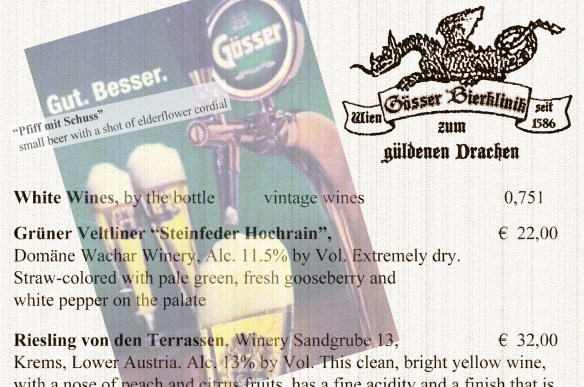
Photo montage: Another Balanced DietI need to tell you that there’s one sure way to have just the right diet, at least if you happen to be me and visiting Vienna. You just wend your way down a couple of funny little narrow byways and find the welcome that waits for you behind the door of the Gösser Bierklinik. That’s right: a clinic dedicated to beer. If that doesn’t make you feel better, you don’t know a healthy diet at all, wink-wink. Hail, Austria! It’s really a lovely old, old restaurant—don’t miss the neatly labeled Türkenkugel, the cannonball reputed to have been shot into the place in 1683 and still enjoying the pride of place where it sticks out of, or into, the wall.Digital illustration: Bierklinik Highlights

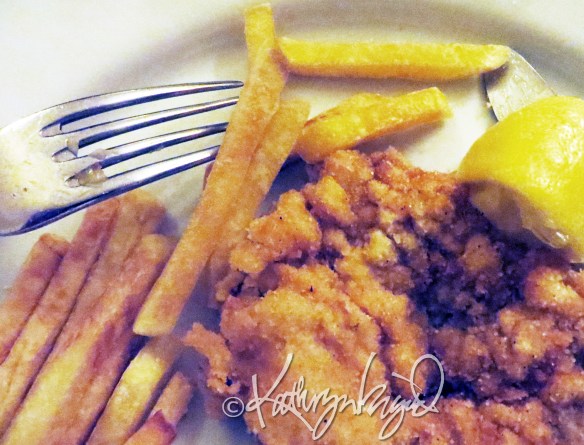
But don’t get hung up on ancient history too much, or you will miss out on one of the best Wienerschnitzeln I’ve had anywhere, and I am a fan, so I’ve enjoyed a few. The Bierklinik’s is tender inside, lightly seasoned, crispy on the outside, and unadulterated with anything other than the requisite lemon wedge for squeezing a drop or two of extra sunshine on it. Fabulous. Combine that with some ordinary but blazing hot fries and a bracing drink of anything from water to the titular beer, to what our server assured me was the ‘ladylike’ way to have a beer, a Pfiff mit Schuss, or beer spiked with elderflower cordial—I can’t speak to the waiter’s assertion, not being so incredibly ladylike myself, but it was a light and sprightly accompaniment to the Schnitzel, and given the perfectly convivial group with whom we were dining on the evening I tried it out (my husband and I were with three delightful friends, but also joined eventually in conversation with the marvelous German couple and his parents who were sitting at the next table), it was no more, and no less, effervescent than the conversation. Schnitzel, fries, a good drink and excellent company. Sounds like a perfectly balanced diet to me!Photo: Gösser's Schnitzel


Foodie Tuesday: Figs and Fika

Despite the present day craze for all things piggy when it comes to meats, bacon inserted into every imaginable recipe—and some not even possible to get my brain wrapped around at all—and the undeniable fabulousness of a grand Black Forest classic, a clove-studded Virginia ham, a spiral-cut, home glazed ham, or the umami-loaded and thus much-lauded and wildly expensive jamón ibérico, what I grew up with at home, as I recall, was that differently seasoned and prepared, smooth textured, Danish ham (as my family knew it then, whether that characterization was entirely accurate or not), and I loved it. It’s on the sweet side, generally, and usually subtler than the more intensely flavored aforementioned hams. Truthfully, I love them all, as long as they’re not those tinny, watery, pallid objects of pseudo-meat that have been processed to the point of looking and tasting like cartoon food.

I also, as you well know, am fond to an obsessive degree of salty-and-sweet combination treats, and hams are very compatible with sweet foods, whether in the form of a glorious, uncomplicated afternoon bite of perfect prosciutto wrapped around a melon slice or as a bone-in beauty bathed in fruit compote for the spring table.

Danish ham isn’t my only foodly fanaticism derived from Scandinavian roots. Here’s another thing I’ve learned from that region to love when it comes to food: the Swedish tradition of fika. Not so different in origins, perhaps, from the Italian treat Tiramisu, wherein a tradition of stopping for coffee and a sweet was the perfect pick-me-up in an afternoon or way to meet with a friend for a bit of refreshment, and eventually the practice became the name of the treat itself—the Italian Tiramisu translating roughly as, yes, “pick-me-up” and the Swedish fika deriving, ostensibly, from a syllabic reversal of “kaffe” (coffee). Not that it matters hugely to me, but I do always love an excuse to sit down at the table not only for a full meal but for the more relaxed atmosphere of a break for, say, a bite and a drink, some appetizers and a cocktail, or tea and dessert.

For a recent casual evening with friends, I got the urge for a ham-and-sweetness starter that would be extremely quick and easy to fix but bring out the simple flavors of the ingredients pretty smartly. I think I did well enough with it, because between the five of us we polished off all but a couple of small corner pieces from a whole cookie sheet’s worth, along with the actual roast beef dinner and dessert; but you can be the judge, if you like. It couldn’t be simpler to make, so there’s no excuse not to join in the testing.

Four ingredients: puff pastry dough, ham, fig jam, and Parmesan cheese. One pan. One swift browning in the oven. Slice. Eat.

I wanted to make this with fresh figs, but couldn’t find any at the moment that were in nice enough shape, so I used a small jar of store-bought fig jam that worked quite nicely. Had I used fresh figs, I would have chopped them roughly and mixed them with some honey, maple syrup, or ginger syrup as the delicious glue for the hors-d’oeuvre topping, but jam had that binder handily built right in, so if you’re unable to find fresh fruit, jam is clearly a convenient and equally tasty alternative. I did buy one package of frozen, pre-made puff pastry dough (lazy me) and about a half pound of thinly sliced ham (I chose the deli’s maple glazed version on this occasion). I had shredded Parmesan cheese in the refrigerator. The process was easy-peasy.Photo: Ham & Cheese with Figs

Ham & Cheese Bites with Fig Jam

Set the oven to heat at 400°F. Lay out all of the puff pastry dough needed to cover it (with a single layer) on a large cookie sheet pan with edges. This could get sticky if you don’t contain the food! You should have a little dough left over: I had about an eighth of the dough remaining and set it aside.

Mix equal amounts of chopped sliced ham—mine, when the thin slices were cut into about 1/2 inch (1 cm) squares, amounted to around a cupful of loose ham pieces—and shredded cheese with gently heated and liquefied jam (the jam I used took between a quarter and a half cup to blend the ham and cheese. Glued together like this, the ham, cheese, and jam mixture was probably about a scant two cups’ worth of topping and was easily distributed and spread evenly by spoonfuls over the whole pastry base. I cut the remaining pastry dough into 1/2 inch by 1-1/2 inch rectangles and I twisted each once to make a little bow and stuck those around on top of the jammy mixture. The whole sticky delight went into the oven for perhaps 14 minutes or so, and once it was golden, was ready to be cut into small rectangles that could be easily handled for eating.

Then, of course, we ate them. Whenever I make them again, I will try pre-baking the puff pastry and simply adding the jam blend for a final, melting warm-up just before serving. Crispier results, I should think. But even with a slightly chewier texture…we ate them all.

Completely Bowled Over by It

Photos + text: Really Knocked Me Off My Feet 1

Photos + text: Really Knocked Me Off My Feet 2

Foodie Tuesday: When Cultures Collide

So many beautiful nationalities and ethnicities with so many fabulous cuisines! How on earth can I possibly choose when I’m about to fix a meal?

Then again, why choose? After all, the best of cuisines have borrowed (or stolen) from each other, been influenced by each other, and often gotten so intertwined that it’s hard to know for certain what the absolute baseline, source, or original version of any popular food or dish really was. Sometimes I think that half the fun of creating the menu for an occasion is figuring out how to play with commonalities and contrasts in the most delicious and interesting ways.

Multiply the possibilities of that original menu with my affinity for revising every ingredient or dish in its following appearances as a leftover, and you have one impressively complicated matrix of possible and tangential menus. Exponential recipe improvisation: that’s a kind of math that appeals even to a mathematical dullard like me.

There was that recent episode when I found an interesting-sounding ready-to-cook packet of mushroom risotto that had—unlike most prefab dishes of the sort—only about five or six ingredients, all of them actual foods, and thought it’d be an interesting basis for my dinner preparations. Even with pre-packaged items, it’s a virtual certainty that I will fail to prepare them exactly as proposed. I’m not talking about that silly thing where you buy a boxed frozen dinner and because it’s pictured on the box as set on a plate, the seller assumes you’re too stupid to know that you might need to remove it from the box and heat it in order to consume it, so it says in tidy type, “Serving Suggestion.” I’m talking about actual changes in the way the contents of the box are prepared or served.

So, first of all, being the perpetually lazy person I am, I thought the prospect of standing around stirring a risotto for eons was less appealing than seeing what would happen if I put the ingredients into my rice cooker with extra liquids and let it do the work. Ours is a low-tech oldie but goodie among rice cookers, with a chintzy looking removable aluminum pot insert, so I did toast the rice, with its spice and earthy little pieces of dried mushrooms and shallots in a generous pool of butter, setting that little aluminum canister right on the burner, before popping it into the rice cooker shell and pouring in a half and half mixture of homemade broth and water, slightly more than my usual doubling of quantity over dry (rice and other) ingredients, and a good dash of dry sherry. It may not have been a true risotto by a long stretch, but by golly, it was pretty darn tasty all the same. I served it topped with bacon pieces and alongside that, with some patties of slightly spicy chorizo, sauced thickly with lemony avocado cream and topped in turn with sweet grape tomatoes, all with a little green salad on the side.Photo: Risotto & Chorizo

It was a filling and nicely congenial combination, this meeting of Italian influenced risotto rice, Mexican style chorizo, and a very slightly French treatment of the avocado sauce.

Later in the week, this pseudo-risotto segued on down to Puerto Rico when I incorporated a big scoop of chipotle salsa, the rest of those thick-cut cooked bacon pieces from the previous garnish, and crumbled leftover chorizo into it, heated it through, and then let it crisp on the outside during a low and slow rest on the cooker to become a fair facsimile of the Mamposteao we fell in love with on our May visit to San Juan. With some of my sushi-ginger dressed coleslaw on the side, I think I managed to get the meal to span even further global miles than the first time, perhaps. In any case, it spanned from pots and pans to stomachs pretty neatly both times.

Foodie Tuesday: Thrilled Cheese

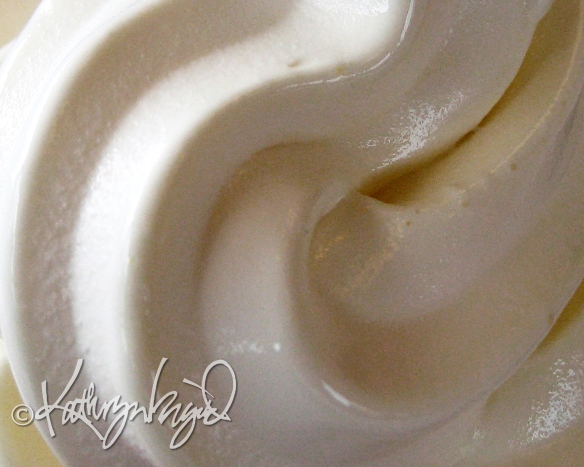
Photo: SwirlyMy name is Kathryn and I’m a dairy fiend.

I sincerely hope there’s no umpteen-step program out there to cure me of my addiction, because I would be ever so sad to part company with butter (pastured butter, sage butter, beurre noisette…), cream (yogurt, ice cream, whipped cream, a drizzle of heavy cream, sour cream…) and all of their cow- and goat- and sheep-produced milky ilk. Among the most dire of those losses would certainly be cheeses. It’s even a remote possibility that in my childhood I mistook various people’s talk about the power and centrality of a certain deity in their lives as completely understandable allegiance to the prepared and aged dairy product, hearing them intone instead, ‘come into my heart, Lord Cheeses.’

All of that is merely to tell you in what high esteem I hold dairy products. I know I am not alone in this. The worldwide fame of the French cheese board, an Italian feast topped with fine curls of Parmigiano-Reggiano, a glorious firework of Saganaki, a rich fondue or heart- and hearth-warming rustic iron cooker oozing with Raclette (somehow fitting is that the compute offers as a ‘correction’ of this name the word Paraclete, for it is both a helper and rather holy in its way)–these are all embedded in the souls and arteries of generations around the globe, along with many others. The land of my birth has been, if anything, impregnated with this rich and robust love by every wave of immigrants who have ever set foot on its shores, bringing along all of the aforementioned and so much more, and gradually adding a multitude of delightfully cheesy (in every sense of the word) American twists to them. Along the way, besides gleefully adopting and adapting all of the aforementioned, we dairy devotees stateside have high on the short list of our national favorite foods such delicacies as cheeseburgers, grilled cheese sandwiches, pizza and macaroni and cheese. [For the latter, by the way, I’d be hard pressed to find a recipe that rivals Amy Sedaris’s death-defying macaroni and cheese for my love; infinite variations of it have become my personal staple when I choose to make the dish.]

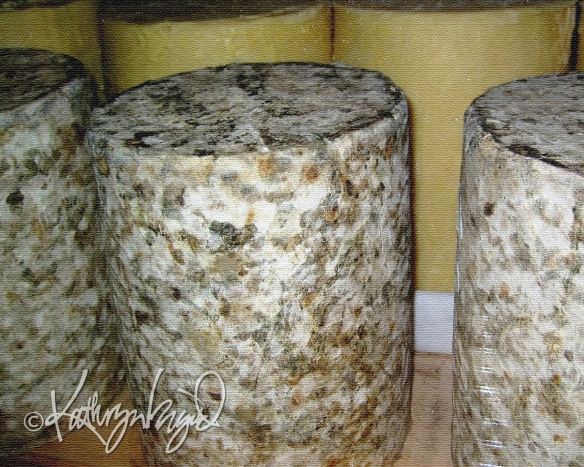
I confess that lowest on my personal list of cheese ratings, possibly even below the most notoriously stinky and bizarre of cheeses (yes, Gammelost, I’m looking at YOU) is the one ‘cheese’ named for our country, American Cheese, which I personally think of as purportedly edible vinyl and often has little or no actual dairy contents, though for good or ill there are otherwise reputable American cheese makers currently promoting a new, truly dairy version of this stuff. Yes, I get the whole melt-ability thing, whether for Tex-Mexqueso‘ (an ironic name, to my way of thinking) or for creamy sauces and the like—but I also know there are plenty of ways to achieve that smoothness with what I think of as real cheeses. But I digress. Yet again.Photo: Aging Cheeses

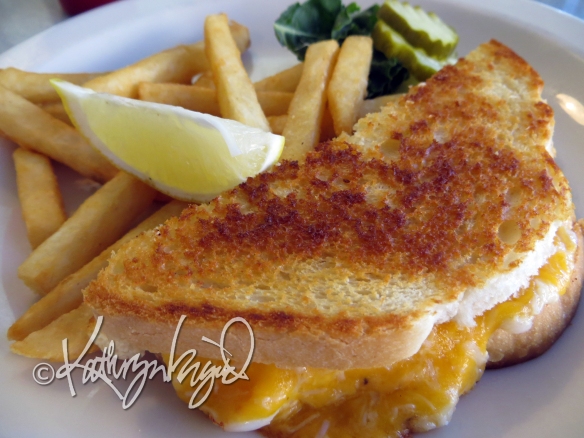
When hungry for grilled or toasted cheese sandwiches I am not averse to tinkering with the most sacred simple versions, as long as the cheese still gets to star in the meal, because after all, the entrée is named after it. Since there are whole restaurant menus devoted to the single item of this sandwich, I needn’t tell you what a wide and spectacular range of goodies goes ever-so-nicely with cheese and bread. Now that I think of it, the stereotype of the French eating nothing but bread, cheese and wine could be excellent reason to pour up a nice glass of red when one is consuming a grilled cheese sammy, but that’s merely a starting point for the whole world of possibilities of course. A cheese and chutney sandwich comprising a sharp white cheddar, Major Grey’s chutney and a lovely dense bread (how about a nice sweet pumpernickel? she asked) is a thing of beauty. A perfect deli Reuben is a great variant of the cheese sandwich. Tuna melt? Why, yes, please! And on we go.

Photo: Dungeness Crab Grilled Cheese

A purist’s dream, amped up: the Bee Hive Restaurant in Montesano, Washington makes a buttery grilled Tillamook (Oregon) cheddar cheese sandwich on sourdough bread, adorned with a heap of sweet Dungeness crab meat. If you can’t find happiness in a bite of that, you’re really not trying.

Sometimes it can be both simple and surprising. I’d be hard pressed to love a sandwich better than the peasant bread grilled cheese from Beecher’s in Seattle with their Flagship in the starring role. But I’ve also discovered that a thick slice of Leipäjuusto (a slow-melt cheese like Saganaki), a few slices of crisped bacon and a generous schmier of ginger marmalade make for a dandy combination, and I would certainly not keep such a stellar combination from you, my friends. Kevin, a Canadian small-kitchen wizard, has published a veritable encyclopedia of grilled cheese sandwich variations on his blog Closet Cooking (a site everyone with cheese in his DNA ought to bookmark, stat), and there are all sorts of other blogs and sites, foodie and otherwise, loaded with such cheesy champions as can make your spirits sing and your capillaries tighten simultaneously. So go forth and chase the cheeses! I’ll be here waiting for you, with the ribbons of some good, fat, stretchy melted mozzarella hanging out of the corners of my loopy grin.

To Whom Much is Given

For unto whomsoever much is given, of him shall much be required.

That’s a passage from Christian scripture, but it’s a precept that I’ve read, heard and seen in the texts and teachings of other religions, and it’s commonly enough reflected in social policy and proposals for humane and ethical action in all sorts of places that it deserves more general notice and attention, I think. There seems to be an underlying assumption amongst many people of all kinds and cultures that if one of us has more than another and that other is in need, one ought to take some responsibility for her neighbor’s well-being and share the resources. It’s arguably a foundational principle of civility and hospitality everywhere.

Yet it’s practiced so much less often than is possible. For all of my love of time with friends and family, I also crave quiet and reclusive time, shutting out the world and curling into my own self, and that applies to all parts of my life. And I think that’s probably more common than not. Who does not prefer the company of her own self or her very small circle of kin and kind, especially when the workaday world has seemed particularly demanding and rest and retreat as hard to come by as clear water in the swamp? Who doesn’t covet the privileges she feels she’s chosen and earned for herself?

I was reminded of this particularly when we were in Hungary this summer and I had the privilege of going with a number of the touring choir members and my husband to visit the ancestral home of a hereditary Count and his wife the Countess. The Count himself made only a brief appearance at the end of our visit, his wife having participated with staff and supporters in the greeting of our group, speechmaking about their work with orphans and special needs children in the family-sponsored home on the grounds of the residence, and a small but lovely reception in the main public-room of the place, a large parlor filled with art and artifacts passed down through the lineage. The Count was charming and rather cheery when he did appear, but I sensed that he preferred his privacy as well.

The Countess, on the other hand, had a rather regal bearing and while she was generous in hosting us and very willing to share her home and thoughts with the group, I heard some quiet comments aside that she seemed a touch condescending or even a bit put out by our visit. I had been at the back of the room during her parlor commentary about the family history and the work of the orphanage, not able to see her over the number of people in the room, and her tone was very subdued, so I got the gist of the story, but didn’t see any of the expressions that might have influenced the commenters.

What I did hear was probably a fairly common tale among the nobility in Europe during the previous centuries: a privileged kinship, whether by their own efforts or honors conferred upon them by royalty, this family had done as they were both able and expected to do with their wealth, which was to live quite elegantly and surround themselves with art and beautiful landscaping and magnificent homes. At the same time, they saw themselves very much as caretakers of the larger community, responsible for the well-being not only of the people who staffed their private holdings but those living in proximity as well. This is of course the story of noblesse oblige, a practice of good that may have been at its core a defensive move but served the purpose in any event. Like many noble families, the one we visited had essentially founded a town around themselves over the generations, supporting educational or healthcare or other needed resources and, in this instance, building a magnificent basilica where the town could worship and where, not coincidentally, the touring choir were performing on the evening of our visit in a benefit concert for the children’s home.

Also like so many other noble families, this one had gradually seen its fortunes decline in the years between the World Wars, and on advent of German action in the region in World War II, was ousted from their land and holdings and fled for safer places. Their palatial home first became military headquarters during that war (in which the Hungarians quickly and brutally learned that their alliance with Germany was a general pretext for annexation and Nazi rule), and then was used for Communist offices in the years after. It wasn’t until just a few decades ago that the Count and Countess were able to return to his family property and renew their residence in the place. The good news was that there had been no interest on the occupying military’s part in redesigning the buildings, nor any money for the Communists to do so, so the architecture remained for the most part intact. The bad news was born of the same circumstances, though: the military’s disinterest in redesign and the Communists’ lack of funds extended to any concern for maintenance. Naturally, the park in which the palace stood, the palace and outbuildings all fell into a state that even in their heyday the real owners could probably have scarce afforded to mend, and it all added to the sorrow that the art and fabulous book collections had been heavily looted.

This is a long way of saying so, but on the day we visited there, I stayed after the others had left that once-elegant parlor, pausing to thank the Countess and to ask her a couple of questions about what I understood were the Count’s and her attempts to resurrect some of the property, if only for the appreciation of the locals and the young wards and their caregivers now living in closer quarters with these two owners. Her tone, perhaps because she was no longer addressing a whole roomful of people, or maybe because she felt she didn’t have to represent her husband’s whole heritage anymore, not acting in any official capacity at the moment, softened greatly, and I sensed mostly melancholy. There was sorrow for what had been lost, yes, but after we spoke about that and the enormity of the restoration needs for a moment or two, I simply asked her in the middle of that once-glamorous hall if she had a personal favorite artwork in there.

It was almost as if she became for a moment the young bride who had come there with the Count before the war, a little in awe of his family and the wealth that surrounded them, the power and the weight of the name upon her shoulders seeming rather immense even in the midst of her happiness. I can’t say she became suddenly shy, though it seemed to me that there was the slightest hint of it as she walked across the room and, instead of choosing one of the showy ancestral treasures or superb museum-quality portraits but this moderate-sized, unrestored and slightly bleary, painting of peasant girls dancing around in an Impressionistic meadow, and said simply, “This one.” I asked her what made it so, and she did little more than offer a soft comment that it was pretty and it made her happy.

Digital artwork from a photo: The Countess's Favorite

This is my digitally painted version of the Countess’s beloved artwork, which besides being in great need of restoration was under glass and hard to see without much maneuvering. But even in its retouched state here, I think you can catch a glimpse of what filled her with such longing: a sense of sweetly carefree innocence that must seem now like a distant, faded dream.

And I thought that perhaps what had been asked of her, she who had had quite a lot at one time and might even be seen in town nowadays as a bit of a remnant of things past, was her innocence. It must have been a long, sorrowful journey from being a young lady inducted into the nobility by marriage and impressed, if not overwhelmed, by the lavish life and the heavy weight of what was expected of her in her new role, to the life she knows now. However she and her husband might work to regain a place in the community through their labor and largesse, the world has changed, and they with it.

What must it have been like, as she moved through the war and later years in exile, knowing that everything tangible she had known at home might well be gone? On returning long after, though she saw that it wasn’t demolished, her happy ease was clearly broken and irretrievably changed. Finally, settling into her new role as figurehead of a still somewhat nebulous but ambitious attempt to find a way to make all that was left have real meaning again, looking into that painting must have become rather like looking into a mirror at her past self, not as a dancing peasant girl but as a naïf who thought the world was simple and clean and kindly and that all she had to do was make the best of what had been given to her in order to be happy in it.

Water Babies Athirst

There was a whopper of a rainstorm in Dallas recently. We were at our friends’ home, enjoying a little birthday party, and heard a few low growls of thunder in pauses between the chatting and laughter but had no great confidence rain would follow. It’s been overcast or cloudy often enough lately without granting so much of the hoped-for watering as it seems to promise, so we never take it as a given that we’ll be watered nicely. Not, in this instance at least, until the front door smashed open under the force of sideways gales and blasts of firehose rain. Bashed open once, and closed; then, a second time. And latched tight; the neighborhood was pelted well and truly until just a little before we left for home.
Photo: Drinking-Fountain Fountain

At home, it appears, no rain had come at all. Our gardens and spirits remained thirsty. I’m quite certain that a coastal-born person of my Washington upbringing and Scandinavian roots is a little more water-conscious, if not obsessed, than average. But the hints of rain that do arrive here, whether in sky-splitting gouts that last but an afternoon or in a steady series of lightly sprinkling days as we are sometimes blessed to see, are a fairly universally admired gift. And I find that north Texas is hardly alone in this.
Photo: Swan Like

The traveling we did this summer in Europe had very few rainy days among the many sun-soaked ones, and while we neither regretted the warmth and light of the sunshine nor bemoaned the drizzling times, we saw plenty of people in Budapest, Vienna, Prague, Stockholm, Port Angeles and Seattle who relished their rain-baths and their waterfront or fountain-side relaxation every bit as much as we did. Even the swans, geese, ducks and waterfowl seemed all the more pleased with their daily peregrinations on the days of and after the rains.
Digital illustration from a photo: Falling, Falling

I think that there might be in all of us a certain kind of thirst that mere water only reinforces and reminds us is different from the sense of desire and hope that can fill our spirits. River or fountain, a strong and cleansing rain, ocean or streaming tears of joy, the only water that can quite slake our longing for wholeness and growth and hope is the remembrance that we are primarily made of water ourselves, and as such, will always seek a way to the well or the shore that reassures us we belong.