


What is this Song?
First the carillon, and then,
Voices of children, women, men,
The organ sounds, lute, harp and lyre,
And as the song grows clearer, higher,
Sweeter and more joyful still,
Ring out the notes from hill to hill,
Across the night, straight on to day,
The melody flies out, away!
What is this potent symphony?
It’s love, my Love, that sets us free. Today seems like a particularly good day to remember that love is larger than romance, peace is larger than a desire for sameness, and joy is larger than a moment of personal happiness. I wish you all love, peace and joy.
For most of my life I’ve had outstanding vision. I had a little interlude in grade school and junior high school when I wore fairly weak glasses to correct my slight farsightedness, but it was indeed correctable, and after about three years I was once again glasses-free, and this state of uncorrected bliss lasted until I was a whole half-century old. During my external-lens-less heyday I could see all sorts of things with great crispness and clarity and in glorious detail. Unfortunately for you, this did not extend to my seeing the truth more clearly than others could or to my understanding anything more clearly than anyone else did. Having sharp eyes doesn’t, it turns out, equal having a sharp intellect. Dang.
It’s as if the universe didn’t care whether I’m a blithering idiot, no matter how excellent my eyesight. Come to think of it, a convenient combination in a person wishing to be an artist and writer and having no particular need or wish to do so in a reality-based universe. So here I am, all of those years post-first-spectacles, once again enhanced in my ability to see things by artificial means, and yet no smarter or better able to clarify the meaning of existence or even an itty bitty little part of it than I was with no glasses near my peepers. Go figure. My appreciation and admiration for genuine intelligence may have increased over the years, to be sure, but the need for such things seems, if anything, to decline steadily and in perhaps directly proportionate amounts. What this says about me I will leave to your imaginations. At the same time, I needn’t leave everything to your imaginations, because as my goofy insight into things utterly fictional remains entirely intact no matter what happens to my eyebulbs, I can assure you that I will continue to produce all sorts of whimsical, bizarre and deeply educational items for your perusal here at my blog. It’s what I do.
It’s my sister’s birthday again—not that she’s getting old at a ridiculous rate, but rather that I have three sisters, so their birthdays occur with a certain frequency, since we all have different birthdays despite people’s occasionally mistaking two or more of us for same-day siblings. While we are separated by gaps, there are enough commonalities in our selves and our looks, I suppose, that it’s not entirely shocking anyone might make such an assumption, but those who know us see the vast array of differences more sharply than the less informed might.
And that, my friends, that differentness, is a grand thing. I adore all three of my sisters and love that we have enough in common to be real friends as well as family to each other, but we are clearly the better for having our unique characteristics and points of view and experiences to further enrich our life in common. It’s those distinctions that keep us from being in any way interchangeable and certainly, from having nothing to talk about when we get the all-too-rare chance to visit. We’re all four fabulous, if you ask me!
Take Sister #3, for example, whose natal day we remember on this date (I’m second of the four). From when she was very small—and she was mighty tiny indeed—her fierce drive for perfection and her native and highly honed intellect awed me. She ‘gets’ things that I will never wrap my head around, things like mathematics and the myriad business-administrative powers that keep the machinery of life and work and family ticking along in ways that only happen to me by lucky accident. She is and was the athlete and outdoorswoman I could only dream of being, and her cookery and baking, frankly, kick my measly skills to the curb. And she’s beautiful, inside and out, even if as a typical sibling I didn’t always manage to remind her so as often as she deserves.
That’s all just for starters, but if I were to go on too far I’d sound like I was making her up out of fairy wings and dewdrops and cookie dough, so instead I shall just wish her a spectacular birthday and a year full of wonder and happiness, beginning to end and for many birthdays and years to come.
 Spirited Pleasure
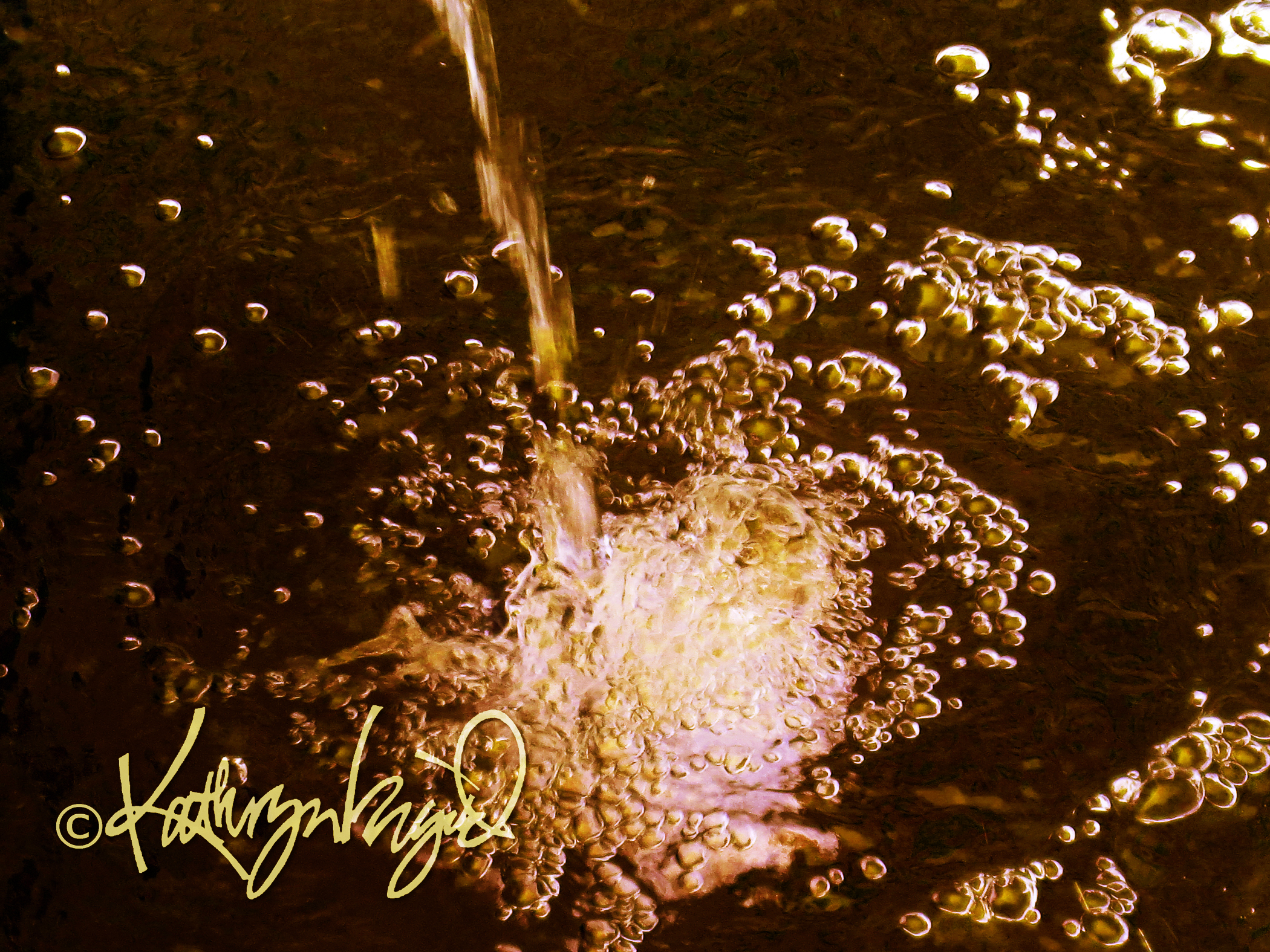
Let us raise a crystal glass of Champagne Brut to toast the passing
Of the weeks and months, the years, to raise resounding shouts of “Cheers!”
We’ll ping the flutes “Salut! Cin Cin!“, tip up the stems and drink it in,
For nothing makes it taste so great as bubbly wine to celebrate
(Though if you care not for its pop, I recommend a Lemon Drop)!
“Let’s canter to the car, Auntie!”
I’m going to lay down a seriously sizable wager that few others ever heard that particular construction from a little kid, but that’s just the way my father once famously startled his great-aunt with in suggesting how they might approach their ride home one legendary day many decades ago. Safe to say that Auntie was as bemused and amazed as anyone would be. No idea where he got that particular word ‘canter’, since he was a townie through and through from birth and if he’d ever heard reference to a horse’s gait it must’ve been in a story everybody else had since forgotten. Regardless of the origin of his comically odd suggestion, he was undoubtedly on to something useful. Why slouch or straggle when you can get up your gumption a little and break into a comfortable run?
It’s never a bad idea to try a new approach to life, especially in something as generally promising as intentionally re-energizing oneself and committing to a higher level of focus and commitment. Even better, if the technique chosen can add a little pizzazz and humor to the act. Why wander aimlessly when you can trot cheerfully?
Around the changes of life as time passes, whether changes of season or millennium or merely of day to night and night to day, it’s always a fairly useful thing to consider What Next–more specifically, how to make what’s next more fruitful, interesting, productive, and enjoyable. And often, such changes needn’t be as daunting as we let them be. The tiniest alteration in the way things have always been can have a remarkable and positive ripple effect if we just put a little heart into it. Why amble when you can gallop?
As the end of 2013 approaches I will as always have spent a fair amount of time looking at what has been in the past year and considering what I might like to add or improve as I move into the beginning of 2014. While I might like to spend time communing with a nice horse or two in the year ahead, because after all they are beautiful and intelligent and full of personality, I might be better served by contemplating how I can pick up my own pace and move forward in a comfortably equine manner. It’s a good time to saddle up and do things that challenge and amuse and please me, most of all those that can help me improve myself at the same time. I can talk about it all I want but until I pony up and make the effort, I’ll only dream of what good can come of it all. Why walk when I can canter?
Maturity is a hard concept to nail down. So few of us would willingly embrace the larger idea of maturity after all: the implication is too much doused with the odor of aging and the loss of innocence, playfulness and joie de vivre.
But if I can move away from those irksome, unflattering aspects of maturation, there is a whole world of better and more admirable traits awaiting me. To refuse to grow up, as so famously done by Peter Pan, one has to reject all of those pleasures and opportunities afforded only to those willing to submit to the passage of time.
I will continue to avoid becoming ensnared in the traps and trials of aging as long as I can get away with it, and probably further. Who wants to become exclusively serious, constantly responsible or particularly predictable? Not I! Age may force me to slow down my physical pace or even make me willing to concede that there is such a thing as a skirt too short or heels too high or a blouse too fitted to be quite seemly for my years, never mind that choosing certain forms of entertainment or places to go or goals to achieve are not particularly well suited for me anymore.
But I am also glad to let down the barriers to other aspects of maturity, and to embrace my aging with a certain relief when it comes to those. I care less and less, for example, about whether I look fashionable or impressive, so the heels and hems can be whatever altitude suits my comfort and mood. I’m happier in my own skin with every year spent getting to know and define and design it.
That, my friends, is the greatest gift of aging: I am freer from the worries, demands and expectations of the world around me and can work at shaping who I am, what I want, and how I feel more deeply and contentedly than when I thought there was a greater need to conform. Youth is not nearly so unfettered as we idealize it as being; so long as more mature people own our territories of home, school, work and even play, they also rule our lives. So long as we concern ourselves with comparison, competition and popularity, we let others have the power as well. When we learn to fit in and find community by being our truest selves, it changes the tune entirely. This is the richness, ripeness and harmony–within and between–conferred by true maturity. And while I’m thinking about musical metaphors, I really must give you a link to my husband’s latest YouTube appearance, conducting the beautiful and magical Monteverdi Vespers of 1610 with the Collegium Singers and Baroque Orchestra of the University of North Texas, with some tremendous guest artists singing and playing alongside the artful student and faculty musicians. This production was the premiere performance of the new edition of the Vespers that was developed by UNT professor Hendrik Schulze and ten of his graduate students, and among the instrumentalists playing on marvelous period instruments were some of the greatest players now gracing the halls and stages of the Early Music genre. Enjoy!
 Fantastic Phenomena
Rare as hens’ teeth, so they say,
the bird I saw the other day;
barely known, less often, seen,
and in the spaces in between,
not found but once, then flown away–
But rarer still, and here’s the thing:
that I should see it on the wing
and landing, perching in a tree
that most folk living never see,
abloom in Fall, as it were Spring–
For what I’ve learned is that this kind
of special magic that I find
can only happen if the heart
is open to the sort of art
where things are made so in my mind.
There are advantages to being out of sync with the known, the planned and the expected. Nothing new, of course, can ever happen if someone or something doesn’t step out of line. Creativity and growth can only take wing if we allow anomalies and anachronisms. Learning doesn’t happen without forward movement and its inevitable mistakes.
So once in a while there has to be the duckling hatched in autumn or the crazy idea hatched at three a.m.
Great things are timely no matter when they occur.
 I don’t mean to be rude, but it’s hard not to recoil at the unknown. What?! No shoulder gills? How can you use your nose for smelling things if you’re busy using it to breathe at the same time? No horns? Oh, dear, where are your radar sensing structures housed? And my goodness, those awful, blind blue and brown orbs where your eyes should be! How in the world do you manage without proper infrared vision, you poor thing? What’s with having ears awkwardly positioned, so low and flat against the head that they can’t rotate and bend to follow every sound?
I realize that we’re not all made the same, but sometimes it shocks me that anyone so odd looking and freakishly ill-equipped as all you other sad creatures out there can survive at all. I don’t hate you because you’re pitiful, but still I can’t help being sad at your obvious plight. It’s difficult at times not to seem patronizing, disgusted and repulsed that you’re not all as sensibly made and beautiful in your correctness as I am. Please forgive my involuntary condescension. It’s not your fault that you weren’t born or trained to be as nearly perfect as me.
 Art-Colored Glasses