We All have Our Preferences

digital illustration

Red. Delicious?

The apple of my eye is bound to be unlike yours. Even among apples, the almost bewildering array of would-be favorites almost catches up with the endless variations in personal character; together, these have the exponential potential to create such a multiplicity of possible tastes that it’s amazing if any small group of people have predictably identical loves.

On top of that, our own tastes are bound to change over time. I’ve lived long enough to have had several ‘favorite’ apple varieties, never mind had enough life experience to know that what I prefer for one use or recipe is not the universal solution for all of my cooking and eating wishes. Even the longtime favorites can be supplanted, eventually.

So while I currently favor Fuji apples for eating plain, a mixture of bright, crisp Granny Smiths with soft and über-sweet Golden Delicious and an in-between variety like Jazz or Braeburn for pies and sauces, and something with interesting color, shape or texture on its peel like a heritage variety to ‘pose’ for my artworks—any of those could change at any given moment. Why, I’ve even been known to draw Red Delicious (a variety that while I’ll grant its being among the reddest of apples I think hybridized to the point of being utterly insipid and flavorless rather than actually delicious) simply because it’s bright and shiny and stereotypically apple-y.

For the most part, life is more interesting to most of us because it offers so much variety and the possibilities inherent in change excite and intrigue our senses. But sometimes it’s perfectly okay to be predictable, too. The comfort of the familiar is also a gift. And once in a while, there’s the amazing possibility that we can surprise and shock others—even our own selves—precisely by choosing the safe and predictable thing when we have all of the options in the world right before us.

Maybe what I relish most of all is simply that I can’t guarantee from one moment to the next, let alone one day to the next, that my own tastes will remain the same, my choices the utterly expected ones. How do you like them apples?

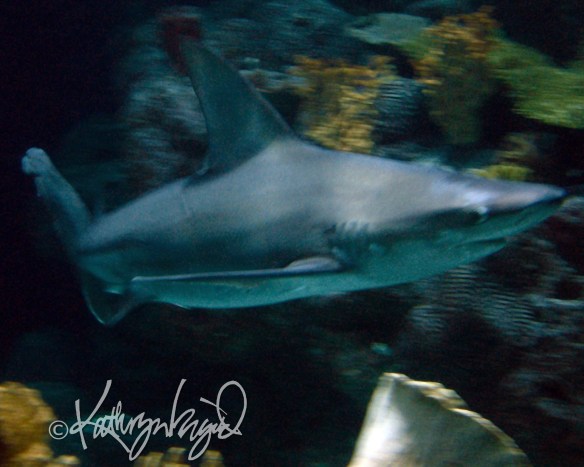
The Character in the Sharkskin Suit

Intriguing, isn’t it, how what we admire in one we might fear in another; how sometimes a single characteristic becomes so entwined with our perception of the whole being that we are unable (or at least unwilling) to see the subject except through that distinctive filter.digital illustration from a photo

Take the shark, for example. We anthropomorphize its curved, elegant mouth and its very pointy dental array as a wicked grin because they form so ironically (we think) bloodless a ‘smile’ for an ideally designed killing machine, and subsequently we are content to identify those people whom we find wicked, bloodless, or murderous as Sharks. Never mind that the shark itself is simply being what it is naturally meant to be and doing what it is created to do. Never mind that, often enough, the person we are happy to affiliate with that same stereotyped vision may also be doing what s/he is naturally inclined, expected, and/or paid to do. If the person in question is good at carrying out dispassionate or relentless action, we’re likely to find a convenient metaphor in the shark.digital illustration

I have long thought, myself, that the mere mention of a character as being dressed in a sharkskin ensemble gave him an air of sangfroid that I suppose must have been similarly associated with the archetype of the coolly relentless shark. I, too, am apparently guilty of stereotyping the creature, and very likely in turn, the person. So it is: we are always looking for shorthand ways to describe and understand those around us.digital painting from a photo

But I would hope that I can also remain cognizant of those positive and laudable qualities that might also be anthropomorphically applied to a shark, and credit similar ones to my fellow bipedal creatures as well: swiftness, strength, tenacity, fearlessness, and a driving desire to move forward at all times. These are characteristics to which I can only aspire for the most part, never mind being as handsome and sleek as a shark can be in appearance. While I doubt anyone will tend to equate me with the supposedly shark-like attributes of cruel indifference or cold-bloodedness, perhaps I would do well to pursue association with those better ones and see if I can’t be identified with such admirable aspirations after all.

A Little Texas Secret

photo

Have you heard?

When people say Everything in Texas is Bigger it’s true–up to a point. Texans in general are happy to point out the vast number of marvels, from natural resources to business and entertainment, culture and personalities, that are bigger than life in this part of the world. Is Texas full of tall grass and longhorn cattle and bluebonnets and armadillos, sizzling days and stormy nights, oil wells and roughnecks and rodeo riders? You bet.photoBut there are amazing and unexpected and even–gasp!–tiny details that also sparkle throughout the Lone Star State and help to make it far more varied and unpredictable than the image Texas has beyond its borders might lead anyone to believe. A spectacular water-lily park? Why, yes, that’s here. Masses of beautiful, delicate butterflies? Oh, yes, those too. I think it’s safe to say that not many people are likely to think of French food when Texas is mentioned, but not only does la cuisine Française exist in Texas, it’s even featured in an eatery in the also seemingly non-very-Texas named town of Humble. I mean it: Texas is full of surprises, and not all of them even Texas-big.photoSee, that’s the thing about stereotypes, archetypes, assumptions and expectations. Generalizing about any place or culture may give us a handy entré to allow us the chance of learning to know it better, but it skims the surface of reality far too much to be dependable as a gauge for the whole of the thing. On my first trip overseas I was immediately struck by the odd conversations I overheard between the locals here and there and the American travelers. It’s not uncommon for natives to ask visitors what things are like where they live; what I found out is that it’s also pretty common for said visitors to pontificate as though their limited experience of life were the standard for all and sundry where they come from–not just all the folk in their house but all in their town, county, state, region–heck, I heard fellow US citizens abroad telling foreign nationals with utter nonchalance what ‘America’ was like. Just as though every part of America were completely homogenous, every US denizen interchangeable.photoI’m perfectly happy to state that not only is that a ridiculous barrel of hogwash but I have seen evidence very much to the contrary in places all over this country. Not to mention in the great state of Texas, in our county, in our town. Yes, in our own household. Texans do like their BBQ and their tall tales, their football and pecan pie and yes, their guns. The real secret, if you must know, is that no place is precisely, and only, like its image. No matter how small or grand that image happens to be.

The Fantastical & the Fleeting

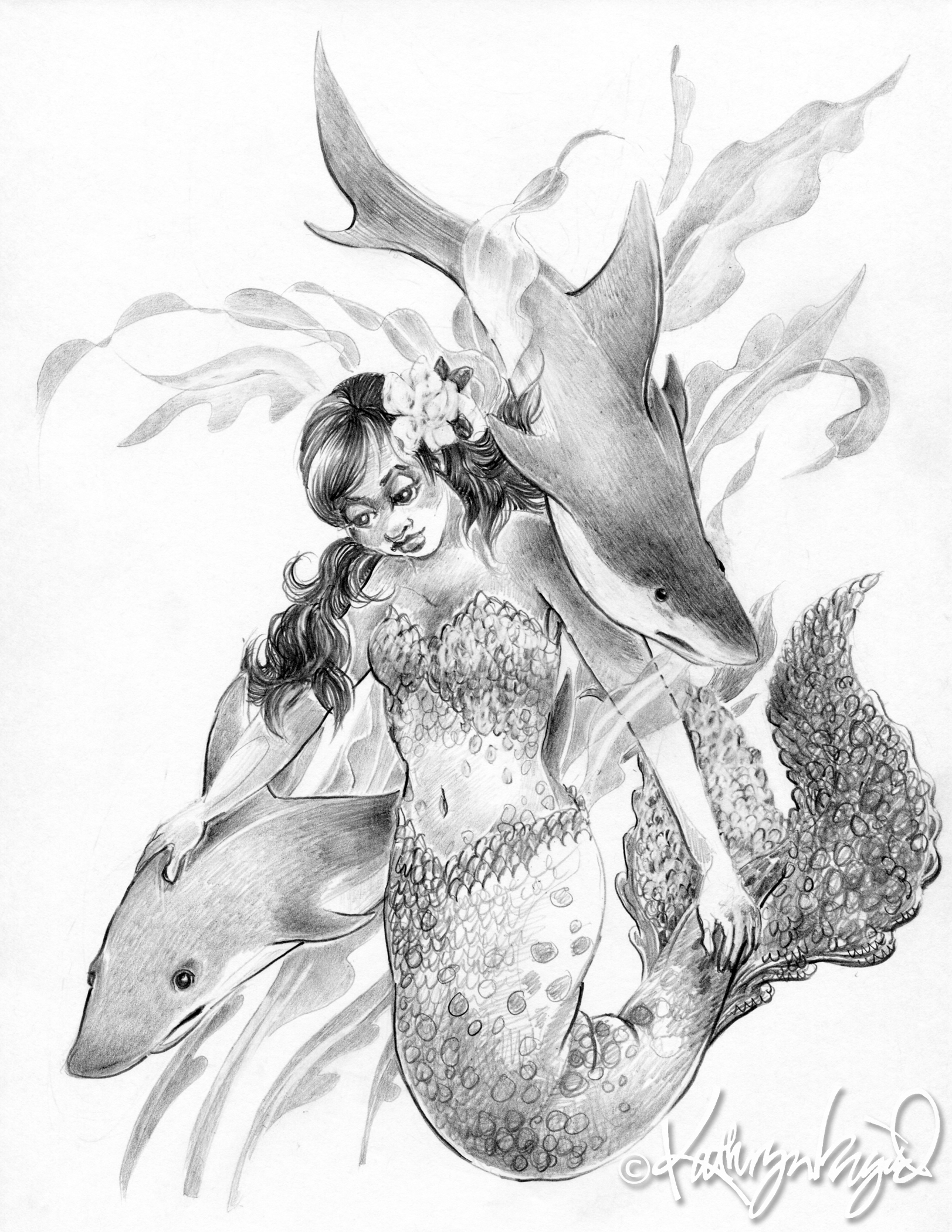
Stuff is ephemeral; imagination is what endures.graphite drawingReal life has enough elements of adventure, romance and mystery to sustain us–indeed, to astonish and entertain quite endlessly–but if we don’t record and celebrate such magic parts of our history they are lost. If we fail to study our chronicles and journals of such marvels, they are but dust.

So the sages among us keep what documents they can and teach us as much as we’re able to learn. What, though, becomes of all this if we are ourselves not so sage? Those of us for whom history is mostly data, steeped and stopped in the past, rely on fantasy to renew in us a sense of the remarkable. The fictional, metaphorical and colorful characters, creatures and cataclysmic events we create in our arts give us vehicles for understanding the true mystical powers in our real lives. Types and archetypes remain because they represent not Things so much as Experiences, not acquisitions but states of being. Through these avatars and our vicarious living of all the extremes that we can imagine, we revisit–and can even revere–the lives that have gone before us.

Through these imaginings, we are best moved to become greater than our small natural selves. In our better selves we have hope of living out lives that might, in turn, outlive us to inspire later generations to dream beyond, to imagine greatness and loveliness not yet known. Dream on, my friends, dream on.