
No matter how old-fashioned the content or style, black and white imagery still has things to say . . .
You know that I’m wild about color. I’m a sucker for the extravagant and flashy and juicy and yes, even subtle, stuff you can do when you play with colors of any kind. But despite my persistent dalliances with exotic color, I always come home eventually to good old black and white. Unlike other relationships, though, this is not an instance of messing about with the dangerous and glamorous side and then coming home to what’s staid and safe and un-challenging. No, indeed.
For black-and-white work has its own tricks and secrets and deliciousness. There’s a good reason that all of the areas of design that feed on trendiness–fashion, architecture, print media, interior and industrial design, and all of their kin–go through cycles of obsession with black and white treatments of their star features. Why are the halls of power and wealth still ruled by black-limo-riding people buttoned down in their black suits and little black dresses? Not so much to show conformity and adherence to the rules as to assert ascendancy over them, a touch of indifference to them, and personal peacock significance that transcends them to the degree that they become merely the frame for one’s individual importance.
It’s no surprise to those who design anything, art or otherwise, that black and white work brings its own set of problems, and shares many others with color work. You still have to think about content (pictorial and psychological) and how you want to convey the right message or storyline with those. You still need to deal with space, volume, proportion, texture, shape, line, style, character, and all of the other ephemera that determine how–or whether–your message is getting across. But like that problem of playing or singing so-called simple music, where the performer’s every note, every interpretive move, is laid bare by the familiar and seemingly uncomplicated structure of the piece and thus lies open to the criticism of the least educated or experienced listener, black and white imagery can appear to be the path of least resistance, the easiest mode, for accomplishing any design goal and is therefore frequently scrutinized with a different and less discerning eye. The truth of the matter is that any technical or theoretical approach in any medium is as easy or hard as any other and depends more on how far the artist is willing and able to push to achieve her ends. If people look at my work with the attitude that it looks terribly hard to have made, that doesn’t change the reality of my process or the end product any more than if they look at it and sneer that their fourth-grader could do much better. Both are probably right some of the time!
All the same, there are some sophisticated possibilities in black and white alone that don’t need the interjections of color commentary to keep things interesting, either on the production end of the equation or in the concrete result and our responses to it.
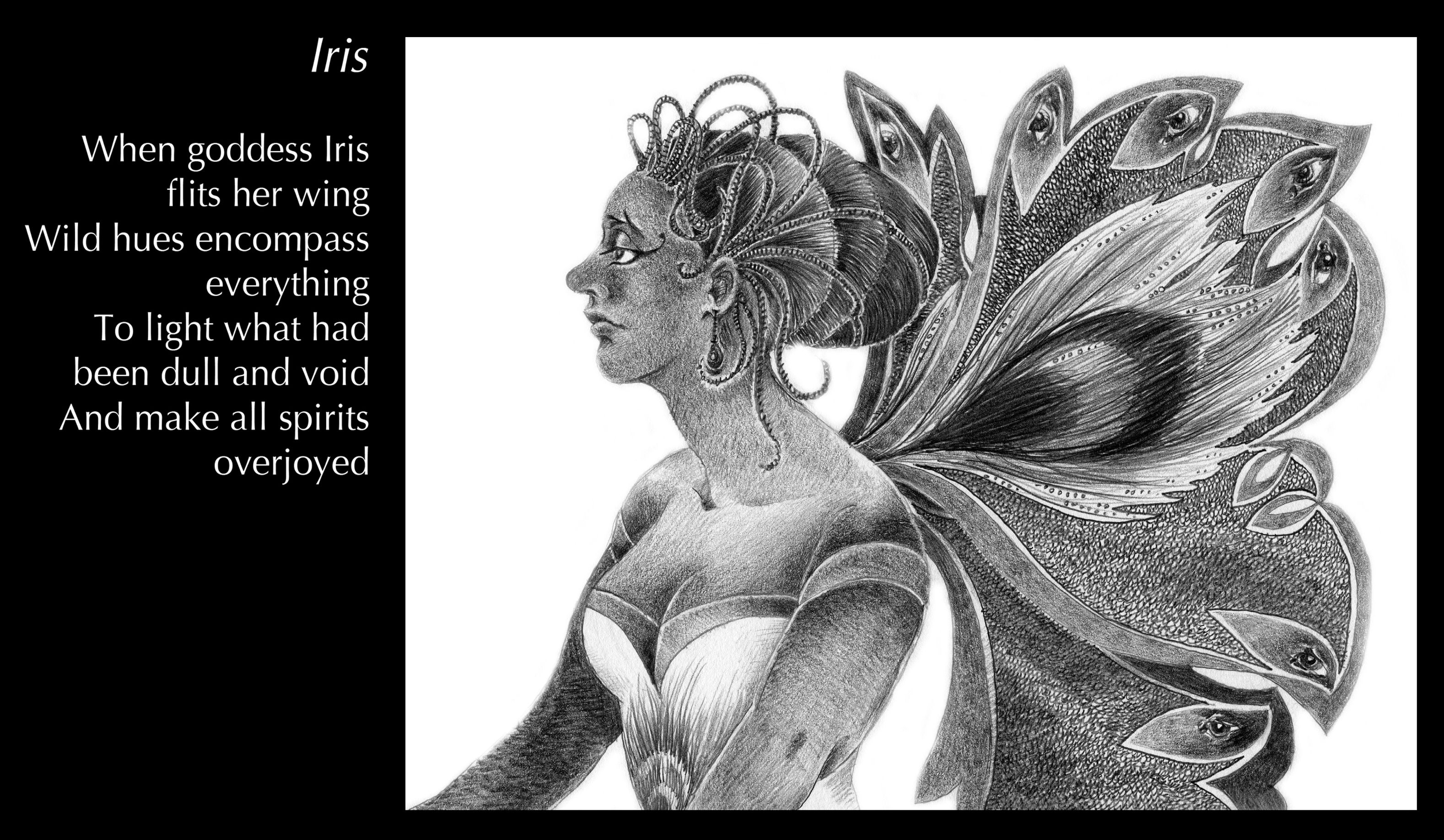
Black and white stuff has come to have connotations in our western culture having to do with things like formality, businesslike attitude, clean simplicity, and expertise, depending on the context and mode of its use. Beyond that, it has the ability to stand out, in this age of constant bombardment with imagery, information and busyness, as a sort of unexpected moment of visual respite that calls to us. And as a compositional tool, it just plain never goes out of fashion. Getting the right contrast in values, intensity of edge and surface, and delicacy of line is a demanding and rewarding process that will never be boring. A fabulous black and white picture carries a cachet that sets it apart from anything that can be achieved with color, no matter how brilliant and fantastical the color may be.

Old as it is, black and white imagery will always stay on the cutting edge . . .
 I was just strolling along and running errands, minding my own business, when I spotted this little twosome toddling along a nearby lawn. The way that they bobbed in unison, then in counter-rhythms, then in unison again, side by side, made me think of piano keys. They were like visual music, these birds, unselfconsciously creating a silent but cheering melody as they made their way across the grass. And they were in sharp contrast, being mainly black and white, to the Technicolor world all around them which suddenly seemed a little dull and plebeian by comparison.


 Art-Colored Glasses