Urbanity

There is a huge difference between the merely impressive and the expressive when it comes to modern cities. Rotterdam, once one of the glories in the European architectural crown, was bombed to dust in WWII and, given the poverty of post-war resources, was rebuilt in the following decades as a horrifyingly soulless, boxy blot of concrete on the face of the Netherlands. There is no comfort in knowing that the firestorm that destroyed the city was probably not planned as it happened but resulted from a perfect storm of another kind in miscommunications; the horrors of war are a long testimony to the potential for such devastation. In any even, it took Rotterdam ages to be revitalized into the place of energy and beauty that it is today. Why? What made it such a heart-stopping graveyard of a place when it had once been full of life and loveliness, and how could it ever come back to be something gracious and potent again?

There is no obvious single word that can express the massive destructive toll the bombing took on that city; annihilation is perhaps a close approximation, since it’s clear even from faded photos that the thoroughness of the attacks left very little evidence there had ever been a Rotterdam. I find it nearly impossible to imagine even when staring at proof. When my spouse and I visited the city for a conference even less than fifteen years ago it was still a sad shadow of its former glory, still dominated by 1950s-vintage blocks of affordable and utilitarian harshness that made me want to scream when I saw them in juxtaposition to the few tiny remnants of the beautiful architecture that had once filled the place.

The main reason that Rotterdam is beautiful once again, and that many other cities have, and some have never lost, such beauty is simple: architectural thought and distinction. Building what is cheapest and easiest to construct is a poor solution to lack of structure anywhere. Places that have never experienced the ravages of war, urban decay and other forms of damage and neglect in such extremes can retain the beauty and patina of urbane culture in their urban settings far more easily. Take Boston, Massachusetts, a city that has seen its share of ups and downs over time, but as one of the older cities in a young and generally untouched-by-war country, still has many of its older–even oldest–and most prized, elegant, distinctive buildings. Despite the expected problems of social unrest, economic up- and downturns, spots of urban blight and misdirected city planning that Boston has faced like any modern city, the knowledge that the architectural strengths it does have are worthy of protecting and preserving means that it was built as more than mere indoor space in the first place and that the character of the structures has as much value in shaping the city’s identity as do its great denizens.photoIt should be obvious to those of us wishing to see all of the world housed and sheltered in humane and useful structures and towns and cities that simply throwing up whatever is cheapest and most readily available is hardly more useful, in the long term, than just plain, well, throwing up on people. If we want others to live educated, healthy and therefore productive and admirable lives, we can’t stuff them into trash bins of buildings that, even if they don’t collapse under their own flawed ugliness, will never encourage their occupants and users to flourish. If we don’t intend to fill others’ lives with the vomitous garbage we ourselves would reject and flee, we must find ways to make good, practical, appealing design a mandate and not an afterthought or an unaffordable dream.

That approach not only makes living and working in tolerable shelter possible but nurtures the human spirit and pushes us all to better ourselves, our cities and our world. photo

The Hooey Decimal System

photoWhen I sort and edit photos, it helps if I can create categories and subcategories that will help me to find and use them after the fact. If an event or occasion is short and simple in the relative sense of such things, the name of the event or occasion itself may suffice as filing ID, but what of things like our summer road trip that encompass 5 weeks, 6000 miles, a dozen states, 2 countries, 3 music conferences, a dozen members of the immediate family, a half-dozen motels and hotels, and ever so much more?

What I tend to do is create an all-encompassing title that all photos will bear, identifying them as part of the larger expedition, and then putting them into files and sub-files that clarify the who-what-when-where-why-&-how of them. This helps me have at least a slight hope of locating any single shot or group of shots from among the multitude that remains even after I’ve culled a multitude more. It also reminds me of what things became, either because of my continuing interest in them or by natural default of recurrence on the way, thematic in the event.

Not surprising, then, that this extended road trip would have obvious and substantial files of many very familiar subjects. To be sure, there are a quantity of such old favorites of mine that any moderately frequent or attentive visitor to this blog could easily guess. Given my blog header, I can start with my fondness for rusty, rustic old things (like me, naturally), mechanical bits and industrial loveliness. There are hints in that image, as well, of my magpie adoration of all things shiny-metal, glass, water, jewels, plastic and any other thing that glints to catch my avid eye.photoMy many obsessions also appear in nature: flora, fauna, sea, sky and stone. If there’s a noticeable cloud formation or special kind of light I am lured to admiration of it. Insects draw me like, well, the proverbial flame-drawn moth. I’m an ignorant admirer of all sorts of vehicles that strike me as different or novel when it comes to my everyday experience, so there are always photos in my stash of cars and trucks, boats and trains, heavy equipment and the slightest, lightest personal transport other than feet. Feet, for that matter, can make perfectly entertaining objects of my camera’s affections, since people in general are also on my list, and character-full feet or quirkily clad ones or ones that by position tell a story ought to make marvelous image sources any time.photoIn the case of human subjects, I do have something of a restrictive love, however. When I know the subjects of my documentation, I’d usually rather be interacting with them, so often, the camera sits idle and forgotten unless I have some sort of mandate to shoot. If I don’t know the people, I am bound by respect for their privacy almost as much as by my shyness not to photograph them at all. So aside from crowd shots and unidentifiably altered distant views, I’m not likely to include too many people in my panoply of for-art photographs.photoWhere people congregate or what people have left behind, that’s all fodder for my imagination, though. I love buildings–the older or odder, the better–and their endless details, and whether they are homes or hospitals, offices or auditoriums, farm sheds or factories, they all have stories to tell. Ultimately, I suppose, that’s the overarching guide to my photographic peregrinations just as much as to my poetry and essays and drawing and every other expressive form of art I attempt: I am trying to discern, guess, or invent the stories behind those things I’ve seen.

There are, you know, endless stories just waiting to be told.photo

All This and an Open Floor Plan Too

photo

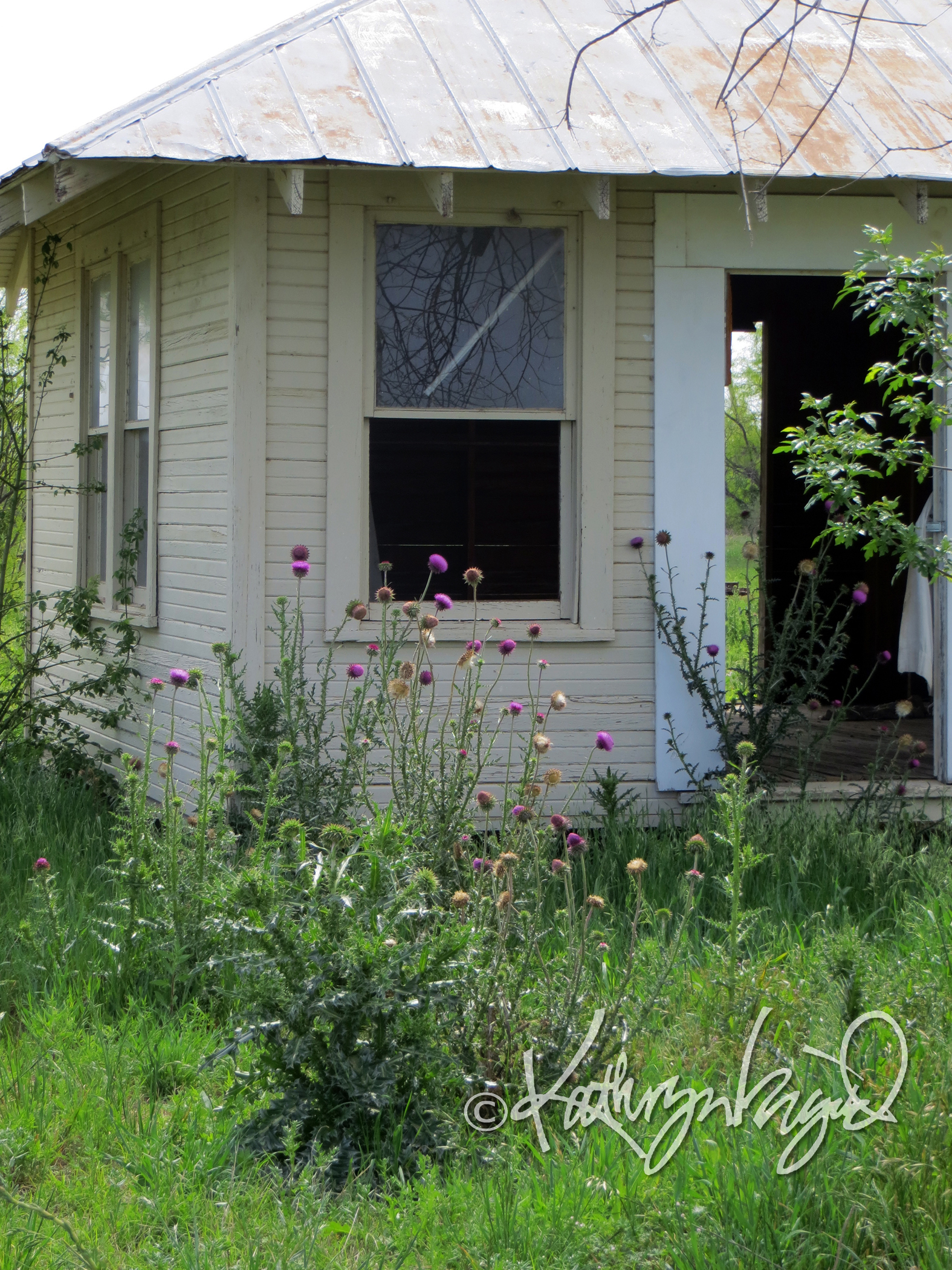
Lots of natural light, established yard, easy access to transportation (railroad across the street), air conditioning included.

I love a good ruin. While I understand the urgency of need for shelter among the homeless of the world and I generally don’t condone waste, the beauty of a derelict and decaying building speaks to me of history, mystery and longing. The reclamation of the ruin by nature, so astoundingly quick in geological terms, appears in the lifetime of a human to be perversely slow, creeping up and catching observers unawares. Deferred maintenance–a term that has taken on a modern oxymoronic twist I despise, given that such deferral is really deference to eventual wrack and ruin of a very irresponsible sort–becomes dire in what seems to have been the length of the watchman’s single circuit, and when we come back to the front door of the property we thought we’d only just circumambulated, it’s already hanging by one rusty hinge.

The character in and inherent fairytales posed by ancient ruins are naturally enhanced and perhaps exaggerated by their superior age, so a once-fine castle or cathedral, stone cottage or pillared temple has an advantage in terms of potential drama. But I am equally fond of a tumble-down shed or an industrial derelict, for nothing in its skeletal state lacks the piquant possibility of backstory as the mind attempts to re-flesh it with purpose and activity. Given half a chance, I might attempt to revive the corpse in the way that I went with cousins and undertook the rehabilitation of an abandoned cabin near our grandpa’s when we were young, because the romance of emptiness is that it’s always seemingly waiting for something special to happen. On the other hand, spending time in a ruin only to contemplate what did or might happen there can be just as alluring.

In this regard, I suppose I think of ruins as endlessly optimistic, though it may seem quite contradictory: the sense of their potential, whether for new life or for telling their stories of what has gone before, tends to outweigh the sense of sorrow that is in their current state of dishevelment and disrepute.

photo

I wonder, then, how I so often forget to see imperfect looking people in the same way.