Singing Our Song

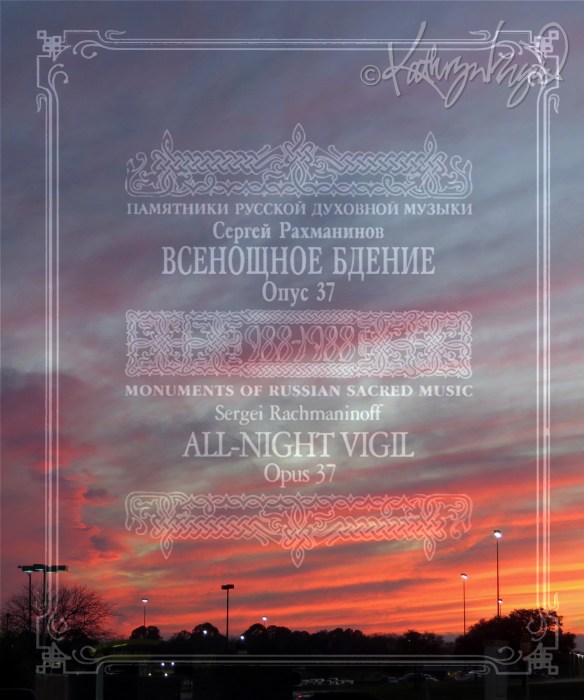
Photo + score cover: Singing Our Song: Rach Vigil

The original ‘our song’ I shared with my true love, because he was in the midst of rehearsing his choir for its performance when we came together—so intensely rehearsing, in fact, that in pretty much the only time I’ve ever known him to talk in his sleep, he whispered dreaming sweet nothings to me in Church Slavonic. Good times!

The expression ‘they’re singing our song’ refers, generally, to recognizing a tune or lyric that carries particular personal weight for a pair or occasionally, slightly larger group of people. It’s our school’s version of Alma Mater, the theme song of our organization, the song that accompanied a memorable first date, first dance, first kiss. Because of its power as a connective tool in communication and in recollection, music is bound to evoke potent responses and pull us into the examination of them, regardless of their current context. I’m one of that lucky class of people for whom music is a pervasive and positive element of my daily life, but I still have some specific favorites not only for what I find appealing about them musically or in their mood, style, and character—and yes, those range pretty widely—but also for the few that stand out in mnemonic and sentimental ways.

There are songs that reconnect me instantly with my childhood, something I suspect is quite a different experience for the younger generations than for mine and earlier ones. Until my youth, childhood songs came not exclusively from radio, films, television, and other distant, anonymous, fixed, or recorded sources but first from the relatives, friends, and teachers who shared them with us and often expected us to sing along. When my family sang in the car on a road trip, it might have sometimes been along with whoever was singing or playing the radio’s pre-packaged tunes, but as often as not it was singing folk songs we’d learned by rote, silly playground songs and game-narrative ones, bits of summer camp songs, rounds, and easily harmonized songs that were popular long before I ever stretched my little pipes to sing. I don’t imagine there’s so much of a lingua franca of family and playground singing not derived from Disney scores and downloads nowadays. There’s lots of delightful and even sophisticated stuff in those, to be sure, but I would guess that there’s a whole lot less that would be in any way distinguishable as historic, traditional, or regional, let along cultural, landmark music that’s just sung for fun anymore unless it’s loaded with undercurrents of market- or message-driven content. Is Mrs. Grady‘s daughter even known, let alone adored, by anyone under a half-century of age anymore?

It’s not strictly old-lady cantankerousness or being prudish, prune-ish, and nostalgic for what may be rose-colored memories that makes me sad for this sort of loss, though there are assuredly elements of those. It’s also a bit of longing for the subtle societal glue that resides in knowing a song: if I spontaneously start to sing an “old familiar lay” under my breath, will there be anybody within earshot who will hear, remember, and join in the song? Are all such endeavors relegated to prearranged flash mobs now? I had a couple of reminders of this urge, recently, and they renewed my quest for an expanded casual-singing culture of the kind that doesn’t require sets, costumes, death-defying choreography, and Auto-Tune.

The first such occasion was, unsurprisingly, in a church setting. Western churches of many sorts are still places where communal singing is common and many songs known to many of the participants by heart. I was at a Protestant church service where, as is typical during communion, the church choir sang anthems and the congregation then sang a hymn or two as well; when the high attendance at the service made communion stretch far longer than expected, the experienced organist got right on the task of keeping the flow going by playing an old hymn. After a few seconds, choristers started softly humming or singing the lyrics along with him, then grew bolder and harmonized, and gradually a number of congregants in the pews were joining in as well. It was really quite sweet, and I certainly thought it perfectly appropriate to the whole concept of a Communal event. But even there, I quickly realized, the truly familiar old hymn couldn’t quite be carried in the old way, because even the choir members clearly only knew one verse by heart, and while it was a lovely bonding experience for everyone, it was fleeting; at the end of Verse 1, a collective dive for hymnals to search for the words (what’s that eponymous first line, again?!), then the resignation to repeat the first verse or fall silent.

Another reminder came in one of the places where such random burst-into-song things do still exist beyond the borders of the performance hall but are perhaps not exercised as often as they used to be: a choral convention. The regional and national gatherings of musicians devoted to choral music—the composing, conducting, rehearsing, singing, performing, and yes, enjoyment of music made for groups of singers—are a great source of education, entertainment, and vivifying energy for me as the partner and follower of a choral musician. And even at these, it’s not as though I hear people breaking into song together, unless they’re rehearsing to perform for each other. Attending an enormous regional musicians’ convention recently, followed ten days later by an equally huge national one, was both exhausting and energizing. And at such events, I don’t often find people gathering to sing together outside of the so-called All Sing sessions, which are of course organized, arranged, led, and regulated nearly as much as any choir’s regular rehearsals.

The point of such conventions isn’t necessarily to build ‘casual relationships’ with singing. But mightn’t it be a fine thing, really? I would guess that the expectation that singing just because, at unplanned moments, with other people, could in fact lead not only to greater interest in and better understanding of more formal choral experiences but also to a more connected social world than social media alone can provide. As the 1971 Coca-Cola advertisement—yes, a commercial jingle—encouraged such idealism and eventually did indeed manage to build into a hugely popular, ex-post-brand-name sing-along song, I [would] Like to Teach the World to Sing. But obviously I can’t do it alone.

Photo + score: Singing Our Song: Nance 'Seal'

This is, in a unique way, truly Our song, because Richard Nance composed it as an anthem for our wedding, and it both became widely popular as an exquisite modern choral piece and remains deeply personal as a gift to my beloved and me from one of our dearest friends.

I Dream the World

I dream the world will learn to sing ‘Til joy suffuses everything—

When peace and happiness abound, I dream a song will be the sound

Most widely heard by every ear Around the globe that longs to hear

A note of kindness, care; of grace, When melody wraps its embrace

Around us like an angel’s wing—I dream the world will learn to sing!


I dream the world will learn to sing And make earth’s darkest corners ring,

Will throw aside all warring ways, Mend brokenness, take up the phrase

That calls to harmony all souls The way a carillon bell tolls,

First, lone and softly, then a pair Joins in, and more, and then the air

Is filled with song, like bells a-swing—I dream the world will learn to sing!


I dream the world will learn to sing And this, the message it will bring:

We must not wait in silent nights, Unsung ’til happiness alights,

‘Til care and kindness, sweetness, peace, Miraculously buy release

And save us from our voiceless state: If we don’t sing, it is too late,

So let our song rise up and ring—I dream the world will learn to sing!

Slipstream

Digital illustration from a graphite drawing: SlipstreamPeople often speak of the person ‘behind the power,’ the right-hand associate who always plays a large role in making the boss look good or the spouse who remains relatively unseen in the shadows while his or her partner is the well-known face of the duo, but I rarely hear anyone mention the full benefits of this kind of relationship. There are, of course, plenty who abuse such an arrangement as purely a platform for self-aggrandizement and advancement and treat their faithful supporters as unseen and unacknowledged slaves. An image comes to mind of the great old Jean Cocteau film ‘La Belle et la Bête,’ wherein the prince’s entire household was condemned by the curse he’d earned and continued to serve him, but even more abjectly, as virtually invisible helping hands. Even in the case of spouses and assistants and supporters who are treated with fairness and generosity and given regular recognition, however, there remains the probability that in normal circumstances, one is more visible and probably more publicly compensated than the other.

There can be, though, a handful of fine, if unexpected, benefits to this arrangement for the person behind the scenes. I think I can speak with a certain amount of authority, having been in this position both by default and willingly in various ways all of my life. I have always traveled in the slipstream of the leader, the marquee character in the act; I fly somewhere behind the lead bird in the V formation, hunt behind the chief lioness, swim behind the flashing silver of the strongest swimmer in the school of fish. I live in the slipstream of those wiser, braver, and more skilled than I am. And I like that very much. It allows me to see at close range where I am headed, led by the example of someone better prepared, while maintaining a sense of safety in my innate introversion and fearfulness from having to set the example or blaze the trail myself It offers me opportunities to find ways to help showcase those I admire in what they are and do best. It puts me on the periphery of events I would never, on my own, have had access to and often gives me the awestruck feeling that my privilege extends, through those I love, respect and admire, beyond any level I could hope to achieve or acquire alone.

I started early: as the next sibling born to a first child who was, and is, extremely bright and wide-ranging in her interests and accomplishments and unabashedly her own opinionated, funny, clever and challenging self—and admired by a great many others for it—I could easily have been, or felt, eclipsed by her. Instead, I tended to feel shielded and guided from the start; others (along with me) generally found her a more interesting focus for their attentions, so she bore the brunt of any critical scrutiny before I would ever feel any, and if there was any entertaining to be done, she managed quite effectively to keep the occasion afloat intellectually and/or with her trademark smart-alec witticisms. That she did all of this shielding of me and leading the way without my hearing much complaint or entitlement either one from her remains a marvel.

On top of that fortuitous training of mine in playing a willing and contented behind-the-lead role, I had parents who were the leaders in their community, too, and in a particularly exemplary version of this star + supporting player arrangement. Dad, the natural extrovert, led active congregations in his primary work role as a pastor and later, bishop, but always had parallel roles as chairman of this, board president of that, and consultant or advisor to the other; Mom, as his one-woman entourage, managed the household so that he was both free to do all of this stuff and looked after enough to be healthy, fed, rested and prepared as well as possible to do so to the best of his abilities. She was also his sounding board at home for anything of import that was underway in his life away from home, helping him to find his way to tough choices and decisions and think through all of the permutations of those situations that anyone tends to carry outside of official work hours. She stood as his consort for official functions, his representative when serving on committees and boards and doing community work as well.

Besides that my father’s work and status allowed me, again, to be quietly in the shadows while attending and participating in all sorts of events and occasions I’d never otherwise have had opportunity or reason to do, my mother was equally quietly setting an example for how to take advantage of all of that in a way that was mutually beneficial. During and through all of those years, I saw Mom come into her own as an equally respected leader among their community, a person looked to for influence and inspiration and committed, intelligent work, but all in her modest and unfussy way. When I finished graduate school and started working at my undergraduate alma mater as a teacher, it was near enough my parents’ house that I simply moved back in with them and paid the cheap rent that put me close to work affordably and, it turned out, in a position to train as the next-level behind the scenes person. Living there, I could keep the household running when they were on the road for work, be assistant-to-the-assistant when they were home by helping to set up for a few of the social obligations or special events tied to their work, and even get assistance from them when I was beginning to have such obligations of my own. By the time that I first went out with the man whom I got to marry, I was remarkably well-versed in the ins and outs of this sort of partnership.

I did, of course, have to learn new variations and nuances to the operation when he and I got together. My spouse is a music conductor. He teaches classes, like I did, but beyond this similarity of standing in front of classes and the variety of preparatory work that gets teachers ready for the classroom time, he had, and has, a much more publicly visible leadership role when he is in conductor mode. I am very glad to stay out of the limelight at those times!

The administrative and preparatory work, the selection of literature, score study, negotiations with guest performers, board interactions, service in the community, publicity commitments, writing program notes, collaborations with commissioned composers—these and so many other aspects of backstage life remain hidden from the public yet can’t be accomplished without time and concentration that are harder to afford if I’m not there to keep him in clean clothes and check that he’s had a meal or two, to chauffeur him to and from places where there’s no parking close enough to get him to a rehearsal on time, and yes, to be a sounding board for him when tough choices or decisions loom. I’ve learned a few things about music along the way, but not so much that I fancy myself anything like a musician or music scholar. But it’s the other parts of his life that I consider the arena for my contributions and participation. It’s the stuff that gets him to the podium that I think I can do best.

When my husband is conducting singers and/or instrumentalists in a concert, my role is to happily sit in the audience and bask in the music along with everyone else. My vocation, my modest part in earning our living, is to slide along in his slipstream and do what I can to keep impediments from holding him back or dragging him down, and whether that happens because I stand near him and shake hands with his bosses and supporters after a concert or because I took the car in for service while he was in administrative meetings doesn’t matter. I’m happy to be a small fish in the big pond as best I can.

Alive & Well

photoSing Now & Always

To celebrate at breaking of the dawn

Or close of evening, or the stroke of noon,

There is no sweeter pleasure than a tune

Well sung by everyone, an antiphon

To peace, to sorrow, or to happiness;

No matter what the poetry or text,

It truly matters most that what is next

Is choral concord to renew, redress,

Resound through all the unseen years ahead,

A clarion, an anthem or motet

Grander than any ear has heard as yet,

And run to distant history, a thread

Of melody and harmony so strong

That no one can resist joining in song

Röda tråden (The Red Thread)

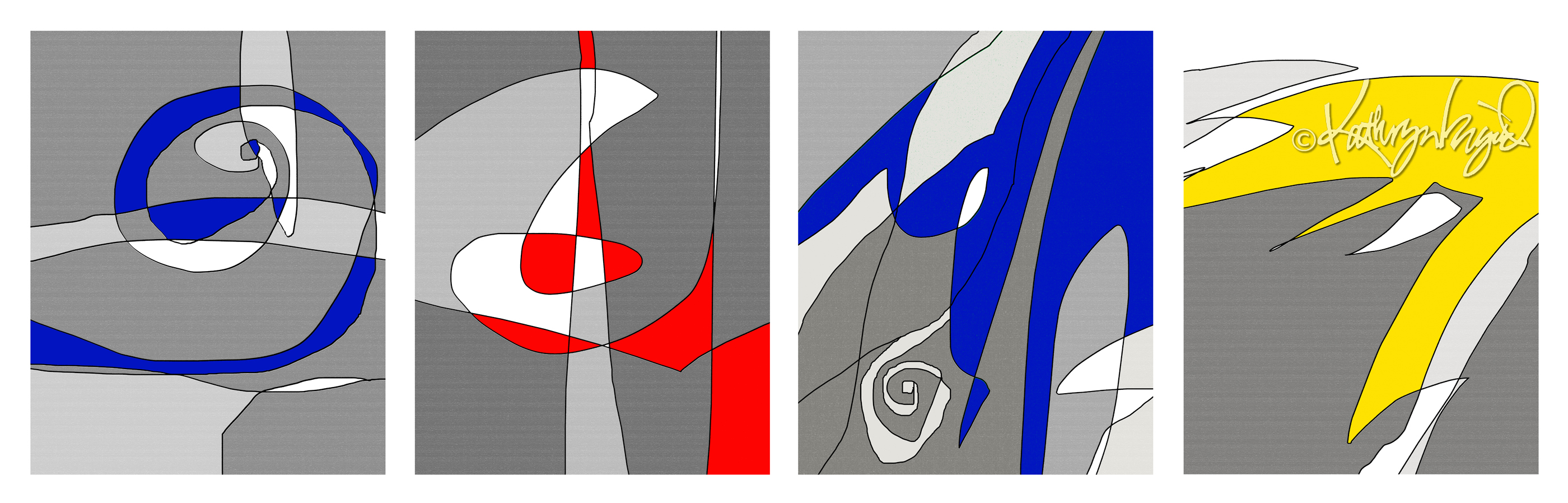
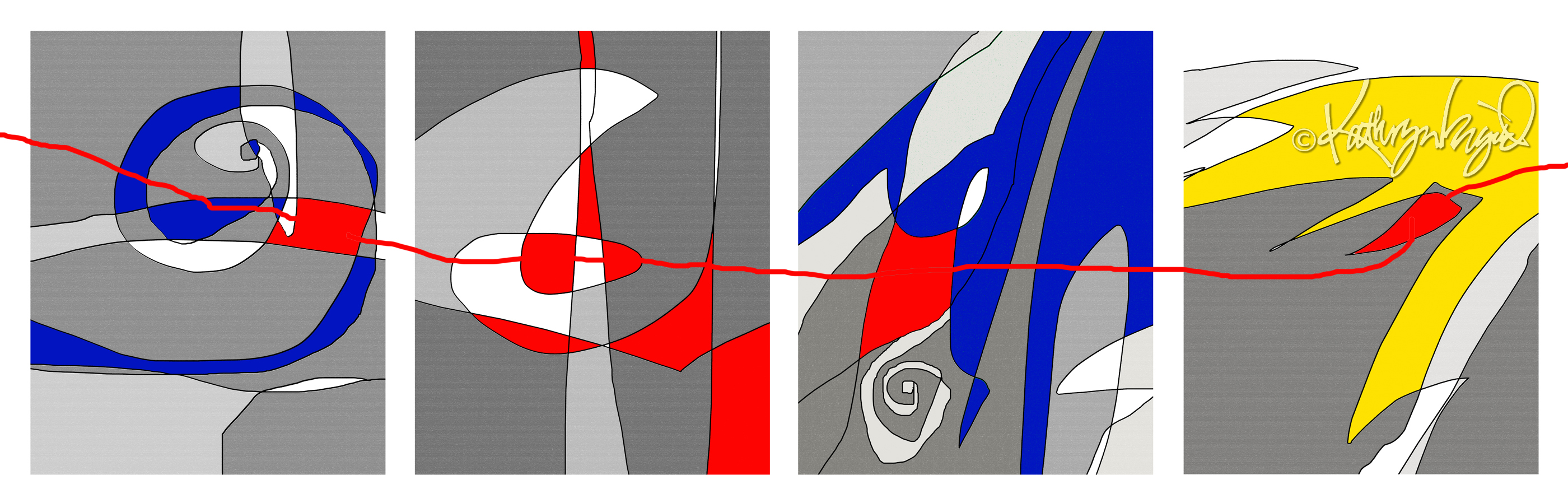
Röda tråden is the Swedish phrase for connectivity. I learned it from my husband, who in turn learned it during his dissertation studies on modern Swedish choral history, and in a way it’s the perfect encapsulation of what his research revealed: that the astonishingly deep and broad influence of such a small country, in such a short time, on such a large field as Western choir singing and music came about primarily because of the remarkable and unique confluence and joining together of a huge number of events, people, ideas and resources in that little land at the end of the Second World War. As unimaginably terrible as war is on any scale, it’s all the more a testament to connectedness that at the end of one of the largest we’ve known, such good and meaningful and positive elements were all drawn into one significant, beautiful growth spurt in the art of singing together.digital illustrationAs a miniature of String Theory in the arts, this surge of the choral art in Sweden is notable (no musical pun intended) not only because it posits a reasonably substantial explanation for the larger choral sector’s modern expansive development amid the general devastation and struggle following the end of WWII, but also because in doing so it illustrates wonderfully how the intertwining of all sorts of seemingly disparate elements such as safe havens from political unrest and postwar reevaluation of norms, personal and professional relationships and experimentation with new media could come into contact and interact to create a new mode of thinking, acting, composing, teaching and singing. In turn, this is a striking model of how people from distinct cultures, educational backgrounds, economic resources and political systems and of widely varying personalities, unified by the one tiny thread of choral music, could be pulled together into a complicated system that, though still colorfully messy and imperfect, led to a potent common end that has had lasting and marvelous influence for long and fruitful decades since.

I am, of course, grateful on a personal level because this Swedish postwar influence on Western choral culture has not only enriched my husband’s professional and artistic endeavors–not to mention was the basis for his award-winning doctoral dissertation that in turn opened a lot of friendly doors to us both in Sweden–but because it produced so much spectacular music and inspiration for so much more.

digital illustration

Röda Tråden is the Swedish version of the idea that–indeed literally–fascinates so many of us: the connecting thread–that which binds one thing to another. I can think of nothing greater than to spend life seeking the Red Thread that shows us our commonalities and binds all people together as well.

Further, though, I am grateful that such an otherwise inexplicable event as the ‘Swedish Choral Miracle‘ seems to me ample proof that all things and people really are connected. And that through recognizing and making good use of those connections, however, odd or tenuous they may appear, there is hope for new and better songs to be sung everywhere.

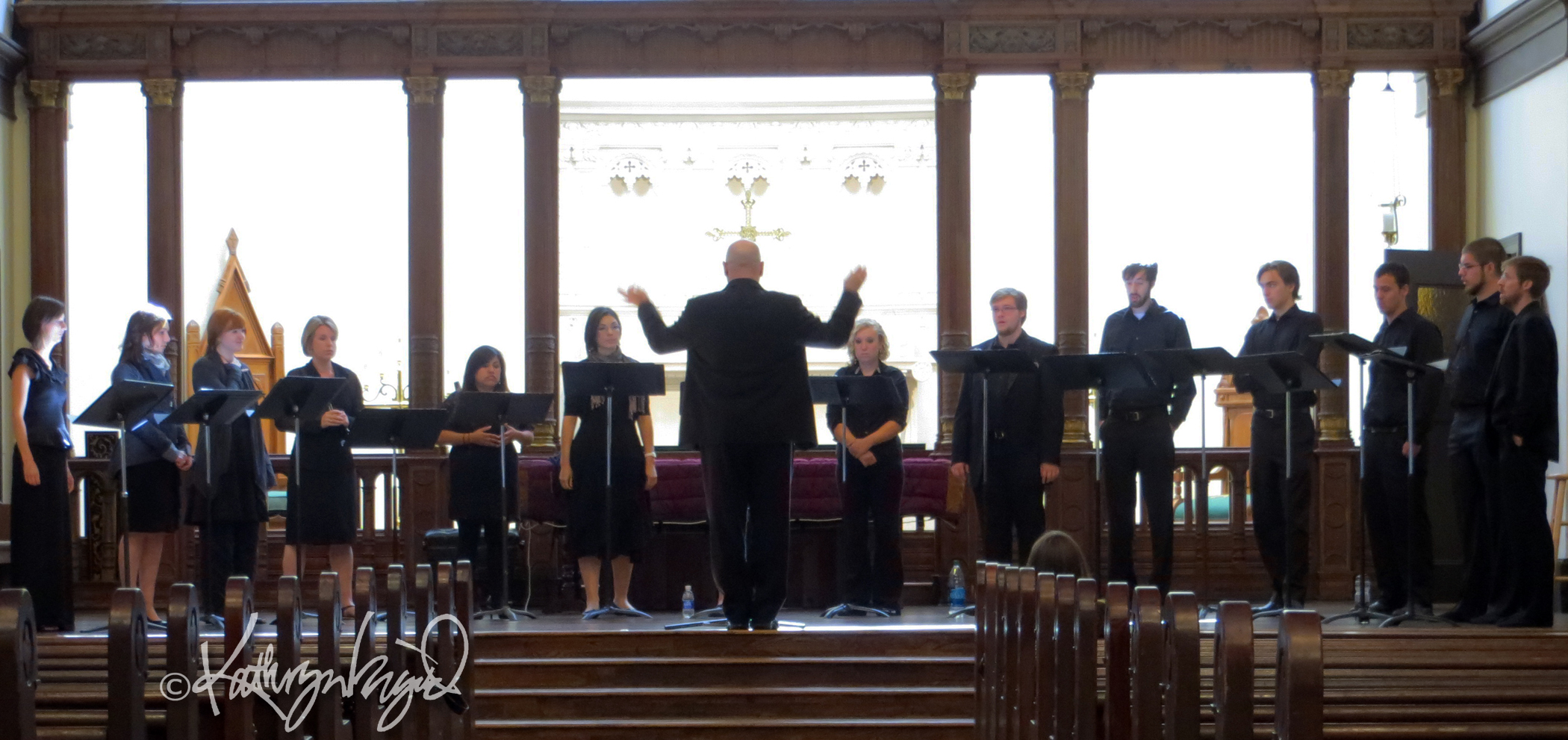
If I needed further proof of this, last night’s concert gave it amply. My spouse conducted the combined forces of the Chancel Choir of the church where he’s currently interim choirmaster plus their excellent hired pro orchestra in performing Haydn and Dvorak’s two settings of the Te Deum text as the concert opening and closing, respectively, bookending the extraordinarily lovely and moving Missa Brevis of Kodaly. I came in to sit for the concert among strangers and acquaintances from the church and discovered a friend from another parish sitting across the aisle from me, then learned from one of the choir administrators that a friend of hers in attendance turned out to be a long-ago colleague of my husband’s from another state, and finally went up to greet my guy after the concert and found him speaking with a group of ladies in the front row, one of whom was the wife of a former US president. What brought all of us divergent people together in this moment? Music. Beautiful singing and playing. Chance, kismet, divine intervention. Call it what you will, the slender but unbreakable thread that connects us all drew us into one place for a time of basking in the inscrutably beautiful harmony that is beyond craft, beyond art. That is a concert without peer.

A Concert with a Wedding Attached

Seventeen years ago today I got married. And as all of you who have visited this blog with any regularity know, when I got together with the man who became my husband, spouse, best friend, partner and daily companion, I gained a world of music. Of course, music was a big part of my life already and distinctly a contributing factor in our getting together in the first place; I worked in the university art building, right next door to the music building, and spent plenty of quality time there going to concerts, meeting with friends and all of that sort of happy thing, and when the nice Director of Choral Activities asked me if I’d be willing to help spiff up the aging auditorium for the annual Christmas concert festivities I gladly said yes. That was only the first time I made banners for an occasion of collaborative fun with that nice DCA man. Less than eight months later I was making bunches of banners to fill up a church nave for our wedding.scanNo surprise that, since under friendly pressure from them we gave up on the attractive idea of eloping and just having a party with our family and friends on our return, we decided that the best alternative was to have a celebration with lots of music and just party all the way through the event. Turned out it was easy to do so.scanAssembling our wedding’s participants was easy-peasy. Relatives and friends from work, home life and church lined up and pitched in as planners, greeters, acolytes, reception hosts and much more. Clergy? Well, as the daughter of a bishop I didn’t have far to go to hunt up someone to marry us. The church’s lead pastor presided and Dad officiated, and a dear sweet retired pastor friend served as lector. Witnesses? Having three sisters, I had no problem lining up a team; Richard’s backup was easy to arrange as well: his sole brother, our mutual beloved friend Jim, and Richard’s colleague and partner in choral crime, also named Richard (Nance). Musicians were easiest of all for us to arrange, unsurprisingly.scanWe had an outstanding pickup choir of students and members of Richard’s choirs, past and present, and friend-colleagues playing horn and singing the processional solo. Jim, getting in some exercise during the service, was organist as well as standing up for us. That, as well as having helped us plan the whole service and choose its music, and set one of my texts to music for our congregational hymn. Richard N, besides joining the altar party, pitched in (no pun intended) musically as well, conducting the choir for us in a lovely collection of pieces capped by the premiere of the exquisite anthem he composed for the occasion (now a best seller for Walton Music!).scanYes, this is a brag post. Happily, all true.photoHappy Anniversary, my Love.

A Choral Symphony

Listening in on rehearsals for the new Jake Heggie Ahab Symphony a companion to his opera Moby-Dick), I wrote. Tonight (24 April 2013), if you’re not able to attend in person, you can watch and listen to the live streamed performance of the world premiere at 8 pm CST at this link, featuring tenor Richard Croft, the University of North Texas Symphony Orchestra and Grand Chorus and conductor David Itkin: http://recording.music.unt.edu/live. In the meantime, from me:digital artworkCharacteristic Frequencies

Light, to begin, as though it were the dawn,

And whispered voices breathed themselves awake,

And sentience would rise and fall and make

A storm, turn faint again, scarce moving on–

On lyric waves these messages were sent,

Foretelling danger and the pangs of grief,

Then, gentler, sing of comfort and relief,

Follow each graceful passage where it went–

This, while the song comes lapping up at me,

Comes pulling like the most insistent tide,

Whether the sound grows deep or thin and wide,

Draws me on deeper in this sonic sea–

Seek me no more, but let me run aground,

My soul sunk in these waves, and listening, drowned.digital artwork

May I Suggest . . .

photo

The University of North Texas Collegium Singers in dress rehearsal for their performance at the Berkeley Festival of early music, June 2012, Dr. Richard Sparks conducting. Yes, *that* Richard Sparks.

MUSIC.

Having had my senses immersed in the bath of fall season-opener concerts of all sorts lately, to the literal tune of hundreds of voices and instruments in symphonies, marches, art songs, musical theater melodies, electronica, motets, chaconnes, folk songs, choral masses, lullabies and all sorts of other lovely music, I am reminded as always at this time of year that such an intense schedule of events, however fabulous and rich they are, can be exhausting. More importantly, though, I am reminded that it’s also invigorating, inspiring and often utterly thrilling.

It’s also the time of year when the European choral magazine for which I proofread and text-check translations goes back into full production for the year. The articles and news items are all full of reviews of the summer season’s festivals and conferences and the amazing machinery that underlies these productions, from choosing and ordering music scores through civic action, political efforts, fundraising, singer scholarships, educational programs for participants and audiences, performers’ uniform shipping, young composers’ symposia, etc, and right on down to whether ‘civilian’ supporters of the group are allowed to arrange the music stands or chairs onstage if the local symphony hall union members are on strike. At the heart of it all is such a profound passion for music that millions of people worldwide, including those from countries and cultures one might be surprised to find even having the time or energy amid their economic, social or yes, war-related battles to sing and to listen to singers. If there’s a genuinely possible force for world peace, my friends, it may well be in music.

More personally, it’s music that is a central force for my own happiness, for a large number of reasons. Every one of those listed above comes into my own life and being regularly. But as you know, I am partnered for said life with a musician, and so the whole topic comes that much more sharply into focus. Music has been a glue for us two from the very beginning of ‘us’. Ask our mutual dear friend, a fellow musician, if I were single and might therefore be ‘available’? Check. Collaborate over a large-scale music performance and its visual presentation as a way to get to know each other a bit, hovering around each other during rehearsals and preparation? Check. Go on a first date to a Mark Morris Dido and Aeneas dance performance [yes, truly spectacular, by the way] for which my suitor had prepared the singers? Check!

photo

Since thousands vie for the dozens of positions in the final selected groups, high school students in Texas undergo a rigorous preparation for All-State Choir auditions, studying the literature in workshops and camps across the state each summer to compete in their local and regional trials before the year of All-State even arrives. This is the UNT group working in the summer of 2012, rehearsing in the camp organized and run by Dr. Alan McClung, assisted by UNT students and graduates and conducted each year by a different guest conductor–this year, by my spouse. What can I say, it’s what he does. And what I love to hear and see.

What followed is, was and ever shall be musicocentric. Our honeymoon (more about that in a future post) was built, in fact, around my fiance’s conducting gig–a gig including, naturally, our aforementioned Dual BFF as accompanist–at a choral festival in Veszprém, Hungary, arranged under the auspices of the parent organization that spawned the magazine for which I still do editorial duties, if you can follow that sprawling, meandering melody line. One might say that it all began with music and went racing straight downhill from there. Or, if one feels as I do, that music has brought uncountable joys into my life from earliest memory to the present, and will sustain me until the end. In any case, one of the clear high points of musical pleasure has been attending the myriad concerts, events, conferences, performances, and festivals that bring musicians and music lovers together all over the world. A huge number of our favorite people are those whom we’ve met in and through all of this music-related stuff. We have deeply loved ‘family’ literally around the world whom we’ve met and with whom we’ve bonded through musical acquaintance.

If you haven’t done so yet, or not recently enough, may I suggest that you ‘get thee to’ the nearest conference, symposium or festival involving music as soon as you’re able. If, like me, you aren’t an active participant, know that every artist needs his or her cheerleaders and fans and supporters, and that your mutual love of the art will mean more than that you stood onstage during the work or the bows. Yes, even non-musicians can and should pitch in–even those with no sense of pitch can fold programs, stuff envelopes, recruit audience members and donors and board members and political supporters, can drive the shuttle that carries the singers and their accompanists from venue to venue at the festival, and can buy tickets and bask in the glorious sounds from town square to church nave to school ‘cafetorium’ to symphony hall and shout a resounding Bravissimi! to all and sundry.

Beyond that, though, the immersion of being in a place where a huge number of people, participants and supporters and happy observers alike, have come together from a wide range of territory for an extended period of days solely for love of music–that is a wholly different and magical experience everyone should have the opportunity to enjoy at least once. So I commend them to you, the small-scale community events offered by your local affiliated high schools and the international events hosted by long-lived organizations in exotic places and every variation on the theme you can find. I promise you will leave with a song in your heart and memories to last you to when all of your other memories have faded to dust and perhaps beyond. If music be the food of love, play on! For though in this line opening his play ‘Twelfth Night‘ Shakespeare exposed the Duke of Orsino’s conviction that being surfeited with love (in this instance, via its musical surrogate) would cure him of his hunger for it, I think that quite the opposite is true: if they are excellent, the more we experience them and are filled with them, the more we crave both love and music.

Food of that sort for thought: visit first the websites and then the events offered by your local choirs, bands, orchestras, theaters, and performance companies. My own favorites are hosted by professional organizations of music educators, conductors and performers simply because those are the ones I’ve naturally had the privilege to attend, as consort to my musical prince charming, and these all offer performances by top artists that are open to the public, sometimes even with free admission. Explore them! The organization that ‘sponsored’, or inspired and was the jumping-off point for, our honeymoon with its Singing Week in Veszprém–with its half-dozen ateliers conducted by musicians from Europe and North America and singers and whole choirs from all over as well–was what is now called the European Choral Association-Europa Cantat and it hosts a wide variety of such choral events throughout each year, with a focal youth choir festival occurring triennially in places like Passau, Leicestershire, Barcelona, Utrecht, Torino (2012), and Pécs, Hungary (a locale to be repeated in 2015).

photo

Just this month, the newly minted University Singers at UNT performed their first concert of the season with my spouse at the helm. If you live in or near a college town, you’ll find endless opportunities for attending all sorts of musical events, many of them free and most of them truly outstanding–after all, these people are all here gaining expertise for what may be their whole life’s passion, and performers need great audiences too.

Pop, folk, jazz, rock, blues, punk, bluegrass, Early Music, all flavors and kinds of music and individual organizations from the Oldtime Fiddlers [I once got to run the stage lighting for their competition in Washington state–fabulous fiddling, huge fun and even some fantastic yodeling!] to the Verona Opera [I can say from my one experience there that genuine opera under the stars is something not to be missed, even if it’s still 40°C when the singing ends in the middle of the night]: there is something for practically any musical taste out there, and many of them that I enjoy immensely are included among these. My personal pet organizations among the professional gang also include many others: IFCM (International Federation for Choral Music), ACDA (American Choral Directors Association), ACCC (Association of Canadian Choral Communities), TMEA (Texas Music Educators Association), Chorus America, the Boston (odd-numbered years in June), Berkeley (even-numbered years in June), and Vancouver (annually in August) Early Music festivals, and ever so much more.

The Large and the Small of It

The depths of Space carry miraculous sparks of inspiration at a seeming infinity of levels.digital collage

A couple of years ago my husband was conducting a concert of choral works all, in one way or another, exploring the idea of Space, and he asked me to provide projected images that would act as a visual companion to the music. Since the centerpiece of the concert was to be a selection of movements from Estonian composer/astronomer Urmas Sisask’s ‘Gloria Patri‘–wonderfully meditative, somewhat minimalistic yet still quite melodic music which was to be accompanied by photographs taken through the Hubble telescope, I was given a clear starting point for the collection of visual images. The good people of NASA willingly agreed to let us use any Hubble images we liked, without any constraints and at no charge, so my task was to find the images I thought best suited the music at all points, edit them (some extensively, some less so) in order to fit the format of the projections, and collate all of it into a pre-arranged program that I could manually ‘play’ as the concert was performed. Looking for, and then through, hundreds of Hubble images was a bit of a project in itself; reformatting and resizing, digitally ‘cleaning’ and grouping and ordering them proved to be a little more weighty. But it was a pleasurable and energizing project all the same, staring at the stars and constellations in all of their miraculously varied glory. ‘Gloria Patri’ indeed!digital collageGoing forward to work out images for the rest of the pieces on the docket for this program, I was moved by both the enormity of the Hubble’s scope and our own galaxy’s tininess within the vastness of space to think that it would be wonderful to explore those strange dissonances and harmonies that occur in the known world, microscopic to massive, blurred by our limited vision and knowledge and delicately detailed by our constant finding of new facts and ideas in all of it. So for the other pieces in the concert’s repertoire, I sought out images that would complement each other yet emphasize the astounding range of contrasts in our spatial existence, from the granular to the grand. Pollen and planets might in fact have more in common than we can imagine, if we stretch our thinking just a little. Snowflakes and stars might be merely opposite ends of a spectrum that transcends dimensions, scale and vision.digital collageI was reminded throughout this process not only of my minuteness in the great spectacle of existence, but also of how fantastically treasure-filled that existence is, from the level of the subatomic to things and thoughts so massive that the Hubble telescope and all of its exponentially larger generations of offspring may never quite be able to encompass the enormity of it all. If I ever think I’m running out of ideas, I only need to remember this one exercise in humility and happiness, and I should be able to break out of my stasis as a flood of newly sparked inspirations stream like comets out of me.