Rainmakers

Now that super storm Sandy is mostly past, those in the wake of the destruction are left to dig out from under all of the mayhem. As all natural disasters do, Sandy left behind not only massive damage brought on by the high winds, flooding, snow, fire and explosions that were part of the storm and its immediate effects but a whole swath of financial, social, political, logistical and definitely not least of all, emotional and personal damages that will take years to be mitigated, let alone resolved. Besides the losses of life and health that are such obvious costs of a massive storm ripping through, we all know–those who have been through this grinder before, anywhere in the world most especially–that there are innumerable other things once held dear that have been slashed away in a few hours’ time and many of them will never be recovered.digital painting from a photo

The homes blown down, stripped away by violent waters, or burned were filled with people and lives and the Stuff of those lives–in many cases, all gone. The businesses closed for a few days, often in crucial periods of their peak season, are eclipsed by those whose doors, if they still physically exist, will close forever and by the many owners and employees and customers who will have to find other resources for making a living or acquiring the services and goods they count on to shape their ordinary lives. They will all find, as my spouse said very quietly to me when I came down the stairs to find him waiting palely on the 11th of September in 2001, that ‘the world as we know it has changed.’digital painting from a photo

But we also know from long experience that disasters, whether natural or human-made, can bring unexpected goodness trailing in their wake. The immediate selflessness and generosity and heroism shown by those who rush into the maelstrom to save others and who pull the stricken into their waiting arms of safety and warmth and shelter and healing are, when we others take a lesson from their shining examples, only the first wave of light and hope to follow the darkness and despair. If we all, whether by the nebulous but potent means of offering support in our hearts, minds, prayers, and invention or by the more concrete ways of donating, digging, driving; of building stronger buildings to replace those lost, remembering those who have died with forward-looking perpetuation of their virtues, and taking up whatever tools we have to recreate a more closely knit community that can expand exponentially to bring in every person with every need and every gift that can fill that need–then every storm is not an irremediable horror and every battle is not the one that will end safety and sanity forever. We are bigger than the storms. We can be the rainmakers who rise up out of ordinariness and even destruction to build something real and new and extraordinary.

The Power of Being Well Behaved

When I was teaching, I thought it useful to devote a bit of the informational materials I handed out at the beginning of every term to basic issues of classroom decorum. The idea that so-called common courtesy has to be taught, not just to children but to all ages, is no less ridiculous than understanding constant the need for training and refreshing what is called common knowledge or common sense. Generations have passed since people saw a need to comment on or complain about the uncommonness of all of these virtues.

More significantly, as a teacher I knew that if I didn’t encourage, if not demand, attention to such virtues in my classroom there was little hope of any other sort of learning happening in there. I’m old-fashioned that way. The silly thing is probably that it was only after leaving teaching that I thought very clearly about how much these attitudes mattered in any and every kind of cooperative venture, not only in the classroom but in the boardroom, the living room, and certainly in the places where politics, religion, health care, social activities and civic progress are in progress. At least, if we want actual progress to occur.

And that’s how my two cents came out as a personalized set of ten ‘commandments’. Ah, well. I’m kind of a megalomaniac, and I did feel the need to keep my eyes on what was happening.pen & ink

THE BIG OL’ HOW-TO LIST

for getting along with Kathryn

I   Come to class unless you are dead.

II   Show up on time. Lectures don’t always begin on the dot of the class-starting time, but if a deadline is stated as “beginning of class, 18 March” and you  arrive one minute late, technically I can tell you that you missed the deadline and so your project is rejected. Flunked. That’s harsh. But trust me, it’s fair. Besides, it’s a safe bet that if the lecture does start on time and you miss part of it, I’m not going to be terribly enthusiastic about repeating myself and your classmates who have just heard the stuff will definitely not be amused to have it reiterated. Be in place, cell phone and watch alarms and headsets off and fully participating in class, and we’ll all get along famously. Hurray for good manners!

III   Bring all assigned materials and have them in ready-to-use position when class starts. Written tests, especially pop quizzes, are uncommon in my classes (they do exist), but notes and written critiques can be required at any time. Be ready. Write down everything, and date it. Even if I don’t say you have to. Then you have documentation of what I told you (and when) if I should change plans inexplicably or you have a question. Also, it makes you look attentive and enthusiastic whether you are or not.

IV   Flattery will get you places. Forget that baloney about it getting you nowhere. You lose nothing by Making Nice with people and attempting to impress them with your admirable and outstanding qualities; they might even enjoy buying into the whole idea. It’s an excellent tool for impressing others, this making them think you find them worthwhile and fabulous. Conversely, the quickest way to turn a potential ally into a pain in the neck is to belittle, ignore, challenge the primacy of, argue with or antagonize her. Diplomacy and tact mean that you can frankly say, “I disagree,” or “what do you think of _____,” and get a respectful hearing. We are only human (if we’re lucky).

V   By the way, if your death prevents your attending class, call and let me know in advance.

VI   If you have big plans, talk to me. It’s possible that your previous experience with and knowledge of this topic mean you can quickly “test out” of the class requirements and go forward into a more challenging and personally fulfilling independent project. If so, let’s work together to get maximum use out of your time and energies.

VII   If you feel out of your depth, it’s okay to swim over to the shallow end and meet with me privately by appointment. Probably all you need is a bit of individual coaching beyond what’s available or comfortable in class time. Of course, if you’ll kindly risk asking the question in class, there are always others who benefit by having their identical question answered, and probably your learning it together will make it simpler.

VIII   Ignorance shouldn’t embarrass you. Holding on to ignorance should. You’re in class, presumably,because you don’t know Everything yet, same as the rest of us.  So ask your “stupid question,” please. Real stupidity is avoiding or refusing to try or doing something wrong because fear of lowering yourself prevented your asking the question that would’ve resolved the problem.

IX   Be patient. Spend the time. Attempt the highest levels of craftsmanship and professionalism. Pay attention to the tiniest detail.

X   Be bold and adventurous. Climb out of ruts. Seek a new perspective on the familiar and become familiar with the alien. Look for connections. Expect the infinite.

What if I Never Grow Up?

digitally doctored photoAside from the fact that all of you know already that this is a given rather than a question, I can still pose it rhetorically and ask it of all people in general. See, I think about this a fair amount, and not just because of my own level of maturity at any given time or in any given category. It’s simply a question we all get asked in one way or another at some point, or should jolly well ask ourselves, at the least.

This marvelous Möbius loop of inquiry and insistence begins the first time we are told, as children, that we need to Grow Up, and it can be applied to any number of circumstances. The irony that this mandate is almost invariably handed down to us by a person or persons barely older and more grown than ourselves is of course lost on all of the parties involved, because we’re all too inexperienced and naive and, conversely, too full of ourselves to understand it. The bigger kid tells the littler kid to Grow Up mainly because the elder wants something that the younger has or has simply lost patience with her.

It doesn’t change. When we’re older, the toys and privileges may have changed to different brands of money and power, but as long as we think someone else has more of whichever kind we desire than we do, we’re just as inclined in adulthood to nit-pick at that someone for his supposedly lower maturity levels both as cover for our covetousness and in shallow hopes of shaming him into being more generous than we are ourselves. The failure of this silly system doesn’t change either, but it doesn’t stop the less magnanimous and less mature from nagging at those who are more so, no matter the age or the occasion.

There are perfectly good reasons to wish anybody, including ourselves, would think and act with maturity and keen sense and the wisdom of experience. Those things tend to lead to our being more level-headed in emergencies, more practical in the everyday, and more inclined to share those traits and all sorts of other things with other people–and that leads to better community. Who knows, even World Peace.

But isn’t it grand, all the same, to forever retain a large enough pinch of immaturity and, if not childishness, then at least the ability to be childlike, that we can still look at the wide world with the awe and wonder it requires. We should hang on, with youthful enthusiasm and gleeful tenaciousness, to innocence and hope, to curiosity and rambunctiousness, to unalloyed silliness whenever the moment permits. Maybe we should even be willing to get down there with the actual kids and roll around in the grass once in a while without batting an eye over how dirty it’ll get us or whether it might make our old joints sore tomorrow. If we can’t still do somersaults, then we’d better find other ways to regain and retain our not at all grown up point of view, because the world, especially while it’s still short of outright Peace, can really use a healthy splash of the ridiculous now and again.


All I Can Do

photoMy Dearest,

I know that your day is dark. Your illness is proving incurable and your pain is chronic. Financial ruin is staring you and your family in the face. The season has turned harsh, your lover has betrayed your faithfulness, your longtime animal companion has died, and your heart grows heavy and your eyes dim with weary tears. War rages just outside your door and grips you by the soul as well.

I know all of this and yet I am thousands of miles from where you are. I can’t step over the threshold and take you in my arms and silently cry with you until the bitterness ebbs. It’s so far that I can’t just bring a basket of hot food and a bottle of wine to sustain you and slake your thirst. My words, even when I try to shape the letter that will ease your suffering one moment’s worth, are too small and sere and frail to make an inroad–and the letter will undoubtedly arrive too late. There is a faint echo in that digital delay when we speak on the phone, and all I can hear in it is our own choked breathing, no sounds of the deep solace really required.photo

All I can do is leave the gash in my own heart open and ask you to take up your residence in it. Know that my thoughts are reaching across the miles to you at every moment, awake and asleep. Let me shift some of the terrible burden from your shoulders to mine; I know it isn’t real, and doesn’t solve your troubles one small bit. But I hope that you can find some comfort and hope in my desire to carry you while you are too weak to carry yourself one small step further. All I can do is love you.

And so I do.photo

Giving Candy to Strangers

photoMost of us are taught from when we’re very small to avoid all contact with strangers. Don’t look them in the eye; don’t make friendly overtures, don’t speak to them, and don’t go running up and hugging random unknown characters. Above all, don’t accept the offer of candy or other lures from those who might turn out to be very lurid indeed.

All of that is mighty wise advice for little persons. They have no experience of the world, no basis for comparison or judgement, and no inner criteria to help them have a good chance of accurately assessing the situation. But when are we Big enough to learn that unfamiliar people are not only not all bad and dangerous but possibly in great need of any gracious and friendly contact they can possibly be given? When are we smart and experienced enough to realize that others around us are not always up to something nefarious or trying to sell us something we neither want nor need if they approach us out of the blue? When are we large-hearted enough to make a more hospitable evaluation of the risks or rewards in approaching the unknown with openness and warmth?

I have been told several stories recently that remind me of the opportunities that constantly surround us for making moves, both large and small, that have the potential to do anything from brightening someone else’s day to saving a life. Most of us fortunates have at some time and place in our lives ‘entertained angels unawares’–had a few of those moments of unexpected, extraordinary, beautiful contact with persons we didn’t know and understand that there are such agents in the world, even if we can’t immediately recognize them. Why not look for places where we can be those agents for no reason other than that we know from experience how powerful and life-changing, healing or hope-renewing, or just plain day-brightening such moments can be.

It is possible to be misinterpreted or rebuffed, true. But the vast majority of times that I’ve seen this sort of subversive joy-sharing happen without any ulterior motives, even if the recipient–sometimes me–is not altogether receptive at the outset, the end result is an astonished recognition that life is rather wonderful, that people, on the whole, are good and genuine and caring and fine, and that we have in our own small hands and hearts the astounding power of remaking ourselves and the world into better things by the simplest and least extravagant of means. A hug, a moment of patience where there has been tension. A donated dime or a pint of blood. A proffered packet of food or bottle of water that had been meant for something or someone else. Handing off the little trinket that was mine but that I can see another one admires or opening the box of treats I was saving for the family and sharing it instead with someone I don’t even know. Opening doors and assisting with chairs and lifting the parcel that’s too heavy for someone else.

They may seem tiny and insignificant enough. For those of us who choose to give them, they amount to easily made gestures. But insignificant? Hardly. For those of us who dared not, who may not have even known we could, ask–this one little mark someone offered to make on our day may mean, after it all, the whole world.photo

Tense and on Target

pen and ink drawing + text

graphite drawing

Solace in Silence

Let us look for our peace wherever we can. Let us embrace it and rest in it. And let us always share that peace with whomever, whenever and however we are able, inviting them all into our places of peace so that they and others all around the world, too, can find and disperse the sweetness of true and deep repose.

graphite drawing + text

Foodie Tuesday: Big Pigs Like Figs

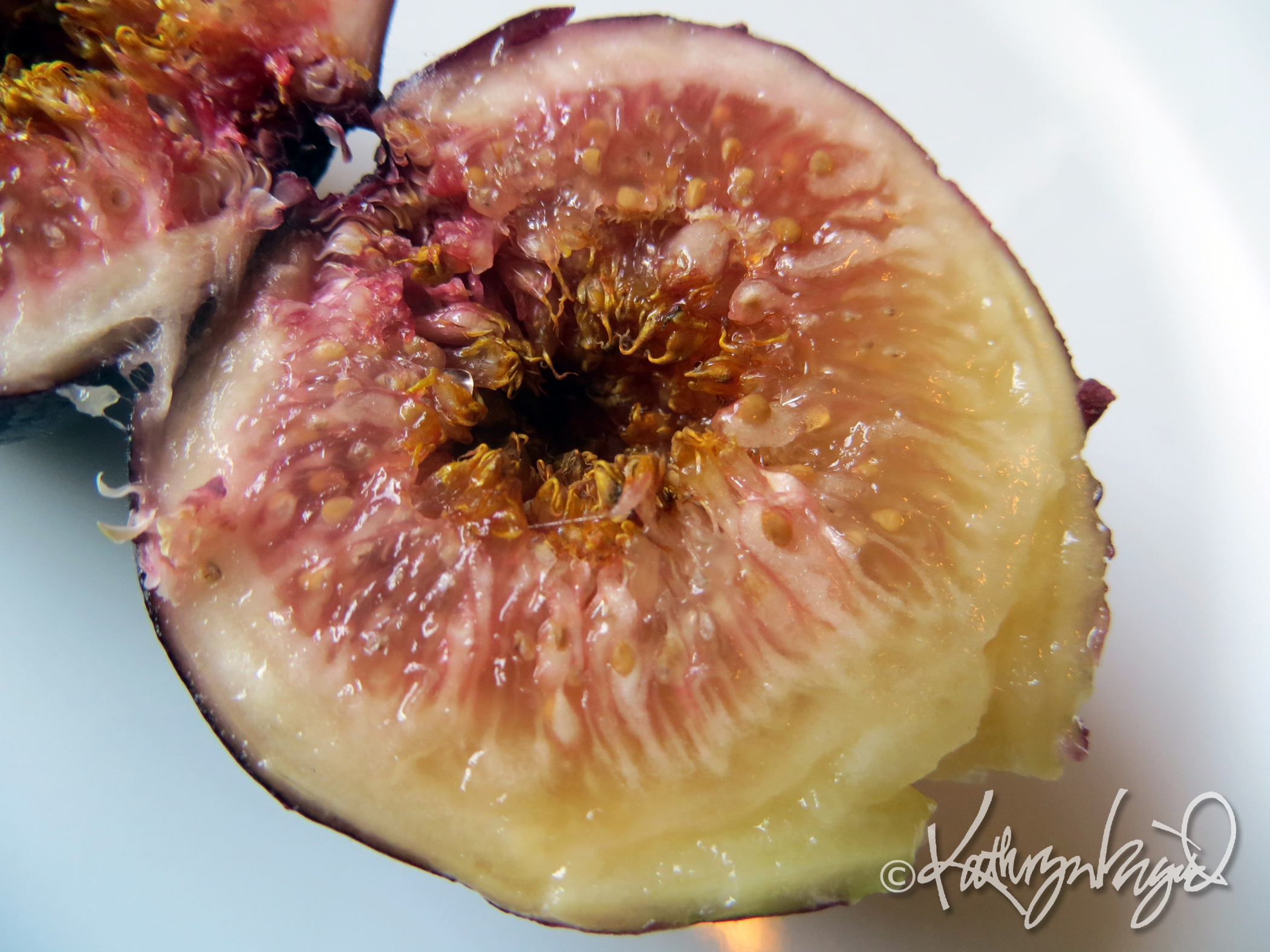
photoBig pigs: who, me? Yes, I’ve admitted to it many a time. Being a food-loving piggy myself, and being terribly fond of the gifts of the pig to food-lovers. I fully understand that vegans, vegetarians, Muslims, Jews, those with health restrictions, and any number of others have valid, legitimate and honorable reasons (philosophical, physiological, religious, ethical, etc.) for not eating pigs; my own litmus test for foods is also personally derived and has much more to do with how much respect has been given the plant or creature in question in its tending while alive, in its preparation when being readied to eat and, especially in how it is used for sustenance and, often, the building of community. So no, I would never dream of knowingly serving pork to any of the aforementioned friends. But I am content to obtain and prepare and consume it myself with respect and gratitude. I have no wish to offend, any more than my abstemious friends would judge me for my being a carnivore. Those who wish to do so are of course very welcome to skip this post entirely.

Meanwhile, back at the board, I will say that I am often quite happy to eat vegetarian style too. I never feel deprived when the food pleases my palate, no matter what the range or contents of the menu, and I can easily be just as blissful about a superb salad, an ounce of outstandingly fresh pistachios, or a pan of colorful mixed roasted vegetables (on tonight’s menu again, as it happens). And good fresh fruit, well since that combines the flavor and vitamins and juicy joys of good health-giving food with the sweetness of dessert, why, you know that I am happy to plunge right into that when it’s offered.

No surprise, then, that I was so delighted when that scrawny little $4 twig I bought this winter first burst into leaf and then, to my great amazement, produced lovely, plump Brown Turkey figs. It inspires me to think that perhaps I shall be able to grow some produce of other kinds if I put my mind to it, despite the challenging temperatures and soil character here in the roasty-toasty land of north Texas.

photo

I am *not* the only ham in my kitchen.

But to return to my porcine loves, I have eaten pork in almost uncountable ways and have loved a great many of them. One standby favorite is a well-made ham. I will happily bypass any of those artificially ‘enhanced’ varieties that are injected with water and so many other, less savory, ingredients and often are processed to the degree that they are no longer recognizable as meat, let alone pork. But a good pit-smoked ham, well, there’s a sweet-and-savory treat of which I am immensely appreciative. I love oven roasted and glazed hams, too, even boiled ones, but I think my affections are most readily given to an unadorned and slightly fumy beauty right out of the smoker.

One of the benefits of being in Texas is that I do have access to a few places that produce such ethereal goodness. As a result, I can often indulge in a meal of simply sliced ham with vegetables or salad or, on a wintry day, perhaps with mashed or roasted sweet or russet potatoes. Or, as I did the other day, with a heap of fabulously fresh and sweet fruits. And of course any leftover bits may be tossed into other welcome meals of the same. Or into sandwich fillings. Or casseroles. Or, as on the day following the feast of ham and figs (and avocado and strawberries and pineapple), next mixed with minced roasted chicken, dill and pepper and stirred into eggs for a quick frittata. Because if ham is good one day in my kitchen, it’s probably a treat for three days in a row if I’ve shopped wisely enough.photoJust now, though, I guess I’d better dash out and check the baby fig tree to see if I can beat the raccoons to the next ripe piece of tree-candy.

What’s-in-My-Kitchen Week, Day 7: Love & Happiness

photoIt’s said that Cleanliness is Next to Godliness, and regardless of your beliefs, a clean kitchen is surely going to keep you closer to the desirable state of ideal health and well-being than a slovenly one. A rotten, filthy kitchen, on the contrary, may well send you off to meet your maker (or annihilation) with unwelcome rapidity. In my experience, Good Eating is Next to Perfect Happiness.

Simply eating well–whether of the most esoteric or exotic or splendidly gourmet meals, or of the handful-of-greens with some impeccably ripe apricots, a speck of salt and pepper and a drizzle of lemon-infused honey pristineness–that act of tasting and enjoying is its own reward. Love of good eating and the happiness that accompanies and follows it are worthy sorts of pleasures.photo

The process by which the meal or nibble is achieved can be grand delights, too. Just happening on the desired food serendipitously, even sometimes without having realized there was a desire at all, is lovely. Planning a dish, a menu, an event can be a satisfying challenge and adventure. Hunting (in field, stream or market) can be your surprisingly meditative, endorphin-brewing action sequence to prepare for the meal making itself.

Along with all of this is the primary joy of dining with others: the communal happiness and yes, meaning that can be cultivated in shared eating. The love of good food is magnified, multiplied exponentially, by the reflection of that affection between those at table. With strangers and acquaintances, it is the magnanimity–the largeness of spirit–inherent in hospitality that binds and bonds us. Among friends and loved ones, the food is both expression and enhancement of the finest graces in our connections to one another. And I can think of no lovelier thing to stock in my kitchen than that.

photo

Pull up a chair and have a piece of pear-blackberry pie with me!

Walk a Mile in My Baby Shoes

photoI’ve been thinking about childhood. The freshness and innocence, the naiveté and helplessness, the curiosity and amazement at every new thing–and everything is new–and of the naturally self-centered universe one forms because self is all one knows. I’ve been thinking about how all of these qualities, so clear and natural in childhood, repeat throughout our lives in cycles. Varied by age and circumstance, and certainly by our own personalities as they develop, but there and recurrent all the same.

I’ve been thinking about how little we are all aware of these cycles and patterns in ourselves over time. We humans, though we congratulate ourselves as Homo sapiens, intelligent beings, are poignantly–sometimes poisonously–unwilling and even unable to truly see ourselves all that clearly. It’s not terribly hard to be self-aware, to know the good and bad of one’s personality and character and style, but it’s amazingly uncommon that we choose to acknowledge it, let alone are able and willing to do anything useful to control or change what we can or should. Most of us are rather childlike, if not infantile, in that respect. We want forever to be loved and be the center of the universe in that way we sensed we were as small children, before knocking up against whatever form of reality dented that illusion for the first time.

For the very fortunate (like me) it’s easy to look with a critical eye on those who are in the midst of childlike neediness because of their poverty, ill-health, lack of education or resources, old age or difference from the popular norms. Easy to forget that I don’t have the same obvious petulance or beggarly qualities only because I am so fortunate, so well off and well fed and loved and young and-and-and. I am the lucky center of my universe for now. It’s simple to be placid when I’m so rich.

I can only hope that this good life not only continues to keep me content, but that it affords me the leisure and good grace to look a little less harshly on the struggles of others. To be more patient and understanding when someone else is in that childlike state of need, whether for the starkest, plainest of dignities–sheer life not being at imminent risk–or for food and shelter, for health and wholeness, for peace and hope. If I can’t be an agent of change, bringing those gifts to those who need them, at least I must try to remember what it is to be in that fragile state and know how much I depend upon the rest of the world myself for being, by contrast, not in my childhood of utter need.photo