Foodie Tuesday: I’m Roasting! No, I’m Frying!


photoOh, I know, you all thought I was having hot flashes again. [Not that I wasn’t.]

But it’s Food Fun day again, and I’m referring to cooking edibles this time. Old broads still gotta eat.

And since much of the time I am thermostatically challenged myself, I generally try to find ways to make the hot foods I’m preparing require the least possible amount of time putting me in near contact with the oven or cooktop. Why risk further overheating, of either myself or my preparations, should I need to stray far afield from the heated zones of the kitchen.

One fairly easy solution, though it seems somewhat counterintuitive to me, is to roast or fry food. Yes, they’re relatively high heat methods of cookery. But by using them, I can usually evade the stand-and-stir duty: do all of the prep before even turning on the oven, then tuck the food into the would-be fiery furnace, set the temperature and timer, and head off to cooler climes until the alarm sounds for my triumphant return to check and/or finish the dish, and serve and/or eat it. Simple as that.

Roasted beetroot, for example, a nice way to enhance the flavors and textures of a cool late-summer salad, gets cleaned and quartered and then needs nothing more than a small amount of fat and perhaps a tiny bit of seasoning before it pops into the tanning booth. Goat cheese is delicious when lightly coated and shallow-fried, even if like me you’re not quite the culinary artist to present it with perfect Cordon Bleu pizzazz, and it takes no more than a couple of minutes, tops, at the cooker to brown that fine crumb crust.photo

Roasted Beetroot and Goat Cheese Salad

Scrub and quarter a handful of medium-sized beets. (Clean and save the greens and stems.) Toss the beetroot pieces with a little fat (oil or melted butter; I used coconut oil to keep its noticeable flavor to a minimum), salt and pepper and scatter them in or on a baking or roasting pan. Since I was making such a small (2-person) meal, I just made a pseudo-pan out of heavy aluminum foil to keep any juices from dripping around the oven. Roast the roots at 350°F just until tender–10-20 minutes, depending on your oven and the size of the beet pieces.

Meanwhile, pat 1/2-cup batches of cold chèvre (goat cheese) into patties and coat them with coarse almond flour, pressing it in on all sides. Quick-fry these in a little butter in a nonstick pan over medium heat. You can see from my photos that I am far from adept at this part, so mine look less like haute cuisine than like something unearthed at Herculaneum, but I assure you, they taste quite fine.

Using in tandem these two homely yet highly edible items plus a small assortment of others, you can quickly assemble a presentable version of some hotshot chef’s beetroot-and-goat-cheese concoction and your stomach will not be critiquing the view anyhow. My version, this time around, consisted of a few of the tenderer, prettier beet greens pared down to the leaf and laid on the plate, a bit of peeled cucumber slices arranged in a green frame around the rest of the plate, and all topped with the chèvre rounds and roasted roots and a sprig or two of fresh dill. I’m sure that roasting any sweet enough veg or tuber–sweet potato, carrot, pumpkin, parsnip for example–would make a similarly fine complement to the bright, fresh taste of the cheese, which in turn could be substituted for with any nice salty/sour cheese, undoubtedly.

Which of course leads me to another hot-weather or hot-mama advantage of this preparation: the leftovers (if any) lend themselves to innumerable variant cold, cool or room temperature dishes that can be popped out of fridge or freezer next time the climate or one’s overheated innards require such things. Behold tomorrow’s dish: minced beet greens and stems, steamed quickly in the microwave while the beetroot was roasting, and now blended with that remaining diced vegetal goodness, some leftover quinoa, some diced dried apricots, a few pine nuts, a little orange dressing . . . and the beet goes on . . .photo


Foodie Tuesday: Big Pigs Like Figs

photoBig pigs: who, me? Yes, I’ve admitted to it many a time. Being a food-loving piggy myself, and being terribly fond of the gifts of the pig to food-lovers. I fully understand that vegans, vegetarians, Muslims, Jews, those with health restrictions, and any number of others have valid, legitimate and honorable reasons (philosophical, physiological, religious, ethical, etc.) for not eating pigs; my own litmus test for foods is also personally derived and has much more to do with how much respect has been given the plant or creature in question in its tending while alive, in its preparation when being readied to eat and, especially in how it is used for sustenance and, often, the building of community. So no, I would never dream of knowingly serving pork to any of the aforementioned friends. But I am content to obtain and prepare and consume it myself with respect and gratitude. I have no wish to offend, any more than my abstemious friends would judge me for my being a carnivore. Those who wish to do so are of course very welcome to skip this post entirely.

Meanwhile, back at the board, I will say that I am often quite happy to eat vegetarian style too. I never feel deprived when the food pleases my palate, no matter what the range or contents of the menu, and I can easily be just as blissful about a superb salad, an ounce of outstandingly fresh pistachios, or a pan of colorful mixed roasted vegetables (on tonight’s menu again, as it happens). And good fresh fruit, well since that combines the flavor and vitamins and juicy joys of good health-giving food with the sweetness of dessert, why, you know that I am happy to plunge right into that when it’s offered.

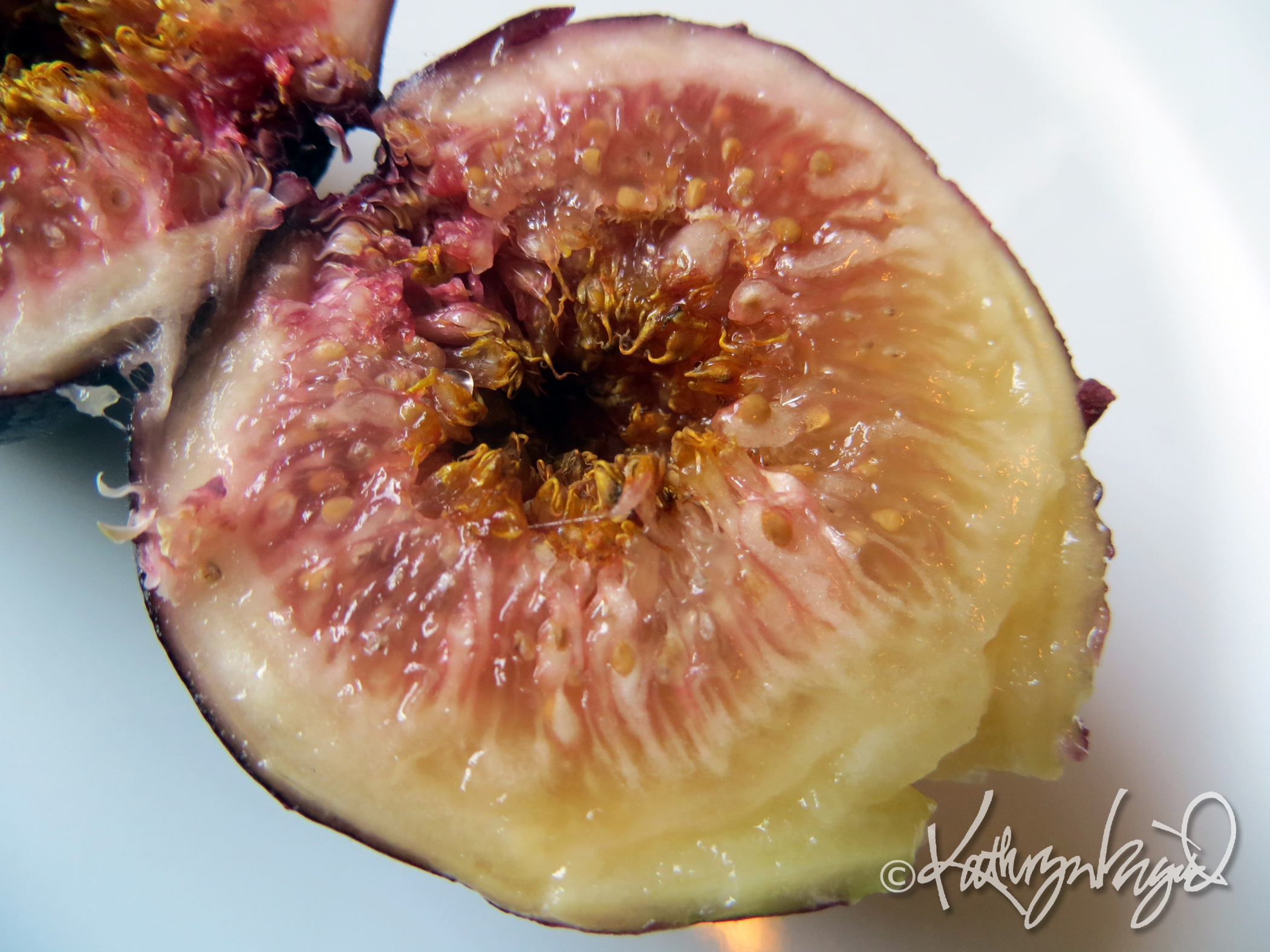
No surprise, then, that I was so delighted when that scrawny little $4 twig I bought this winter first burst into leaf and then, to my great amazement, produced lovely, plump Brown Turkey figs. It inspires me to think that perhaps I shall be able to grow some produce of other kinds if I put my mind to it, despite the challenging temperatures and soil character here in the roasty-toasty land of north Texas.

photo

I am *not* the only ham in my kitchen.

But to return to my porcine loves, I have eaten pork in almost uncountable ways and have loved a great many of them. One standby favorite is a well-made ham. I will happily bypass any of those artificially ‘enhanced’ varieties that are injected with water and so many other, less savory, ingredients and often are processed to the degree that they are no longer recognizable as meat, let alone pork. But a good pit-smoked ham, well, there’s a sweet-and-savory treat of which I am immensely appreciative. I love oven roasted and glazed hams, too, even boiled ones, but I think my affections are most readily given to an unadorned and slightly fumy beauty right out of the smoker.

One of the benefits of being in Texas is that I do have access to a few places that produce such ethereal goodness. As a result, I can often indulge in a meal of simply sliced ham with vegetables or salad or, on a wintry day, perhaps with mashed or roasted sweet or russet potatoes. Or, as I did the other day, with a heap of fabulously fresh and sweet fruits. And of course any leftover bits may be tossed into other welcome meals of the same. Or into sandwich fillings. Or casseroles. Or, as on the day following the feast of ham and figs (and avocado and strawberries and pineapple), next mixed with minced roasted chicken, dill and pepper and stirred into eggs for a quick frittata. Because if ham is good one day in my kitchen, it’s probably a treat for three days in a row if I’ve shopped wisely enough.photoJust now, though, I guess I’d better dash out and check the baby fig tree to see if I can beat the raccoons to the next ripe piece of tree-candy.

Foodie Tuesday: All about the Ingredients

photoI’ve said it before, and lots of food experts smarter than I am have said it lots of times before I ever did: good food preparation starts with good ingredients. No amount of genius and skill will make a great meal out of so-so ingredients, let alone out of bad ones. And me, I have a modicum of smarts and very modest, though for a lazy goof-off like me, surprisingly patient skills. So yeah, I can get the job done, as long as I have some excellent ingredients in hand.

photoStarting with salt. One of the most indispensable of delights in the entire pantheon of foods and culinary assets from its first discovery, good salt in just the right quantity is the First Rule of Yumminess in many, many a dish. But, hang on, salt should still often be the last ingredient applied. Tricky, no?

photoThe meal, however, if it’s with fun guests on hand and stretching a little over the course of the day or evening, well that should begin with a little taste of something nice. For the other day’s dinner guests, who were indeed a whole lot of fun, the starters were simple enough, and already on hand: the crackers I made (and posted) last week, the olives I’d previously bathed in sherry and olive oil, and smoked almonds, plus a few chilled prawns with dill-enhanced cocktail sauce. A fresh, cold batch of light Sangría:

Blushing Sangría

Two 750 ml. bottles dry rosé (I used a nice dry Pinot Noir rosé by Toad Hollow), plus 1 bottle of sweet white wine (I used a bottle of Moscato), 1/4 cup of Amaretto, 1/4 cup of Himbeergeist, 1/2 pint of fresh raspberries, 6 small or 3 large fresh peaches, 1 teaspoon rose-water, 1 teaspoon vanilla, 1/4-1/2 cup of light agave syrup or raw honey. Stir gently and chill thoroughly before serving.

The peaches I bought were an unexpected mix of half overripe and half underripe fruits, so I peeled and sliced the underripe pieces into the Sangría, where I’d already immersed the raspberries, and the too-ripe ones I pitted; I put the mushy peaches and all of the skins from both kinds into the blender with a bunch of the liquid ingredients, blended them all thoroughly and sieved the pulp into the Sangría, so I still got all of the mileage of flavor and color from the peaches, if a little less sliced fruit. In the end, it was plenty drinkable, so all was well in our pre-prandial world.photo

photoThe meal needed vegetable balance, of course, so I kept the ingredients to a fair minimum again and the flavors simple. Why mess with good contents? A mix of heirloom tomatoes and red cherry tomatoes made a simple but flavorful topping for romaine lettuce with a couple of simple salad dressing choices. Sweet corn, freshly pared off of the cob, was gently and quickly warmed in butter. And some delicate asparagus was steamed with a little soy sauce, a little plain rice vinegar, a very small dash of toasted sesame oil and a sprinkling of sesame seeds.

photoThe main dish, which I’ve undoubtedly mentioned in previous posts, was our old favorite household standby of Smoked Salmon Pasta. Not even a true recipe, really. Dearest John, I did not hand-craft my pasta. Yes, I bought refrigerated fresh fettuccine. Would that I’d had you supervising the party, not to mention in charge of the pasta-making, this element would indeed have been more, erm, elemental. Not to worry. Some day I shall reform. Meanwhile, a decent store-bought fresh fettuccine is not such a bad thing when dressed up just a leetle bit with smoked salmon cream. Simmer about a pint of heavy cream until it thickens to a nice sauce thickness, add about 1/4 teaspoon of freshly grated nutmeg and 1/4 teaspoon ground white pepper, 1 cup of broken up [hot smoked] alder smoked wild salmon, and a good splash of lemon juice. Toss gently with the freshly cooked and drained pasta and serve.photoThere are only two main high-quality ingredients needed to complete a pretty good party with all the rest of this, then. Dessert, naturally, should be offered–a bit of sweetness to follow all the preceding, and stretch as far into the evening as can be managed by all. But most significantly, the last essential ingredient of the gathering is, well, the gathering. The good company. We had that. Good enough company to want to stretch out the evening. So there was just a touch of dessert. Fresh strawberries and, you guessed it, chocolate.

photoI never said I was original in my menu planning. But I am really good at putting myself in excellent company, and that’s always what the party is all about. There you go: my real culinary talent is cooking up a right magical blend of outstanding people and enjoying the delights that result from the combination. Too bad there’s no cookbook out there that teaches that–no, wait–every good cookbook in the world gives guidance for just this art. As these good books teach us, choose your excellent ingredients wisely, food or company, and you will brew up a marvelous party.