Foodie Tuesday: Inner Beauty

photo

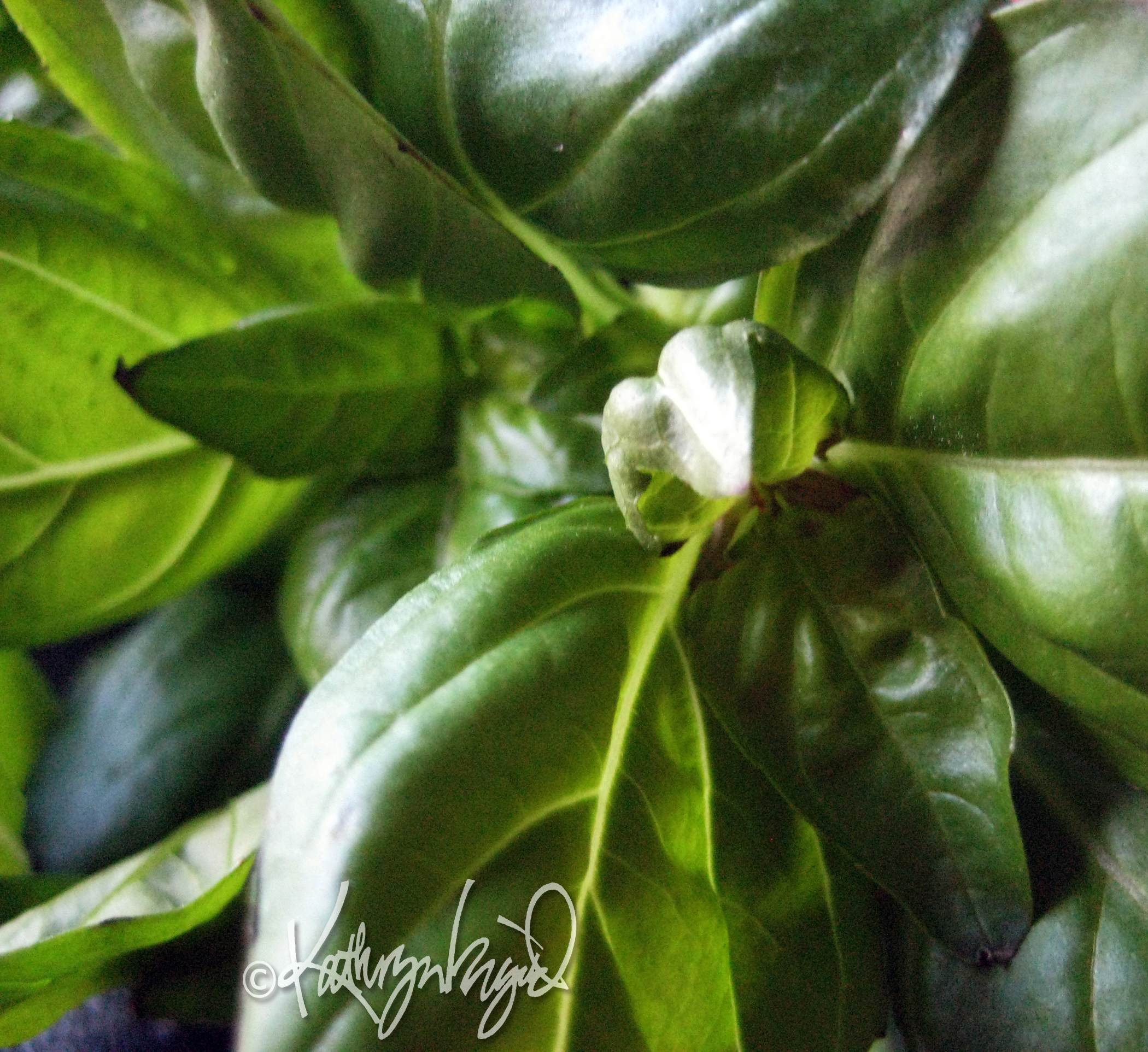
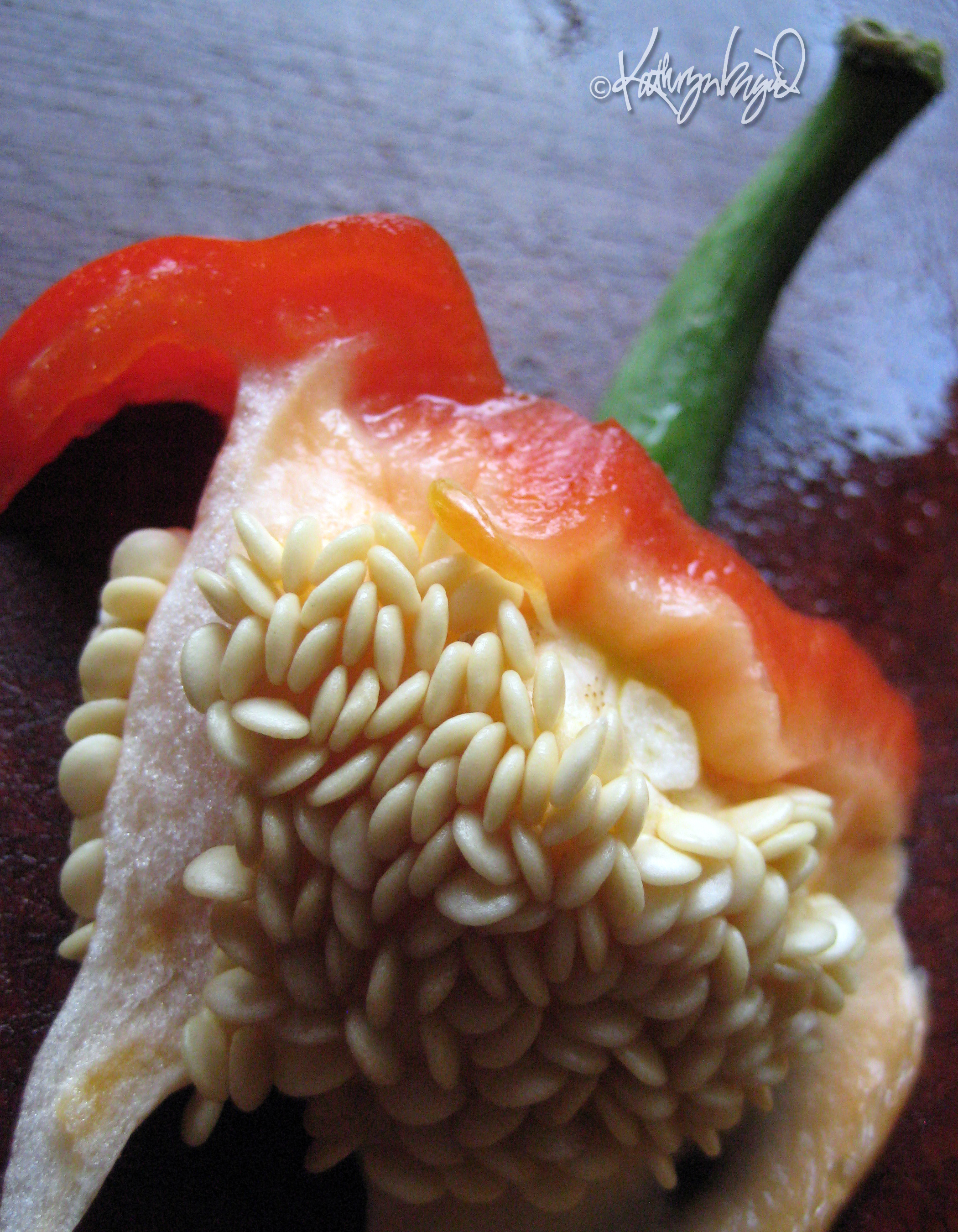
Holy Basil--Ocimum tenuiflorum--Batman!

There are nearly as many food aphorisms and adages as there are things to eat. Or not to eat. Humans have long sought specific herbs, seeds, barks, flours, shellfish, eggs, and much, much more for the decoctions and concoctions made of them as treatment or cure for far more than starvation. Theories abound regarding what is and isn’t healthful and when and why and for whom, and they swing from one extreme to another at the drop of a spoon. The only fairly dependable approach, it would seem, is to listen to one’s own body. Not such a bad thing to do, in any event, but remarkably rare among the extreme advocates of numerous dietary practices, for whom their personal insights and experiences become a matter of faith.

Indeed, faith (as expressed in religions) has long been a significant factor in shaping what is deemed good or ill at table. Religions often determine what their adherents consider healthful or horrible, sacred or profane. Many religions require strict practice of particular dietary laws, from veganism to vegetarianism to specifying what meats or fruits one may or may not eat and how they must be prepared and in what season they may be embraced. My own beliefs about foods are far less religion-driven–as you can probably tell from my food-related posts here, anyway–but I don’t think religious strictures are any more or less perfect or questionable than dietary practices developed by most other means. I would no more knowingly offend anyone’s religious dietary practices than tell them they should eat foods they’re deathly allergic to or that they must like or dislike the same food and drink as I do. And let’s just be honest here: if others say No Thank You to something I like, then there’s more of it for me!

But what is on my food-crazed mind on this particular day is the practice of finding what foods suit one’s own particular health and happiness. Aside from any laws and limitations, and of course availability and accessibility, we must make constant choices about what to eat. Nearly as long as humans have eaten with any deliberation, any sense of knowing what will kill them or preserve their lives, they have also looked at foods as capable of qualifying the degree of health and well-being they enjoyed.

photo

Love-Apple or Deadly Nightshade?

Tomatoes, perhaps because they are members of the Solanum clan, the nightshades, were considered poisonous in some places (including North America) long after other places’ cuisines were safely and even happily employing them as food. Consciously or not, we all revisit the notion of a comestible‘s safety and health-enhancing properties rather constantly, choosing those things whose tastes we prefer or that make us feel new-and-improved in any way, and avoiding those that give us heartburn, nausea, gallbladder attacks, the Wind, loss of hair, loss of appendages, dropsy, dyspepsia or excessive whimsy. (Well, masochists aside, at least.) Herbalists and nutritionists teach us the known and purported characteristic effects of pretty much everything that can be chewed or swallowed. And ultimately, all I can do is try to learn from my own body what it does and doesn’t want or need.

That’s not to say that I will always do what I believe is best for my health and welfare, by any stretch of the imagination. And you know I have one.

What I want is to feel good. And sometimes stuff that’s not necessarily guaranteed good for me makes me feel good.

photo

Dear Verbena, let me be candid: I may be a little lipophilic, but I'm no radical . . .

It’s really quite amazing what the things we eat and drink can do to us, in us and for us. And I’m not just talking about pharmaceutical effects. Necessarily. See, lunch affects how we feel until dinner, yes, but there’s also the general effect on mood and attitude, on what we see when we look in the mirror, on whether we feel healthier and happier or more impressive in any way. Part of me wants to believe that if I just ate the right stuff I actually would look fabulous in my long-ago orange fake-fur trench coat. That I would be suddenly as smart as I’ve always thought I was and solve all the problems of the world. And of course, that I would be the most spectacular version of myself possible and live that way for another half-century or so at least.

But really, I’m just happy when I figure out what pleases my inner workings and makes me feel pleasantly sated and really ready for whatever the next few hours bring. Oh, and doesn’t make me break out like I’ve reverted to my teens. I’ll get back to you when I’ve developed the perfect diet for all humanity. All I know so far is that it has lots of butter, salt, and chocolate in it. And that it guarantees a certain degree of both inner peace and vigorous smiling when taken regularly and judiciously.

photo

. . . meanwhile, back in my orange trench coat days . . .

Foodie Tuesday: Love is an Everyday Thing

photoOh, yes, Ladies and Gentlemen all, it is Valentine’s Day. At least, here in the good old US of A, where we constantly rebel against being told what to do and how to live our lives but are terrible sticklers for traditions that may or may not even suit our beliefs and needs. Now, celebrating the life–and, let’s face it, not-so-charming-to-celebrate death, since 14 February recognizes the officially accepted date of the martyrdom of St. Valentine by clubbing and beheading–of a possible whole group of Christian martyrs, who all have become conflated in the popular mind as one really nice guy who pitied and assisted the lovelorn, all of that is a matter of personal belief and taste, to be sure. Celebrating the highly adapted holiday of Valentine’s Day is one as well: as it’s been popularized, it’s a day for telling people we love them, filling them up with romantic food and drink and notions, showering them with flowers and sparkly gifts, and paying homage to our love in generally showier ways than usual.

There, my friends, is the rub where this stubborn old lady is concerned. I’m not really as curmudgeonly as all of this sounds however arguable my crankiness is on other topics. It’s just that I feel mighty strongly that if the love isn’t expressed on a fairly constant basis, in (as one might say) thought, word and deed, it means nothing whatsoever on Valentine’s Day, an anniversary, a birthday, or any other celebratory occasion no matter how the gifts and gooey treats are piled up and the lyrical words flow. It’s got to be the real, the every single day sort of deal, or it’s so much useless fluff.

photoThat said, I am among the biggest mush-meisters inhabiting the supposed real world, never tiring of being madly in love with the one person who’s crazy and silly enough to love me back in equal extremity. When we’re sitting at our respective desks down the hall from each other–which we have positioned conveniently so we can see each other across the way while working and maybe sneak a wink for no better reason than that after more than 16 years we still have a school-kid crush on each other–we are both inclined to chirp I Love Yous back and forth at intervals just because we actually do. He cheers me up when I’m feeling low and cheers me on when I’m flagging, chauffeurs me because I’m not fond of driving, works long hours to keep our accounts balanced, and tells me I’m smart and pretty like he really believes it.

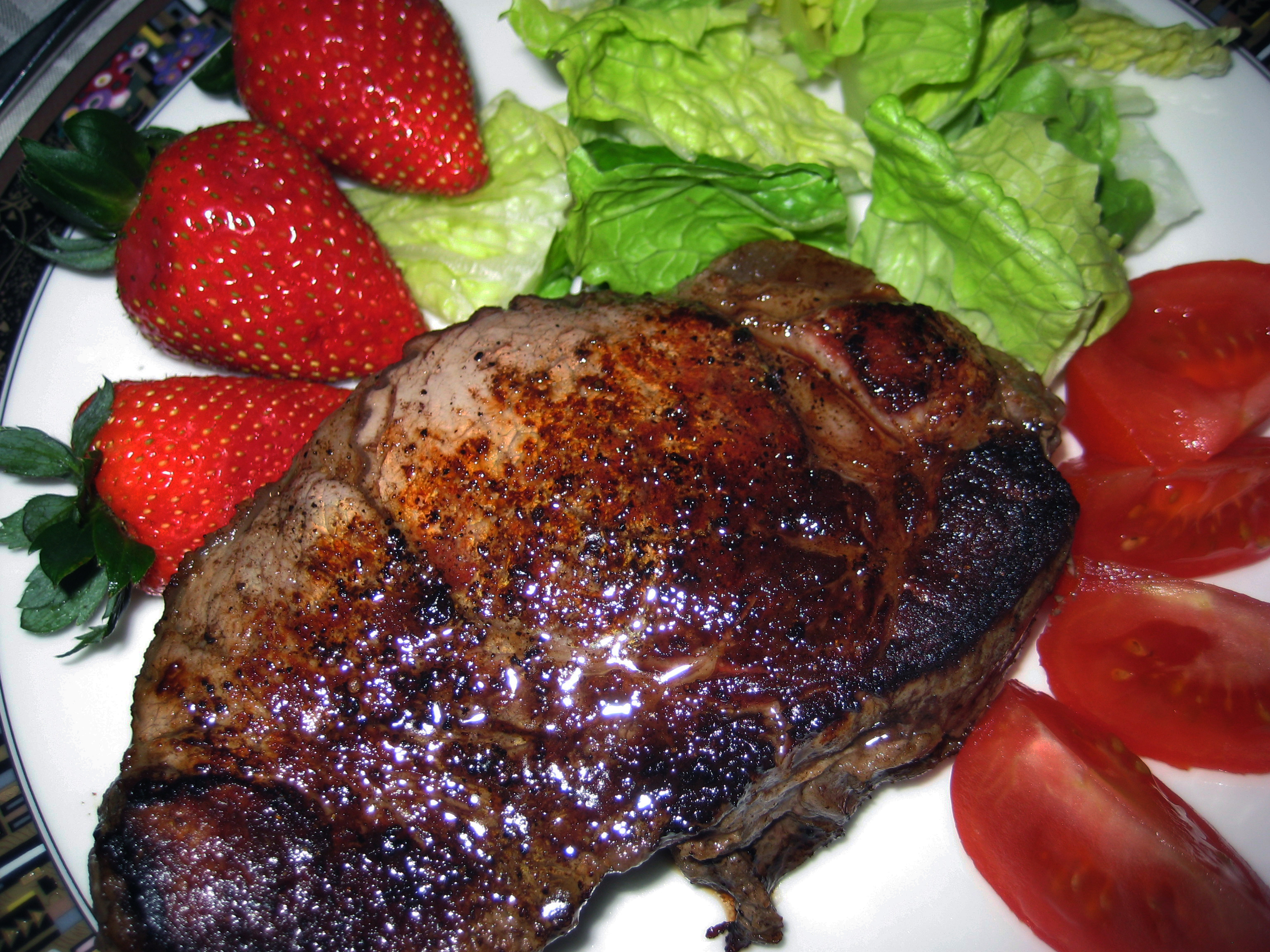
So I am delighted to make a favorite dinner for him on Valentine’s Day. Appropriately enough, I can operate on the K.I.S.S. [Keep It Simple, Stupid] principal on this day of romantic silliness, because he likes things unfussy. So all he gets is a slab of tender, untrimmed Texas filet mignon, skillet seared in butter with salt and pepper (my blend of black, white, green and pink peppercorns and whole cloves) and a pinch of ground coriander, a handful of fresh-cut Romaine lettuce and some juicy tomato pieces and a few ripe strawberries, a flute of South African bubbly, and a piece of dark chocolate with toasted almond bits and crunchy salt in it. Couldn’t be easier. No recipes, no muss, no fuss, and because I made big steaks, we both have enough left over for steak and eggs in the morning.photoBecause romance is not a one-day deal, and expressing love should be the most important practice of the everyday. Bon appetit!

Foodie Tuesday: My Salad Days are Not Behind Me

photo

Is it salad or crudites when it's deconstructed? Do I care, or am I just *really* hungry? Is salad so hard to eat unabashedly that it must be disguised as something else to pass muster? Is Vilma secretly seeing Ernesto at his nightclub El Gallo Llorón while she thinks Juan Maria is away on vineyard business?

Sometimes I think that Salad has a little bit of a stigma in the popular mind, even though ‘some of my best friends eat salads’. There’s just a hint that if one is too obviously fond of salads one must be (a) stuck in the 1970s–don’t get me started on alfalfa sprouts–(2) trying to lose weight and hopelessly clueless about all of the better miracle diets out there, or (lastly) some sort of chlorophyll-blooded alien. Despite the widespread knowledge that there are endless kinds and combinations of foods that can be classified as salads and that the vast majority of them are both rather tasty and potentially nutritious, there’s always some naysayer out there who thinks that there’s something just a tiny bit off about people who embrace frequent salad-eating.

I would find it seriously boring to eat salad often, too, if all salads were born alike, but that is far from the case. There are all sorts of recipes and inspirations available from every quarter, and definitions galore of what constitutes a salad. The origin of the salad construct is arguably that of a simple collation of a dish or meal, in antique times, consisting simply of raw, fresh vegetal matter seasoned with salt (the ‘sal‘ of salad), and occasionally, with vinegar and oil. The idea has expanded over the centuries gradually to include cheeses, meats, fish, eggs and nuts, and at some point probably around the latter nineteenth to regularly include mixtures of warm ingredients and often grains, legumes, and their offspring of breads and pastas as well. If you can’t figure out how to keep a salad interesting then you are as sadly unimaginative as the average politician and probably deserve to go hungry for a while to contemplate your sins.

All the same, I have no objection to a rather staid and standard sort of salad, a plain bit of greens or greens with a few ‘classic’ add-ins–juicy sweet tomato; a bit of diced avocado, perhaps–and maybe a splash of good dressing, either as a light meal or a side dish. The much-maligned ordinariness of even a wedge of supposedly flavorless iceberg lettuce can sometimes add an exceedingly welcome and refreshing bit of mild crunch and hydration to offset an otherwise heavy or over-the-top sort of meal. There’s a perfectly good reason the ‘Wedge Salad’ has remained wedged onto the menu of virtually every standard American steakhouse for so very long, in between the slabs of highly seasoned beef and the creamed This and butter-slathered That and deep-fried Other, all quite delicious indeed but occasionally in want of one coy kiss of contrast or brightness in some fashion.

photo

In our hearts, we're all kind of plain, but is being ordinary a *bad* thing? Or is it mostly just comforting? Is a salad comprising only common uncooked vegetables and dressed abstemiously with a squeeze of lemon juice and a slurp of olive oil anathema, or can it be loved for its pure, taste-able simplicity? Honey, do deer eat salad in the woods? (Or just salal?)

I suppose I could be said to be more fond of or partial to salads that take the trouble to stand out from the crowd just a little bit, or at least less likely to become jaded by them since they vary the input on the palate. Why not jazz up the greens with a bit of roasted vegetable or bright fruit, with some shredded or crumbled cheese, some toasted nuts? Give the dressing a little boost of unexpected flavor. Make it a meal by putting some handsome protein in that invitingly verdant nest. But let’s not get crazy here! At some point, a concoction too complicated ceases to be a salad and becomes either a circus sideshow not very enticing as actual sustenance or more about ideas than about taste, and I find that tiresome in any part of a meal. If food is entertaining, great, but if entertainment is inedible, don’t try to tell me it’s dinner.

For that’s what it all means to me, finally: does what I’m serving genuinely satisfy hunger? Does it actually taste good? Does it express hospitality by being sensitive to the tastes and health of guests at the table? If it doesn’t meet those criteria, all of the artful towers of constructivist salad art and all of the impressive molecular gastronomist foams and gels and powders, the foodie-swooning truffles and caviar and smoked duck ravioli and balsamic-martini dressings in the world won’t save it from death-by-silliness. Let’s hear it instead for a thoughtful, pleasurable combination of flavor, texture, color, scent and sensibility that balances the needs of the diners and plays nicely with whatever else is brought to the feast.

Lately, my salads have been fairly basic again, combining the wonderfully homely base of romaine lettuce leaves or shredded cabbage with whatever array of old-fashioned but still tasty partners I happen to have on hand and be hungry to devour and topped with a lick of some complementary dressing for the big, if unsurprising, finish. I’ll be hungry soon enough for a hit of pizzazz in some part of the salad equation, whether it’s a whole new salad or just a garnish I’ve not enjoyed in a while. Because I’d hate for the old-familiar to become dull and unappealing. That is the very definition of being too far gone to recapture one’s salad days.

photo

A salad certainly needn't be fussy, only friendly, to enhance the dining experience; it's more important to balance the other characteristics of the meal than to show off what wild and weird tricks a salad can be made to perform. Unless you happen to know how to, say, make yellow tomatoes turn into red tomatoes when you put the dressing on the salad or how to make origami swans out of butter lettuce leaves.

Being beautiful, after all, is more about attitude than pedigree, so I’m more concerned that my salads be composed of flavorful fresh ingredients, play a proper supporting role to the stars of the meal (the people, first, and then the entrée), and in true Coco Chanel style, always be appropriately dressed. Even Coco, I feel certain, would admit that certain occasions require tasteful nudity, but she would know better than anyone that most events are best served by a well-designed and appropriate ensemble and careful accessorizing. With that, I scratch out here a couple of my thoughts about salad dressings, which like salads themselves seldom require an actual recipe–if they need one, they may have gotten too complicated for their own good.

I think of salad dressing as a marvelous way to distinguish the beauties of a particular salad. Something astringent works better with salad than with nearly any other course of the typical meal, so if the meal needs a little flash, that’s a great place to create it. For milder needs, despite my love affair with heavy cream, I know that creaminess in salad dressings is rarely best accomplished by incorporating actual dairy cream. A better partner with salads is an emulsion, generally two liquids that want to hate each other being brought into détente by mechanical means. Typical examples would be an acid ingredient like vinegar or citrus juice and a fat-centric goodie like oil or egg yolk, the two ingredients being beaten into submission by gradually incorporating the fat into the acid with a vigorous, airy, steady whisking. Sort of like a cranky teacher putting the harsh reality of thoughts into my fat head by forceful means. Not that any of my own teachers was ever like that. (Cough! Mrs. Finley!) Once I have (or a persnickety teacher-like person has) made the dressing’s basic parts behave properly together, there are endless sorts of herbal, spicy or other flavors that can be invited to play along with them for individuation and to better suit all of the dinner’s other ingredients.

Here’s a little combination to try: 1 part ginger juice (freshly grated ginger root will do, if you don’t have bottled juice), 1 part soy sauce, 2 parts maple syrup or raw honey, 2-3 parts lime juice, 2-4 parts macadamia or coconut oil (or any mild flavored oil you like). Put them all together in a tightly lidded jar or bottle and shake vigorously. Adjust to taste. Dress the salad just before serving or let guests dress their own salads. Fitting add-ins or add-ons for this sort of dressing are toasted or black sesame seeds, ground black pepper, toasted sliced almonds or pine nuts. Well suited to mixed green salads with sweet orange segments, diced dried apricot, ripe avocado, grated myzithra cheese, kale, thinly sliced jicama or daikon or sweet radish, or . . .

What? You can’t hear me over the crunching? Well, then, grab your salad fork and join me. I won’t tell anyone you’re one of those, you know, salad eaters.

Foodie Tuesday: Nothing Freaky about Frikadeller

Kjøttkaker, as they’re known in my Norwegian-descended (and oh, how far we can descend!) family, or frikadeller, as the Danes and some other ‘cousins’ of ours call them, are simply and literally seasoned ground (minced) meat cakes. My husband finds them strange because they aren’t cozied up inside a hamburger bun, since that’s pretty much what the patties are, though usually on a slightly smaller scale. He finds it equally strange to serve them without a nice tomato-based sauce over the top of some beautiful fresh pasta, since again, they’re pretty much meatballs too, though usually on a slightly larger scale. And they certainly aren’t meatloaves, being far too teensy to serve sliced to anyone without smirking at the sheer silliness of it, though it might be worth it just to watch their expressions, while you counted out five peas per person alongside the meat and baked one fingerling potato for each. In any case, it’s really no surprise that these little dandies should suffer an identity crisis on this side of the pond.

Truth be told, said spouse isn’t a huge fan of ground meats outside of some favorite places where they commonly lurk, as in the previously mentioned hamburgers, or as meatballs in pasta sauce, or in a nicely spicy taco filling. The texture isn’t all that appealing to him without some distracting vehicle or accompaniment. I will have to continue on my search for some other alternatives or just know that any kjøttkaker cooked up around here are all mine for the munching. Hmm, was I thinking there was anything wrong with that scenario? How ridiculous!

Because I do like a nice chopped meat treat of one sort or another occasionally. So I made up a batch the other day. These are no more than a lightly-mixed blend of equal parts ground beef, veal and pork (about a half pound each, I suppose) with a couple of eggs to bind them and boost their nutrients a bit, some salt, black pepper, smoked paprika, ground coriander and a nice toss of shredded Parmesan for a touch of textural variety. I oven-baked them (in bacon fat, because I’m a flavor-holic), having made a big enough batch to freeze a bunch and have a few left in the fridge for weekday meals in the short term. Then I stuck the ones headed for supper into the skillet where the side-dishes were waiting, so all would arrive together hot at the table.photoWhile the patties were roasting, I’d cooked up a nice big batch of crimini mushrooms in butter and my homemade bone broth, set them aside and lightly cooked some nice thin green beans in the fat of the pan, and then layered it all back up together. While the vegetable portion of the program rested a moment, I’d taken the meat patties out of the oven, poured off the fat and scooped up all of those nice meaty drippings into a little container where I whipped them up with some heavy cream. The drippings were already plenty well seasoned and nicely condensed by their medieval-hot-tub adventures in the oven, so I had Instant Gravy of a kind you’re not likely to find in a packet of powdered whatsis on your grocery’s shelf. Which is to say, rich and flavorsome enough even for the likes of me.photoAll I added at table were some nice little fresh tomatoes to add a bit of color both to the plating and to the palate, a brightener welcome alongside the warmth and savory goodness of the rest. A little shot of sunshine is always welcome, whether in the kitchen or on the grinning face of someone happily gobbling up what’s served for supper.photo

Foodie Tuesday: Keeping the Tank Full Makes Me Thankful

Let’s just say I’m not the most compliant or enthusiastic when it comes to trying to eat what I think I ought to eat. It’s not that I don’t love eating practically everything–it’s that I do–limiting my choices to what’s right at the moment seems amazingly hard to manage when I’d rather just eat what I feel like eating, in the largest possible quantities and whenever I’m so moved. Sadly, this is what gradually moves me toward the zaftig and less ‘peep show’ sexy than that of a Marshmallow Peep. While its High Season of springtime is ever nearer on the calendar, I don’t really fancy being the latter shape no matter how popular the treat is with other people as sweet-toothed as I am. In fact, I’d have nightmares about being chased around by lust crazed Sugar Zombies in a yellow snowstorm. The very thought!

So I’m going to see if I can’t reduce my carbohydrate footprint, so to speak, and eat things that stay with me in a more kindly manner, that is, in the form of longer-lasting energy and higher nutritive value and deeper savory satisfaction. Frankly, I’m not as worried about fats as I am about the quantity and quality of sugars I’m capable of packing away and have no real need of, nutritionally. So pardon me while I butter myself up, as long as I can learn to more nearly kick the carb habit.

Today I went for an easy start: steak and eggs, Tex-Mex style. I put a couple of cuts of steak in the Sous Vide cooker last night just before bedtime, and when we got going (at our respective times) today, each of us had a piece of medium-rare beef to sear off in the skillet when we were ready to eat. I browned mine in butter and while it rested momentarily on the plate, deglazed the skillet with some of the bone broth from the last batch, handily waiting for the summons from the fridge, and while the broth cooked down to a thin gravy I poached an egg in it. I topped it with a little gussied up salsa: I often buy a jar of Pace Picante Chunky salsa–a pretty mild type–and stick-blend part of it with a (yes, one) chipotle en Adobo, mixing all together for a slightly smoky kick. Then a spoonful of sour cream (didn’t have real crema on hand) and a spiff each of smoked paprika and some lovely crunchy Maldon sea salt flakes, and immediately stuck my fork in and got to work.

photo

I'm just a Steak and Egg sort of cowgirl, I guess . . .

Thankfully, such a hearty brunch (I won’t lie to you about when I got up) holds up well when it comes to that Work thing, so I’m contentedly looking toward a 7 pm supper with nary a twitch. Well, okay, there is that completely hunger-unrelated humming in my candy molars . . .

It’s Foodie Tuesday and I Haven’t Eaten Yet

When I was an undergraduate, our university operated on a semester basis, and required all lower-classmen to take a course during the Interim month of January. As the courses offered during that period were designed in part as a testing ground for future standard semester courses (‘experimental’), in part as cram-courses for catching up a missed class in compressed time or as courses that otherwise didn’t fit into the typical academic demands of a semester or involved travel, they tended to be highly desirable classes anyway, and I opted to continue my Interim studies during all four years of my undergrad education. It came in very handy in my senior year after I’d taken a whole semester of the previous year to travel in Europe (non-academically, but spending my school funds all the same) and really needed to finish school in 3-1/2 years rather than the full four to compensate.

But the real benefit of the system was that I got to take a delightful course somewhat off the beaten path of my degree each January. One year, it was ‘Chinese Conversation, Culture and Cuisine‘–a supremely entertaining class team-taught by two brilliant New York Jews and their Chinese grad student (the team in itself a refreshment in the midst of a perfectly fine ‘white-bread’ west coast Lutheran uni education). Two days a week, one or the other of our professors would lecture on Chinese history and culture, slipping in lots of anecdotal hijinks from their respective times studying in China; one day was a practicum devoted to classic Chinese cookery, and was needless to say the day of perpetual perfect attendance for and by all in that class, given how hungry undergraduates always are for good food; and one day was spent focusing on the development of Chinese written and spoken languages, with some rudimentary training in making Mandarin-like sounds and practicing the beautiful strokes of character calligraphy to accompany what the sounds should, at least, have meant, though I’ve no doubt that what we actually said translated as something much more in the comical-infant-to-international-crisis-causing range. One of the few things that’s stuck with me for all of the intervening years was learning that the proper greeting was not Howdy or Hey, Baby, but Have you eaten rice today? And of course, that is heart and soul of compassion and hospitality in any culture or language. Would that we all might operate more fully on the basis of that concern.photo + text graphicAll of this wisdom aside, I guess it’s hardly rare for anyone as food-obsessed as I am to generally forget to eat once in a while. Here it is already 18.00 hours and I haven’t eaten more than a handful of pistachios. And those, not recently. Tasty though they were, I imagine I might not be just dreaming that I could enjoy a slightly more substantial repast before long. But sometimes I think a little semi-fasting is not a bad thing, because it may, for example, begin to ameliorate any damage done to my innards, and any, erm, expansive qualities reflecting that internal damage in my out-ards, over certain recent holidays by a slightly over-enthusiastic or exaggerated sense of my capacious personage’s actual dietary needs. Also because, being frank here (though I generally prefer the name Frances/is, should anyone ask), a short period of partial abstemiousness only serves to enhance the pleasures of the simplest foods.

And that’s what I’ll have today: the simplest. A little fridge-cleaning bite while paused from a somewhat overweening stack-up of household chores left too long undone, messes unattended. But I can’t say that I’ve any objections at all to a little truly simple food goodness, so I shall indulge in that momentarily. I’ll leave you with some verses to chew upon until my return on the morrow. Bon appetit! Or as we say in my family, Vær så god. That’s far more appetizing, I’m sure, than what I would have said in Chinese, no matter how good my intentions.photo + text graphicphoto + text graphicphoto + text graphic

Foodie Tuesday: Lefse as History

digital imageMama’s Justifiably Famous Potato Lefse

[This is a recipe she developed in collusion with a group of faithful Old Norskies in Puyallup, Washington, one of whom added the strict instruction that the lefse must be rolled “so thin you can read a faded love letter through it”. I’ve spelled out the procedure here in my own words, so Mom can’t be blamed for that part of the recipe!]

8 c. cooked and finely mashed potatoes

1/4 lb. butter

1/2 T salt

1/4 c. potato cooking water plus 1/4 c. evaporated milk

2-3 c. flour + more for rolling the lefse

Take a gallon bowl filled with 8 cups of riced cooked Russet potatoes, still hot, and press 1/4-pound piece of butter into the middle of it. Put a generous 1/2 tablespoon of salt on top. Pour a mixture of 1/4 cup of the potatoes’ cooking water plus 1/4 cup of evaporated milk over the top of the salt. Mash everything together thoroughly and mix it with 2-3 cups of flour. This makes enough dough for 20 lefse. [Yes, Mom was likely to make a triple recipe or more for many occasions. Eat one piece and you’ll know why.]

The flour amount should start out as small as possible and only get the potatoes into a very light dough-like, rather spongy consistency, and not stick to your hands as you mix. The more flour added, the tougher and drier the finished lefse will be. Mom almost always did the potatoes the day before their appointed baking day, rolled the tender dough into logs about 3″ in diameter and wrapped them in cling film, storing them in a cool place. The fridge is forever too crowded at the time when you’re lefse-baking for festivities of any kind, so if the weather was cool enough, the potatoes usually waited overnight on the workbench in the garage in that state for their final apotheosis.

Baking day is invariably messy and laborious, particularly on the days of multiple batch preparation. One does best to have the correct tools for the occasion, and they are many and specialized. First, you really ought to have a lefse griddle, which is a flat, circular electric griddle about 18″ in diameter and capable of reaching around 500º F in temperature. You’ll also want some nice old flour-sack dish towels or linen tea-towels to stack freshly baked lefse between on the counter as you take them off the griddle. You’ll find it helpful to have a pastry rolling cloth on your work surface, because not only will it keep the lefse from sticking as easily to the countertop, it’ll also help hold the lovely texture of the lefse’s surface that is so ideal for carrying oodles of melted butter and other fillings.

Make sure to have not just a rolling pin but an actual lefse rolling pin, a wooden pin whose roller surface is scored to create the optimum texture: some are simply grooved with parallel lines around the circumference of the roller and others, like Mom’s, textured with a full crosshatch of about 1/16th-inch grooves). Most people using the lefse rolling pins also like to use a soft cloth sleeve over the roller, because (and you can guess how I know this), a very soft, tender and potentially super-sticky dough will create a remarkably gunky agglomeration in the grooves of the pin, and lemme tell you, it’s a serious undertaking to get that concrete out ever again. Think about how many of those little grooves are on a whole rolling pin. Think fondly of an early death. Nahhh, just cover the pin.

Last and not least, it’s good to have a really fine lefse turner. Yes, the person who will flip the lefse when it is appropriately birthmarked on one side with light brown speckling to give the other side its chance for equally pretty freckling, that person will be an important part of your equipment. But even more important is the modest sword-like object known in our household as a lefse turner. It’s a flat stick around a yard/metre long. Yes, it would probably be entirely possible to use an actual sword for the purpose, but if you did, what would you use to fend off the ravening lefse-starved Viking invaders whilst baking? You could probably use a yardstick. Then you might well benefit from the ability to measure your lefse’s circumference in the very midst of moving them from griddle to stack. My mother has two lefse turners of both great practical beauty and artful grace. Gramps handcrafted them from fine-grained wood, making a 3/16″ thick x 2-1/2″ wide handle end pierced with a hanging hole and tapering them down to a soft ovoid tip less than 1/16th” thick, each turner sanded down to perfectly smooth softness so that it feels as sweet in the hand as that aforementioned sword ought to do in a master swordsman’s, and able to slip its narrowest point easily under a magically tender hot lefse to lift it from the griddle to the cooling stack.

photo

Mama's lefse turners, handcrafted by her father, hang on her kitchen wall.

With your mise en place, off you go. Slice the log of soft potato dough into evenly measured pieces that, when you pat them gently into shape, are about the size and shape of a slightly smaller diameter, slightly thicker than typical hamburger patty (twenty pieces from a whole batch, if you remember). Keep them rather cool, so that they don’t become more difficult to roll–they’re sensitive enough as it is. Gently flour the outside of a piece of dough, pop it in the middle of a small handful of flour in the center of the pastry cloth and roll the lefse out into a circle of delicate, ethereal, dainty, lightly textured sheerness as big as you can fit on the lefse griddle–even a tiny bit too big, because it’ll retract a tad and shrink to fit the griddle as soon as it hits the 450-500º heat; test to see how quickly your griddle bakes the flatbreads without either scorching or drying them out.

You don’t want the baked lefse’s spots too dark brown–lift an edge and check occasionally as they cook. You don’t want too much flour flying around–always use the smallest amount you can get away with using. You don’t want the lefse too dry–they’ll dry a bit as it is, when they’re awaiting use. As you can imagine, during the baking day one works hard, gets hungry, and smells buttery mashed potato dough cooking, so some of the lefse will not live long enough to worry your pretty little head about any real drying-out problems with them. Some will have to be rescued from their intended wait immediately for slathering with beautiful melting butter and eaten instantly. After all, there are always some lefse that resist the most valiant efforts to make them into a perfect circle and choose instead to replicate maps of various continents, and once you get too far away from Australia-looking they’re just not going to fold into even quarters for the standard packaging and serving format and it’s best to destroy the evidence. It’s sort of like James Mason’s delightfully dry remark in ‘11 Harrowhouse‘ when he’s found apparently in the midst of removing the contents of a diamond safe: “I’ve eaten the inventory.”

What else is there to say? Roll. Bake. Lay a freshly-minted lefse flat on a clean towel and cover it with another towel. Roll. Bake. Lay the next lefse on top of the first and cover it with that top towel. Repeat until all of that carefully crafted dough is baked into giant, tissue thin circles of lightly moist flatbread. When the whole batch is done, either eat it all for supper or let it cool under its towel, carefully fold each piece into quarters and then package small stacks of the finished lefse in zipper bags for the counter, refrigerator or freezer, depending on how long until they will be eaten.

And what is all of this enormous effort for? Some, including members of my own family, would say as Grandma W said regarding lefse’s cousin kumpe (Norwegian potato dumplings) that it was “a lot of work to spoil potatoes”. Others revere them as the Norsk version of the Mexican tortilla, Middle Eastern pita, South/Central Asian naan, or any other culture’s soft flatbread. Making lefse is of course potentially a fine way both to preserve the Norwegian culture in both country and family, as well as a social event. You know me, though: Lazy Girl helped only when I had to other than in the devouring of the finished product. It was usually other relatives and friends that pitched in with Mom in the manufacturing of lefse. And it’s so fragile, both as a tensile object and in its moisture content, that it doesn’t taste good for very long.

So in my opinion, what this labor of love is about is, well, love. Secondarily, it’s about a great potato flatbread best hot off the griddle and smeared with fresh butter only, as it always was preferred in my family. Others like it best with sugar and perhaps some cinnamon sprinkled on it before it’s folded up and jammed into their mouths, and we would sometimes, if the day had grown extra long and laborious over multiple batches of lefse, make a heartier meal of it by making a sort of quesadilla out of a hot lefse with some cheddar or Jarlsberg cheese and thin slices of good ham folded and warmed inside, not a bad “sandwich” at all.

In any case, I can tell you that there are many who will vouch for Mama’s inimitable lefse as the archetype of all potato lefse. But then, you already knew that Mom is pretty much the archetype of moms, so what would you expect! As for Grandma W, she may be forgiven for thinking potato dumplings, and possibly lefse as well, too labor-intensive for their meager culinary payoff since she grew up in her immigrant father’s grocery store and might have considered it better to enjoy prepared foods in that Modern, American way.photoThat’s Grandma, by the way, the little barefoot girl in white, Christmas-tree-tipping Auntie Ingeborg behind her, with their parents and little brother and an employee (haloed in window light) in Great-Grandpa’s grocery store. Lefse or no, they apparently did have some fine food on hand! May all of you dear readers eat well–whatever you’re eating!

Foodie Tuesday: It Makes Me Hungry Just Reading about It: Food for Thought

Julia Child. Jeffrey Steingarten. Ruth Reichl. Anthony Bourdain. Jane & Michael Stern. Calvin Trillin. MFK Fisher.colored pencil on black paper

Whether you have a Pavlovian reaction of immediate salivation when you hear any of those names (or get an instant craving for a perfectly prepared Pavlova), or you are filled with horror at the mere mention of them, you probably recognize that these are all persons associated with food, and specifically, with writing about food. For good or ill, they have collectively made a deeper impression on the palate of every would-be foodie in the Western world than any of us can even guess–even those of us that know little of the specifics of these individuals’ writings and gustatory opinions. Because the modern world does hold art criticism with a certain sort of reverence not usually associated with the arts themselves (obviously, those who determine the ostensible value of art must be much smarter and more reliable than those who merely make the stuff), and chases after those things that the most influential critics tell the world it should desire, or reviles that which they tell us we should fear or disdain. And where our tastes go, there go our wallets also. Soon to be followed by every shopkeeper and purveyor of ingredients and/or ideas related to said tastes. It’s the way we’re wired.

What attracts me to any of these, or other food writers, is that when at their best, each of them speaks not only with a truly distinctive and individual voice–but also writes as much about the context of the food as to give me a deeper and more delicious sense of its place within its cultural surrounds, in history, in each writer’s personal history, in the sciences of cookery that led to its development. Every bite we eat is potentially not only a small barrier between us and starvation but also is fraught with danger (want to talk about all of the discoverers of what wasn’t safe for human consumption?), full of potential for making memories that outlive and outlast every scholarly hour any of us ever spent on Serious Pursuits, and able to make or break meaningful relationships. We find, and lose, ourselves in what we eat and when and how and why we eat it, and these writers all carry that weight with such authority and finesse at times that there’s as much heartbreak in the description of a tender stalk of asparagus, as much ethereal joy in the coddling of one little egg, as though one were reading the great philosophers, the kings and queens among novelists. Oh, wait: all of those have also waxed wildly poetic on food from time to time; it’s how they connect with the rest of us too.

That this relationship between the ordinary and extraordinary can so blur at its own boundaries is precisely because food has such life-and-death power over us all and because we seek it, when we can, for its own allure.

So I am thankful, not only on a Foodie Tuesday but whenever I pause for such thought, that there have long been people who loved food enough to prepare and eat it–and to talk about it, study it, and yes, write about it well. Sometimes reading good food writing is almost like the actual eating of it; more often, it makes me desirous of both eating and knowing more of it. My parents and relatives and friends have trained me up in certain ways of cooking and eating, and the larger world offered numerous expansions on the ideals of both. And the great and good among food writers and critics and historians have pushed my horizons further in every direction. When I set out to put food on the table (or just directly into my mouth), it is most often done with a current of those thoughts they have inspired in me running through every move I make and every ingredient I take in hand.

I think, as a result, of how I first knew of various simple elements of cookery: ingredients, techniques, recipes and menus. Then I think of how I might wish to recombine them in the present moment. Who should be present. What is best suited to the occasion. How I wish to assemble it all. And off I go.

Spare ribs were an infrequent but welcome treat when I was growing up–infrequent because Mom’s method was of the boil-then-broil variety, a slow simmering on the cooktop in water or broth followed by oven roasting to finish with a bit of higher heat for caramelizing the glaze. I doubt that I ever requested her recipe for the ribs because I was too daunted by the amounts of time and labor required to want to fuss with any such thing. Ever so much later, here I am making them too, but with enough of a boost from kitchen rocket science to simplify them to a point where even Miss Lazybones is willing to make the (much more modest) effort, knowing that the ribs will turn out tender and juicy no matter what else I do with them.

My process, then, is simpler than the description of it will sound, and the ingredient list is flexible and easy to decide as well. I have (I believe I mentioned before) that dream-machine of lazy cooks, my home sous vide appliance [not a compensated endorsement but yes, I really do like it!]. It’s about the size of a very small microwave oven and even lives on our kitchen counter between uses because I have the luxury of a great expanse of countertop workspace. Sous vide cooking is the method of putting vacuum-sealed packets of food (plus, if desired, seasonings of various kinds) in a temperature-controlled water bath and letting the bath do pretty much all of the work except for final browning or caramelizing. I have a kitchen vacuum sealer, also a fairly pricy but mighty handy appliance as it allows for good freezer-proof packaging of meats and vegetables so they don’t spoil as quickly, and with the food-safe wrappings means that I can even put pre-seasoned packets directly from the freezer into the sous vide machine if I allow enough time for the frozen food to come fully to the correct internal temperature and stay there for the right amount of time.

The water bath cooking method is as old as the hills, really, though in olden times it required much more elaborate and ingenious ways of wrapping the immersible foods and a constant vigilance over the cooking temperature of the water bath that yours truly would never dream of undertaking. Sous vide mechanisms with automated water circulation and temp control can even be home-built by the mad-scientist sort of kitchen enthusiast. Me, I was gifted with a ready-made beauty by my kindly spouse. It cost quite a chunk of change, as you’d imagine, but the payoff for him is worthwhile, I think, when I actually endeavor to make such previously tiresome things as a rack of perfectly fall-off-the-bone baby back ribs.photo

Baby, Come Back to Me Ribs

[Special equipment: a food vacuum-packing machine and a home sous vide setup]

1 Full rack of well-marbled pork ribs

Spice rub

Butter

Barbecue sauce

I slash the rack of ribs in half and vacuum-pack the halves separately so that I can nestle the two together, thus making a small-shoebox-sized batch of meat that can fit comfortably into my sous vide and still be surrounded by water. For prep, I put each spice-rubbed* half-rack into an open vacuum bag with a pat of butter, then seal the packets closed, fit the two together snugly, and keep them in the fridge until start-up time. The evening before Rib Eating Day, I’ll immerse the conjoined twin packs in the sous vide. I use the machine’s handy printed cooking guide to choose and set the temp for a mere hair-above-minimum ‘ideal’ for ribs, and let them slowly melt into juicy morsels overnight. About a half hour before mealtime, I take the now soupy-looking packets out of the water bath, open the bags carefully over a sauce pot and drain all of the extra juices into it for boiling down into a nice quick base for the barbecue sauce, and while that’s heating up, very delicately (as they’re now falling apart) dress the rib racks with some of the prepared barbecue sauce** and put them, in a 9×13″ or larger baking pan, under the broiler to brown them nicely for serving. Watch out for burning! When they look and smell enough like candy that you can’t wait any longer, grab them out of the oven and rush them to the table. Hopefully, everything–and everyone–else has been gathered on or at the table beforehand, so it’s all ready to go. Eat ribs with your hands, and become outlandishly messy. Wear your worst old clothes, because if you’re not all painted elbows-to-eyebrows in barbecue sauce by the end of the meal, you’ve definitely done something wrong. This is barbecue, after all. [If you eat these in summertime y’all can go out and run through the sprinkler afterward to wash up.]

Ribs go down wonderfully with a wide range of goodies. I like a Kansas City or Memphis-style rub and sauce (slightly spicy, sticky and sweet), so mine tend to be as follows:

* Spice rub: salt and black pepper; brown sugar; ground cloves, cinnamon, allspice, ginger, garlic powder and cayenne.

** Barbecue sauce: we love Corky’s (from Memphis, no surprise) regular sauce, so if I have some on hand I may well use it straight out of the bottle, just adding the concentrated meat juices I’ve cooked down. If I’m making my own BBQ sauce, I concoct something in a similar vein, using dark molasses, ketchup, tomato puree, the same spices as in the rub sans sugar, and usually some citrus juice (orange is great) and a splash of whiskey to coat the ribs for browning, and to blend with the meat juices for serving.

Side dishes: at our place, it’s likely you’ll see coleslaw and corn (creamed, on the cob, or cooked kernels of super-sweet corn are all pretty hard to beat); buttery mashed potatoes, fresh peaches and watermelon . . . of course, any good Southern side dishes are pretty perfect with ribs: a mess o’ greens (would that I had the late great Raydell’s delectably classic recipe!), biscuits or soft rolls with butter, grits, beans cooked down almost to disappearance with salt meat. Big ol’ pitchers of sweet tea. Some sweet potato pie or lemon cake to finish. Ohhh, my stomach is growling now. I’d better read me some good foodie scripture right away before I lose my soul. Help me, blessed Calvin Trillin! Save me, saint Mary Frances Kennedy Fisher!colored pencil drawing + text

Foodie Tuesday: Some Assembly Required

photo

The way to maintain my vegetative state of bliss is to keep dissimilar food parts from dangerous intermingling . . .

My dinner table usually resembles an early automobile factory, or at least the aftermath of an IKEA shopping spree. I’ve gotten in the habit, over years of feeding guests with allergies and dietary needs that are unpredictable and widely varied across the board, as well as supertasters like my husband, of presenting the various parts of a meal as separately as possible. In many cases, the segregation extends to dividing the ingredients of a single dish into many serving containers so that salad becomes a salad bar and entrees become DIY designer projects to be customized on every plate. I don’t mind helping people put their food together or serving it to them to order, but I have long since learned that one dish does not suit all eaters and it’s silly and wasteful to force the issue. It may seem like a foolish extreme, but it’s become comfortable for me. Two year olds should, in fact, also like dining chez moi. And since I’m often prone to thinking rather like a two year old, I suspect any such event could be quite the adventure all ’round.

Thus, whether we all work our way through a buffet line and create our culinary variations on our own plates as we go, or we sit at table with an assemblage of small containers sprinkled around like so many car or furniture parts in every available spot, everybody had better be hungry enough to fend for themselves, or get a helping hand from someone else who’s able to build them their ideal dishes from the bits provided there. It makes for a whole lot more dishing-and-passing of a whole lot more little bowls, plates, platters and jars, but then–well, being at table with me is bound to be something of a project, anyway.

Last night’s dinner was somewhat typical in that way. Small parts of the meal like side dishes and condiments are so easily omitted when one is serving oneself that I never fear to go ahead and serve them as-is. So we have haricots vert already slathered in beurre noisette, a relish of ground cranberries and mandarins in maple syrup, bakery croissants and butter all ready for the taking. Or yes, for the ignoring. I made up last evening’s main dish as a whole before putting it out to serve, because it has so few ingredients the removal of any of them would amount quite nearly to asking the diners to make the whole meal themselves. Which I am not in the least averse to doing, in principle, but didn’t feel was necessary in this case.

So the pasta–wide egg noodles–emerged from the kitchen fully dressed in their cream, lemon juice and zest, pepper and smoked salmon. Mom and Dad S having shipped us a succulent Washington Christmas present early, we thought it prudent to dive right into those tender, moist pieces of Sockeye and pink salmon before they tortured and tantalized us for too long. Since our guests brought us a bottle of superb champagne, this was clearly the destined dish to accompany it! Also, as it goes almost without saying, it’s one of the world’s simplest entrees to make, and therefore a favorite in the arsenal of the Kath of Least Resistance at any time when such great smoked salmon is available. I did go so far as to serve the garnish of fried sage leaves separately, knowing my spouse’s disdain for “Green Stuff”; he’d be quite happy if all herbs just disappeared from the face of the earth, or would be at least until he realized that some of his favorite foods actually do rely on them for their distinctive flavors.

photo

. . . no offense to you Green vegetables and ((shudder!)) Herbs!

It was the salad’s turn, as is often the case, to be divided and conquered by the individual diners last night. In keeping with my fetish for combinations sweet and savory, I chose to accompany a bowl of freshly torn romaine lettuce with the following, from which everyone could pick and choose their proprietary blends: a bowl of cubed red Bartlett pear and super-sweet mandarin oranges–the seediest, by the way, that I’ve chopped up in years, but as fresh and bright and juicy and candy-like as any I’ve ever had, to make up for the inconvenience; toasted pine nuts; diced and candied orange peel; crumbled feta cheese. The dressing, also to be added or bypassed at will, was an easy blend of two parts of blood orange infused olive oil (fabulous stuff from Stonehouse) with one part each of mixed mandarin/lemon juice (leftovers from the salad fruit and pasta sauce), soy sauce and maple syrup, plus a healthy shot of fresh ginger juice. Easy peasy.

Now, lest you imagine that I am some sort of cruel beast that would make all of my guests take care of themselves completely . . . oh, wait, I am. My idea of being in a hospitable environment is someone else’s idea of being left alone.

I am quite happy to spend time with friends and family, as long as they are tolerant of my not being an attentive hostess in the any sort of normal waiting-on-you-hand-and-foot mode and know that I crave large quantities of time to spend not honing my admittedly limited set of social skills. I keep strict private ‘office hours’ between bedtime and late morning so that most people needn’t be exposed to my internal dragon lady, she who rules whenever I should be recharging my emotional batteries in silence. At bedtime, I’ll gladly show y’all where to find any breakfast groceries, pots and pans, clean linens and spare toiletries in the house, have my husband train you how to use the TV remote, hand you the house key and the garage door opener, load up your bookshelf, keep the newspaper out for you on the kitchen table and the coffeemaker stocked on the counter, hunt you up a crossword puzzle collection or a pack of playing cards for solitaire, and give you my spare coat, hat and gloves to borrow for a cool-weather walk, but please wait until I emerge from my cave before attempting any interaction.

And know that I’m just not very good at reading minds when it comes to culinary preferences. Even if I know you’re a vegan or keep Kosher or are deathly allergic to whole grain toast, I don’t necessarily know what you really love or hate to eat or how you like it served. If you can choose your own food and manage assembling your own meal out of the provided parts, we’ll get along swimmingly. Even the Generalissimo, the Duchess and the Dalai Lama would have to fend for themselves at my table. I bet you’ll do well enough too.

Foodie Tuesday: Apple Pie Order

In most places, ‘apple pie order’ refers to perfect tidiness. Around me, not so. It has two meanings for me, each off on its own tangent. The first is very simple: it describes a standard action of my spouse’s–whenever the occasion should arise, he will order apple pie. The second meaning of the phrase in my world is quite the contrary to the idiom. When my husband’s menu request is at home, the pies I am apt to make are anything but orderly.photoAs with all of my kitchen adventures, the making of pie is always and only an approximation of reproducing a Platonic ideal of the pie concept. I am perhaps a touch the cantankerous and childish rebel in the kitchen, constitutionally unable to conform to others’ instructions to the letter. Can’t think of a lot of things as fun as playing with my food, after all. Remarkably, my supertaster spouse, with all of the palatal restrictions this condition inevitably entails, tolerates my machinations and monkeying remarkably well.

I use that phrase advisedly, since despite his uxorious generosity, he still doesn’t hesitate to remark on the results, good or bad. But he doesn’t actually turn up that fine-tuned nose of his very often, as it happens.

The mere physical assembly of a dish is unlikely to come very tidily from my hands, either, given my previously noted propensity for impatience. and slightly anarchic search for visual amusements. Needless to say, anything more pie- or tart-like than a mere crisp or crumble is more often than not going to turn out rustic as can be. Given that I’m a sort of rustic myself, I suppose it’s only fitting.

graphite and colored pencilThanksgiving‘s apple pie was somewhere in between true ‘apple pie order’ and my kind.

My mother is-was-and-ever-shall-be the indisputable nonpareil, the mistress and icon, of pie making. Her crust is legendary with very good reason. I’ve never met a filling she couldn’t make that wasn’t a paragon, the archetype of its genre. Her fresh raspberry pies, loaded with fruit of the canes she nurtured from cuttings off her father’s plants have been known to reduce adults of seemingly endless sophistication to slobbering infants in one bite, a whole slice to cause delirium, fainting spells, reenactments of the Dancing Plague of 1518, and umpteen return pilgrimages to the dessert table.

Needless to say, my pies grovel in obeisance to Mom‘s, though she’s much too modest and generous to require such a thing. So when she’s in our vicinity for any length of time, you can guess what she bakes for my elated husband. Last time, she went the extra mile and left a spare bottom crust and dough scraps in our freezer. So the Thanksgiving pie was even more reason for giving thanks: Mama’s magical piecrust, ready-made, waiting only to be filled for the big finish.

I blind-baked that bottom crust and a sheet of cinnamon-sugared leaves I’d cut out of the dough scraps, made apple pie filling, warmed all of the parts at the last and assembled the concoction just before serving time. The man with the spare tastebuds deemed the result a little too far inclined toward the nutmeg, and I agreed: I’m always a bit unclear on how much volatile oil is still present when I grate a nutmeg–guess this one was more potent than it smelled to me. But, miraculously, the pie still managed to disappear down various gullets with some alacrity. Not to mention with many spoonfuls of homemade vanilla-cinnamon ice cream.

photoThe filling was a little of this and a little of that, as usual. I always prefer a blend of tart and sweet apples, some firmer and some tenderer, so I chose a mix of Granny Smiths, Braeburns and Golden Delicious from among the grocer’s offerings. I cut them in somewhat varied thicknesses of slice and chunks both, because I like the textural variety it brings as well as the emphasis on the distinct tastes of the types. The rest is fairly standard stuff, mostly: sweetening, spices and flavorings, fat and thickener.

My favorite thickener for apple pie filling is a bit of quick-cooking (small grain) tapioca, which again contrasts in texture with the apples to liven things up a little, and keeps the pie from collapsing when sliced. Or almost does. For sweetening apple pies, I love to use brown sugar for part or all (as in this case), because it’s no secret caramel and apples are a divine pairing and that flavor comes through in a pie nicely. A dram of vanilla to smooth out the caramel flavor. A toss of salt. A little lime juice to spark the sweetness and keep the apples’ color. A good dose of browned butter to add a little nutty undertone. And a last boost of both sweetening and zing, a spoonful of ginger preserves.

That leaves the other pie spices, and I’m pretty sure I’m relatively tame and standard with my cinnamon, nutmeg and a dash of cloves and that little bit of sweet-spicy ginger, even if I did accidentally go a little overboard with the nutmeg this time around. After all, I’m not a monster. It is my husband who asked for apple pie. And he does like his in apple pie order.