It’ll be a while yet. Spring and its sprouts aren’t making any particular headway even here in Texas just now, and I don’t expect to see any more than tiny hints of promising green until the current cycle of typically unpredictable and radically changeable temperatures settle into their usual late-February-into-March kindliness. But I can’t help thinking ahead.
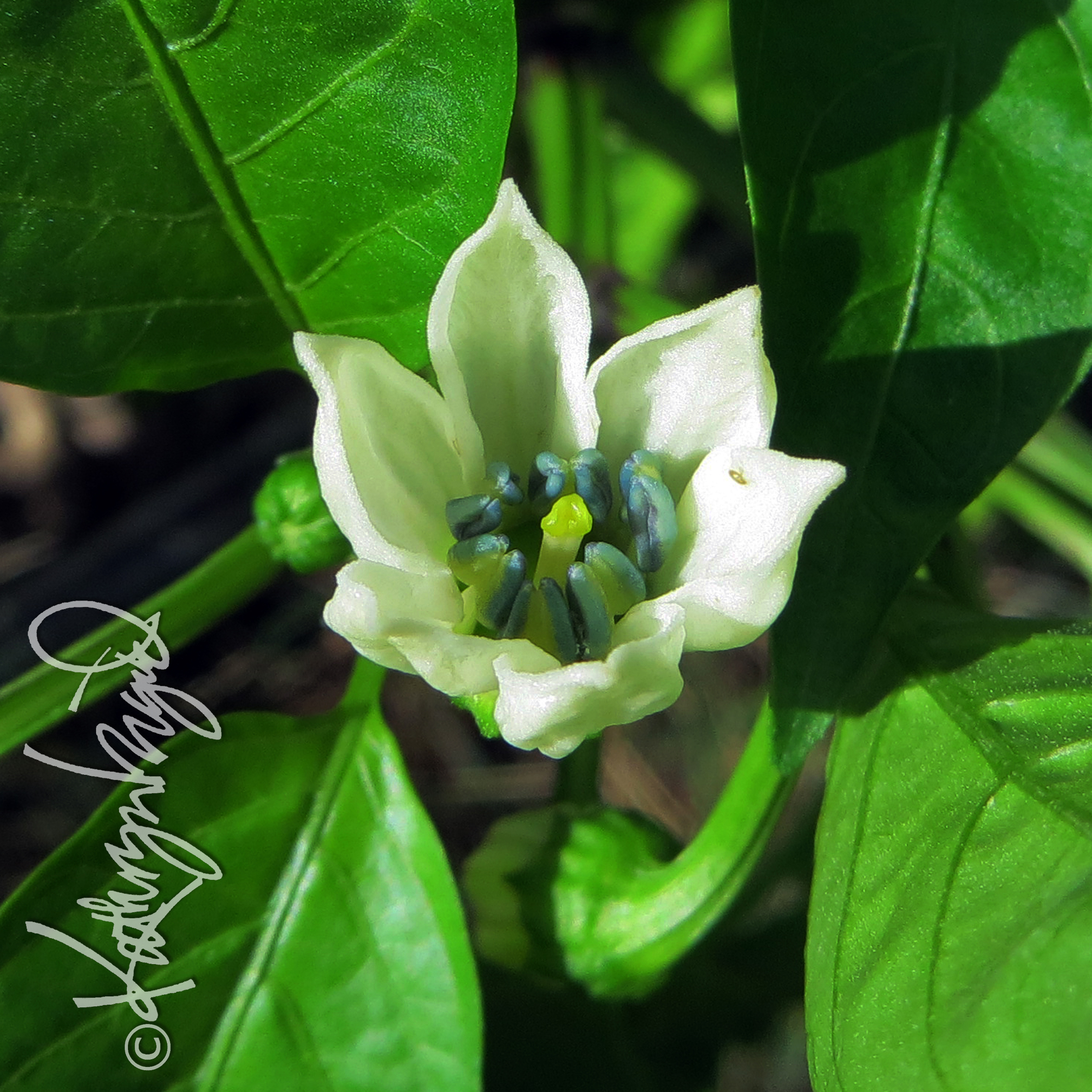
After all, there’s such a compelling sense of momentum that comes with those first tiny glimpses of something ever so delicate and yet determinedly pointy that forces its way out of hard ground and harder branches. The very fact that they can emerge from such unwilling sources tells me that once they’ve driven through those barriers, not only is there little that could stop them, they will pick up speed as they go, unfolding, uncurling, swelling, bursting into bloom, and finally, enlarging into the full fruits of the season. Such a suffusion of newness and energy and purpose!
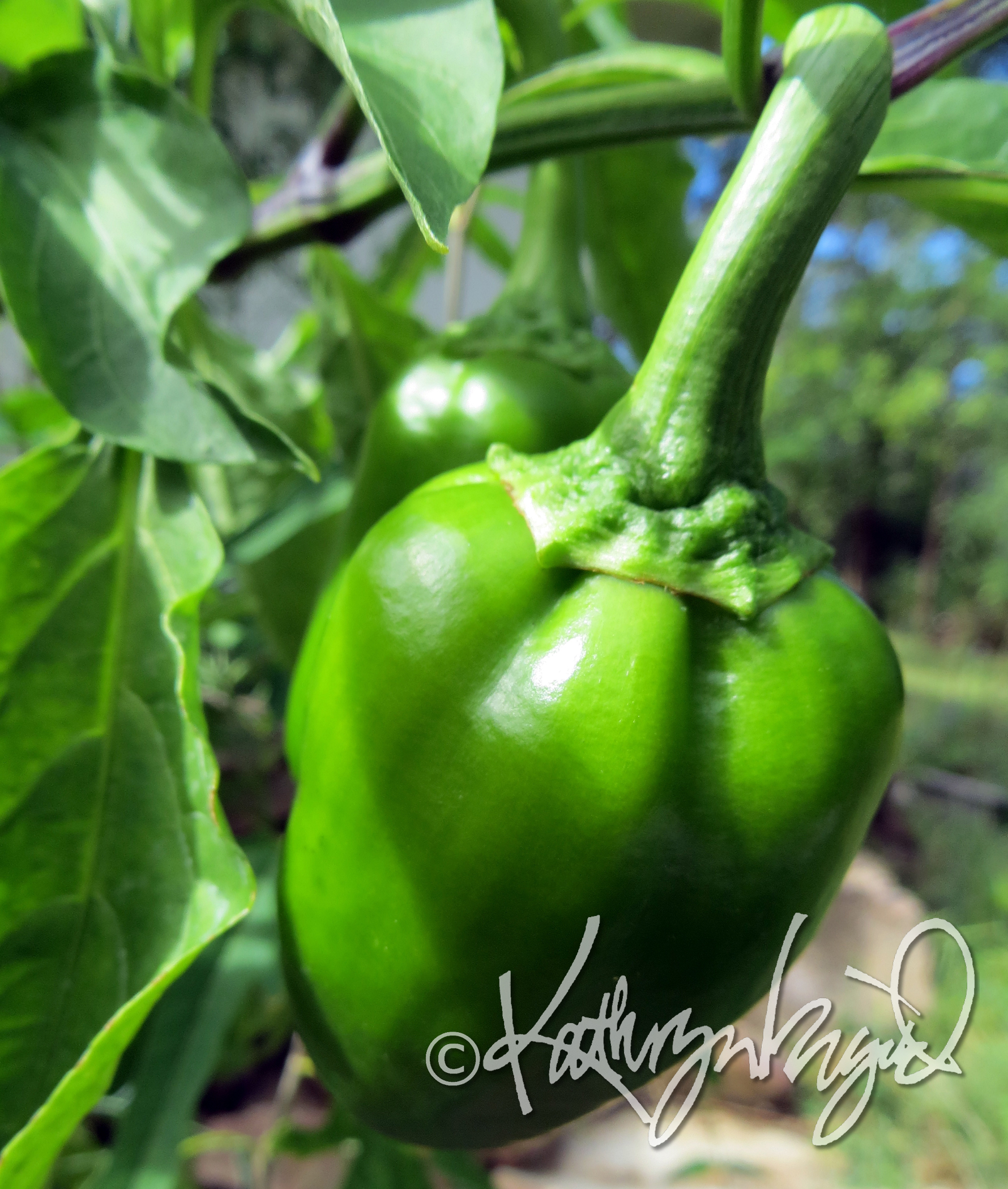
I look forward, in the same way, to some of my many projects coming to fruition, as I so rarely know what the final outcome will be, really. What seems like a perfectly lovely little green bell pepper can grow up into a dramatically bold but even sweeter scarlet capiscum, if nurtured and tended along its sojourn of development; in the same way, what may have begun as a quick little one-line idea sketch with pencil or pen while I sat in the back of a rehearsal hall or in the waiting room before an appointment could well grow up, over time, into a digitally enhanced illustration full of color and texture and layers that I hadn’t planned at the start. Whatever the result, it begins with the green bud or the green light of an idea, and I cannot resist the allure of that color, beckoning me with its promises and possibilities.
Tag Archives: greenery
Will the Blooms Return?
I’m thinking about flowers. [I’m not talking about my cousin’s family, though they’d be a welcome sight in this part of the world as much as any!] Perhaps it’s because, here in Texas, signs of sprouting, budding and even outright blooms are beginning to show all around us: the flowering pear trees are starting to burst like giant batches of popcorn, my infant fringeflower is sporting a deep fuchsia-colored tassel or two, and even the local redbud trees are bravely showing off glimpses of their own hot pinks and purples. It may also be that the influence of a few days spent recently on seasonal cleaning and prep in our yard brings, along with the seasonal sneezing and watering of the old eye-bulbs, the welcome scent of earth and sightings of green specks that seem to increase in size while I watch, reminds me of spring and summers past and favorite blossoms I eagerly await on their return. The recent speedy trip to San Antonio, just enough farther south from us to be a week or two ahead in the race to renew its flora, certainly enhanced my longing for the sight of flowers while it was giving me its own preview. And of course, there’s simply the persistent infatuation with all-things-growing that grips me year-round that might be one of the main instigators of this present hope.
No matter what the cause, my heart is yearning for floral happiness these days.
Too Early to be Called Springtime
Leaning back into the shade
Next to a mirror foxed with age but
Gleaming still with that low glint,
Mercurial, that holds onto its ghosts—those
Pale vapors that have passed
Through the pavilion and its garden greens,
Have dreamed while leaning in
This selfsame shade
Of fading memory and of
Incipient bloom, in this
Just-waking secret garden—
Here I will stay at rest, a shade myself
In the pale green gloaming
Hanging around in Trees
There are numerous living things that spend time up in the trees besides the trees’ branches and leaves. All sorts of insects and animals, not least of all various nutty sorts of anthropoid mammals that might be not only cousins of ours but a little more similar to us in character than we generally wish to acknowledge. There are, of course, also those companion plants we know as parasites and, more mellifluously, their subtler siblings the epiphytes.
Kissing under the mistletoe is a pleasant enough excuse for familiarity with such entities, but mistletoe isn’t necessarily a specially handsome bit of greenery on its own, being a modest clump of small leaves with some inconspicuous pale berries clinging to them. Mistletoe, in fact, only really comes into its own in wintertime when the host oak trees shed their seasonal clothes and the puffs of the mistletoe’s tidy presence reveal themselves among the branches against the winter sky. This is not only reason enough for the plant to be a fitting representative for the winter holiday season but for us to appreciate it as a remarkable and pervasive and even likable presence in oak country, particularly since it does no notable harm to its host plant, unlike many parasites of all species.
But if we’re to talk about the kinds of plants that make their homes in the trees, I’m even more of a fan of the epiphytes, many of which were only vaguely familiar to me some years ago thanks to occasional visits to botanical gardens and conservatories and parks. I find their ability to live, virtually, on air astounding and, somehow, poignant. Oh, I knew lichens and mosses and algae pretty well, what with living in the moist and miraculous Pacific Northwest among the old-growth rainforests and craggy granite faces and the richly green shores of Puget Sound and the ocean. But I can tell you that, like most people who live in treasuries, I knew the sparkle of the jewels but nothing of their true nature.
When I had closer contact with those parasites and epiphytes at last, it made for a short descent to fall in love. My lifetime romance with moss and seaweed expanded to welcome bromeliads and all sorts of pretty flowering epiphytes. I found all of that mighty attractive when I would get drawn in by the strangler figs and pulled into the pretty gloaming of the tropical house at the conservatory, the steamy glass room of the jungle displays at the horticultural center. So, so lovely. Then there was the trip to Panama. Ahhh, Panama.
Opportunity enough to see firsthand a whole lot of gorgeous bromeliads and previously unknown green joys in situ, to experience a whole new level of admiration for the variety and intricacy in the plant universe. Poinsettias, my natal flower as a December baby, meant little to a northern-born kid who’d only seen their showy bracts in hothouse display and known them merely as holiday decor: suddenly, on their own turf, I was able to learn that they can grow as tall as four meters and thrive like showy weeds in the sparest of small dirt patches. To see coffee growing in its accustomed shade on the slopes of a dormant volcano, overlooking rainbow-crowned valleys and orange plantations. And to look up into the cloud forest canopy and see tree trunks hugged all ’round by glorious orchids. Among the many wonders of the region, we stumbled into an orchid farm. Bliss!
For one who had been impressed by but hardly addicted to orchids, to arrive in the environs of a farm specializing in orchids to the tune of about 2400 varieties was a stunning and heady shock of new delight. Finca Drácula, named for its showpiece orchid variety, was a superb baptism in the beauties of the breed. And yes, it did make me want to swing from the branches of the trees like my monkey cousins. What an irresistible lure is an orchid smiling down from the heights. Funny that the Christmas crop of mistletoe has led me the whole winding way to Panamanian orchid country. Then again, they could both inspire an urge to engage in frenzied kissing if one got caught up in their fantastic beauty.
Another Pastorale
Yesterday after running errands, we were reluctant to head directly home and do serious Work on a sunny Saturday afternoon, so first we took a couple of brief driving detours into the surrounding ranch-lands and enjoyed a uniquely lush and verdant north Texas spring outing, luxuriating in the marvels of denser woodlands, fuller runoff creeks and richer grasslands than we’ve yet seen since moving down here. Needless to say, we are reveling in the wealth of meadow and pastureland in the surrounding counties, as are all of the horse and cattle herds that didn’t get sold off or butchered outright to evade starvation and thirst in last year’s drought. It’s a beautiful prospect, this well-watered magic we have right now, and inspires the poetic in one’s spirit no matter how it defies other work.
Spring Pastures
Far back among the rolling hills, Where prairie grasses sweep and bow
And the sweet wildflower spills Pour down the slope, the Angus cow
Set farthest back along the line Draws up her calf to join the herd,
Slow-swaying, toward a stand of pine; The rancher there, without a word,
Appears to bring an evening feed, And all the cattle on the clock
That balances content with need, Some time before, began this walk . . .
The faintest glint of sidelong rays Begins to tint the brush with gold
The way late Spring colors her days, As if instead of growing old
She’s only burnishing her tone The more to show her graciousness,
Inviting birds that fly alone To join a choir whose notes confess
A radiant love of living things, Of all that’s sweet and warm and new,
Of leggy calves, of seed that brings That grass now banking up the slough . . .
The cattle walk, now, in their line, Their black flanks shaded in the dusk
With blue-tinged shadows, as a fine Light scent arises like a musk
From all their footsteps tapped in clay, Veils of the thinnest dust laid low
Between the sorghum rows’ array And that tall hayfield yet to mow,
And not one calf among them all Drifts off the center of the trail,
Because they sense their supper-call As sure as seasons never fail . . .

