Trading Bouquets All ‘Round

photoI’m rather pleased with myself, but then that’s hardly a new thing, as anybody can tell. At the moment, part of my self-congratulation stems from passing the 500 posts mark on my blog, almost all of those posts at the rate of one a day. Yes, this blog is my multivitamin! I get so much affirmation, yes, but also so much practice writing, drawing, working out topical ideas, cooking, photographing and all sorts of other things that it’s beneficial in more ways than I can count.

I also continue to gain enormous amounts from the fellowship I find here with blogging friends and readers, where we share our thoughts and inspirations, and often, our hearts on a regular basis. This is a world that, considering I didn’t even know of its existence very few years ago and even then, had no idea of its potential influence on my life and others’, has become a remarkably important part of my every day as well as a challenge and quite frequently a great pleasure.

It doesn’t hurt that the kindness of previous strangers in my circle of blogging friends has also included cheering me on in the form of blogging award recognitions, and I would be remiss if I didn’t say, with a deep bow, Thank You to them once again for the gracious support and encouragement that make me feel happy to be here far beyond the initial drive that found purpose merely in enforcing my need to practice and to be accountable for doing so regularly. I am in fact trying rather hard these days to apply the same sort of discipline to getting back some seriousness about both useful physical exercise and some degree of greater mindfulness about my eating, both of which I know from experience serve to make any intellectual and artistic practice more feasible and more enjoyable too.

So to my generous and gracious co-bloggers Subhan Zein (passing along the Sunshine Award, though he himself is one of the brightest rays of light in the blogosphere!), Kate Kresse (she is so amazing she knows how to make me feel Illuminating, Versatile and Lovely whether she’s flying by to grant me awards or not!), and the London Flower Lover (whose land of peace-love-and-joy compels me and delights me at every visit!), I say that however slow my public acknowledgement of their sweet open-handedness is, it is truly sincere and grateful. Along with all of you dear people who have cheered me on with awards and readership and, especially, your constant comments and conversations with me, this has been a richly rewarding place to be for this last year and a half, and I will gladly keep ‘living here’ for the foreseeable future in your marvelous company if you let me! Your popping by this ‘daily diary’ of my thoughts, artworks and adventures makes every second of it a worthwhile treasure, and I thank you all. Bouquets to each and every one of you.photo

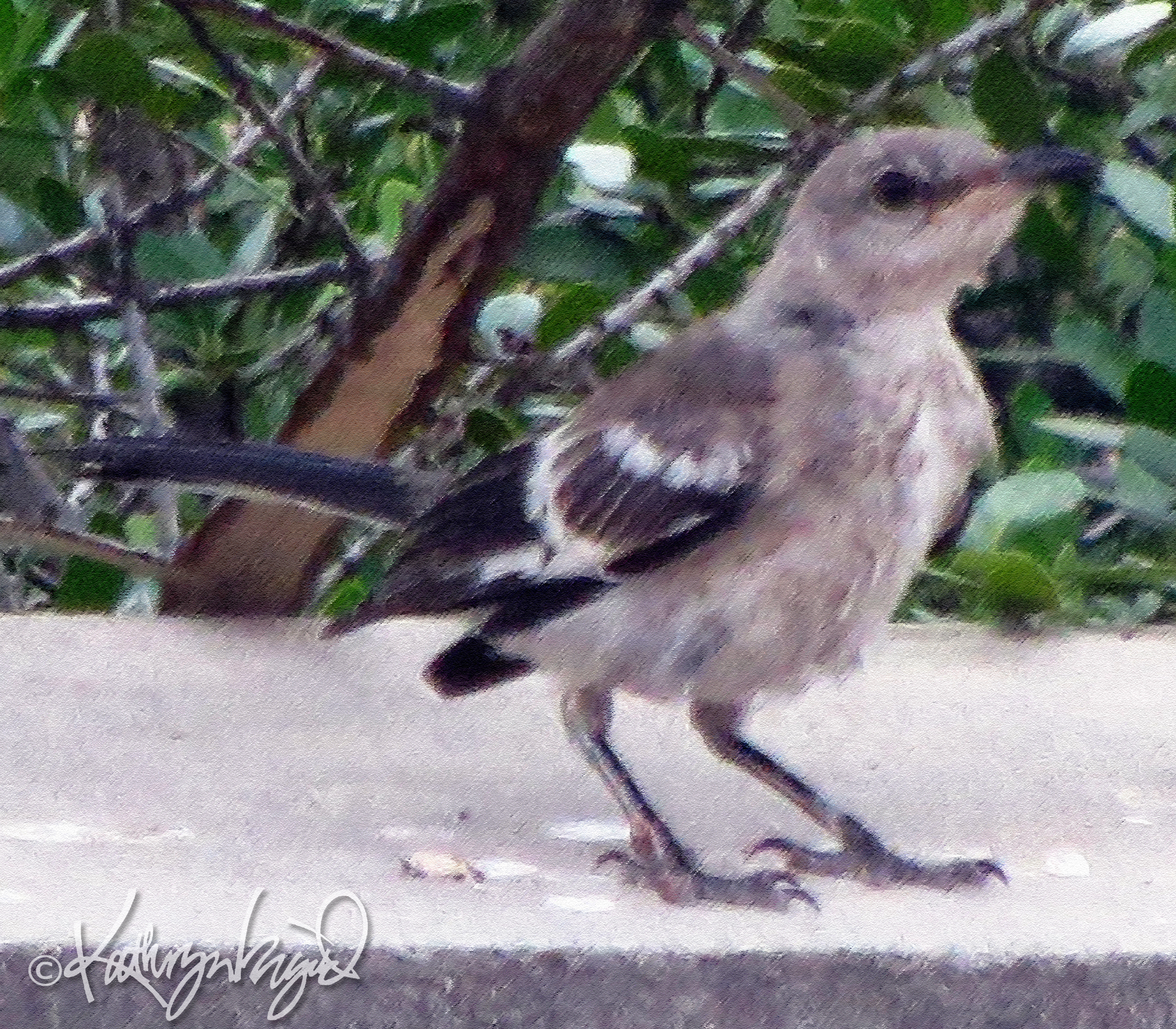
Nobody Loves Me, Everybody Hates Me . . . *

photo

. . . Think I’m Gonna Go Eat Worms! [Note: no actual worms were harmed in the making of this photograph.]

Yes, it may be true that no man is an island–we all depend on others far more than we even recognize or comprehend–but conversely, every one of us is his or her own unique and seemingly isolated version of Three Mile Island at times when it comes to having personal meltdowns. It starts right at birth, when most of us scream and complain at having been removed from that ever-so-pleasant resort and spa, Mom’s innards, and ejected unwittingly and unwillingly into the cold, cruel world, and it continues, however sporadically, throughout our lives. We are such fragile creatures.

The majority of humans, happily, are not subject to this dark reality for too large a percentage of our lives, but it’s more common than is commonly discussed that we have trials, tribulations and the varying degrees of inability to cope with them that make us question, if not our sanity, then certainly our ability to rise above what’s bad, get a grasp on the good, and move forward regardless of feeling worthy or curable. Depression truly sucks–not just in the vernacular, but in the sense of pulling one down into a bottomless abyss like an evil and irresistible vortex.

I’m not referring, of course, to ordinary grief or sadness. We all get hit by those monsters at times. We flounder, we suffer, we recover. It may be deep and painful and take a long time to rebound from sorrows of even the most normal sort, but we do, eventually, learn how to go on living and being and take part in the doings of the world. Generally, that sort of difficulty or tragedy even tends to gradually heighten the sense and appreciation of what is good and joyful once we’ve experienced and survived the dark and can see the shining contrast of even a modest pleasure with what appeared insurmountably grim from its midst. True clinical, chemical, physiological depression, well, that’s a different thing.

It resists the most persuasive and intelligent logic. It batters self-worth and love in the most brilliant, gifted and accomplished sufferers. It tears at relationships of any sort with other people or with action, with one’s wit and will to survive. If it doesn’t make one outright, actively suicidal, it can simply kill through atrophy and attrition: sufferers have described the state of longing intensely to kill themselves but having no strength or energy to do so.

Why would I talk of such dire and dreary and horrid stuff, even think of it at all? Because I am reminded sometimes of when I used to be there. My worst bout of depression was perhaps aided and abetted by various situational and temporal aggravations, including the typical catalysts and intensifiers of real-world health and happiness threats: the onset of my spasmodic dysphonia, job problems, the murder of our good friend. These were of course widely different in intensity and timing, but to someone like me, their interaction with my evidently wonky endocrine system or whatever combined forces of chemical and biological imbalance were building in me meant that when I hit bottom, no amount of thoughtful and heartfelt reasoning with myself could ‘fix’ me or my situation.

I am one of the true Lucky Ones. I finally felt so brain-fogged, so unable to resist the pull of that deadly sucking, enervating, soul-destroying feeling of pointlessness and ugliness and being unlovable and incapable of doing anything meaningful or good–well, I got so needy that I actually let others help me. That was it. The only way out of the hole was to grip the hands reaching in toward me and let them do all of the work of pulling me out. Part of it was accepting these helpers’ assurances that they did indeed believe in me and in how I felt, that they loved me and knew that I had worth and potential. Part was letting others lead me around and taking their advice and simply letting go of what little shreds of ego I had left enough to say that I would do better in following an educated and experienced prescription for improvement than I’d been doing on my ever-weakening own two feet. And a part that was essential for me was loosening my grip on my insistence that taking prescribed treatment–both psychological and chemical–without trying to create or control it myself was a sign of weakness or failure. It took, in fact, all of my strength and intelligence to recognize that any strength and intelligence I had couldn’t save me.

The luck involved is clearly that together we (my caregivers–medical and personal–and I) did find the combination of therapeutic treatments, behavioral changes and chemical re-balancing medication that not only unlocked my present emergency state of depressive existence but ultimately proved to let me feel fully, wholly myself for the first time in my life. I know that this is not a cure but an ongoing process for as long as I live. And, having lived both ways, I am more than happy to take on that responsibility. It’s a privilege.

What’s most beautiful of all, for me, is that when it happens (as it has in this last couple of weeks) that several occurrences and situations conspire to remind me of this my past and how it shaped my present life and self, it also reawakens in me the profound gratitude for all of those complex minutiae that converged so miraculously well as to make this life possible. To make my continued existence at all possible, perhaps, but particularly such a happy me. What seemed like the most disastrous and irreparable of confluences instead conspired to make just the right blend at the right moment that finally offered me a rescue.

Turns out that eating worms is the very nourishment that makes some birds healthy enough to sing their hearts out with the pure delight of existing. Last week I was out walking and saw a ditch full of drowned worms, lured into and killed by stormy waters. This week I was walking the same route and the sky was filled with the most spectacular warbling, chirruping, musical bird songs I could hope to hear. Coincidence? Very possibly not.digital illustration from a photo

(* from the old campfire song Nobody Loves Me, Everybody Hates Me . . . )


May I Suggest . . .

photo

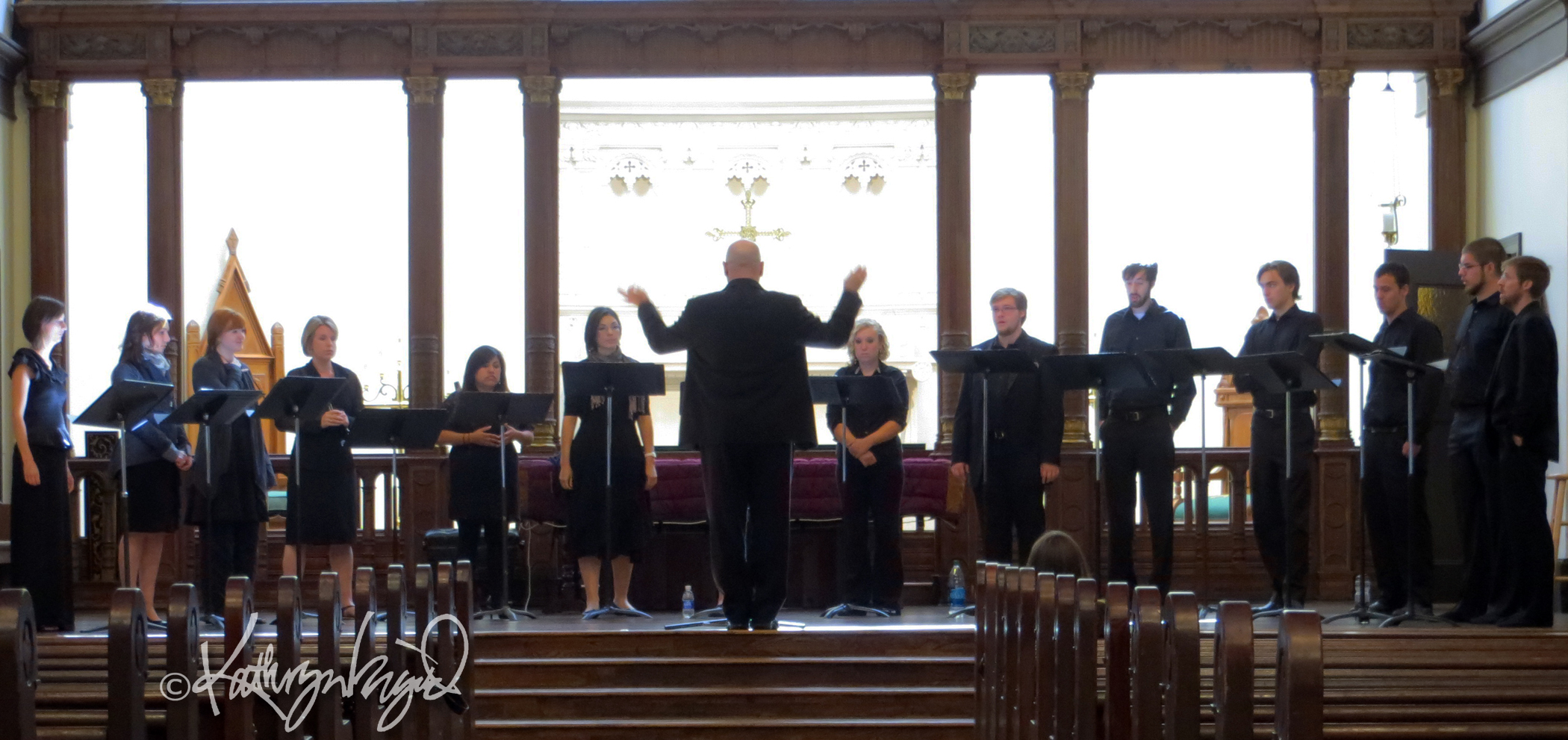
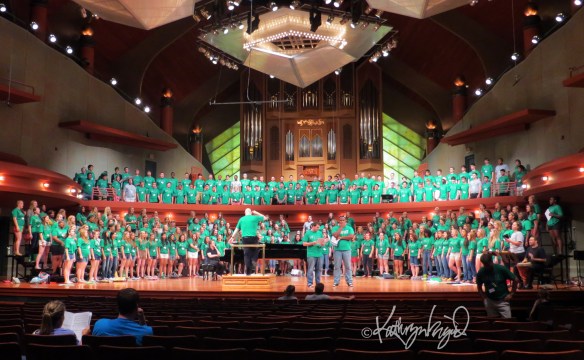
The University of North Texas Collegium Singers in dress rehearsal for their performance at the Berkeley Festival of early music, June 2012, Dr. Richard Sparks conducting. Yes, *that* Richard Sparks.

MUSIC.

Having had my senses immersed in the bath of fall season-opener concerts of all sorts lately, to the literal tune of hundreds of voices and instruments in symphonies, marches, art songs, musical theater melodies, electronica, motets, chaconnes, folk songs, choral masses, lullabies and all sorts of other lovely music, I am reminded as always at this time of year that such an intense schedule of events, however fabulous and rich they are, can be exhausting. More importantly, though, I am reminded that it’s also invigorating, inspiring and often utterly thrilling.

It’s also the time of year when the European choral magazine for which I proofread and text-check translations goes back into full production for the year. The articles and news items are all full of reviews of the summer season’s festivals and conferences and the amazing machinery that underlies these productions, from choosing and ordering music scores through civic action, political efforts, fundraising, singer scholarships, educational programs for participants and audiences, performers’ uniform shipping, young composers’ symposia, etc, and right on down to whether ‘civilian’ supporters of the group are allowed to arrange the music stands or chairs onstage if the local symphony hall union members are on strike. At the heart of it all is such a profound passion for music that millions of people worldwide, including those from countries and cultures one might be surprised to find even having the time or energy amid their economic, social or yes, war-related battles to sing and to listen to singers. If there’s a genuinely possible force for world peace, my friends, it may well be in music.

More personally, it’s music that is a central force for my own happiness, for a large number of reasons. Every one of those listed above comes into my own life and being regularly. But as you know, I am partnered for said life with a musician, and so the whole topic comes that much more sharply into focus. Music has been a glue for us two from the very beginning of ‘us’. Ask our mutual dear friend, a fellow musician, if I were single and might therefore be ‘available’? Check. Collaborate over a large-scale music performance and its visual presentation as a way to get to know each other a bit, hovering around each other during rehearsals and preparation? Check. Go on a first date to a Mark Morris Dido and Aeneas dance performance [yes, truly spectacular, by the way] for which my suitor had prepared the singers? Check!
photo

Since thousands vie for the dozens of positions in the final selected groups, high school students in Texas undergo a rigorous preparation for All-State Choir auditions, studying the literature in workshops and camps across the state each summer to compete in their local and regional trials before the year of All-State even arrives. This is the UNT group working in the summer of 2012, rehearsing in the camp organized and run by Dr. Alan McClung, assisted by UNT students and graduates and conducted each year by a different guest conductor–this year, by my spouse. What can I say, it’s what he does. And what I love to hear and see.

What followed is, was and ever shall be musicocentric. Our honeymoon (more about that in a future post) was built, in fact, around my fiance’s conducting gig–a gig including, naturally, our aforementioned Dual BFF as accompanist–at a choral festival in Veszprém, Hungary, arranged under the auspices of the parent organization that spawned the magazine for which I still do editorial duties, if you can follow that sprawling, meandering melody line. One might say that it all began with music and went racing straight downhill from there. Or, if one feels as I do, that music has brought uncountable joys into my life from earliest memory to the present, and will sustain me until the end. In any case, one of the clear high points of musical pleasure has been attending the myriad concerts, events, conferences, performances, and festivals that bring musicians and music lovers together all over the world. A huge number of our favorite people are those whom we’ve met in and through all of this music-related stuff. We have deeply loved ‘family’ literally around the world whom we’ve met and with whom we’ve bonded through musical acquaintance.

If you haven’t done so yet, or not recently enough, may I suggest that you ‘get thee to’ the nearest conference, symposium or festival involving music as soon as you’re able. If, like me, you aren’t an active participant, know that every artist needs his or her cheerleaders and fans and supporters, and that your mutual love of the art will mean more than that you stood onstage during the work or the bows. Yes, even non-musicians can and should pitch in–even those with no sense of pitch can fold programs, stuff envelopes, recruit audience members and donors and board members and political supporters, can drive the shuttle that carries the singers and their accompanists from venue to venue at the festival, and can buy tickets and bask in the glorious sounds from town square to church nave to school ‘cafetorium’ to symphony hall and shout a resounding Bravissimi! to all and sundry.

Beyond that, though, the immersion of being in a place where a huge number of people, participants and supporters and happy observers alike, have come together from a wide range of territory for an extended period of days solely for love of music–that is a wholly different and magical experience everyone should have the opportunity to enjoy at least once. So I commend them to you, the small-scale community events offered by your local affiliated high schools and the international events hosted by long-lived organizations in exotic places and every variation on the theme you can find. I promise you will leave with a song in your heart and memories to last you to when all of your other memories have faded to dust and perhaps beyond. If music be the food of love, play on! For though in this line opening his play ‘Twelfth Night‘ Shakespeare exposed the Duke of Orsino’s conviction that being surfeited with love (in this instance, via its musical surrogate) would cure him of his hunger for it, I think that quite the opposite is true: if they are excellent, the more we experience them and are filled with them, the more we crave both love and music.

Food of that sort for thought: visit first the websites and then the events offered by your local choirs, bands, orchestras, theaters, and performance companies. My own favorites are hosted by professional organizations of music educators, conductors and performers simply because those are the ones I’ve naturally had the privilege to attend, as consort to my musical prince charming, and these all offer performances by top artists that are open to the public, sometimes even with free admission. Explore them! The organization that ‘sponsored’, or inspired and was the jumping-off point for, our honeymoon with its Singing Week in Veszprém–with its half-dozen ateliers conducted by musicians from Europe and North America and singers and whole choirs from all over as well–was what is now called the European Choral Association-Europa Cantat and it hosts a wide variety of such choral events throughout each year, with a focal youth choir festival occurring triennially in places like Passau, Leicestershire, Barcelona, Utrecht, Torino (2012), and Pécs, Hungary (a locale to be repeated in 2015).

photo

Just this month, the newly minted University Singers at UNT performed their first concert of the season with my spouse at the helm. If you live in or near a college town, you’ll find endless opportunities for attending all sorts of musical events, many of them free and most of them truly outstanding–after all, these people are all here gaining expertise for what may be their whole life’s passion, and performers need great audiences too.

Pop, folk, jazz, rock, blues, punk, bluegrass, Early Music, all flavors and kinds of music and individual organizations from the Oldtime Fiddlers [I once got to run the stage lighting for their competition in Washington state–fabulous fiddling, huge fun and even some fantastic yodeling!] to the Verona Opera [I can say from my one experience there that genuine opera under the stars is something not to be missed, even if it’s still 40°C when the singing ends in the middle of the night]: there is something for practically any musical taste out there, and many of them that I enjoy immensely are included among these. My personal pet organizations among the professional gang also include many others: IFCM (International Federation for Choral Music), ACDA (American Choral Directors Association), ACCC (Association of Canadian Choral Communities), TMEA (Texas Music Educators Association), Chorus America, the Boston (odd-numbered years in June), Berkeley (even-numbered years in June), and Vancouver (annually in August) Early Music festivals, and ever so much more.
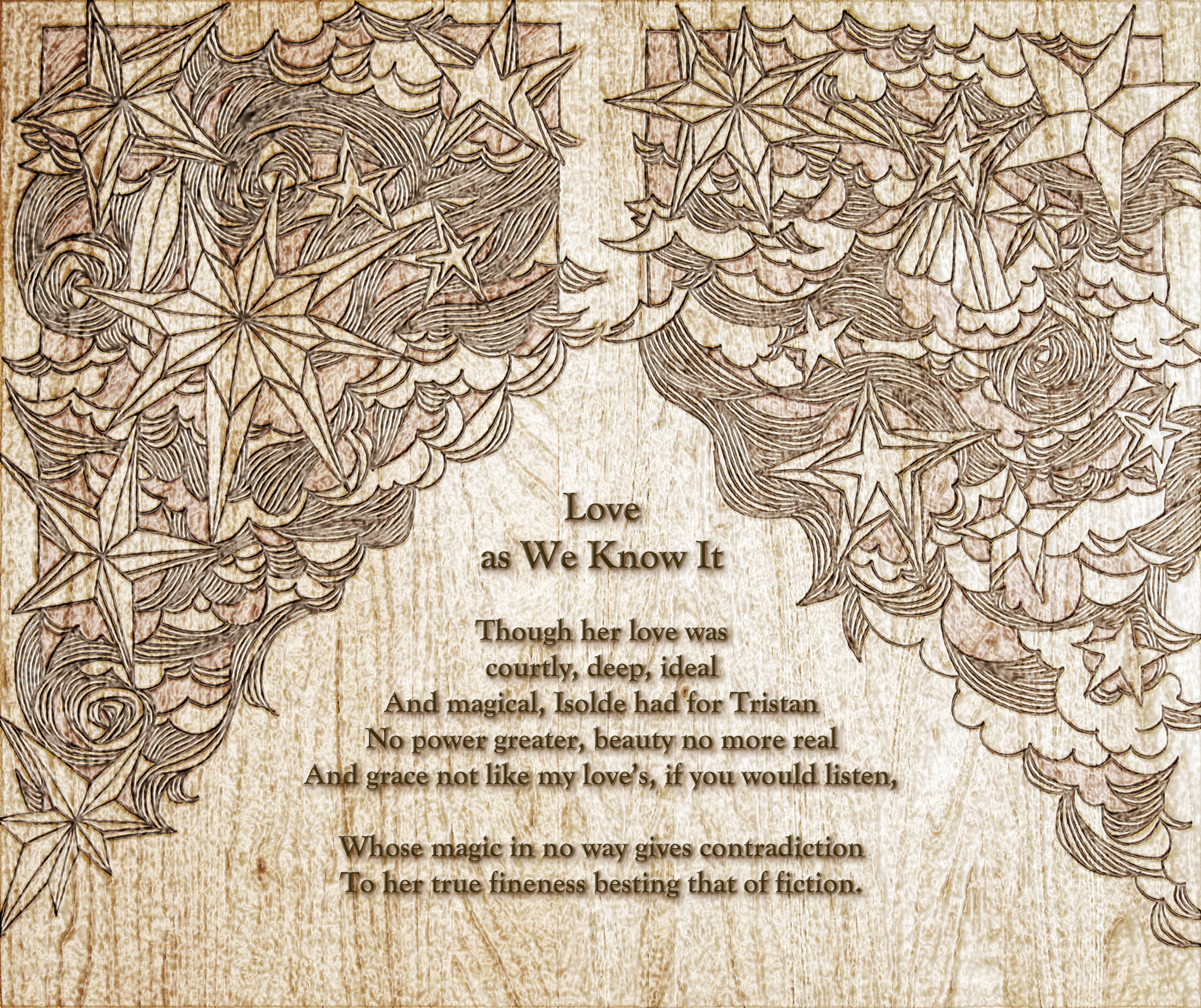
Love, Always Love

Image

digital artwork + text

Another Good Thing about Waving One’s Arms


Waving my arms is something I may think about more than the average person does. From when I was pretty young I was conscious of arm movement as being mighty significant in a seriously diverse series of ways. First of all, there was that childhood training we all enjoy, if we’re well inducted, in the art of waving hello and farewell. I have almost always preferred the former to the latter, but in either case, whenever the occasion was deemed genuinely worthy of such a gesture, I knew that it was a sign of love or affection, and that made it pretty darn worthwhile.

Then again, I also had an early fondness for wagging my crayon-gripping fist over a piece of paper (or whatever flattish surface was convenient) to make squiggly lines and, if I got lucky, get them to coalesce into picture-like concoctions. I  might be sitting off in a cozy corner at Grandma and Grandpa W’s, scribbling away, with the faint sounds in the background of parental and grand-parental chatter as they sat drinking their coffee intermingled with the slight chattering sound of Grandpa’s cup doing a little jitterbug against the saucer, because he had a mild tremor in his hand. Of course, his arm-waving was hardly dramatic, but it was one of those delicate underpinnings of my early memory that became part of the whole subtle weave of my perceptions.

Sometime in my early teens or thereabout, I found that the family resemblance extended to my having my own familial tremors, occasionally in my head and neck but mostly in my hands and arms. There have been times when it was more pronounced than was entirely convenient for a person wanting to draw, but fortunately it’s rarely been at problematic extremes, more often merely requiring that I find ways to compensate for or control or use the tremors to advantage in my art-making. In any event, keeping my hand in (no pun intended) as an artist has tended to keep the inevitable interactions of these two kinds of arm-waving present in my attentions. Meanwhile, my other grandmother had her own kind of arm-waving to lend to the family skill-set: Parkinson’s Disease.

Typically, Granny had the wit and will to battle her Parkinsonism not only with great tenacity in staving off the ravages of the illness for many more years than is typical but also with a lot of good-natured humor, because that was her style. So whenever we had a family gathering, she was the first to offer her services for tossing salads and making milkshakes. That my mother has followed in the Parkinsonian lineage would make her forms of arm-waving far worse to behold, knowing that the same sort of insidious progression lay ahead for her, and to be fair, including the knowledge that the odds are a bit higher for me than for some that I will eventually join the parade, but she too has maintained a bright attitude about it all. Besides that, I am very slightly suspicious that her particular skillfulness when it comes to shaking the dice gives her a unique edge in the evening board games.

But the top of the list when it comes to magnificent ways and reasons to wave one’s arms has surely got to be the one I’ve been witnessing so much now that the concert season is well underway again: conducting. Bands, orchestras, operatic performances, choirs. No matter what the form of the musical art, if there is a conductor up there waving his, her (or, particularly, my beloved husband’s) arms, the love that fills the air is what makes all of the arm-waving a worthy and beautiful thing. It brings hearts and minds into focus and, often, into community, and it makes the world a more wonderful place to be.

And that makes me want to stop waving my arms altogether, just opening them wide enough to embrace that better world and anyone I can in it.digital image from an acrylic painting on canvas


Will You Sing in My Stead?

graphite drawingWhen I can Sing No More

When I am weary, worn beyond all reckoning,

My breath is gone and voice has ceased to sound,

The darkness draws me in, its silence beckoning

And luring me to lie down on the ground–

To fall asleep; perhaps to melt there into death,

Because I can no longer coax my throat

To speak of joy, or yet to longer draw a breath,

To sing a song as long as one fine note–

Beloved Friend, how sweet if you will stand for me

And draw the air that lifts the lark to wing

Its way across the sky–if you will kindly be

My voice, and raise your own aloft and sing–

For in my silent darkness I shall never die

Long as your voice goes on and in your song I lie.

Matters of Perspective


photo

Stormy skies can bring destruction . . . or the rains of growth and promise . . .

I’ve said before, and in ever so many ways, I’m a firm believer that we all live our lives wearing our own very distinctive glasses. By that I’m not referring to the glass-half-full vs. glass-half-empty attitude–but that’s indeed part of the whole idea. It’s about how we see the world through our individual filters.

In a fairly concrete fashion, that means that the quality of my actual eyesight–my acuity, ability to detect and distinguish colors, textures, shapes, depth of field aided by stereo vision, and all of that sort of thing does, in fact, have a profound effect on my world view and how I experience my passage through it in life. As a longtime visual artist, I am dependent upon all of this stuff for my very sense of self.

But I’m also convinced that each of us has a life history that includes our adventures from birth to the present, our nurturing or lack thereof, our environment and resources and social contacts and political influences and educational progression, and that whole reality is so distinctive for each of us, right down to a cellular level, that I can’t quite imagine how even the closest of kin could possibly have identical points of view.

I’ve been reminded of this in the last few days as I’ve been reading the latest Oliver Sacks book on which I’ve laid hands: The Mind’s Eye. Every book of his that I’ve read thus far is, since he’s a neurologist, a humane and humorous thinker, a deeply curious scientist, and a citizen of the world with wide-ranging interests, bound to be an adventure. Given the visual theme of this particular collection of case-studies (including his own discovery of and treatment for an ocular tumor), it is indeed a confirmation of my sense that such complex inventions as human bodies, multiplied by the almost infinite variants those influences I mentioned above can infuse, create and incubate an incredible range of possible ways to see and experience life in this world and whatever we can conceive of beyond it.

Yes, I am enjoying this latest Sacks book as immensely as I have all of his thus far. It’s been rather striking, too, to add to the layers of my own filters, many of which I’ve only come to recognize rather more recently in my life. I have sussed out and confirmed to my own wildly non-medical satisfaction that I am very probably distinctly dyslexic or cognitively ‘different’ in a whole bunch of ways, and having looked at this good doctor’s descriptions of face-blindness, or prosopagnosia, I’ve a feeling that my realization sometime not long past that I might have a degree of face-blindness might well be accurate. I’m certainly no less inclined to believe it since immediately before the book arrived on scene at the local library, I was working in our front yard when a car pulled up and the nice driver called me by name and conversed with me pleasantly until I could identify by her voice, questions and comments that she is the neighbor who lives directly across the street from me. Sigh. Sometimes the ol’ filters do get a little blurry.

More importantly, though, I’m convinced that how we respond to our life experiences and our histories–the choices we make and what we do with what we’re given and who we are within it–those are the truly telling filters. They’re the things by which we’ll be known, be remembered (if we’re remembered), and that offer us ways to define ourselves and our place in the world. So while I’m happy as an artist to play (as you saw in the last couple of posts) with my reality in the artificial world of visual imagery and how I attempt to show others what it’s like to see through my lens, I realize that my moods and attitudes are a part of that process too. Can I get others to understand or accept my point of view? Rarely, if I’m mighty fortunate. Can I help them to see it? More likely, if I work hard. Can I give them happy access to their own filters that might improve their moment or their day? That, I hope, I can do if I am true to the better of my instincts in responding to the world as I know it and expressing, the best that I’m able, with passion and with compassion. With love and joy.

digital painting from a photo

Heavens! What started as a grim and ominous day can become something bright and hopeful . . .


All I Can Do

photoMy Dearest,

I know that your day is dark. Your illness is proving incurable and your pain is chronic. Financial ruin is staring you and your family in the face. The season has turned harsh, your lover has betrayed your faithfulness, your longtime animal companion has died, and your heart grows heavy and your eyes dim with weary tears. War rages just outside your door and grips you by the soul as well.

I know all of this and yet I am thousands of miles from where you are. I can’t step over the threshold and take you in my arms and silently cry with you until the bitterness ebbs. It’s so far that I can’t just bring a basket of hot food and a bottle of wine to sustain you and slake your thirst. My words, even when I try to shape the letter that will ease your suffering one moment’s worth, are too small and sere and frail to make an inroad–and the letter will undoubtedly arrive too late. There is a faint echo in that digital delay when we speak on the phone, and all I can hear in it is our own choked breathing, no sounds of the deep solace really required.photo

All I can do is leave the gash in my own heart open and ask you to take up your residence in it. Know that my thoughts are reaching across the miles to you at every moment, awake and asleep. Let me shift some of the terrible burden from your shoulders to mine; I know it isn’t real, and doesn’t solve your troubles one small bit. But I hope that you can find some comfort and hope in my desire to carry you while you are too weak to carry yourself one small step further. All I can do is love you.

And so I do.photo

Giving Candy to Strangers

photoMost of us are taught from when we’re very small to avoid all contact with strangers. Don’t look them in the eye; don’t make friendly overtures, don’t speak to them, and don’t go running up and hugging random unknown characters. Above all, don’t accept the offer of candy or other lures from those who might turn out to be very lurid indeed.

All of that is mighty wise advice for little persons. They have no experience of the world, no basis for comparison or judgement, and no inner criteria to help them have a good chance of accurately assessing the situation. But when are we Big enough to learn that unfamiliar people are not only not all bad and dangerous but possibly in great need of any gracious and friendly contact they can possibly be given? When are we smart and experienced enough to realize that others around us are not always up to something nefarious or trying to sell us something we neither want nor need if they approach us out of the blue? When are we large-hearted enough to make a more hospitable evaluation of the risks or rewards in approaching the unknown with openness and warmth?

I have been told several stories recently that remind me of the opportunities that constantly surround us for making moves, both large and small, that have the potential to do anything from brightening someone else’s day to saving a life. Most of us fortunates have at some time and place in our lives ‘entertained angels unawares’–had a few of those moments of unexpected, extraordinary, beautiful contact with persons we didn’t know and understand that there are such agents in the world, even if we can’t immediately recognize them. Why not look for places where we can be those agents for no reason other than that we know from experience how powerful and life-changing, healing or hope-renewing, or just plain day-brightening such moments can be.

It is possible to be misinterpreted or rebuffed, true. But the vast majority of times that I’ve seen this sort of subversive joy-sharing happen without any ulterior motives, even if the recipient–sometimes me–is not altogether receptive at the outset, the end result is an astonished recognition that life is rather wonderful, that people, on the whole, are good and genuine and caring and fine, and that we have in our own small hands and hearts the astounding power of remaking ourselves and the world into better things by the simplest and least extravagant of means. A hug, a moment of patience where there has been tension. A donated dime or a pint of blood. A proffered packet of food or bottle of water that had been meant for something or someone else. Handing off the little trinket that was mine but that I can see another one admires or opening the box of treats I was saving for the family and sharing it instead with someone I don’t even know. Opening doors and assisting with chairs and lifting the parcel that’s too heavy for someone else.

They may seem tiny and insignificant enough. For those of us who choose to give them, they amount to easily made gestures. But insignificant? Hardly. For those of us who dared not, who may not have even known we could, ask–this one little mark someone offered to make on our day may mean, after it all, the whole world.photo

The Way It Ought to Be

graphite drawing + textI’m not what you might think of as a big traditionalist in the ways of romance–at least, if you think of those things packaged in the way that American commercial enterprise would have us think the norm or the appropriate mode. It may be that I’m a little too tomboy at heart and in physique to wear either the girly or the sexy look with any credible panache. There’s more than a small chance that I’m too lazy and cheap to buy cards and flowers for my nearest and dearest with any regularity. Chocolates, yes, but you know that I’m going to expect to share in their consumption. I’m far from selfless enough to be a true romantic either, I guess. Otherwise, around our place the romantic expressions are more often found in filling an empty gas tank, caulking the shower door, making lunch, washing socks. All of that sort of glamorous stuff.

I’m so unromantic in the popular sense, in fact, that despite being both shy and kind of prudish, I moved in with my intended life partner before I married him–yes, before I even warned him of my intent to marry him. Or to stick to him like glue for the rest of my life if he was shy of the whole getting-married thing, having done that before. Despite my love of pomp and circumstance and ritual, I was prepared to forgo the whole dress-up extravaganza and either commit to the partnership in heart and hand only or just keep the legal transactions simple and stand in front of a Justice of the Peace somewhere and then party later with family and friends. (Because, let’s face it, any excuse for a good and love-filled party is not entirely to be passed by, wishes for simplicity aside.)

As it turned out, we had a pretty spectacular wedding day, but it was really icing on the proverbial cake. One of the central beauties of that day was an anthem composed for us by our dear friend, with a text my intended chose from the enigmatic and marvelous Song of Songs that includes the phrase ‘love is as strong as death’–this accompanied by other close friends playing organ and horn and a superb choir of yet more friends (also conducted by the composer). Hard to get more romantic than that. But that was all well after I’d realized that a big spectacle wasn’t necessary to validate the spectacular thing that had already happened within.

All of this because at some point pretty early in our relationship, I knew with complete and unshakeable conviction that when I was with this person I was where I ought to be. It was so clearly and plainly the place and state in which I was meant to exist that I felt it in my bones. I was at home in his house the first time I stopped by for a visit–even though you all know full well that I reinvented that physical space from Day One around the two of us. The music that I heard was not just the glorious sound of his choirs welling up around me but was also a new rhythm in my heartbeat that was more confident, more joyful, and more purely contented than it had ever felt before, in those days before I even knew it could feel this lovely new way. A new sense of the world skewing into proper perspective that suffused my brain.

And that, to me, is how true romance ought to be. Genuinely loving and playful and silly and passionate and supportive and all of that, yes, but most of all, merely having the recognizable quality of a homecoming, every single time we come together. Flowers and candy and frills and thrills are all very welcome in their own right, but they have nothing on a sense of wholeness that only grows with time and no matter how it evolves and changes iterations over the years, will not go away. It is both transcendent and, when it’s so well ingrained and incorporated in the truest sense, also wonderfully, perfectly ordinary.

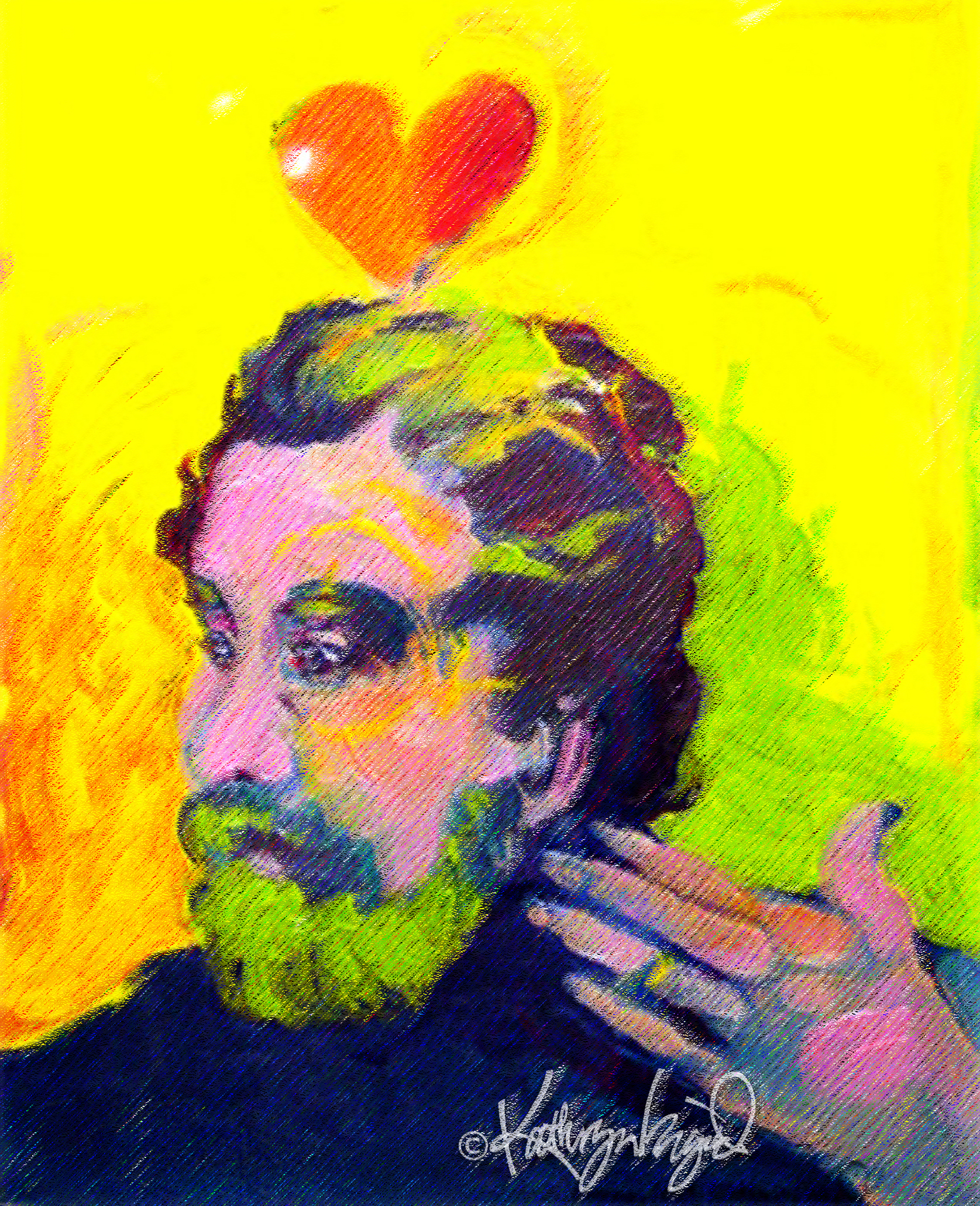
Today, on my beloved‘s birthday, I have another reason to remember all of the reasons why I am grateful for him and his place in my life and my love–and I in his.

Beloved Mysterious

Beloved Mysterious, if you could see

The blood-dark river hid inside of me

With longing deep as chasms unexplored

Through which, from which, in which that love is poured

In endless flood of hope and of desire

As hot and wild and dangerous as fire

Then you would know the depth, the liquid breath

That carries love for you beyond my death.