 Health is a wildly, weirdly, wonderfully complicated state. Both physical and mental health are astoundingly omnidirectional networks of intersecting matrices and random points; genetics, environmental influences, accidents, allergies and so much more come together and continue to change over the life of any one person. Furthermore, these meet in an intersection of the two networks (mental and physical) in every single person, that it’s nothing short of miraculous that any of us human conglomerations actually survive and have relatively good health.
It’s completely unsurprising, then, when something or other does break down or fail to be really perfect when it comes to health matters. Thank goodness there are more and more answers and helps for us when it comes to such moments of concern. But for every solution, there are shortcomings and side effects, and we still have to make choices and experiment, test and try and hope.
I’m one of those relatively rare creatures blessed with generally outstanding and reliable good health. I’ve never had a broken bone; I’ve had all of three stitches in my whole life, and I’ve never worn a cast or a brace unless you count the kinds I could buy in a neighborhood pharmacy for an achy hyper-extended knee or a fiddly fingertip whose little cut made a mockery of my hale-and-heartiness when I was whimpering over the pain every time I’d bump it. My various moles, cysts, and bumps have all thus far been benign and manageable. Even those more significant elements that might affect my function and longevity are so far pretty reasonable to deal with and don’t require enormous amounts of care just yet.
The essential tremor, noticeable since I was about ten or twelve, has never gotten so obtrusive that I have had to do anything for or about it. The mitral valve prolapse (heart murmur) is so mild that it went unnoticed until I had a regular physical exam from a person who, as pure chance had it, was conducting a study of that specific condition and so was attuned to its unlikely presence. Very minor hypothyroidism like mine is easily kept at bay with very little medicine (mostly pretty common ones at that) or monitoring. I am especially grateful that thus far there is no indication that the Parkinson’s Disease that poses as the only true black sheep of my family has not to date taken up residence in my body.
This is not to say that I have no inkling of any of the irksome and unpleasant effects of imperfect health. I’ve come to recognize the recurrent, and in some cases, chronic, annoyances and inconveniences that come with allergies. While mine have remained moderate and turn out to be treatable if not controllable, I figured out after getting some help that they had had a far greater control over my daily life and well-being before that time than I had realized. And as I’ve said here before, I have had my adventures with Spasmodic Dysphonia, clinical depression, and anxiety; these had larger influences on me and, therefore, those around me, by a magnitude of difference.
What arises every time I contemplate these things, all of which are in my own life more survivable and treatable than I know that they can be for others, is the notion that as a typically complicated human health exemplar, I still have to work continuously to discern what combination of the tangible and medical kinds of interventions and treatments with those more intangible approaches of meditation, activity, and trust—call it faith, hope, prayer, optimism, or attitude adjustment, it’s all fodder for feeling, and possibly, getting, better—will suffice to keep any of my anomalous conditions in check.
Thus far, the answer for me has been a shifting combination of the tangible and the intangible; I think that’s how it works for most people. My personal recipe for success is neither absolute nor permanent, any more than my personal state of being is fixed or unchangeable. Health, both physical and mental, changes rather constantly over a life span, and the longer one lives the more cycles and spikes of change are likely to occur during the stretch. What, then, can I do?
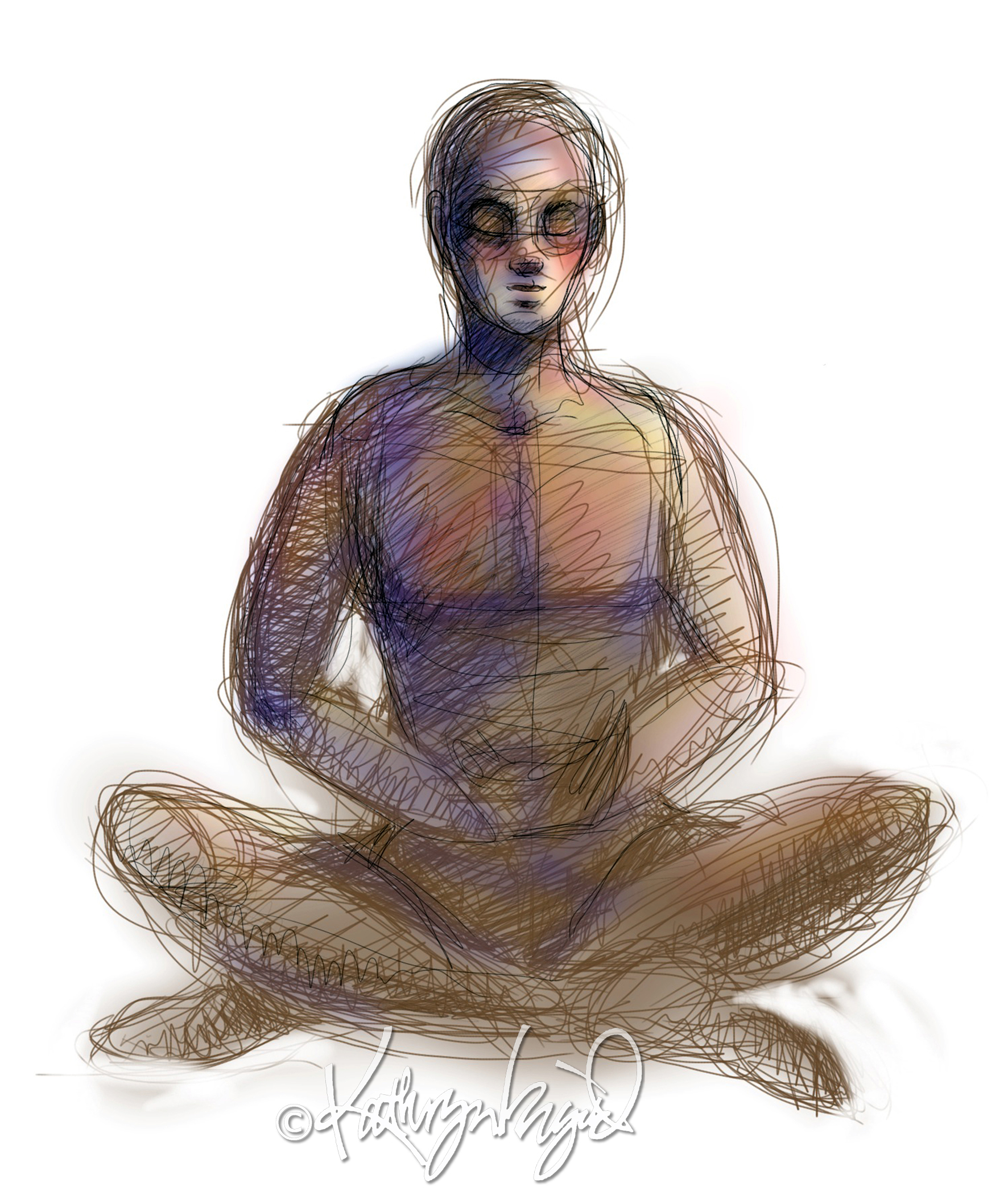
Keep trying. What combination of body-chemistry-altering substances serves my needs at the moment? They might well be outright commercially made and sold and officially, doctor- or nurse-administered drugs, but they can also easily be homeopathic or folk cures, foods or herbs or numerous other things that I’ve discovered through trial and error suit my physical and mental well-being. The same can be true of physical therapy: it might be specific exercises recommended to me by my doctor or other trusted medical and health experts, or as is often the case, it can be a set, series or group of activities that simply make me feel closer to my optimal conditioning. Nowadays, as always, I find myself using quite the mixture of these helpers to suit my specific needs and wishes for better health and happiness. For me, that means a full combination of what could be loosely classified as medication and meditation.
I can’t begin to tell you how that works or is explained scientifically. Some of it I’d bet good money can’t be clarified in scientific terms. But experientially, that I can tell you: I feel pretty good. I get the occasional sneezes or headaches, and there are times when it irritates me, yes, that my vocal cords are recalcitrant and unreliable. I’d definitely prefer if the shadow of Parkinson’s hied itself off my family’s shoulders, most especially Mom’s, and would never try to sneak up on me later despite any efforts on my part to ward it off if possible. But let’s be honest. Right now I feel pretty good, and that makes me happy. Whatever I’m doing or not doing, taking or not taking, it seems to be working.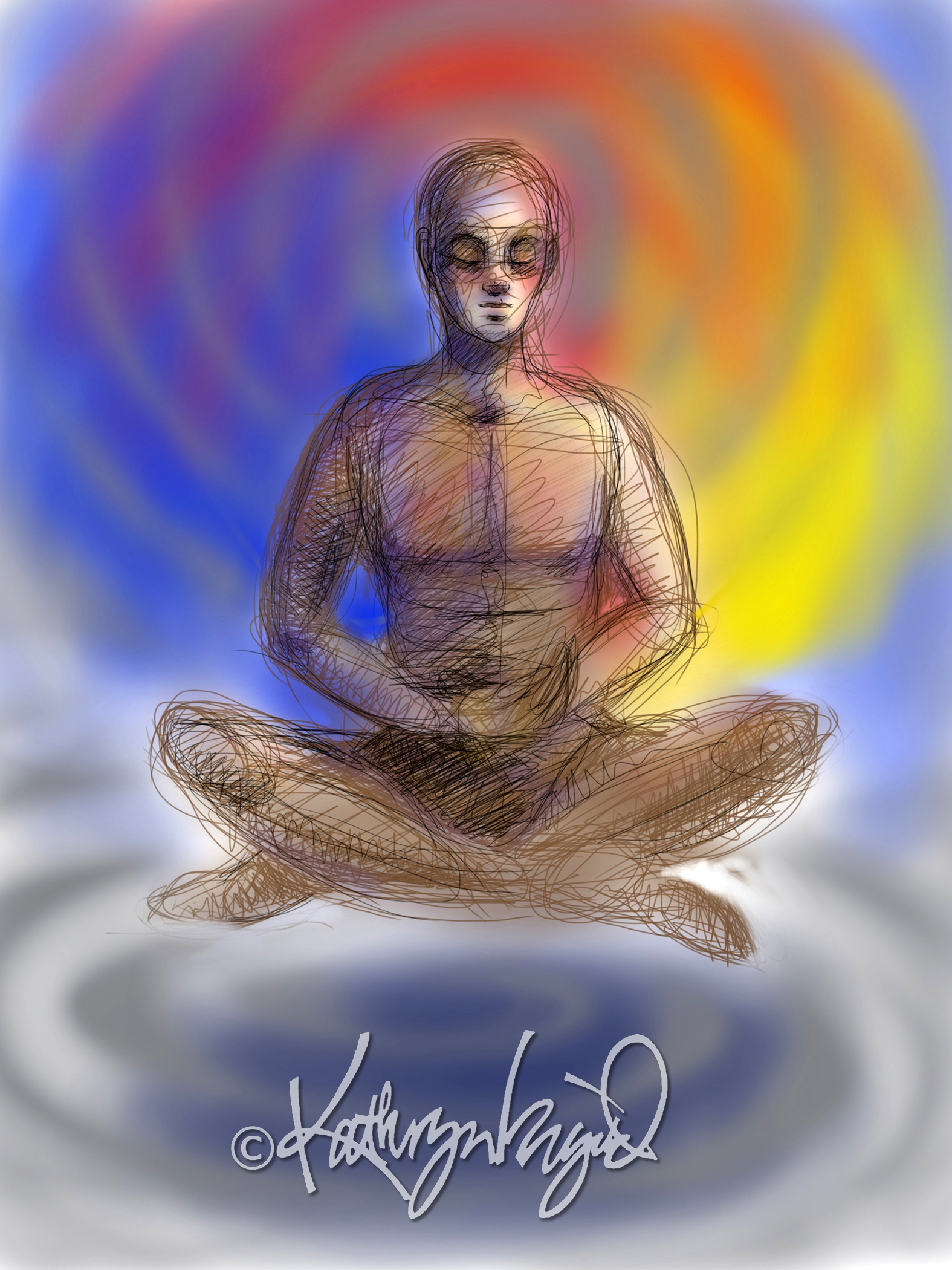



 Art-Colored Glasses