Foodie Tuesday: Simple Sips & Snips

I do appreciate stuff that is not only easy to fix but lives on past the fixing. By that I mean the sort of kitchen trick that provides more than one episode of eating and/or drinking, and the more the merrier. It might be something that, while it can be somewhat time-consuming while in the process (I’m looking at you, lasagna!) can be portioned and frozen for multiple meals, so the subsequent preparations are ever so much easier and faster than the initial one.

Or it might be more like what I did the other day. It doesn’t take terribly long, and requires virtually no brilliance or skill on my part to do it, but when I expend the effort to chop and then puree a goodly quantity of fresh ginger root and preserve it in vodka, it keeps for ages in the refrigerator and the mash is instantly accessible for any of my myriad edible loves. If I manage to drain the puree slightly when using it I might even score a small quantity of high-octane ginger-infused vodka at the end to enhance a sauce or a party drink that will more deservedly gain the title of Punch.photo

On this particular occasion, it provided me with the reasonable excuse to do a quick side-by-side taste testing of two Texas vodkas, as I knew I had none either for drink mixing or for the ginger preservation, let alone for the second set of ‘preserves’ I intended to make that day. So I bought the two bottles, one of Tito’s (a brand I’ve mentioned here before as I had discovered it is quite smooth, mellow and even drinkable straight, which is saying some for vodka in my book) and one of Western Son (a brand I’d not tried, but since it’s produced less than half an hour from where I live I thought I ought to give it a fair shake). I found Tito’s still more to my taste and less hard-edged, but both were perfectly pleasant. It’s always interesting and informative to read others’ reviews of these or any other alcoholic drinks (see the links through their names above for just a quick example) to be reminded that everything has its fans and haters, and often the most extremely opposite opinions can be backed by the exact same characteristics.

My purpose in this was pretty uncomplicated, though: I only wanted to decide which I’d rather keep some of for making the occasional spiked drink and which I would put to use as the preservative in my day’s longterm mise en place prep. Tito’s stayed in the freezer for drinks; WS got voted into eau-de-vie duty. That title is apropos not only because it will lengthen the life of the two flavorings I was treating, but also because it may become a bit of ginger firewater if the use of the root leaves enough liquid behind, and it will certainly become some beautifully flavored stuff after a good long mingling with the other flavoring agent I paired it with this time.

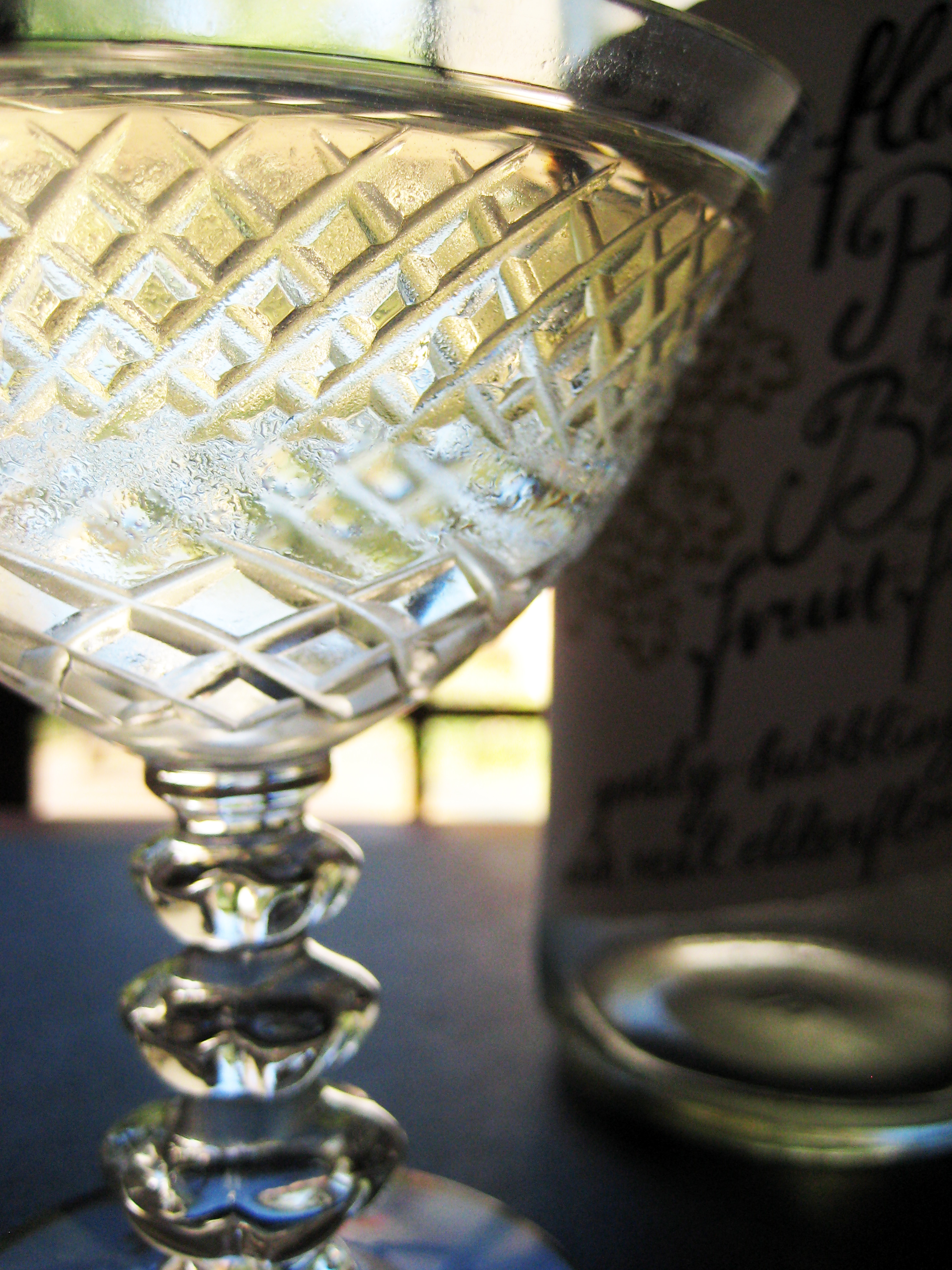
That, my friends, is vanilla. Store-bought vanilla beans at the grocery are often tragically bad facsimiles of their former selves, being shriveled and dry and bland and pathetic from poor packaging and over-long sitting on grimly over-lit shelves. Real, well prepared vanilla bean pods, on the other hand, are as sleek and fat and glamorous and moist as the sweet orchids that bear such beautiful fruit. Buying in bulk, with the quick turnaround of today’s online ordering and shipping, can be a much more productive and cost-effective way to bring that beauty home. So I bought a handful of nice, heavy vanilla beans and, like Jack in the fairy tale, got instant bounty from them. All I had to do was to take the WS vodka bottle that had had some liquor removed for the blending of that ginger root (now safely tucked up in a clean jam jar in the refrigerator) and the bottle had, conveniently, just the right amount of space for me to spear all of the beans down its neck into the vodka for immersion. Now all that’s left is to wait while the vanilla steeps into its full glory.photo

I can, in the meantime, take out a bean or two to cut and scrape and otherwise use to infuse and flavor any number of kitchen wonders. I can, very shortly, use the booze as a perfectly unadulterated vanilla extract, knowing that a little proper cooking or baking will remove the alcohol and leave the voluptuous flavor in its wake. And last of all, I can look forward to using the heavily perfumed vodka to jazz up drinks of the adult variety if I should so desire.

All of this from a short stint at the chopping board with nothing more than a knife for peeling and chopping the ginger, a couple of little saucers for testing the vodkas’ smell and taste characteristics side by side, and a bag of magic beans. And so much good should come of it in the days and weeks ahead.photo

Foodie Tuesday: Getting a Menu Transplant

photo

Sticking to my ribs, yes, but maybe with the barbecue sauce twisted into a (Southern) peach chutney style to suit the Basmati rice alongside . . .

It’s not what it used to be, moving to a different place. The world is so much smaller than it once was! We talk via computer and cell phone as though we were sitting right next to each other–and sometimes when we’re sitting next to each other. Language and culture and history are all getting a good mash-up in this shrinking world where we live.

One genuinely wonderful aspect of this not-entirely-perfect scenario of homogenization is that we have access to so much that was once unreachable to everyone but the most extremely far-flung intrepid explorers and have commonalities that our ancestors could never have dreamed remotely possible. Not least of all, we can indulge in the joys of cuisines and ingredients from places we can’t even pronounce, let alone afford to visit.

Most of these regional, national, racial, cultural treasures, by virtue of being intermingled with and sampled by so many others to such a degree that sometimes it seems something learned from the Chinese by the Dutch traders and then passed along to their colonial outposts in the south seas, who in turn brought it along when they immigrated to North America, well, these ideas and arts and recipes have been so transformed along the way that they, like the initial message in the old game of Telephone, are utterly new inventions by the time the Chinese ever experience them again. And yet, in a happy twist, we who create and share the first iteration often fall in love with it and repeat and refine it until it becomes part of who we are, so it’s not wholly lost in the translation, either.

For someone who grew up in one part of the vast American patchwork of a country and experienced East Coast specialties, Southern cooking, Midwest traditions, and Southwest cuisine as being no less foreign in their ways to my Northwestern experience and palate, it’s always been a pleasurable study to try out the fabled deliciousness of Other Places. So while I’ve long loved Chinese and Dutch and Polynesian and Italian and German and Thai and Indian and North African foods of various kinds, it’s no less exotic and thrilling and delicious to sample the comestible culture of different regions of my own homeland.

photo

Fajitas today, quiche tomorrow . . .

photo

. . . but you only have to switch from a Coronita to a Trappist ale to suit the occasion, right?

Still, it’s been an entertaining and tasty part of the adventure of moving from Washington state to Texas that I’m experiencing Tex-Mex and Southern and cowboy cuisines in places of their origins and that’s mighty rich learning and dining, too. So I’m more than happy to indulge in all of those special items here anytime I can. But you know me, y’all: rarely do I go into the kitchen without bringing my own machinations and deviations to the party, so I am more than likely to emerge bearing platters and bowls filled not only with classic Texan foods but also with Texan foods as filtered through Washingtonian hands, perhaps with a hint of Chinese cookery here, Dutch baking there, Polynesia and Italy and Germany and Thailand and India and North Africa and all of my other palatable favorites making inroads and appearances whenever I see fit.

photo

A Texas-sized pork chop can also be cooked sous-vide, even if it’s getting classic Southern sides like bacon-sauteed sweet corn and coleslaw . . .

photo

. . . and if you want to shake things up a little in a more cosmopolitan way, you can always make the slaw a variant of Waldorf Salad while you’re at it by adding chopped apples and celery and sliced almonds . . .

What’s-in-My-Kitchen Week, Day 3: Relishes and Remnants

photoBest way to have a head start on preparing a meal: keep lots of shelf-stable or frozen flourishes convenient–they don’t have to be artificial or toxic, you know–and be kind to the best of your leftovers. It’s important to have the usual dry goods in stock; flour or thickeners, if you use them; spices; rice or oats or that kind of thing, but small prepared items are just as crucial for time and taste’s sake. Yesterday it came in handy to have stashed a few servings of easy-to-serve chocolate dessert items like my homemade nut truffles and almond-flour brownies. Today it was an assortment of fresh fruits that rounded out the meal with no cooking and virtually no prep, unless you count washing and cutting just enough for two plates; I certainly don’t find that onerous compared to prepping and cooking actual side dishes. Tomorrow, who knows? If someone pops by unexpectedly and we sit to lunch or dinner, it’s just nice to know that there’s almost always something in the pantry that can be served up in a trice.

Or in a casserole, if one prefers.

photo

I like to have a variety of types and flavors of oils, vinegars and the like close by me–including a couple of spray-on kinds of oils for pan prep.

You’ve no doubt noticed in any previous food posts, especially if I’ve referenced my pantry shelves, that I’m mighty fond of pickles and toppings and condiments of many kinds. I tend toward the salty, savory and sweet rather than extremely spicy ones, though I’ve been known to crave some good north Indian lime pickle with my Palak Paneer or pickled jalapeños with my Tex-Mex treats. Mostly, I like a fairly wide assortment of olives, vinegar-pickled vegetables like green beans and carrots and asparagus, preserved lemons, mild pickled okra or clove-scented beets; relish, chutney, sweet watermelon rind pickles also tickle my palate, as do pickled ginger and preserved sauces, and so forth ad mortem. Because I do concede that it’s just possible I could eat myself into a happy coma followed by cheery death, given constant proximity to such dainties. Nearly all of these delights, not to mention those aforementioned (okay, I did mention! deal with it) garnishes and toppings, like the ubiquitous southeast Asian fried shallots, salted and unsalted nuts, fried herbs, candied peel and ginger, shaved coconut, and so much more, can be nicely preserved to be either shelf-safe or freezer friendly without too much difficulty.

And yes, there are commercial preparations of those and other easy-to-keep foods and edible accoutrements that I willingly stock and use. Perhaps one of the most favored is tinned tuna, but I admit I don’t like many of the commercial brands, preferring those that can only the tuna itself, usually with a little salt, and simply let it be preserved in its pristine glory and its own juices. There are more and more good guys out there who are trying to do right by the tuna and our tastes, so it takes very little effort to find them out, and the boost in flavor and concomitant decrease in artificialities are well worth it. Canning fruits and vegetables does commonly act as a killjoy, destroying much of their texture and flavor and, not surprisingly, nutrients as well. Now, I know that much of the destructive character comes from mass production and that many people are able to home-preserve beautiful specimens of both fruits and veg, but frankly, that’s almost always too labor-intensive and plodding for my energies and attention span.

photo

Dried fruit: check. Coconut: check. Tinned seafoods: check. *Lots* of good coconut milk: oh, yeah, Baby (throw-it-together curry, here we come)!

So I tend to lean toward decent quality fast frozen green-groceries if I’m keeping some around for quick use. These are often perfectly delish in soups, cooked dishes and quick pickling, where they take up the dressing and seasonings more readily than raw foods because of the slight cellular breakdown inherent in freezing. And there are, for that very reason, also a few commercially canned things besides jam or jelly or pickles that I will concede to stock on my shelves and eat. For example, I wanted a speedy picnic sort of salad the other day, so I took out tins of cut green and wax beans and baby carrots, all of which I admit would be strikingly unappealing to me for straight-from-the-can eating, and bathed them in a light dressing of plain rice vinegar, vegetable oil, orange juice, orange zest, salt, pepper and snipped dill, and had myself a tasty little salad that has fed me all week long, gaining in flavor as it sits but having been quite edible right from the ceremonial Opening of the Tins.

photo

Not quite the traditional Three Bean Salad, but perfectly edible all the same.

Salmon is something I generally prefer fresh or smoked over tinned as well, but having a couple of cans on hand does have its moments. If, as with the tuna, it’s prepared well enough to not taste of the tin rather than of the sea, why it too makes a very useful salad when mixed with good mayonnaise and seasonings and can sit lightly on crackers, in a sandwich or stuffed into hors-d’oeuvres plenty well. I’ve made mine up with Asian-grocery wasabi mayo (another good condiment to keep in the refrigerator, mind you), minced gari, and a splash each of ginger juice and soy sauce, and enjoyed it even more for those uses. When the salmon is not tinned but instead left over from yesterday’s dinner, it can do similar things. We’re not overly enamored of leftover seafood, my spouse and I, in its previously served form, always feeling a bit like it’s sure to have gone bad. But a little change-up can rescue that leftover fish too: the oven roasted salmon, smoked salmon, and a few cooked prawns from the other night’s dinner got mashed to a pate with the stick blender, using some mayonnaise, and then spread on a small Romaine leaf and topped with slivers of yellow capiscum, a curl of gari and a dab of that nice wasabi mayo–whose squeezable bottle charmingly arrives with its own built-in star tip for decorative application–and voilà! Snacks.

photo

Salmon salad–straight from the shelves of the pantry, fridge and spice cabinet.

I’ll grant you that any amount of ‘trim’ kept in the kitchen guarantees nothing like conferring gourmet status on what I make of it. And it’s a virtual miracle when I bother to gussy up my food as much as even that last little snackable item, so presentation isn’t instantaneously improved either. But having the stuff right here at my beck and call is the only way either is likely to happen, even by accident. And who says I can’t eat all of this tastiness right out of the box, bottle, jar or tin, anyway?

photo

Don’t Cry, Honey, the End of One Party is Only the Beginning of the Next

photoWhile I’m on the subject of eating, and when am I not, and delving into the marvelous mysteries of leftovers and rehashed Hash (or, as I often call my versions, casseroles), let us contemplate yet more intimately The Day After. Or, the day after the day after, if you need me to be more precise. For the party two nights ago made happy provision of both work and comestibles to follow.

The broth put on to cook ‘way back when is now strained and the stewing beef I made into pot roast within it put up for later with a soupçon of broth soaking right back into it. The chocolates* I’d set aside to chill while making the tapas for the party are now broken out of the pan into nice variable-sized hunks for dessert treats to come. The cleanup after the party was incredibly simple–a couple of goodly batches of dish-washing, a quick sweep-up and tossing a few tea towels into the wash for today, and snip-snap, that was all it needed. The leftovers of various nosh-ables went into the fridge for later sorting and rearrangement into new meals.

So lunch today capitalized on all of that. Chorizo, Manchego, marinated mushrooms, Papas Bravas; I took the last quarter-cup full each of these various tapas leftover bits and chopped them into a smaller cut, mixing them and tossing them on top of some of my refrigerator stash of cooked broth rice. A sprinkling of smoked paprika, a drizzle each of cream and my freshly brewed beef broth, and into the oven for a thorough heating. Done.

With that, the accompanying salad was made somewhat in the style of Vietnamese (lettuce wrapped) salad rolls, with greenery fresh-plucked from my own garden borders. Next time I make them I’ll eliminate the layer of red cabbage leaves, which despite their glaucous beauty, snappy crunch and fine flavor are just too dense and tough for the otherwise tender rolls, so the rolls had to be sliced up into bites and eaten with a fork rather than the possible eating out-of-hand I could otherwise have managed. So without the cabbage, here’s the rest of the concatenation, and it was a tasty collation at that.photo

Spring Salad Rolls

On a piece of wax paper or parchment, lay out a few whole green leaves in a solid ‘sheet’–a pattern that will allow them to be rolled up as a whole into a green sausage once the other ingredients are layered on top of them–sushi style, if you will. I started with three nice big tender chard (silverbeet) leaves to create an outer layer of roughly 8″x10″. And then I piled on, in fairly even layers one over the other, the remaining greens. I used:

Chard leaves, borage leaves, basil leaves, mint leaves, a little parsley, and tiny baby beet (ordinary red beetroot) greens.

Over the top of this ‘lasagna’ of fresh greens I drizzled a couple of tablespoons full of my lately-signature jam mixture (equal parts strawberry, plum and ginger preserves, to use up the tail-ends of several favorites), warmed to thin it enough for drizzling since the leafy stuff was so loosely stacked. The last layer was a set of red cabbage leaves, which next time I’ll replace with more chard or lettuce substitutes for tenderness, slathered with cream cheese, goat cheese or mascarpone and laid face-down on top of the stack. This ‘glue’ helped hold everything in place as (one could lift an end of the paper underneath if necessary to get started) I rolled the greens up gently into a reasonably tightly packed solid cylinder. Once rolled, it’s best chilled for a bit to help it hold its shape, and can easily be sliced across into a couple of shorter hand rolls or a number of pretty pinwheels. I think this will prove almost infinitely variable with whatever greens I have on hand or am in the mood to include, not to mention any tender and thinly sliced addition that’s neither too brittle nor too juicy to ‘play well’ with the others. Sounds fussy, but it’s really incredibly quick and  simple, and it’s plenty refreshing. To serve it today, I drizzled a tiny bit of crema and honey mixed together on top, but that’s just icing on this particular cake.

With the salad roll and the casserole, nothing else but some of the sherried olives made for the other night’s gathering, and sparkling water. Oh, and some of the chocolate* pieces I’d made back then, too, from nothing more than a mixture of melted Hershey’s Special Dark chocolate, a little melted butter to emulsify, and pure black cherry juice. The finished chilled pieces are solider than fudge but a little softer than the pure chocolate, and also subtly fruity, just a teeny bit mysterious, and pretty swell, as a sweet bite at the end of the meal.photo

Foodie Tuesday: Drinking Flowers and Eating Dirt

photo

When you can't afford to drink stars, why not drink flowers?

Molecular gastronomists amaze me. Their mastery of elaborate concoctions and decoctions, deep-frozen and spherized and powdered and atomized into unprecedented works of art is impressive, often–I’m told–just as extravagantly delicious (though few can afford to find out), and almost always results in an astounding display of visual artistry of one sort or another. Many practitioners are also preparing and presenting highly refined acts of theatre. I stand in awe of and sometimes deeply moved by the concept of what the molecular gastronome does. And think that perhaps no kind of cook is as deserving of a “gnomic” title as the mad scientist of the kitchen.

Yet both because so few people can stretch our pockets to carry large enough quantities of that other essential dining ingredient, dough–in its vernacular definition as money–and because trendy palates are so easily jaded, the stage for molecular gastronomy’s expression is necessarily a very narrow niche apart from its conversational appeal. I hear that many of the most famed practitioners of this very art are indeed delving into a new branch of the kitchen sciences, or more accurately, going back to the attics and cellars of it, by reexamining antique cookery of all sorts. No matter how much we hybridize and transmogrify the ingredients or tweak, deconstruct and reassemble them, there is and always will be a relatively limited palette of possible foods we can use for the culinary practice. For every pallet of russet potatoes shipped to the kitchens of the world, there are only so many truly new things we’re likely to be able to do with them and still result in an edible item, let alone one we want to eat.

The beauty of revisiting and rethinking traditions and successes of the past is that there are so many forgotten treasures that deserve to be enjoyed yet again. But far more than that, it’s because it takes us back to where we came from as families, as cultures, as homo sapiens, and allows us to understand better how we fit in the world. Think, for example, of the people that first took up and swallowed a handful of their native clay, not knowing but evidently instinctively sensing that it offered essential minerals and nutrients that the plants and animals in their usual diet could not provide. Imagine being the very first person to taste a mint leaf, an oyster, a strawberry. To eat honey, of all things. These intrepid adventurers advanced human existence immeasurably. Imagine, even, your own first taste of any kind of food–what a revelation, a revolution, for good or ill that was!

And so much of the origin of any culture’s cuisine is full of wonders and delicious things that we should be loath to forget and lose. While I would never be one to turn down a good glass of champagne or sparkling wine, there have been many discoveries to equal the joys of Dom Pérignon‘s possibly apocryphal but nonetheless fitting sensation that in such a quaff he was tasting the stars. One of my own favorites is the drink that has been a standard from farm to fancy-dress for uncounted generations, an elderflower cordial. It’s like a light lemonade with great floral top-notes. A classic home brew in the British Isles and Scandinavia and probably elsewhere as well, it’s both delicate and distinctive in its light and heady sweetness. My sister, who lives in Norway and has nice elders growing near her house, makes fabulous elderflower cordial with the technique she learned there. I’m neither so skilled nor so patient, but am not ashamed to rely on well-made commercial cordial, whether in syrup form as in the kind I buy off the grocery shelf when in Stockholm or at IKEA when here, or as sparkling pressé like that produced by the charming Belvoir Fruit Farms (nope, not getting any sort of payment for sharing this personal endorsement with you! But you should go visit their humorous and quirky and refreshing website just for fun even if you think “flower soda” sounds appalling).

A mighty tasty lunch or supper treat that’s different from the usual for me but is extremely simple to prepare and satisfies both my sweet and savory hankerings is fried cheese with a dipping sauce. I love the crumb-crusted and deep fried cheese with a tzatziki-like sour cream dip that we get at Bistro Praha, a very favorite haunt in Edmonton for innumerable delectable and delightful reasons from the uniformly fabulous central-European cookery to the marvelous people running the place. But again, limited in resources to get to Edmonton whenever I wish or, barring that, to get quite the right ingredients and find time to bread and fry and sauce it all up properly, I can do a variant here that’s also wonderfully satisfying. I find a nice slab of Halloumi or Queso Ranchero or (as here) Juustoleipä or some similar “heatproof” cheese and fry it on medium heat in my cast iron skillet with just enough butter or olive oil to keep it from sticking (this time the skillet was conveniently still seasoned just fine with duck fat from last week’s lunch) and just warm it through until nicely browned on the outside, melty inside. I had this with a cup of last week’s beef bone broth on the side, so between the two savories, both a bit on the salty side as I prefer them, I wanted the dipping sauce for the cheese lusciousness to be sweet and a tiny bit spicy to offset that. I mixed plum jam and ginger preserves and warmed them with a little minced fresh mint, and that did the trick perfectly for my tastes. Jam, cheese, broth: all slow foods in their initial preparation, but once in the larder or fridge, they become almost instant throw-together happiness. And there is a decidedly old-fashioned appeal to such a meal that makes me glad so many of our illustrious ancestors were venturesome gastronauts in their own right.

photo

A simple repast is not a thing of the past, but it needn't be dull as dusty history either . . .