Unnaturally Lightfooted

We’ve long since established that I can’t dance. I couldn’t dance well enough to stay in a second-grade dance class; heck, I couldn’t even be trusted to remember whether we were supposed to show up wearing tights with our tutus or not, for the class picture before the big recital. Though it’s only fair to give myself credit for having been obsessed with the ugliness of our getups to such an extent that I forgot the part about the stockings, and I promise you, they were hideous costumes.

But you also know that I am enamored of beautiful dancing of nearly any kind, if allowed to watch it from a safe distance. So I think I can be forgiven for letting others take to the floor in real life and only doing so in my imagination and, occasionally, in my poems. I think any creature, real or imagined, that can dance beautifully deserves my attention and admiration (as long as it wears the correct tights with its tutu).Graphite drawing: Swinging Dragonflies


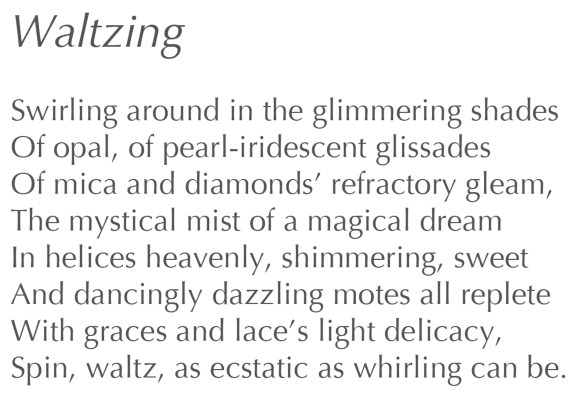
Text: Waltzing

Deep Sea Wishing

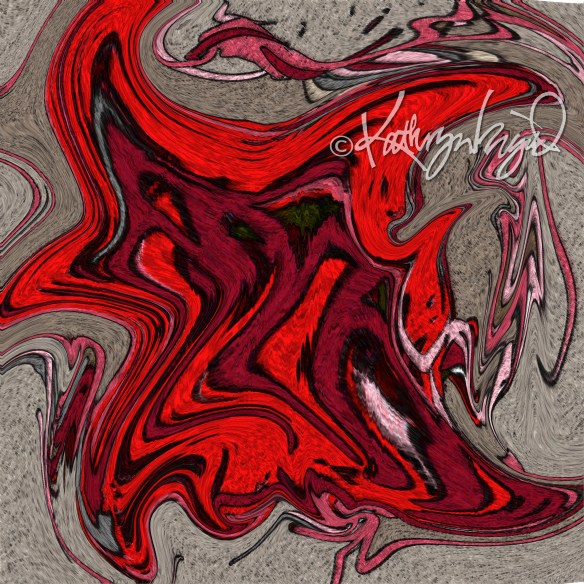
Digital illustration: Psychedelic PstarfishPsychedelic Pstarfish

Seems sillier than psyllium to sing of starry seas,

Yet so the ocean’s silken shore’s sufficient proof of these

That sparkling in such shady deep, something is sure to gleam

In stunning stellar specks and sparks in that submergèd stream,

So sing we sweet and shining songs of starfish as we wish

Upon the evening star to see a firmament of fish

The Great-Greats

Naming things is an endlessly fascinating and complicated way of creating and better understanding our relationships with them. Different cultures have even devised quite distinct ways of classifying and identifying the kinships within them, to the extent that families and relations in the different cultures affect the very ways people interact and consider themselves connected, responsible for each other, and much more.Photo: Great Great Grandparents

One of the appealing (or appalling) quirks, depending upon one’s view, of the American traditions of familial identification and the names given them in English is the way we use the word Great to specify layers of distance from ourselves. This photo, for example, is of one of my sets of great- and/or great-great grandparents (my maternal grandfather’s forebears), if I am not mistaken, and there is much to pique my curiosity in this image.

First, of course, is the question of whether I have identified them correctly at all. But then, in what ways—besides the nominal—were they great? Clearly, being among my ancestors is an easy in to that category. [Ba-dum-tsssssssshhhhhh!]*

Seriously, though, what distinguished these people? Safe to assume, from what little I do know of my relatives in Norway, these two lived on a small farm, and they worked hard. I mean, incredibly hard, by my standards. I’m inclined, actually, to think that the gent is my great grandpa and the lady next to him is his mummified mum, but having seen many a portrait from that era whose subject I was shocked to discover was eons younger than I’d have imagined, I can’t be sure. If this is a couple, I am extra, extra glad I have such a lazy and comfortable life. I may be no spring chicken, but I like to think that people will be able to tell whether or not I’ve already died, and when it does occur, won’t be able to make work boots out of my hide without tanning it further.

This could be the great-grandfather who was a tinsmith. A pretty skilled one, at that. The hands I see here could easily be tough enough to have put metal in its place. As for the farming, what little I’ve gleaned [enough with the shtick! I’ll try to behave myself]* from the various family stories and photos indicates that my family were subsistence farmers, growing what produce would feed their own households or be swapped with neighbors for  further goods, and raising enough sheep and goats, chickens and cattle to keep them in meat, eggs, hides and bones as needed. Agrarian life, until more recent decades, was generally a far more solitary and jack of all trades kind of existence. My grandmothers, great and otherwise (and I can only assume all of the neighbor women of this ancestress’ approximate vintage) did such work as probably made them all look equally leathery.

I would like to think that the sober, if not condemnatory, expressions in the photo sprang from the typical problem of holding still for the interminable exposure time a photograph required in those days, not to mention doing so while squinting in the sunlight. But I also suspect that a combination of that hardscrabble life of theirs and the grimly perdition-obsessed brand of religion to which many of my relatives have subscribed means that these two generally took life mighty seriously as well. They probably didn’t see so much to joke about or room for fun and games in their daily lives.

What I can safely assume about my relatives still gives me some hope. Obviously, they knew enough about how to survive and yes, thankfully, to procreate, that I am here generations later to tell the tale. I consider my existence a fine thing. Although they weren’t either wealthy or showy, they are dressed in well made, tidily kept clothing and lo, my mustachioed male relative even sports a watch chain, so theirs was not, even from the perspective of my privileged and cushy life, a torturous life of pure privation. So I don’t feel enormous existential guilt for their suffering. But I’m not inclined that way like they might have been, anyhow.

My late Norwegian relatives lived and labored in a landscape and climate rather like where I grew up in the American northwest, so I know that even if their daily work was hard they did it surrounded by beauty and nurtured in a mostly benevolent natural environment. They raised children who were able to go out in turn into the wider world and make their ways, eventually finding own their paths, making their own livings, and raising their own families, and eventually crossing many mountains, borders, and seas. I think all of this a fine, if modest, sampler of human existence with [dang it, I just can’t help it!]* relatively little grand tragedy or overblown drama. Most of all, I am glad that the long-gone beings who posed for this rather inscrutable image contributed to the production of a line of pretty good folk, culminating in my immediate family. That’s greatness enough for me, and makes me very thankful indeed. Happy Thanksgiving, my friends.

Foodie Tuesday: Swim for It

If left to my own devices to raise or, more difficult yet, forage and hunt for all of my food, I’d soon enough be a non-meatatarian. I haven’t the patience or the skill for any sort of animal husbandry, nor the remotest chance of outsmarting anything sentient in order to catch it. But despite my pitiful showing as a junior fisherman alongside Gramps in days of yore, I think I could pull myself together enough to learn how to fish and forage the sea enough to keep my love of seafoods at least occasionally treated. Good protein, too.
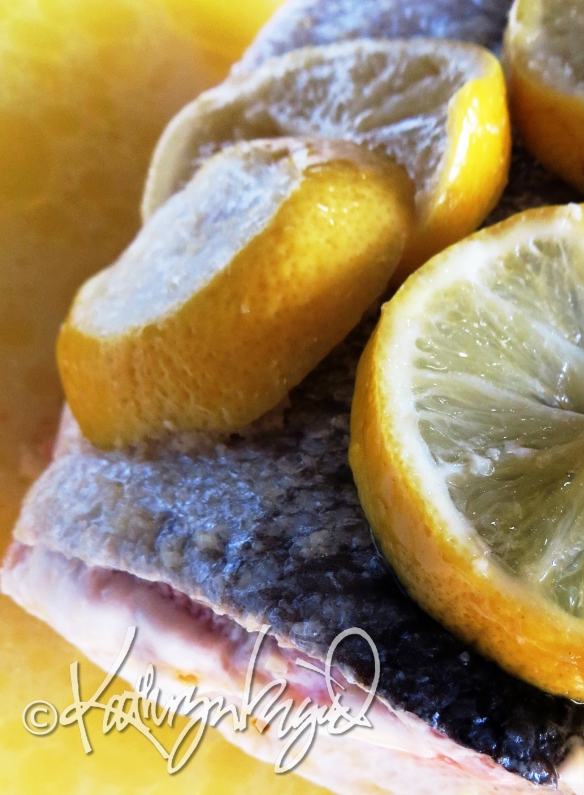
Photo: Salmon Champagne Evening

Sometimes I am happy enough to have a rather plain fried, roasted, baked, steamed, raw, or poached piece of fish. When it’s pristinely, spankingly fresh and sweet, fish should probably not be made too fancy. Why mask perfection? At most, a dash of fresh herbs or a little zip of some lovely masala ought to be plenty of interest to vary the day’s meals. Even I have been known to identify and safely pick and consume wild sorrel, which is an excellent companion to fish in modest amounts. And of course, there’s nothing friendlier with a piece of salmon than citrus or ginger root or plain black pepper, if the foraging can extend as far as a grocery store. One thing I do think well worth the [negligible] fuss if I’m preparing salmon with its skin is to sear it, lightly salted, in butter or a high smoke-point oil before I cover its pan to finish cooking it through on cooktop or in the oven, because crispy salmon skin is delicious and its crunch a wildly beautiful complement to the velvety tenderness of the flesh. Once my palate was introduced to this marvel, I wondered how I had managed to enjoy salmon so much, so often, without having known what I’d been missing. Salty, slightly fat, salmon-flavored, and crispy? How could I not love it!
Photo: See Food

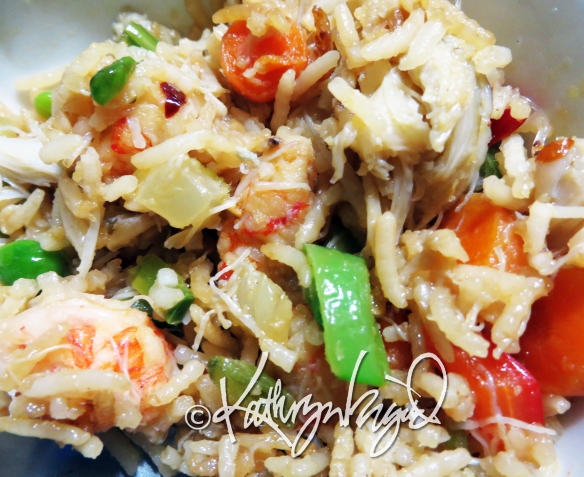
Of course, there are innumerable other outstanding ways to enjoy and indulge in seafood, if one does happen to have access to plenty of other ingredients. Seafood fried rice is one very flexible, quick to fix, and reliably delectable way to enjoy such things. Salmon in bite sized pieces, for one seafood treat, goes quite well with the contrasting grains of rice, lovely with rich that’s been cooked in either broth or coconut water or milk and filled with a delicate confetti of diced celery, carrots, onions, bell peppers, or peas, whether shelled or in sugar snap or snow pea form. But as you can see in the accompanying photo, I enjoy, along with salmon or other kinds of fish, those admirable insect imitators the crustaceans. Hardly anything, sea-based or otherwise, is more enticing in fried rice than crab (naturally, I vote for Dungeness first, every time), lobster, langoustines, or shrimps of various sizes. I would guess that some tiny, tender clams might be more than acceptable in this sort of dish as well, but truthfully, I doubt I’ll ever get quite that far, as long as any of the usual suspects are available. Never say never.

Meanwhile, back at the fried rice, I am still an old Occidental renegade when I make it, cooking it much too slowly for a wok-master’s taste and throwing in whatever I have on hand and am in the mood to eat, from the aforementioned vegetable ingredients, crisply sautéed, to seasonings like Tamari or soy sauce, citrus juice, fresh or candied or pickled ginger or ginger syrup (or all four, as I am an unregenerate ginger fiend), honey, shallots, and/or chile pepper flakes. All of these cook in gently, over low heat, while I’m stirring in an egg to scramble into shreds, and then letting the rice slowly develop a good crust amid copious lashings of fat—coconut oil, avocado oil, ghee, whatever I have on hand. All of this, until I can’t quite wait any longer. Must keep that seafood delicate and fresh. Until I can devour it, anyway.

Tastebud Ticklers

Image

Drawing + text: Delicious Delirium

They were Just Talking

Digital illustration from a photo: They were Just TalkingI listen to the mourning doves that coo and call in the shadows nearby and think that they do indeed sound ineffably sorrowful. The low, guttural sounds they make seem to my ear quite melancholy and, no matter how musical, to convey a kind of tragic news that makes me wonder just what it is that they say to one another. In my mind, they are exchanging the saddest of sad information, a litany of lachrymose lugubriousness.

In addition, I fear that I don’t give them enormous credit for wit and intellect, so if you’ll pardon the expression, I suspect that what conversation they do have is probably akin to what we American human-types sometimes call pidgin English—any actual content of worth being marred by the lack of intelligible vocabulary and syntax. But, to paraphrase what someone wiser than I has also said, if pigeons are the arbiters of intelligence in the same way that we humans are when we assume ourselves to be the wisest and brightest beings in creation, then all other creatures will by default be found wanting. No wonder the pigeons deign to unload their critiques on the heads of our celebrated effigies in the park.

The truth, I imagine, is that mourning-dove conversation is no less and no more wise and scintillating than our own, at least in the context of pigeon society. Heaven knows that anyone who translated my quotidian chitchat into ‘pigeon English’ would probably be violating the Columbiformian (I just made that up from their Latin name, thank-you-very-much) Geneva Conventions by boring them to death with my inanity and my extreme dull-wittedness when it comes to where to find the best yucky trash to eat, how to maintain the pecking order in the flock, or why one must always look for the shiniest surface on an automobile for proper deposition of one’s automotive excretions. So no matter how tragic the tone of the mourning-doves’ vocalizing sounds to a mere humanoid like me, it could be that they were just discussing their plans for world domination and the swell soirée with which they intend to celebrate it.Digital illustration from a photo: They were Just Talking 2

Hot Flash Fiction 13: Eternity Beckons

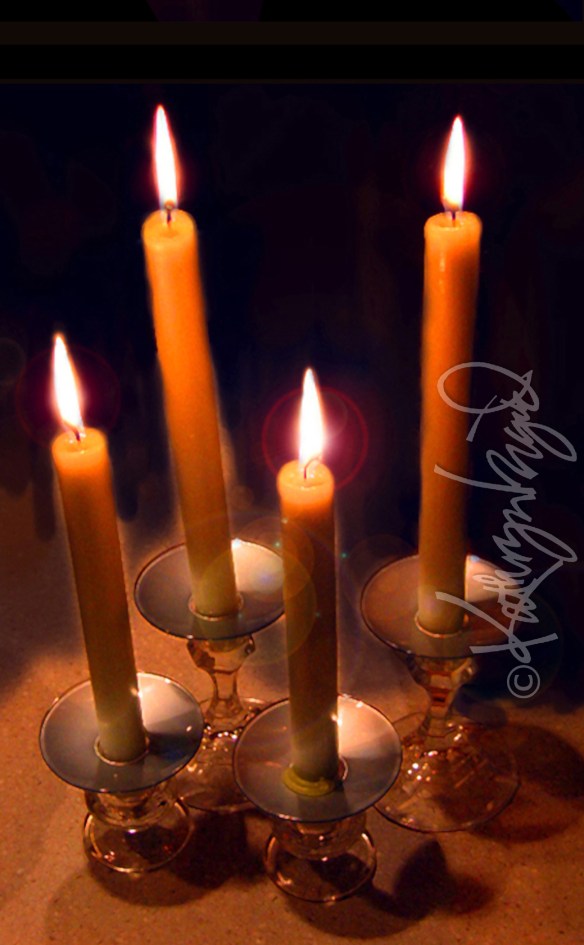
Photo: Science by CandlelightEternal life has always been the masters’ magnificent goal; no wonder that great magister and alchemist Osteodaimon was also determined to solve this elusive mystery himself, to plumb the Stygian depths of knowledge collected by the most piercing minds and intrepid souls ever to walk this dangerous earth. He began with years of reading, apprenticeship, exploration, privation, and experimentation. What Osteodaimon learned most quickly was that the process of becoming immortal was in fact incremental; it was a long series of tiny steps and grand leaps, of fallings-backward and soaring upward, all of which took him through both his long and arduous life of study and also a few strange periods of stasis, in which, all told, he began this mystical transformation of his into one truly able to transcend death. Many and terrifying were the missteps and passages, rites and elixirs, incantations, and the heart-shaking, wrenching feats of bravery and agility required of his profound intellect and the ever-disintegrating body that sought answers from that abyss.

One winter’s night, when he had traversed the grueling routes both between his birth and the ninety-two cycles of the seasons that already marked him as uniquely time-defying by his ancient era’s reckoning, and between the smoothly un-furrowed innocence of youth and his avidly acquired brilliance, he recognized in the ice crystals forming along his lashes the last increment required to complete his journey. Carrying the tinctures and potions that would preserve his last bits of mental and physical strength for the ritual, he set forth in the falling snow and moonlight to go farther into the frozen wilderness than he, or anyone, had ever plunged before. He began to notice as he went forward that the slower he moved, the faster the vastness of ice seemed to recede before him, until it was clear that his pace of progress was directly opposed by the increasingly swift passage of time. He knew that his own final breath was hardly a hairbreadth ahead of him, racing both toward him and away, and that only by letting the speed of it catch up with the glacial slowness he himself was approaching, at exactly the right juncture, and by taking the last dram of his precious medicine at exactly the same instant, could he affect the perfect circumstances for his final transformation.

Osteodaimon finally marked the spot. He lay down on the bottomless swath of blue-black ice, took the last draught of his alchemical magic into his gaunt grey mouth, and stopped. He became fused to the ice there instantly, his eyes made into a pair of wide, dull mirrors for the relentless moon and faded stars of perpetual polar night.

When he returned to himself and forced his eyes to focus again, his vision was oddly fragmented, and he sensed that he had drifted from his last stopping place far more than he had imagined he would have done. But the new place, also moonlit and cold, was pleasant enough, and he knew that soon his vision would clear and the slight buzzing in his ears would pass as he regained his strength. His sense of physical power, indeed, astonished him immediately as it returned; it was not only as though he were young again but as though he had new and exhilarating powers that would easily surpass those of his remembered early years, when he had labored so mightily in his pursuit of conquering death. This new Osteodaimon was a super-being to be reckoned with, and he took off at great speed to see what he could now accomplish in this next passage of his life.

It startled him how quickly he was able to go from place to place, how he seemed now to see things from so many new perspectives and rarely wearied of dashing about, looking, stopping to sup cold water or wine, or have a little food when he chose, but endlessly pursuing the delights of his renewed life. We cannot be sure, for history has failed to record all of the details perfectly, but it may be that it was only a matter of days, or at most weeks, before he realized that he could no longer read.

This proved a surprising disappointment that he would attempt to address soon enough. Not quite soon enough, perhaps, that he was ever able to learn the story of how, in A.D. 1867, a small group of botanists on the steppe discovered a perfectly preserved man encased in ice at the edge of a receding glacier. How the intrepid scientists chiseled their magnificent find out of his tomb in a manageable block and labored to drag it back to their fledgling university by sledge and wagon and train. How they built an ice-house museum room for the express purpose of preserving and examining this amazingly lifelike ancient man. How, one awful night in 1871, the city and that little-known museum in it were consumed by fire. How the ice-entombed mystery man had been spared cremation himself only because the conflagration had taken so long to melt his ice block that he remained weirdly, wonderfully intact, his eyes dully mirroring the moon once again.

Surely Osteodaimon could not have learned how to read again even in time to make sense of the tale that followed, of the chaos after the city’s destruction that prevented anyone from having further sightings of this miraculous time-traveler that had so clearly been the earthly form of the great magister and alchemist himself. Even if he had been able to read again, there would be no document to explain that his ultimate disappearance meant neither that he had finally ceased to exist nor that his old ideas of perpetual life being possible were entirely incorrect, for in the days and weeks immediately following the Great Fire, there was far more concern for removal of dangerous debris and rescue of injured and homeless known victims than for tidying up the remnants of an obscure museum. Had there been a witness to record it, there might have been something that Osteodaimon could hope to learn to read, something telling him that his thawed remains had rotted in the post-apocalyptic drear of an abandoned building, showing no more activity than the usual decay and natural recycling would show.

He might also, of course—had he been able to read it—thought that perhaps the early philosophers and proto-scientists were not entirely wrong but only slightly misdirected in their belief in spontaneous generation. For he would have found in the documentation of the ice-man’s progress that feeding on his mortal remains had been the usual generation or two of avid creatures that led to his emergence, eventually, as revivified carbon in the form of a blowfly. Once alive, always alive, but not, perhaps in precisely the way he had long imagined it.Digital illustration from photos: From Here to Eternity. Maybe.

A Plague on All Our Houses

Even the most steadfastly unquestioning among believers in various versions of mainline religions will allow that, if their deity cares for them as a shepherd cares for sheep, their own religions, yes, even their own temples, mosques, and churches, sometimes harbor wolves in sheep’s clothing. Partisans of every political and philosophical school of thought have seen the unmasking of many such monsters that have hidden behind the guise of goodness and faithfulness, selflessness and judiciousness, or at least experienced the dire effects those have on the lives of the truly committed. There are reasons most languages have such large inventories of words like heretic and traitor, infidel, apostate, renegade, impostor, infiltrator, double agent, betrayer, and hypocrite.
Digital illustration: A Pox on Both Your Houses!

So it astounds me every day that such experienced, otherwise reasonable people are either afraid, or simply refuse, to regularly and thoroughly question and examine the sources of their information, whether they are people or inanimate forms of evidence. Even among the most dedicated, wise, and well-meaning persons the human flaws we all bear cause mistakes and missteps. The most widely accepted proofs of truth may have come about by means of equally imperfect human study and the telephonic accidents of human transcription and translation. No matter how inspired the origin of the wisdom, it can’t be guaranteed to get to the page and from hand to hand, meeting to meeting, one end of the surprisingly not flat earth to the other, without sometimes being misinterpreted or co-opted, whether it’s by the false sheep in the flock or by our own good intentions.

All I can say is that if such stubbornness against rigorously examining our beliefs and every source of them is at its roots a terror of self-examination, we are doomed. We will forever repeat the grim side of human history, by acting out of doubt, cowardice, and ignorance, assumptions that have as much chance of being incorrect as not, and hidebound inability to see the wolves in our very midst for fear of discovering our own culpability. Circling each other with rapiers drawn and fighting to uphold traditions or beliefs or codes that we have so ingrained that they are unquestioned no matter how wrong, we will only deserve the curse of Shakespeare’s Mercutio—who, by the way, may or may not have said “A plague a’ both your houses,” in the original text, but various scholars over the years have guessed at such a reconstruction of it. Even Shakespeare, that demigod of English literature, is only as reliable a source as the many readers and interpreters since his time can determine, assuming that there was one playwright and poet of that name and not, as some believe, some cadre of the great literary minds of that era. Don’t get me started.

I will say right out that I know full well that I am guilty of being poorly or misinformed on a host of topics, and a stubbornly slow learner on top of that. I am trying, however I may stumble along the way, to grow beyond such ossified thinking. If only we could all begin with the premise that the fault might be not in our stars but in our selves, I think we might discover that our reliance on incomplete or incorrect information puts us constantly at risk for inner and outer conflicts we ought to have laid aside or, better yet, avoided altogether. The Other Guy might in fact deserve a listen, and acting first, asking questions later is not a conversation but is likely instead to end in swords crossed and lives lost. Acting in haste or acting in hate, the result may be the same because we were ill prepared to ask the right questions, let alone come to a wise and humane conclusion as a result. There are, sadly and unquestionably, baddies among us. But even so, if we all insist on clinging to our own versions of the truth without regularly and rigorously questioning their verity, then the attack we are all under begins inside, not from any external enemy, real or imagined.

Hey, Lookit What I Found!

Crows are a great source of pleasure to me. I admire their bold, graphic good looks: wiry legs and strong beak, shining eyes, and smooth feathers accented with iridescent shine. I enjoy listening to their noisy announcements and conversations, knowing that whether one is broadcasting his name in braggadocio or informing the rest of the neighborhood of what she’s discovered, there is often more brainy expression and interaction going than in many a text-messaging flurry from a pack of attention-deficient humans.

Crows can be aggressive and mean-spirited like humans, too, as I well know from working many years on a heavily treed campus where nesting season was Open Season on certain passersby whom the crows chose to bully. But for the most part, when they’re not busy trying to defend their territory they devote a goodly amount of time and energy to exploring and problem-solving and even humorous play, that is also surprisingly easy to see through an anthropomorphic lens. If I see a crow taking a particular interest in anything, chances are pretty good that I’ll find it interesting myself, should I follow its lead.
Digital artwork from photographs: Curious Crows

Shore Enough

I am too smart for you by half; you think you’re bright? Don’t make me laugh!

You think me infantile and boisterous, but cannot crack an oyster

With no knife? Ha! Silly chums: no fingers, no opposing thumbs,

And yet, I’ve dined on oysters thrice before you’ve opened one. How nice

That you consider yourselves wise to have your thoughts and synthesize

Them into action, yet still fail to see that mine makes yours seem pale,

When you consider that you’ve got advantages that I have not,

And still I’m able, while you strive and strain to merely keep alive,

To caw this jeering little poem at you from this, my beachfront home.

Things Seen and Unseen

I know I’ve talked here before about how easy it is to stop seeing what’s right in front of me because, well, it’s always right there in front of me. The ubiquitous becoming invisible, and all of that. But lately I’ve been thinking, too, about how often what I haven’t seen before gets automatically dismissed by my brain as non-essential because I relied on the part of thinking that makes instantaneous generalizations and assumptions and chooses to categorize things, as soon as it decides the new thing doesn’t pose a threat.
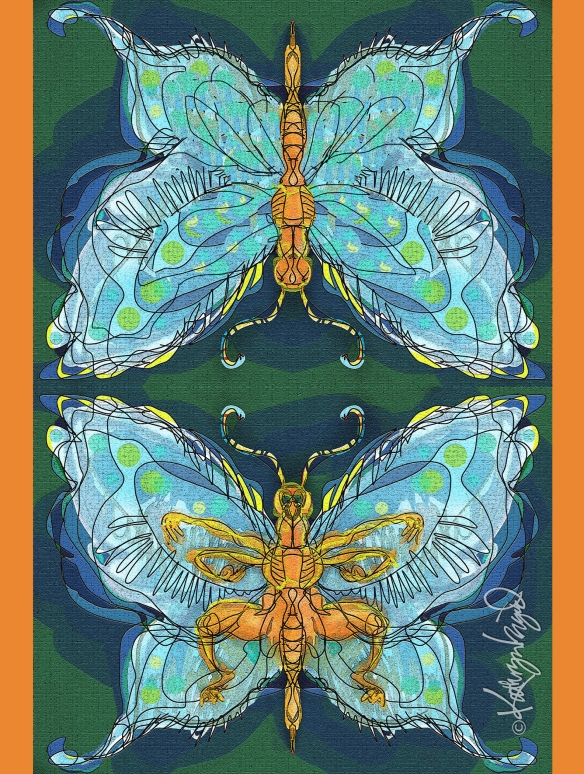
Digital illustration: Friendly Little Insect

While this rarely makes, in real life, the stuff of horror stories, as much as I like a rollicking scary tale at times, I am more concerned when I begin to wonder just how many things this autopilot state of mine makes me miss. Have I bypassed grand opportunities through lack of attention? Undoubtedly. Has my life been different than it could have been had I been more deliberate and thoughtful and thorough? Certainly. Are there people I’ve met whom I never got to know as well as I should have done, never appreciated as deeply as they deserved, never enjoyed the benefits of learning from them or being made better by a real relationship with them? That is unquestionably the hard truth.

Will I be smarter, moving forward, because I paused to ask myself these questions? That, my friends, definitely remains to be seen. I like to think that I’m teachable, but I know I’m also drawn to the easy path in life and often distracted by non-essentials when I should at least be watching where I step, so I’ll make no promises. If I do, however, happen upon any new and delightful things or, especially, people and recognize greater value than a passing glance would have registered, then I won’t consider myself beyond rescue in this regard. Plus, I might find in them the material for some fantastic fiction later on, if I’m lucky.