My One and Only

Despite its title, this post isn’t about my marvelous spouse. But it could be. After all, like the actual topic of the day, marrying him is one of the most meaningful, fun and satisfying achievements in my life, and an act I intend to perform exactly one time ever.

But don’t we all have those? There are certain life experiences that we are so glad happened or are so pleased we did, yet there’s no intention whatsoever of our repeating the episode. Whether it, like my marriage, simply cannot be replicated in all of its fabulous fantastic-ositude-inous-ness, or it’s too expensive or difficult or ephemeral to do more than once in a lifetime, there are just things that will only occur once in our lives.

Making a stone sculpture is one such thing, for me. It was a required project somewhere along the course of my art studies, and I am glad it was required, because I doubt I’d ever have attempted it if the materials hadn’t been put right into my hands, the techniques taught to me on the spot, and the work necessary for me to fulfill the requirements of the class. I’m old enough by now to have figured out that there are a whole lot of activities and things in life I’d never have dared try, let alone figured out how happy I was to pursue them, if I hadn’t had to do them. Stone sculpting is one of those things that fell into the been-there-done-that category, finally, but besides having a decent little piece of art to show for it I am glad there was that one chance in the beginning.
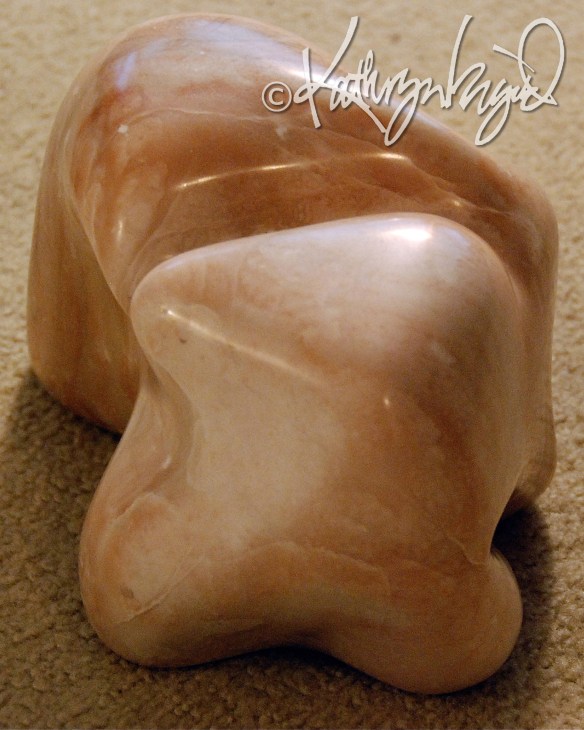
Photo: Alabaster Sculpture

My very own [Untitled] alabaster sculpture, the one and only. Approximately 7.5″ (19 cm) H x 8″ (20.5 cm) W x 11″ (28 cm) W.

Luck and happenstance, of course, have their own parts to play in the determination of whether any new experience becomes a one-off or a lifelong passion. Or, like my marriage, a one-time event that turns into a lifelong passion.

In the case of the rock sculpting, there were a few particulars that [ahem] shaped my attitude about the experience. One was that when the pile of alabaster hunks appeared on the table in front of my sculpture class, I chose a piece, lone among the heap as far as I remember, that had no major, unavoidable fissures in it. This allowed me to make a piece that was not a lot smaller than the original stone without having large parts of it crack and fall off. And my bit of alabaster had some nice coloration, attractive pale veining, and a natural overall shape that guided my sculpting choices. So all I did was refine the existing form and exaggerated it, and that led to the abstraction I made in the end. I just aimed for a sort of rounded Henry Moore-ish sculptural curvaceousness to showcase the silky, milky beauty of the alabaster as best I could. It was a slow and fussy process to chisel out an alabaster sculpture, and it made me ever so much more appreciative of and awestruck regarding the accomplishments of all real stone sculptors throughout the ages. Also, glad not to put my perpetual laziness into extended servitude to stone carving.

So, yeah. I made an alabaster sculpture, and I kind of like the result. And I’m happy that I did it, that I had the experience and learned a deeper appreciation of that art form. And yes, I am also pleased that I don’t ever have to make another alabaster sculpture, with the possible exception of the if-and-when instance of my deciding someday to have another go at it. Meanwhile, I have a decent memento of the experience. And if I get tired of it as a decorative object, it’s big and heavy enough to make a decent doorstop. If not beauty, then utility: that’s kind of how those once-or-more decisions can go.
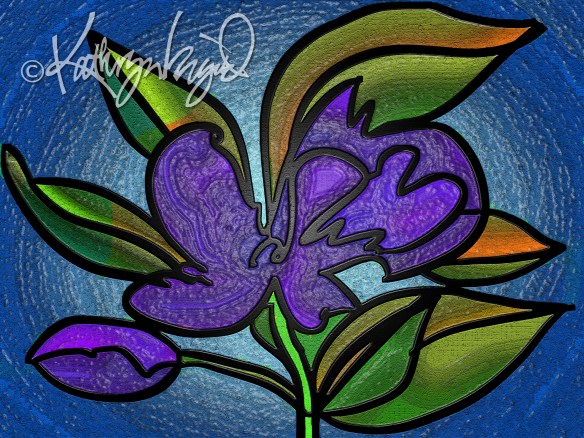
Sometimes It’s Hard to Tell Who’s Giving the Gift and Who’s the Recipient

I have been taught that it’s polite to accept generosity with good grace: say Thank You, show proper appreciation, and humbly know that even when you think you don’t need or want the gift, it is your turn to show kindness by recognizing its significance to the giver. That doesn’t mean I’m terribly shy about ‘re-gifting,’ or passing the gifts along to someone I think will better appreciate and use them, eventually. It also doesn’t guarantee that I’m entirely alert to when I’m being presented with something valuable and meaningful. Even when I’m fully aware of my undeserving, I’m not exactly a genius at generosity myself, let alone fully attuned to how much I am given and how often.

Take the times when I am being thanked with gifts for doing things that I should have done as a matter of course, and often have done very grudgingly at that. I have always been a poor excuse for a visitor, supporter and caregiver, being intimidated and squeamish and easily unnerved by others’ needs and ailments and trials. I was terrified of visiting my own grandparents when they were old and shut-in, unable to be the people I had known in their healthier and more mobile and cogent days, and could rarely face the strangers that they had become, let alone the alien and frightened person I was myself in their presence.

Long before those times, even, I was both younger and less experienced or brave, if you can imagine anything yet more craven. My parents had always taught me by example that care and compassion, generosity and hospitality and respect, all of these were essential life skills and characteristics that should be nurtured and cultivated through consistent use. And I never got good at any of that.

Once, when Dad was making a hospital call on a parishioner who was dying of cancer, it happened to be when Mom and I needed to be along with him for something later in the day and it wasn’t convenient for anyone to be shuttling back and forth multiple times, so Mom and I rode along. Somewhere on the trip I realized or was persuaded that I should join both of them in visiting this man who was a stranger to me, rather than sitting and waiting in the car on a cold, damp day in the first week of December. I’m quite certain that I was both reluctant and frightened to make this visit, parental support notwithstanding. I’d never seen a person so near to death, and his being unknown to me did nothing to ease my fears; if anything, my perpetual social anxiety probably spiked to all-time highs at the thought of meeting someone new just when he was about to die. I’m quite sure that I wasn’t mature enough to recognize that this was a clear instance of the occasion being ‘about’ him, and not about me at all.

I remember rather little of the actual visit, only little bits. I had met this man’s wife once or twice, so I suppose we exchanged some small talk about that acquaintance. He asked me about my interest in art and shared that, while he’d had some entirely different sort of day job, he’d always had a creative urge and had made many small stained glass pieces as a fond hobby, something I gathered he sold to make a little pocket-money at times. His inquiry about what was happening in my own life just about then eventually revealed that the anniversary of my birth was approaching just as the end of his life was to come.

He was a pale, yellowish creature after cancer had defeated most of his bodily systems and all of his treatments, bloated but in an empty way; an airy husk of the man that had been, now nearly ready to blow away. His hospital room smelled just like hospital rooms have always smelled, overlaid with the added imaginary pall of looming mortality. I wasn’t a baby—I understood well enough that his sort of death wasn’t contagious—but I couldn’t help itching to escape all the same.

When this pallid wraith offered me his dry, cool hand I took it in mine and held it for a while as he and my parents continued to talk softly about more needful things. I did my best to give the appearance of better bravery than I had, if not compassion, and still he showed me more sympathy than I expect I did him. He thanked us all quietly for the visit as we left, and I was too immersed in trying to console myself over the sadness and discomfort of it all to realize that it was he who had done the kindness.

I heard in just a few days of his death and thought with some melancholy of how sorrowful it must have been for him to face it, and for his loved ones to cope with its eventual, if expected, arrival. Only a couple of days later, I thought of him again.

It was my birthday, and among the presents I received was one small package that was not from a family member. My parents told me that my acquaintance had asked his family to see that I be given this gift as a token of his gratitude for my visit. It was a table-top stained glass flower he had crafted sometime back when he still had the strength and skill to make such things. The little blue flower bowed gently on its wire stem, and I was abashed and moved by it.

This was a delicate token of real grace. It made a fine representation of that goodness, its glass petals and leaves letting light filter through, its slender stem so fine, yet resilient enough to spring back upward when pressed. It was a flower that stubbornly refused to wilt, even when it was a post-mortem gift from a virtual stranger. I don’t know, after all of these years, precisely what happened to it or when and where it disappeared, but I kept it for a very long time indeed and found in its simplicity a constant reminder that the little things even a reluctant and weak person might do in the name of duty or expedience or, however hesitantly and ineptly, for kindness’ sake, might in the end have some power. That this power is not our own matters less than that it can change the course of the moment, or sometimes, perhaps, even make a difference in matters of life and death.Digital illustration: Stained Glass Flower

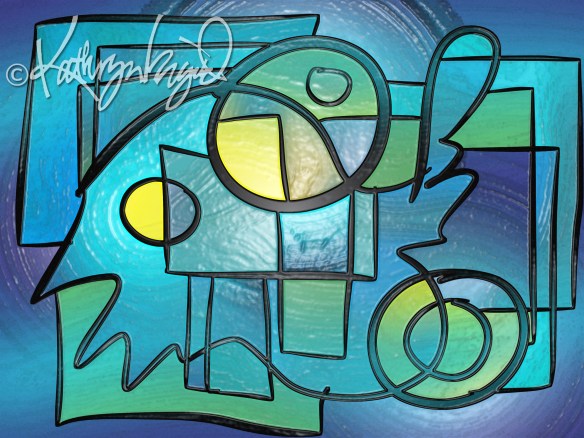
Changing Directions

Digital illustration: Changing Directions

Do I move at the whim of the slightest breeze? Often enough, I suppose. But what really changes my direction in life? Chance? Passion? Accident? Will?

I’d say it’s been one or another of all of those at various times, and perhaps occasionally a combination of elements. What I would say most definitely and commonly is that I have rarely known very far in advance what direction my life would be taking, let alone exactly when. Living with uncertainty is at the heart of the human condition. We can’t know (nor would I wish to know) much of what lies ahead for us. Being an artist, and married to an artist, I have made some choices that guaranteed perhaps an even deeper and more frequent susceptibility to wondering what comes next. While both of us have taught at times, an occupation that has a degree of predictability and dependability absent in most other employment that involves our artistic skills and training, it never prevented the question from arising in other ways.

For me, as a longtime adjunct at the university, it meant that though I’d been there for nearly seventeen years (most of those, full-time) before I stopped teaching, I never had a contract in hand for more than a year at a time, nor was my class load or schedule in any way predestined; I taught what I was asked to teach, when I was asked to teach it. For my spouse, a tenured full professor and director of his division, he still had questions about how he might change and grow as a teacher, never mind whether to apply for or take any of the other positions on offer at other places from time to time.

We are, I think, pretty much the ordinary pair when it comes to that sort of thing. Even now, after many years of doing particular kinds of work at specific places and getting plenty of satisfaction from those various tasks, it doesn’t in any way stop us from asking, What next? Will we continue on the present path exactly as we are just now? Do we opt to  make any kinds of transitions, either changing the way we do what we do or the venue for doing it, or does something entirely new entice and draw our interest? If it does, is it attainable? Is there some utterly unimagined thing lurking just around an unsuspected corner, waiting to draw us in?

At times, it can make me feel as though I can never quite catch my breath or my balance. I tire of asking myself all of these whys, hows and what-ifs, yet I can’t resist scratching at the questions the minute I thought I’d put them to rest for a while. Even when I’m most happy and fulfilled and contented, I always wonder what lies ahead.

And that, of course, is the very heart of that human condition. We know that change is inevitable. We know that some of it will be by our choice, and much of it will be thrust upon us or sneak up subtly and surprise us all the same. And we know that, in some ways, the only guarantee we have is that we will all die wondering. It’s what we do, and it’s who we are.

Shadowy Façade

digitally doctored photo

There are endless supplies of guides on How To do something-or-anything; I’m more concerned with How Not to Do It. Much of the how-to tutorials seem aimed more at giving us a gloss of respectability in the subject, a sort of facade of excellence, than actual, practical depth. Expertise is, obviously, a relative thing, after all. It’s not all that hard to be considered an expert in or at something that is very rare or an extremely new discovery or invention: lack of exposure guarantees that few can have mastery. A whole lot more, however, is skill or knowledge that takes a dedicated effort to master to any level of real expertise.

My greatest expertise, if I can be said to have any, is probably in the category of performing ‘filler’ duties in most of the activities I try. Work as I may, I’m not likely to become great at most, and I seldom find learning anything all that easily or swiftly done. Being naturally lazy, I’m even less often found pursuing new knowledge and skills with great rigor and vigor just for their own sakes. So at best, I tend to end somewhere in the middle of the pack. I like to think of myself as the necessary delineator between the great and the mediocre.

All silliness aside, this seems to me an age in which we, collectively, have lost our appreciation for true expertise. Maybe it’s my imagination, but I get the sense that somewhere between the assumption that a speedy dash through Wikipedia will provide all the wisdom we need on any topic and our fascination with outliers—finding the novelty of savants and overnight sensations far more exciting than hardworking earned-doctorate intelligence—and the sense of entitlement our privileged modern existence gives us, we lose touch with the value of elbow grease and passion.

I wasn’t born either brilliant or extraordinarily gifted, and I’m not ashamed of that. But it’d be a pity to go to my grave without having tried to improve on what few bits of intelligence and invention I do have. If I manage to do my best in the present and keep moving toward an elevated horizon, I may not change the world for the better by a single degree, but I will certainly have bettered myself and I might have the slightest chance of shedding a little light around me as I go.

Looks like I’d better get moving!

PostModern Coloring Book

Now that I’ve had my iPad and its various drawing and art apps for about six months, you might hope, if not expect, that I would have gained a certain amount of fluency in the medium. You would, of course, be disappointed in that. I’m still as ignorant a neophyte as ever. But I’m having a good time, and that makes plodding along at my own minimal speed worth my while, all the same. I suppose it could be compared to the childhood love of scribbling and crayons and such excellent things that leads to our continuing to practice for extensive periods over our early years despite being unlikely to become little masters of art for a much longer time yet.
Digital illustration: Modernist Coloring Book

It would be more meaningful to me, I imagine, and to those who know me, if I could extend that youthful courtesy not only to playing with my latest techno-tools for art making but also to other areas of my life’s education, the many in which I have far less patience with learning as slowly as I do and therefore generally end up quitting or making virtually no progress for eons. Imagine if I loved studying personal finance as much as I like scribbling: I might be rolling in wealth by now instead of still struggling to count change when I buy a few groceries. If I had learned to enjoy practicing exercise—any form of exercise at all—I could have been fit and fabulous and looking at living enough more decades that I could learn a vast quantity of other fantastic and exciting things.

But alas, none of that is my nature or my passion. Plodding along and just playing with those things that amaze and amuse me, that’s my style. I may get up a short burst of energy or speed and manage to improve at one thing or another in my repertoire occasionally, but if you’re looking for snappy progress, cast your eyes in any other direction and you’ll have a better chance of seeing something new and inspiring happen. I’ll be right here in my little corner, scrawling with a stylus like a crazed second-grader mauling her coloring book and cackling with delight over the slightest mark that pleases me. Just think how well I make the rest of you look good!

I Did It Myself…*to* Myself

Do It Yourself (DIY) projects, when well executed and realized, are impressive and admirable. They double one’s pleasure in the end product by being not only beautiful and useful as desired but also the satisfying result of her own skilled labors. Personal investment increase value exponentially.

I can claim a few DIY accomplishments on my resume, happily, despite my ordinary limitations of resource, monetary or of expertise or ability for the project in hand. But having mentioned hands, I must also confess to having a DITY (Do It TO Yourself) record as well. On the occasion of the hand-made hand injury, I was fortunate that my second of inattention resulted in no worse mishap than a tiny nip on my finger.

Being an artist, I did however do this with a certain degree of style: when I stuck my finger with a single tooth of my nice, sharp little hand saw (too aptly named, perhaps?), I did manage to insert the steel into the only small spot on my hand that already had a visible scar. Puncture becomes punctuation, so to speak.

As always, the tiniest wound is magnified by other pains, not least of them the injury to ego and dignity when on the instant of infliction I succumb to a combination of reactions that to the uninjured could only have a sort of serio-comic ridiculousness perfect for cutting me down to size. The unpleasantness of having made an unwanted incision in my personage is compounded by the leap back that threatens to throw me over a chair and onto my tailbone; the pinching clamp of fingers on the cut to stanch the bleeding hurts almost more  than the initial stab; the yell of pain that, in my nephew’s youthful terminology ‘scares my ears’ is also loud enough for the neighbors to hear and enjoy. On top of all this is the diminution of my sanguine pride, reminding me that my handy skills are sorely limited no matter what I tell myself.

Does this prevent my attempting further DIY projects? Hardly! Being by nature a timid and lazy and not-so-brilliant craftsman hasn’t made me give up but instead tends to make me plan and work things out fairly exhaustively before I begin, and to assume that I’ll make mistakes or need help before I finish. It all slows me down, to be sure—and that’s not a bad thing, mind you. Any DIY work is bound to be only as polished as patience and occasionally remedial work can make it.

When I speed up too much, I get sloppy and unfocused; I make silly mistakes like sticking my finger on a saw tooth/a saw tooth into my finger. Luckily for me, I didn’t have a power saw going there, so all I lost was a few minutes, my composure, and a few red cells rather than a digit. In return, I got a good reminder to sharpen my attention, to use tools with greater care, and to call in expert help when needed.

After all, I’d far rather sacrifice some dollars and a touch of my DIY pride than an appendage. This is how I’ve survived to my advanced age without losing any body parts or breaking any bones. I have recovered numerous times from being an (or falling on my) ass. Self image is ever so much more resilient than such things. Arguably, a little too much so in my case, or I wouldn’t tend to get into these fixes at all.

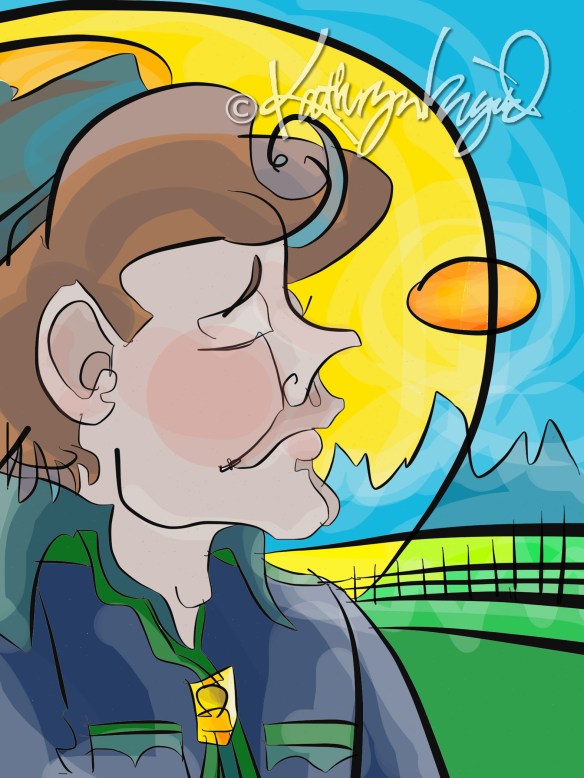
Of course, getting into a fix is something I can easily do all by myself. For that task, I do have all of the necessary experience and expertise.Digital Illustration: In Which I am a Silly Ass

A Whispering Medium

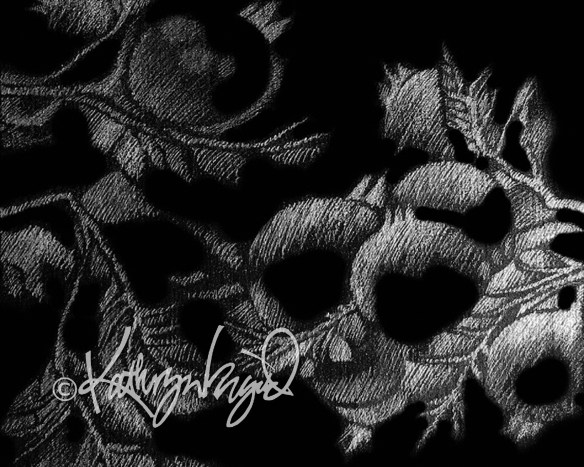
Silverpoint is relatively rarely seen nowadays, but it remains a delicate medium for drawing. Putting a point of real silver onto gessoed paper allows the same kind of fine detail and fragility to be expressed that are characteristic of harder graphite pencils’ work. The effect is of pale and careful imagery, a wisp of smoke, a mist, a whisper.Drawing: Silverpoint Apples

There’s an appealing air of the arcane to a medium that’s old and seldom used nowadays, and silverpoint qualifies on both counts. It’s also effective, as I found in my little experiments, on a black background to create gently ghostly drawings, but as ghosts seem wont to do, has a tendency to disappear at the slightest whiff of air, since oxidation darkens silver and it becomes less and less visible against the dark ground. Of course, that very ephemeral quality might be a further attraction, an encouragement to see the medium as a passing fancy best appreciated ‘fresh’ and gone in the blink of an eye.

Drawing: Silverpoint Blueberries

This is, after all, an age in which change comes at an ever-increasing speed and in growing quantities, and we become accustomed to nearly everything having the shelf life of a mayfly at best. We adapt, we move on. Yet we crave the sense of permanence and connection, so here I am marking in graphite over the top of the silverpoint as it fades, or scanning the images to enhance the contrast while it can still be seen. And while I still love the sense of tactile attachment and involvement that writing longhand, pencil on paper, gives me even when I’m up to my elbows in graphite dust, not to mention hoping that the neural connections such physical action reinforces better than keyboard manipulations will stay with me longer somehow, what do I do with my writings? Transcribe the scribbles to the electronic medium by sitting at my keyboard afterward anyway.

So passes our world; we labor with new tools to speed things up, revisit and relish the old methodology and tools to slow down and remember, and then run back to catch up with the new again. We, too, are ephemeral as faint images, as ghosts, and we feel our mortality even as we strive to make our marks on the world while passing through it. Our tiny voices and messages may be lost in the ether forever, and that, almost at the instant of their making, but the urge to tell our tales remains. Our little silver trails will fade, but we will have moved on elsewhere as well.

I am a Three-Year-Old

Digital illustration: Coloring Book/Stained GlassHave I matured as much in three years of daily blogging as a toddler does in her first three years of life? Highly unlikely. I was, after all, already a half century old and probably set in many of my ways to a degree that could forestall any large amount of progress toward real change, or at least drag it by the ankles dramatically.

Chances are, I haven’t made a huge number of changes as a person in general during the last three years. But I can lay claim to some growth, after all.

Moving to the wholly new world of life here in Texas in 2009 certainly necessitated some change. My aging corpus may not have made the transition perfectly: being over-endowed with the internal furnace function of middle-aged hormonal fun isn’t entirely compatible with the outdoor temperature norms here, and like many transplanted citizens I’ve done some battle with the local slate of allergens new to my system.

On the positive side, what I’ve found as a blogger echoes the best of what I found in migrating from my longtime home in the Pacific Northwest to the new-to-me frontier of North Texas, an entirely different sort of northern-ness. Entering new territories, both the real and the online ones, presented the possibility of encountering insurmountable tasks and challenges, or worse yet, unfriendly natives. Of course, my being still in Texas after five years and still blogging after three tells you that none of those fears proved true. Quite the reverse, in fact, considering that I’ve had some lovely experiences in both worlds during my brief tenure here, and I’ve garnered a whole cadre of wonderful friends in both, as well.

In short, I would amend my initial statement so far as to say that anything leading to such an exponential increase in the size and variety and quality of my circle of compatriots seems to me the very best kind of growth possible. Happy blogiversary to me this week—and more importantly, from me to all of you, who have made the journey so worthwhile and still so inviting. Who knows where the next three years may take us all!

Ridin’ the Fences

I’ve lived in Texas for five years now. Safe to say, no native of the state would remotely consider me a Texan, though. Being a true Texan, I think, is not so much a matter of hometowns and habits as it is something that exists in the ethereal zone where there is an overlap between a spiritual state and an art form.

I don’t begrudge this; I merely stand in awe of it. It’s as intense and intrinsic a form of identity, I gather, as any birthright. I also believe that regardless of where on earth you had your nativity, you either are or aren’t born to be a Texan. Some people born in the state of Texas can take it or leave it, some just need and can’t wait to leave it, period, and can’t take it at all. And as the slogan here goes, there are non-natives who swear that ‘I was born in X, but I got to Texas as fast as I could.’
Digital illustration: Ridin' the FencesKind of the way of all callings, I suppose. Some have a clear sense of destiny or vocation, and some don’t. Some adore what that purpose promises them, some are indifferent, and some will go to the ends of the earth and beyond, if necessary, to escape it as if it were Toxic Doom, Incorporated. We all have our ways of ridin’ the fences.

So if I can’t be a real-live ranch hand no matter how that suits my romantic image of what it ought to mean to be a Texan, at least I’ve found my ways to make living in Texas suit me just fine, for as long as I desire to live here or the Real Texans don’t hogtie me and ship me out of the state in a rickety hay-wagon with a busted axle.

Did that Sound Insincere?

My family thrives on sarcasm, satire, and silliness, with a tiny dash of the snarky for good measure. It’s in the genetic pattern, and I can’t remember a time or age when we weren’t all generally a bunch of smarty-pants, irreverent goofs around home. I can’t even remember the first time that I began to realize that not everybody speaks that language. Some people think it too flippant (or possibly, blasphemous, at times), and some simply and plainly see the entire world in a very literal light. I can certainly understand how, to them, my family’s way of communicating would be mystifying and, very probably, make us seem really dimwitted or alien, or both. I don’t mind. It’s most likely true, about me, anyway.

Digital illustration: Did that Sound Insincere to You?

There are times, however, when I have well and truly put my foot in it. And I wish that I either could have read the situation better or had simply paid better attention. Sometimes it’s not nice to be flippant or jokey or snarky, or even to say the direct opposite of what I mean merely to lighten the mood or put someone at ease. Such stuff can go very wrong in an instant if I fail to notice that the party on the receiving end doesn’t converse in that language, or doesn’t appreciate what I think of as its lightheartedness.

But to be honest, most of the time I just think it’s their loss.

With one particular exception: I do feel especially ridiculous when I’ve been consistently playful and perhaps outlandish in my communications with a person and I want to get serious for a moment, especially when I want to say something complimentary. Did it now sound like I was insulting my friend because I was uncharacteristically nice and kindly? If I think it humorous to be droll and dry and sarcastic, maybe I’ve gotten too far from being nice! What’s a poor fool to do? Most likely, fall back on my old ways and hope for the best. At least I’ve done marvelously well in my life at surrounding myself with people who are almost superhuman in interpreting my chatter with generous and accepting ears and open minds, so I haven’t yet been banished from polite society despite my shortcomings.

And if you’re one of the many who have thus given me a pass, I thank you deeply. No, I really, really do mean that!