You are So Strange!

digital illustrationI don’t mean to be rude, but it’s hard not to recoil at the unknown. What?! No shoulder gills? How can you use your nose for smelling things if you’re busy using it to breathe at the same time? No horns? Oh, dear, where are your radar sensing structures housed? And my goodness, those awful, blind blue and brown orbs where your eyes should be! How in the world do you manage without proper infrared vision, you poor thing? What’s with having ears awkwardly positioned, so low and flat against the head that they can’t rotate and bend to follow every sound?

I realize that we’re not all made the same, but sometimes it shocks me that anyone so odd looking and freakishly ill-equipped as all you other sad creatures out there can survive at all. I don’t hate you because you’re pitiful, but still I can’t help being sad at your obvious plight. It’s difficult at times not to seem patronizing, disgusted and repulsed that you’re not all as sensibly made and beautiful in your correctness as I am. Please forgive my involuntary condescension. It’s not your fault that you weren’t born or trained to be as nearly perfect as me.

Haunted Youth

digital illustration from a photoThat House on Our Street

The doorway was a toothy maw, the casement was an eye,

and all the children crept in awe each time they must pass by,

regardless what they heard or saw; they knew that they would die

if anything at all should draw them in, no matter why,

For bogeys, fiends and ghastly ghouls inhabited the place,

entrapping and devouring fools, and set on them apace;

those children who had left their schools and homes without a trace

now lay decaying in deep pools as dark as outer space,

Dug in the basement deep below, a catacomb of holes

filled up with youth who’d tried to go into this cage of souls

and found, not fun adventures, no, but rather, evil moles

of spirit-kind hid here–and so, for them the town bell tolls;

Lost children wail twixt yonder walls at night while moonlight creeps,

and roam like mists down endless halls while all around them sleeps;

no knowing parent ever calls again; the mansion keeps

its secrets tight, and silence falls, far as the deepest deeps;

At least, the children’s fears said so; the legend kept in thrall

the children thereabouts, who’d go timidly past it all

at anxious speed along the row, lest they lose their recall

to safety. As grownups all know: life’s scary when you’re small!

Halloween can Drive You Batty

photophoto + textReal Vampires Never had it so Good

Dracula had an excellent agent,

Publicist extraordinaire,

Selling the masses on his glamour

And his wicked savoir-faire;

Modern undead rock-star heroes

Fascinate and rake the bucks,

But for ordinary vampires,

Sans PR-men, life still sucks—

We’re just rodents to the public,

Flying hair-snags, guano kings,

Rabies-ridden, squeaking, dog-faced,

Lots of other rotten things,

Never mind we were the first,

The inspiration for the rest—

Love to give usurping phonies

Juicy stakes for every pest,

Take back our eternal midnight,

Sip the hemoglobin wine,

Fatten up our hard-earned bloodlines,

Back in place as night’s divine.photo

Enter Two Figures, Stage Right, Smoking

It’s weird, downright bizarre, to watch vintage film and plays and see hospital scenes where the doctors and nurses and orderlies are all puffing madly on their unfiltered cigarettes while earnestly counseling and tending their patients to make them all as healthy as they, their caregivers, are. To see those marvelously odd advertisements of yore with the top athletes of the day touting the energizing and strengthening effects their favorite brands of smokes give them. I watch such things with the same sort of astonishment I feel on observing the freakish footnotes of science as the pendulum swings back and forth with abandon, belying the idea that scientific discoveries lead to indisputable fact, or that even more outlandish concept, that once something is accepted as fact it would change how we behave.digital collageBecause what’s sincerely weird and bizarre, odd and freakish is that there are still millions of people, even many who will say outright that they believe smoking has been proven to be a health hazard, who smoke cigars, cigarettes and pipes, use snuff, or chew tobacco. I get the older folk who’ve been smoking since well before it was generally considered a given that it was a bad idea and likely to shorten or worsen one’s lifespan, knowing what a deeply addicting ‘treat’ tobacco is. A friend who was both a smoker and an alcoholic long ago swore that giving up drinking was absolute child’s play compared to kicking the nicotine habit. It’s those who, growing up in generations that predicated their smoking views on the premise of its outsized dangers, still choose to start smoking, that mystify me utterly. But then, I am amazed and flummoxed and otherwise mystified by anyone wanting to ride motorcycles without helmets, imbibe hallucinogens, run with the bulls, free dive competitively, juggle chainsaws, charm cobras, or any of that other adrenaline-junkie stuff.photoThen again, millions of people are bound to be equally agog that I would risk my health eating the way that I do, waste my time being an artist and writer, or be so stupid as to like any number of the things I enjoy and admire. Perhaps one day there will be a play or movie of my life, made for the sheer entertainment of people who like being shocked by my great idiocy and strangeness and find it hard to believe I survived to the great old age of fifty-two (or, hopefully, much more) with my inexplicable bundle of psychoses masquerading as the stuff that charmed me. I bow to you and take my leave, friends. I know that I shall die, but we can only guess which of us will get there first.

Memento Quod Vivitis

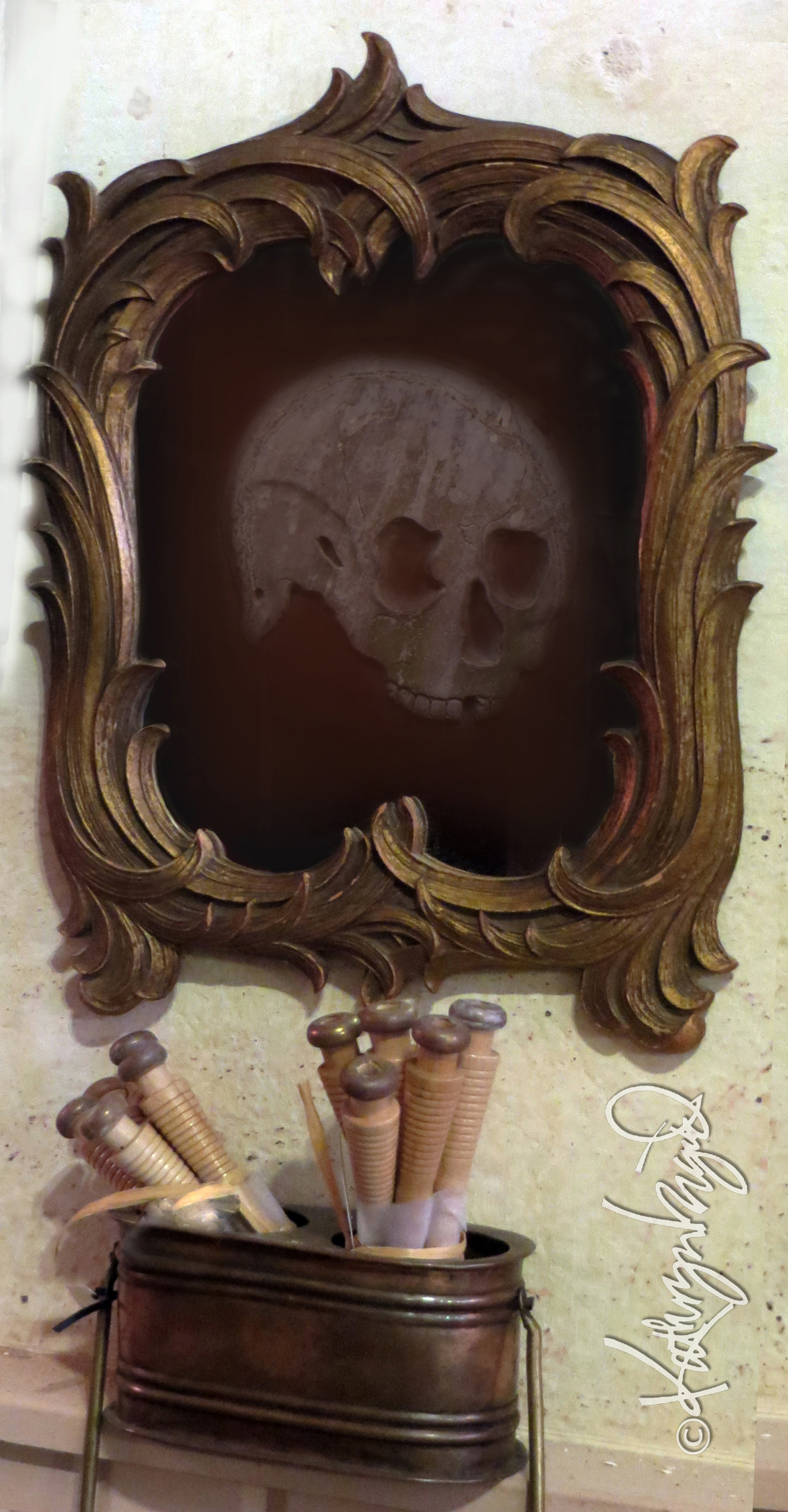
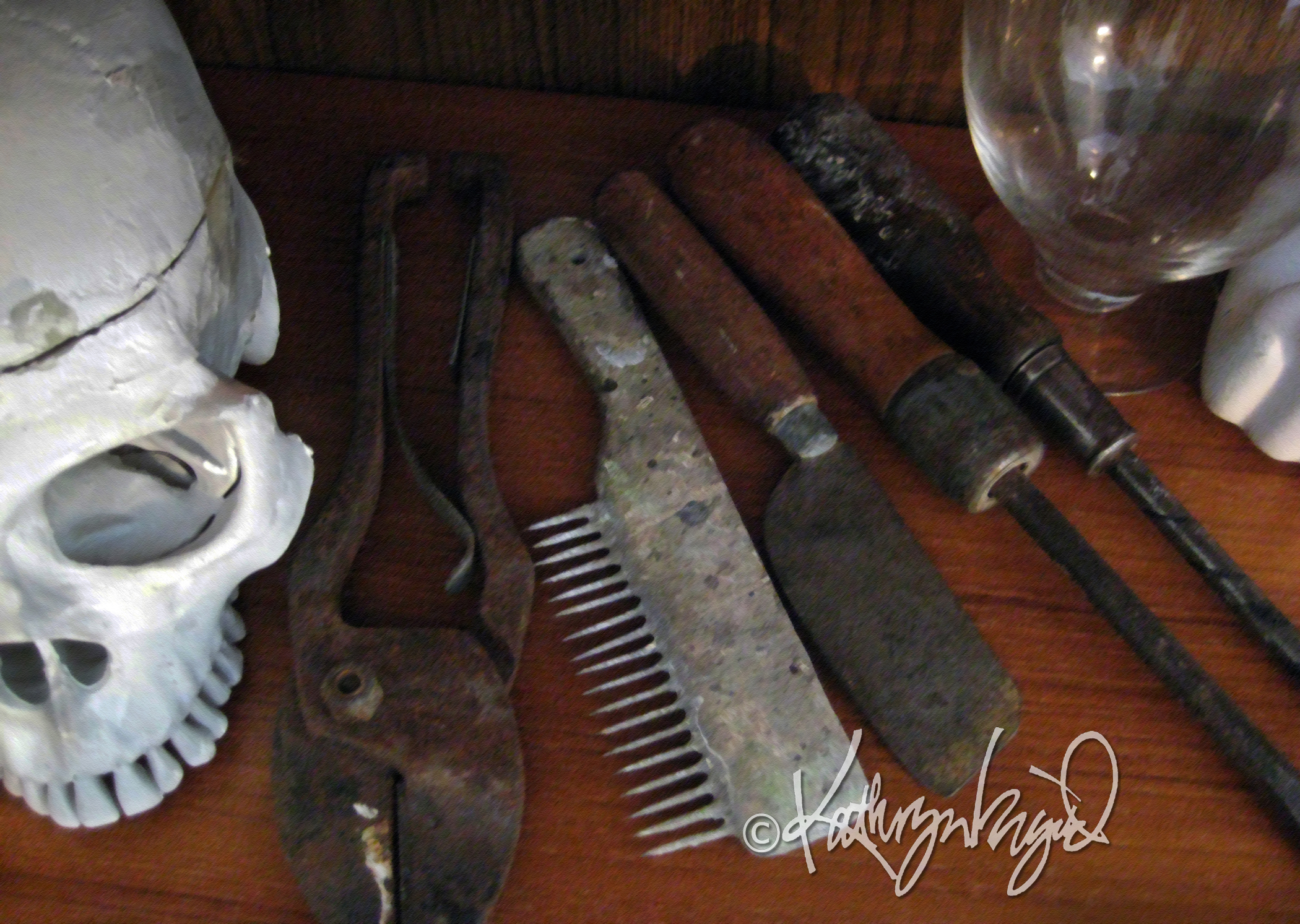
The longtime artistic tradition of the ‘memento mori‘ has always appealed to me. I think it’s valuable to recognize our mortality and the limitations of our time on this plane to devote to earthly enjoyments, the better to value them fully. Not to mention that I love skeletons and a lot of that stuff so often used symbolically in these works. I’m not disheartened, horrified, or unsettled by death and the subjects surrounding it, under everyday circumstances, in the way that some people are.digital illustration from a photoThe main thing is, I think it’s even more important to (as my guesswork-Latin post title suggests) remember that you’re alive. It’s not enough motivation to live a full, meaningful, rich, purposeful life just to know that you’re going to kick the bucket one day; everybody knows that, and it’s probably not even a majority of our kind that actually give serious thought to being fully present in their lives and making the most of their life spans. I know for certain that I haven’t always been especially good at such things.photoSo I’m rather happy to have an eye-opening, soul-tweaking glimpse of my little collection of death-defying totems, kept in view around my home and work spaces, at any moment when they happen to some into my field of vision. Not a bad way to refocus me and make me feel especially alive.

Urbanity

There is a huge difference between the merely impressive and the expressive when it comes to modern cities. Rotterdam, once one of the glories in the European architectural crown, was bombed to dust in WWII and, given the poverty of post-war resources, was rebuilt in the following decades as a horrifyingly soulless, boxy blot of concrete on the face of the Netherlands. There is no comfort in knowing that the firestorm that destroyed the city was probably not planned as it happened but resulted from a perfect storm of another kind in miscommunications; the horrors of war are a long testimony to the potential for such devastation. In any even, it took Rotterdam ages to be revitalized into the place of energy and beauty that it is today. Why? What made it such a heart-stopping graveyard of a place when it had once been full of life and loveliness, and how could it ever come back to be something gracious and potent again?

There is no obvious single word that can express the massive destructive toll the bombing took on that city; annihilation is perhaps a close approximation, since it’s clear even from faded photos that the thoroughness of the attacks left very little evidence there had ever been a Rotterdam. I find it nearly impossible to imagine even when staring at proof. When my spouse and I visited the city for a conference even less than fifteen years ago it was still a sad shadow of its former glory, still dominated by 1950s-vintage blocks of affordable and utilitarian harshness that made me want to scream when I saw them in juxtaposition to the few tiny remnants of the beautiful architecture that had once filled the place.

The main reason that Rotterdam is beautiful once again, and that many other cities have, and some have never lost, such beauty is simple: architectural thought and distinction. Building what is cheapest and easiest to construct is a poor solution to lack of structure anywhere. Places that have never experienced the ravages of war, urban decay and other forms of damage and neglect in such extremes can retain the beauty and patina of urbane culture in their urban settings far more easily. Take Boston, Massachusetts, a city that has seen its share of ups and downs over time, but as one of the older cities in a young and generally untouched-by-war country, still has many of its older–even oldest–and most prized, elegant, distinctive buildings. Despite the expected problems of social unrest, economic up- and downturns, spots of urban blight and misdirected city planning that Boston has faced like any modern city, the knowledge that the architectural strengths it does have are worthy of protecting and preserving means that it was built as more than mere indoor space in the first place and that the character of the structures has as much value in shaping the city’s identity as do its great denizens.photoIt should be obvious to those of us wishing to see all of the world housed and sheltered in humane and useful structures and towns and cities that simply throwing up whatever is cheapest and most readily available is hardly more useful, in the long term, than just plain, well, throwing up on people. If we want others to live educated, healthy and therefore productive and admirable lives, we can’t stuff them into trash bins of buildings that, even if they don’t collapse under their own flawed ugliness, will never encourage their occupants and users to flourish. If we don’t intend to fill others’ lives with the vomitous garbage we ourselves would reject and flee, we must find ways to make good, practical, appealing design a mandate and not an afterthought or an unaffordable dream.

That approach not only makes living and working in tolerable shelter possible but nurtures the human spirit and pushes us all to better ourselves, our cities and our world. photo

Defeating Nightmares

graphite drawingNo matter how impressive and terrifying the monster, there’s always something that can defeat it. Most monsters have their own monsters, when it comes right down to it. Their tormentors may be superior powers, but in truth, it may well be the simplest and smallest, most innocuous detail that thwarts the fiercest monster.

It might even be me.

digital illustration

Is it his own greed and hubris, or is it a clever prank I pulled that takes down the mighty monster? Not that it matters, as long as I win the day!

Kept at Bay

Greedy little nightmare,

You stole from me an hour

Of sleep that should have been repose

With twisted, dark and sour

Delirium and horror-shows

Of ghosts and ghouls and glee-

Filled monster tales and dragon-scales—

O! Set this captive free!

For if you deign to torture me

Incessant, sleepless grind,

I’ll out you in a rotten verse

And you will lose your mind.

Hot Flash Fiction 9: Shall We Table It for Now?

digital illustrationThe lovely lady Alexandra wears a perfect pair of gleaming white kid gloves; for tea, we all sit in perfect posture and pose with poise, making our astute and marvelous and dreamlike commentary, our remarks about seemingly innocuous and polite ideas and topics far above reproach; the lady Alexandra is so ideal and beautiful and perfectly correct and her kid gloves so white, her manner of nibbling on the fresh strawberries so flawless, her tea so perfectly hot and sweet, I’d like to lean across the lace tablecloth and smash her like a roach.

Another Totentanz

digital illustrationTo Rest in Peace

Alas! for shadows carve my collarbones

and misery is lapping at my heels;

Death’s machinations turn, wheels within wheels,

and grind me for its grist between cold stones–

And yet, as dust-dry as I turn, breath blooms

persistently, a torture to my soul

when I had rather be devoured whole

and go on into Peace’s empty rooms–

Still, here I stay, lie atomized, forlorn,

forgotten on the fringes of what life

and loves I knew once, when my days were rife

with possibility as a new morn–

Let me die now, not live without a chance

of altering this endless Totentanz.

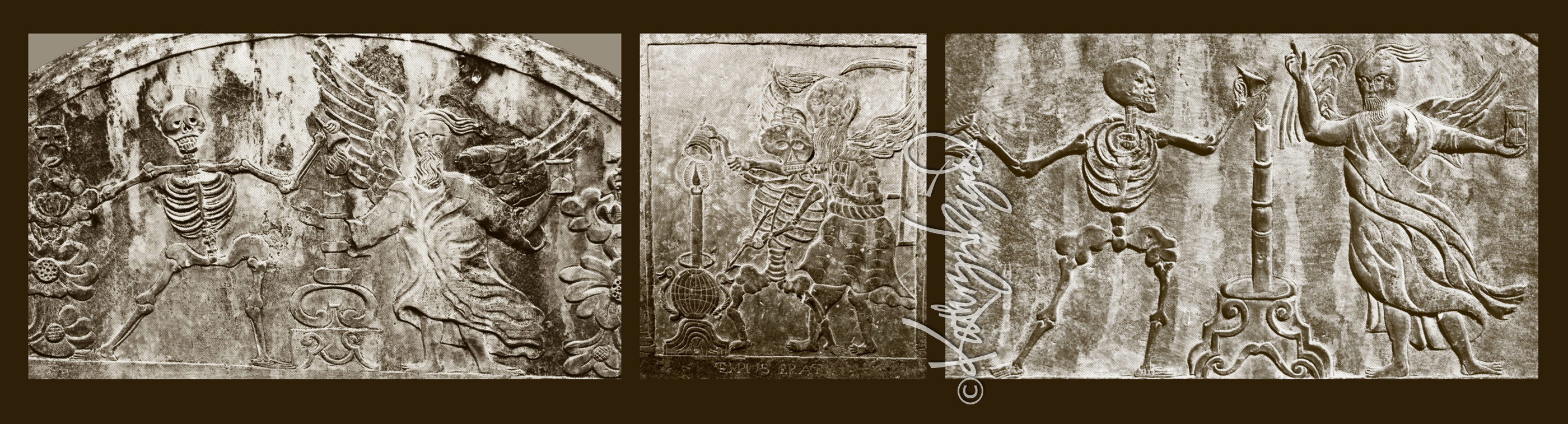
Lest you think me suffering myself, or pessimistic, I assure you I am alive and well. It’s just that I have seen many others struggle with prolonged and pitiful end-of-life dramas and was reminded this June when I saw the beautiful antique gravestones in Boston of how different things are now, when we have such nearly unbelievable powers to keep ourselves alive for tremendously long lives but have lost touch with when it’s acceptable or even desirable not to do so. If our skills for ensuring or encouraging genuine quality of life are far outstripped by our skills for lengthening it, what does that say about us? Generations removed from our forebears, whether in Boston or elsewhere, who knew much more primitive medicine, greater physical dangers, irreparable injuries and the concomitant shorter lifespans we have apparently long since forgotten, do we know how to accept death as a natural end to life and treat dying as a passage to be eased to the fullest extent instead of forbidden?

Peace as the New Superpower

It was a wonderfully happy anniversary yesterday. The birthday of one of our nephews.

It was also a horrible anniversary, as far more people know: that of the infamous terrorist attack on US soil in September of 2001. You understand my intense desire to have the former event wholly eclipse the latter. I don’t demand that all the world celebrate our nephew’s birthday (though our niece and any one of our nine nephews would all be well worth the attention), but I would absolutely recommend that the whole planet get a lot less warlike and a lot more humane overall.

If grey is the new black, we should be mature enough by now to play well together.

Americans, first and foremost. We may be barely over 200 years old as a country, but we’re old enough to know better than to tear around the planet saber-rattling and messing around in every other country’s business whether they like it or not. Aren’t there enough things to keep us occupied in more peaceful pursuits? Many such valuable actions could probably be funded on the strength of one month’s national military expenses, things that might not only make the country better educated, healthier, more scientifically advanced but also better able, even, to improve conditions for other people, other nations.

Call me naive.

But first, here’s a nice little bouquet, from me to you. It’s a small thing, I know, but I’d like to start somewhere. You’re welcome. Pass it on, please.digital illustration