It’s All Rehearsal, Really

Blog.08-30-2013.all-rehearsalWe may look like we’re all geared up and doing important stuff, but mostly, we spend all of our lives practicing, learning and getting ready for one thing or another. Some of those things happen in due course and many more of them either never quite come to fruition, or far more often, change along the way and we end up following along and seeing where it all takes us. All of this is quite normal and perfectly valid.

As a privileged observer and listener in many musical rehearsals long after the years when I was an active amateur participant, I can tell you that I think these more explicit practice sessions can have much the same sorts of both trajectories and outcomes. What anyone not privy to the backstage view of any sort of practice may easily forget, even if they once knew it, is that whether the moment is strictly obligatory, is amateur in the finer sense, or is wholly professional, it can have the same range of characteristics, studious, soulful, playful, predictable, heartrending or hilarious–or some grand combination of them all.

The experience of listening in on the preparations for musical performances is distinct from the performances themselves in a multitude of ways, but perhaps the most striking to a non-participant is arriving at a high-level rehearsal and seeing all and sundry set up camp for it in their work clothes. The star soloist is wearing old jeans. The conductor, who no matter how rigorously the singers and players enact their parts will likely move around and sweat the most, is wearing shorts and a short-sleeved, thin shirt. The players have open cases near their chairs with spare instrument pieces and alternate score parts strewn across them, and the singers, no matter what the temperature, are wearing neck scarves and lugging big containers of fluids to protect their own precious instruments. The rehearsal accompanist at the beat-up old piano is wearing glasses both on the bridge of the nose and the crown of the head, one for the easier to read individual parts and one for the microscopically reduced full score. All of this in a sort of ordered chaos the shows they are all there to Do Things. It’s work. It’s fun. It’s messy, like life.

Our Big Summer Road Trip, a driving circuit of over 6000 miles this July and August, was a multipurpose travel package designed to accomplish a number of ends, not least of them to attend and study and enjoy music-related adventures with friends, colleagues and other musicians and music lovers in several disparate events. First, we went to the Oregon Bach Festival to see the newly anointed Artistic Director make his debut interview marking the occasion, and more importantly to see maestro Helmuth Rilling conduct his grand finale performance as AD in this season when he officially passed the baton to his successor after 44 outstanding years at the Festival’s helm. The Festival is a fine one, Rilling a justly revered conductor and teacher, and many of the singers and players who participate, along with many regular OBF attendees, are longtime friends and colleagues, so it’s always a joy and privilege to go to the Festival ourselves, but particularly meaningful to see Rilling lead the B Minor Mass on his way to Conductor Emeritus status, since my husband Richard had the good fortune to sing the same piece under Rilling during the maestro’s second year at OBF. A great deal of water has gone under the bridge, and though a lot has changed in that flow of time, many things remain the same. Rehearsals and performances, practice and action go on as ever.

I had been reminded of all of this, of course, by the opportunity to attend the Boston Early Music Festival and see my spouse conduct and his Collegium Singers and the university’s Baroque Orchestra in June, along with admiring all of the other marvelous artists and events at BEMF. So many wonderful concerts and recitals; so much hard and happy work to prepare them! And how quickly June disappears into the mists of memory as the summer rolls forward. Thus, a long road trip seemingly becomes an amazingly fresh outing to experience more variations on this theme.

The second of the trio of musical events we attended on the road trip was the regional gathering of choral conductors in our former home area, a great opportunity to renew ties with longtime fellow conductors, teachers and friends over grilled wild salmon and to revisit musical literature options, audition processes, mull over the usual academic topics, share hints about favorite new compositions and gossip about who is the up-and-coming hottest new choir or conductor in anyone’s neighborhood. Driving up to the chapel that serves as the main conference space, whom should we see sitting visiting on the porch but a man who was the excellent recording engineer serving in that artistic task for many of my husband’s choirs’ recordings over the years, and with him, the teacher-conductor-mentor who led Richard to music as a vocation and profession in the first place and so became not only his ‘choral father’ but a lifelong dear friend. To follow this greeting with collegial renewal among many other fellow musical artists, from colleagues and collaborators to singers and students, composers and coordinators of conferences and musical programs at all levels, and then to have dinner a week later with both of those two first friends we’d spotted, was rich beyond words.

Third on our list and rounding out the road trip with our stop in Vancouver, BC, was the Vancouver Early Music Festival. A perfect bookend to starting the trip with OBF in Eugene, VEMF attendance had much the same purpose for us as the Oregon visit: see and hear good friends and other artists at work, and attend the events honoring the longtime AD’s retirement. While Jose Verstappen has served a mere 34 years in Vancouver, he has had as much impact of his own on the Festival there as Rilling has in Oregon, just a very different sort. Jose is a modest and self-effacing man, but as warm and as hardworking and dedicated, and certainly as hard for donors and supporters to say No to, as Rilling, and so both have created environments of commitment and excellence that will thrive long after both have abdicated their thrones. Matthew Halls, Rilling’s successor, and Matthew White, Verstappen’s, are both bright, gifted and able men and I expect to enjoy attending both festivals with as much outstanding artistry on display as ever in years to come.

While in Vancouver, besides the great fun of attending Verstappen’s farewell party, seeing many dear friends, meeting Bruce Dickey–the leading light of cornettists nowadays, he will be playing in the production of the Monteverdi Vespers Richard’s conducting in October–and hearing some terrific music of various kinds in concert, the highlight was sitting in during rehearsals for Händel’s ‘Israel in Egypt’. It was there that I was most struck by this lovely interweaving of labor and lightness that can happen when the people at practice are fully engaged in their work and love what they do. The piece itself is a marvel, full of potent and piquant and even picaresque melodies and moments, and those singing and playing it made the most of these riches. When Tyler Duncan and Sumner Thompson started singing the bass duet ‘The Lord is a Man of War‘, not only was the music and text mesmerizing (never mind my personal feelings about the story’s theology) but their obvious pleasure in exploring the expressive potential in the piece together with the players and conductor (the impressively sensitive and dramatic Alexander Weimann) moved me to pay special attention to this juxtaposition of the remarkable and the workaday, the plain and the powerful. So to all of you out there who sing, play, work, rehearse, prepare and perform, and especially to the players, singers, composers, conductors, administrators and Artistic Directors encountered on this summer tour of ours, I dedicate this poem.digital illustrationNumber Thirty-Eight

Strike, then carry on, and so the sound

Belies in beauty such a martial start,

When ragtag troops in everyday are found

To sing and play at battle from the heart–

Who seemed so simply destined for the soil

As laborers in neither art nor war

But some plebeian, plodding sort of toil,

Then strike, and decimate what came before–

Show the illusion is not acted out

Through violence or merely artifice,

But rather, note by note dispelling doubt

That mystery’s all quite undone by this–

Where love and war are mingled in their way

By songs more eloquent than words can say.

A Concert with a Wedding Attached

Seventeen years ago today I got married. And as all of you who have visited this blog with any regularity know, when I got together with the man who became my husband, spouse, best friend, partner and daily companion, I gained a world of music. Of course, music was a big part of my life already and distinctly a contributing factor in our getting together in the first place; I worked in the university art building, right next door to the music building, and spent plenty of quality time there going to concerts, meeting with friends and all of that sort of happy thing, and when the nice Director of Choral Activities asked me if I’d be willing to help spiff up the aging auditorium for the annual Christmas concert festivities I gladly said yes. That was only the first time I made banners for an occasion of collaborative fun with that nice DCA man. Less than eight months later I was making bunches of banners to fill up a church nave for our wedding.scanNo surprise that, since under friendly pressure from them we gave up on the attractive idea of eloping and just having a party with our family and friends on our return, we decided that the best alternative was to have a celebration with lots of music and just party all the way through the event. Turned out it was easy to do so.scanAssembling our wedding’s participants was easy-peasy. Relatives and friends from work, home life and church lined up and pitched in as planners, greeters, acolytes, reception hosts and much more. Clergy? Well, as the daughter of a bishop I didn’t have far to go to hunt up someone to marry us. The church’s lead pastor presided and Dad officiated, and a dear sweet retired pastor friend served as lector. Witnesses? Having three sisters, I had no problem lining up a team; Richard’s backup was easy to arrange as well: his sole brother, our mutual beloved friend Jim, and Richard’s colleague and partner in choral crime, also named Richard (Nance). Musicians were easiest of all for us to arrange, unsurprisingly.scanWe had an outstanding pickup choir of students and members of Richard’s choirs, past and present, and friend-colleagues playing horn and singing the processional solo. Jim, getting in some exercise during the service, was organist as well as standing up for us. That, as well as having helped us plan the whole service and choose its music, and set one of my texts to music for our congregational hymn. Richard N, besides joining the altar party, pitched in (no pun intended) musically as well, conducting the choir for us in a lovely collection of pieces capped by the premiere of the exquisite anthem he composed for the occasion (now a best seller for Walton Music!).scanYes, this is a brag post. Happily, all true.photoHappy Anniversary, my Love.

Electricity

Strung more tightly than violin strings, the two sweeping the darkened, smoky room in a feral arc know a dance that defies all others. Piazzolla provides the backdrop of sound, but the pulse is found far deeper inside–somewhere near the center of two souls, perhaps. Will the world implode in this, their passionate spin? Love, darkness and brilliance compel their moves; time will race or freeze and stars may blaze or die, but as long as the dance goes on, the night will be filled with mystery and animal joy that only these hearts could possibly make. Let the music stalk on, and learn to live and die of love: here in the night, the tango burning in these two will keep a world of beauty pulsing long beyond their lives.

digital artwork

Love, or Something, Conquers All

Is there something else you want to tell me, sir? You say you are a musician, yet I distinctly recall that on evenings around the campfire you’ve always strummed off-key and your songs are always unrecognizable to your fellow players. You tell me that you are a skilled horseman, but I have known you to fall off every mount you ever met and the way you’re always sneezing makes me pretty sure you’re more a specimen of the allergic type than a cowboy of any real sort. As for your claims of being a king of the romantics, they strike me as far more hopeful than strictly factual, considering that you cannot read, write or dance, never remember to comb your hair or wash your face, and are cowed into stammering and foot-shuffling when actually in the presence of anyone even slightly ladylike.

Forgive me, then, if I tend to take your claims with a certain jaded skepticism. I am fairly certain I do not want to listen to you bash away on your two-stringed guitar, to watch you topple out of the saddle the instant your horse makes a move, or to wait for you to wrestle up the courage to make small talk while I dream of my escape from your company. And if you should persist in attempting to convince me that you are the master of the Wild West, I shall be reduced to the expedient of dispatching you with a hefty branch of mesquite laid across your noggin, stuffing you into a handy gunny sack and slinging you over the back of a mule headed toward some terribly remote corner of the prairie.

Other than that, though, I suppose I don’t mind your company. A girl can’t be too choosy out here on the frontier if someone offers her his family fortune and she has her eye on a particular set of acres for ranching. Business is business, after all.digital illustrationOn Closer Examination

A fella whose flaws were prolific

And both manners and taste quite horrific

Filled my soul with alarm

But still had one great charm–

His inheritance, to be specific.

Joy in the Morning

digital painting from a photoMorning, Waking

Starting anew with a fresh clean slate

I feel a sense of freedom, youth

A breathing moment where the truth

Is not unlikely, not too late

I have arisen and begun

Not just by law but for desire

Alit with unaccustomed fire

From some oft-hidden ray of sun

These days when age most often stings

The simple joys right out of me

I slake my thirst with ecstasy

When a rare morning-welcome singsphoto montage

Under the Influence

mixed media drawingWhen I hear that phrase, of course I’m immediately reminded of its use to describe those persons, so much dimmer witted than a barnyard fowl, who drive or operate heavy machinery or otherwise behave inappropriately (and most likely, quite dangerously) because they are under the influence [UTI] of drink or drugs. Personally, I would go further, with my concept of UTI encompassing other, equally dangerous things like ignorant social, political, religious or philosophical views that give their disciples delusions of superiority, imperviousness, entitlement, and so forth.

But it behooves all of us to remember that the phrase isn’t inherently negative, for one can be under positive influences as well. Even better if one can manage to be a positive influence. It’s notable enough in a long and active life if one succeeds in generally doing no serious harm (intentional or otherwise, and to be in fact benevolent and able to enact good and fine things, why, that’s remarkable and admirable stuff indeed. I know people who can do so right here in the blogiverse, teaching and leading us all to do and be better versions of ourselves, and doing so not only by sharing their stories but by being living examples of what they teach. My years of classroom teaching proved to me that I was better suited to being a student than a leader, yet tutorial and mentoring settings gave me a much greater level of comfort in that they allowed me to operate as a fellow learner and thus engage more deeply and without as great a fear of steering anyone (myself included) astray.

The bloggers I most admire, immensely entertaining and humorous and dramatic and artistic in ever so many ways, are always, at heart, teaching, whether it’s overtly and with carefully designed pedagogy and prescriptions or it is so inherent in their natures that it comes fully interwoven in the fabric of their posts. These favorites include, but are not limited to, logophilic, ecological, travel-oriented, cuisinal, community-building, arts-centric, historical, and in many cases, wildly multitasking blogs. Some bloggers are small fry like me, known only to a cozy circle of great friends who come by to read and sometimes comment, and some of those I greatly admire are large-scale bloggers, people with lots of published work elsewhere or major accomplishments in their fields (whether related to their blogging topics or not!); a few have multiple blogs and the amount, whether on one blog or many, of posts published varies from one every few weeks to daily. There may, in fact–given electronic media of all kinds nowadays–be people putting up posts every few minutes, but I haven’t the time and energy to keep visiting such volcanic sources and tend to keep to my group of favorites with an occasional foray outward.

So who are my influences among bloggers? Friends who give us invitations to visit them at places like The Bard on the Hill, Spanish-English Word Connections, and Year-Struck, Just a Smidgen, The Valentine 4, David Reid Art, and The Complete Cookbook, like Bardess DM Denton, The Kitchens Garden; like the blogs Cooking-Spree, O’Canada, Nitzus, Peach Farm Studio, and  Bishop’s Backyard Farm, like Blue Jelly Beans, One Good Thing by Jillee, Road Tripping Europe, My Little Corner of Rhode Island, Promenade Plantings, L Scott Poetry, Poetic Licensee, and Gingerfightback, and blogs like From the Bartolini Kitchens, Rumpydog and The Human Picture. There are many more I enjoy and admire, but each of these, whether longtime blogging friends or a site new to me, have proven to be influential and inspirational for me in many ways, both as bloggers themselves and often as encouraging and educational commenters here at my own place. We don’t always agree, which is part of what’s so powerful: the diversity of the world and its ideas and passions and hopes and loves, this potent brew is what makes the fellowship of bloggers such a joy.

That we can share it with so many, most of whom we know only in and through this forum, is a great gift indeed. Also shared among fellow bloggers: awards and recognitions. Some accept them and participate with great alacrity in sharing them, and others are happy to be complimented thus but have no interest in or simply no time for such things. All quite acceptable responses. This post, in fact, is in response to my having been ‘tapped’ by the gracious and yes, influential blogger Samina Iqbal, whose Forum for police support is a notable effort by one passionate blogger to garner greater recognition and appreciation for those who serve and protect the populace as members of the police force–indeed, a job few of us would dare or relish, yet most have great reason to be grateful that there are the admirable folk who do so on our behalf. She was named a Most Influential Blogger and has passed the torch here.

While I think she is over-generous in her estimation of what happens here at my blog, I am happy to carry out the task of sharing the aforementioned blogs and their authors with you, because they really do deserve the attention and I hope you’ll visit as many of their sites as you’re able; you, too, will find many things to influence you: ideas and passions, skills and arts, love and human drama and many a good belly laugh in the mix. Best of all, under the influence of these luminaries you will likely pose no additional danger to the general public if you should, say, get behind the wheel of a car. With the possible exception of the belly laughs, which could cause you to steer right into the ditch. But at least you’d be guffawing all the way to the emergency room, possibly accompanied by some helpful police officers. And don’t blame me!mixed media drawing

A Choral Symphony

Listening in on rehearsals for the new Jake Heggie Ahab Symphony a companion to his opera Moby-Dick), I wrote. Tonight (24 April 2013), if you’re not able to attend in person, you can watch and listen to the live streamed performance of the world premiere at 8 pm CST at this link, featuring tenor Richard Croft, the University of North Texas Symphony Orchestra and Grand Chorus and conductor David Itkin: http://recording.music.unt.edu/live. In the meantime, from me:digital artworkCharacteristic Frequencies

Light, to begin, as though it were the dawn,

And whispered voices breathed themselves awake,

And sentience would rise and fall and make

A storm, turn faint again, scarce moving on–

On lyric waves these messages were sent,

Foretelling danger and the pangs of grief,

Then, gentler, sing of comfort and relief,

Follow each graceful passage where it went–

This, while the song comes lapping up at me,

Comes pulling like the most insistent tide,

Whether the sound grows deep or thin and wide,

Draws me on deeper in this sonic sea–

Seek me no more, but let me run aground,

My soul sunk in these waves, and listening, drowned.digital artwork

My Baroque Gesture

The first time I heard Early Music performed in period-appropriate style I experienced, not surprisingly I suppose, a full mixture of amusement, bemusement, mild horror and deep curiosity. It was in a performance of Claudio Monteverdi’s seminal opera Orfeo at the English National Opera; I was a mere college stripling who had probably not even heard the phrase Early Music at the time let alone known what it might mean, and ‘performance practice’ was in something of a time of transition. Anthony Rolfe Johnson sang the title role with, if I remember properly, a rather nice overall sound, but a straight-tone and senza vibrato style and a strangely stuttering kind of ornamentation that might well have been an authentic recollection of the opera’s original character and an accurate and historically informed version of the way it would have been presented by its composer and first performers. I, having never been taught such things, merely heard sounds quite foreign not only to my ear but to my concept of skilled and artful performance, let alone prettiness. I do remember thinking that either this was all far over my head (entirely possible) or it was a pointless and poor imitation of what the ENO imagined the average amateurish opera company of Monteverdi’s day must have been capable of doing (less likely), or poor Mr. Johnson, who later went on to receive his OBE, just plain wasn’t up to the job despite a naturally pleasant voice.

Years later, I may not be much smarter than the young squirt of those days, but I’m far more experienced and have heard worlds more music, both the great and the terrible and, of course, a massive quantity in between. And I’ve been taught a thing or two about the fine points of what is beautiful and magical when it comes to singing or playing with any amount of vibrato–or none–and the many elements that combine to create tone and color and variety and character in a performance. I’ve learned some useful stuff that changes how I perceive both the level of virtuosity in playing or singing and its aesthetic appeal, two aspects that do not always coincide in my ear, mind and heart but when they do, that combine to create a kind of joy that is virtually unattainable in any other way.

When my husband conducted a production of Orfeo over a quarter century after the first one I’d heard, I had a whole different understanding and appreciation for what the many performers were doing and why the stage director would expect them to do so both from a visual standpoint–training them, along with other coaches, in appropriate ways of moving and posing and gesturing as well as in those of vocal ornamentation, since she is a superb and well-trained Early Music singer herself–and an historically suited musical one. Just as there are countless styles and types of music known to us nowadays, which you can multiply by the number of individual teachers, performers and audience members to get a rough sense of the variety you’ll encounter, there were historical strictures and structures and stylistic trends and ideas that shaped earlier generations (centuries) of music and musicians and listeners, and while some have perhaps remained relatively unchanged since their inception, many more evolved over the ages. Our expectations of music have certainly changed, and our guesses as to how it was first conceived and perceived are only as good as the lines of scholarly inquiry and oral tradition can attempt to make them.

In all, it makes rich fodder indeed for both the ear and the imagination, and I for one am mightily pleased that I have had the opportunity to live a life immersed in all kinds of music and to learn along the way. I still like much of what I heard, whether ignorantly or not, in my younger days, and much of what I like now I learned to love along the way. While my form may be far from historically accurate or artistically impressive, I will still happily bow and curtsey to all the musicians who have shared their gifts with me in my life, and to all of those who work and are inspired to play more, to sing onward.graphite drawing

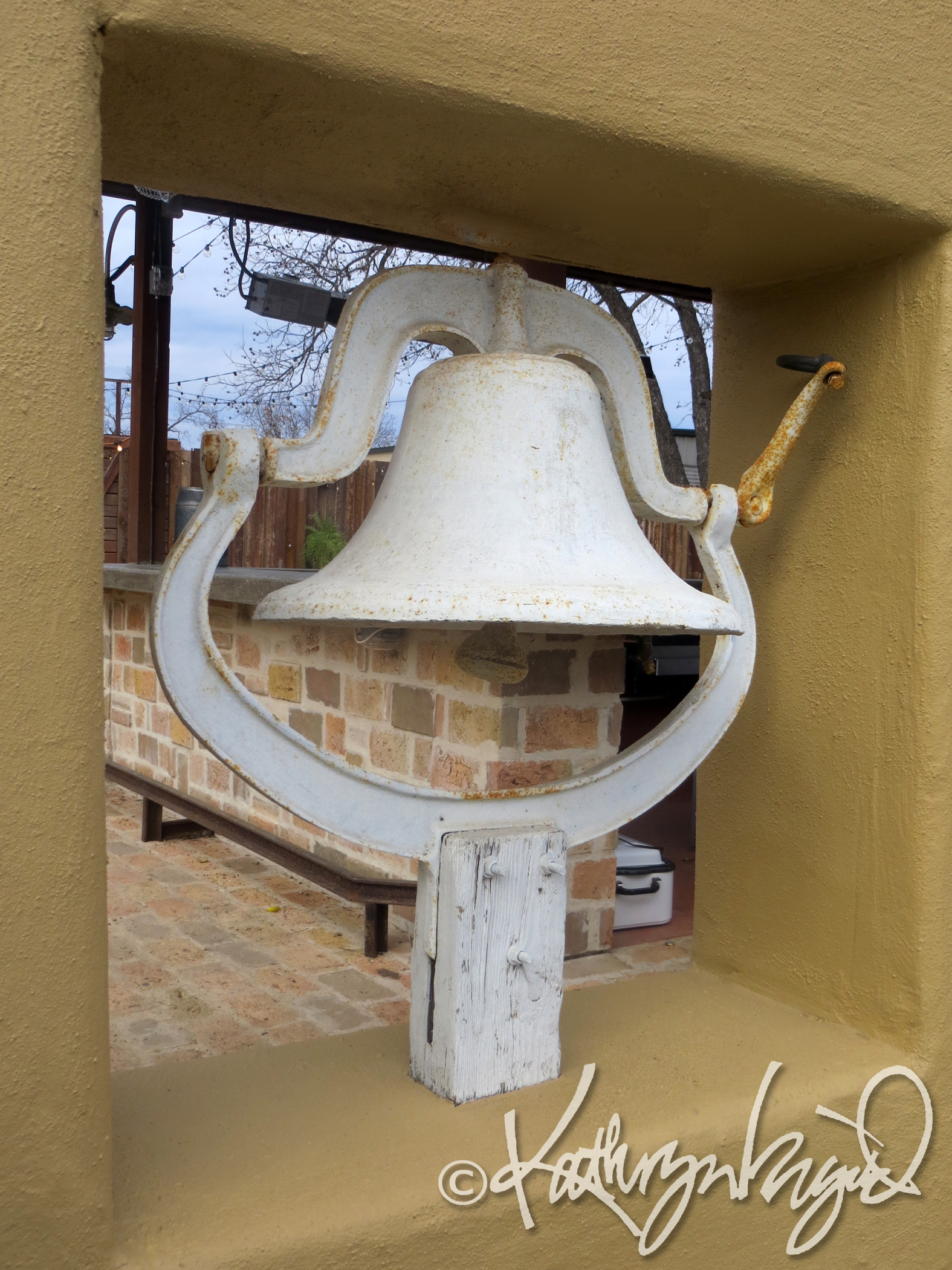
Tintinnabulation

photoOn the Hour

I hear a distant clamoring, that clear and golden hammering,

the calling so enamoring me of this hour of day,

That chorus of the chiming bells change-ringing, as their music swells

until no other parallels the news they swing to say,photo‘Til every other sound should cease as swiftly as the bells increase,

work stop, hopes rise, hearts fill with peace; the ringing calls that soon

The echo of its chimes will fall where it sang out from wall to wall

in waves of life over us all to tell us it is noon–photoNo wonder, in this ringing sphere of tonal loveliness I hear,

I sense a sweetness drawing near and beckoning to me

To join the clangor of the song, to strike at every chime and gong

and bell, that each must sing along and set the midday free–photoRing every bronze and silver note, ring brass and gold, and keep afloat

all of earth’s joy–the antidote to death is in this tune–

Ring happiness, ring love and peace; ring out the hour of sweet release;

ring the refrain of this caprice until another noon!

Be It Ever So Humble

I had such a grand week at the conference. The 11th through 15th of March was my spouse’s purported Spring Break from the university, but as so often happens, most of the week was filled up with work. In this instance, the work was exceedingly pleasurable, but as it was the conference of the American Choral Directors Association, it was, as are most tremendously enjoyable activities, exhausting. Two, three or four concerts a day, master classes, seminars and sessions of all sorts, wandering the exhibitors’ booths, networking and lots of socializing and late, late nights are all piled into the ACDA conferences. By the end of the week, going home sounded beautifully and truly welcome.photoIt might surprise some people to hear it, but by nature I’m an introvert, shy, and I used to have a fairly nasty perpetual case of social anxiety. Yeah, all that fun stuff. I spent a lot of years feeling scared and sick over every new meeting, every unfamiliar place or event. Luckily for me, there are such things as therapists, medications, and lots of family support and training. As a result, going to the various conventions, festivals and conferences that bring together the choral world from time to time has gone from what was, the first time I attended one with my then new husband, quite overwhelming and nerve-wracking to this last, which like its latest predecessors was a much-anticipated ‘family reunion’ with a great number of beloved friends and colleagues from all over the world.photoSo I certainly had a grand week. Meeting with longtime friends from various places we’ve lived, choirs my husband’s conducted, and from our school days, and with ever so many outstanding colleagues, we got to celebrate with them all over music, lunches and dinners, receptions, walks-about-town, drinks and quiet conversations. We laughed and hugged and chattered with current and former students, with composers and conductors and publishers and singers and players, so many friends, and it was all tremendous fun. It made for long days and for short sleeps, for incredibly dry eyes from staying up way too late and for teary eyes from amazingly sweet meetings, no matter how fleeting, with our long-absent dear ones. Stellar music performed by both friends and strangers moved me to both sniffling and silly grins (sometimes simultaneously). It made me as happy and full of love for music and friends and life as I can get, and it made me so tired I could hardly move ten of my cells at a time. And it made me look forward with great intensity to the splendors of home. There, I can relish in retrospect all the sweetness of the multitude of marvels granted by a superb week. And I can revel in Just. Plain. Being. Home.