I am not bugged by insects as much as many other people seem to be, but there are limits to my tolerance. I do not enjoy, for example, finding them taking blood samples from any portion of my anatomy without a doctor’s referral, nor do I appreciate having any of them buzz around my head with the persistence of a news helicopter hovering over a celebrity wedding site. But they can be intriguing looking characters, and the majority of them most certainly seem to lead fascinating lives, among their many and varied species, so as long as I can study them from a safe distance I am happy to either learn about them or merely continue my childish and fantastical speculations whenever the mood strikes.
Category Archives: Nature
Space Cadet
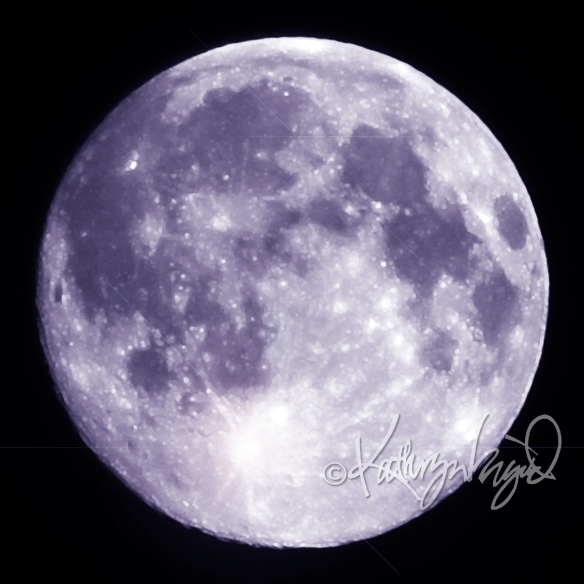
Pardon me for mooning you. [If my backside looked this fabulous, I might show you that, too. You are very lucky things are the way they are.] Lacking such stellar assets myself, I look to the sky for my inspiration yet again, because, well: that moon!!! It’s been showing off a lot lately, giving us so much indulgent, up close and personal, viewing of that wildly handsome face that I begin to wonder whether the moon doesn’t have a crush on us. Given the seeming frequency of supermoon approaches these days and this apparent increase of mutual attraction, I begin to wonder if, instead, it would like to crush us.

But I prefer to think that I’m living in a time and place where I can enjoy to fuller than usual advantage the beauty that is that big old hunk of reflective rock out there. To me, it’s a candy-coated, opalescent, crazily pretty artwork stuck up in the canopy of the sky just for my pleasure and amusement. It’s big enough, bright enough, and grand enough that we can all share it, so don’t be shy, you can gaze upon it too. And I will enjoy thinking of the silvery light shining on me being the same silvery light that’s shone on you.
Species Unknown
Regardless of whether you’re of an evolutionary or Creationist or magical or pragmatic sort when it comes to the origins of life and the vast variety of creatures populating the planet—and, for all I know, the universe, though why anyone would want to live more than a single planet away from the wonderfulness that is Moi, I can’t imagine—it’s fascinating and entertaining to try to suss out how so many divergent and astonishing life forms there are all around us. I suppose one of the aspects I find most curious and amazing is the startling mix of sameness and extraordinary differences that seems to occur within what a first glance might have appeared to be nearly identical beings. How can two butterflies that look, even side by side, very little different contain both marked similarities and also such miraculously distinct characteristics and traits?

I imagine that if there are other life forces out there, whether they’re supernatural or simply extraterrestrial, they might find the zoology of earth just as entertaining as I do, even if they already know and understand far more about it all that I ever will.

It’s all of no great matter to me, to be honest, as my limited imagination will never remotely encompass the full reality of life on this globe or any other, and yet I think it fair to assume that it all predated me by a longshot and will continue long after I’m composted, no matter what I do or don’t understand. But knowing that I can’t ever know much within the greater scheme of things is neither daunting nor preventive; I will always, I suppose, be intrigued and piqued by the sheer magnitude of exotic, colorful, flagrantly felicitous Life. I can’t explain myself any more than I can explain any other living creature, and that is as far from boring an existence as one could wish.
Though I am just the tiniest bit unsettled by that one lady down the street who glows in the dark and has a flying dog.
Winter in My Soul
Winter lends itself, more than any other time of year I think, to the welcome sort of solitude and melancholy that fills me up with meditative calm. It can feel bleak and beautiful at the same time, as long as I’m not in a particularly dark place emotionally. The kind of cold and emptiness that sear the lungs and sting the eyes can sometimes set the soul on fire with inspiration and, concomitantly, a sort of scraped-clean elation.
Sunny with a Chance of Starlings
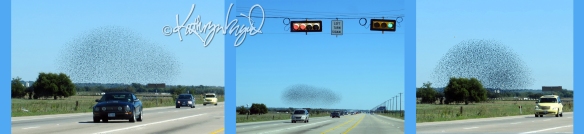
So, we’re driving along a local stretch of highway and I see clouds gathering in the wide blue stretch of the sky. But as we get closer, the clouds move oddly; they ebb and flow like rivers, collect tightly into spotty black pools, move around in magnetically collected groups from one hayfield to another, and expand again into writhing, twisting masses that make accordion-like progress from the highway shoulder to the grassy median. Birds. Masses of starlings having a communal day-trip in search of dinner.

I know that they do this because of instinct and hunger and, perhaps, seasonal urges. I’ve read a little about the scientific studies indicating that a murmuration of birds flying and flocking this way has something to do with an only partially understood sensory operation or mechanism that allows the movement of one bird to affect up to six or seven concentric layers of proximal birds, and the resultant ripple effect to make the wonderfully flexible yet ultimately collective movement of such groups possible without the birds’ all exploding from the general formation into random isolation. All of this, indeed, is based on consistent and controlled observation by far more educated ornithological experts than I will ever be.
But it has a certain charm, for me, to simply keep imagining the birds peppering the sky as clouds, as mobile lakes, as little pieces of sky-high impossibility. Delight finds me, even on the highway under billowing masses of winged wonder. I’m quite happy to imagine that the whole purpose of such behavior on the starlings’ part is to amuse and please and amaze me, just me, specifically. Until a scientist can prove to my satisfaction that the truth is otherwise, I’ll stick to that. No need to spoil such a good thing with too much reality.
The Seasonless Sea
Open water. The image in my mind is rarely of swimming there; growing up on a northern section of the Pacific Ocean’s edge, I knew of the sea as a place for wading and the rare venture to splash in a bit farther than ankle-deep, but also as bitingly cold, rocky, and full of sharp shells and ethereal but menacing jellyfish. A lake, while it might be at least marginally warmer, held in my mind multitudes of the same creatures that live in children’s closets and under their beds, but wetter and slimier and without a single door or mattress to deter their finding and nastily clinging to every immersed cell of my body. Rivers were icy highways relentlessly pulling me into the thick of their mad traffic unless I had oars with which to do battle against the current. Open water was, for me, always best admired and appreciated from docks and bridges, boats and beaches.
But, as my mind has always been willing to venture into places my body had no intention of visiting, I also know oceans and lakes, rivers and streams, as realms of inviting mystery and magical adventure. Under the surface of every body of water, there are endless natural beauties and curiosities of wildly diverse sea creatures and aquatic gardens, landscapes of great magnitude and delicate detail, and biological wonders that rival the most fantastic notions of primordial soup. There are also, for me, equally magnificent and splendid worlds of the fantastic. I see, in my mind’s eye, tremendous tales of adventure and romance and daring and delight all over in the rippling, dappled light below the surface. Every sighting of a coelacanth, of gulper eels and viperfishes, confirms my belief in the literally outlandish contents of the oceans’ depths.
I understand that from a climatic and biological viewpoint, open water is of course affected by and dependent upon seasonal changes. It’s perfectly logical that, metaphorically, a sea change should refer to a significant transformation or metamorphosis. That the seas themselves undergo tremendous changes as the weather and tides and time pass over them has potent enough impact on the realities of this world; what the seas do, in turn, to anything while it is immersed in them adds to that alchemical appearance. Ariel’s song reminds us that what is embraced by the ocean’s depths becomes one with the ocean in profound ways. The possible applications of such a metaphor are so numerous and so thought-provoking that I could probably write a thousand posts about those alone, but the effects of existing immersed in open water are the ones that lap up against my attention and flow through my imaginings the most often, so it is on those shores I will continue to do my wandering and beachcombing.
Best place to find mer-people and coelacanths: open water. In the seas of my fantasies, there are no seasons. I will always be able to dive deeply among mysterious and wonderful events and creatures in my dreams.
10 Terrible Words that Shouldn’t Exist in Any Language
One person who hates is a Weapon of Mass Destruction. One who cares and shares? Perhaps the only antidote.
As I recently said to my friend Maryam: poverty—both of concrete, material resources like food and shelter, and of intellectual and ephemeral resources (education, spiritual enrichment, the arts, community engagement, etc)—seems to me to be perpetrated and perpetuated more by selfishness than by an actual shortage of any of those resources. The rich and powerful always want more riches and power, and what they do have makes them able to afford and acquire more and to keep their feet firmly on the backs of the have-nots. Plenty is never enough. The resulting imbalance is as old as history, and rotten as ever. Only those who will speak up and resist entrenched inequities and injustices will have any hope of making change.
The badger and the wolverine have a reputation for being among the most tenaciously savage brutes of all the mammals. Yeah, Honey Badger even has his own meme to show for it. But let’s be honest: no beast of earth, air, or sea has a capacity for vile, rapacious cruelty rivaling that of the human animal. Even creatures of the natural enmity of predator and prey compete, fight, kill, and are sated. They have little apparent ideation of hatred and war to match people’s. A wolverine or badger will fight to defend, or to kill for food, but unlike the human, doesn’t seem inclined to attack indiscriminately outside of its primal needs for safety, shelter, and food; when the skirmish is done as efficiently as possible and the need assuaged, the sharpest of tooth and reddest of claw among them doesn’t do an end-zone dance to celebrate its pleasure in winning but will usually depart the scene or go to rest for the next time of need. The remaining food and shelter and other resources stay in place for whatever creature comes next, hunter or hunted, cousin or not.
Can we humans not learn from such a thing? I’m pretty sure that if we destroy each other and ourselves in our constant self-righteous, self-congratulatory belief that we deserve everything we can get our hands on, Honey Badger won’t be the only creature that doesn’t care.
Sailing Ahead, Wherever That May Be
The only time I’ve ever been on a sailboat was to sleep. There’s a great Tall Ship converted into a youth hostel in Stockholm where my sister and I bunked for a couple of nights on our college gallivant across western Europe. [Which hostel appears to have been recently renovated, and very nicely, if any of you should be interested.] While there may have been the faintest of motion rocking us to sleep in our on-board berths, I doubt it replicated very accurately the sensation of actual sailing. My next opportunity was during graduate school when I got a fan letter (one of the very few in my life, as you can imagine!) from a stranger who’d liked a gallery art installation I made so much that he offered to take me out sailing to the nearby islands. I don’t think there was anything predatory about him, but besides my still having a grandiose case of social anxiety in those days, there is the fact that the art show in question was entirely a walk-through, life-sized illustration of an espionage thriller; while I am doubtful that was his inspiration, I didn’t take him up on the offer.
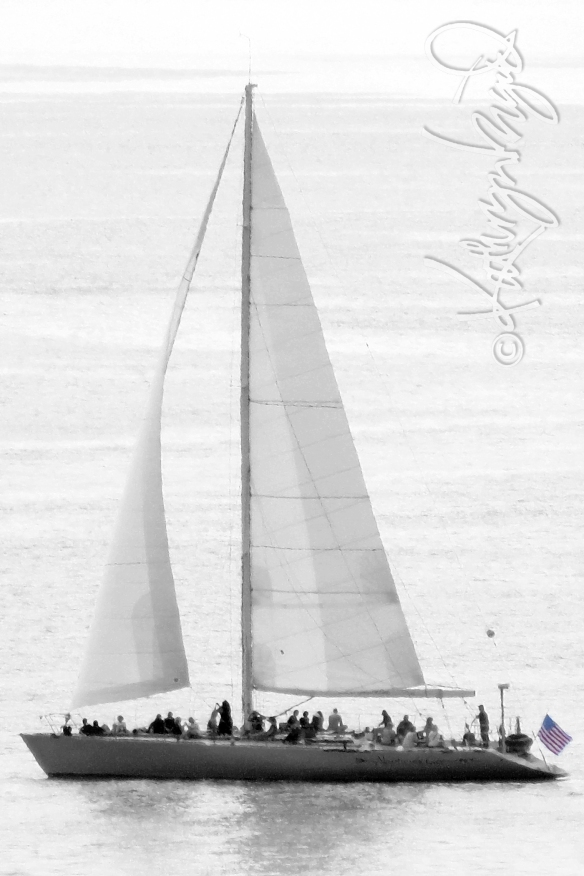
But whenever I see a sailboat, I do think it’s a beautiful representation of a genteel form of freedom that captivates my imagination all the same. Yes, I know plenty of tales of grueling trials on the high seas, no matter the size of the craft; even some of my close friends and relatives have such stories to tell, thankfully, having survived them. And I know, too, the old joke about testing one’s real interest in boat ownership by dressing up in a rain slicker and standing under an ice-cold shower for a couple of hours while flushing hundred-dollar bills down the toilet. But I also know that a vast number of people who could jolly well choose to spend their money and time on less demanding, safer, and far less expensive pastimes still choose boating. There’s clearly a strong pull to counterbalance any such negatives.
I, too, have spent some happy times on boats, just not sailboats. As a coastal kid, after all, I grew up thinking time spent on the ferries was as much pleasure and sightseeing as it was commuting or transport. I have been fairly miserable on a North Sea ferry in stormy seas while I was recovering from the stomach flu, but it did not so permanently scar either my psyche or my stomach lining that I didn’t look forward to the next time I got to be on a slow boat cruising along the shore, or perhaps best of all, in a rowboat or canoe, dipping the oars or paddle in with the rhythmic soft splashing that accompanies my reveries.
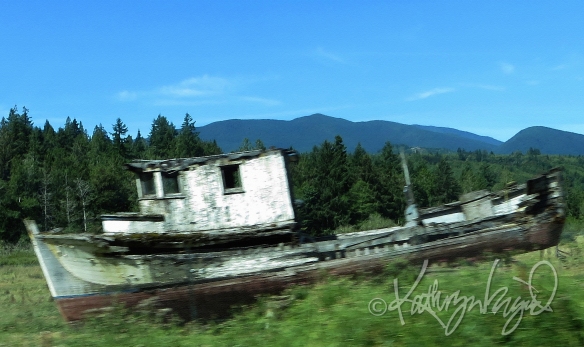
Living far from any natural body of water as I do these days, I am beached like an old craft whose hull is no longer seaworthy. But like those old boats I see, dry-docked on the beach or alongside the tumbledown barn or in a weedy field, I keep in my soul a firm and loving memory of every good time spent with the waves rocking me softly from below, telling me stories of their own and inviting me forward, ever forward, wherever that might take me.
Crashing through the Snow
Few things are as visibly expressive of joy as a dog bounding excitedly through deep snow. Except, possibly, a whole bunch of dogs, plus a whole cadre of little kids, leaping, tunneling, floundering, grinning, and generally exploding their way through the same drifts.

The problem with being an adult human is that we become so conscious of our creakiness and increasingly inflexible bodies, so obsessed with the dangers of having an infarction while shoveling or being speared in the forehead by a forty-pound icicle from the eaves, so hung up on our supposed decorum and dignity, that we stop risking not only true dangers but the possibility of gleefully tipping arse-over-teakettle into a billowing heap of powdery snow. It’s really too bad, because an occasional tumble from the pedestals we prop ourselves on, a momentary reminder of our own foolish frailty, and a smart whack on the overly fixed sense of reality is well worth a little bruising on ego and elbow. It might just teach us a renewed appreciation for the beauties of snow and nature. Why, if one were to be exceedingly incautious in the event, it might even turn out to be fun.
Contagion vs. Compassion
“One bad apple spoils the lot.” That creaky aphorism is based on equally venerable experience. Rot is contagious.
Bad company makes bad behavior seem the norm, and we adjust our own standards ever lower accordingly. One or two disheveled houses bring down the values of the others in the neighborhood, and those, in turn, fall into neglect and decay as their owners lose the courage and determination to resist the incredible pull of entropy. What isn’t growth is death.
What leads otherwise good and sane people to fall apart like that? Doubt; fear; despair. These are the hallmarks of contagion: the plague succeeds in felling us not only through its own virulence but because rather than seek its cure with full courage and determination we flee with it hot pursuit, and when it eventually catches up with us, we topple, curl up in the fetal position, and succumb.
The fall of one member of the world community—like Mr. Duncan, who was felled by Ebola in Texas—is a very real and terrible loss for all. The loss of thousands—those dying in West Africa—is indeed a plague and a thousand-fold grief we all must recognize and bear. The response, though, cannot be equally contagious doubt, fear, and despair. That can only make us choose unconstructive, even destructive, responses like blame, xenophobia, retreat, and the neglect of our fellow citizens of the earth. Then, no matter how many or few have been overtaken by disease and disaster, the contagion will have won.