Youth in Springtime

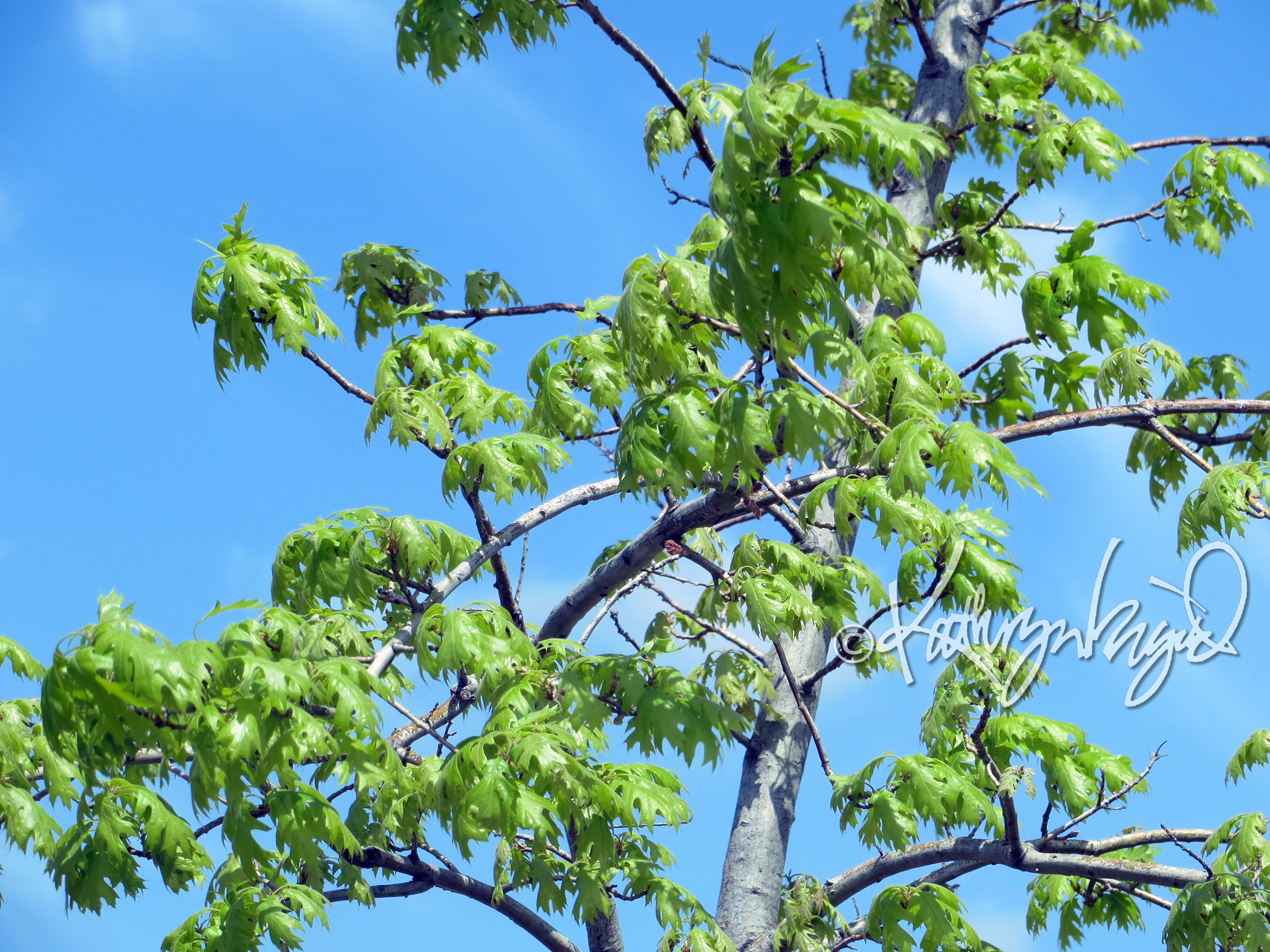
photoFew pleasures can compare to children’s when they are allowed untrammeled playtime in nature’s kind and pretty places. We should all be so fortunate in Springtime, especially in the springtime of our lives.photoBy Babylon Creek

Babylon Creek

used to make the

children laugh as it ran

tickling fingers up

their summer-heated shins

and the older folk

chuckle shamefacedly

at its puns and the way

its hilarious licking made

them squirm like

dog-loved kids themselvesphoto

Windows into the Heart

photoConservatories

Shells of glass to shield from winter

Leaf and flower, root and seed

Give the tender lives inside them

Shelter that they crave and need

In the warming arms of friendship

We in kind find safety, grace,

Shelter from the world’s hard trials

In that other shielding placephoto

Sleeping Angels, All

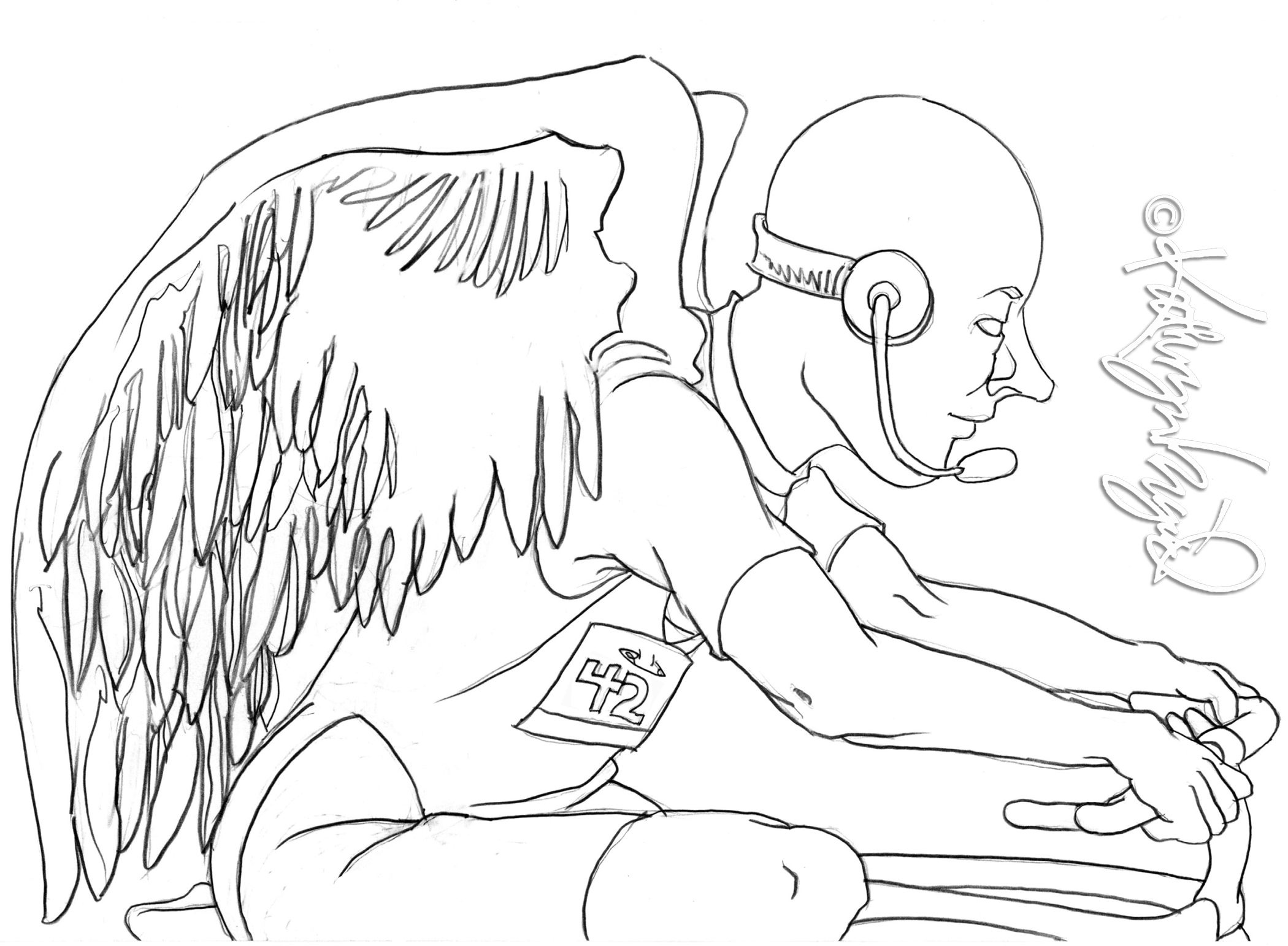
drawingThe assertion that ‘if it bleeds, it leads’ is cynical in its assumption not only that bad things will happen and that people will do bad things, but that this is where our greatest interest lies as well. To a certain degree, I will concede it.

And yet.

There is a part of me too that believes in the other having equal weight: the kind and good, the innocent and the pure. Our every moment of disaster, whether natural or human-made, brings out this good in force. It is the sleeping angel inside that emerges on call to offer aid to the suffering, comfort to the weary and food to the starving. I think that maybe, despite all appearances, it’s goodness that is actually the one inexhaustible resource.

I certainly hope so; in this is the promise that our history is not quite at an end.graphite drawing

A Beautiful Sun-Baked Land

photoBread for the morning came from five-o’clock ovens fired with passion and streaked with musky, pungent olive oil; the steam rolled out of those great clay caves and up the terraced resin scented hills of vineyards’ cool and shadowed kiss. Inside the chalk-white walls with their gauzy curtains strewn and the brick brown pavers all around worn by pacing wiry dogs and treading cats, the whole countryside slept, immobile, somewhat far retreated in their beds before the wavy rays of fourteen-karat sun-baked into turquoise heat our ceiling of sky.

photo

If Only They Would Use Their Evil Power for Good!

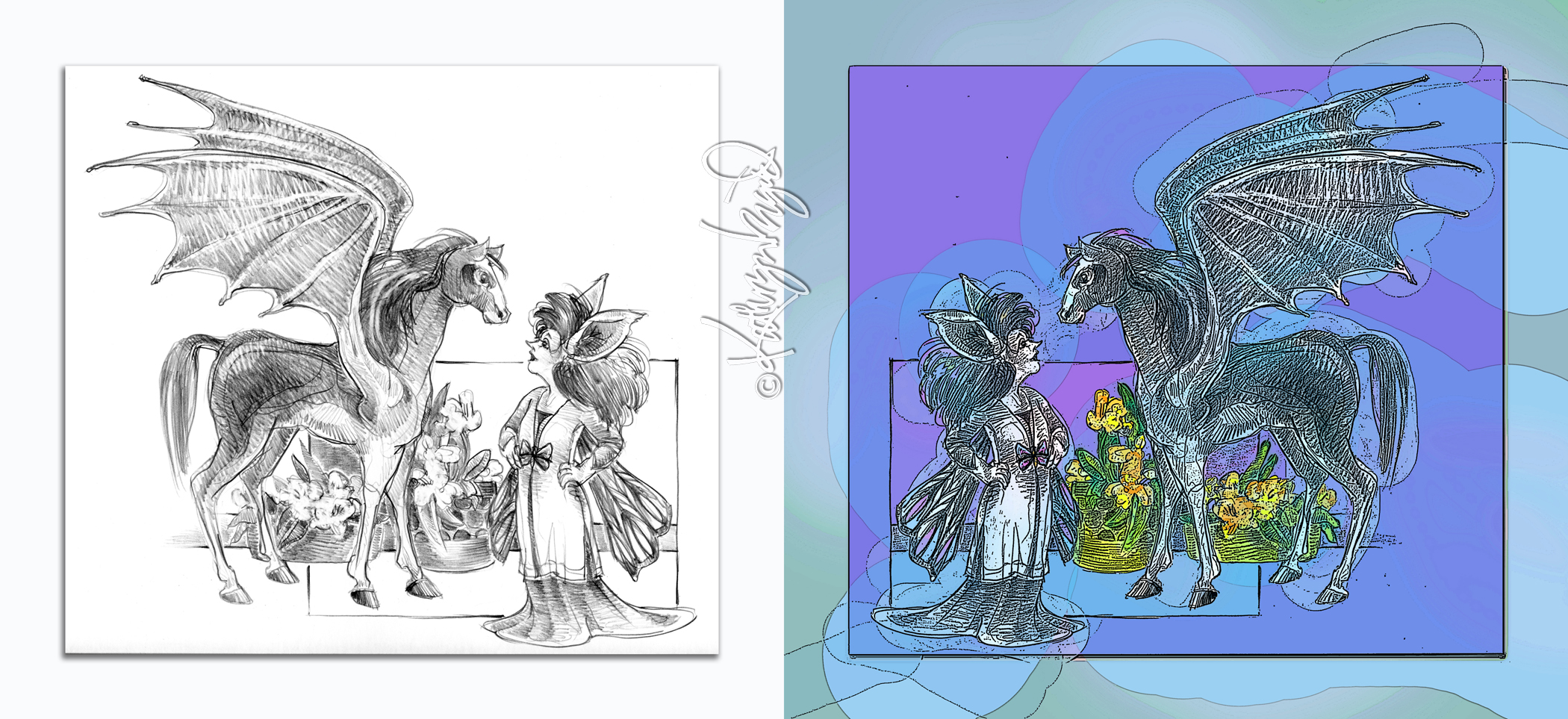
digital illustrationWounding Wonders

One needn’t be a Visigoth or Hun

or carrying machete, poison, gun,

or be eight Samurai with flashing swords,

to do the deeds of such marauding hordes–

Supposed lovers, intimates and friends

have other weapons to achieve such ends,

devising and divining fresh new schemes

for making misery on endless themes–

Have irritating nettles, needles, knives

plus-perfect for the ruining of lives–

Imagine if invention, by intent

so much the sweeter, how life would be spent!digital illustration

Don’t Waste Too Much Time on Reality

digital illustrationRestorative Dreaming

A pensive morning in quiet shade

Of this is inner contentment made

A sip of silence, a moment’s rest

In the garden corner I love the best

With butterflies skimming the border’s blooms

Voile curtains billowing out of rooms

A book of poems upon my lap

Read in short bursts between nap and nap

And the sound of a bicycle coming near

To bring the post of love-letters here

I’d rather recline in this reverent haze

Than waste on reality any daysdigital illustration

Hijacking Happiness

digital artwork from a drawingTrouble, as we all know, is highly contagious. I was reminded of this recently both by a television character and by a couple of real-life incidents involving real live people (who shall here remain nameless), and all of them, real and fictional, have a number of similarities, the chief one being their apparent unshakable belief that their suffering is greater than anyone else’s, is incurable, and is probably the fault of everyone else too.

My life is pretty fantastically good, when you get right down to it, so to people who don’t know me very well it might appear that I have no business criticizing anyone else’s way of handling sorrow and pain. But that’s just it: even the most wonderful of lives is touched by trials now and then, and struggle or strife isn’t fairly measurable in the moment. My paper cut seems as dire as your childbirth pangs when I’ve just gotten paint thinner on my hand. I know this to be logically ridiculous in the extreme, but don’t tell me the paper cut doesn’t hurt like boy-howdy at that moment. That would be tantamount to me telling you that since your labor pains will probably be over in short shrift, they don’t compare in any way to another’s battle-for-life with esophageal cancer, so you should just get over yourself. Whatever agony each of us is undergoing is more than enough and not to be belittled. And frankly, since each of us has a history that is tinged here and there with darkness, we do all have a sense, however small, of what it means to accept our griefs and cope with, live with, and go forward with them still present. Real sorrows never truly go away.

And for all of us who can feel empathy, or even more than that, can feel sympathy without having experienced the fulness of another’s troubles, life after infancy (when memory, like the lifespan thus far, is short) can be a perpetual bombardment of such troubles even when they’re not entirely our own.

I, of all people, will readily grant you that some people are far better equipped than others to find ways to survive pain and suffering and to continue living a full life without resorting to out-and-out acting. But that’s just it, isn’t it: barring full mental incapacity, don’t we owe it to ourselves, anyway, to try every possible avenue of becoming whole and happy (and of course I don’t mean that superficial kind of happiness that is either fully false or simply stupid); don’t we? When my personal apocalyptic horsemen appeared at the intersection of a group of the classic stressors (job-related problems, health challenges and the sudden death of a close friend converging on me at the same time) and plunged me into clinical depression, I was fortunate to not only have some of the significant tools (support from family and friends, a great doctor and a good therapist, and ultimately, medication that worked for me) for doing battle with those monsters but also the sense that there was no other acceptable option but to try to do that battle.

I won’t lie; there were times–and will probably be more of them over the years–when I did have to take the tack of that ‘fake it till you make it’ mode, when I simply wanted to quit and lie down and just hope it would all miraculously fix itself, or when I was as sulky and whiny and crotchety and pessimistic and tedious as unhappy people can be. We humans are good at all of that stuff, better than at being sunny and charming. But finally, even in my worst state I knew that was no way to live, and that the important people around me would suffer at least as much as I did, if not more. Thanks to the aforementioned helpers, I am here to tell the tale. More importantly, I don’t dwell in that darkness, even though there’s not much I could prevent or even fix about the troubles that led to such a state of existence. Things just happen. It’s how I deal with them that’ll likely make or break me.

That television character–and the many real-life imitators I referenced–stays so focused on how traumatized and maltreated she feels (albeit by genuinely distressing events and problems) that they become her one-note existence. She has a hard heart because it seems less trouble to close it to others than to be vulnerable to further hurt, but of course the actual effect is that she treats everyone around her like dirt, riding roughshod over their feelings and regarding any trauma or maltreatment they may suffer, often at her hands, as inferior or nonexistent. In turn, after being stomped on repeatedly by her seeming egotism, narrow-mindedness and refusal to set her hurt aside, the people around her disperse as speedily as that unlucky drop of water hitting a sizzling skillet explodes into mist. Those who tolerate her constant vituperation, impatience with their perceived stupidity or lack of sympathy, and her seeming wish to continue forever wallowing in her fury and self-pity, those characters ultimately become uninteresting or even unsympathetic themselves to me; after the ninety-ninth offense anyone sits back and takes without a fight, they tend to my eye to look like either enablers or equally fixed in victim mode.

I think we all have the power to steal others’ health and happiness, at least as much as the reasonably healthy among us should make every effort to take charge of our own. Doesn’t mean perfection is expected, but c’mon, people, if there’s really no going forward with life, perhaps a retreat to a very quiet hermitage would be more apropos than imposing our worst on the rest of the world. Yeah, I said it: get over yourself, Kathryn. Even if it might occasionally require brief periods of kindly deceit, times of returning to fighting off the dark singlehandedly, and the ordinary moments of being a jerk. It’ll mean equal demand on me for repentance, amends-making, and getting back on the wagon. There’s too much life left ahead, I hope, to spend it mired in a grim and terrible past, let alone impose it on others.

The upside of all this is that there is a possibility of turning this kind of thievery to good. Very simply, if I have to I can borrow my equilibrium and contentment from others. Put myself in proximity to saner, happier people than me until I can manufacture my own, and quietly absorb what I can of their good graces. I, at least, don’t want to be the one who steals the joy of anyone else; that only becomes the reason for new sorrows all ’round. Happiness and health can be contagious, too, if we let them. And so we all should, my friends. So we should.
Ashore

Islands can bring out the hermit in people, as it seems–and conversely, the social butterfly. Some who go to islands voluntarily either do so out of the desire to cut themselves off, at least partly, from social pressures and demands or come to embrace the opportunity that appears when they’ve become islanders. But involuntary islanders, the marooned (whether by shipwreck or by job transfer), can often feel contact-deprived. Suddenly people who had no particular desire for company on a regular basis feel socially abandoned and hungry; who knew?

Me, I have never lived on an island. Certainly never been set adrift and stuck on one against my will. And I happen to have pretty serious hermitage skills when I want to haven them: I’m a master at finding the quietest, remotest, emptiest corner of any place when I sincerely desire it. So I don’t generally have to wrestle through either of those dire, trying situations mentioned above. And also, I don’t really expect to run into such a situation any time soon.

That means I rather like my visits to islands, which visits are thus far entirely intentional (unless you count wrong turns onto bridges leading to them), and I like aloneness enough to seek it. Even on an island, if need be. Truthfully, though, I’m quite happy to visit islands any time I can, for holidaying purposes. Whidbey Island, Molokai, Ireland, Vancouver Island, Puerto Rico . . . I will be glad to return to these and visit many another any time I might have the chance. Let me wander inland and explore the beauties beyond the islands’ perimeters. Perch me on a rock by the shore and I will be happy, no, delighted to spend my time in good company or solitude, either one.photo

Be a Good Sport

digital artworkIt only just occurred to me that the admonishment to ‘be a good sport’ has little to do with showing athletic prowess and a whole lot to do with someone cajoling someone else to do a thing that the other person has no desire to do. What a to-do!

Perhaps this little guilt trip was meant, if the person saying it to me had any thought about it at all, to encourage me to discover that I actually enjoyed those activities (sports or other) under consideration once I willingly participated. Maybe those who said it even thought I had a hope of becoming skillful, adept, if I just faked a bit of enthusiasm until I got more properly involved. Cynic that I am, I harbor some doubt as to the former and, let’s face it, find the latter somewhat laughable. I can’t think of anything anyone would trouble me to do by telling me to Be a Good Sport that would be necessary to my survival or the rest of the world’s well-being, so it seems pretty plain that I was being chided to do that thing in order to please the person who was scolding me.

If, by not wishing to participate in the present extravaganza (whatever it may be), I am not a Good Sport, then it seems to me a bit like when those demonstrators and activists and yes, politicians, who cheer on their personal causes by insulting and tearing down and attacking their opponents rather than by simply extolling the virtues of the cause and letting it win converts and participants by its own evident excellence, and said promoters are then utterly mystified and stunned that others don’t flock to the cause willingly. You may well surmise from this that I never did buy into the value of group-think much, and in turn, haven’t ever warmly embraced the ‘popular’ activities. You can call me a meanie, a wimp, a curmudgeon, whatever you like, but please don’t label me a Poor Sport for having different wishes and tastes than yours. It’s just not sporting!

Be It Ever So Humble

I had such a grand week at the conference. The 11th through 15th of March was my spouse’s purported Spring Break from the university, but as so often happens, most of the week was filled up with work. In this instance, the work was exceedingly pleasurable, but as it was the conference of the American Choral Directors Association, it was, as are most tremendously enjoyable activities, exhausting. Two, three or four concerts a day, master classes, seminars and sessions of all sorts, wandering the exhibitors’ booths, networking and lots of socializing and late, late nights are all piled into the ACDA conferences. By the end of the week, going home sounded beautifully and truly welcome.photoIt might surprise some people to hear it, but by nature I’m an introvert, shy, and I used to have a fairly nasty perpetual case of social anxiety. Yeah, all that fun stuff. I spent a lot of years feeling scared and sick over every new meeting, every unfamiliar place or event. Luckily for me, there are such things as therapists, medications, and lots of family support and training. As a result, going to the various conventions, festivals and conferences that bring together the choral world from time to time has gone from what was, the first time I attended one with my then new husband, quite overwhelming and nerve-wracking to this last, which like its latest predecessors was a much-anticipated ‘family reunion’ with a great number of beloved friends and colleagues from all over the world.photoSo I certainly had a grand week. Meeting with longtime friends from various places we’ve lived, choirs my husband’s conducted, and from our school days, and with ever so many outstanding colleagues, we got to celebrate with them all over music, lunches and dinners, receptions, walks-about-town, drinks and quiet conversations. We laughed and hugged and chattered with current and former students, with composers and conductors and publishers and singers and players, so many friends, and it was all tremendous fun. It made for long days and for short sleeps, for incredibly dry eyes from staying up way too late and for teary eyes from amazingly sweet meetings, no matter how fleeting, with our long-absent dear ones. Stellar music performed by both friends and strangers moved me to both sniffling and silly grins (sometimes simultaneously). It made me as happy and full of love for music and friends and life as I can get, and it made me so tired I could hardly move ten of my cells at a time. And it made me look forward with great intensity to the splendors of home. There, I can relish in retrospect all the sweetness of the multitude of marvels granted by a superb week. And I can revel in Just. Plain. Being. Home.