Tractor Pull

Unlike those romantic beings who imagine farming as a bucolic and sweet, easygoing fairytale of a life, I am thoroughly undone by the thought of a mere day spent living like a farmer. I don’t doubt that those who choose it can find beauty and joy in many times and places therein, but the sheer intensity of labor and the long, relentless hours required for such a way of life would be utterly and overwhelmingly consuming to a weakling like me.

Still, I have tremendous admiration and gratitude for the work that farmers of all kinds perform, and I am far from immune to the attractions of magnificent farm animals, crops and all of the tools and implements and structures that make farming possible. For starters, I would have a pretty meager diet and little to wear if it weren’t for farmers, so I’m very conscious of the gifts and comforts that are mine by virtue of their hard work and the gifts and sacrifices that they and their charges bring to my existence. You should all be thankful for the clothing contributions I receive if for nothing else, given that otherwise you’d be stuck seeing me flouncing around garbed in nothing more than what I could manufacture from leaves and bark, and that’s a frightening thought.

But it’s no surprise that in addition to my love of what farmers and farming do to give me a richer existence in such practical matters, as a visually obsessed person I am also admirer and fan of all of the beauties that are part of the seen aspects of farm life. I know I’ve mentioned this before in many ways, celebrating those subjects and objects that enliven my dreams and strike my fancy among rural locales and sights as well as vintage and battered, heavily used and aged, Stuff. If I’m not obsessed with the loveliness of rural life, I’m at least a serious admirer of its visible characteristics.

Not smallest among these delights are all of the wonderful and sometimes mysterious machines that populate the properties of farmland. I may lack any ounce of desire to operate any of them, not least of all because I know how hideously dangerous many farm machines are, but I do love to see them, whether in action or at rest. The latter, truthfully, is all the more appealing when it’s of a machine that is so long and hard used that it can’t be operated any further no matter how much elbow grease and baling wire is applied, and it now resides as a totem on the front forty, weeds or flowers embracing its long-flat tires and curling up around its blasted motor. When I think of it, perhaps that’s because I like the thought that I will be held in such an embrace, metaphorically, in my old age. In any case, as I wander through the farmlands along the way of my own life’s passage, I do find they have a great pull on my soul.photo

Upon Further Reflection

photoCogitation

Let us pause for a moment of thought on who we are and what we’re not,

On living life as best we can, no matter whether beast or man,

And think of beauty, wisdom, skill, kind spirits, charm, and strength of will,

And not forget, not for one blink, we’re not as dandy as we think,

But all the same, let’s take the tack of cutting, each, ourselves some slack—

Our imperfections won’t be solved until we’re all far more evolved,

But what we are at present, still, has bits of charm, kind spirits, skill,

Has strength and wisdom; beauty too—and that gives us enough to do—

Not Just Another Pretty Face

At some level, most of us—no matter how disdainfully we might pretend to look upon those Others who obsess over appearances—wish to be thought beautiful. We want to fit in with others, to belong in the pack, to be loved.photoOf course, we know that even those who do fit in do so if and as the hierarchy of the pack allows. We are put in our places and told who we are, where we belong, what we’re supposed to be doing, and why we should accept that fate as though it were a natural law. After all, we tend to believe that nature is fact-driven and therefore we, who are mere specks in its vastness, must play our little roles as prescribed in the absolutes of existence. We sit here and take it. In many ways, that’s a useful approach to life, because, well, nature does drive a lot of what is and what happens, and bucking that can be counterproductive or even quite dangerous. And worse, perhaps, such refusal to accept the norms others have agreed upon as right and correct and natural puts us on the fringes and at risk of rejection. Someone along the way is sure to reject the rebel or misfit. Someone will think I’m unfit or, yes, Ugly.photoIt’s a wonderful thing to remember that besides all of the weird and dangerous and unpleasant and otherwise negative possibilities in stepping outside of the normal and expected course of events or refusing to be other than myself in order to seem to fit in better where I really don’t, there are also a vast array of glorious and splendid maybes waiting out there for me to dare to reach for them. Much of what is good and beautifully new in the world happens because one person dared to think, do, and exist differently from the pack, the mass of ordinary people, and brought about an increment of change. How wonderful if I can shed my fears, my need for conformity borne of desire for universal acceptance, and become ever so slightly more notable, one little nth more dazzling, than I was when I was only hoping to be like all the other creatures that I knew.

Just a Different Stripe, or a Horse of a Different Color Altogether?

Does it really matter whether our differences make us varied members of the same family or citizens of separate countries entirely? At the bottom of it all, we remain genetically bound to each other as disparate parts of the same species. What we choose to do with and in response to that simple truth is what really defines us as individuals and as parts of the human family, not how different we are from one another.

Working for respect, kindness and peace toward and among all the people whose paths cross mine in life seem to me like perfectly viable ways to respond. That’s the choice I’m going with, and I hope that it will be seen as defining my true colors always.

digital illustration

Our differences may be subtle or they may be tremendous, but they’re still contained in remarkably similar packages.

photo

It’s a gift and a privilege to see the beauty in those of a different stripe than ourselves.

photo

What, are you really so concerned about the cut of my hair or the color of my hide?

photo

I should always try to get a leg up on what challenges my expectations, whether it’s my nearest neighbor or someone from worlds away.

photo

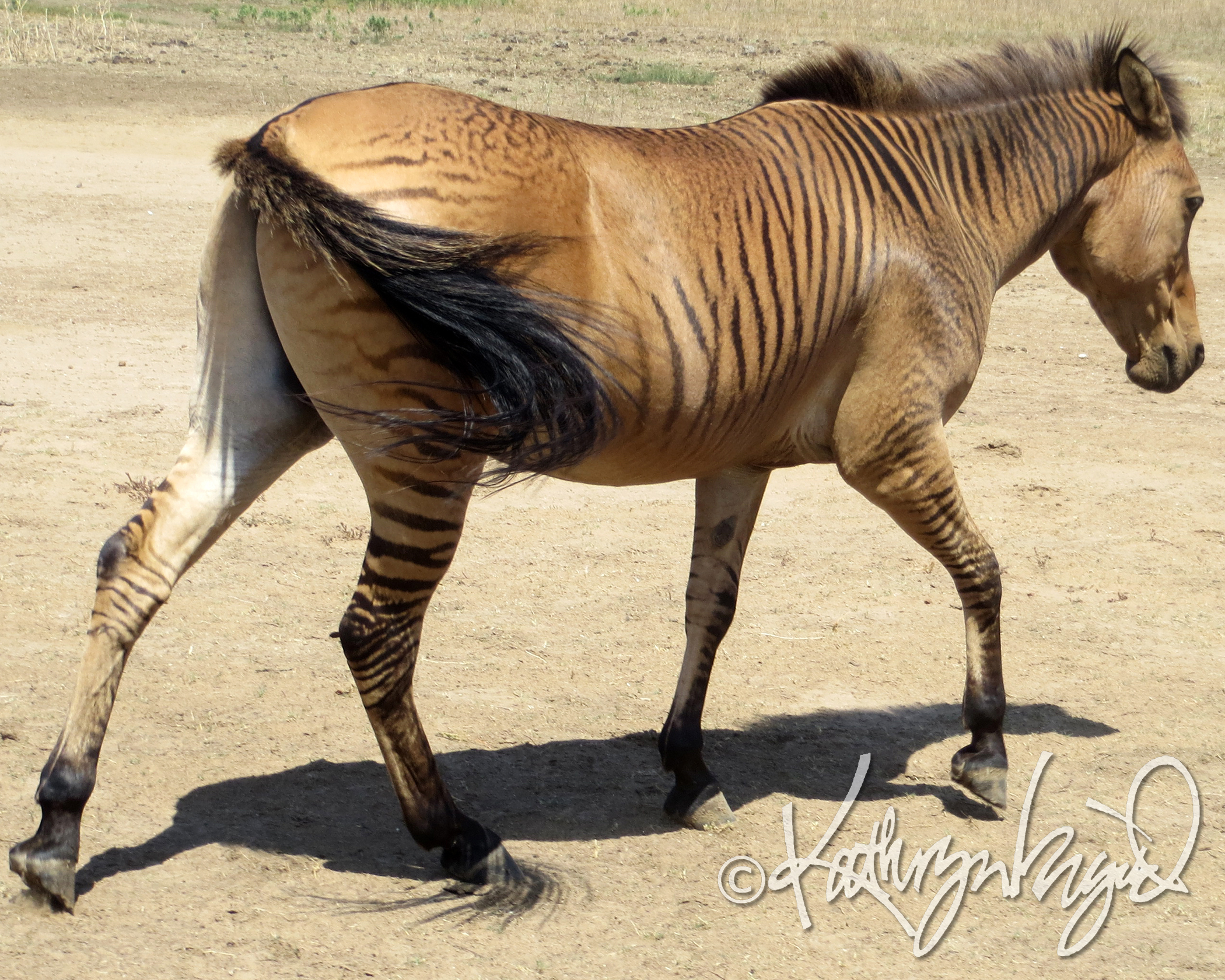
After all, some of my best friends are zorses….

Under the Arches

I walk into the room after the rehearsal has begun, and the men are working on a slow passage of Handel. Choirs I and II sing the same tenor, baritone and bass parts at this part of the piece, and they have unified their pitch and the round warmth of their Latin vowels so that despite having only ten of them singing a relatively soft phrase, the sonority is beautifully intense and sweeps me into the room on an almost ecstatic wave.photoI sit and finally have a look around. The doctoral student assistant is conducting, and one of the voices raised is my husband’s, from where he’s joined Choir II. I close my eyes for just a moment to listen to the lilt and roll of the men’s voices.

When the women rejoin and the full ensemble begins to move forward, picking up speed and volume as the text becomes more buoyant, I feel myself lifted further on the waves, transported far from this concrete box of a room and its cold fluorescent lights.photoSuddenly I am under the morning light pouring through a cathedral’s oculus, gazing up into the curves of the arched nave and dome. I am pacing sedately through the arcade of a cloister, the afternoon sun warming my heels as it peers into the intervals between the pillars. I am in the garden, watching the sun set on the curled canes of the roses climbing there,the bows of the water leaping in the fountain, the draped arms of the willow as it leans out to embrace the day’s last rays of light.

This is the sweetness of music, and in this wash of light and dark, cool and warmth, joy and meditation I can gladly lie for a thousand years.photo

Urbanity

There is a huge difference between the merely impressive and the expressive when it comes to modern cities. Rotterdam, once one of the glories in the European architectural crown, was bombed to dust in WWII and, given the poverty of post-war resources, was rebuilt in the following decades as a horrifyingly soulless, boxy blot of concrete on the face of the Netherlands. There is no comfort in knowing that the firestorm that destroyed the city was probably not planned as it happened but resulted from a perfect storm of another kind in miscommunications; the horrors of war are a long testimony to the potential for such devastation. In any even, it took Rotterdam ages to be revitalized into the place of energy and beauty that it is today. Why? What made it such a heart-stopping graveyard of a place when it had once been full of life and loveliness, and how could it ever come back to be something gracious and potent again?

There is no obvious single word that can express the massive destructive toll the bombing took on that city; annihilation is perhaps a close approximation, since it’s clear even from faded photos that the thoroughness of the attacks left very little evidence there had ever been a Rotterdam. I find it nearly impossible to imagine even when staring at proof. When my spouse and I visited the city for a conference even less than fifteen years ago it was still a sad shadow of its former glory, still dominated by 1950s-vintage blocks of affordable and utilitarian harshness that made me want to scream when I saw them in juxtaposition to the few tiny remnants of the beautiful architecture that had once filled the place.

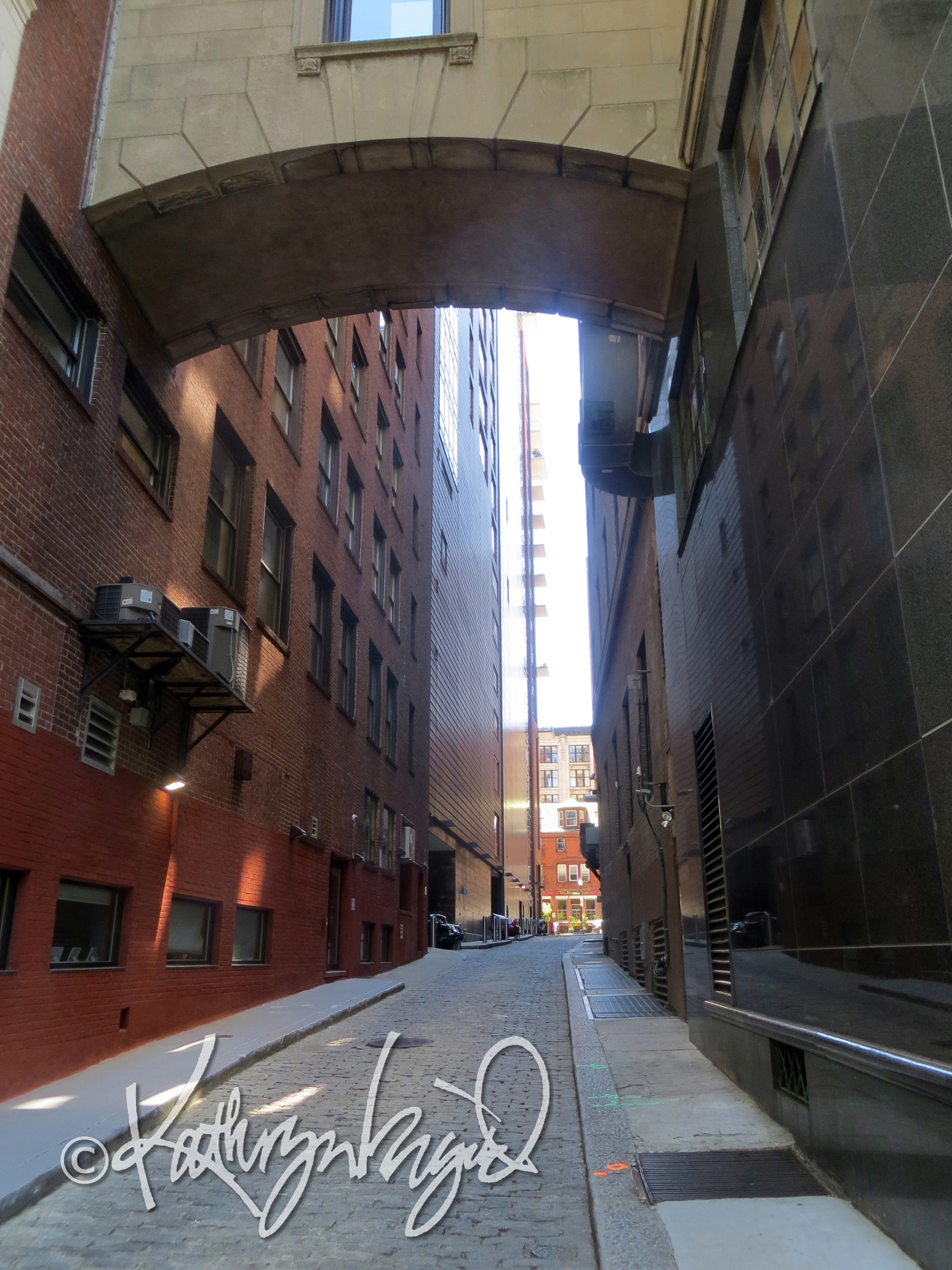
The main reason that Rotterdam is beautiful once again, and that many other cities have, and some have never lost, such beauty is simple: architectural thought and distinction. Building what is cheapest and easiest to construct is a poor solution to lack of structure anywhere. Places that have never experienced the ravages of war, urban decay and other forms of damage and neglect in such extremes can retain the beauty and patina of urbane culture in their urban settings far more easily. Take Boston, Massachusetts, a city that has seen its share of ups and downs over time, but as one of the older cities in a young and generally untouched-by-war country, still has many of its older–even oldest–and most prized, elegant, distinctive buildings. Despite the expected problems of social unrest, economic up- and downturns, spots of urban blight and misdirected city planning that Boston has faced like any modern city, the knowledge that the architectural strengths it does have are worthy of protecting and preserving means that it was built as more than mere indoor space in the first place and that the character of the structures has as much value in shaping the city’s identity as do its great denizens.photoIt should be obvious to those of us wishing to see all of the world housed and sheltered in humane and useful structures and towns and cities that simply throwing up whatever is cheapest and most readily available is hardly more useful, in the long term, than just plain, well, throwing up on people. If we want others to live educated, healthy and therefore productive and admirable lives, we can’t stuff them into trash bins of buildings that, even if they don’t collapse under their own flawed ugliness, will never encourage their occupants and users to flourish. If we don’t intend to fill others’ lives with the vomitous garbage we ourselves would reject and flee, we must find ways to make good, practical, appealing design a mandate and not an afterthought or an unaffordable dream.

That approach not only makes living and working in tolerable shelter possible but nurtures the human spirit and pushes us all to better ourselves, our cities and our world. photo

Now that My Hair is Longer

It’s interesting, this growing out my hair after about fifteen years of having it fairly short. Suddenly I’ve got wavy hair, and it not only looks different from the super-straight short stuff I had but I kind of like it better now that it’s got white hairs streaking through it here and there. Go figure. Still, that doesn’t make the following poem true. Just sayin’.photoLady Samson

 Her hair’s grown long now; does this signify

She’s stronger yet somehow, or then, have I

Mistaken this adornment so hirsute

For something that a person more acute

Would recognize as only pretty hair?

I’ll ponder it (and hope not seem to stare)

Until a sign arises that this length,

If only by its beauty, gives her strength,

For anyway, I oughtn’t give a fig

E’en on discovering that it’s a wig.photo

Hands

What is more beautiful than the hands shaped by devoted work? The marks of time and trial make wonderful maps of all the history and care that make each hand unique, every capillary the path blazed on the journey of toil or triumph.

An elder’s hand might be craggy both with age and strength and a dancer’s, always artful, even in repose. A farmer’s and a gardener’s might both have creases full of long-embedded earth, looking like furrows in the plant-rich soil. Craftsmen’s hands are often as modeled and sculpted as their works, and the athlete’s power and precision and timing and sensitivity bespeak years of training and focused will. A conductor’s hands, as I happily know, conjure music out of thin air with the way they guide and join voices and other instruments into a whole new thing, a sound that transcends all of the individuals responding to the gesture, transcends the single pair of hands.

But best of all, I think, are the hands that hold. Cradling and offering gifts to those in need, they hold a hint of another, better world. Reaching and taking another person’s hand with kind tenderness or sweet familiarity and love, the message they send for all to see is very clear. Would that every person on earth could feel the touch and know the purpose and meaning of such hands. What a pure and magical message. Send it out to the rest of the world, won’t you?photo

Image/Self Image

digital illustrationBeauty is in the Mirror of the Beholder

Brenda, trendy modernist, zips through her ultra-racy home

Her super-powered vacuum on a wave of pearly foam;

Her sexy subatomic voice, her skirt of crisp chiffon,

Her to-the-minute kitchen wares, her wildly brilliant spawn,

Her microscopic facial pores, her savvy in her biz,

Convince nobody that she’s great, but make her think she is.

Strange Attractors

Living things, like certain mathematical systems, are attracted (or not) to each other in a wonderful variety of ways. It’s pretty hard to predict what will constitute an individual’s attractors. Some people might say that a warthog, for example, could only be attractive to another warthog, but that’s a very limited notion, because we all have different definitions of beauty and those definitions can be strictly visual but can easily also include appeals to our other senses, not only the standard receptors of touch, sound, taste or scent but also our sense of curiosity or contentment or spirituality or a whole range of other concepts.photoIf I were a little tiny Texas Spiny Lizard, for example, I might be interested in mating or procreating only with a similar little tiny lizard, but I could also very easily be attracted for other purposes to the warmth of a sunny concrete slab, the smorgasbord of yummy insects that visit a group of potted plants, or the shady shelter between the bricks on which the pots are perched, where I can hide from the patrolling cats of the neighborhood. If I were one of the cats, I can imagine I’d be very attracted to the lizard, not just out of feline curiosity but because cats apparently like Texas Spiny Lizards, I suppose because they are small, moving targets for the hunt and possibly just because a cat might enjoy a good set of lizard drumsticks or baby back ribs or tenderloin on occasion. Do cats analyze their dining on a basis of whether or not a meal ‘tastes like chicken‘? I don’t know, but I do know that small, moving objects and food are both common cat attractors.photoI’m sure it’s also safe to assume that others are attracted to these little reptiles. Most likely that’s the main reason I’ve rarely seen one on our patio or porch any larger than this three-inch/10 cm specimen. If one of the local hawks swoops close enough to notice them, such dainty critters would logically look like the animal equivalent of fast food, and some of the smaller but reasonably aggressive birds (I’m looking at you, bluejays) might compete for such a snack. Snakes, if any of those nearby are larger than my typical garden snake visitor, would find them delectable. So it goes. We are attracted to partners and friends, but also to that which will sustain our progress toward finer dining or just plain survival.photoMy admiration of Texas Spiny Lizards, tiny or not, is based on several of these elements. There’s the simple appeal of the handsome patterning on and sculptural shapes of their infinitesimal-alligator bodies, of course. Those zippy dashes they make from one spot to another first catch my eye and then intrigue me, especially when one of them stops to practice his pushups for a while. I like the way they hold very, very still in between moves, moving only their eyes as they seem to scan for bugs to eat or new heights of patio slab or plant pot-dom to conquer. And very often, I like to contemplate them at equal leisure, attracted most of all to their very differentness from me.