
Lounge Around the Jungle
Image
10

Few things are as visibly expressive of joy as a dog bounding excitedly through deep snow. Except, possibly, a whole bunch of dogs, plus a whole cadre of little kids, leaping, tunneling, floundering, grinning, and generally exploding their way through the same drifts.

The problem with being an adult human is that we become so conscious of our creakiness and increasingly inflexible bodies, so obsessed with the dangers of having an infarction while shoveling or being speared in the forehead by a forty-pound icicle from the eaves, so hung up on our supposed decorum and dignity, that we stop risking not only true dangers but the possibility of gleefully tipping arse-over-teakettle into a billowing heap of powdery snow. It’s really too bad, because an occasional tumble from the pedestals we prop ourselves on, a momentary reminder of our own foolish frailty, and a smart whack on the overly fixed sense of reality is well worth a little bruising on ego and elbow. It might just teach us a renewed appreciation for the beauties of snow and nature. Why, if one were to be exceedingly incautious in the event, it might even turn out to be fun.
I give myself credit for being smarter than I am. I suspect, given what I see around me in this wild and woolly world, that I am far from alone in the practice. Even owls, a favorite symbol of wisdom, are not likely as perfectly ingenious as we imagine them, but they might still be more intelligent than the half of us.

The Search Continues
Parsing paragraphs to find
The author’s complete state of mind
Is no more useful than to ask
A Word how it performs its task,
If we assume we’ve read aright
What’s only there in black and white.
The Long and the Short of It
How quickly pass the hours and days
and weeks and months and years,
And yet, how slowly pass our worries,
paranoiac fears;
This is the great conundrum that
presents in mortal time,
And quite enough of food for thought
in one quick, measly rhyme.
Cut
Skin, though as taut as rawhide, and as strong,
Still splits under a jagged, cruel knife,
Opens its jaws to scream a gout of life
As blood that would atone and end the wrong—
But wounds, no matter what the cause or source,
Cannot withhold their sorrows or their rage;
Injustice must be shouted off the stage,
So bleed they without pity or remorse—
Break, then, both skin and soul, and sear the heart
Of any who is cognizant of pain;
Who cries for justice and can’t sleep again
‘Til order is restored as at the start—
What’s done cannot be undone should a scar
Reveal the fragile creatures that we are.
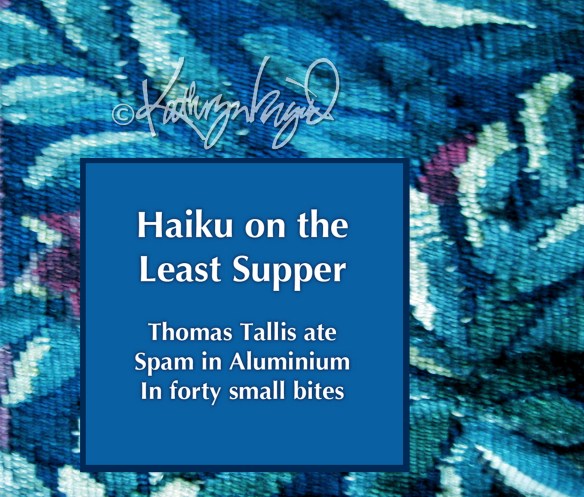
If you haven’t already crossed paths with Thomas Tallis‘s landmark Renaissance motet Spem in alium, I highly recommend it. It’s a truly astounding piece of European music history, representing the confluence of the political and artistic competition for primacy in that time period; it’s believed to have been composed as England’s answer to Italy’s Alessandro Striggio‘s own, earlier 40-part motet, or possibly to Striggio’s 40-60 voice mass. I’m no musician, but I’ve learned, mostly through witnessing a few performances of the Tallis by different groups led by my husband and his colleagues, just what a feat this piece really represents.
While the creation of Striggio’s works for 40 and more independent voices is amazing in its own right, the 40-part motet he wrote specified that the voices be doubled instrumentally. That is impressive enough. For my fellow non-musicians, think of it this way: a typical piece of music for a mixed choir requires singers to perform different notes and lines of music, often at the same time, so that what is heard is not one single series of notes, one after the other the way we sing by ourselves, but layers of notes that become deeper and more distinctive expressions of the words being sung. Instrumental doubling means that some or all of the vocal parts are supported by one or more instruments “singing” the same notes at the same time. This can intensify the effect of that singer or section’s line, and it can sometimes also help a less skilled singer or choir stay on target with the line.
In any event, the more typical choral works tend to have soprano, alto, tenor and bass voice parts, or singing lines, (or some combination of those) and generally, not more than eight or perhaps twelve different lines intermingling at once. Anything more than that means that every singer in a moderate-sized choir is responsible for knowing and performing his or her own notes, on pitch, at the right moments, and with exactly the right loud-soft dynamics and flow at every point throughout the piece. Being in a choir is a thrill; being in a good choir is a real intellectual and artistic and even physical challenge.
What makes the Tallis Spem so incredible is that it comprises not only forty individual, fully independent singers’ voices all singing their own distinct parts of the song, but indeed, doing so entirely unaccompanied. Every one of the singers has to be spot-on at all times without the support of either a fellow singer or any kind of instrumental doubling. If one singer goes off the rails, there’s the possibility that others will be thrown off of their pitch, timing, or even their place in the whole work. It could well lead to a musical train wreck. Think you’d be intimidated by doing this? I think any sane person should be!
But it’s powerful stuff, when it’s well done. I’ve had the privilege of hearing this feat beautifully accomplished by singers surrounding me in a cavernous cathedral space, and by singers standing onstage in a modern performance hall with a carefully engineered acoustic. I’ve experienced it in art galleries where Janet Cardiff‘s intriguing installation of forty high fidelity speakers on stands are placed in a circle in the otherwise rather bare room, each playing in synchrony the recording of one of the singers in a performance of the Tallis, so that one can stand outside the circle or in the center of it surrounded by the speakers, or can move to stand at one individual speaker at a time, getting entirely different effects depending upon which part of the score is being performed and where one stands in relation to the speaker playing that part.
No matter how it’s done, once you’ve gotten a little of the idea how this piece of music intertwines voices that seem at first to be operating without a clear relationship but then, more and more, to be converging into a meditative, chant-like, layered song, it is quite mesmerizing. There are some recordings and performances out there on CD, iTunes, and YouTube worth a listen, and if you get the chance to visit the Cardiff installation, called simply Forty-Part Motet, do it. Best of all, of course, is if some fine choir nearby offers a live performance that you can attend. It’s rather haunting and ethereal, and made all the more impressive by the knowledge of its complex origins.
Meanwhile, I have given you this bite-sized humorous meditation on the work. A haiku seemed the ideal vehicle for acting as either commentary on or antidote to a choral masterpiece so complicated and virtuosic. And I sort of wonder if, in the process of composing this grand work, Mr. Tallis had any chance to stop for rest or was so deep in concentration that he barely had time to do the Renaissance equivalent of opening a tin of luncheon meat and dining directly from it, pen and parchment in one hand and dripping Spam juice on the other. Thankfully, it doesn’t appear that this effort of his was entirely detrimental, let alone leading to his personal version of the Last Supper, since he went on to compose other fine works up until nearer his death some fifteen years later.
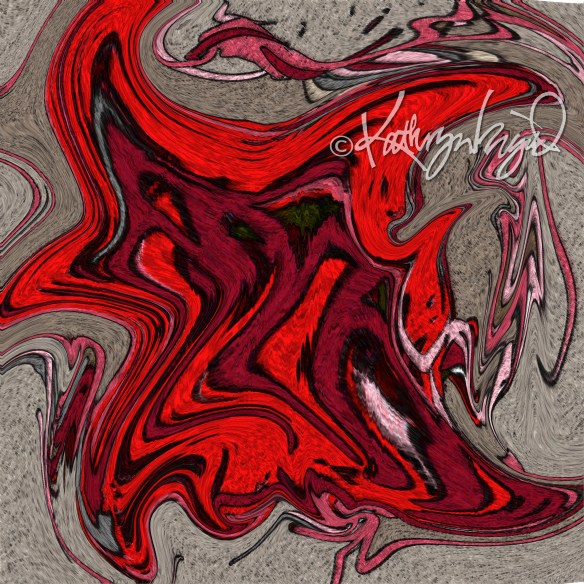 Psychedelic Pstarfish
Seems sillier than psyllium to sing of starry seas,
Yet so the ocean’s silken shore’s sufficient proof of these
That sparkling in such shady deep, something is sure to gleam
In stunning stellar specks and sparks in that submergèd stream,
So sing we sweet and shining songs of starfish as we wish
Upon the evening star to see a firmament of fish
 I listen to the mourning doves that coo and call in the shadows nearby and think that they do indeed sound ineffably sorrowful. The low, guttural sounds they make seem to my ear quite melancholy and, no matter how musical, to convey a kind of tragic news that makes me wonder just what it is that they say to one another. In my mind, they are exchanging the saddest of sad information, a litany of lachrymose lugubriousness.
In addition, I fear that I don’t give them enormous credit for wit and intellect, so if you’ll pardon the expression, I suspect that what conversation they do have is probably akin to what we American human-types sometimes call pidgin English—any actual content of worth being marred by the lack of intelligible vocabulary and syntax. But, to paraphrase what someone wiser than I has also said, if pigeons are the arbiters of intelligence in the same way that we humans are when we assume ourselves to be the wisest and brightest beings in creation, then all other creatures will by default be found wanting. No wonder the pigeons deign to unload their critiques on the heads of our celebrated effigies in the park.
The truth, I imagine, is that mourning-dove conversation is no less and no more wise and scintillating than our own, at least in the context of pigeon society. Heaven knows that anyone who translated my quotidian chitchat into ‘pigeon English’ would probably be violating the Columbiformian (I just made that up from their Latin name, thank-you-very-much) Geneva Conventions by boring them to death with my inanity and my extreme dull-wittedness when it comes to where to find the best yucky trash to eat, how to maintain the pecking order in the flock, or why one must always look for the shiniest surface on an automobile for proper deposition of one’s automotive excretions. So no matter how tragic the tone of the mourning-doves’ vocalizing sounds to a mere humanoid like me, it could be that they were just discussing their plans for world domination and the swell soirée with which they intend to celebrate it.
The spookiest thing about Halloween? That its frights and frissons are based on a simple and scary truth: we humans are the source of the villainies that pose the gravest dangers to us, as well as being the easiest mark for them. Be very afraid!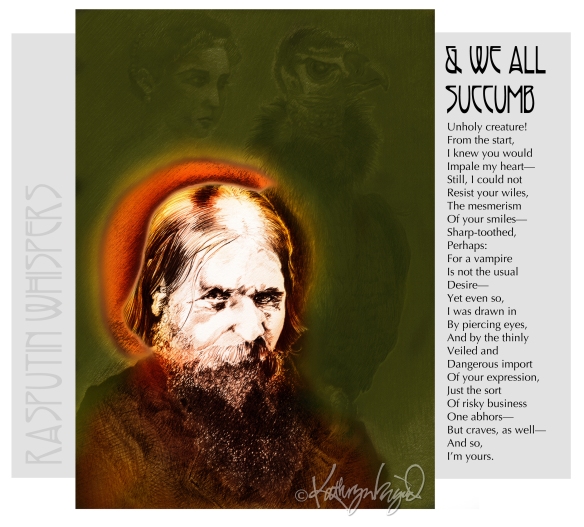


Even the most steadfastly unquestioning among believers in various versions of mainline religions will allow that, if their deity cares for them as a shepherd cares for sheep, their own religions, yes, even their own temples, mosques, and churches, sometimes harbor wolves in sheep’s clothing. Partisans of every political and philosophical school of thought have seen the unmasking of many such monsters that have hidden behind the guise of goodness and faithfulness, selflessness and judiciousness, or at least experienced the dire effects those have on the lives of the truly committed. There are reasons most languages have such large inventories of words like heretic and traitor, infidel, apostate, renegade, impostor, infiltrator, double agent, betrayer, and hypocrite.

So it astounds me every day that such experienced, otherwise reasonable people are either afraid, or simply refuse, to regularly and thoroughly question and examine the sources of their information, whether they are people or inanimate forms of evidence. Even among the most dedicated, wise, and well-meaning persons the human flaws we all bear cause mistakes and missteps. The most widely accepted proofs of truth may have come about by means of equally imperfect human study and the telephonic accidents of human transcription and translation. No matter how inspired the origin of the wisdom, it can’t be guaranteed to get to the page and from hand to hand, meeting to meeting, one end of the surprisingly not flat earth to the other, without sometimes being misinterpreted or co-opted, whether it’s by the false sheep in the flock or by our own good intentions.
All I can say is that if such stubbornness against rigorously examining our beliefs and every source of them is at its roots a terror of self-examination, we are doomed. We will forever repeat the grim side of human history, by acting out of doubt, cowardice, and ignorance, assumptions that have as much chance of being incorrect as not, and hidebound inability to see the wolves in our very midst for fear of discovering our own culpability. Circling each other with rapiers drawn and fighting to uphold traditions or beliefs or codes that we have so ingrained that they are unquestioned no matter how wrong, we will only deserve the curse of Shakespeare’s Mercutio—who, by the way, may or may not have said “A plague a’ both your houses,” in the original text, but various scholars over the years have guessed at such a reconstruction of it. Even Shakespeare, that demigod of English literature, is only as reliable a source as the many readers and interpreters since his time can determine, assuming that there was one playwright and poet of that name and not, as some believe, some cadre of the great literary minds of that era. Don’t get me started.
I will say right out that I know full well that I am guilty of being poorly or misinformed on a host of topics, and a stubbornly slow learner on top of that. I am trying, however I may stumble along the way, to grow beyond such ossified thinking. If only we could all begin with the premise that the fault might be not in our stars but in our selves, I think we might discover that our reliance on incomplete or incorrect information puts us constantly at risk for inner and outer conflicts we ought to have laid aside or, better yet, avoided altogether. The Other Guy might in fact deserve a listen, and acting first, asking questions later is not a conversation but is likely instead to end in swords crossed and lives lost. Acting in haste or acting in hate, the result may be the same because we were ill prepared to ask the right questions, let alone come to a wise and humane conclusion as a result. There are, sadly and unquestionably, baddies among us. But even so, if we all insist on clinging to our own versions of the truth without regularly and rigorously questioning their verity, then the attack we are all under begins inside, not from any external enemy, real or imagined.
 Art-Colored Glasses