DIY Survivor

Do or Die

The ancient Archaeopteryx had never turned a wing

Or lifted her substantial claws to help with anything;

She wielded her impressive bill, but only to express

Disdain for any task but what advanced her happiness

Exclusively, for she believed herself the focal point

Of all existence on the earth; her nose got out of joint

When anyone would question her supremacy as Queen.

You’ll notice, now, that she’s extinct, and never since been seen.Digital illo: The Archaeopteryx's Mistake

Gold in the Darkness

Image

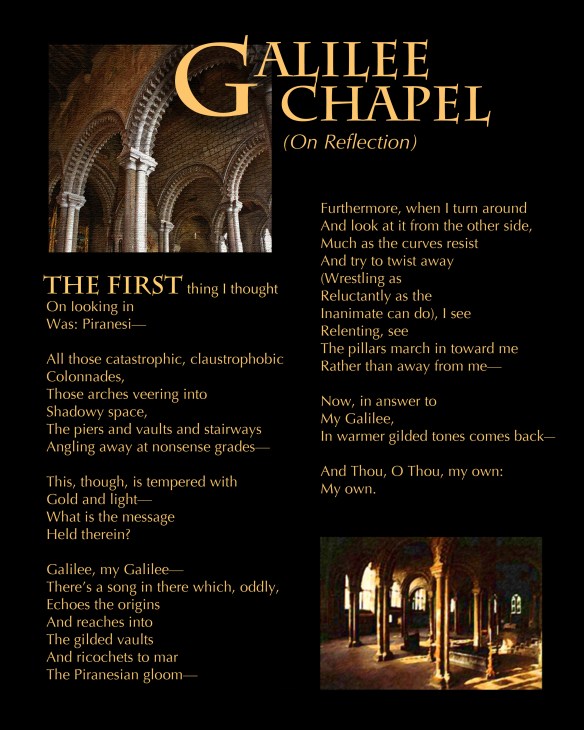
Digital illustrations from photos + text: Galilee Chapel

How They Came to Winnipeg (Mapping History)

Digital illustration + text: The Plains I

Text: The Plains II

Text: The Plains III

10 Terrible Words that Shouldn’t Exist in Any Language

Digital text-illustration: 10 Terrible WordsOne person who hates is a Weapon of Mass Destruction. One who cares and shares? Perhaps the only antidote.

As I recently said to my friend Maryam: poverty—both of concrete, material resources like food and shelter, and of intellectual and ephemeral resources (education, spiritual enrichment, the arts, community engagement, etc)—seems to me to be perpetrated and perpetuated more by selfishness than by an actual shortage of any of those resources. The rich and powerful always want more riches and power, and what they do have makes them able to afford and acquire more and to keep their feet firmly on the backs of the have-nots. Plenty is never enough. The resulting imbalance is as old as history, and rotten as ever. Only those who will speak up and resist entrenched inequities and injustices will have any hope of making change.Photo montage: Wolverine & Badger

The badger and the wolverine have a reputation for being among the most tenaciously savage brutes of all the mammals. Yeah, Honey Badger even has his own meme to show for it. But let’s be honest: no beast of earth, air, or sea has a capacity for vile, rapacious cruelty rivaling that of the human animal. Even creatures of the natural enmity of predator and prey compete, fight, kill, and are sated. They have little apparent ideation of hatred and war to match people’s. A wolverine or badger will fight to defend, or to kill for food, but unlike the human, doesn’t seem inclined to attack indiscriminately outside of its primal needs for safety, shelter, and food; when the skirmish is done as efficiently as possible and the need assuaged, the sharpest of tooth and reddest of claw among them doesn’t do an end-zone dance to celebrate its pleasure in winning but will usually depart the scene or go to rest for the next time of need. The remaining food and shelter and other resources stay in place for whatever creature comes next, hunter or hunted, cousin or not.

Can we humans not learn from such a thing? I’m pretty sure that if we destroy each other and ourselves in our constant self-righteous, self-congratulatory belief that we deserve everything we can get our hands on, Honey Badger won’t be the only creature that doesn’t care.

FutuRetro

One of the things I so love about travel and touring is getting a much more powerful sense of history; standing in and on the places where events and lives long past have happened, whether grand or insignificant, utterly changes my understanding of those people and occurrences. My first trip overseas, that Grand Tour I was so privileged to take in college with my older sister, was an awakening I never expected. I hoped the trip would be a cure for my sophomore blues, and indeed it was, beyond anything I could have planned or dreamt before, but more than that I was startled by how connected I felt to history.

The drizzly and cold autumn day when we visited Canterbury Cathedral was atmospheric enough in its way, but I remember standing on stone steps worn into a soft bowl by the thousands of footsteps that had passed over them in the centuries of its existence, looking up into a palely gold ray from a lamp, seeing the motes of dust whirling in it, and feeling that time itself was floating down around me in delicate pieces, that the spirit of every person who had ever set foot on that same smooth hollow in the stone was present there with me in that very moment. It was almost as though I could hear their voices and see the scenes of the past play out in the faint gloom around me, all overlapping and yet perfectly present. I felt my own place in the whole of the human timeline in an entirely different way than I ever expected, tinier than ever, yet surprisingly more concrete and tangible.

This was reinforced later in the same journey many times, as we passed through or visited (not necessarily in this order) England, Italy, France, the Netherlands, Switzerland, Austria, Germany, Denmark, Sweden, Norway, Wales, Scotland, and Ireland and stood in the very footprints of many a person, going down the winding passages and cobbled side-streets that had seen multitudes of significant moments long since fled. As this was the first time I visited Norway, the rooting ground of my ancestors from every branch of my family tree, it is no surprise in retrospect that many of those potent realizations came to me in that place—but as usual, hindsight is ever so much clearer than was my youthful wisdom in those days. It was moving, more meaningful than I can express, to get to know the relatives in Norway with whom my family had maintained contact: my maternal grandfather’s sisters and brother-in-law, nieces and nephew. These were days before cheap telephonic long distance, let alone email and internet communiqués, so we had only briefly even met most of these people when they visited America once in my younger years, yet they not only took us in as visitors, Tante Anna and Onkel Alf kept my sister and me with them for a full month and took us to see the family’s two longtime farms, the graves where many of our ancestors were sleeping underfoot. This was incredibly touching, a genealogical history lesson, but the more so because it was taught by the eldest of our remaining family there.

What moved me the most, in fact, was when on arriving in Oslo at our mother’s cousin’s home before we even came down south to be with his parents, we explored the great city a little on our own during the days, while he was at work and his wife and children off having their own day of adventures. It was all so humbling and so magical to feel for the first time that I understood a tiny bit more of my own family lineage and how our people fit into the larger world. We did visit many of the obligatory and famous tourist sites, knowing that there was no direct link to our ancestors, only cultural ones. So I was quite stunned when we visited the Viking Ship Museum and, standing before these ancient vessels, I was absolutely electrified with a sense of shared history coursing through my veins. My forebears were undoubtedly humble subsistence farmers, not the bold and violent and adventurous Viking strain we know through film and television, never mind through the great Sagas—but I felt for the first time something connecting me to those long-gone people all the same.
Photo: Enter the Time Machine

By now I have traveled a fair amount more. I have been on this planet more than twice as long, and I think I might even be a little bit wiser through my experiences in that life than I was back then. But I approach every narrow stone passageway, every weathered door, every window with its rippling antique panes presenting everything that’s beyond them like a warped post-impressionist fiction of itself, I expect to learn something not only about what is there in front of me and around me, but what is inside me. And I know that I will learn something, too, about how I fit into that larger, and ever so mysterious, world if I am wise and patient and alert enough to notice it. So much has gone by. So much remains ahead, yet unknown.

The Great-Greats

Naming things is an endlessly fascinating and complicated way of creating and better understanding our relationships with them. Different cultures have even devised quite distinct ways of classifying and identifying the kinships within them, to the extent that families and relations in the different cultures affect the very ways people interact and consider themselves connected, responsible for each other, and much more.Photo: Great Great Grandparents

One of the appealing (or appalling) quirks, depending upon one’s view, of the American traditions of familial identification and the names given them in English is the way we use the word Great to specify layers of distance from ourselves. This photo, for example, is of one of my sets of great- and/or great-great grandparents (my maternal grandfather’s forebears), if I am not mistaken, and there is much to pique my curiosity in this image.

First, of course, is the question of whether I have identified them correctly at all. But then, in what ways—besides the nominal—were they great? Clearly, being among my ancestors is an easy in to that category. [Ba-dum-tsssssssshhhhhh!]*

Seriously, though, what distinguished these people? Safe to assume, from what little I do know of my relatives in Norway, these two lived on a small farm, and they worked hard. I mean, incredibly hard, by my standards. I’m inclined, actually, to think that the gent is my great grandpa and the lady next to him is his mummified mum, but having seen many a portrait from that era whose subject I was shocked to discover was eons younger than I’d have imagined, I can’t be sure. If this is a couple, I am extra, extra glad I have such a lazy and comfortable life. I may be no spring chicken, but I like to think that people will be able to tell whether or not I’ve already died, and when it does occur, won’t be able to make work boots out of my hide without tanning it further.

This could be the great-grandfather who was a tinsmith. A pretty skilled one, at that. The hands I see here could easily be tough enough to have put metal in its place. As for the farming, what little I’ve gleaned [enough with the shtick! I’ll try to behave myself]* from the various family stories and photos indicates that my family were subsistence farmers, growing what produce would feed their own households or be swapped with neighbors for  further goods, and raising enough sheep and goats, chickens and cattle to keep them in meat, eggs, hides and bones as needed. Agrarian life, until more recent decades, was generally a far more solitary and jack of all trades kind of existence. My grandmothers, great and otherwise (and I can only assume all of the neighbor women of this ancestress’ approximate vintage) did such work as probably made them all look equally leathery.

I would like to think that the sober, if not condemnatory, expressions in the photo sprang from the typical problem of holding still for the interminable exposure time a photograph required in those days, not to mention doing so while squinting in the sunlight. But I also suspect that a combination of that hardscrabble life of theirs and the grimly perdition-obsessed brand of religion to which many of my relatives have subscribed means that these two generally took life mighty seriously as well. They probably didn’t see so much to joke about or room for fun and games in their daily lives.

What I can safely assume about my relatives still gives me some hope. Obviously, they knew enough about how to survive and yes, thankfully, to procreate, that I am here generations later to tell the tale. I consider my existence a fine thing. Although they weren’t either wealthy or showy, they are dressed in well made, tidily kept clothing and lo, my mustachioed male relative even sports a watch chain, so theirs was not, even from the perspective of my privileged and cushy life, a torturous life of pure privation. So I don’t feel enormous existential guilt for their suffering. But I’m not inclined that way like they might have been, anyhow.

My late Norwegian relatives lived and labored in a landscape and climate rather like where I grew up in the American northwest, so I know that even if their daily work was hard they did it surrounded by beauty and nurtured in a mostly benevolent natural environment. They raised children who were able to go out in turn into the wider world and make their ways, eventually finding own their paths, making their own livings, and raising their own families, and eventually crossing many mountains, borders, and seas. I think all of this a fine, if modest, sampler of human existence with [dang it, I just can’t help it!]* relatively little grand tragedy or overblown drama. Most of all, I am glad that the long-gone beings who posed for this rather inscrutable image contributed to the production of a line of pretty good folk, culminating in my immediate family. That’s greatness enough for me, and makes me very thankful indeed. Happy Thanksgiving, my friends.

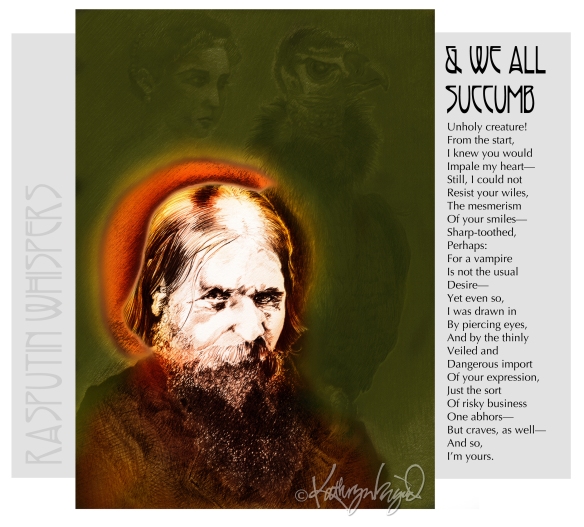
Rasputin Whispers & We All Succumb

The spookiest thing about Halloween? That its frights and frissons are based on a simple and scary truth: we humans are the source of the villainies that pose the gravest dangers to us, as well as being the easiest mark for them. Be very afraid!Digital illustration + text: And We All Succumb

The Magic of Books

Photo montage: The Magical BookIlluminations

A leather-covered volume with its pages edged in gilt

Slipped from the deck into the sea but, cradled in the silt

Where oxygen could not intrude, nor prying eyes descry

Its ancient glimmer in the mud, a century did lie;

One century—another—no, nine centuries of dark

It passed in sleeping silence after falling from that bark.

And then one day, a ray of light passed through the waves above

Just at the perfect moment for a mermaid, as she dove,

To catch a glimpse of gilded pages in that sea-deep sun

And swim down to investigate this treasure—only one

Quick sparkle of that golden edge brought her so close to look,

To brush aside the lazy silt and so, reveal the book.

Nine hundred years in darkness had it lain in quiet wait

For just this passing moment to wake up, illuminate,

And catch the passing fancy of an unsuspecting maid

Who’d bring it to her grotto in the deepest ocean’s shade.

In dappled dark, her opal eyes lit up the page, and next,

She read it, eager, mesmerized, the calligraphic text

Transforming, leaping from the book, becoming swiftly wild

And glorious, and telling tales that moved the mermaid child

To bend with sorrow, weep with joy; to palpitate with fear;

To live the story as her own; and, as the end drew near,

To grieve that such a magic fable had to end at all,

For it had seemed so rich and real, had held her in such thrall

That she’d begun to think it true, this tale of mythic men

And women wondrous wise and brave—she turned to read again—

Thrice through, in fact, she read the tome, and every time the more

Believed its great, compelling tale of life beyond her shore.

Full hearted, then, she closed the book, but never ceased to wish

That other mermaids, other seas, and other sorts of fish

Than those she knew in her own place were, as the story’s, real,

And though once happy, now she longed to see and hear and feel

What was beyond her native coast. One day she must return

To where she’d found that magic book, and see what she could learn.

One day, indeed, an older lass, but nonetheless enthralled

By the old book (she’d read again six times, if she recalled),

She caught the rolling afternoon’s most fearsome wave and rode

Under its lashing, crashing crest to where the book was stowed

Within its silken, silty bed so long, so long ago,

And knelt down on the ocean’s floor, and watched the water’s flow,

And saw the ripples up above, a thousand fathoms high,

And wished a little inward wish that something from the sky

Up higher still would pierce the waves, would light for her one ray

Of visionary hope the way it had upon that day.

Out of the darkness streaked with kelp, the passing sea life came

To look at her, this pearly lass, but swam off just the same,

For curious though she appeared, they’d naught to give or tell

That would assuage her longing or relieve her of her spell.

For days she hovered in that place, to gaze with fading hope

And heave a soft and bubbling sigh, and comb the gentle slope

To see if some small, overlooked companion to her find

Would rise to hand and help explain; but none was left behind.

At last she turned, quite woebegone, to drift for home, undone,

Her childhood fantasies all dashed—but wait! A ray of sun,

One faded spear, had pierced the deep; it beckoned her to draw

Back to the place her book had lain, and in its light she saw,

But faintly, now, another book, this one yet older still,

And as she took it in her hand, she felt a silent thrill

Race up her spine. She sailed for home as swift as mantas fly,

Gripping her treasure to her heart, this book dropped from the sky.

There in the grotto, as before, she read with trembling care

The prologue to her favored tale, the key unlocking there

The meaning of that history and mystery so grand,

The explication of her longed for never-ever-land.

Page One of this tremendous tome opened the secret wide

And startled her to drop the book, for there she saw inside

The preface to her deepest loved tale of that mystic place

Began with an engraving of her own familiar face!

Around her portrait, mirror-like, the title read, in part,

“The Story of Our Lady-Queen, the Owner of My Heart.”

Her own heart skipped a beat or two ere she once more to read

Took up the opus in her hand, to see where it might lead—

There in the shell-lined grotto sweet, she pored over the lines

Telling her life from this day forth, as writ by kingly hand:

Who authored this spoke of his love, and how she ruled his land

Long years to come, and how, in sum, her people throve as well,

And in the book, she met her love, who had such tales to tell,

And read them through with eager joy, to see what else she’d learn,

‘Til by the end-page she loved too, and had begun to yearn

To know this King and how it came that time had backward spun

So that these books of things yet dreamed fell from the present sun.

The end-page held, as she had hoped, engraved once more, two eyes

Whose gaze made her young, beating heart in recognition rise!

She dashed outside into the swell, and ne’er looked back again,

To find that place the boat was moored, to greet the sailing men,

To follow them to distant seas where they in their bark would roam,

And find the heart that from its start had known she would come home.Digital illustration from a photo: The Mermaid's Tale
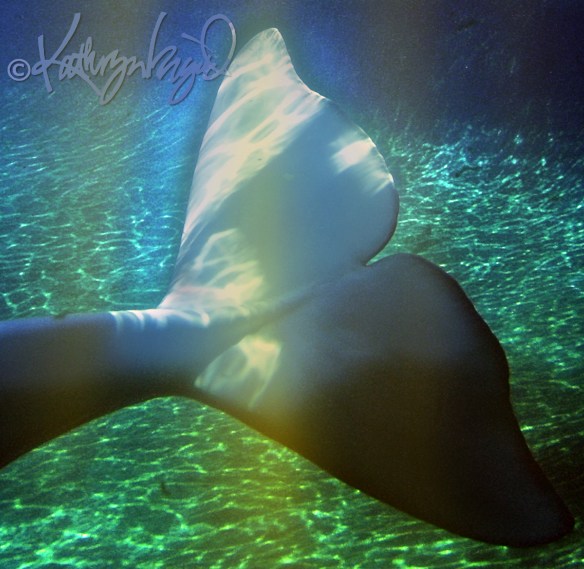
Don’t Pass Me; I’m Going as Fast as I Can!

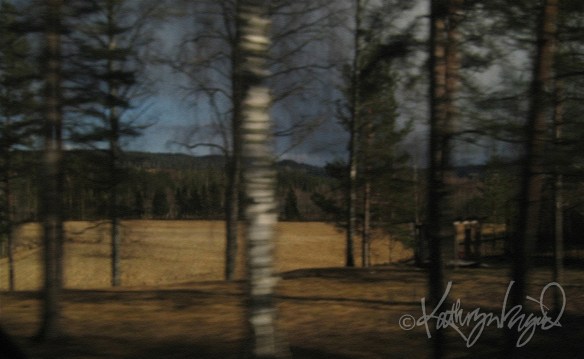
Photo: Seen from a  TrainHigh Speed Chase

The world, my friends, is a fleeting thing, and life, swift passing by

Like silent film outside the train, blurred trees against the sky

And birds, small flecks, shot from the grass to pepper clouds with black,

Yet nothing would I change a whit to veer from on this track;

If hurtling time should slow its pace in this great journey’s run,

There’d be no more such tales to tell, no news under the sun,

No destinations to explore, adventures to be had,

And not one bit of joy that’s new, and wouldn’t that be sad!

So I’ll hang on and buckle up, and hope what’s speeding past

Won’t leave me in a cloud of dust. I’ll get there, too, at last.

Things to Remember

Apparently I am sucked into the Throwback Thursday vortex, for amid my housework wanderings I stumbled across some dish-drying towels that brought a flood of memories over me. The first thing that came to mind was curiosity about whether there are many others who grew up using tea-towels like these made of flour sacking material and hand-embroidered, often with a small posy or aphorism in the corner, and usually by Mom or some older relative, at least until we ourselves were conscripted for the task.

My mother enjoyed embroidery as a relaxation mode as well as art form, and the last batch of dish towels that I know of her having made were a series of line drawings of local native flora, based (with the author’s permission) on a book of lovely little watercolors of the same plants and flowers. I chose one representing a favorite alpine blossom, even though the creamy white blooms were guaranteed to fade quickly against the pale fabric, and the outline of them remains faintly visible even after many years of hard use. That’s a perfect representation, in its way, of how my memory works. I began to reminisce, seeing this embroidery, on the alpine plants that have always signaled peace and freedom to me as I day-hiked on the flanks of Mt. Rainier. So I meandered over to search online for native alpine plants of the northwest, and as soon as I began looking at the images I was struck with an infusion of the very scent of those hikes, a spicy, earthy, fresh and herbal blend of tree resins—cedar, pine, alpine fir—and sun-baked earth, lightly perfumed flowers, crushed needles and fallen leaves underfoot, the brisk dash of elevated air. What a lot of fine things to be contained, in addition to the treasury of love and family history, within my mama’s embroidered dish drying cloth.Photo: Mama's Embroidery

You might think I’d’ve inherited an embroidery gene, because in addition to my mom’s fine handiwork, I grew up seeing and using Grandma’s embroidered towels and pillowcases and enjoyed them, too. I did not, and since I had these two sources readily available, I didn’t mourn the gap in my skill set. I could always go to one or the other of them and find some new kitchen linens in a time of need.

My father’s mother never got so inventive as to design her own embroideries based on book illustrations like Mom’s were, but Grandma chose for her projects the resource of hand-me-down and found patterns, most of them quite out of date already (hence the ease of her collecting them), and almost all of them much quirkier and tackier than her normally refined taste would have allowed. These were, however, mainly destined to be given to charity or sold for the proceeds that would go to the charity in their stead, so she had no attachment or agenda for showing them at home. I, on the other hand, bought a few not only out of any little do-gooder intentions but because the sheer silliness of some of the designs so delighted me.

This one, for example, that was my inspiration for joining now in the Throwback Thursday brigade, was highly amusing to me in its ridiculously fantastic subject, its period style, and its girly goofiness. I couldn’t resist it. I found no other Days of the Week as companions, so I can only imagine what happened on those days, but it was enough to find this towel that could simultaneously remind me of my grandmother and my youth and make me laugh, all while getting my dishes dried.Photo: Throwback Thursday

Fashions change, and with them, the decor and even tools that fill our lives and homes. Yesterday’s dish towels are probably more often machine-made of some high-tech sort of microfiber or super-absorbent bamboo fiber blend with an artful printed-on design in the proper Pantone colors of the year. But do they do a more artful job, as well, of wiping dishes dry after washing? Can they strain soup broth into crystal clarity? Do they make perfect wraps for ice packs when a sore neck or bruised arm is in want of one? No better than the old standbys of my youth, I imagine. Old as I am, I come from good stock that valued something a bit quaint and very handmade, and if it managed to accomplish the task and carry memories for decades at the same time, why, I suspect I’ll do well to try to be a human imitation of it myself.