Röda tråden (The Red Thread)

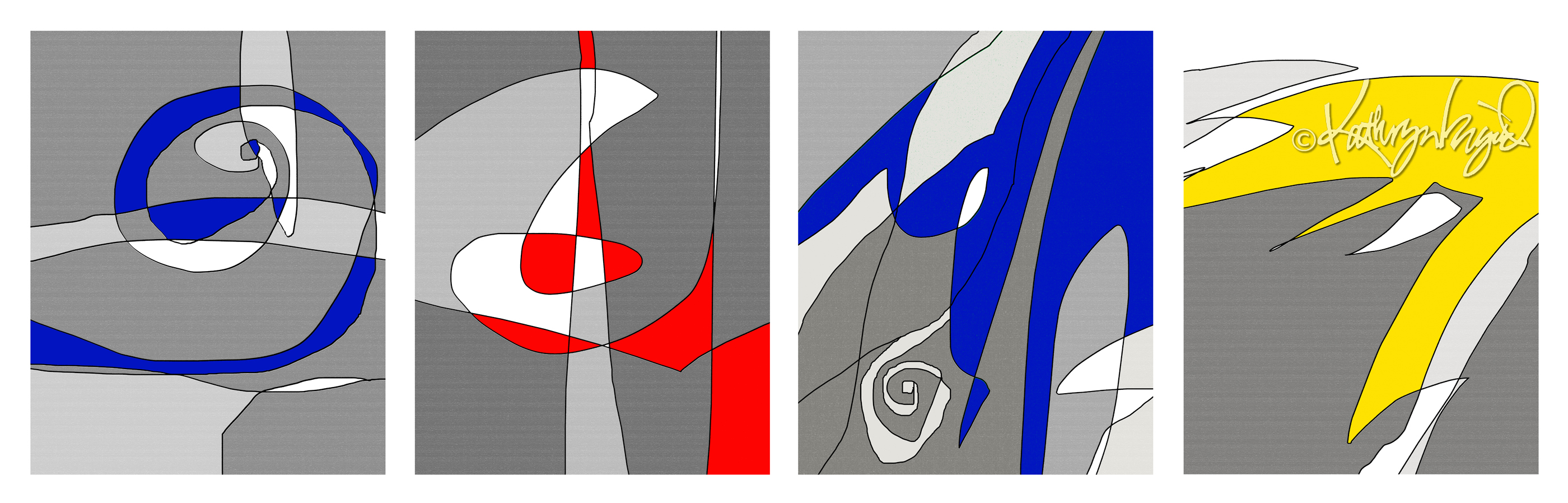
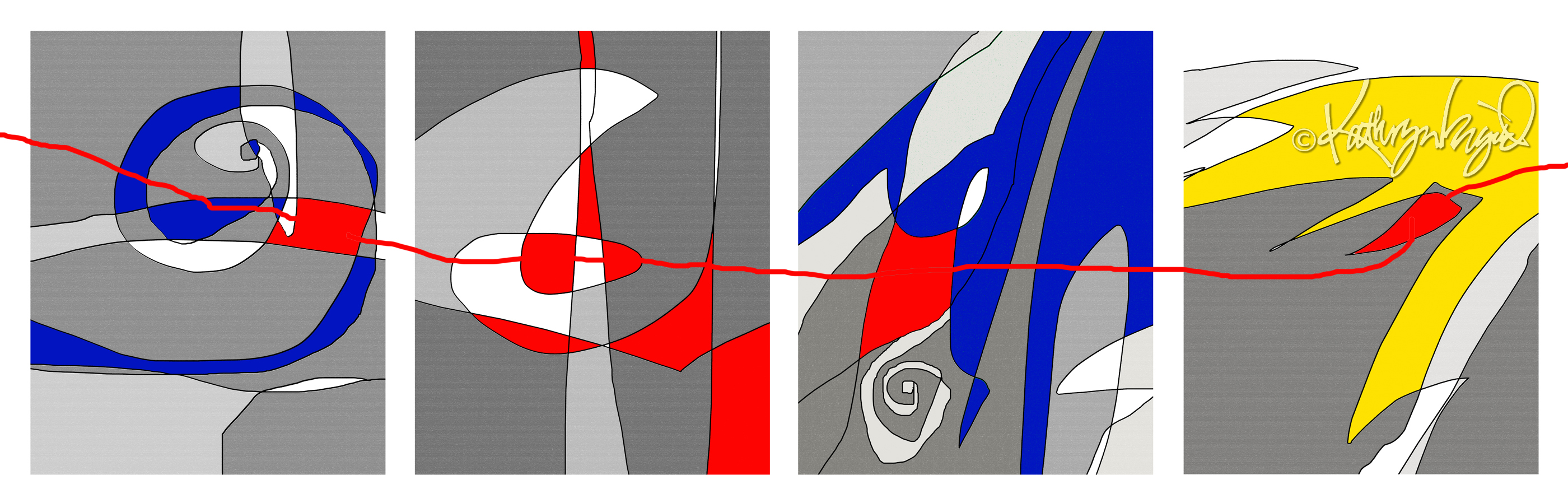
Röda tråden is the Swedish phrase for connectivity. I learned it from my husband, who in turn learned it during his dissertation studies on modern Swedish choral history, and in a way it’s the perfect encapsulation of what his research revealed: that the astonishingly deep and broad influence of such a small country, in such a short time, on such a large field as Western choir singing and music came about primarily because of the remarkable and unique confluence and joining together of a huge number of events, people, ideas and resources in that little land at the end of the Second World War. As unimaginably terrible as war is on any scale, it’s all the more a testament to connectedness that at the end of one of the largest we’ve known, such good and meaningful and positive elements were all drawn into one significant, beautiful growth spurt in the art of singing together.digital illustrationAs a miniature of String Theory in the arts, this surge of the choral art in Sweden is notable (no musical pun intended) not only because it posits a reasonably substantial explanation for the larger choral sector’s modern expansive development amid the general devastation and struggle following the end of WWII, but also because in doing so it illustrates wonderfully how the intertwining of all sorts of seemingly disparate elements such as safe havens from political unrest and postwar reevaluation of norms, personal and professional relationships and experimentation with new media could come into contact and interact to create a new mode of thinking, acting, composing, teaching and singing. In turn, this is a striking model of how people from distinct cultures, educational backgrounds, economic resources and political systems and of widely varying personalities, unified by the one tiny thread of choral music, could be pulled together into a complicated system that, though still colorfully messy and imperfect, led to a potent common end that has had lasting and marvelous influence for long and fruitful decades since.
I am, of course, grateful on a personal level because this Swedish postwar influence on Western choral culture has not only enriched my husband’s professional and artistic endeavors–not to mention was the basis for his award-winning doctoral dissertation that in turn opened a lot of friendly doors to us both in Sweden–but because it produced so much spectacular music and inspiration for so much more.
digital illustration

Röda Tråden is the Swedish version of the idea that–indeed literally–fascinates so many of us: the connecting thread–that which binds one thing to another. I can think of nothing greater than to spend life seeking the Red Thread that shows us our commonalities and binds all people together as well.

Further, though, I am grateful that such an otherwise inexplicable event as the ‘Swedish Choral Miracle‘ seems to me ample proof that all things and people really are connected. And that through recognizing and making good use of those connections, however, odd or tenuous they may appear, there is hope for new and better songs to be sung everywhere.

If I needed further proof of this, last night’s concert gave it amply. My spouse conducted the combined forces of the Chancel Choir of the church where he’s currently interim choirmaster plus their excellent hired pro orchestra in performing Haydn and Dvorak’s two settings of the Te Deum text as the concert opening and closing, respectively, bookending the extraordinarily lovely and moving Missa Brevis of Kodaly. I came in to sit for the concert among strangers and acquaintances from the church and discovered a friend from another parish sitting across the aisle from me, then learned from one of the choir administrators that a friend of hers in attendance turned out to be a long-ago colleague of my husband’s from another state, and finally went up to greet my guy after the concert and found him speaking with a group of ladies in the front row, one of whom was the wife of a former US president. What brought all of us divergent people together in this moment? Music. Beautiful singing and playing. Chance, kismet, divine intervention. Call it what you will, the slender but unbreakable thread that connects us all drew us into one place for a time of basking in the inscrutably beautiful harmony that is beyond craft, beyond art. That is a concert without peer.

Urbanity

There is a huge difference between the merely impressive and the expressive when it comes to modern cities. Rotterdam, once one of the glories in the European architectural crown, was bombed to dust in WWII and, given the poverty of post-war resources, was rebuilt in the following decades as a horrifyingly soulless, boxy blot of concrete on the face of the Netherlands. There is no comfort in knowing that the firestorm that destroyed the city was probably not planned as it happened but resulted from a perfect storm of another kind in miscommunications; the horrors of war are a long testimony to the potential for such devastation. In any even, it took Rotterdam ages to be revitalized into the place of energy and beauty that it is today. Why? What made it such a heart-stopping graveyard of a place when it had once been full of life and loveliness, and how could it ever come back to be something gracious and potent again?

There is no obvious single word that can express the massive destructive toll the bombing took on that city; annihilation is perhaps a close approximation, since it’s clear even from faded photos that the thoroughness of the attacks left very little evidence there had ever been a Rotterdam. I find it nearly impossible to imagine even when staring at proof. When my spouse and I visited the city for a conference even less than fifteen years ago it was still a sad shadow of its former glory, still dominated by 1950s-vintage blocks of affordable and utilitarian harshness that made me want to scream when I saw them in juxtaposition to the few tiny remnants of the beautiful architecture that had once filled the place.

The main reason that Rotterdam is beautiful once again, and that many other cities have, and some have never lost, such beauty is simple: architectural thought and distinction. Building what is cheapest and easiest to construct is a poor solution to lack of structure anywhere. Places that have never experienced the ravages of war, urban decay and other forms of damage and neglect in such extremes can retain the beauty and patina of urbane culture in their urban settings far more easily. Take Boston, Massachusetts, a city that has seen its share of ups and downs over time, but as one of the older cities in a young and generally untouched-by-war country, still has many of its older–even oldest–and most prized, elegant, distinctive buildings. Despite the expected problems of social unrest, economic up- and downturns, spots of urban blight and misdirected city planning that Boston has faced like any modern city, the knowledge that the architectural strengths it does have are worthy of protecting and preserving means that it was built as more than mere indoor space in the first place and that the character of the structures has as much value in shaping the city’s identity as do its great denizens.photoIt should be obvious to those of us wishing to see all of the world housed and sheltered in humane and useful structures and towns and cities that simply throwing up whatever is cheapest and most readily available is hardly more useful, in the long term, than just plain, well, throwing up on people. If we want others to live educated, healthy and therefore productive and admirable lives, we can’t stuff them into trash bins of buildings that, even if they don’t collapse under their own flawed ugliness, will never encourage their occupants and users to flourish. If we don’t intend to fill others’ lives with the vomitous garbage we ourselves would reject and flee, we must find ways to make good, practical, appealing design a mandate and not an afterthought or an unaffordable dream.

That approach not only makes living and working in tolerable shelter possible but nurtures the human spirit and pushes us all to better ourselves, our cities and our world. photo

Equilibrium

photo montageOne of the things I enjoy most as an artist–as those of you who frequent this joint know–is playing with all of the commonalities I find in the visual world. I am very much an analogous thinker; what I see is tested, examined, recognized and theorized on the basis of what it reminds me of at first glance. I suppose it’s the virtual equivalent of judging a book by its cover, but what it allows me when I’m thinking in strictly visual terms is the opportunity to fiddle with the ideas of what I imagine to be the links between one subject and another and as patterns emerge from it, use that for creative fodder, learn something about these pet subjects of mine, build images based on them, and in turn, learn something about myself along the way if I make even a little effort.

It’s very easy to become a collector. We all have our idiosyncratic passions and interests, to the degree that when we’re not actively gathering objects and concrete stuff that reflects them we are still busy building our internal storage of ideas and images related to them, and we end up with personalities shaped by, and like, them. People associate us with our sets of tastes and ways of thinking. Me, I am addicted to patterns and repetition and all of those other characteristics that seem to me to express the wholeness of the world. I like the unique iterations that make each part of the larger network have its own personality or meaning yet remain subservient in one way or another to the more visible and outspoken qualities that are held in common.

I strongly suspect that this simply showcases my longing for a wider world wherein the beauty of each individual is respected and nurtured yet the things we know we have in common are celebrated above all else because we treasure our place in a bigger picture. That’s a work of art that we shouldn’t have to take art classes to appreciate.

What’s Wrong with this Picture?

photoThe answer, if you haven’t already guessed it, is Nothing at All.

Except, that is the problem.

I saw pictures in this week’s newspapers of international leaders meeting in the Tuileries to discuss whether it would be a good idea to attack Syria in response to the country’s use of chemical weapons on its own citizens. The Tuileries, if you don’t already know it, are exquisite, bucolic, gorgeous, peaceful gardens in the City of Light, Paris. A park full of such prettiness and solace as you’d find in any fortunate, war-free spot in the privileged world. Where it wouldn’t seem out of place to have a gathering of polite, well dressed, well-fed people speaking in confident tones of insight and wisdom and deciding what would likely appear to be, if you were out of earshot, where to go for dinner and a nice glass of wine after the opera.photoExcept that this opera happens to be a particularly brutal one, from the chillingly despotic callousness of a leader and his henchmen willing to murder their own countrymen en masse to the remote offices, boardrooms, streets and parks where a multitude of other leaders and citizens of other countries debate whether to kill some more humans in order to redirect the battle. What’s wrong with this picture, from my view, is the frightening sense that unless all of those who think it their business to intervene in such a disastrous situation are willing and able to have these theoretical discussions in, say what was a pretty, bucolic park in Syria and now exists instead in the heart of its darkest hours and gravest danger, they will never likely have a realistic sense of the probable consequences, good or bad, of any choice for the people ‘on the ground’, their fellow humans, and of course, ultimately for themselves.

Until we Americans have something of this literal kind of skin in the game, as it were, I can’t imagine how we can expect to do any right thing in such a situation, and I sense that this same problem might well apply to many other relatively safe, privileged nations and their leaders and citizenry. I would hope that reason and logic and wisdom will prevail no matter what is decided, or how, or by whom. But more than that, I hope that the tide worldwide will turn toward resolutions of all troubles and trials through some more honest, unselfish, patient and wholesome means that leaves all parties with at least the possibility of sitting at peace in any quiet and lovely place, eventually.photo

The End of Us is Not the End of All Things

photoHer Bones are Glass

Her bones are glass; the diamonds in her eyes

Now shining dust, yet still and otherwise,

Though time says that she must, she still decries

The need, opposes it by effort, will

And awful grief and rage at what would kill

Her body, spirit, mind and heart, until

She mounts the ridges of that final hill,

‘Til battle’s over and the victory won;

So while she harries them, Age sets her sun

A-fade, Time lets her hourglass empty run,

Approach the space where sleep and she are one;

The sands thin silently, passing to less-

Than-empty, right to utter nothingness,

In view but fading, to her pale distress,

Her winding-sheet already worn for dress,

‘Til battle’s over and the victory won;

Comfort she needs, yet I can offer none

‘Til battle’s over and her victory won.photo

Love-Birds of a Feather

I’m as much a sucker for a good bird-brained, glutinous, weepy love story as the next guy. But I only like that stuff in fiction, and only in small doses. It’s not enough for me that a love story should have a meet-cute first act and an upbeat dénouement–it’s the stretch between that ought to be uplifting and exciting. Yes, it’s a rather charming sounding concept, at least on paper perhaps, that love would be perfectly lifelong (a lot riding on how long the lives happen to be) and all-encompassing. Yet aside from the exceedingly rare few seemingly flawless pairs for whom there is no apparent need for a world outside of them at all, most of the best relationships I’ve seen or known happen because they comprise two actual individuals, with all of their own unique characteristics, their daily existence intertwining intimately without losing the color and clarity of those individual souls shaped by their distinct thoughts, actions, experiences and inspirations. A true partnership, with all the challenges of give-and-take, beats cloning any day.

That popular book-and-movie of my younger days, Erich Segal‘s ‘Love Story‘, may by now be better remembered for its tagline ‘Love means never having to say you’re sorry‘ than for its actual story of an opposites-attract kind of couple barging and charming their way through thick and thin, plucky and witty and utterly devoted to each other [because of course his haughty family has disowned him for linking up with One of Them, not of Us], until she dies–but very prettily, mind you–of leukemia and her grieving spouse is reunited with his estranged father. The whole story I could take reasonably well, but that one phrase really stuck in my craw, negating all of the negotiations it took to get the fictional couple from their meeting to the bittersweet end of their partnership at her death. Never mind that Segal himself seems to have had a great marriage that defied the glossy sentimentality of such a thing, it always struck me as cheapening the very joy of learning each other’s ways and enriching each other by simply being flawed and odd yet willing to figure out how to fit the two brands of strangeness together well. If I interpret the slogan as regarding regrets rather than apologies, it’s less distasteful to me, though I still think if there’s no risk of hurt, there’s little chance of reward either. The ultimate hurt, in this case, being not death (the old inevitable, despite the dramatic awfulness of its being untimely and painful in this heroine’s case) but the possibility of the relationship failing or being destroyed.

I guess it boils down to this: if a so-called love is so flimsy and flighty it can’t withstand mistakes and the necessary if clumsy duct tape and chewing gum sort of repairs we make on it, how can it be worthy of the name love at all? I much prefer the sort where feathers do get ruffled occasionally but the draw of true companionship and care and hilarity and comfort and adventure all together makes it well worth smoothing them back down.digital illustration from a photoMore than anybody else I know, I have been lucky in love.

I have never suffered through ill-treatment, being dumped or neglected or abused or any of that terrible stuff. I was raised by kind, loving, enjoyable parents–who still seem to think I’m worth keeping around–and have three wonderful sisters who have also kept my coffers filled with affection and excellent companionship. I’ve had a raft of kind friends who have been constant in their warm and encouraging presence throughout my days. Even the teachers, co-workers, postal carriers and shopkeepers peopling my life’s paths have generally been of a goodly sort. Best of all, I am lucky to know just how lucky I have been. And am.

No, that’s not exactly right: the true pinnacle of all this is that I found a best friend I could love, and be loved by, in the truest sense, for the rest of my life. It’s his birthday today, and I can’t help but be reminded how wildly blessed and fortunate I am in having him as my partner and daily companion as well as my great love. Being the best of friends makes all of the rest of it possible, the love and joy and kindness and life challenges faced together. We are birds of a feather, my love and I, and I wish him a long and marvelous series of birthdays yet to come. And a deeply happy one today, to get the rest of them started.

See you back at the ol’ nest by evening, my Sweet.photo montage

A Faraway Look

Looking inward requires the most thoughtful, clear, exacting kind of sight. It requires both the power to see great distances through any number of intervening obstacles or distractions and the will to pay attention to and accept what’s seen. These interior distances can present the greatest challenges in our lives. And when they’re conquered, having presented the greatest risk, they can at last offer the greatest rewards. Braving this adventure into self is often frightening and intimidating far beyond the terrors offered by ordinary, real life adventures ‘on the outside’. May I always be willing to take the leap.digital illustrationI wrote that thought down some time ago, and while it’s often played out in my life in a vast number of ways and to differing degrees, it seems to have come to the fore once again in a particularly pointed way. Every time I reach the crossroads I have to decide: do I dare to do what I really think I need to do? Do I want to do what I need to do? I know that other people are always undergoing these same challenges, most of them deeper and more perilous than my own, but I also know that every one of us worries and struggles and imagines and aspires uniquely, and that no one person’s journey is truly untouched by any other’s. And the more other people that I know are affected–directly or indirectly–by my decisions, the more I will wrestle with the inner process.

All of the standard stresses of existence that plague those of us fortunate enough to be beyond the most basic survival questions of food and shelter will continue to try us as long as we do exist. Health, work, age, finances, relationships, memory, strength, purpose: how we do fret and fear and puzzle our way through them is the ongoing test of our self-worth and contentment, and in turn, of our ability to give to others. Will I come out of the day on the plus side of any or all of these valuables? What decides it? The only certainty, for me, is that the need to address such questions never ceases.

Now let me close my eyes and go to work.

Seen There, been That

Here in the shade I need no shades. Every corner of the copse is cool and watery green, the shoots of grass streaking up toward those glints of sun that peep between leaves, sparkling without heat and calling me to rest. The world outside can keep tearing around like a cyclone, overheating and undermining calm and joy and peace of mind, but here in the clearing, in the sweet gloaming, I can ease back and close my eyes, and all that is, was and ever shall be washes over my memory and my soul. Shuttered thus from sight, events and people and places and gifts pour by like rivers, refreshing and kind, and in my mind I am rejoined with all that I have ever known and been. Accompanied by the delicate bubbling sound of their passing flow, I return to myself, my full self, whether with my eyes closed or open, glasses on or off–because everything I need to know is right here with me, here inside the deepest cool green shade.photoThe temperatures have returned to their normal just-this-side-of-hell Texan summer levels, the hot flashes are not cured, only moderated, and I shall just do my best to keep fending off the heat with a modicum of inner cool. It’s the only place any of us can hope to keep well in the shade anyway. Now shoo, go on, y’all, and let me chill down a bit.

A Moment for Contemplation

photoWorlds of Peace

In the sleepy little world where

kindness can prevail and thrive

The beasts and people live in peace,

all happy just to be alive

Their gracious ways, generous hearts,

their gentle speech and thought and will

Protect them all throughout the day,

and through the nighttime hold them still—

Would that this dreamy little world

could bloom and flourish here on earth

And that such hopeful tenderness

pursue us all straight on from birth

My wistful wishing is not vain;

this virtue could embrace us all,

For we do know how to be so,

if only we would heed the call

And so each morning as I rise

I make a small and silent prayer

That by the night’s new-darkened skies,

we’ll find ourselves all living there

photo

Ultimatum in a Kindly Voice

From cavernous frog-hollow bogs and willow darkened border ponds, from spiky sun tied down in strands of those explosive irises so wild that they spread right over the water as unharmed as magic fire; from restive ducks and cat-sprung goldfinches among the blackberry vines and the easement’s stripling trees and soughing weeds; from these—from all—comes in the dawn a rustling, chuckling dance and clatter, and a call to come to morning, to rise up, come and fly: Move out! Move on!

photo