Body Dysmorphia Dolly vs. Me, Unvarnished

I am not beautiful by worldly standards. I have all of the requisite parts to meet the various averages and norms, am reasonably symmetrical and moderately well proportioned, and have no extreme [visible, wink-wink: happy weirdness doesn’t count here] anomalies that draw attention to themselves or, worse, make other people start in sudden horror and look away with a shudder. I am ordinary, reasonably well ‘put-together’ in terms of neatness, cleanliness, clothing, and so forth, and I have an in-house hairdresser who gets consistently good reviews not just from me, his wife, but from others who marvel that a person as musically, academically, and otherwise gifted as he has yet another impressive and artful skill. But I am not, nor have I ever been, what the rest of the world would consider distinctively beautiful.

My partner considers me beautiful, and I not only revel in that because I know it’s true that he loves me inside and out, but I also feel beautiful in knowing it. That still doesn’t make me the universal Ideal. I am just incredibly fortunate to know that I’m “beautiful” in the ways that matter to me. I’m also human enough to have plenty of little things I’d happily ‘upgrade’ if able: from the mole right in the middle of my face to the jiggly bits around my upper arms and midriff and right on down to my not very glamorous stubby fingers and toes, I can imagine all sorts of ways I could be more like at least my own ideal image of me. While I am working, very gradually, on better exercise and (gasp!!!) eating habits to improve the tone and fitness parts of the equation, I am not so troubled by most of the other perceived imperfections that I feel compelled to fiddle with them. This is just me, sitting here and typing at my desk. Me.
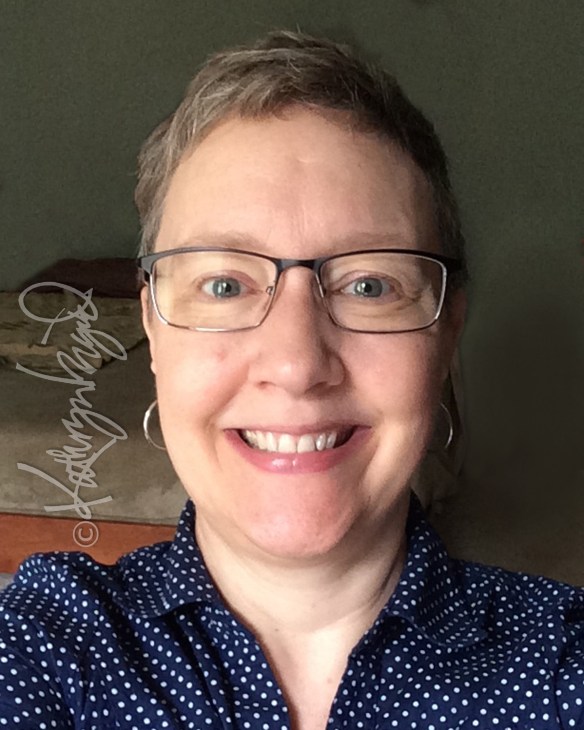
Photo: Me, Unvarnished

Me, unvarnished. Not bad, for all that—silly selfie smile and all!

Nowadays, granted, I hear nearly as much chatter about body dysmorphia and low self-esteem and the evils of the societal pressures, particularly those coming through the commercial and mass media, that feed them, but I still see a remarkable amount of obsession among people of all ages with perfecting appearance in whatever ways each considers ideal. It still frightens me most of all when anyone goes to extremes to meet others’ ideals, for I hope obvious reasons. So I’m none too thrilled to see that the mutant-looking dolls long favored by the young, or at least those who buy for them, are still prevalent and imitated to such an extent by so many.

I can’t help but wonder what would happen if there were a counterbalance of, or even a momentary appearance on the market of, Truth in Labeling/Advertising consciousness when it comes to these beauties. I imagine a Beautiful Bobbye doll and [her] many lovely iterations stopping people in their tracks in the toy aisle for new reasons: picture the same “perfect” dolls now packaged honestly as Defective Breast Implant Bobbye, Collagen Overload Bobbye, Botox Paralysis Bobbye, Internal Organ Displacement Bobbye, Heroin-Chic Turned Addict Bobbye, and of course the ever-popular Acid Reflux Sufferer, Early Denture Wearer, & Coronary Infarct Death as Consequences of Bulimia Bobbye.

It’s too much to ask, of course, even to have anything like a balance of dolls with aught besides pink plastic skin and long, straight or wavy hair, never mind the idea of having great ones with visibly not-so-average qualities—like, say, a prosthetic leg, ears that stick out, albinism, asymmetry, flippers rather than arms, a mole in the middle of the face, club foot, or overbite—that are simply part of their good old normal selves just as they can be in real life. Wonder what that might do?

All I can say for certain in my own experience is that it’s wonderful to have a doll of a partner who finds me the right kind of Beautiful for his taste and, best of all, to feel quite fine about myself whether I’m looking in a mirror or not. I might decide to fool around with a hair coloring experiment, because I have silver hair envy and given my genetics, won’t ever get much more than the sprinklings of grey I’ve sprouted here and there among the mousy browns for nearly thirty years. I do bother to put on a little streak of eyeliner on the rare special occasion. I wear high heels sometimes to enjoy being taller and pretend I’m longer legged if I feel like it, and I sport earrings almost always because in my much younger days, lots of people thought anyone with really short hair and a fairly flat chest was male, so I got in the habit to avoid the confusion.

Now, of course, males, females, and others wear their hair any length, embrace jewelry from their ears to their toes, or none, wear kilts and sarongs and skirts and pants at will, and indulge in eyeliner or guyliner, tattoos, showy stockings, platform shoes, hats and updos and shaved heads, all while being as masculine, feminine, or other as desired. And I don’t any longer care in the least whether anyone knows me as one or the other, myself, any more than I really care whether they find me beautiful on the outside or entirely different from their taste.

I would far prefer to be thought worthwhile as I am, however I happen to be, as a person. Maybe I can thank my childhood environment where I was free to design and build little houses in the bookshelves and out of empty boxes instead of playing with uninteresting (to me) dolls inside them, and then graduate to building forts in the woods with real, flawed, beautiful playmates populating them. Maybe I did benefit, after all, from exposure to that artificial kind of beauty popularized and supported by plastic dolls and the people who emulate them, youthfully testing their sanity and happiness or lack thereof and shrinking from it. I have my faults, but they can’t stop me from feeling beautiful if I don’t let them.
Going Viral, Part 1: The Texas Sore Throat Massacre

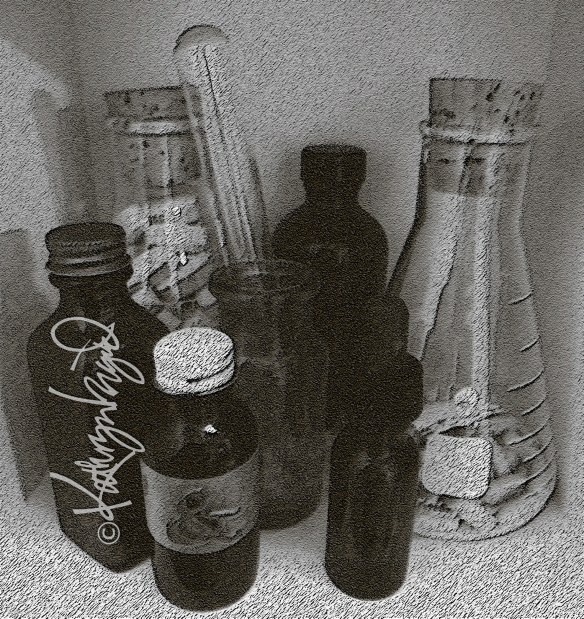
Digital illo from a photo: Going ViralI’m sorry if I breathed on you. I was unknowingly the “I” of the storm. Patient Zero. One hand on the door knob; ten thousand infected. The maker of monsters, incubator for incubi. Thankfully, I have not yet come across a single one of my hundreds and thousands of contacts throughout this winter who was evidently poisoned into illness through contact with me. I never had any of the usual indicators of being contagious during the whole time I had my various and numerous waves of feeling lousy: no fever, no evidence of strange-colored, pungent crud emerging from anywhere in or on my person…unless you count the slightly hallucinatory character of my thoughts in their natural state. My doctors, when I finally saw them, didn’t seem to think I had been particularly dangerous.

So I wasn’t quarantined. I didn’t get hermetically sealed in a makeshift NASA bubble-style ICU. I didn’t even get quite miserable enough to go to the doctor with my complaints until about ten days ago, despite having felt uncharacteristically unwell so many times through the winter, when I generally manage to go the whole year without suffering more than, at most, one cold. I just dragged myself around with a wan little, pasted-on smile.

But here’s the thing: that’s how Bad Stuff can get passed around. Not every little germy critter that sneaks its way into our bodies, even in this very knowledgeable, clever day and age, is necessarily that easy to spot, let alone to treat. Just because modern medicine can recognize so many more diseases and injuries and conditions than previous generations knew doesn’t mean that every medically trained person everywhere would recognize even the majority of them quickly and easily, never mind how unlikely any of us commoners are to notice and understand them ourselves. So for all I know, while I thought I was being the appropriate combination of careful for others’ safety and stoically dedicated to keeping up my own commitments during the whole fun winter, I might as well have been opening the door to unleash Pandora’s Pandemic. I might have been Typhoid Mary the Second.

Let me be clear about a couple of other things, too, though.

First, I grew up thinking that the nickname of Mary Mallon was as good an epithet for a vile and deliberate criminal mastermind as any. But in more recent years I’ve had reason to revisit that idea and wonder if she mightn’t possibly have been as much victim as villain, after all. The current political climate of preferring divisive self-righteousness and sniffy dudgeon on all sides of any issue about all of the evils perpetrated, always, by Them, not Us, makes it remarkably hard to establish and enforce any policies that do any genuinely positive things to make societal problems any better—poverty, education and healthcare being always top of the list. They’re always somebody else’s fault and everyone else’s problem. I can easily imagine a modern plague getting the better of this entire country as much because we refuse to cooperate with each other and pay attention to some basic survival instincts and practicalities as because anything were especially virulent or unusual.

If we refuse to converse and cooperate, we have no one to blame but our own desire not to be subservient to any greater good. The law of unintended consequences visits its ugly repercussions on us all at times, and most of all when we are busy wishing everybody who isn’t in our happy little 100%-shared-view groups would just stay quiet and out of the way.

Reality works quite differently, as history should have taught us all long ago. If, for example, (a) we don’t provide health care for the indigent/impecunious and (b) they become ill but must find some way to pay for health care, then (c) those able to do so will continue to work when ill. They have no other clear way to pay bills, feed families, and get tasks done than to do the work themselves as always. If (d) the only kinds of work that marginalized populations tend to be able to get are in servitude, then (e) their work will most often be in service work like hourly hire positions as housekeepers, janitors, maintenance workers, food service employees, day laborers, child care workers, and personal health assistants in private homes, nursing care or rehab facilities, and hospitals.

That’s right: if we don’t take care of the poor unless they pay, they will continue to work as long as they can drag themselves there, and the work they do is often both the lowest paid—where, as a bonus, it takes longer to earn enough, while sick, for their own care—and the highest social contact-oriented in all of society. If we want to be truly Dickensian, we can repeat the Typhoid Mary solution as well and imprison the ill to keep them from working; at least in that instance, we can make the choice to either care for that new prisoner or risk his/her infecting the prison population, which again in Dickensian terms could “decrease the surplus population,” but of course containment will remain an ever-growing issue, if the prisoners are dying in droves and the staff either succumb or, more likely, refuse to return.

Meanwhile, let’s just imagine, as some folk are inclined to do, that the majority of the poor anywhere are illegal immigrants and layabouts who only take jobs away from natural-born citizens and live as criminals by choice. We certainly wouldn’t want to either train and motivate any natural-born citizens who are layabouts to do any of these highly desirable jobs that have been stolen from them or, perish the thought!, educate and give incentive to both groups. Thankfully, we have a whole crew of people in many sectors of the political realm working hard to see that there’s plenty of money allocated to such progressive and humane and productive activities as developing larger PACs and private donation coffers to better control election results, and keeping business strong in the blessed US economy by letting larger and larger mega-corporations swallow up dwindling independents until they resemble nothing so much as a snake that has snacked on a water buffalo. I know that I, for one, am greatly relieved that we are nationally so opposed to monopolies, or I might mistakenly think they were popping up by the dozens. It’s also comforting that the same herd of politicos of all stripes have among their numbers plenty who think that the best way to finance such boons to humanity is to cut budget waste in areas like state funded universities, social services, and other massive boondoggles like universal health care. Clearly, educating, mediating, and healing larger groups of people to interact and live in good health, productivity, and harmony is an evil conspiracy.

You could say that feeling unwell makes me, unlike the hardworking poor, prone to lying around and getting irritable, misanthropic, pessimistic, snarky, and critical of the state of this so-called Union. I certainly won’t argue if you accuse me of thinking we’re a lot of selfish, under-informed, entitled rich people and a counterbalance of too many people who can’t support themselves and their families with the paltry resources left for them after the top feeders have had their fill. If, as some social commentators and economists and even scientists claim, the concept of surplus population and limited resources is a fallacious or at least far from inevitable construct, since we theoretically have the brain power to make what already exists on this planet into resources and better distribute them, then I can think of few better, more immediate, or more visible places than health care, civility, and education in which to begin this process. And I can’t think of any valid excuse for anyone who believes in the value of a single human being not believing in the potential value of each human being and thinking all worthy of the effort. Good citizenship and care for others should not be a partisan Issue.

Knowing thus full well that we’re all capable of being stupid, lazy, entitled, paranoid, or just plain bad (just read or listen to the news, if you’ve somehow forgotten this), I still don’t think we should just assume that anyone is any or all of those. Isn’t it better to encourage and defend kindness, generosity, trust, humility, respect for differences, and joy in our commonalities?

Even I, at my most crabby old complainer moments, think it worth a try to do better. To be better. I would hope others might think me worth the effort.

Hordes of Hoards

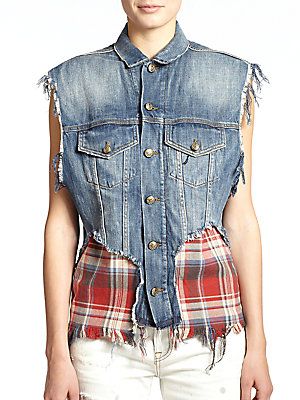
I just had some heartwarming reminders of how wealthy I am and how rich most of us are, without even thinking about it much of the time. First, there was this odd item I came across on a fashion/shopping site that startled me. “R13 Denim & Plaid Combo Vest.”

Saks Fifth Avenue Photo: R13 Denim & Plaid Combo Vest

Photo from Saks Fifth Avenue online: R13 Denim & Plaid Combo Vest.

Available at Saks Fifth Avenue for $695. Yes. Now, imagine this: one could buy a denim shirt + a plaid one at the local thrift store for a combined hundredth of the price (yes, it can still be done, with relatively little hunting), tear off the sleeves and lower portions of both, layer them together, and give the remaining $680+ to the poor, many of whom can’t afford a single one of the thrift store shirts. If a few people who wanted to buy the SFA garment did the latter instead of, or even in addition to, buying the Saks combo for themselves, what might the world look like then? Better dressed at more price points, I’ll wager. My personal taste would argue for not doing any of the ripping and faux-aging of clothes, as I live a life wherein my clothes get naturally beat up more than quickly enough for my taste, but that’s irrelevant to this train of thought.

Am I declaring Saks Fifth Avenue or people who shop there terrible? Certainly not. For one thing, I know plenty of people of moderate-to-massive wealth who are incredibly thoughtful and generous in their philanthropy, regardless of how they spend on themselves. Today I have been wearing a brand name denim dress, still in pristine condition, that I bought at one of the aforementioned thrift stores for $5 USD several years ago because someone well-to-do enough to own and no longer need it donated it while it was still in great shape for further use. Even major businesses, those often characterized as heartless, soulless, and solely dollar driven, can be usefully attentive to the needs of the larger world at times, and if they didn’t make those large amounts of money in the first place, how would they give away any such amounts of largesse?

Am I ranting against materialism because I despise wealth or hate acquisitive people? Far from it. If you’ve been around this blog for more than two minutes, you know I’m a highly dedicated magpie myself, loving Things and Stuff, and sometimes, the shinier and more pointlessly beautiful the better. Nature herself is great at promoting such things, and if you can open your eyes and mind to the view, even the urban ‘wasteland’ or the middle of a massive landfill can offer amazing perspectives on color, texture, pattern, and any number of other sensory attractions that comprise what a person might perceive as beautiful and even useful. But why should it all be consigned to the landfill, then, or just as sadly, to hidden stashes and caches of forgotten junk in our homes and offices and storage spaces? One person’s trash, as it’s said….

On top of the commercial reminder I fell upon today, my friend Switters recently put up a couple of fantastic posts about dealing with the aftermath of getting, keeping, and trying to part with large quantities of the Stuff of life, and I was moved to revisit my own experiences of that process. His commenter Jenny’s recommendations are outstanding. I’ve done most of what she suggests myself, and with great success. Somewhere along the line I imagine I’ve posted about it here, too, but it’s never an outdated topic among us rich folk, we who have anything more than barely enough. And I have learned—most importantly, for me—that decluttering and reviewing my belongings and responsibilities is an ongoing process. I’ll never stop needing to ‘rinse and repeat‘ periodically so that the big buildup never gets overwhelming for me. My original successful foray into the practice has made every subsequent one that much easier and more desirable.

I did learn from my mother and other influential family members and friends that no matter how high the sentimental value of a Thing, it’s increased rather than diminished by use. If Mom had kept her best china and silver like untouchable trophies for Special Occasions only, I’d have been terrified of using them, and I would have missed out on innumerable events that gave them additional mnemonic value through my own experiences. So what if a plate gets chipped or a sterling spoon gets bent? That in itself may add story, character, and relevance to the object. Otherwise, it’s just taking up physical and psychic space while waiting for Specialness that might never happen. So the Venetian wine decanter here holds mouthwash right now, because it comes off of the shelf where I forget it that it even exists to occupy the bathroom counter where, if I’m honest, it’ll get seen and enjoyed much more: every morning and evening at the least.

Photo: Venetian Mouthwash Decanter

The great Venetian Mouthwash Decanter!

Being a highly visual person, while decluttering I’ve clung particularly to the strategy of documentation-before-disposition and photographed—digitally only, to avoid adding photos to the Stuff already requiring management (talk about Unintended Consequences!)—every little thing in great detail, preferably ‘in situ‘ or as I remembered loving or using it most, before parting with it. What I discovered: out of the hundreds, maybe thousands, of things I’ve given away or sold or discarded in the years since my first great household purge, I can think of literally two or three that I’ve ever subsequently missed, let alone replaced. The latter, upgraded, of course. I can barely remember any times I’ve even actually looked at those memory-jogging photos. Knowing that they’re available should I become wistful is enough. For a sentimental softie like me, that was a shocker. Definitely a lesson well worth learning.

A peripheral item that turned out to be helpful to me is my recollection of what meant a great deal to me in years past: my grandmothers were both dedicated to the idea that anything they wanted us grandkids to treasure, they gave us when they were still around to tell us the stories and help us appreciate the context, so that there was a much greater chance we’d invest equivalent interest in their beloved belongings. I don’t even still own all of those items; much as I appreciated the gifts, it was the interaction that gave them the most meaning, and so the memories are the most significant part of the package. Any of those things that were part of that kind of transaction I in turn passed along to treasured people—niece, nephews, beloved friends, neighbors, and former students who became family—with the same story attached, and my own layer of the experience added on. The delight with which these are received is the center of the gift, and makes it irrelevant if they are, in turn, passed on to yet other dear ones, because the items become connectors of history and community that far surpass the inherent value of any of the objects.

That was the bottom line, for me. The realization that what I have loved most in any object is its emotional content and its connection to important people and events in my life makes the keeping of the objects less necessary than the honoring of the love they’ve contained. I will continue to buy, accept, and bear the caretaker burdens of Things. But I think it’s safe to say that the collection will continue to be more sharply curated, limited, and specialized with the passing of time and changes in my values and occupations, too. I have found that some of the beauty in objects arises from their not having cost much or taken a lot of care over the years. I love having my drawing and writing tools organized and readily available, but I don’t much care to store them in lead crystal vases and leather-bound boxes. A clean soup tin does very nicely. And in a pleasing nod to magpie-ism, tin cans are shiny. For the double win.

Photo: Shiny Objects Holding Other Objects

Shiny objects holding other objects. Bonus points.

Party Crashing Parson

At some point, romance is the catalyst of many a fall from grace. The higher the starting point, the more spectacular the tumble can be. Of course, some people on this goofy planet are just constitutionally unable to be graceful, no matter what the circumstances. Me, for example. But being sympathetic doesn’t mean I’ll let anyone else off the hook over it. Good material for silly stories don’t grow on trees, you know.Digital illo + text: Slippery Slope

A Moment of Silence for…

…its own sake. Yes, because despite the huge number of worthy causes these days for which we’re encouraged to meditate for a mere moment, there are few causes more worthy than the good health and well-being that a brief pause for meditation in peaceful silence can help renew in any of us. There is so much need for our attention and efforts to be devoted, and in far larger and more frequent doses than an occasional moment of silence, to vast numbers of those worthy causes.Photo: Hermana's Hideaway

But nobody is fully prepared and equipped for even the least significant observation of those more meaningful causes’ pauses unless we permit ourselves, yes, even require ourselves, to rest and restore our own spirits. Part of my renewal and joy comes, to be sure, from surrounding myself with wonderful people just as I am able to do here. And another, very important, part comes from being able to step back, to lie low for just a little bit, and to be very, very glad that there’s room and time and silence available for me to bask in and be better able to cherish and rejoice in your good company. And to think about what little I can attempt to accomplish before the next such little escape.Photo: Secretive

A Very Brief Tribute—and an Invitation

Life never ceases to astound me, the people in my daily experiences in particular. This Friday evening, for example, I am going to another concert that will involve a whole host of dedicated, skilled, passionate musicians all working together to make history come alive in their performance. There will be wonderful music from greats like George Frideric Handel and Henry Purcell, and less widely known stars who also had connections with the London musical scene in a time when instruments were quite different, compositional and singing styles distinct from what we know nowadays, and the world, even of a metropolis like London, much smaller and simpler than the bright lights and wild energy we know now—yet the stories that the songwriters and performers of that age were telling differed rather less than you might think.The College of Music here at the University of North Texas where my husband conducts and teaches is gigantic, in some ways rivaling the sensation of a city itself, at times. Little London, if you will. Nearly sixteen hundred music majors and their teachers and peers work together to make all of these impressive performances, and of course they are far from limited to early music, though that’s the focus of the concert I’ll be attending. Tonight, there was music of Frank Zappa; tomorrow, voice and instrumental recitals precede the early music performance by the Collegium Singers and Baroque Orchestra; next week, along with many more spring recitals, there will be the Grand Chorus performance of Beethoven Nine and Vaughn Williams, and there are more wind symphony and jazz and chamber ensemble performances yet to come before the school year ends. It really is a bustling metropolis of its own kind, dazzling and almost losing me in its complexity. But again, the stories remain the same. It’s always about adventure and drama, love and longing. We seek to connect through the communal experiences of music.

So if you want to join in and can’t get to the campus, you can always tune in via the live stream, with many of our friends and relatives, by clicking on the link here. Or play or sing your own song, among your own friends and relatives. I imagine your stories will be familiar as well. I think I can hear them across this vast city of ours.Digital illo + text: Maze/Amaze

Pity Me If You Will, but I’ll Admit…

…I’d rather you throw money.

What, you think because I feel lousy I’ve become less crass and ridiculous? Mais, non! When I’m sidelined by big mean germs and have little strength left in my flimsy carcase, never mind my moral center (if any), what is there to keep me occupied and involved in life besides celebrating those last shreds of my identity that haven’t yet slipped fully out of my grasp? And I’m feeling a little extra bumptious tonight because it’s been a long week and I feel kind of worse tonight than I had in the last three days or so. Apparently, behaving myself and finally going to the doctor and getting started on treatment for the colorful mashup of strep, cold, and allergies that converged on me doesn’t make me feel all shiny and new in a couple of mere hours. What?! I don’t get tough customer bonus points for being stubborn, and a sentence reduction for time served, and stuff like that? Or at least a piece of candy from the nurse at the desk?

Yeah, yeah. I have it so much easier than so many, it’s not even funny, and I know it. But it won’t stop my whinging, wringing my hands as much as my handkerchiefs, and singing elegies of self-pity. You knew it wouldn’t. The world is suffering genuine trials and disasters and I just curl up in my little coracle as it drifts and caroms off the craggy banks of the Slough of Despond as though I were a little pinball of perfect sorrow.

But really, there is room in here with me for a couple of bags of soothing cash.

No? Ah, well. See you when I drift back into port. End of transmission. Over and out.Photo: Defying Logic

And Look out for the Piranhas

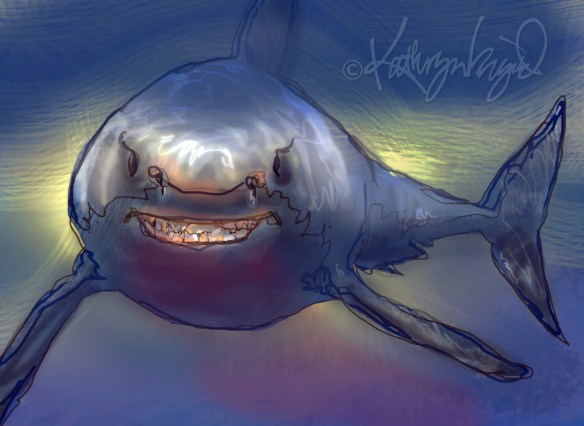
Digital illo: Mr. Tough Guy

You may call me *Mister* Tough Guy, if Yes, Sir! isn’t satisfactory.

So you’re a big shot, eh! Not everyone is as impressed with your highfalutin pedigree and your cosmopolitan veneer as you might hope.

Small Pond, Small Fry

Some clown came to town from the city

But he didn’t know everything, did he?

The result was so bad

That, alas, the poor lad

Was the first course we had, out of pity.

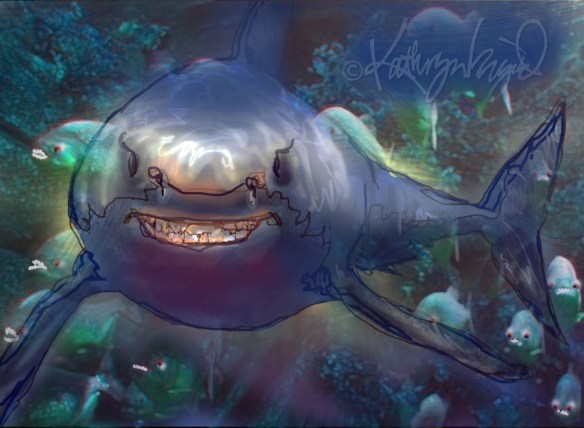
Digital illo: Uh-oh.

Suddenly I sense there’s another school of thought…

Dear Ones All

Photo: Bouquet of the Day 1I have my own Theory of Relativity, and I hope you’ll find it useful, too, as you grow from the tiniest curl of humanity to a venerable old woman. No claim of scientific knowledge here, only an observation on what I think really matters in my small corner of the universe: relationships between people.

Relationships, regardless of economic or social, religious or political status, can be begged, borrowed, and bought; they can be stolen, stumbled upon, forced or freely given; there are also, of course, the clearly genetic sort or the biologically driven. All are valid, and many of them necessary, but none of those fully encompasses the best of what I think defines Family.

For starters, none of those aspects can guarantee a relationship’s ultimate failure or success. Human connexions, like living creatures, can suffer from Failure to Thrive, whether through damaging acts or events or mere neglect. Estrangement is, I think, the perfect name for a lost relationship: what was familiar has somehow changed, become alien. Whether birth, common interests or goals, affinity, or contract is its basis, a relationship can still fail. Or it can flourish.

Family is, for me, the height of relationship, the pinnacle of human interaction. Bloodlines, religion, and legal bonds don’t own it. My view of the ideal, when it comes to family, is that it should spring from an ongoing will to maintain and foster the connection; just keeping it plugged in is useless unless all involved see that it’s well-oiled, reboot it when in need, and occasionally, polish it to a high gleam and rediscover its original beauty.

In my heart and mind, family as that highest form of relationship is an earned status, a privilege. If it doesn’t work in mutuality, with both parties contributing, it’s a different sort of transaction. I don’t see it as a constantly equal balance; in fact, the level of need versus the level of resource and capability in any individual varies greatly over time and situational changes, and the more people in the equation, the more the possible iterations. Sometimes the crisis is virtually universal, everyone called to extraordinary service for each other’s good. The established bond helps bridge those gaps between need and sparse resource in the moment. Happier times and better circumstances, when life is more gracious again, will replenish the void for more balanced give-and-take in days to come. Ebb. Flow.

The crucial elements in all of this have, for me, much more to do with respect, mutual values, friendship, and delight in one another’s company than with lineage, contracts, or societal expectations. I’m a rarity in having both born relatives and married ones that do meet and surpass my standards for true family. Further, I’ve a remarkably expansive extended family, acquired over the years through shared ideas and experiences and the love and respect that grow out of them. I know that with all of these joys, I’m beyond blessed. I have a world-sized circle of good people, both related by DNA and not, surrounding me and, through that, one of the largest and most wonderful of familial relationships possible. I’ve spent years discovering just how wide caring arms reach to embrace me, and how deep open hearts’, minds’, and hands’ resources go, regardless of physical proximity, when anyone anywhere treats me like family.

It is a wonderful world, my beloved, and there is always room in it for more like us, if you are willing to take on the role and cultivate the larger Family too.Photo: Bouquet of the Day 2

Careening toward Excellence

Digital illo from photos: Psycho-Zydeco 1There is no chance, however infinitesimally remote, that I will ever be perfect in any way. Olympic scores of 10 notwithstanding, I suspect that quantifiable perfection is beyond human reach altogether. My reach, however, I can guarantee unequivocally will remain ever short of the absolute.

And I make no apologies for it. Argue the possibility for human outliers if you will, I am no such exemplar.

This doesn’t excuse a perpetual state of lying down on the job. Corpses are already better at that task than we are while still alive, no matter how expertly lazy. And you know that I do speak as a highly skilled practitioner of that art. Not being a corpse, just yet, thank you. Laziness.

I also know, however, that from play, serendipity, accident, and even out of the occasional non-life-threatening disaster can come growth and inspiration. We improve more by learning from our mistakes than from thinking, “Nailed it!” and settling comfortably into what we hope is an easy formula for repeating the success. This, however counterintuitive it may seem, gives me hope.

Perhaps as I go bouncing through life in my random, attention-deficit-slanted, cheerily inefficient way, I may well stumble upon my better self, eventually. Don’t look for me in the Hall of Fame, let alone among the stars. But if my fine intentions and a healthy dose of good fortune should, like mythic planets, align at some heroically splendid place and time, you can certainly find me in the shining company of the wonderfully, luckily contented.Digital illo from photos: Psycho-Zydeco 2