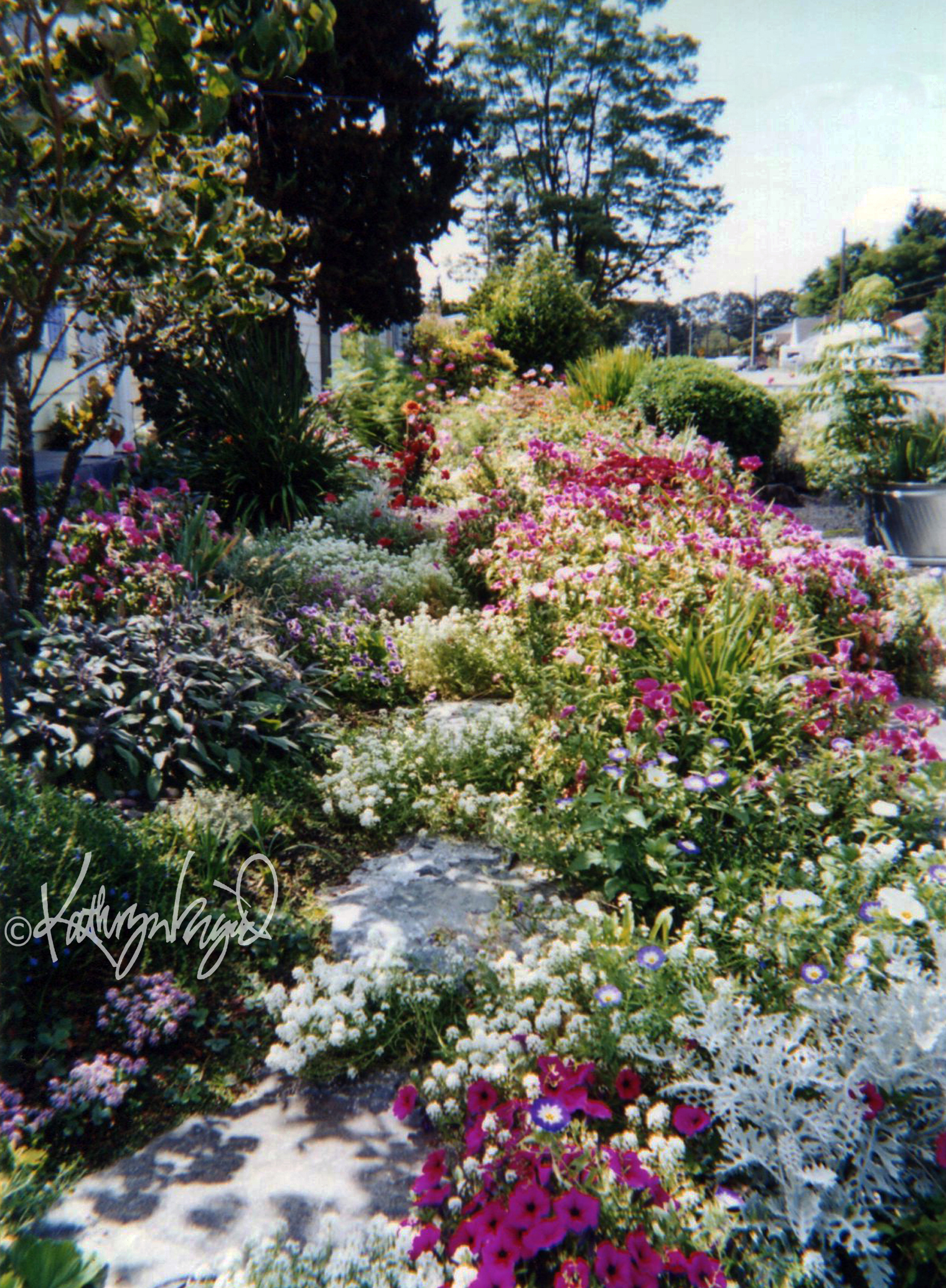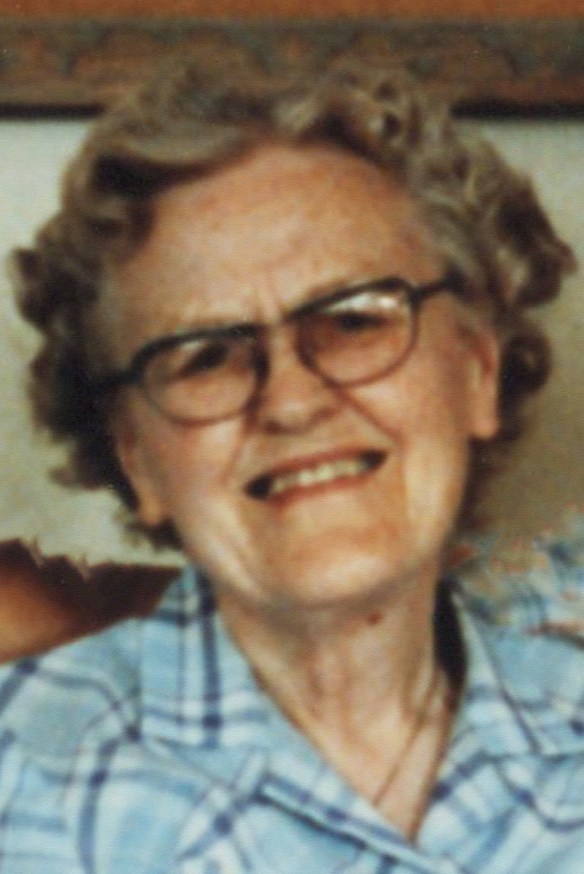
So Much Good Reading, So Little Time

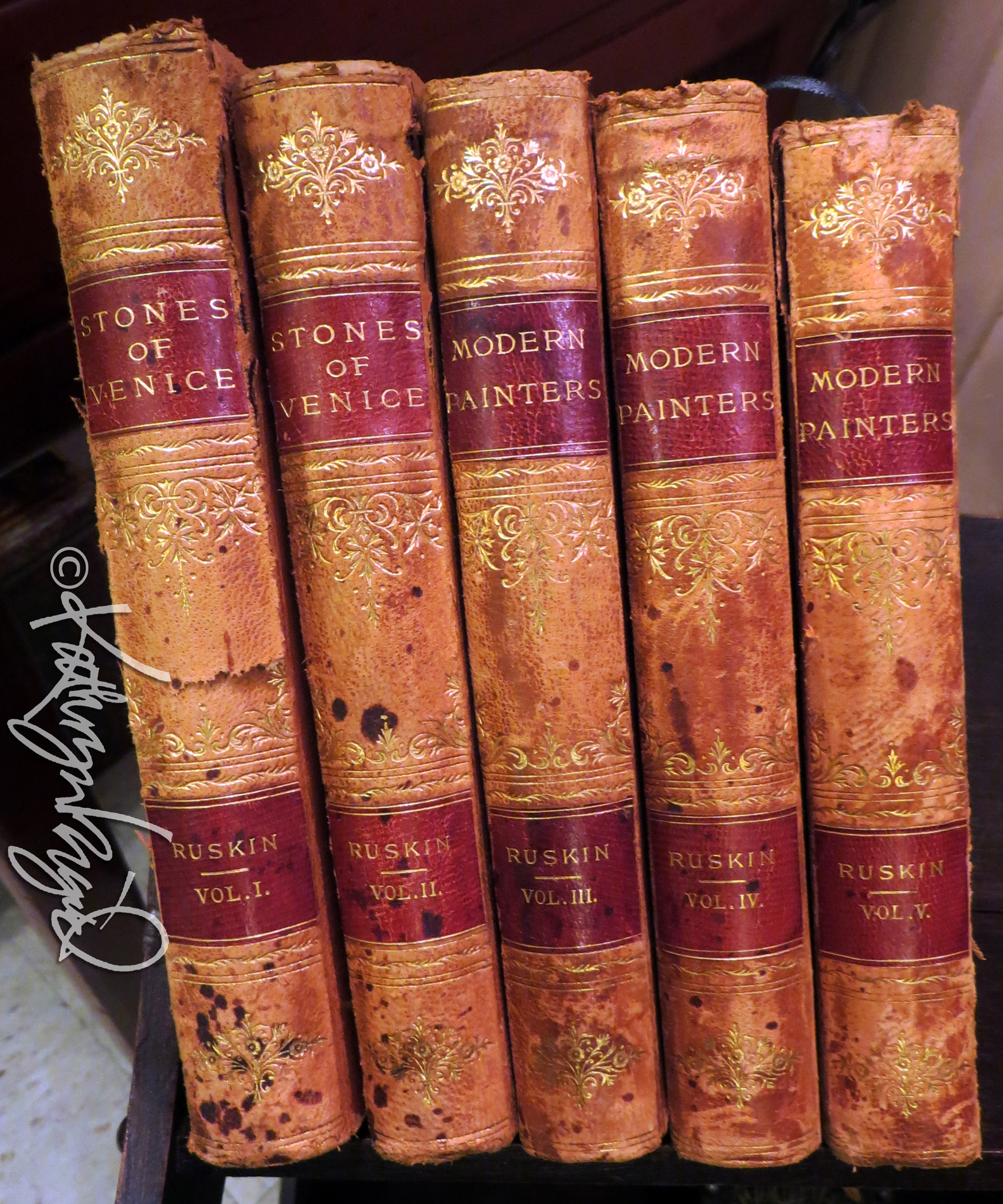
Photo montage: So Much Reading, So Little TimeOne of the keenest problems in a comfortable life, that. So much great stuff that I would love to read, and such a short life. So many beautiful pages of literary jewels and deliriously fun junk, paper and zine, novel and blog, that I would happily devour, if only there weren’t so much other Stuff to be done in the finite hours of the day.

In my case, of course, there is the additional complication of being an interminably slow reader. I will have to live to be 627 years old, at least, to read all that I’d like to read. Add to that the extra time (about half again as long) to comprehend what I read and I will have outlasted Methuselah and any number of other supernal beings. And the problem remains, on top of this literary one, that I will have a wide assortment of other highly irksome and undignified complications to overcome and survive in order to achieve such an advanced age. So I have to pick and choose what I am willing and able to devote my actual reading time to perusing, and accept my limitations with as good a grace as I can manage.

This summer, though many of you whose blogs I am fond of visiting for both reading and commenting might be surprised to hear it, I have been reducing rather than increasing my holiday reading. Since much of what I do read is online, and on an erratic schedule with less frequent long periods of sit-down-and-read time, let alone with reliable wi-fi access, I must think about what little I can squeeze in between other summer activities and parcel out my energies and devotion accordingly. I assure you that this is in no way a reflection on the quality and desirability of your work and its pull on my imagination, but it’s rather the reverse: that I want to return to it when I can give it more of its due and proper attention and appreciation. I will return to you, rest assured. Meanwhile, I hope you are lying back on a comfortable chaise in the summer shade, sipping a cool drink, and reading whatever stirs your soul while the season lasts.

Hot Flash Fiction 13: Eternity Beckons

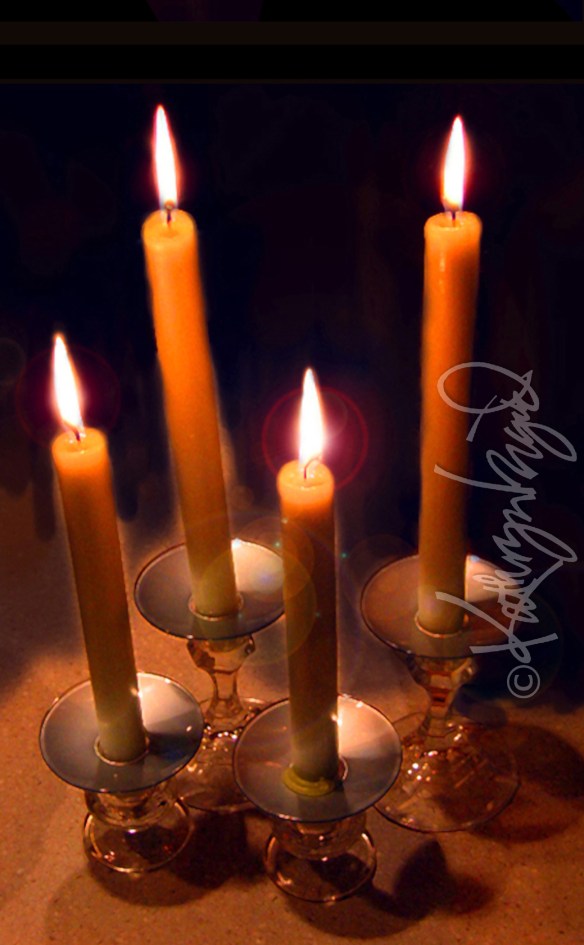
Photo: Science by CandlelightEternal life has always been the masters’ magnificent goal; no wonder that great magister and alchemist Osteodaimon was also determined to solve this elusive mystery himself, to plumb the Stygian depths of knowledge collected by the most piercing minds and intrepid souls ever to walk this dangerous earth. He began with years of reading, apprenticeship, exploration, privation, and experimentation. What Osteodaimon learned most quickly was that the process of becoming immortal was in fact incremental; it was a long series of tiny steps and grand leaps, of fallings-backward and soaring upward, all of which took him through both his long and arduous life of study and also a few strange periods of stasis, in which, all told, he began this mystical transformation of his into one truly able to transcend death. Many and terrifying were the missteps and passages, rites and elixirs, incantations, and the heart-shaking, wrenching feats of bravery and agility required of his profound intellect and the ever-disintegrating body that sought answers from that abyss.

One winter’s night, when he had traversed the grueling routes both between his birth and the ninety-two cycles of the seasons that already marked him as uniquely time-defying by his ancient era’s reckoning, and between the smoothly un-furrowed innocence of youth and his avidly acquired brilliance, he recognized in the ice crystals forming along his lashes the last increment required to complete his journey. Carrying the tinctures and potions that would preserve his last bits of mental and physical strength for the ritual, he set forth in the falling snow and moonlight to go farther into the frozen wilderness than he, or anyone, had ever plunged before. He began to notice as he went forward that the slower he moved, the faster the vastness of ice seemed to recede before him, until it was clear that his pace of progress was directly opposed by the increasingly swift passage of time. He knew that his own final breath was hardly a hairbreadth ahead of him, racing both toward him and away, and that only by letting the speed of it catch up with the glacial slowness he himself was approaching, at exactly the right juncture, and by taking the last dram of his precious medicine at exactly the same instant, could he affect the perfect circumstances for his final transformation.

Osteodaimon finally marked the spot. He lay down on the bottomless swath of blue-black ice, took the last draught of his alchemical magic into his gaunt grey mouth, and stopped. He became fused to the ice there instantly, his eyes made into a pair of wide, dull mirrors for the relentless moon and faded stars of perpetual polar night.

When he returned to himself and forced his eyes to focus again, his vision was oddly fragmented, and he sensed that he had drifted from his last stopping place far more than he had imagined he would have done. But the new place, also moonlit and cold, was pleasant enough, and he knew that soon his vision would clear and the slight buzzing in his ears would pass as he regained his strength. His sense of physical power, indeed, astonished him immediately as it returned; it was not only as though he were young again but as though he had new and exhilarating powers that would easily surpass those of his remembered early years, when he had labored so mightily in his pursuit of conquering death. This new Osteodaimon was a super-being to be reckoned with, and he took off at great speed to see what he could now accomplish in this next passage of his life.

It startled him how quickly he was able to go from place to place, how he seemed now to see things from so many new perspectives and rarely wearied of dashing about, looking, stopping to sup cold water or wine, or have a little food when he chose, but endlessly pursuing the delights of his renewed life. We cannot be sure, for history has failed to record all of the details perfectly, but it may be that it was only a matter of days, or at most weeks, before he realized that he could no longer read.

This proved a surprising disappointment that he would attempt to address soon enough. Not quite soon enough, perhaps, that he was ever able to learn the story of how, in A.D. 1867, a small group of botanists on the steppe discovered a perfectly preserved man encased in ice at the edge of a receding glacier. How the intrepid scientists chiseled their magnificent find out of his tomb in a manageable block and labored to drag it back to their fledgling university by sledge and wagon and train. How they built an ice-house museum room for the express purpose of preserving and examining this amazingly lifelike ancient man. How, one awful night in 1871, the city and that little-known museum in it were consumed by fire. How the ice-entombed mystery man had been spared cremation himself only because the conflagration had taken so long to melt his ice block that he remained weirdly, wonderfully intact, his eyes dully mirroring the moon once again.

Surely Osteodaimon could not have learned how to read again even in time to make sense of the tale that followed, of the chaos after the city’s destruction that prevented anyone from having further sightings of this miraculous time-traveler that had so clearly been the earthly form of the great magister and alchemist himself. Even if he had been able to read again, there would be no document to explain that his ultimate disappearance meant neither that he had finally ceased to exist nor that his old ideas of perpetual life being possible were entirely incorrect, for in the days and weeks immediately following the Great Fire, there was far more concern for removal of dangerous debris and rescue of injured and homeless known victims than for tidying up the remnants of an obscure museum. Had there been a witness to record it, there might have been something that Osteodaimon could hope to learn to read, something telling him that his thawed remains had rotted in the post-apocalyptic drear of an abandoned building, showing no more activity than the usual decay and natural recycling would show.

He might also, of course—had he been able to read it—thought that perhaps the early philosophers and proto-scientists were not entirely wrong but only slightly misdirected in their belief in spontaneous generation. For he would have found in the documentation of the ice-man’s progress that feeding on his mortal remains had been the usual generation or two of avid creatures that led to his emergence, eventually, as revivified carbon in the form of a blowfly. Once alive, always alive, but not, perhaps in precisely the way he had long imagined it.Digital illustration from photos: From Here to Eternity. Maybe.

Get Me Some Book-Larnin’

Drawing: Samuel ClemensJust because I have had the benefit of a decent education doesn’t mean I am smart. We all know that it’s entirely possible to have any number of degrees and diplomas, plaques and endorsements, letters and titles decorating your name and still be a complete fool. Idiocy is a far less rare condition than the number of high school and university graduates would have us believe.

Indeed, I have read a great quantity of writings during the course of my life, but I would never go so far as to say that I am well read. Among other contradictions to that claim would be my incredible slowness as a reader, both in speed and in comprehension: as a multifaceted dyslexic, able to turn words, letters, numbers, directions and relative spatial placements all inside out and upside down without even trying, I can easily spend four times the amount of energy and hours reading that any decent reader would need to get through the same amount of text. And of course that doesn’t guarantee that I will actually understand what I read in precisely the way the authors intended.

A more important reason that I don’t consider myself well read is that I have managed to conquer only a relatively small segment of the library most scholarly and literate persons would consider to be well written, informative, accurately researched and defended, or just plain must-read, important stuff among books. Long before I knew why it took me so long and so many tries to read a mere paragraph, let alone a book, I was required to tackle a handful of the so-called Classics of literature, and a bit of contemporary contenders for the title as well. It’s just as well I didn’t imagine I had such an anomalous reading style or that it was considered a disability by others, because I might have had yet more frustrations and difficulties in trying to fit the mold of how one was expected to overcome such things, instead of finding that by plodding through in my own backward way, I became attached to some of the books and stories to an equally unexpected depth. Whom should I, as a struggling reader, admire most among authors but those champions of the dense and complicated, say, Charles Dickens and Robertson Davies.

On the other hand, it’s probably less surprising that I also favor the purveyors of the most outlandish and appalling and ridiculous, from Ogden Nash, Evelyn Waugh, and Edgar Allan Poe to Mark Twain, S.J. Perelman and Franz Kafka. This part at least makes some sense, if you tend to believe I’d read writers who reflect something of my own mind’s workings or the weird ways in which I see the world. In any event, this latter crew might explain a little more about my tending to choose the least arduous paths in life, since I find a certain sort of familiarity in the strangest of their inventions and so can perhaps navigate their writings with a surer strength than otherwise.

So while I may not be the sharpest pencil in the drawer or the most edified of readers, I have at least a few pieces of proclamatory paper in my coffers to prove that I did my homework somewhat dutifully if not doggedly. My degrees don’t confer any special wisdom upon me, but they at least excuse my curmudgeonly attitude about how long it takes me to read my own posts, let alone anyone else’s books and articles and poems and proposals, no matter how brilliant and scintillating and clever and beautiful they are. I’m still trying, but give me plenty of time!

Huntin’ ‘n’ Fission

I’m told that it’s both fun and useful to have hobbies. There are certainly plenty of books, magazines, news articles, classes, clubs and social organizations devoted to leisure-time pursuits, all of them trumpeting the value of such avocations. Some of them are decidedly age-specific: I haven’t seen a large number of free solo rock climbing promotions aimed at senior citizens, for example. There are hobbies considered preferable to persons of certain economic strata, fitness levels, sexes, nationalities and any number of other identifying categories, some active and some quite passive or spectatorial, some of them expensive to learn and requiring extensive training and practice and others free and simple to master. Regional favorites abound, like, say, noodling (catching catfish by hand), which would be hard to enjoy in desert climates unless you happened to be both a big fan of the sport and dedicated enough to stock your own evaporation-protected pond. Some of the more intellectually stimulating hobbies, like competitively designing robotics for cage fights or nuclear plants for home use, are highly entertaining to their practitioners but utterly escape the attentions of us more modest-brained folk as either too highfalutin or just plain incomprehensible. Sudoku, popular with millions of people cleverer than I am, falls into that too-challenging category for me since I’m so mathematically unfit, but I do like some kinds of word puzzles reasonably well if I’m in that rare mood.

Should I take up golf, having decided to move (when my spouse gets around to retiring) to a place on a golf course partly for its–surprise!–affordability and its location in a great town in a great part of the country, and in no small part as well for its great view into the green and leafy first fairway of the course? That would require my learning which end of the club is the grip and which the head, not to mention a whole bunch of other stuff, and on top of that, paying dearly for the privilege.photoWhile I’m still living in Texas I’d certainly be in a logical place to take up hunting, but that doesn’t appeal to me at all, unless it’s with a camera. For that matter, I’m more inclined to practice target shooting with a longbow, something I’ve enjoyed briefly in the distant past, than with a gun as well, being mighty skittish about those things. Being on the fast track to old age, I could probably pick up something more sedentary like knitting and crocheting if I had the patience. My single brief fishing moment post-childhood actually garnered me a cute little throw-back bass (as a kid I never caught anything but one big scary looking White Sucker that even my older boy cousins wouldn’t touch) and was enjoyed in good company while sipping a fine Texas brew; maybe that should inspire me to get busy with fishing.photoThat’s the thing, though: I just don’t enjoy games and sports, puzzles and pastimes much at all. Whether this arose or was reinforced by my longtime social phobias, perfectionistic fear of being seen as incompetent, dyslexic inability to keep anything I’m doing on a standard track, hilariously hideous sporting skills or any combination thereof is probably irrelevant. You see, there’s no separation of church and state in my life. I spend my days and evenings doing the very things that lots of folk can only do on an occasional basis and to fill their free time.

If I took up drawing, concert-going, reading and writing, cooking, DIY projects, gardening, photography or collecting weird bits of Stuff as a so-called hobby, what would I do with my day job? The truth is simply that I’m a fully fledged frivolous person. If eccentric creative activities and ways of thinking are on the periphery of real life, then I am a bona fide fiction, an imaginary character myself. If on the other hand art is, as I’m convinced it should be, central to existence and well-being, why then I’m just ahead of the curve; I won’t need to retire to any old rocking chair or go in a desperate search for something to keep me occupied, because I already have too many fun and pleasing things to do. Either way, I’m keeping busy.

Regaining My Memory

photoAntique Finishes

The lovely grain of quartersawn oak

With age’s silk patina glows

And hints of many-storied lives

And past events nobody knows;

The ghosts and gossips of days gone

Are whispered in the cupboards’ glassed

Door fronts; the table’s curving legs

Bespeak its long, mysterious past;

In the looking-glass, the passage

Of the hours and years is blurred

By antiquity’s sweet singing

All the stories ever heard,

By the voices of the missing,

Of the dead departed wealth

That once filled these halls with magic,

Now reached only late, by stealth.

If antiquity should call me,

Siren-like, to take a look,

Once more in my soul I’ll draw it

From the pages of a book . . .photo

Toward Home and Hearth

photoAt Close of Day

After the labor that fills the day and long before full darkness falls,

We long to gather and go away, to leave the dimness of labor’s halls

And go back home to the fireside, where supper and books and armchairs wait,

To spend the remains of eventide over soup and a novel beside the grate.

This is the way the day should end, and peace and renewal repair the spent,

Frayed souls whose work was less than friend, for whom the fire is heaven-sent–

This nest of comfort from which we roam always draws us back to hearth and home.photo montage

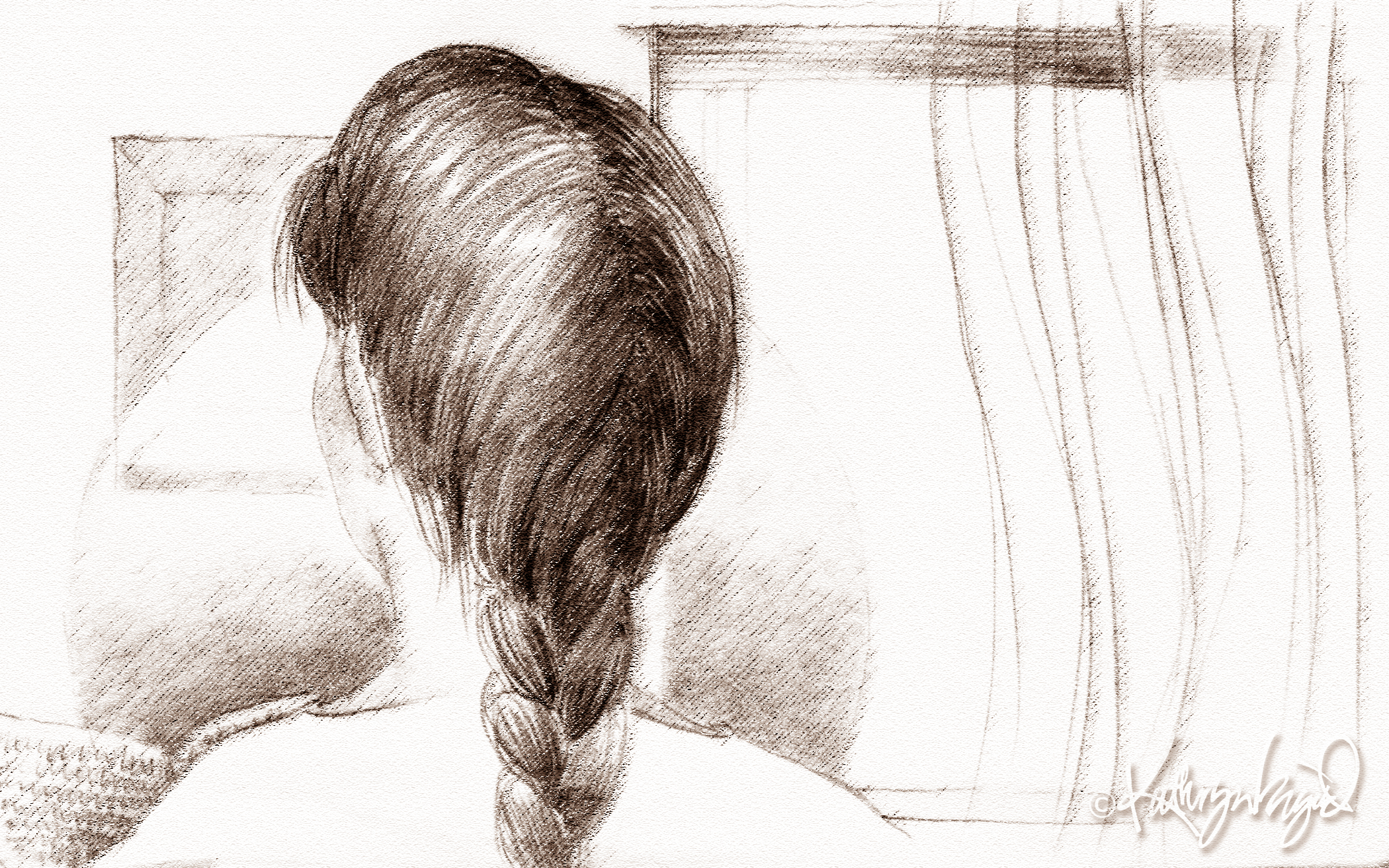
Her Moment of Respite

graphite/digital illustration

Reading

A heavy braid of brown-black hair

Coiling over her shoulder frames

The mourning dove-brown collarbones

That rise and fall in subtle flight

As she breathes, sitting back there in such quiet repose

As if to lend some grace to that so humble vase of white

Field lilies at her side, and when she turns

The antique pages of that favored book,

She spares a moment’s look to watch the lilies catch

The kitchen windows’ waning light

Just as the late-day sun tips in

Behind those distant trees to

Chase the night

You have a Lovely Forehead

photoI was Auntie Ingeborg’s favorite great-niece. Of course, that’s potentially a less impressive achievement if you happen to know that each of my three sisters were her favorite great-niece, our father was her favorite nephew, his brother was her favorite nephew, and so on, ad infinitum. Potentially less impressive, I say, but not at all so in reality if you happened to know Auntie Ingeborg. Because she had a peculiar talent that is very rare indeed among humans: the capacity to make every individual she knew into her absolute favorite. It was completely sincere, unforced, and unquestionably real, and we never doubted it, any of us Favorites.

Auntie had a perpetual delighted smile and an endless twinkle in her eyes and rosy cheeks just made for children to pat affectionately, a lap that was always at the ready for clambering kids to pile on and around for stories, and a genuinely exotic store of entertainments few aunties of any sort can aspire to offer. But by popular standards of style and glamor, you’d never have given her a second glance. She found a perfectly prim schoolmarm look in simple crepe dresses and orthopedic shoes that suited her right down to the ground, and once she established that as her comfort look I don’t recollect her ever deviating from that significantly in the remaining decades of her life. She certainly wasn’t a magazine cover model, with her rather crooked teeth, and with her heart-shaped face accented just a touch too far by her under-bite. But that radiant smile, those softly blushed cheeks, and those merry blue eyes showed off the ethereal beauty of her heart to perfection, so I never once thought of her as ordinary at all. And she most certainly wasn’t ordinary.

Auntie had skills, talents, powers and exotic resources that no one could have guessed on first meeting her. First off, she lived in an apartment, quite the exotic concept to little kids raised in American suburbia. It was already a well-worn building of that vintage that had all sorts of wonderful creaks in its hardwood floors and hallways, a cage-style elevator that was just about the most mystical contraption I’d ever seen and carried us slower than a kid carries his books to school on Exam Day. And it had a Murphy bed. One of those fantastical metal monsters that stood on end, hidden in a closet, by day and pivoted out to unfold down at night.

But also during the daytime, as we learned, it stood guard in front of Auntie’s toy chest, an old and very slightly musty trunk filled with even older and rather odd and very delightful toys, including one of the earliest versions of a small robot I can recall, a little metal man that, when the key on his side was wound, began to walk stiff-legged across Auntie’s carpet in a cheerfully menacing zombie sort of way as the sharp little metal spikes that protruded through the soles of his metal feet would push out to raise up each one alternately from the rug. It was the sort of toy that would never be allowed by modern parents and other legal experts, because the foot-spikes were incredibly sharp and the metal was hard-edged and undoubtedly the paint on it was full of lead, and we loved to play with it almost endlessly.photoThere were other bits of magic and mystery stashed in the toy box, to be sure, not least of them that we quickly learned to dig into the box thoroughly on arrival, and as quickly as we could wrestle the bed far enough on its pivot to release the box to us, to find the box of Barnum’s Animal crackers that Auntie happened to have hidden along with the toys in there. Those who grew up eating them tend to agree that they are fairly insipid of flavor and texture, but the fact that they came in a charmingly decorated little box that looked like one of Barnum’s mythic circus train cars, full of exotic beasts, and it had a string handle on it for carrying around with us as we played with the toys and we got to dole out the little biscuits at our own leisure from the little wax paper lining inside the box–why, this was the stuff of dreams!

In truth, the toy box, though it was the object of our beeline in the door on arrival, was not the most crucial of entertainments at Auntie’s–that status was Auntie’s alone. For, as a lifelong grade school teacher, she knew how to amuse and occupy the caroming minds of wriggly kids about as well as anyone on earth ever did. She quizzed us about our wide-ranging and rarely accurate knowledge on any number of topics, showing more genuine interest and enthusiasm than any such conversation with miniature humans deserves, she played her old upright piano and sang silly songs and very old hymns, and best of the best, she would let us all pile up around her as she told fascinating folk tales, the finest of which were accompanied by her making pencil marks on her paper tablet to illustrate the path the story’s protagonists took from one episode to the next, the drawing of which ended quite miraculously in a picture of something–perhaps a giant vegetable with a person who lived in it looking out its window, or our favorite, a cat whose tail curled in a wild spiral that ended both the tail and the tale.photoShe was no specimen of the more refined social graces that might be expected by a more patrician crowd than her circle of family and friends. Physical or athletic grace was clearly not her great gift any more than it’s mine–when we moved the Christmas tree into the middle of the room to join hands and circle it singing old Norwegian Christmas songs, as was our sometime tradition, Auntie managed not once but in two different years to bump into and topple the decorated tree. I’m not even absolutely certain that the second time could be credited entirely to her, because it’s not as though there wasn’t the previous experience to tell my father, for example, that we could consider just doing that little ritual on one of the days when Auntie was celebrating at another relative’s house. But given that no one was harmed in the event and that we all had an excellent laugh not only on both ‘tipsy’ occasions (no, Auntie was not–only the tree was) but for all the years since as well, he can hardly be faulted if he did suspect a repeat in the offing. Auntie, as it was, laughed harder than any of us.

Auntie’s driving history, too, had certain mythic qualities to it, ending when she was at least in her eighties and still chauffeuring needy Old People (some of them undoubtedly much younger than herself) to the doctor’s office or the grocery store or church, or to where she taught English as a Second Language to immigrants for a very long time. The beginning of her automotive life was illustrated for us by the awe-inspiring story of the day that my father, then a high school student, came home after classes and found Auntie reclining on the family couch in a somewhat dazed state, from whence she plaintively asked if her nephew would mind going out to retrieve her car, which she had left at the neighbors’. He was puzzled as to why she hadn’t, evidently, brought it along with her all the way to his parents’ house, until on arriving at said neighbors’, he could see that her slightly skewed understanding of the operations of centrifugal-vs-centripetal force in driving had resulted in her cutting the corner of the street, jumping the neighbors’ front rockery, and landing the car in the midst of the garden border under their front window. It is unclear how, precisely, he was able to successfully remove the automobile from its highly artistic position in the neighbors’ front yard, but apparently this did occur, as did eventual restoration of the yard’s normal, more vegetal, aspect. Auntie’s driving was somewhat tamer after that, though occasional indications of her earlier style did leave us all wondering over the years how it was that she never seemed to get in any further accidents, or even get a police citation, out of all her miles on the road, an outcome for which we were all profoundly thankful.

It may be presumed that among other things, the lovely lady we knew alternatively as her self titling of Jog-along Julie did indeed keep on moving through life at a steady pace but because she had so many commitments to her teaching at school, community and church locales and to her watchful companionship of nearby friends, she didn’t need to drive very far when she did drive.

She was, after all, far too busy taking care of and cheering up a multitude of others, writing letters prolifically to family far and near, and reading–to herself and to others as well. Any birthday or holiday was almost guaranteed to be celebrated with the gift of books, and she can certainly claim much credit for how much her nieces and nephews of all ages learned to love a good story not only at her knee but in the pages of the books she doled out to us. Every story, even the books of silly rhymes and jokes she shared with us, may have had some subtext of educational purpose, given Auntie’s lifelong commitment to teaching, but we knew in addition that the central theme was simply how much she loved us.

She constantly made sure to say something supportive and complimentary to everyone, even on days when and to people with whom it was quite a stretch. When we sisters reluctantly sent her the dreaded school portrait photos that we always thought were hideous representations of who we were rather than what we hoped and wished we looked like to others, she would tell us how marvelously sweet and attractive we were, without fail. When one sister sent the photo that she hated most to reveal to the light of day (because she despised how far she had her hair pulled back on the occasion, thinking it made her face exceedingly exposed) Auntie wrote to her with great kindness that she had ‘a lovely forehead.’ Nothing could, for us, more simply and clearly have illustrated how gifted Auntie was in finding beauty in us even where we felt most flawed.

Though she seemed so fixed in time by her perpetual uniform of the schoolmarm look, by her continuity in writing letters, sending books, telling stories to the youngest members of any party, and driving, albeit more slowly, the Old Folk she knew to their appointed rounds, Auntie finally did actually grow old and die. But of course, even her funeral was occasion for us to hear her piping voice cheerfully chirping out how amazing and fantastic we all were. The relatives who gathered to plan her memorial service were suitably impressed to compare notes and discover yet more of her Favorites among their number. And the whole day of togetherness not only confirmed that her love was what we all had in common, but was filled with laughter at the same old stories of Auntie’s antics, and the warmth of her boundless thoughtfulness and selfless kindness toward all and sundry in the family and in the whole wide world.photo
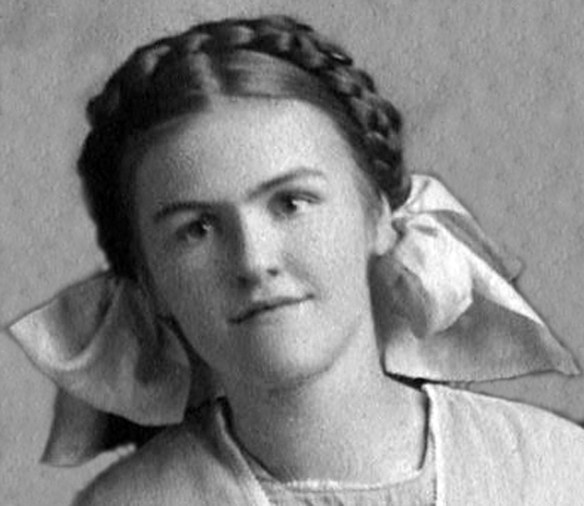
Little Mysteries and Big Adventures

graphite on paperIt’s kind of odd, when you think about it, that we readers and writers and storytellers and listeners have such an affinity for mystery and adventure stories. Life itself is so full of both that it could be argued there’s no need to entertain or challenge, frighten or amuse ourselves by inventing yet more. But besides the obvious pleasant aspect of fiction that it remains under our control in ways that real life cannot, there is much more reason that the appeal remains just as strong as it has for ages.

For starters, it gives us a forum for posing questions and answers that can’t always be simplified enough to solve any real-world conundrum puzzling us. It’s both potentially a problem-solving process and a bit of creative play that can lead to greater flexibility and insight when we do get around to solving the problems with which we’re faced. If I can metaphorically bump off the villain that has been making my life such a trial, perhaps the metaphor can be extended to show how I can cope with him or her in actuality in a more legal and humane manner. If not, at the very least (assuming the real person behind the fictional stiff is fully enough disguised so that s/he cannot sue the socks off of me and make my life miserable in new and legal ways) I got the satisfaction of offing said offender in effigy. On paper I can exert all of the cruelty my heart secretly harbors, without ever lifting a physical finger, even that uniquely expressive one, against anyone at all.graphite on paperMostly, in the fictional world it allows a vicarious thrill for both creator and reader or listener that few of us dare or have the wherewithal to experience in three dimensions. Being a very ordinary person, I have little to no likelihood of the kinds of outsized adventures and brilliant insights that would make for a good, cracking read, but I’ll happily devour such stories and envision myself in their midst when it suits me. In fiction, I can do all sorts of athletic and impressive things that there isn’t the remotest chance of my accomplishing with my feeble skills and lethargic attitude, but there’s something rather bracing in even the imagined high-speed sculling through the black waters of a swift river, the steeplechase saddled up on a magnificent pedigreed mare, or the vaulting over crevasses with rime in my eyelashes and ice axe gripped in my gloved hand, when they’re well written.graphite on paperIn fiction, I can commit the perfect crime–or solve it. I can be the heroine of the story or an innocent bystander. I can follow all of the clues, absorb all of the details of the characters’ lives and loves, interests and actions, and guess what comes next or just roll along for the ride and see where it takes me. Sometimes, admittedly, I don’t have complete mastery of the fictional world because a tale becomes so gripping that I can’t put down the book and go to sleep, turn off the television and leave the room, or avoid re-reading parts just to see if I missed any exciting details. I should note that I am also often driven to this latter end by my dyslexic reading and the way it requires frequent repetitions of phrases and paragraphs to ascertain that I’ve kept true to the thread of meaning, so perhaps it’s not exactly a universal approach to reading! That is, as you would guess, a part of my reading process that makes me very slow to finish a book or article, even if in practice I am a reasonably fast reader. A bonus of dyslexia, conversely, is that things I have read before become new to me again almost immediately because the arrangement of words and elements of the tale might become slightly different each time through.graphite on paperWhich, in turn, is a good reminder of one of the other joys of reading: each of us brings filters, viewpoints, experiences, beliefs and interests that flavor each reading, for good or ill. We are so distinct in this that the best of friends and the most like-minded people can easily love or hate quite opposite stories and versions of them. And that makes the mere act of writing or reading a story that much more of a mystery and adventure in and of itself. All the more reason to keep writing and reading and telling . . .

Dream a Little Dream . . . But How to Choose?

photo-collage + textI never tire of fantasizing and imagining my ideal. But some days it’s really hard to decide what would be better. To be slung sidelong over a rocking chair in the wash of yellow afternoon, watching the lift and ruffle of wisteria where it is teased by currents chasing around me on the old screen porch, drinking Blackberry Acid and reading Evelyn Waugh while the sound of Gershwin laughs its way out the door to shake the sleepy cat into a semblance of watchfulness? Or perhaps I should the rather be curled in a high-backed leather wing chair with Zola, maybe Garcia Marquez, a faint dark stain of Verdi’s Requiem insinuating its way slowly through my brain, the lamp turned barely high enough to read so that it doesn’t fade the firelight or those lights fourteen stories down where the city shimmers below, and with the scent of Boeuf Bourguignon drifting into the paneled room from where it’s simmering down the hall?photo-collage

Yes, I say, sometimes it’s hard, so hard to choose which I should prefer. Would it be finer to be wandering up a quiet path in checkered green light, perfumed with the heady incense of cedar and douglas fir, emerging from their shadows into meadows lapping with avalanche lilies and paintbrush and gentians at my feet as I climb up higher, drowsy with the sun and hypnotized by the river crashing away, just out of sight, to my right, and stopping at last to rest on the stony shore of a glassy lake and slake my thirst, assuage my hunger, with a crisp sweet apple and some salty well-aged cheese? Or should I better like to stride out through wildly waving waist-high grass onto the dunes just as the lowering sky with its mass of high black clouds starts spitting a sand-fine mist of icy rain, but bundled so warmly to the eyes that only my cheekbones feel the chill, and watching the storm blow up a wave so high it seems to engulf the top of the sky before it shatters to smithereens on the bouldered bulkhead there–and just as that cloudbank starts to split to disgorge its mighty gout of rain, tearing up the beach to the safety of the white-painted cottage, where I peel off the layers of storm-proofing down to my jeans, drag the little table to the window to watch the show, cracking the Dungeness crab that I bought at the shop today, to drown it in butter while watching the shoreline also drown, and eat crab sweetness messily to the tune of pelting rain and smashing sea?photo

I suppose if all else fails I could simply ask my butler to make the selection, you see. No, this one I know: I’d rather ask my love, since whichever it is, it’ll be that much better a dream if he will only share it with me.