MUSIC.
Having had my senses immersed in the bath of fall season-opener concerts of all sorts lately, to the literal tune of hundreds of voices and instruments in symphonies, marches, art songs, musical theater melodies, electronica, motets, chaconnes, folk songs, choral masses, lullabies and all sorts of other lovely music, I am reminded as always at this time of year that such an intense schedule of events, however fabulous and rich they are, can be exhausting. More importantly, though, I am reminded that it’s also invigorating, inspiring and often utterly thrilling.
It’s also the time of year when the European choral magazine for which I proofread and text-check translations goes back into full production for the year. The articles and news items are all full of reviews of the summer season’s festivals and conferences and the amazing machinery that underlies these productions, from choosing and ordering music scores through civic action, political efforts, fundraising, singer scholarships, educational programs for participants and audiences, performers’ uniform shipping, young composers’ symposia, etc, and right on down to whether ‘civilian’ supporters of the group are allowed to arrange the music stands or chairs onstage if the local symphony hall union members are on strike. At the heart of it all is such a profound passion for music that millions of people worldwide, including those from countries and cultures one might be surprised to find even having the time or energy amid their economic, social or yes, war-related battles to sing and to listen to singers. If there’s a genuinely possible force for world peace, my friends, it may well be in music.
More personally, it’s music that is a central force for my own happiness, for a large number of reasons. Every one of those listed above comes into my own life and being regularly. But as you know, I am partnered for said life with a musician, and so the whole topic comes that much more sharply into focus. Music has been a glue for us two from the very beginning of ‘us’. Ask our mutual dear friend, a fellow musician, if I were single and might therefore be ‘available’? Check. Collaborate over a large-scale music performance and its visual presentation as a way to get to know each other a bit, hovering around each other during rehearsals and preparation? Check. Go on a first date to a Mark Morris ‘Dido and Aeneas‘ dance performance [yes, truly spectacular, by the way] for which my suitor had prepared the singers? Check!
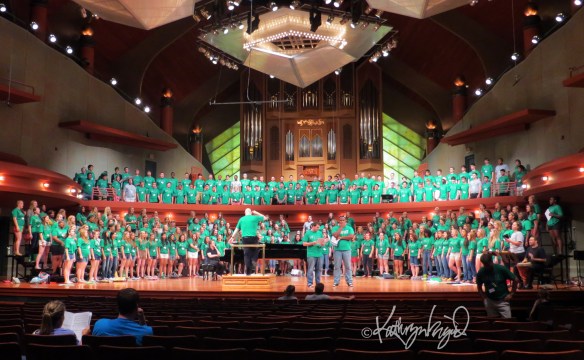
Since thousands vie for the dozens of positions in the final selected groups, high school students in Texas undergo a rigorous preparation for All-State Choir auditions, studying the literature in workshops and camps across the state each summer to compete in their local and regional trials before the year of All-State even arrives. This is the UNT group working in the summer of 2012, rehearsing in the camp organized and run by Dr. Alan McClung, assisted by UNT students and graduates and conducted each year by a different guest conductor–this year, by my spouse. What can I say, it’s what he does. And what I love to hear and see.
What followed is, was and ever shall be musicocentric. Our honeymoon (more about that in a future post) was built, in fact, around my fiance’s conducting gig–a gig including, naturally, our aforementioned Dual BFF as accompanist–at a choral festival in Veszprém, Hungary, arranged under the auspices of the parent organization that spawned the magazine for which I still do editorial duties, if you can follow that sprawling, meandering melody line. One might say that it all began with music and went racing straight downhill from there. Or, if one feels as I do, that music has brought uncountable joys into my life from earliest memory to the present, and will sustain me until the end. In any case, one of the clear high points of musical pleasure has been attending the myriad concerts, events, conferences, performances, and festivals that bring musicians and music lovers together all over the world. A huge number of our favorite people are those whom we’ve met in and through all of this music-related stuff. We have deeply loved ‘family’ literally around the world whom we’ve met and with whom we’ve bonded through musical acquaintance.
If you haven’t done so yet, or not recently enough, may I suggest that you ‘get thee to’ the nearest conference, symposium or festival involving music as soon as you’re able. If, like me, you aren’t an active participant, know that every artist needs his or her cheerleaders and fans and supporters, and that your mutual love of the art will mean more than that you stood onstage during the work or the bows. Yes, even non-musicians can and should pitch in–even those with no sense of pitch can fold programs, stuff envelopes, recruit audience members and donors and board members and political supporters, can drive the shuttle that carries the singers and their accompanists from venue to venue at the festival, and can buy tickets and bask in the glorious sounds from town square to church nave to school ‘cafetorium’ to symphony hall and shout a resounding Bravissimi! to all and sundry.
Beyond that, though, the immersion of being in a place where a huge number of people, participants and supporters and happy observers alike, have come together from a wide range of territory for an extended period of days solely for love of music–that is a wholly different and magical experience everyone should have the opportunity to enjoy at least once. So I commend them to you, the small-scale community events offered by your local affiliated high schools and the international events hosted by long-lived organizations in exotic places and every variation on the theme you can find. I promise you will leave with a song in your heart and memories to last you to when all of your other memories have faded to dust and perhaps beyond. If music be the food of love, play on! For though in this line opening his play ‘Twelfth Night‘ Shakespeare exposed the Duke of Orsino’s conviction that being surfeited with love (in this instance, via its musical surrogate) would cure him of his hunger for it, I think that quite the opposite is true: if they are excellent, the more we experience them and are filled with them, the more we crave both love and music.
Food of that sort for thought: visit first the websites and then the events offered by your local choirs, bands, orchestras, theaters, and performance companies. My own favorites are hosted by professional organizations of music educators, conductors and performers simply because those are the ones I’ve naturally had the privilege to attend, as consort to my musical prince charming, and these all offer performances by top artists that are open to the public, sometimes even with free admission. Explore them! The organization that ‘sponsored’, or inspired and was the jumping-off point for, our honeymoon with its Singing Week in Veszprém–with its half-dozen ateliers conducted by musicians from Europe and North America and singers and whole choirs from all over as well–was what is now called the European Choral Association-Europa Cantat and it hosts a wide variety of such choral events throughout each year, with a focal youth choir festival occurring triennially in places like Passau, Leicestershire, Barcelona, Utrecht, Torino (2012), and Pécs, Hungary (a locale to be repeated in 2015).

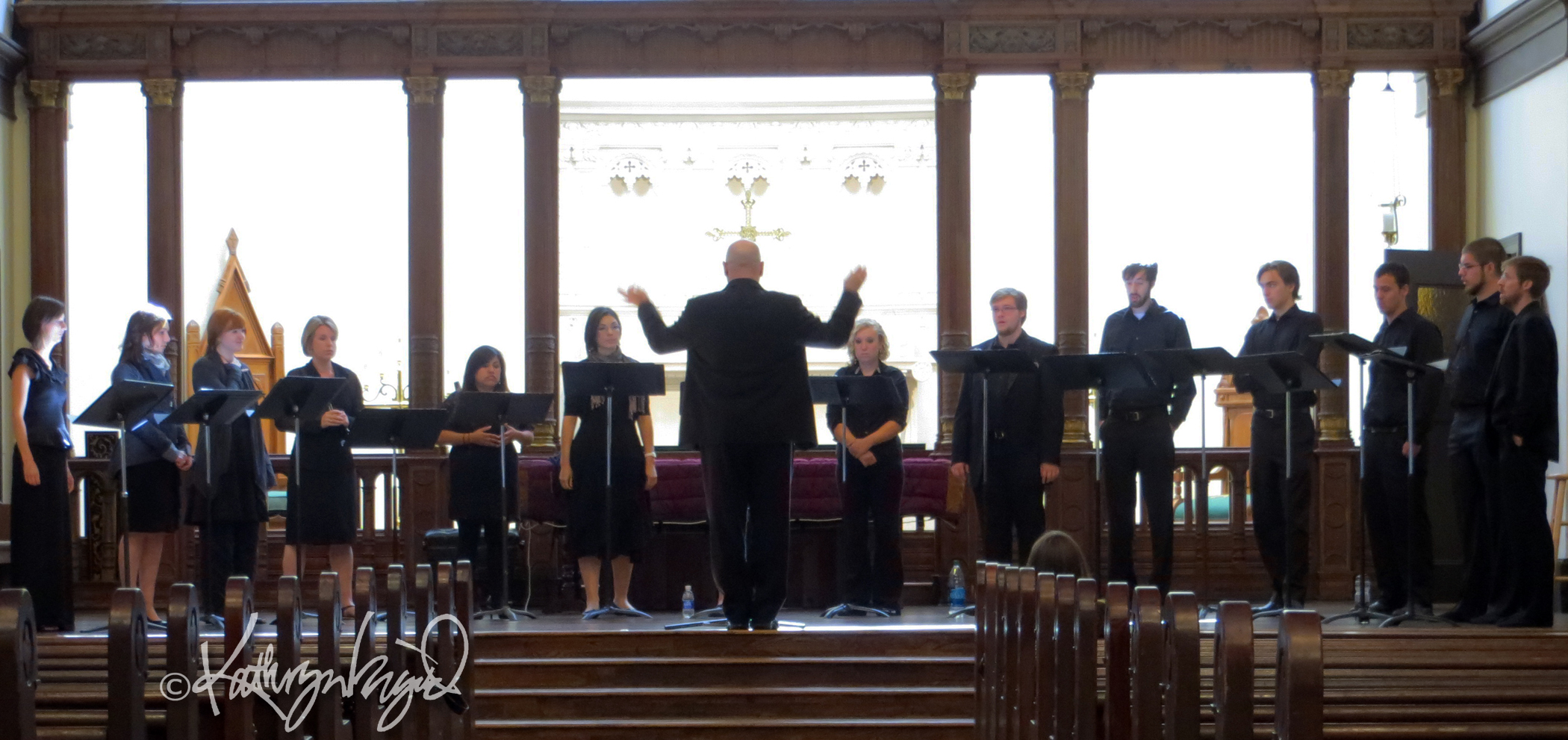
Just this month, the newly minted University Singers at UNT performed their first concert of the season with my spouse at the helm. If you live in or near a college town, you’ll find endless opportunities for attending all sorts of musical events, many of them free and most of them truly outstanding–after all, these people are all here gaining expertise for what may be their whole life’s passion, and performers need great audiences too.
Pop, folk, jazz, rock, blues, punk, bluegrass, Early Music, all flavors and kinds of music and individual organizations from the Oldtime Fiddlers [I once got to run the stage lighting for their competition in Washington state–fabulous fiddling, huge fun and even some fantastic yodeling!] to the Verona Opera [I can say from my one experience there that genuine opera under the stars is something not to be missed, even if it’s still 40°C when the singing ends in the middle of the night]: there is something for practically any musical taste out there, and many of them that I enjoy immensely are included among these. My personal pet organizations among the professional gang also include many others: IFCM (International Federation for Choral Music), ACDA (American Choral Directors Association), ACCC (Association of Canadian Choral Communities), TMEA (Texas Music Educators Association), Chorus America, the Boston (odd-numbered years in June), Berkeley (even-numbered years in June), and Vancouver (annually in August) Early Music festivals, and ever so much more.
 Today seems like a particularly good day to remember that love is larger than romance, peace is larger than a desire for sameness, and joy is larger than a moment of personal happiness. I wish you all love, peace and joy.





 Art-Colored Glasses