The Last Rose of Summer

The Thomas Moore poem that gives this post its name has lent its melancholia to many a song and story to follow it in the years since Moore first honed the image into such an iconic form in 1805. He wasn’t the first to recognize the symbolic substance of decaying, wilting blossoms at the end of the growing season, or to apply it to tales of longing and sorrow, not by many long and mournful years. And the idea is so ready and apt that I can only assume there will be endless instances of such fading bloom representing the grief and sadness of life.

When I see real roses at the end of summer, though, I tend to see another kind of meaning in them myself. For what could stand better as an emblem of perseverance and strength than a fragile, delicate tissue of a flower that clings boldly to life when all of its companions have given up the ghost, when the elements conspire to kill it, when all of the art of Nature dictates that it should not be able to survive? Is there an image more fitting for resilience and bravery and the hope of beating all odds? Certainly there are few representatives more perfectly suited that appear in as beautiful a guise as the rose.

The idea of being that kind of a last rose of summer appeals to me. I would like to defy the expectations of the world that I should cower in the face of death and its precedent cruel disintegration, and instead age gracefully into an ever stronger, wiser and more beautiful being. This is impossible if I depend wholly on myself and my own resources. But having chosen to surround myself with the generous gardeners whose kind tending can nourish and enrich me along the way, I think I might have a chance of flowering over time, too.Rose in Bloom

I Love You Like Crazy

Acrylic mural: Tongue-in-Cheek, after Élisabeth Vigée-Lebrun It’s probably inaccurate in more than just the politically correct sense to say that I love my husband like crazy, because it would imply that my affections are only similar to complete madness, and we all know I’m much closer than that in reality. While I flatter myself that I maintain a reasonably plausible façade of normalcy, everybody knows that I’m pretty nutty about my spouse. And those who know him don’t blame me.

He really is a lovable guy.

But aside from the stuff that is evident to the general public, that part about him being a thoughtful colleague, a committed and skilled teacher, a nuanced and inspired conductor of singers and instrumentalists, and all that other excellent and admirable kind of thing, he is smart and curious and kind as a person. I know that when we are together, I matter as much to him as he does to me; that he is a safe retreat from both the minor perturbations of the day and the greater dangers of the wide world when I am in need. And I have in him the great friend with whom I would rather while away the hours either in intensive work or fully at play than with anyone else on earth.

Most of all, I know he not only understands my particular brand of craziness but shares in it as well. Each day, each year, is a surprise package of a kind, and every one of them is somehow richer than all of the foregoing ones as more than the sum of their many parts. Love and admiration and respect and support are all well and good, but if they don’t have the kind of holy hilarity that life with my partner has, they can never be enough.

With that, I wish my beloved the happiest of birthdays, and many more of them yet to come, each in succession with new and astonishing delights.

A Little Something for a Friend

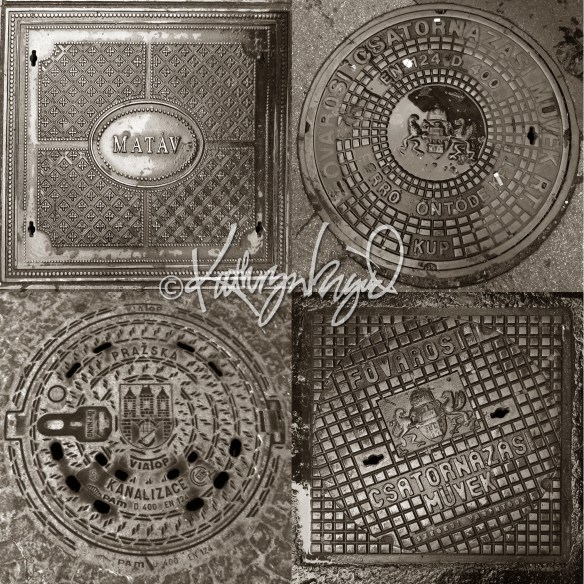
Photo Montage: Manhole Covers 1I discovered quite some time ago that the admirable proprietress of a photography blog I enjoy very much, inte fan gör det det (I’ll let you look up the translation, you non-Swedish-speakers, for your own amusement) shares my affection for many things that escape attention from lots of others. Among those oft-overlooked everyday objects are the steel caps that separate cars and pedestrians and the like from whatever dwells in the underground infrastructure: manhole covers.Photo montage: Manhole Covers 2

Some of these utilitarian items are made without much regard for their aesthetic potential but even so, manage to become rather special and interesting by virtue of the patina of age and use. On top (no pun intended) of that, there are many manhole covers deliberately designed to be special and interesting and aesthetically pleasing. I don’t much care what the original intent of a manhole cover’s design happens to have been, as long as part of the purpose was to keep me from falling into the sewer.Photo: Manhole Covers 3

But it does beg the question, for me, of why, outside of emergencies, one shouldn’t make every single thing one makes as beautiful as it can be. Maybe I should simply be content that so many things, like manhole covers, can become beautiful through use and time. After all, that’s what I would like to be able to do, myself. Ah, perhaps that is precisely what is at play in the manufacture of a manhole cover; it is made expressly to become beautiful through use and years. Perhaps, indeed, I’ve stumbled onto a cosmic truth, and we mortals are also designed with that in mind. I suppose I’d better get busy!Photo: Manhole Covers 4

Things to Remember

Apparently I am sucked into the Throwback Thursday vortex, for amid my housework wanderings I stumbled across some dish-drying towels that brought a flood of memories over me. The first thing that came to mind was curiosity about whether there are many others who grew up using tea-towels like these made of flour sacking material and hand-embroidered, often with a small posy or aphorism in the corner, and usually by Mom or some older relative, at least until we ourselves were conscripted for the task.

My mother enjoyed embroidery as a relaxation mode as well as art form, and the last batch of dish towels that I know of her having made were a series of line drawings of local native flora, based (with the author’s permission) on a book of lovely little watercolors of the same plants and flowers. I chose one representing a favorite alpine blossom, even though the creamy white blooms were guaranteed to fade quickly against the pale fabric, and the outline of them remains faintly visible even after many years of hard use. That’s a perfect representation, in its way, of how my memory works. I began to reminisce, seeing this embroidery, on the alpine plants that have always signaled peace and freedom to me as I day-hiked on the flanks of Mt. Rainier. So I meandered over to search online for native alpine plants of the northwest, and as soon as I began looking at the images I was struck with an infusion of the very scent of those hikes, a spicy, earthy, fresh and herbal blend of tree resins—cedar, pine, alpine fir—and sun-baked earth, lightly perfumed flowers, crushed needles and fallen leaves underfoot, the brisk dash of elevated air. What a lot of fine things to be contained, in addition to the treasury of love and family history, within my mama’s embroidered dish drying cloth.Photo: Mama's Embroidery

You might think I’d’ve inherited an embroidery gene, because in addition to my mom’s fine handiwork, I grew up seeing and using Grandma’s embroidered towels and pillowcases and enjoyed them, too. I did not, and since I had these two sources readily available, I didn’t mourn the gap in my skill set. I could always go to one or the other of them and find some new kitchen linens in a time of need.

My father’s mother never got so inventive as to design her own embroideries based on book illustrations like Mom’s were, but Grandma chose for her projects the resource of hand-me-down and found patterns, most of them quite out of date already (hence the ease of her collecting them), and almost all of them much quirkier and tackier than her normally refined taste would have allowed. These were, however, mainly destined to be given to charity or sold for the proceeds that would go to the charity in their stead, so she had no attachment or agenda for showing them at home. I, on the other hand, bought a few not only out of any little do-gooder intentions but because the sheer silliness of some of the designs so delighted me.

This one, for example, that was my inspiration for joining now in the Throwback Thursday brigade, was highly amusing to me in its ridiculously fantastic subject, its period style, and its girly goofiness. I couldn’t resist it. I found no other Days of the Week as companions, so I can only imagine what happened on those days, but it was enough to find this towel that could simultaneously remind me of my grandmother and my youth and make me laugh, all while getting my dishes dried.Photo: Throwback Thursday

Fashions change, and with them, the decor and even tools that fill our lives and homes. Yesterday’s dish towels are probably more often machine-made of some high-tech sort of microfiber or super-absorbent bamboo fiber blend with an artful printed-on design in the proper Pantone colors of the year. But do they do a more artful job, as well, of wiping dishes dry after washing? Can they strain soup broth into crystal clarity? Do they make perfect wraps for ice packs when a sore neck or bruised arm is in want of one? No better than the old standbys of my youth, I imagine. Old as I am, I come from good stock that valued something a bit quaint and very handmade, and if it managed to accomplish the task and carry memories for decades at the same time, why, I suspect I’ll do well to try to be a human imitation of it myself.

Little Things

The tiniest detail can determine the depth and intensity of a memory. It’s that faint fragrance wafting from the corner of the flowerbed at my first home that I remember most about playing in its front yard, and that in turn, reminds me—every time I get a whiff of the same scent—of living in that cozy brick house with its backyard apple trees to climb, the slope from fence to sidewalk where we slid down the grass on a cardboard magic carpet, and the narrow muddy track behind the back wall where we played at exploration.

My grandmother gave me a little locket, once, that had been her father’s watch fob, and I made a little drawing of the monogram on its front, HDB for Hans Daniel Bolstad. When I look at the drawing now, the locket itself long gone somewhere else after multiple moves of residence, I remember the small weight of it in my hand, the warm burnished shine of its pale yellow metal, and the feel of the engraved curves in the monogram bitten well into the gold-plated finish on it. I also remember, thanks to the tiny little hole where the drawing is black at the bottom center of the drawing, hearing the story of how the space between the engraved lines there were caved in by a different kind of bite, that of Great-Grandpa’s tiny daughter when she teethed on the locket a little fiercely.Drawing: Memento

What will I remember when my memory is further faded by time and age? Impossible to know. But my guess is that it’ll be seemingly insignificant, minute motes, and not the grand arc of history, that’ll remain intact and prod me to recall unexpected things from time to time. I may not hang onto much of importance, but some dust-sized fleck of a sensory clue that will likely trigger a cascade of reminiscence when the moment comes.

A Certain Age

I’ve always been mystified by the people who are terribly age-conscious. When I was younger, I didn’t get the agonies my peers went through over longing to be old enough for this, that, and the other thing. Driving a car was never especially thrilling or compelling to me, alcohol had little allure as an illicit tipple when I could see how stupidly my peers (and many legal-age drinkers) behaved when drinking more than they could handle, and I’ve still not had the remotest interest in trying to smoke anything. I didn’t even care about R-rated movies any more than I do now; most of those are too violent, too rude, and or too loud for my usual taste.

When I got old enough to do all of the supposedly grownup-geared stuff, I became just as amazed and confounded by those who wish and try to be or appear younger than they are. If I want to lie about my age, I won’t pretend I’m some young thing I’m not; I’ll certainly tell everyone I’m much older than I really am so they’ll be impressed with how fit, alert, and fantastic I am compared to everyone else “my age”—but that’s too much effort for a silly joke on my part. I’m pretty content to be myself, whatever age I am, and let people love, respect, and admire me—or not—for the real me that they know. I’m happy to have accomplished what modest things I’ve learned or done, to covet the thin grey hairs and fine-lined wrinkles I’ve earned through years and experience, and to relish the freedom that comes with age.

Because as far as I’m concerned, the biggest and best goal of growing up (insofar as I’ll concede to attempting anything like that) is to be so at home in my own skin, however baggy and spotty and misshapen it might be, that I can like myself fine and expect the same respect from others without trying to be someone or something I am so obviously not. Here I am, 53-plus years of ordinary, thin-haired, not-so-fit, tacky happiness jammed into a humbly passable carcass, and I’m mighty glad of it.Ink drawing: A Certain Age

Tick Talk

Photo: Shoulda

Photo: Tick Talk

Sometimes It’s Hard to Tell Who’s Giving the Gift and Who’s the Recipient

I have been taught that it’s polite to accept generosity with good grace: say Thank You, show proper appreciation, and humbly know that even when you think you don’t need or want the gift, it is your turn to show kindness by recognizing its significance to the giver. That doesn’t mean I’m terribly shy about ‘re-gifting,’ or passing the gifts along to someone I think will better appreciate and use them, eventually. It also doesn’t guarantee that I’m entirely alert to when I’m being presented with something valuable and meaningful. Even when I’m fully aware of my undeserving, I’m not exactly a genius at generosity myself, let alone fully attuned to how much I am given and how often.

Take the times when I am being thanked with gifts for doing things that I should have done as a matter of course, and often have done very grudgingly at that. I have always been a poor excuse for a visitor, supporter and caregiver, being intimidated and squeamish and easily unnerved by others’ needs and ailments and trials. I was terrified of visiting my own grandparents when they were old and shut-in, unable to be the people I had known in their healthier and more mobile and cogent days, and could rarely face the strangers that they had become, let alone the alien and frightened person I was myself in their presence.

Long before those times, even, I was both younger and less experienced or brave, if you can imagine anything yet more craven. My parents had always taught me by example that care and compassion, generosity and hospitality and respect, all of these were essential life skills and characteristics that should be nurtured and cultivated through consistent use. And I never got good at any of that.

Once, when Dad was making a hospital call on a parishioner who was dying of cancer, it happened to be when Mom and I needed to be along with him for something later in the day and it wasn’t convenient for anyone to be shuttling back and forth multiple times, so Mom and I rode along. Somewhere on the trip I realized or was persuaded that I should join both of them in visiting this man who was a stranger to me, rather than sitting and waiting in the car on a cold, damp day in the first week of December. I’m quite certain that I was both reluctant and frightened to make this visit, parental support notwithstanding. I’d never seen a person so near to death, and his being unknown to me did nothing to ease my fears; if anything, my perpetual social anxiety probably spiked to all-time highs at the thought of meeting someone new just when he was about to die. I’m quite sure that I wasn’t mature enough to recognize that this was a clear instance of the occasion being ‘about’ him, and not about me at all.

I remember rather little of the actual visit, only little bits. I had met this man’s wife once or twice, so I suppose we exchanged some small talk about that acquaintance. He asked me about my interest in art and shared that, while he’d had some entirely different sort of day job, he’d always had a creative urge and had made many small stained glass pieces as a fond hobby, something I gathered he sold to make a little pocket-money at times. His inquiry about what was happening in my own life just about then eventually revealed that the anniversary of my birth was approaching just as the end of his life was to come.

He was a pale, yellowish creature after cancer had defeated most of his bodily systems and all of his treatments, bloated but in an empty way; an airy husk of the man that had been, now nearly ready to blow away. His hospital room smelled just like hospital rooms have always smelled, overlaid with the added imaginary pall of looming mortality. I wasn’t a baby—I understood well enough that his sort of death wasn’t contagious—but I couldn’t help itching to escape all the same.

When this pallid wraith offered me his dry, cool hand I took it in mine and held it for a while as he and my parents continued to talk softly about more needful things. I did my best to give the appearance of better bravery than I had, if not compassion, and still he showed me more sympathy than I expect I did him. He thanked us all quietly for the visit as we left, and I was too immersed in trying to console myself over the sadness and discomfort of it all to realize that it was he who had done the kindness.

I heard in just a few days of his death and thought with some melancholy of how sorrowful it must have been for him to face it, and for his loved ones to cope with its eventual, if expected, arrival. Only a couple of days later, I thought of him again.

It was my birthday, and among the presents I received was one small package that was not from a family member. My parents told me that my acquaintance had asked his family to see that I be given this gift as a token of his gratitude for my visit. It was a table-top stained glass flower he had crafted sometime back when he still had the strength and skill to make such things. The little blue flower bowed gently on its wire stem, and I was abashed and moved by it.

This was a delicate token of real grace. It made a fine representation of that goodness, its glass petals and leaves letting light filter through, its slender stem so fine, yet resilient enough to spring back upward when pressed. It was a flower that stubbornly refused to wilt, even when it was a post-mortem gift from a virtual stranger. I don’t know, after all of these years, precisely what happened to it or when and where it disappeared, but I kept it for a very long time indeed and found in its simplicity a constant reminder that the little things even a reluctant and weak person might do in the name of duty or expedience or, however hesitantly and ineptly, for kindness’ sake, might in the end have some power. That this power is not our own matters less than that it can change the course of the moment, or sometimes, perhaps, even make a difference in matters of life and death.Digital illustration: Stained Glass Flower
Changing Directions

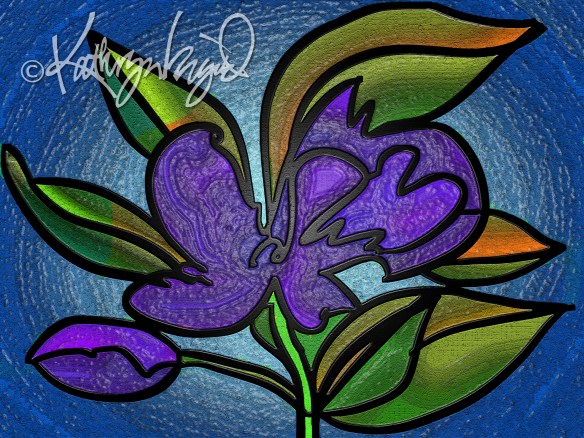
Digital illustration: Changing Directions

Do I move at the whim of the slightest breeze? Often enough, I suppose. But what really changes my direction in life? Chance? Passion? Accident? Will?

I’d say it’s been one or another of all of those at various times, and perhaps occasionally a combination of elements. What I would say most definitely and commonly is that I have rarely known very far in advance what direction my life would be taking, let alone exactly when. Living with uncertainty is at the heart of the human condition. We can’t know (nor would I wish to know) much of what lies ahead for us. Being an artist, and married to an artist, I have made some choices that guaranteed perhaps an even deeper and more frequent susceptibility to wondering what comes next. While both of us have taught at times, an occupation that has a degree of predictability and dependability absent in most other employment that involves our artistic skills and training, it never prevented the question from arising in other ways.

For me, as a longtime adjunct at the university, it meant that though I’d been there for nearly seventeen years (most of those, full-time) before I stopped teaching, I never had a contract in hand for more than a year at a time, nor was my class load or schedule in any way predestined; I taught what I was asked to teach, when I was asked to teach it. For my spouse, a tenured full professor and director of his division, he still had questions about how he might change and grow as a teacher, never mind whether to apply for or take any of the other positions on offer at other places from time to time.

We are, I think, pretty much the ordinary pair when it comes to that sort of thing. Even now, after many years of doing particular kinds of work at specific places and getting plenty of satisfaction from those various tasks, it doesn’t in any way stop us from asking, What next? Will we continue on the present path exactly as we are just now? Do we opt to  make any kinds of transitions, either changing the way we do what we do or the venue for doing it, or does something entirely new entice and draw our interest? If it does, is it attainable? Is there some utterly unimagined thing lurking just around an unsuspected corner, waiting to draw us in?

At times, it can make me feel as though I can never quite catch my breath or my balance. I tire of asking myself all of these whys, hows and what-ifs, yet I can’t resist scratching at the questions the minute I thought I’d put them to rest for a while. Even when I’m most happy and fulfilled and contented, I always wonder what lies ahead.

And that, of course, is the very heart of that human condition. We know that change is inevitable. We know that some of it will be by our choice, and much of it will be thrust upon us or sneak up subtly and surprise us all the same. And we know that, in some ways, the only guarantee we have is that we will all die wondering. It’s what we do, and it’s who we are.

If You’re Not Growing, You’re Disintegrating

Decrepit Like Everybody Else

I ought to get my rear in gear; encroaching entropy

Challenges my mere existence, yes, the being-ness of me—

photo

Why, I’ll be disappearing soon, with chaos on the rise—

Order is losing ground to it, and much to my surprise,

Growth falls to dissolution at a speed I comprehend

Is likely to outlast me, too, as I fade to my end—
photo

And now I am unraveling, unwinding, getting old

And obsolete, for that’s the end of every tale that’s told.

Goodbye to all you younger things: relish your hour of youth—

You’ll all join me, and soon enough, and that’s the simple truth.