

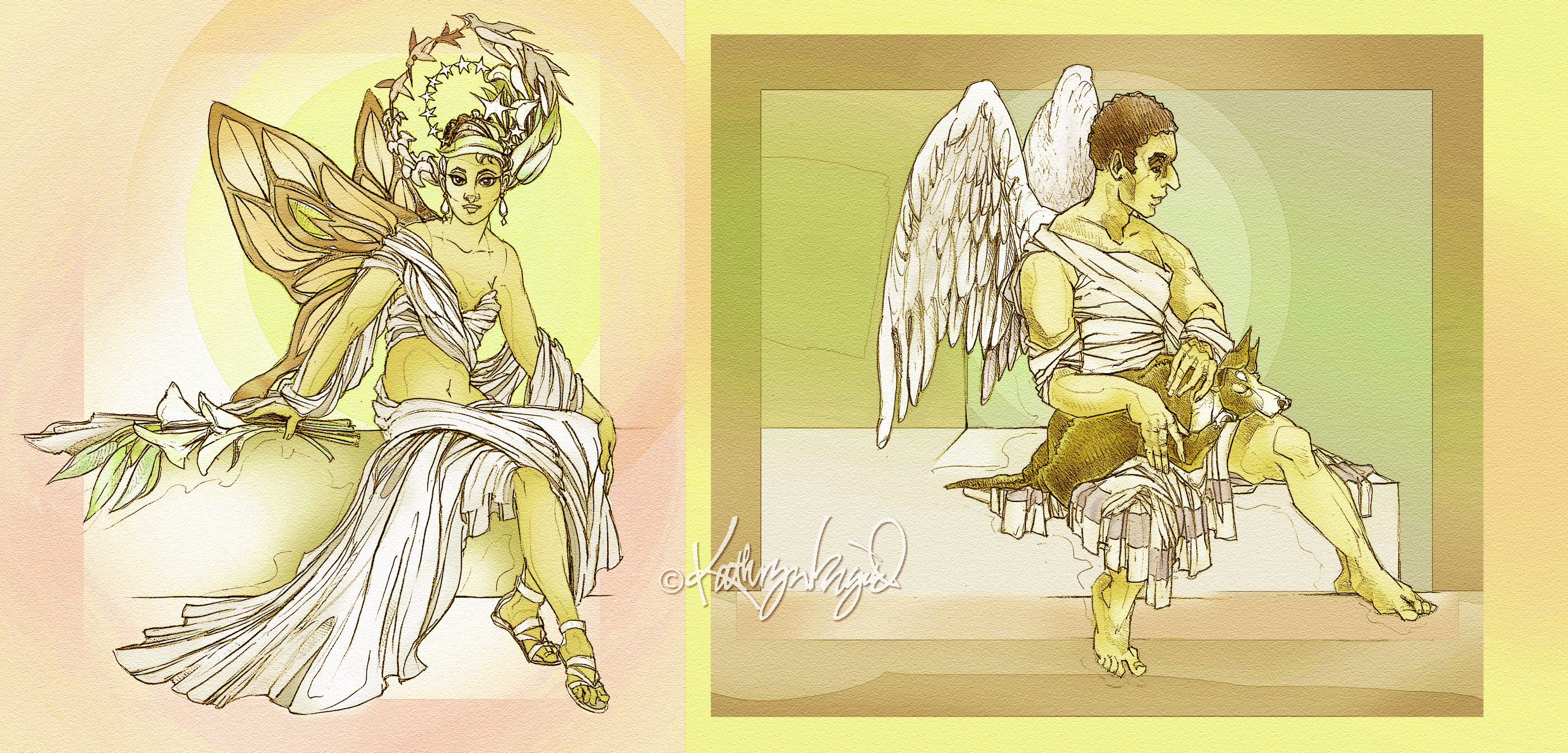
To my beloved youngest sister on her birthday:
Taking life from the real to the magical and from drabness to brilliance, luminosity is the agent of glorious change. Little Sister is such an agent in many lives as well, bringing beauty and joy to us solely by existing, let alone having the sweetness and humor and wisdom that fill her with the warm inner light I so treasure. Simply, my world would be far smaller and more limited to the dull version of reality if it weren’t for the presence of her gracious illumination!
With that in mind, here is a series of illustrations of that progression of luminosity to celebrate the gifts of sisterly love.


 Burnout. Tension. Stress. Exhaustion. Doesn’t matter what I call it, the unfriendly truth of that state of being is the same. Distraction. Aching and malaise. Irritability, withdrawal, collapse. The dramatic drops in life participation and wholeness all come together in equally unpleasant responses.
What are the causes, catalysts and triggers? As many and varied as the moments of any lifetime, of a million lifetimes, can allow. How is it that I–or anyone else on this madly spinning globe–can survive such stuff assailing us, let alone prevail against it and win?
Why, in a number of ways, we all do it pretty much all of the time. That’s how our species can even continue to exist; if we didn’t have a whole arsenal of defenses and strategies for the cosmic battle, it would’ve taken little more than a moment’s stray breeze to blow us all to oblivion. But vulnerable and weak as we are, we do have our ways, and we survive.
Faith. Whether it’s the belief in something as grand and benevolent as a Supreme Being that will rescue me or in something as small and ephemeral as the offer of a stranger’s hand to grasp mine and pull me up, faith can overcome many an obstacle.
Hope, too. If not utterly confident of it, as long as I can summon a sense that there’s some probability or even possibility of better things ahead, I have a chance of mustering just enough strength, patience and will to wait for the good to come to me. I may not be able to reach for it myself any longer, but I can hang on, however thinly, to a promise of change and renewal. For the return of the light.
And love. When all other resources are at their lowest ebb, even faith and hope having withdrawn in the impenetrable distance, love can carry me through. I have a greater store than most, being surrounded as I am by not only the encouraging affection and support of spouse, family and friends but also the remarkably kind uplift I’ve received at the hands and words of a wide array of acquaintances and strangers buoying me in my life over every would-be catastrophic wave. Beyond even this, there is another love that serves me well, when I can remember it: the love inside me that, however pale and faint it’s grown in my weakened state, recognizes a need to care for and comfort others in their time of need. The moment I can step outside of my own need, my hunger, despair, anger, longing or sorrow, just enough to recollect the existence of anyone else, I tend to draw back, however slowly, from the brink myself.
I can look around again with eyes less inward-focused and with a heart more willing to keep living, hard as it may seem at the time, and crawl back toward more gracious and sanguine days. My fellow survivors show me how to do it all the time. In this, I am once again truly at peace.
 My superpower, if I could be said to have any, is being supremely ordinary. Yeah, I’m really, really good at that. Now, you may think it’s not impressive that I’m good at being so-so, and you could be forgiven for thinking it. And yet . . .
Besides that it requires massive numbers of us mid-range sorts to keep nature in a sort of balance with the various human outliers at the top (and bottom) of the spectrum, there’s also the comfort and safety of being able to travel under the radar of scrutiny and pressure to which both kinds of exceptional people are exposed.
What on earth does this mean I am good at doing, at being? Why, I do what’s expected. I go to sleep; I wake up. I eat and I walk and I get dressed and undressed, and the world carries right on around me. And though I don’t at the moment have employment outside of our home, my current occupation being Homemaker, I spend myself and my efforts, rather, on doing the small and yet significant things that might not be essential to keeping the world operational but grease the gears, instead. And keeping the cogs working relatively smoothly is as useful in its own way as being the driver, the engineer or a cog myself. I go to meetings and do Projects, too, to be sure, but mostly what I do nowadays is fix a meal, repair a door-jamb, ferry my spouse and a student to a rehearsal. I do laundry; I prune the plantings near the window. Glamorous? Just exactly enough.
Because the luster of the day comes not from being admired and lauded but from being appreciated, even if it’s hardly necessary to hear that announced constantly–after all, the proof of its value is in plain view if the needful things get done. Any reward lies in the belief that I make life that one tiny iota smoother and pleasanter for that one brief instant, even if only for this one other person. It’s borne on the smile of relief worn by him whose sheaf of office paperwork got filed at last when he couldn’t get to it himself, or whose old slippers have been mended by the time he gets home from the office at the end of the day. It’s in the neighbor being glad to have the excess garden supplies or box of art materials I’ve collected to send to school with her. It’s with me when I arrange the chairs alongside the singers before a rehearsal when I come by to listen to their work. It’s mostly in knowing that the stuff needed to keep quotidian action on course is being looked after, bit by little bit. And that I’m the person for the job.
I don’t do this selflessly, of course, because I would hardly keep it up for long if it weren’t so simply and inherently rewarding. And it certainly bespeaks no genius or courage on my part that I do it, for clearly it takes greater skill and ingenuity and bravery to do all of the shiny, showy things for which I provide my atoms of encouragement from the periphery. Maybe a jot of courage only to admit to being a homemaker and loving it. So many who haven’t the privilege of the life seem to disdain it and misconstrue its meaning, especially if it doesn’t have either children or wealth as part of the equation. I am far more fearful of having no sense of purpose than of being thought unimportant by anyone else; I care more about feeling my own worth than having it validated by any outside agents.
So if I seem to anyone to be afraid of taking a larger role in the Real World as they see it, I suppose I ought to admit that in one sense I am. I know that having this Job for a few years has given me new strength and the ability to go out in the wider world for a so-called Real one again when the time comes, yet I do dread leaving this role that has given me a feeling of vocation more than anything else I’ve ever done and risking the dimming of any of the self-worth I’ve garnered or the value I’ve learned to impute to the tasks of being normal and simple and everyday, which I’ve learned to see as so much deeper and richer than they’d seemed until I tried on the role of their custodian myself. I do, at the end of it, think that if I’m a dull, bland or unimportant grease-monkey to the cogs of the world, I’m a damn good one, and if I’m scared of giving up that high honor, then I at least credit myself with being a superior variety of chicken.
 Few pleasures can compare to children’s when they are allowed untrammeled playtime in nature’s kind and pretty places. We should all be so fortunate in Springtime, especially in the springtime of our lives.
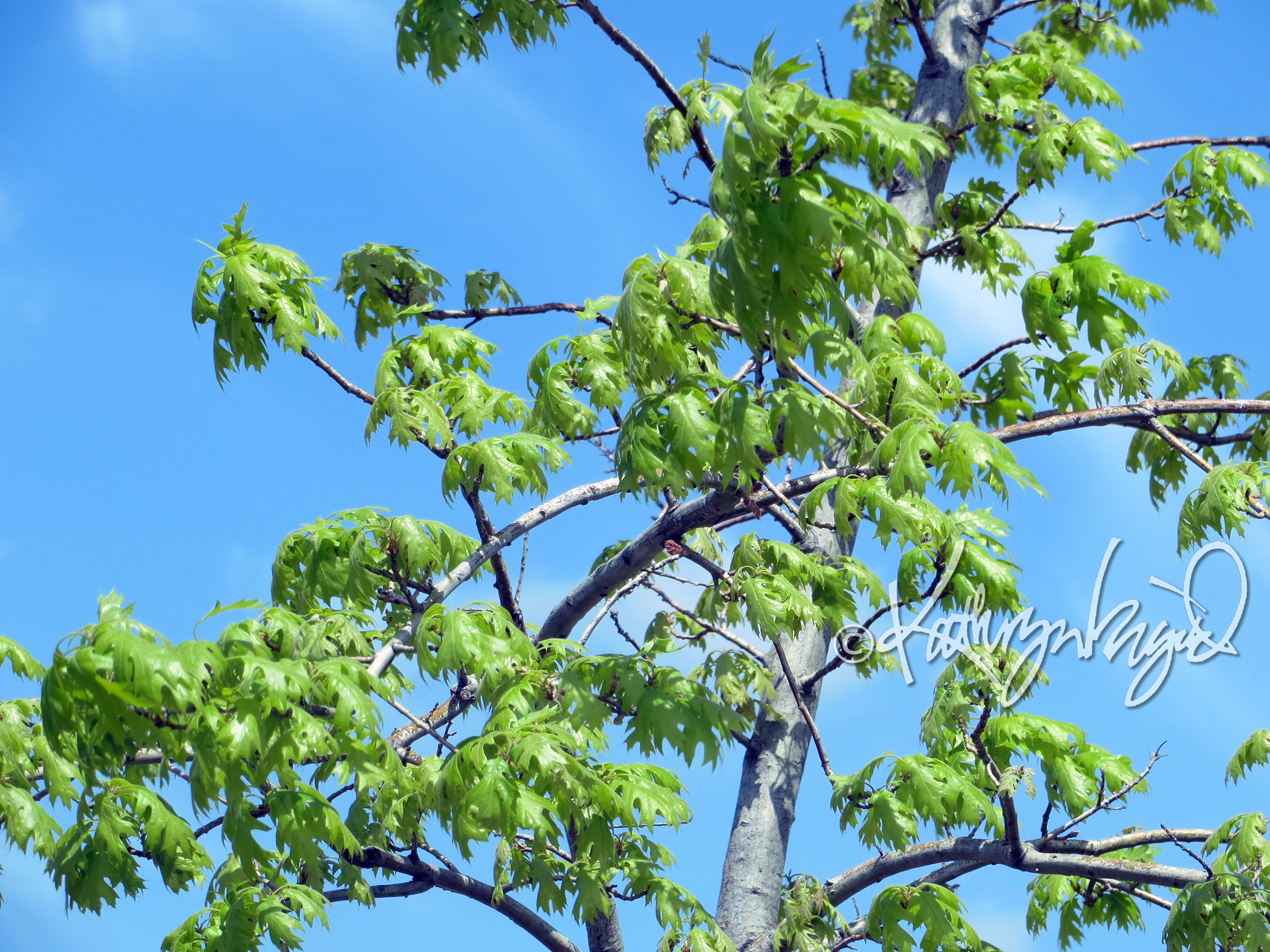 By Babylon Creek
Babylon Creek
used to make the
children laugh as it ran
tickling fingers up
their summer-heated shins
and the older folk
chuckle shamefacedly
at its puns and the way
its hilarious licking made
them squirm like
dog-loved kids themselves
 Conservatories
Shells of glass to shield from winter
Leaf and flower, root and seed
Give the tender lives inside them
Shelter that they crave and need
In the warming arms of friendship
We in kind find safety, grace,
Shelter from the world’s hard trials
In that other shielding place
Even when we’re young we pick up clues pretty swiftly regarding what sort of behavior and attitude is expected of us in our interactions with others. As a child, I learned ever so quickly that I am not the boss of anyone else and practically everyone else is the boss of me, and not much has ever changed in that department. Whether happily or unfortunately, depending entirely on your point of view, I also figured out as speedily as most kids do that as long as I behaved in the expected manner when anyone was watching I could get away with a fair amount of far more self-indulgent–if not subversive–ways. Sure does simplify my life!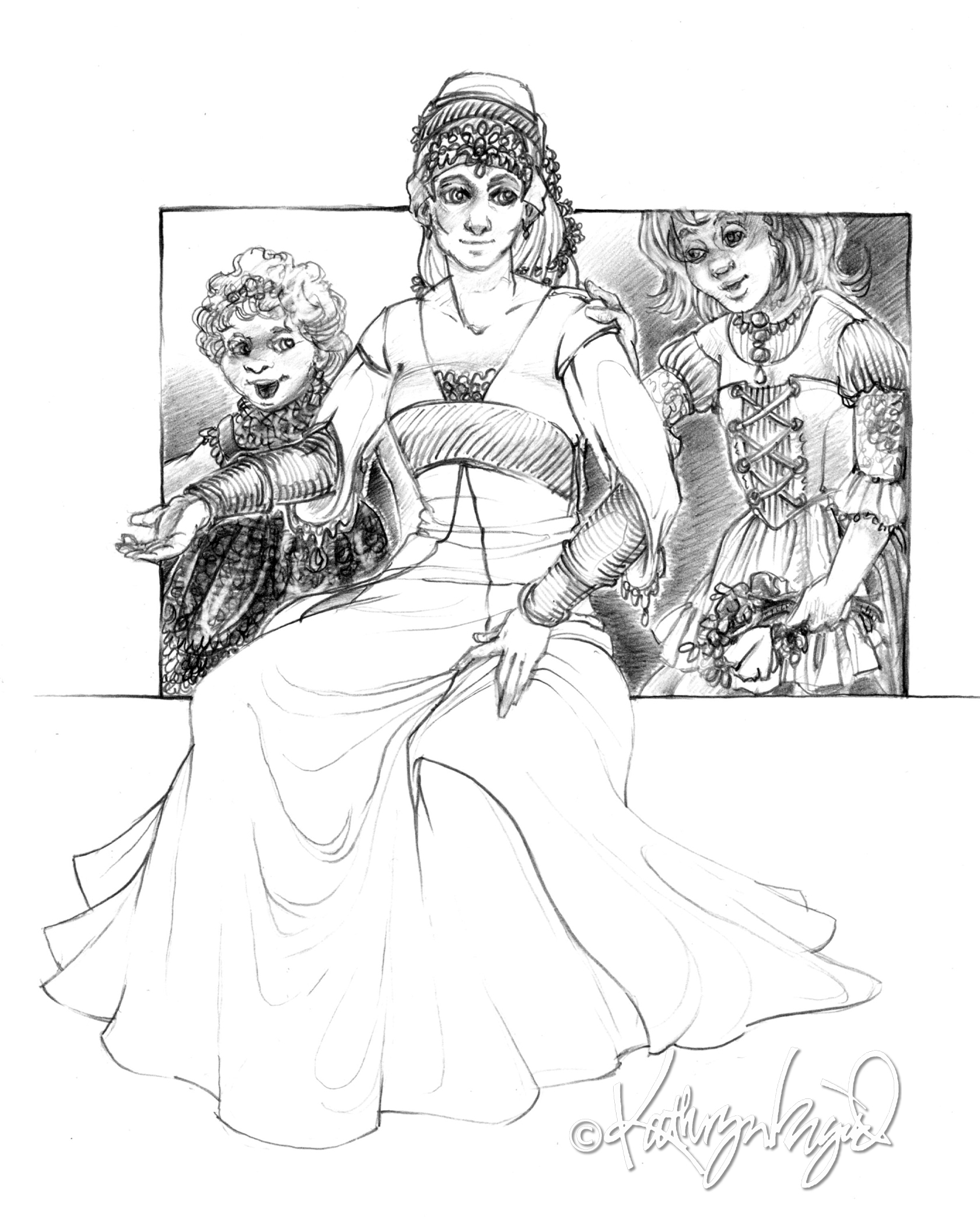 Show of Proper Respect
The Mistress in her jewelry and finery and furs
Thinks everyone should bow and kiss the ground—that’s also hers—
And genuflect before her grand tiara and her mace,
So that is what we tend to do—at least do to her face. All frivolous jocularity on the topic aside, however, getting trained by our elders and betters, in particular our mothers, is both more complicated and more happily meaningful for those of us who are blessed with great moms. Me, I’ve got two. The mother who gave birth to me and raised me from my days as an only mildly subversive little sprout into the silly but exceedingly happy big kid you see before you today is worthy of recognition as one of the great teachers not only for giving me a framework on which to hang my sense of right and wrong and general grasp of manners but also the education and freedom and knowledge of being unconditionally loved that enabled me to choose how to build on those foundations as I grew. My second Mom, brought to me courtesy of (her son) my beloved husband, gets credit for instilling the same curiosity and drive in her children and, in turn, for reinforcing in me through her example what it means to be a lively and lovely person who is good company, an active part of the household and community at every turn, and a tireless learner and adventurer who earns her place in those settings with remarkable grace. Whether I can live up to the standards set by either of my Moms remains to be seen, but they certainly give me the tools that should make it possible if anything can.
If it can’t, I guess I’ll have to fall back on my naturally ridiculous ways and just pretend to be better than I am for as long as I can keep up the front. Those of you who are looking for reliably good, sound company, go see Mom W and Mom S. And also my sisters and my sister-in-law, great mothers to their children, and all of those other mothers, who by birth, adoption, random acquisition and teaching, raise better people, who in turn make the world a better place altogether. All of whom I thank profusely not only on Mother’s Day but every day for being such great examples even for those of us who are a little too childish to be motherly examples ourselves. Go ahead, you can say it right in front of me. I’ve learned that much, at least!
 Defying Probabilities
The most improbable outcome
Of delirious, fanciful dreams
Is not the impossible can’t-be
That perpetually it seems—
And I can prove this conundrum,
In my personal life, is true,
For it happens that though it’s wildly unreal,
I’m actually loved by you.
The first time I heard Early Music performed in period-appropriate style I experienced, not surprisingly I suppose, a full mixture of amusement, bemusement, mild horror and deep curiosity. It was in a performance of Claudio Monteverdi’s seminal opera Orfeo at the English National Opera; I was a mere college stripling who had probably not even heard the phrase Early Music at the time let alone known what it might mean, and ‘performance practice’ was in something of a time of transition. Anthony Rolfe Johnson sang the title role with, if I remember properly, a rather nice overall sound, but a straight-tone and senza vibrato style and a strangely stuttering kind of ornamentation that might well have been an authentic recollection of the opera’s original character and an accurate and historically informed version of the way it would have been presented by its composer and first performers. I, having never been taught such things, merely heard sounds quite foreign not only to my ear but to my concept of skilled and artful performance, let alone prettiness. I do remember thinking that either this was all far over my head (entirely possible) or it was a pointless and poor imitation of what the ENO imagined the average amateurish opera company of Monteverdi’s day must have been capable of doing (less likely), or poor Mr. Johnson, who later went on to receive his OBE, just plain wasn’t up to the job despite a naturally pleasant voice.
Years later, I may not be much smarter than the young squirt of those days, but I’m far more experienced and have heard worlds more music, both the great and the terrible and, of course, a massive quantity in between. And I’ve been taught a thing or two about the fine points of what is beautiful and magical when it comes to singing or playing with any amount of vibrato–or none–and the many elements that combine to create tone and color and variety and character in a performance. I’ve learned some useful stuff that changes how I perceive both the level of virtuosity in playing or singing and its aesthetic appeal, two aspects that do not always coincide in my ear, mind and heart but when they do, that combine to create a kind of joy that is virtually unattainable in any other way.
When my husband conducted a production of Orfeo over a quarter century after the first one I’d heard, I had a whole different understanding and appreciation for what the many performers were doing and why the stage director would expect them to do so both from a visual standpoint–training them, along with other coaches, in appropriate ways of moving and posing and gesturing as well as in those of vocal ornamentation, since she is a superb and well-trained Early Music singer herself–and an historically suited musical one. Just as there are countless styles and types of music known to us nowadays, which you can multiply by the number of individual teachers, performers and audience members to get a rough sense of the variety you’ll encounter, there were historical strictures and structures and stylistic trends and ideas that shaped earlier generations (centuries) of music and musicians and listeners, and while some have perhaps remained relatively unchanged since their inception, many more evolved over the ages. Our expectations of music have certainly changed, and our guesses as to how it was first conceived and perceived are only as good as the lines of scholarly inquiry and oral tradition can attempt to make them.
In all, it makes rich fodder indeed for both the ear and the imagination, and I for one am mightily pleased that I have had the opportunity to live a life immersed in all kinds of music and to learn along the way. I still like much of what I heard, whether ignorantly or not, in my younger days, and much of what I like now I learned to love along the way. While my form may be far from historically accurate or artistically impressive, I will still happily bow and curtsey to all the musicians who have shared their gifts with me in my life, and to all of those who work and are inspired to play more, to sing onward.
 Trouble, as we all know, is highly contagious. I was reminded of this recently both by a television character and by a couple of real-life incidents involving real live people (who shall here remain nameless), and all of them, real and fictional, have a number of similarities, the chief one being their apparent unshakable belief that their suffering is greater than anyone else’s, is incurable, and is probably the fault of everyone else too.
My life is pretty fantastically good, when you get right down to it, so to people who don’t know me very well it might appear that I have no business criticizing anyone else’s way of handling sorrow and pain. But that’s just it: even the most wonderful of lives is touched by trials now and then, and struggle or strife isn’t fairly measurable in the moment. My paper cut seems as dire as your childbirth pangs when I’ve just gotten paint thinner on my hand. I know this to be logically ridiculous in the extreme, but don’t tell me the paper cut doesn’t hurt like boy-howdy at that moment. That would be tantamount to me telling you that since your labor pains will probably be over in short shrift, they don’t compare in any way to another’s battle-for-life with esophageal cancer, so you should just get over yourself. Whatever agony each of us is undergoing is more than enough and not to be belittled. And frankly, since each of us has a history that is tinged here and there with darkness, we do all have a sense, however small, of what it means to accept our griefs and cope with, live with, and go forward with them still present. Real sorrows never truly go away.
And for all of us who can feel empathy, or even more than that, can feel sympathy without having experienced the fulness of another’s troubles, life after infancy (when memory, like the lifespan thus far, is short) can be a perpetual bombardment of such troubles even when they’re not entirely our own.
I, of all people, will readily grant you that some people are far better equipped than others to find ways to survive pain and suffering and to continue living a full life without resorting to out-and-out acting. But that’s just it, isn’t it: barring full mental incapacity, don’t we owe it to ourselves, anyway, to try every possible avenue of becoming whole and happy (and of course I don’t mean that superficial kind of happiness that is either fully false or simply stupid); don’t we? When my personal apocalyptic horsemen appeared at the intersection of a group of the classic stressors (job-related problems, health challenges and the sudden death of a close friend converging on me at the same time) and plunged me into clinical depression, I was fortunate to not only have some of the significant tools (support from family and friends, a great doctor and a good therapist, and ultimately, medication that worked for me) for doing battle with those monsters but also the sense that there was no other acceptable option but to try to do that battle.
I won’t lie; there were times–and will probably be more of them over the years–when I did have to take the tack of that ‘fake it till you make it’ mode, when I simply wanted to quit and lie down and just hope it would all miraculously fix itself, or when I was as sulky and whiny and crotchety and pessimistic and tedious as unhappy people can be. We humans are good at all of that stuff, better than at being sunny and charming. But finally, even in my worst state I knew that was no way to live, and that the important people around me would suffer at least as much as I did, if not more. Thanks to the aforementioned helpers, I am here to tell the tale. More importantly, I don’t dwell in that darkness, even though there’s not much I could prevent or even fix about the troubles that led to such a state of existence. Things just happen. It’s how I deal with them that’ll likely make or break me.
That television character–and the many real-life imitators I referenced–stays so focused on how traumatized and maltreated she feels (albeit by genuinely distressing events and problems) that they become her one-note existence. She has a hard heart because it seems less trouble to close it to others than to be vulnerable to further hurt, but of course the actual effect is that she treats everyone around her like dirt, riding roughshod over their feelings and regarding any trauma or maltreatment they may suffer, often at her hands, as inferior or nonexistent. In turn, after being stomped on repeatedly by her seeming egotism, narrow-mindedness and refusal to set her hurt aside, the people around her disperse as speedily as that unlucky drop of water hitting a sizzling skillet explodes into mist. Those who tolerate her constant vituperation, impatience with their perceived stupidity or lack of sympathy, and her seeming wish to continue forever wallowing in her fury and self-pity, those characters ultimately become uninteresting or even unsympathetic themselves to me; after the ninety-ninth offense anyone sits back and takes without a fight, they tend to my eye to look like either enablers or equally fixed in victim mode.
I think we all have the power to steal others’ health and happiness, at least as much as the reasonably healthy among us should make every effort to take charge of our own. Doesn’t mean perfection is expected, but c’mon, people, if there’s really no going forward with life, perhaps a retreat to a very quiet hermitage would be more apropos than imposing our worst on the rest of the world. Yeah, I said it: get over yourself, Kathryn. Even if it might occasionally require brief periods of kindly deceit, times of returning to fighting off the dark singlehandedly, and the ordinary moments of being a jerk. It’ll mean equal demand on me for repentance, amends-making, and getting back on the wagon. There’s too much life left ahead, I hope, to spend it mired in a grim and terrible past, let alone impose it on others.
The upside of all this is that there is a possibility of turning this kind of thievery to good. Very simply, if I have to I can borrow my equilibrium and contentment from others. Put myself in proximity to saner, happier people than me until I can manufacture my own, and quietly absorb what I can of their good graces. I, at least, don’t want to be the one who steals the joy of anyone else; that only becomes the reason for new sorrows all ’round. Happiness and health can be contagious, too, if we let them. And so we all should, my friends. So we should.
 Art-Colored Glasses