We All Wear Our Masks

digital illustration (B&W)It’s so much easier to hide behind convention and other convenient facades than to let our true selves be seen and known. Don’t we almost always prefer that sense of safe anonymity or at least ‘appropriateness’—however tenuous or specious it may be—to taking the chance that in our own skins we might not measure up to the occasion or to the  expectations of others?

It is, of course, a foolish conceit. One can rarely cozen anyone else, let alone oneself, by such a means. No matter how hard I may try to appear in the guise of what I think will qualify me for the In Group or make me richer-thinner-prettier or smarter than I really am, if it’s all show, the mask will like any faulty exterior prove too thin to cover my realities. It has always been so, and yet I am far from alone in continuing these futile attempts. I do believe that constant practice can transform us into a nearer semblance to the disguise, but that can work for ill as well as good.

Probably wiser is to recognize that the urge is age-old; that insecurity and an assumption that others will find me inadequate in my natural state are neither new problems nor absolutely decisive. The masks of the past remain, both in those symbolic and ceremonial concrete forms and in the records of our history books and art, to amuse, bemuse or warn us, if we will pay attention. And a close enough, thoughtful enough reading will remind any of us that no mask covers the truth forever—and yet, all the same, that we as a species continue (however astoundingly) to survive. Perhaps unmasking isn’t entirely as dangerous as any of us have feared.

I spent enough years acting the part of a brave, socially mature person, one who was more comfortable hosting a gathering, letting others see my art and writing, lecturing, teaching and doing so many other things that in truth absolutely terrified me to tearful agony behind the scenes that it turns out I am capable of doing all of those things after all. I still fuss and worry, yes, but nothing like the self-flaying horrors that I used to suffer just to get through what were apparently no-big-deal occurrences for most other people, and now I can experience them with fair equanimity. Funny how, when you’ve spent your whole remembered life in the grip of a belief that every second was one degree away from total disaster and death, any tiny bit less becomes magically huge.

And each of those instances becomes a step toward understanding that I have perhaps begun to grow into my mask of wishful improvement and become more like it underneath. Or better yet, that it never did matter as much as I feared, this different reality behind the convention. Best of all, I find that the more I let people see me as I really am, the more kindly they seem to look on me, and in turn, I begin to think the real me is perhaps pretty likable, respectable. Even lovable. Who knew.

digital illustration

Unique doesn’t inherently mean Alone.

Suicide without a Corpse

digital illustrationMichelle, a writer I greatly admire, just offered a post on her blog, wherein she details some of the characteristics of her daily experiences in life as a person with depression. As always, she makes me think. It’s not simply that I, too, am such a person—albeit one whose version of depression is as unique, individual as hers and everyone else’s—but that there are a few aspects of depression that, if not exactly universal, are amazingly common. First of these is that being sad is not depression. Sadness is to depression about like a paper cut is to getting an ice pick stuck in your eye.

I will not belittle the paper cut, real or metaphorical. Pain of the physical and the psychic sorts will always be relative to our own experiences and our own moments, and pain of any kind is inherently unpleasant and undesirable. That, I think, would be hard to argue.

But I might also say that it’s less accurate to equate sadness with depression than to call being sad, however jokingly, being “differently happy”. Sadness is a passing, ephemeral experience of the sort where the last scoop of one’s favorite ice cream flavor has been dished up and handed to the person just before her in the queue. Depression is when she has the dish of that flavor sitting right in front of her and not only doesn’t have the strength to reach over and take a spoonful of it to eat, she thinks she isn’t a good enough person to do so, if she can form such a solid thought at all, and if there were a super-powered sleeping pill that could put her peacefully to sleep forever sitting right next to the ice cream and she longed beyond words to die, she mightn’t have enough strength to reach over and take the pill either.

Suicide is a hideous thing, if you ask me. It’s tough enough that anyone would hate or fear her life and self to the degree that she sees no alternative but to end it, but of course she either knowingly accepts whatever horrible consequences her death will have on the entire rest of the universe, starting with the people who love her or she is no longer capable of recognizing that there are such people or consequences or caring about them. Beyond that, it inevitably is simply messy in the practical and logistical and legal senses. Someone will have to clean up after the fact, and the suicide doesn’t or can’t care that this will require others to deal with her corporeal remains, the legal messes she’s left behind, the tasks unfinished, and most of all, with the incurable suffering that follows when survivors realize that they couldn’t save her, might indeed have been utterly forgotten by her in the abysmal darkness of her depression.

Every individual’s best response to depression is as different as his or her version of the ailment. I am one of those whose unique combination of depression and other physical and emotional characteristics and components resisted all non-medical interventions until despite my vigorous resistance to the idea of chemical treatment I learned that that was the only useful method for me. Rather than diminishing my sense of self, it allowed me for the very first time in my four-plus decades to experience what I now believe is (and yes, probably always was) my true self. It still required being dedicated to a variety of other forms of non-chemical rehabilitation and therapy; talk therapy, meditation, and my practice of various arts and exercises mentally and physically that please and heal me all contribute to my wellness along with my meds.

I was fortunate in a way that many clinically depressed people are not: I never seriously contemplated committing suicide. I would go so far as to say that I considered it as a rather detached philosophical argument, inwardly, but I never reached the point where I so lost my will to oppose the idea of killing myself that I could let go of all the external reasons not to do so, those messy consequences others would have to undo or survive. If I valued myself so little as to want to be dead, I suppose it could be said that at least this made me think it would be that much worse of me to impose so terribly on those around me for something that wasn’t directly their problem. This sort of tautology clearly says to me that I wasn’t in imminent danger; I was busy arguing myself out of something that I didn’t really have the strength to do anyhow.

What I didn’t recognize in the midst of all of this soliloquizing was that I was committing a form of suicide, if an invisible one. True, there would be no stinking remains turning into human soap and sliming the rubber gloves of some poor janitor, no internecine paperwork to be sorted by attorneys and opportunists. But the burden on the world around me would have been just as heavy, the struggle of my loved ones just as inexorable, if I hadn’t rather literally stumbled into the intervening care that brought me to this lovely resolution where I find myself dwelling so comfortably today. Because, in my depressive brain fog and fear and self-loathing and ennui, I was rapidly forgetting how to be alive. It’s quite possible, I discovered, to die without stopping breathing, without even losing all conscious thought. A walking coma, an animate death is entirely possible in the midst of true depression.

And for that reason, I am all the more grateful that by virtue of being surrounded by people who helped to guide me in that direction, combined with being blessed, lucky, fortunate, or whatever combination thereof you prefer to name it, after my years in the dark I fell into the combination of elements that conferred a kind of wellness on me that I’d never known before. I am among you today not just as a happy and contented person, full of gratitude and amazement at what a good life I have, but also as a testament to the unfathomable differences and distances between existing and living, between something indescribably yet terribly akin to sleepwalking through life and waking up every day a little bit more…alive.

The Last Place on Earth

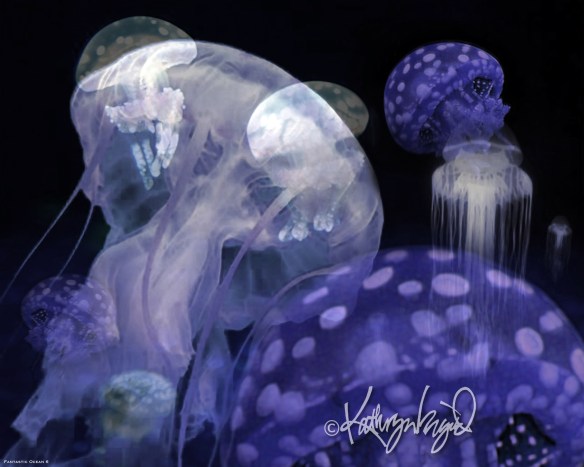
digital collageIn Profundum Maris

Deep in the ocean, fathoms far,

Beyond the reach of the brightest star,

In the abyss of the secret sea—

Seemingly past where life could be

Sustained—lies a billowing bed of kelp

That waves in the dark, where sleep, where help,

Where mystical mending music calls

As the tides turn back and the current falls,

As the storms above relent, abate,

Becalm, bring peace—it is not too late

To dive in the depths with delight, embark

On the garden path of the ocean’s dark,

Miraculous beauty, unseen, immense,

Suffusing the soul in every sense,

To lie in the rush as the seas roll by

And think it a joy too fine,

To die…digital collage

Risk/Reward

Breaking free of our bonds can send us soaring. Or it can make us crash hideously. Sometimes the same experiment or adventure can lead to both results, and sometimes that can happen in short shrift. Hubris leads, often enough, to overreaching and all manner of unrealistic expectations and lets us take stupid risks, if we get too caught up in our dreams or delusions to pay attention to their practical details.

photo

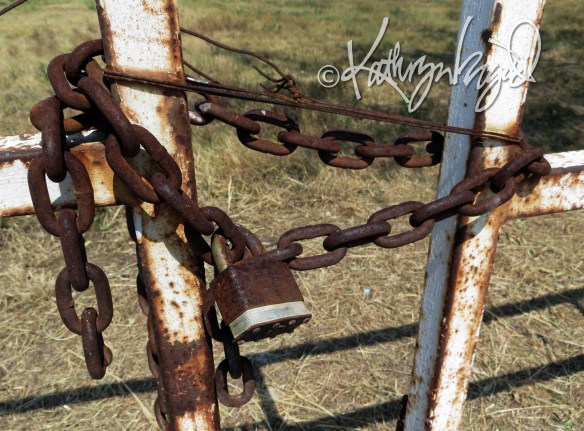
Breaking free of all constraints has its challenges; it can be a long, laborious, and sometimes dangerous task.

Icarus, My Cousin

A bird, aloft on updrafts in the sun

Above the path, could see one tiny soul,

Alone as if in death, yet singly, whole,

Complete and full contented as that One—

For on that path, and in that blessed place,

He knew such deep delight, such peace and calm

From drawing in each breath of nature’s balm

With that sweet sun so gentle on his face—

It seemed that like the bird, he too could fly,

Could rise above the green enchanted wood,

Need only think it and, behold, he could

Leap up at will, suspended in the sky—

Yet, knowing he could not thus really do,

He suddenly wept, bitter now with rue—

So turns the heart of merely mortal man,

Full in one moment of outlandish joy;

The next, despairing like a little boy,

Because the joy’s imperfect, as it can

Be seen by clearer eyes to truly be;

So rose that wanderer up to the crest,

Where soon the path was free of trees, and best,

Clear-viewed down from the cliff there to the sea—

He bound upon his shoulders feathered wings,

Sleek as the bird’s, to take by force his flight

And steal the sky, but its great burning light,

The blazing sun, had no use for such things,

And cast him, melted, in the ocean swell,

Gravity’s slave, thrown back from heav’n to hell.

photo

The world, powerful as it is, cannot fully contain me.

For myself, I will concede that I have been known to aim higher than my reach many a time, to think I am better or more skilled or more prepared for certain things than I really am. I have gotten knocked on my backside more than once; turned down, failed, fooled, exposed. There are fissures in the earth to prove the grandness of my fall. But what little I have accomplished was done mainly by dint of that same outsized expectation of my success, and without that I would hardly have moved since birth. So while I may grow and change as slowly as a tree breaking roots out of its paved prison cell, I will take my cue from that tree and keep expanding and hoping, and just see what I can do.

I Find Respite in the Woods

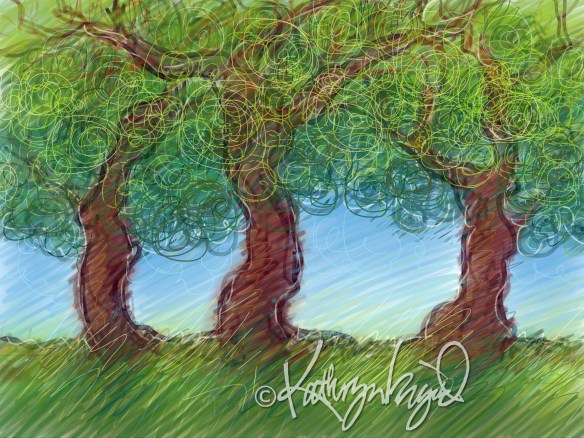
We all find our places of escape where we can. Having grown up in the Evergreen State and not far from both the vast forests of Mt. Rainier and the green refuge of the Olympic Peninsula’s rain forest, I have always found trees and wooded places a comfort and a place of safety and reassurance. No matter how deep the sorrow and pain, I have found strength returning to me and a gentling of the spirit poured on my woundedness in those times spent in the protective forest greenery. When I can spend time among the trees and relish their distinctive and individual beauties, I find myself rescued and my hope renewed.digital illustration

To the Woodland

Cedar, bless me with your resinous breath,

And oak, stretch down those knotted arms to me

And close me in, so others cannot see

My sorrow as I stand so near to death—

I come here to the woodland for relief

Among the leafy shadows of the glade,

Hoping to leave my sadness where I’ve laid

It here, a monument in shade to grief—

Sweet birches, bend your green to veil my tears

And weep with all the willows, as I do;

Great trees, for graces have I come to you

Each time that I grew mournful through the years—

I come here to the woodland for relief

And leave a monument, in shade, to grief.

This mottled darkness will give way to sun

Anon, as time flows on, and so shall I;

The dead still sleep, no matter how I cry,

And I must live, or my own death’s begun—

And I’ve much yet to live, and purpose find

In bringing others light who, too, repine

That have no pine-groves filled with peace like mine

As balm and rescue for a troubled mind—

Who know not aspens’ kindly whispered care—

Should all seek peace and comfort in the wood,

These mercies surely better us, their good

And healing gifts send us renewed from there—

So we’ll go to the woodland for relief

And leave in shade, as we emerge, our grief.digital illustration

Lesser Lights

digital illustration

The major stars are always more visible than those around them. It’s demonstrably true not only in the galaxies but in the more modest constellations of humanity. Our attentions are naturally drawn toward those who shine most impressively and dramatically—for good or ill; those more modestly gifted or less showy mostly find their own lights muddled or even eclipsed by the intensity nearby, and as a result we seldom spot and take note of them.

Even those of us who are not only accustomed to, but also aware of, being humbled and diminished by comparison to others’ flashier character can easily forget how this applies to others. Just because I might feel neglected doesn’t necessarily mean I notice others being equally shortchanged; indeed, it’s more likely that if I’m feeling under-appreciated I get too preoccupied with my longing to be Special and resentful navel-gazing to think that I’m probably in the majority rather than otherwise.

Still, there’s hope. Just as a supernova will someday burn to nothingness, human stars tend mostly to flash into the general notice, burn however brightly for however long, and be dimmed by eventual inattention or death. They, too, will eventually be outshone and/or replaced by other stars whose time has come.

And if I, or any other, should in the meantime feel unreasonably hidden from sight, we are still free to seek our own bit of gleam. For some folk, that seeking comes in ambitions for accomplishment and fame. For the rest of us, the surest way to kindle the blazing fire that gives off sufficient heat and light to be noted by anyone else is to turn our focus outward. Devoting energy, attention and love to causes and works outside of our petty selves, and especially to other persons, is the spark that, when kindled in their spirits, creates the steadiest, most lasting kind of light. Even the smallest and weakest among us shines brightly in this tiny act of selfless will.digital illustration

…and Don’t Forget, I Tell Myself, These *Other* Things…

photo

digital illustration + text

photo

digital illustration + text

photo

I Tell Myself These Things, Too…

text

text

text

photo + text

One Simple Self-Improvement Tool: Live Among Your Betters & Keep Your Eyes Open

text + images

digital artwork

text + image

Bland Like Me

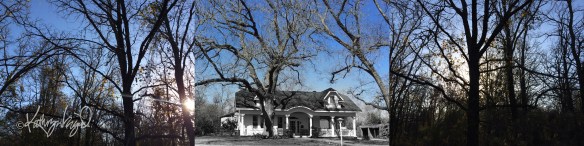
photo montageThe marvelous Diana of A Holistic Journey has been writing posts asking about the influences of race, culture, national origin, education, and so forth and the ways that they shape who we are and how we perceive ourselves. This series of hers is proving an outstanding eye-opening and thought-provoking exercise for me, too. I have spent most of my life living amid and being part of The Majority—middle-class, white, English speaking, native-born, educated, boringly predictable, etc, etc. There were a few touches of diversity around me here and there, of course, this country of the so-called United States being what it is, but those were relatively small and isolated, so mostly I grew up sheltered and unchallenged in nearly all ways.

Yet as an individual I came to know myself as being different in one way or another from most of what I thought of as the ‘norms’ of my own environs, and even learned over time that what I thought was my Majority milieu was mostly just my very narrow path through it in life. While a lot of my classmates, immediate neighbors and friends when I was a kid, for example, were also little pasty white critters like me, the friends I remember best as seeming most interesting to me were ones like Eha, the Estonian girl, or Karen, one of my few black classmates, or the Japanese friends who shared exotic treats from their lunches and who performed classical Japanese dance in a miniature celebration of the Cherry Blossom Festival at school. I have hardly any memories so suffused with longing as that of watching the girls flutter their fans, while dressed in exquisite kimonos and dancing their stately, courtly dance to the strains of the tune ‘Sakura’, which melody in turn still fills me with delicately melancholy love.

My ideals of human physical beauty, as my husband and I have often noted musingly, are nearly all attached to non-whites or mixed-race people, not something I think of as a conscious or intentional choice but a persistent reality for me ever since I can remember. My superficial list of Most Beautiful People would probably have a paucity of caucasian members among its top fifty. While I have never been either very adventurous or flexible in my choices and tastes and experiences, I suppose I have always been fascinated by what seemed different or even exotic to me. I am a fantasist and a romantic in the cheap, popular versions of those ideas, I guess.

I have even wondered, in a broader sense, if part of my very nature is simply to feel like an outsider for no very specific reason. I was always shy, and learned as an adult that this expressed not only a naturally introverted character on my part but also demonstrated lifelong social anxiety and probably the incipient state of my developing depression that didn’t come to full fruition until later. Those, along with undiagnosed dyslexia, tremors, the dysphonia that came into play in my forties, and who knows what other quirks of my unique persona and biological makeup, could perhaps explain why I never felt I fit in with any particular group or was especially central to its character. But I still can’t say I felt consciously sad or was overtly unhappy or removed or, certainly, ostracized for any of this.

What was odder was that as I reached adulthood and gradually began to find a more comfortable sense of self and direction, I have a feeling I may have chosen to put myself into groups where it was plain that I didn’t quite match the norm, specifically because, if I knew there was no possibility of my being an exemplar in its midst of the highest standard, I might unconsciously feel safe from being expected to be so by anyone else. This might be complete nonsense, but it gives me pause. In any event, I spend a great deal of my ‘quality time’ nowadays in the company of people who are immersed in and even expert at music, pedagogy, administration, and a number of other topics in which I have no training whatsoever and only a very little observational knowledge, and I am very happy in this environment.

Conversely, I tend to keep my company of good visual artists and writers and others with training or knowledge more likely to be similar to mine at the seemingly safer arm’s-length of cyberspace, and that probably doesn’t reflect well on my personal fortitude. I never did, at least, make any claims of being any better than a big ol’ chicken. Being a scaredy-pants is probably not race-specific. Or attached with any particularity to culture, social stratum, nationality, educational accomplishment, religion, language, income level, or anything else in question. Being a scaredy-pants is just part of being myself, and the unique combination of qualities and characteristics that make up the wonderfulness of Me.

On the other hand, being attracted to, frightened by or otherwise connected to or dissociated from people who are Not Like Me is a central consideration of understanding how the human species works. Or doesn’t. And there’s no doubt that all of those things influenced by proximity (physical or metaphorical), the aforementioned race, culture, social strata, and so forth, are very potent indicators and influencers of how we will experience the concept of Self and Other at any level.

So what does that ‘solve’ about me, about how I feel about those who are or seem in any way different from me? I’m still not at all sure. Perhaps the best I can say is that my feeling of being, in a value-neutral way, unlike those around me makes me unwilling to assume much about them, in turn. I would generally rather let personalities and individuality be revealed to me and my understanding of my surroundings at the moment unfold in their own sweet time than that I jump in and make any precipitous assumptions. I’m perfectly capable of finding lots of other ways of being wrong and making a fool of myself without constantly worrying over whether I’m being judged, rightly or wrongly, as a stereotype of either the majority or the minority on hand.

Most of my blogging friends and acquaintances are significantly different from me in nearly all of the aforementioned identifying categories, and yet I feel remarkably at home among you. So I’ll let you decide if sameness or difference affects how you see me. I feel at home, and that’s good enough for my part of the bargain.photo montage