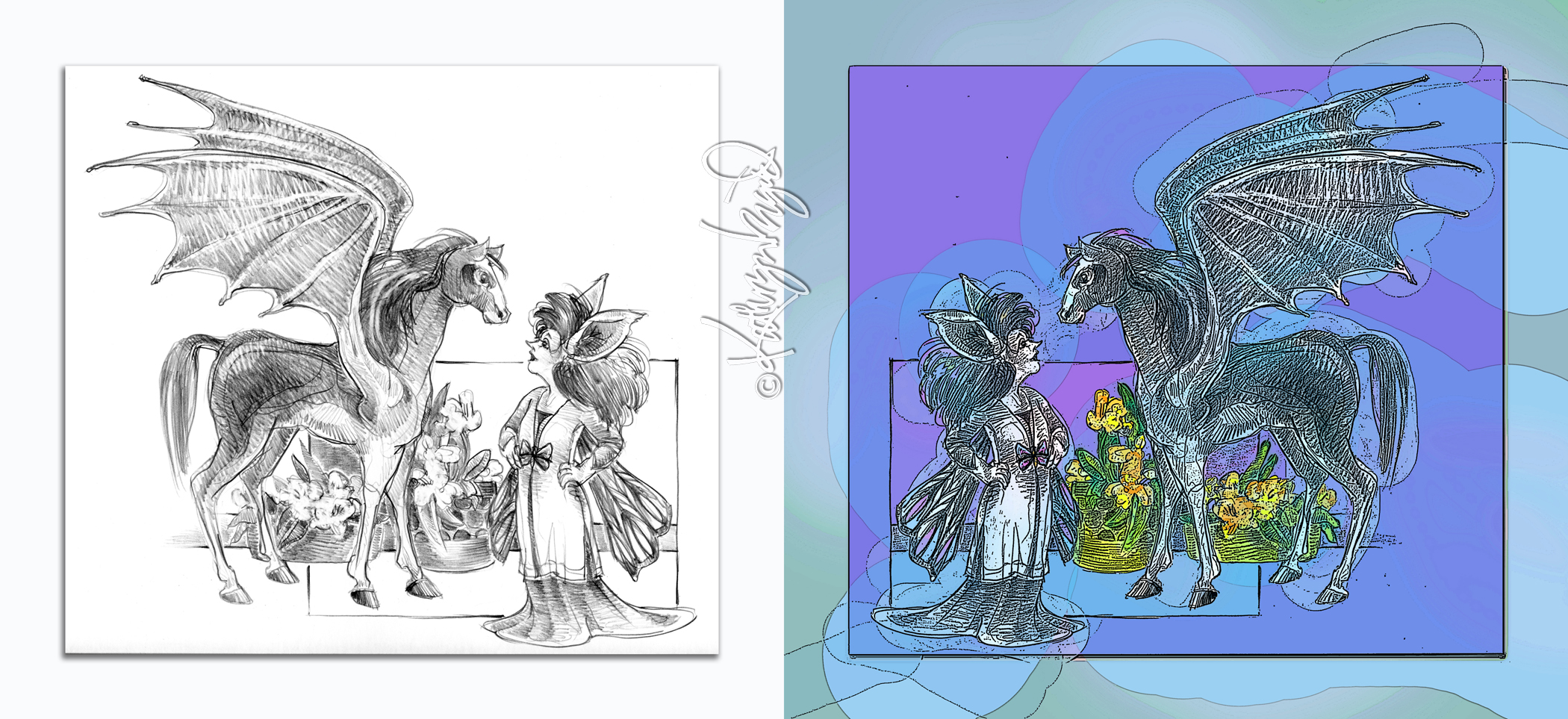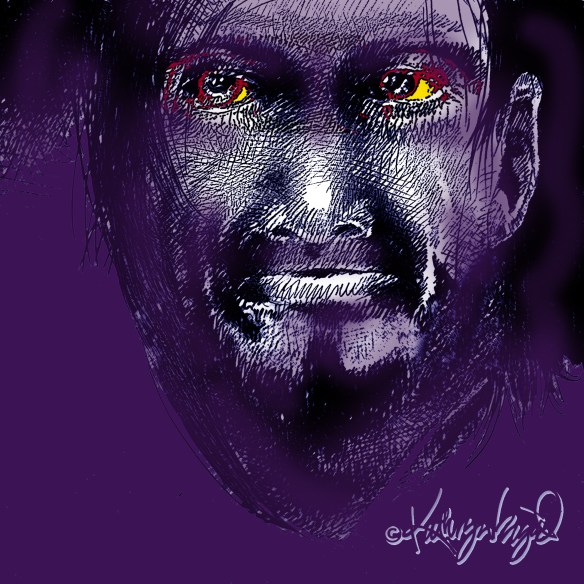
Bread for the morning came from five-o’clock ovens fired with passion and streaked with musky, pungent olive oil; the steam rolled out of those great clay caves and up the terraced resin scented hills of vineyards’ cool and shadowed kiss. Inside the chalk-white walls with their gauzy curtains strewn and the brick brown pavers all around worn by pacing wiry dogs and treading cats, the whole countryside slept, immobile, somewhat far retreated in their beds before the wavy rays of fourteen-karat sun-baked into turquoise heat our ceiling of sky.
Category Archives: Happiness
Natural Affinities and Others
Cats are nature’s hate-seeking missiles. If there’s a houseful of guests, only one of whom dislikes or is wildly allergic to felines, everybody knows that’s where the household cat will make a speedy beeline and glue itself to the ankles of whichever sufferer would rather the cat were somewhere about a thousand miles away. As it happens, when they choose to do so, cats can also sense affinity. Some are so quick to attach to the humans who will indulge their every whim that they must probably have a sense transcending the dimensions we with our merely mortal five senses perceive.
In both, I have seen parallels in human form. There are some who manage at every turn to recognize quickly and attach themselves instantly to others who will love and appreciate them and all their gifts—and some, conversely (or perversely) who have only the knack of finding and sinking their hooks into people who would rather they were about a thousand miles away.
Wag if You Know What I Mean
While all you two-legs types are mired
And wallowing in wintry fear,
I see spring’s hints and am inspired
To smell the happiness from here
What gain or merit mankind finds
In only frigid, dormant joy,
When you could wag those sad behinds,
Dance forward, every girl and boy—
Hold on to sorrow if you must,
While I lap up those thrills made dear
By breaking through the frozen dust:
I smell the happiness from here!
Foodie Tuesday: Orange Foods for Your RDAF*
[* Recommended Daily Allowance of Fun]
I guess you know by now that I have a Thing about orange. Among the many orange-obsessions in my color-hungry psyche, and far from least, is the love of orange foods, whether naturally that way or made that color by virtue of their preparation or combined ingredients. Oranges, tangerines and kumquats, for example, have the advantage of already being that eye-catching hue, as do carrots and cantaloupes, peaches and apricots and a long list of other vegetable and fruit delights. Then there are the lovely delectables tinted with turmeric, annatto, saffron, onion skins and other strong yellow dyes combined with various companion colorings to create all of those edible paints that make cheeses and egg dishes and breads and cakes and so many other desirable comestibles burst out in alluring orange flame. It’s often a bonus attraction of particularly succulent foods that they call to us first with this beacon of color.
Mirepoix, for example, is not only a magnificent contributor of flavor and texture to a vast palette of palate pleasers but brings the come-hither warmth of the carrots’ orange to add visual appeal to those dishes. It takes very little besides to make, for example, a simple omelet or frittata both delicious and pretty, and they can be further customized with many ingredients that will further both the orange coloration and the flavor with a happy boost, as in the case of the one seen here that added only a pinch of dill and a toss of finely diced summer sausage (a.k.a. beef stick), whose fat when heated usually oozes with orange glory.
Many orange-colored foods are not only intensified in flavor but also in their punch of sunny hue by the concentration of the drying process. Dried apricots benefit in both ways from gentle dehydration. The brand of boxed chocolates I grew up enjoying (See’s), includes in its roster of stellar treats a juicy little bite called Apricot Delight that is so good it actually deserves a place in a box of chocolates–and you know my religious beliefs about chocolate: that’s a massive concession–so recently I bethought myself to attempt a sort of replication of its goodness. I think I did a pretty fair job, but will leave it to you to decide. I think these could be made by hand mincing, crushing and chopping, but by far are best made in a food processor or powerful blender.
Apricot Slice Candies
Equal parts of plump dried apricots, toasted sweetened, shredded coconut and roasted and salted pistachio nut meats–in this instance, about a cup of each–go into the processor with about 2-3 tablespoons of butter (or, if you prefer, solid coconut oil) and a handful of candied citrus peels. Whirled together until the solids become a coarse sandy mixture, they should have enough butter in them to become a tender but malleable dough (add more butter if needed) that can be formed into a log (about 2 inches in diameter), rolled into parchment and refrigerated until serving time. To serve, simply slice the chilled dough into 1/8 inch thick coin slices. I found these addictive enough as they were, but surely there would be no harm in adding candied ginger to the peel or throwing in a pinch of cayenne, a little splash of rose- or orange-blossom water or almond extract, or some sesame seeds, to name a few possibilities. Why, even some dark chocolate mini-chips thrown in after the blending or melted to coat the coins might not be amiss and could conceivably satisfy the diehards who mightn’t be as forgiving as I’ve been about finding these beauties in the box of chocolates, but I’m content to let them shine in all of their orange cheeriness, after all.
Don’t Waste Too Much Time on Reality
A pensive morning in quiet shade
Of this is inner contentment made
A sip of silence, a moment’s rest
In the garden corner I love the best
With butterflies skimming the border’s blooms
Voile curtains billowing out of rooms
A book of poems upon my lap
Read in short bursts between nap and nap
And the sound of a bicycle coming near
To bring the post of love-letters here
I’d rather recline in this reverent haze
A Choral Symphony
Listening in on rehearsals for the new Jake Heggie Ahab Symphony a companion to his opera Moby-Dick), I wrote. Tonight (24 April 2013), if you’re not able to attend in person, you can watch and listen to the live streamed performance of the world premiere at 8 pm CST at this link, featuring tenor Richard Croft, the University of North Texas Symphony Orchestra and Grand Chorus and conductor David Itkin: http://recording.music.unt.edu/live. In the meantime, from me:
Characteristic Frequencies
Light, to begin, as though it were the dawn,
And whispered voices breathed themselves awake,
And sentience would rise and fall and make
A storm, turn faint again, scarce moving on–
On lyric waves these messages were sent,
Foretelling danger and the pangs of grief,
Then, gentler, sing of comfort and relief,
Follow each graceful passage where it went–
This, while the song comes lapping up at me,
Comes pulling like the most insistent tide,
Whether the sound grows deep or thin and wide,
Draws me on deeper in this sonic sea–
Seek me no more, but let me run aground,
The Fantastic is Surprisingly Real
My Baroque Gesture
The first time I heard Early Music performed in period-appropriate style I experienced, not surprisingly I suppose, a full mixture of amusement, bemusement, mild horror and deep curiosity. It was in a performance of Claudio Monteverdi’s seminal opera Orfeo at the English National Opera; I was a mere college stripling who had probably not even heard the phrase Early Music at the time let alone known what it might mean, and ‘performance practice’ was in something of a time of transition. Anthony Rolfe Johnson sang the title role with, if I remember properly, a rather nice overall sound, but a straight-tone and senza vibrato style and a strangely stuttering kind of ornamentation that might well have been an authentic recollection of the opera’s original character and an accurate and historically informed version of the way it would have been presented by its composer and first performers. I, having never been taught such things, merely heard sounds quite foreign not only to my ear but to my concept of skilled and artful performance, let alone prettiness. I do remember thinking that either this was all far over my head (entirely possible) or it was a pointless and poor imitation of what the ENO imagined the average amateurish opera company of Monteverdi’s day must have been capable of doing (less likely), or poor Mr. Johnson, who later went on to receive his OBE, just plain wasn’t up to the job despite a naturally pleasant voice.
Years later, I may not be much smarter than the young squirt of those days, but I’m far more experienced and have heard worlds more music, both the great and the terrible and, of course, a massive quantity in between. And I’ve been taught a thing or two about the fine points of what is beautiful and magical when it comes to singing or playing with any amount of vibrato–or none–and the many elements that combine to create tone and color and variety and character in a performance. I’ve learned some useful stuff that changes how I perceive both the level of virtuosity in playing or singing and its aesthetic appeal, two aspects that do not always coincide in my ear, mind and heart but when they do, that combine to create a kind of joy that is virtually unattainable in any other way.
When my husband conducted a production of Orfeo over a quarter century after the first one I’d heard, I had a whole different understanding and appreciation for what the many performers were doing and why the stage director would expect them to do so both from a visual standpoint–training them, along with other coaches, in appropriate ways of moving and posing and gesturing as well as in those of vocal ornamentation, since she is a superb and well-trained Early Music singer herself–and an historically suited musical one. Just as there are countless styles and types of music known to us nowadays, which you can multiply by the number of individual teachers, performers and audience members to get a rough sense of the variety you’ll encounter, there were historical strictures and structures and stylistic trends and ideas that shaped earlier generations (centuries) of music and musicians and listeners, and while some have perhaps remained relatively unchanged since their inception, many more evolved over the ages. Our expectations of music have certainly changed, and our guesses as to how it was first conceived and perceived are only as good as the lines of scholarly inquiry and oral tradition can attempt to make them.
In all, it makes rich fodder indeed for both the ear and the imagination, and I for one am mightily pleased that I have had the opportunity to live a life immersed in all kinds of music and to learn along the way. I still like much of what I heard, whether ignorantly or not, in my younger days, and much of what I like now I learned to love along the way. While my form may be far from historically accurate or artistically impressive, I will still happily bow and curtsey to all the musicians who have shared their gifts with me in my life, and to all of those who work and are inspired to play more, to sing onward.
Hijacking Happiness
Trouble, as we all know, is highly contagious. I was reminded of this recently both by a television character and by a couple of real-life incidents involving real live people (who shall here remain nameless), and all of them, real and fictional, have a number of similarities, the chief one being their apparent unshakable belief that their suffering is greater than anyone else’s, is incurable, and is probably the fault of everyone else too.
My life is pretty fantastically good, when you get right down to it, so to people who don’t know me very well it might appear that I have no business criticizing anyone else’s way of handling sorrow and pain. But that’s just it: even the most wonderful of lives is touched by trials now and then, and struggle or strife isn’t fairly measurable in the moment. My paper cut seems as dire as your childbirth pangs when I’ve just gotten paint thinner on my hand. I know this to be logically ridiculous in the extreme, but don’t tell me the paper cut doesn’t hurt like boy-howdy at that moment. That would be tantamount to me telling you that since your labor pains will probably be over in short shrift, they don’t compare in any way to another’s battle-for-life with esophageal cancer, so you should just get over yourself. Whatever agony each of us is undergoing is more than enough and not to be belittled. And frankly, since each of us has a history that is tinged here and there with darkness, we do all have a sense, however small, of what it means to accept our griefs and cope with, live with, and go forward with them still present. Real sorrows never truly go away.
And for all of us who can feel empathy, or even more than that, can feel sympathy without having experienced the fulness of another’s troubles, life after infancy (when memory, like the lifespan thus far, is short) can be a perpetual bombardment of such troubles even when they’re not entirely our own.
I, of all people, will readily grant you that some people are far better equipped than others to find ways to survive pain and suffering and to continue living a full life without resorting to out-and-out acting. But that’s just it, isn’t it: barring full mental incapacity, don’t we owe it to ourselves, anyway, to try every possible avenue of becoming whole and happy (and of course I don’t mean that superficial kind of happiness that is either fully false or simply stupid); don’t we? When my personal apocalyptic horsemen appeared at the intersection of a group of the classic stressors (job-related problems, health challenges and the sudden death of a close friend converging on me at the same time) and plunged me into clinical depression, I was fortunate to not only have some of the significant tools (support from family and friends, a great doctor and a good therapist, and ultimately, medication that worked for me) for doing battle with those monsters but also the sense that there was no other acceptable option but to try to do that battle.
I won’t lie; there were times–and will probably be more of them over the years–when I did have to take the tack of that ‘fake it till you make it’ mode, when I simply wanted to quit and lie down and just hope it would all miraculously fix itself, or when I was as sulky and whiny and crotchety and pessimistic and tedious as unhappy people can be. We humans are good at all of that stuff, better than at being sunny and charming. But finally, even in my worst state I knew that was no way to live, and that the important people around me would suffer at least as much as I did, if not more. Thanks to the aforementioned helpers, I am here to tell the tale. More importantly, I don’t dwell in that darkness, even though there’s not much I could prevent or even fix about the troubles that led to such a state of existence. Things just happen. It’s how I deal with them that’ll likely make or break me.
That television character–and the many real-life imitators I referenced–stays so focused on how traumatized and maltreated she feels (albeit by genuinely distressing events and problems) that they become her one-note existence. She has a hard heart because it seems less trouble to close it to others than to be vulnerable to further hurt, but of course the actual effect is that she treats everyone around her like dirt, riding roughshod over their feelings and regarding any trauma or maltreatment they may suffer, often at her hands, as inferior or nonexistent. In turn, after being stomped on repeatedly by her seeming egotism, narrow-mindedness and refusal to set her hurt aside, the people around her disperse as speedily as that unlucky drop of water hitting a sizzling skillet explodes into mist. Those who tolerate her constant vituperation, impatience with their perceived stupidity or lack of sympathy, and her seeming wish to continue forever wallowing in her fury and self-pity, those characters ultimately become uninteresting or even unsympathetic themselves to me; after the ninety-ninth offense anyone sits back and takes without a fight, they tend to my eye to look like either enablers or equally fixed in victim mode.
I think we all have the power to steal others’ health and happiness, at least as much as the reasonably healthy among us should make every effort to take charge of our own. Doesn’t mean perfection is expected, but c’mon, people, if there’s really no going forward with life, perhaps a retreat to a very quiet hermitage would be more apropos than imposing our worst on the rest of the world. Yeah, I said it: get over yourself, Kathryn. Even if it might occasionally require brief periods of kindly deceit, times of returning to fighting off the dark singlehandedly, and the ordinary moments of being a jerk. It’ll mean equal demand on me for repentance, amends-making, and getting back on the wagon. There’s too much life left ahead, I hope, to spend it mired in a grim and terrible past, let alone impose it on others.
The upside of all this is that there is a possibility of turning this kind of thievery to good. Very simply, if I have to I can borrow my equilibrium and contentment from others. Put myself in proximity to saner, happier people than me until I can manufacture my own, and quietly absorb what I can of their good graces. I, at least, don’t want to be the one who steals the joy of anyone else; that only becomes the reason for new sorrows all ’round. Happiness and health can be contagious, too, if we let them. And so we all should, my friends. So we should.
Ashore
Islands can bring out the hermit in people, as it seems–and conversely, the social butterfly. Some who go to islands voluntarily either do so out of the desire to cut themselves off, at least partly, from social pressures and demands or come to embrace the opportunity that appears when they’ve become islanders. But involuntary islanders, the marooned (whether by shipwreck or by job transfer), can often feel contact-deprived. Suddenly people who had no particular desire for company on a regular basis feel socially abandoned and hungry; who knew?
Me, I have never lived on an island. Certainly never been set adrift and stuck on one against my will. And I happen to have pretty serious hermitage skills when I want to haven them: I’m a master at finding the quietest, remotest, emptiest corner of any place when I sincerely desire it. So I don’t generally have to wrestle through either of those dire, trying situations mentioned above. And also, I don’t really expect to run into such a situation any time soon.
That means I rather like my visits to islands, which visits are thus far entirely intentional (unless you count wrong turns onto bridges leading to them), and I like aloneness enough to seek it. Even on an island, if need be. Truthfully, though, I’m quite happy to visit islands any time I can, for holidaying purposes. Whidbey Island, Molokai, Ireland, Vancouver Island, Puerto Rico . . . I will be glad to return to these and visit many another any time I might have the chance. Let me wander inland and explore the beauties beyond the islands’ perimeters. Perch me on a rock by the shore and I will be happy, no, delighted to spend my time in good company or solitude, either one.