Memento Quod Vivitis

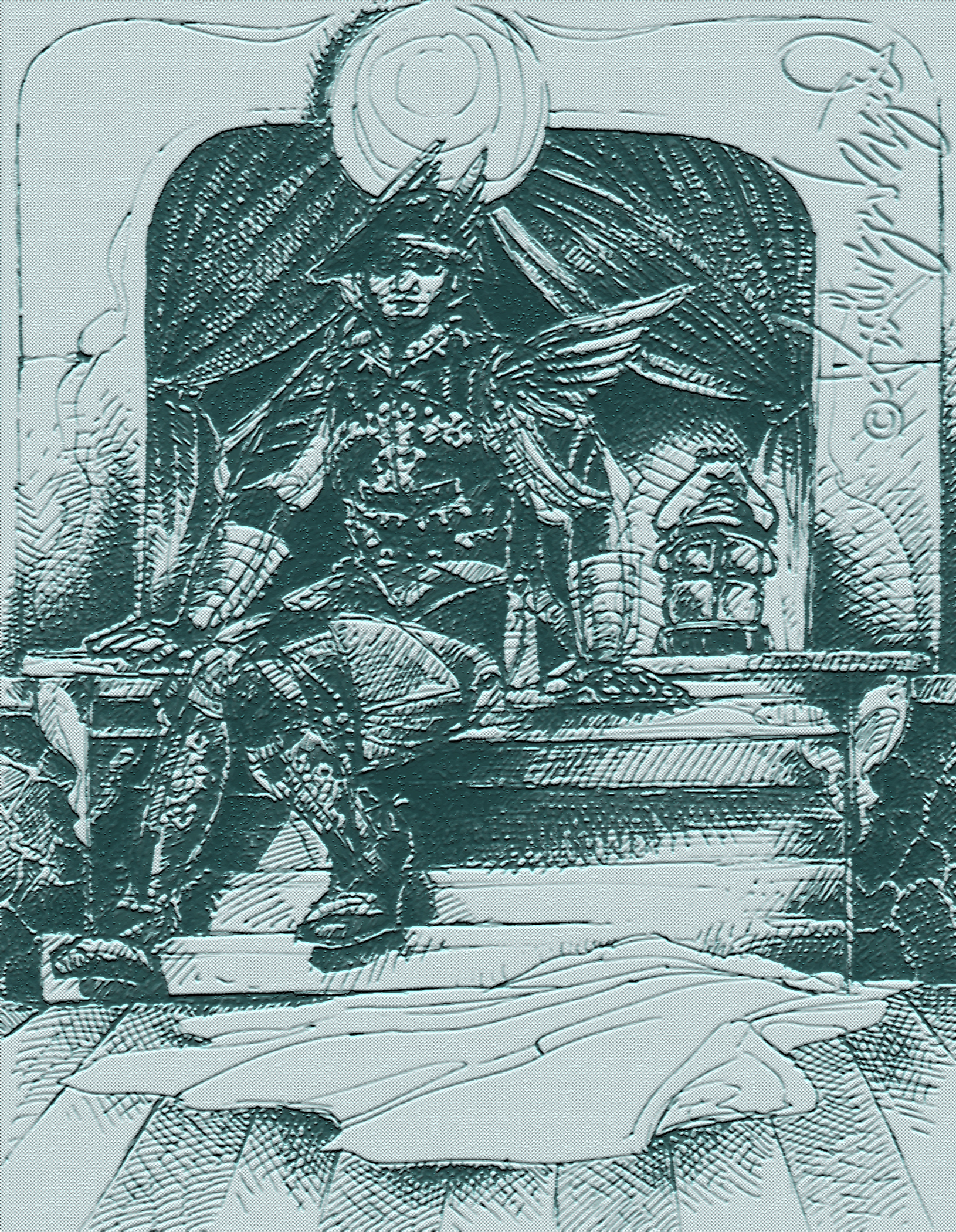
The longtime artistic tradition of the ‘memento mori‘ has always appealed to me. I think it’s valuable to recognize our mortality and the limitations of our time on this plane to devote to earthly enjoyments, the better to value them fully. Not to mention that I love skeletons and a lot of that stuff so often used symbolically in these works. I’m not disheartened, horrified, or unsettled by death and the subjects surrounding it, under everyday circumstances, in the way that some people are.digital illustration from a photoThe main thing is, I think it’s even more important to (as my guesswork-Latin post title suggests) remember that you’re alive. It’s not enough motivation to live a full, meaningful, rich, purposeful life just to know that you’re going to kick the bucket one day; everybody knows that, and it’s probably not even a majority of our kind that actually give serious thought to being fully present in their lives and making the most of their life spans. I know for certain that I haven’t always been especially good at such things.photoSo I’m rather happy to have an eye-opening, soul-tweaking glimpse of my little collection of death-defying totems, kept in view around my home and work spaces, at any moment when they happen to some into my field of vision. Not a bad way to refocus me and make me feel especially alive.

Röda tråden (The Red Thread)

Röda tråden is the Swedish phrase for connectivity. I learned it from my husband, who in turn learned it during his dissertation studies on modern Swedish choral history, and in a way it’s the perfect encapsulation of what his research revealed: that the astonishingly deep and broad influence of such a small country, in such a short time, on such a large field as Western choir singing and music came about primarily because of the remarkable and unique confluence and joining together of a huge number of events, people, ideas and resources in that little land at the end of the Second World War. As unimaginably terrible as war is on any scale, it’s all the more a testament to connectedness that at the end of one of the largest we’ve known, such good and meaningful and positive elements were all drawn into one significant, beautiful growth spurt in the art of singing together.digital illustrationAs a miniature of String Theory in the arts, this surge of the choral art in Sweden is notable (no musical pun intended) not only because it posits a reasonably substantial explanation for the larger choral sector’s modern expansive development amid the general devastation and struggle following the end of WWII, but also because in doing so it illustrates wonderfully how the intertwining of all sorts of seemingly disparate elements such as safe havens from political unrest and postwar reevaluation of norms, personal and professional relationships and experimentation with new media could come into contact and interact to create a new mode of thinking, acting, composing, teaching and singing. In turn, this is a striking model of how people from distinct cultures, educational backgrounds, economic resources and political systems and of widely varying personalities, unified by the one tiny thread of choral music, could be pulled together into a complicated system that, though still colorfully messy and imperfect, led to a potent common end that has had lasting and marvelous influence for long and fruitful decades since.

I am, of course, grateful on a personal level because this Swedish postwar influence on Western choral culture has not only enriched my husband’s professional and artistic endeavors–not to mention was the basis for his award-winning doctoral dissertation that in turn opened a lot of friendly doors to us both in Sweden–but because it produced so much spectacular music and inspiration for so much more.

digital illustration

Röda Tråden is the Swedish version of the idea that–indeed literally–fascinates so many of us: the connecting thread–that which binds one thing to another. I can think of nothing greater than to spend life seeking the Red Thread that shows us our commonalities and binds all people together as well.

Further, though, I am grateful that such an otherwise inexplicable event as the ‘Swedish Choral Miracle‘ seems to me ample proof that all things and people really are connected. And that through recognizing and making good use of those connections, however, odd or tenuous they may appear, there is hope for new and better songs to be sung everywhere.

If I needed further proof of this, last night’s concert gave it amply. My spouse conducted the combined forces of the Chancel Choir of the church where he’s currently interim choirmaster plus their excellent hired pro orchestra in performing Haydn and Dvorak’s two settings of the Te Deum text as the concert opening and closing, respectively, bookending the extraordinarily lovely and moving Missa Brevis of Kodaly. I came in to sit for the concert among strangers and acquaintances from the church and discovered a friend from another parish sitting across the aisle from me, then learned from one of the choir administrators that a friend of hers in attendance turned out to be a long-ago colleague of my husband’s from another state, and finally went up to greet my guy after the concert and found him speaking with a group of ladies in the front row, one of whom was the wife of a former US president. What brought all of us divergent people together in this moment? Music. Beautiful singing and playing. Chance, kismet, divine intervention. Call it what you will, the slender but unbreakable thread that connects us all drew us into one place for a time of basking in the inscrutably beautiful harmony that is beyond craft, beyond art. That is a concert without peer.

Urbanity

There is a huge difference between the merely impressive and the expressive when it comes to modern cities. Rotterdam, once one of the glories in the European architectural crown, was bombed to dust in WWII and, given the poverty of post-war resources, was rebuilt in the following decades as a horrifyingly soulless, boxy blot of concrete on the face of the Netherlands. There is no comfort in knowing that the firestorm that destroyed the city was probably not planned as it happened but resulted from a perfect storm of another kind in miscommunications; the horrors of war are a long testimony to the potential for such devastation. In any even, it took Rotterdam ages to be revitalized into the place of energy and beauty that it is today. Why? What made it such a heart-stopping graveyard of a place when it had once been full of life and loveliness, and how could it ever come back to be something gracious and potent again?

There is no obvious single word that can express the massive destructive toll the bombing took on that city; annihilation is perhaps a close approximation, since it’s clear even from faded photos that the thoroughness of the attacks left very little evidence there had ever been a Rotterdam. I find it nearly impossible to imagine even when staring at proof. When my spouse and I visited the city for a conference even less than fifteen years ago it was still a sad shadow of its former glory, still dominated by 1950s-vintage blocks of affordable and utilitarian harshness that made me want to scream when I saw them in juxtaposition to the few tiny remnants of the beautiful architecture that had once filled the place.

The main reason that Rotterdam is beautiful once again, and that many other cities have, and some have never lost, such beauty is simple: architectural thought and distinction. Building what is cheapest and easiest to construct is a poor solution to lack of structure anywhere. Places that have never experienced the ravages of war, urban decay and other forms of damage and neglect in such extremes can retain the beauty and patina of urbane culture in their urban settings far more easily. Take Boston, Massachusetts, a city that has seen its share of ups and downs over time, but as one of the older cities in a young and generally untouched-by-war country, still has many of its older–even oldest–and most prized, elegant, distinctive buildings. Despite the expected problems of social unrest, economic up- and downturns, spots of urban blight and misdirected city planning that Boston has faced like any modern city, the knowledge that the architectural strengths it does have are worthy of protecting and preserving means that it was built as more than mere indoor space in the first place and that the character of the structures has as much value in shaping the city’s identity as do its great denizens.photoIt should be obvious to those of us wishing to see all of the world housed and sheltered in humane and useful structures and towns and cities that simply throwing up whatever is cheapest and most readily available is hardly more useful, in the long term, than just plain, well, throwing up on people. If we want others to live educated, healthy and therefore productive and admirable lives, we can’t stuff them into trash bins of buildings that, even if they don’t collapse under their own flawed ugliness, will never encourage their occupants and users to flourish. If we don’t intend to fill others’ lives with the vomitous garbage we ourselves would reject and flee, we must find ways to make good, practical, appealing design a mandate and not an afterthought or an unaffordable dream.

That approach not only makes living and working in tolerable shelter possible but nurtures the human spirit and pushes us all to better ourselves, our cities and our world. photo

Early or Late, Good Sleep is Great

digital artworkRestoration Drama

Give me dreams, but let me sleep,

In peaceful rest to lie—

Haul off the tossing, counting sheep,

The nightmares passing by—

Yes, make the most of forty winks,

A hundred, if I may;

Remove insomnia and keep

Harsh wakefulness at bay—

No more foul nights as hostage to

Psychosis’ nasty knife—

Now, make a truce and make it true,

Right through eternal life!

Friendly Dragons

photo montageLight Armor

Not everything that’s fierce is cause for fear,

for strength in a good cause is great indeed,

but not intended to make others bleed;

rather, to shield the weak and persevere

Against all odds, to seek the distant grail,

to lead the way when battle’s all around,

and when it’s won, to hold the conquered ground,

protecting treasures fragile, sweet and pale;

For guardian angels, pioneering, brave

adventurers and stalwart friends in stress,

must keep their fiercest watch and always dress

full-armored, so prepared to shield and save

Us humbler beings and what we hold dear;

Not everything that’s fierce is cause for fear!

digital illustration from a P&I drawing

See? I told you they show up unexpectedly; just after I gave you this messenger in another post, I got the idea for today’s sonnet.

Another Totentanz

digital illustrationTo Rest in Peace

Alas! for shadows carve my collarbones

and misery is lapping at my heels;

Death’s machinations turn, wheels within wheels,

and grind me for its grist between cold stones–

And yet, as dust-dry as I turn, breath blooms

persistently, a torture to my soul

when I had rather be devoured whole

and go on into Peace’s empty rooms–

Still, here I stay, lie atomized, forlorn,

forgotten on the fringes of what life

and loves I knew once, when my days were rife

with possibility as a new morn–

Let me die now, not live without a chance

of altering this endless Totentanz.

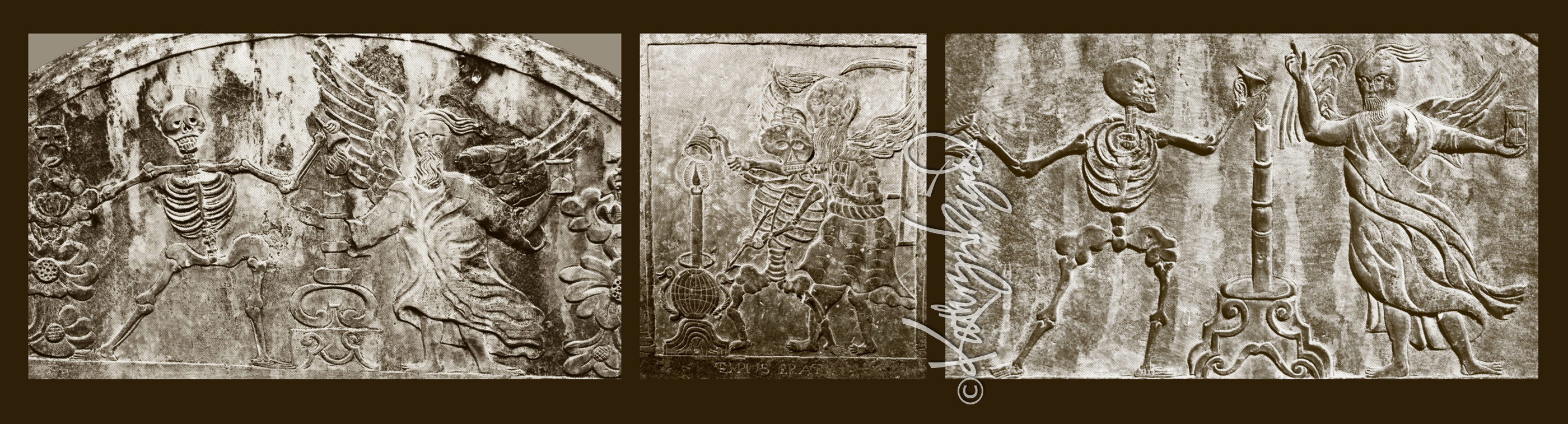
Lest you think me suffering myself, or pessimistic, I assure you I am alive and well. It’s just that I have seen many others struggle with prolonged and pitiful end-of-life dramas and was reminded this June when I saw the beautiful antique gravestones in Boston of how different things are now, when we have such nearly unbelievable powers to keep ourselves alive for tremendously long lives but have lost touch with when it’s acceptable or even desirable not to do so. If our skills for ensuring or encouraging genuine quality of life are far outstripped by our skills for lengthening it, what does that say about us? Generations removed from our forebears, whether in Boston or elsewhere, who knew much more primitive medicine, greater physical dangers, irreparable injuries and the concomitant shorter lifespans we have apparently long since forgotten, do we know how to accept death as a natural end to life and treat dying as a passage to be eased to the fullest extent instead of forbidden?

Sometimes No News is Just…No News

I’m not here a second time today to announce I’ve discovered the cure for halitosis, let alone cancer. But I’m back simply to share a link with you because another blogger’s words for today had such a thought-provoking effect on me and I figured you might find them equally intriguing. Jen, the smart and compassionate translator/interpreter for her charming and handsome malamute Rumpy over at Rumpydog, is a committed animal activist. My friends, you know that it’s more likely I should be committed [IYKWIM] than true that I am disciplined, self-confident or wise enough to be an active advocate for much of anything. But today Jen addressed a topic that’s long been nagging at me, to the extent that I know I’ve actually mentioned it to you: it’s not that we as humans are incapable of caring about things enough, too stupid to figure out some solutions, or unwilling to do the hard work to enact them–it’s that we are too self-centered to do so together with anyone who fails to think and care about, and approach, those problems in precisely the way we personally approve.

I’m absolutely certain that no matter how much I liked or admired Jen it would be impossible for me to agree 100% with her on everything, or her with me. But I’m also sure that I do deeply respect her commitment and willingness to act on it and speak her mind. So I encourage you to go and visit her to read her most sensible, cogent piece I’ve seen in ages about what does and doesn’t work in discussing, promoting, advocating for or acting in *any* good cause. I don’t know a solution, because I suspect it’s such a universal ill among humans that it would require Nobel Peace Prize brilliance *plus*. But if we gather around the conference table determined to listen, learn and share the best of ourselves, there just might be some hope for us. The very thought cheers me.Happy days to all of you, and many thanks to Jen for sharing. (Click on the word ‘sharing’ to go to her blog.)digital artwork from a photo

A [Mostly] Black & White Photoessay from the Road

digital photo art montage

Farm Frames.
I loved the sweet repetition of gorgeous farms of all sorts, in parts of every state.

Some of the images yielded by five weeks and six thousand miles’ worth of rambling cross-country seemed to want expression in my old favorite black and white imagery. And, not coincidentally, this set particularly showcases my obsessions with seeing patterns, repetition and commonalities.

digital photo art montage

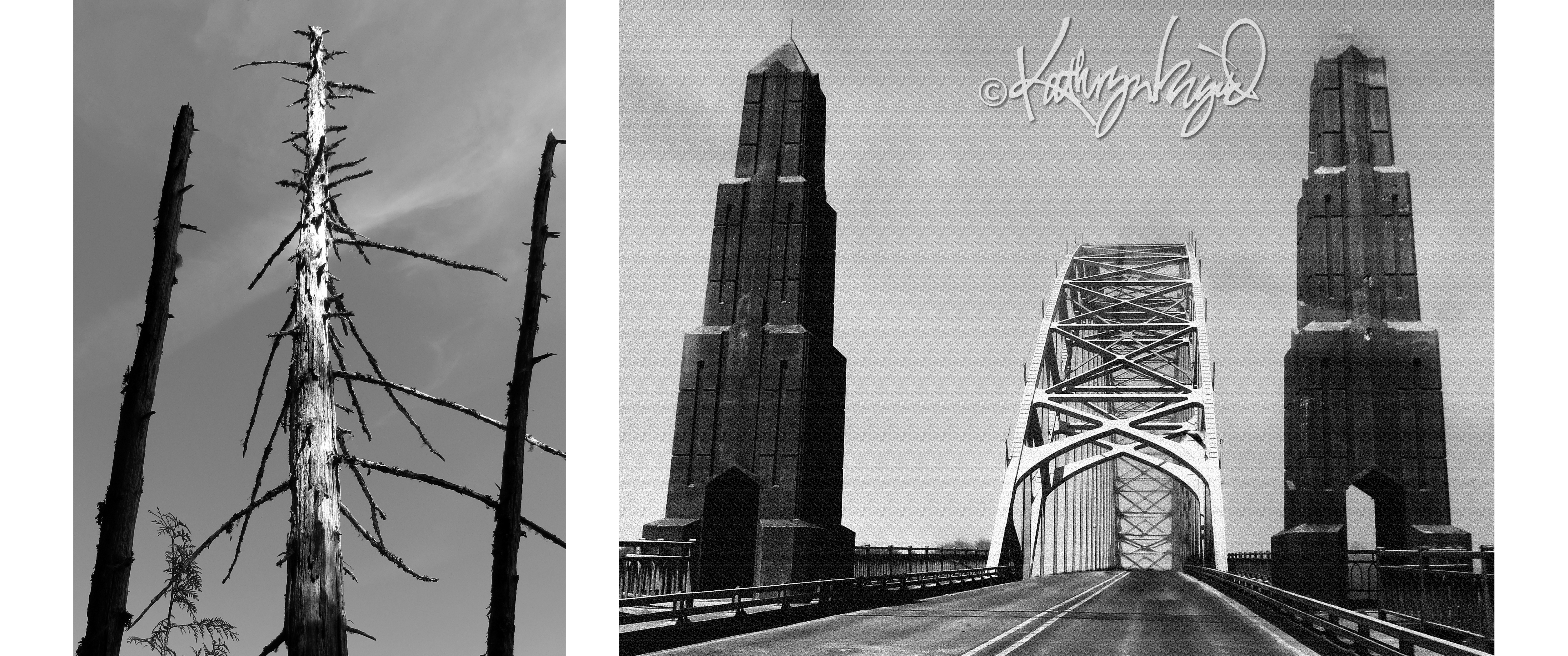
Towers
Monolithic bare trees and sculptural bridges seemingly imitate each other.

digital photo art montage

Twisted Trees
Driftwood. A helical trunk amid Douglas-fir and vine maple companions.

digital photo art montage

AmeriCars the Beautiful
Car culture in the US may have long grown old, but it hasn’t stopped being a classic.

digital photo art montage

Boarded Up
Fruit growers’ packing crates. A burned house.

digital photo art montage

Shake Your Tailfeathers
Hawk? Maybe. Mallard, definitely.

digital photo art montage

Sunday School
The old shed behind the parsonage, the inner workings of a portative organ, and a vintage church.

digital photo art montage

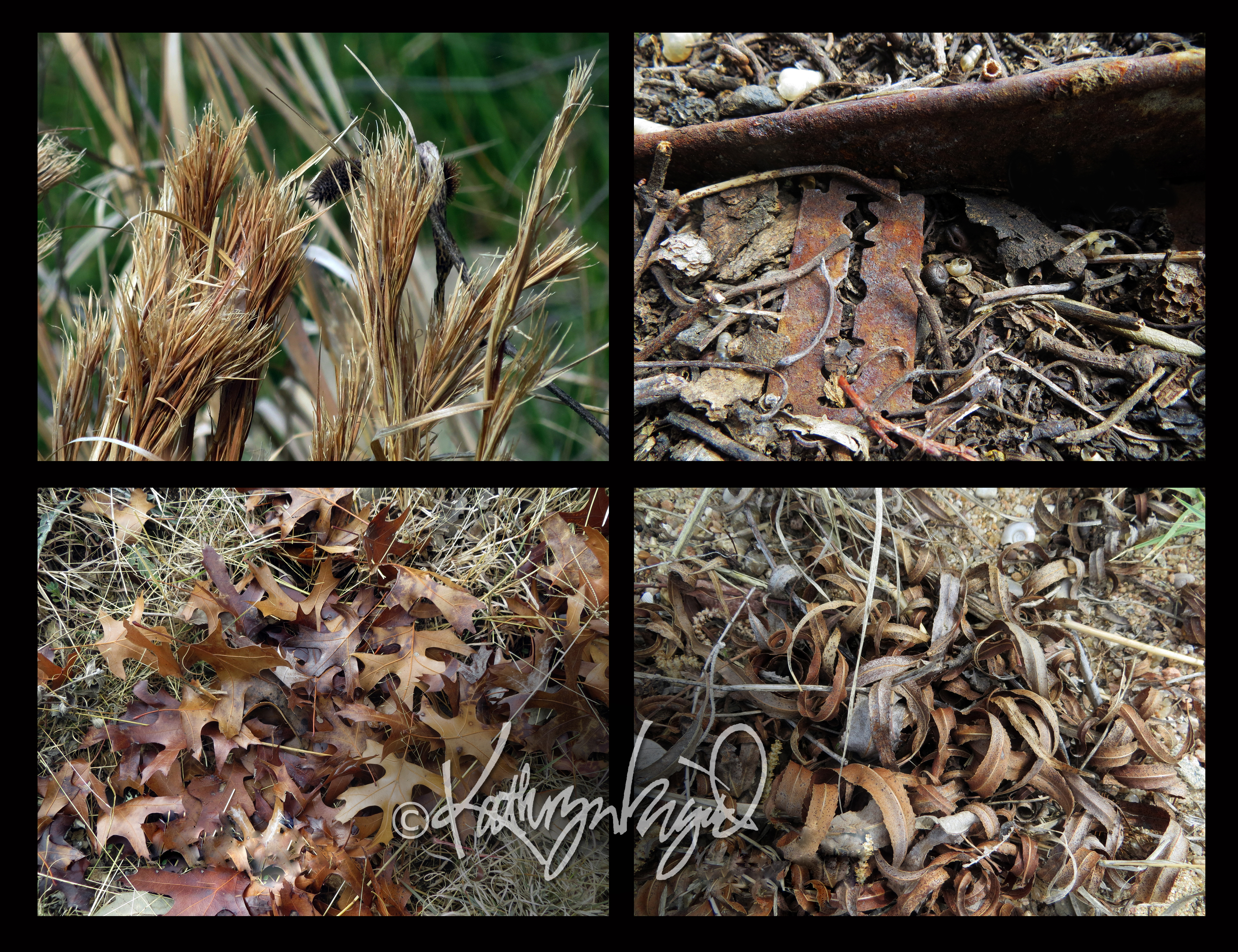
God is in the Details
Small stuff, large impact.

digital photo art montage

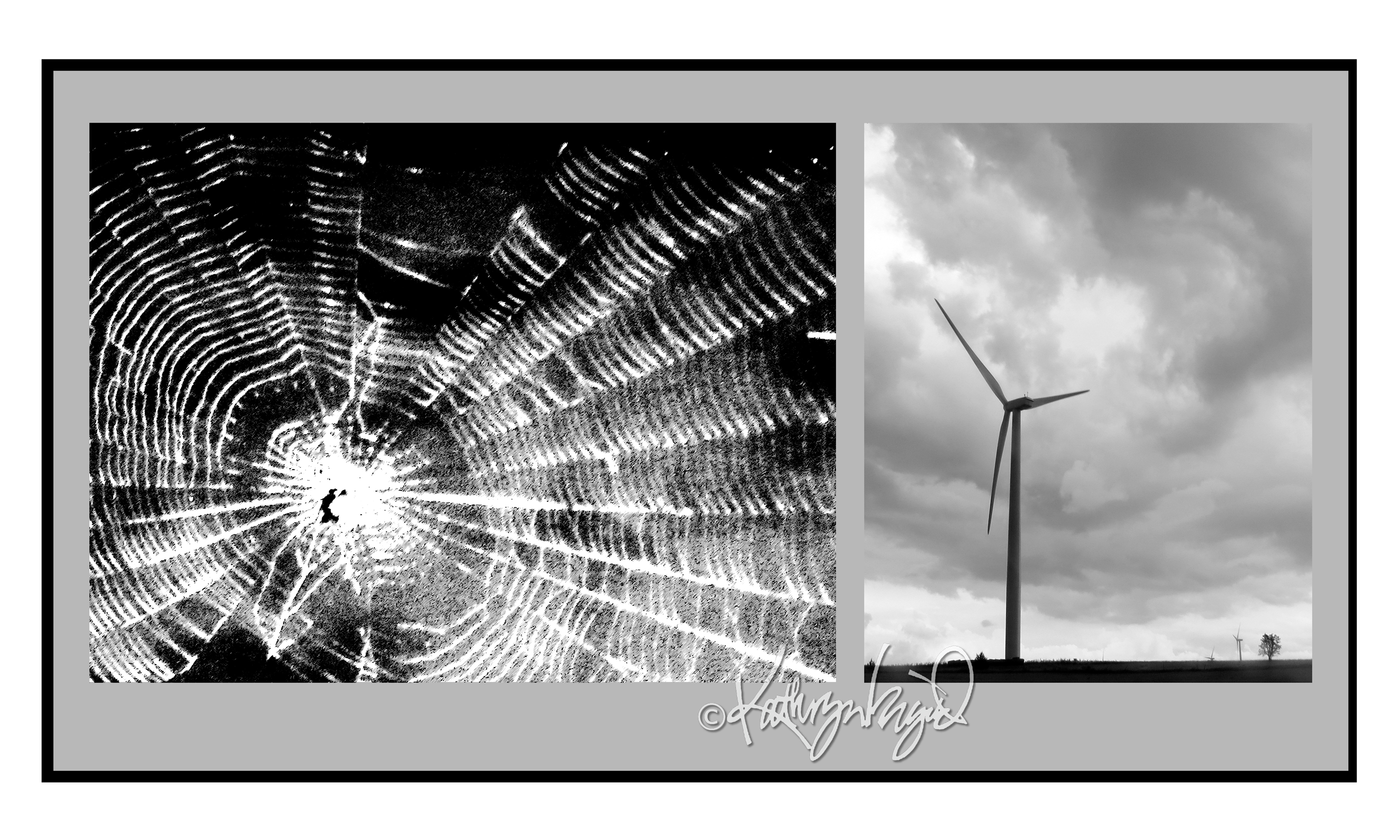
Radii
Spokes that speak for themselves.

digital photo art montage

Elephants
An older model pachyderm and an older model Packard? (Nah, I think it was a Rolls.)

digital photo art montage

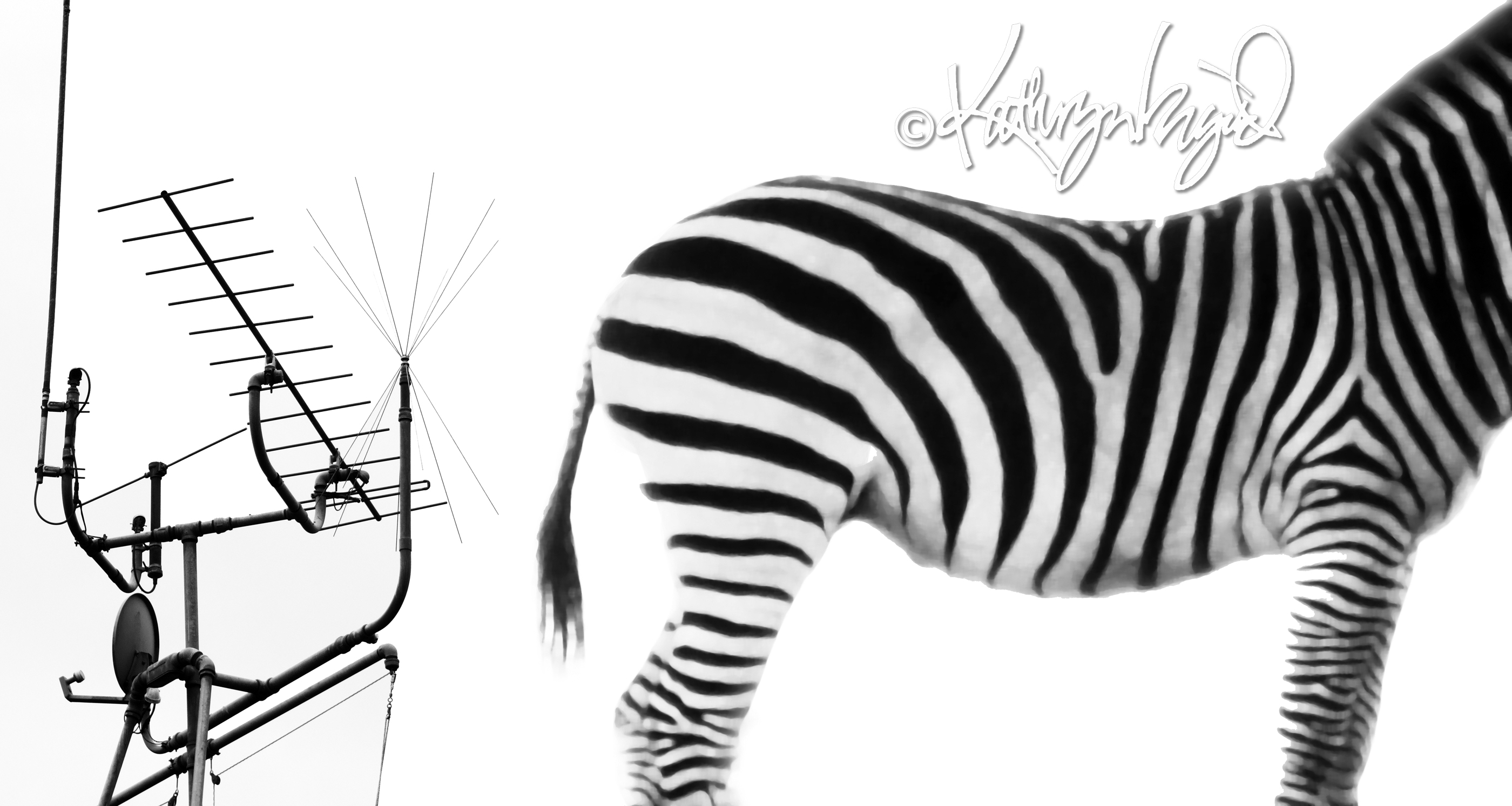
Strange Geometries
The wonder of a weird homemade aerial and the magic of a zebra.


Equilibrium

photo montageOne of the things I enjoy most as an artist–as those of you who frequent this joint know–is playing with all of the commonalities I find in the visual world. I am very much an analogous thinker; what I see is tested, examined, recognized and theorized on the basis of what it reminds me of at first glance. I suppose it’s the virtual equivalent of judging a book by its cover, but what it allows me when I’m thinking in strictly visual terms is the opportunity to fiddle with the ideas of what I imagine to be the links between one subject and another and as patterns emerge from it, use that for creative fodder, learn something about these pet subjects of mine, build images based on them, and in turn, learn something about myself along the way if I make even a little effort.

It’s very easy to become a collector. We all have our idiosyncratic passions and interests, to the degree that when we’re not actively gathering objects and concrete stuff that reflects them we are still busy building our internal storage of ideas and images related to them, and we end up with personalities shaped by, and like, them. People associate us with our sets of tastes and ways of thinking. Me, I am addicted to patterns and repetition and all of those other characteristics that seem to me to express the wholeness of the world. I like the unique iterations that make each part of the larger network have its own personality or meaning yet remain subservient in one way or another to the more visible and outspoken qualities that are held in common.

I strongly suspect that this simply showcases my longing for a wider world wherein the beauty of each individual is respected and nurtured yet the things we know we have in common are celebrated above all else because we treasure our place in a bigger picture. That’s a work of art that we shouldn’t have to take art classes to appreciate.

Peace as the New Superpower

It was a wonderfully happy anniversary yesterday. The birthday of one of our nephews.

It was also a horrible anniversary, as far more people know: that of the infamous terrorist attack on US soil in September of 2001. You understand my intense desire to have the former event wholly eclipse the latter. I don’t demand that all the world celebrate our nephew’s birthday (though our niece and any one of our nine nephews would all be well worth the attention), but I would absolutely recommend that the whole planet get a lot less warlike and a lot more humane overall.

If grey is the new black, we should be mature enough by now to play well together.

Americans, first and foremost. We may be barely over 200 years old as a country, but we’re old enough to know better than to tear around the planet saber-rattling and messing around in every other country’s business whether they like it or not. Aren’t there enough things to keep us occupied in more peaceful pursuits? Many such valuable actions could probably be funded on the strength of one month’s national military expenses, things that might not only make the country better educated, healthier, more scientifically advanced but also better able, even, to improve conditions for other people, other nations.

Call me naive.

But first, here’s a nice little bouquet, from me to you. It’s a small thing, I know, but I’d like to start somewhere. You’re welcome. Pass it on, please.digital illustration