Trust & Trojan Horses

The problem of what and whom to trust or distrust is far older (though my niece and nephews might be shocked to hear it) than I am, but it remains a puzzle to me, too. In some ways, I suppose, the difficulty only increases with the passing of time, both personal and historical. As I get older and, theoretically at least, more mature and educated, I should have a greater base of knowledge and experience and sharpened observational powers and discernment. As history flows forward and the world grows smaller through the connections of increased mobility and communications, there are exponentially more points of view, levels of experience and learning, and sources of information to be sorted. Yet each generation, each individual, is generally born with no more innate wisdom and perception of fact-vs.-fiction than the ones who’ve gone before. We—individually and corporately—have had the opportunity to not only be taught by previous generations and their experience and learning, but also an unprecedented ability to go places, do things, and otherwise see with our own eyes what is possible on this earth. Yet there remains no shortage of people who mistake their opinions or values for facts, and demonstrable fact for somebody else’s ill-informed opinion if it doesn’t suit them.

When our classical predecessors told about the defeat of Troy by canny Greeks who tricked the Trojans into hauling a massive equine sculpture into the city as a victory trophy when it was actually full of Greek operatives who emerged by night, opened the city gates, and let their fellow soldiers in to attack [the standard modern interpretation of the tale], they tapped this universal theme. Whether it was clever subterfuge or a foreseeable pattern in war tactics didn’t matter so much, perhaps, to the ordinary Trojan citizen waking up to the sight of a Greek sword overhead, but any survivor of the battle must surely have considered whether he might have realized the ‘gift horse’ of left behind treasure was such an improbability as to be highly suspicious. A number of citizens did, apparently (as told in other parts of the Trojan Horse story) come to this conclusion, but such is our nature: there’s always someone making a counter-claim, asking the opposing question, and coming to an equally fervent yet incompatible Truth.

It’s on this ambiguity of our understanding and interpretation that American politicians and their supporters, no matter what the Issue or which side of it, thrive. That’s not merely an aside, but a fairly typical example of our quotidian practices. How easily we attach to our ideas, and how hard it is to persuade ourselves, let alone anyone else, that those ideas might merit frequent reexamination.

Digital illo: Truth or Consequences?

Truth or consequences? Can I trust that the drawbridge will stay up as I sail under it, down as I ride over it? Or will some villain throw the counterweight in gear against my safe passage? Do I rely on its long history as a sturdy and reliable bridge, or do I need to worry that all this rust means it hasn’t been properly inspected and maintained? Will it hold a horse? Will it hold a horse full of spies and soldiers?

Ultimately, I tend to think there are relatively few absolutes beyond being Alive or Dead in this realm of ours. The marvels of the world, as little as we know of it, are compelling and astonishing enough to seem beyond pat answers and fixed realities. But I also think that if our existence has any cosmic purpose, then chances are pretty decent that we’ve been set to a few basic tasks and given a few tools with which to attempt their accomplishment. Task: question; wonder. Tools: observation, cogitation, research, testing, conversation, reasoning, challenging, and returning repeatedly to the questions and wonderment. All of these, in endlessly rearranged repetitions, fill our tool and skill inventories.

What was considered self-evident Truth might prove to have some wiggle room for better understanding or a new reality in the long run: a human does not, as once believed, have to sprout feathers in order to achieve flight more extensive and less potentially final than that made by falling off a cliff. What was impossible may become possible. Complications remain. Humans disagree on what is or isn’t incontrovertible. No universally recognized and accepted magic surtitles appear, blazoned on the sky, that define fact, fiction, falsehood and firm truth for all people, for all time. We interpret and surmise. The very ability for the human brain to entertain two opposing potentials simultaneously enough to formulate and ask a question assures me that, answer or not, we will always find ample possibilities for disagreement. And also that we can keep moving forward. Even under or across a drawbridge. Even on—or in—a horse.
Efficiency Expert

Digital illo: Bug

All Tied Up in a Bow

Tidy packages are not

the sole solutions I have got,

but of the puzzles in my path,

few fill me with such rage and wrath

as that I cannot seem to find

what I have lost from in my mind.

I’ve lost more thought than many hath;

Does that make me a psychopath?

Don’t fret, my pretties, yet, for I

am not a wholly rotten guy:

I’d bump you off, but you should know,

won’t (for certain sums of dough)…

and if you can’t afford the fee,

I’ll parcel you out tidily.

Hot Flash Fiction 15: Dazzlingly Dim

Digital illo: Dazzlingly Dim

The streetlights at both corners had already burnt out in a sputter of brownout-fueled sparks when Beasley rolled up the road in Ren Hufnagel’s low-slung station wagon. The neon over Beasley’s jewelry store refused to die as quickly, though, flickering back on faintly, flicking off again with a buzz, and opening its weary eye for one more second to guide him to the parking strip before it winked out at last. The car, a 1978 monster of decrepit steel, crunched onto the gravel and died there, too, with a hoarse cough.

Beasley, the second-to-last living inhabitant of the state as far as he knew, had carjacked Hufnagel for the last liter of his fuel to get to his store and rescue the paltry inventory. It hadn’t occurred to Beasley that there was nobody else left to steal the jewelry, let alone buy or barter anything for it. Standing there on the weedy parking strip, he did finally think that perhaps overpowering his victim by shattering Ren’s last bottle of whiskey over his skull might not have been the most brilliant move, either. That maneuver probably meant that there was only one survivor now, and it definitely left the remaining one thirstier than ever. Willard Beasley sat down there in the dust and waited for more of nothing to happen, and that was the end of the beginning.

Foodie Tuesday: My Choice of Chowders

Photo: Clam Chowder 1

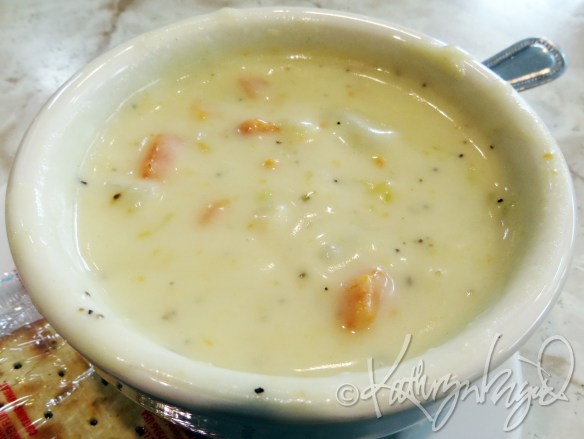
Lots of flour thickener = a chowder too glutinous for my taste. Good for installing wallpaper, but not light enough to show off the glam of its clams.

This summer’s travels in the American northeast offered perfect opportunities for me to revisit a dish that is a longtime favorite, be reminded of how much flexibility lies within its simple framework, and how much beauty comes from keeping it relatively uncomplicated in the first place.

Photo: Chowdah 2

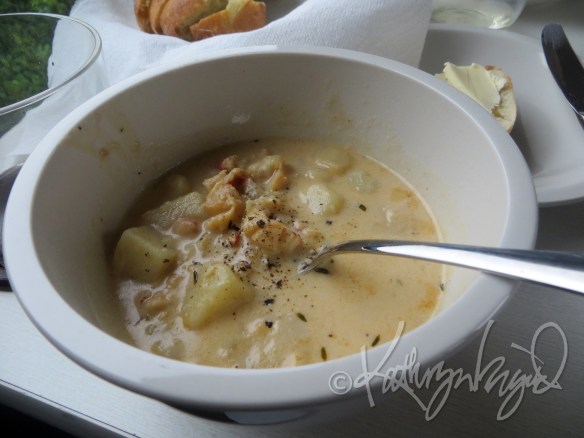
Better broth still doesn’t win the day if the clams are hiding under so much greenery I think I’m being served a bowl of lawn trimmings. Herbs are great, but too *many* fresh herbs can still overpower those dainty little fellas.

Not that I have anything at all against varying and playing with food. If it’s a great item, why, it’ll withstand any number of fiddling fools in the kitchen. Sometimes one even invents yet another reason to love the dish. There’s room at the table for as many delicious versions of goodness as there are diners.

For my own taste, I’ve had great Manhattan-style (red broth based) chowders and many fantastic variants of clam, fish, and mixed seafood stews and soups and chowders, a top favorite among them my brother-in-law’s salmon-rich bouillabaisse. Lacking immediate access to that, though, I may be fondest of all of a bisque or a light, creamy New England-style chowder. There are few things I like less than dense, floury heaviness in chowder, but that can easily be avoided by thickening the soup with little or no wheat flour and not using one of the other popular approaches (also wheat-based), that of thickening the chowder with saltines or oyster crackers. I see no reason to include any in it, because another traditional ingredient I do love, potato, adds enough starch itself to keep the chowder from being too thin. If I want mine thicker, I wouldn’t hesitate to mash a bit of the cooked potato into the broth, or simply add a tiny amount of potato flour.

But there is a standard set of ingredients that make bisques and New England style clam chowder the beloved icons that they are, and these give them more clear identity than any technique tends to do. Seafood, obviously, is central, and should be tender and fresh and sweet. Many who make chowder boost the ocean-fresh flavor by adding bottled clam juice, and while I think it tasty, I don’t think it absolutely necessary. If I don’t have any of that, I’m happy to boost the broth with whatever reasonably subtle umami-buzzing jolt I might have handy.

You already know I am far from a purist about practically anything food-related. And while I try to be rigorously appropriate about avoiding the offending blends or ingredients when feeding friends with kosher, vegan, halal, allergic, or other dietary concerns, if none of these are present I am not averse to mixing seafood or dairy ingredients with meats, and so on. First choice for seafood chowder liquid? Uh, is there any question? Seafood broth. If I happen to have seafood parts handy, the shells, skins, and/or bones of assorted fish and shellfish make a marvelous addition and the perfect flavoring agent for the broth.

Lacking that but wanting the flavor to be a bit more complex, I’d still look around my kitchen for inspiration. So if I have it and want to use it, I wouldn’t be afraid to enhance clam chowder’s broth flavor by adding some of my homemade chicken broth to it. Meatless vegetable broth, especially roasted veg broth, might be better, though, mightn’t it. I’ve found that roasting meat bones for my non-vegetarian broth is generally an unnecessary step, since the ingredients tend to rise and caramelize over the long, slow cooking time, so they get browned enough to intensify the flavor if I just give a good stir to redistribute the less-cooked ingredients every once in a while. But vegetables, requiring less simmering time than meaty ingredients, don’t necessarily get quite as well browned this way, so it can be better to go ahead and roast or sauté them.

Imagine the depth of flavor possible when you use the liquid made from simmering a pot full of fragrant, chopped and slow-roasted celery, onions, and carrots, perhaps some shallots or garlic cloves; possibly even sweet corn, red capsicums, and/or mushrooms, along with bay leaves, thyme, perhaps a little dill, and a toss of black peppercorns, then straining it. I prefer to roast veg with a bit of good fat, too, of course, being who I am. If I want to keep the soup meat-free, I’d keep it very mild in flavor, choosing something like avocado or palm oil for the fat. But if I want the intensity of it, this is the one spot where I’d likely cast my vote with those who find bacon an acceptable or even desirable addition to clam chowder.

See, I don’t like the texture of bacon itself when it’s been cooked into wet foods. Might as well be raisins. The latter are, to me, too often bloated and slimy when cooked or even baked. I know, I’m a jerk, hating on poor, defenseless raisins. The flabby and listless look and bite (or lack thereof) of bacon cooked and left in wet food like a chowder doesn’t thrill me, either. But that flavor can be a great complement to chowder, if you’re a bacon fan. So roasting vegetables for veg broth is a perfect way to take advantage of the flavor without the texture, simply by giving the veggies a goodly slick of bacon grease before their roasting. If the broth is being used strictly for seafood chowder, you could even add bottled clam broth to the vegetables right along with the water for the later slow simmer into soup base.

All of this is a kind of long way of saying that what I really crave, when I’m in the mood for chowder, is seafood in a creamy soup base. Not much else. So: broth. Russet or Yukon Gold potatoes, celery, and carrots that have been diced fairly small (about 1/2 inch pieces) and oven roasted or sautéed until crisp-tenderly caramelized in butter, then thrown into the strained broth to bubble into toothsome tenderness throughout. Seafood added, just long enough to cook through (or if precooked, to warm through). Cream or half-and-half added and warmed. For those who don’t mind alcohol, a tot of sherry or brandy is fabulous added now, at the last, or even served at table as a condiment, along with the mill for grinding out fresh black pepper.

Saltines and oyster crackers bore me a little and just get in the way of good chowder. If I want an accompaniment, I’d rather have a nice crispy Parmesan tuile or two, or some straight-from-the fryer homemade potato chips alongside. And a big spoon, so I can sit and inhale tantalizing steam while I wait just until the chowder’s cooled enough to eat.

Enough dream-state ‘cookery’. I’ll end this episode of food fantasizing with the magnificent real-life seafood chowder we ate over the weekend with our superb hosts on a beautiful coastal sightseeing drive from Halifax to Peggy’s Cove, Nova Scotia, and back. Our friend Catherine cooked up a truly gorgeous chowder full of Canadian Atlantic-style goodness—homemade lobster-shell-based broth with white wine and cream and full of perfectly cooked russet potato cubes, tender scallops, chunks of haddock, meat from that freshly prepared lobster, and thyme. Little else. Exquisite. Served with some more (locally produced) white wine, warm bread, and cool butter, it was a spectacular treat. No, it was better than that. It was a spectacular treat in superb company. The genuine ‘secret ingredient,’ of course, that last one. A taste of perfection.Photo: Chowdah 3: Catherine's

Big Fan

Photo: Big Fan

My favorite mode of transport is another person’s coattails. Being the perpetual tag-along serves a number of functions greatly and simultaneously. First, it dovetails handily with my indolent nature, allowing me to let others do the heavy lifting of thinking, doing, and being important. I don’t have to have anything grand to contribute. Just go along for the ride, don’tcha know.

While I’m not much on generating heat—hot flashes notwithstanding; I’m talking about star power here—I’m quite happy to catch a little reflected glory before regaining my modest pose of poise and deflecting the shine back where it belongs. Being on the periphery of stardom means I can have a front row seat to see what the greats do with their time and energies without breaking much of a sweat myself. I can admire, and even learn, without the pressure of the present spotlight.

As a naturally introverted and intimidated person, I can enjoy a glimpse into the alternate universe of extroverts and experts without excessive fits of fear. I, in turn, provide the kind of audience that gives these otherworldly beings quiet approbation without judging them for their moments of offstage humanity and humility, giving them room to be ordinary and extraordinary at the same time, as most true artists are.

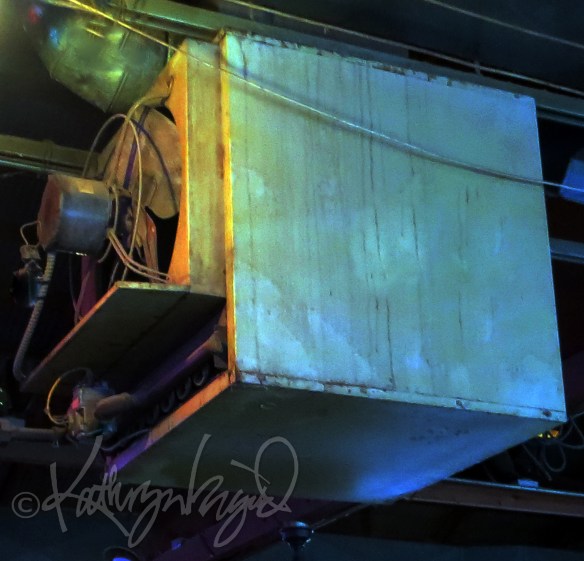
I’m a big fan of others’ accomplishments, but I’m not much on making a big show out of my admiration, either. Like the old AC unit in the dusty dance hall, I’m glad to keep making the talented two-steppers happy to keep up their dancing while I just enjoy the show from my place in the shadows.

Mine for the Taking

Precious Things

Copper in the morning hours and gold at peak of noon,

And sparkling like a thousand gems until the silver moon

Highlights the constellations of diamonds in the sky—

None has a richer treasury than Nature has—and I.Digital illo: Natural Treasures

Travel Like a Chipmunk

Photo: Lolitas

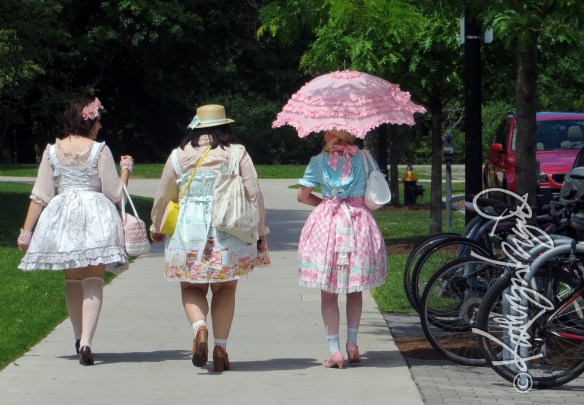
Not the most predictable of sights in Boston. Unless you happen to have a kawaii-Lolita events calendar on your desktop, maybe. But just getting out for a meander might also find you on the heels of a trio of Lolitas. 

The idea of having ‘a place for everything and everything in its place’ has appeal. It has many useful applications. A life enhanced by travel needn’t be dominated by such notions, though, or I risk being too fixed, both where I have landed and in my expectations and experiences wherever else I go.

Like most people, I suppose, I find comfort in the familiar, in anticipated pleasures and good things I expect, but—especially when I travel—there’s another sort of wonder and happiness that abounds when I can let go of these supposed needs and just allow life to happen.

From my very first major sans-parents sojourn, the privileged joy of an undergraduate “sophomore sabbatical” of untrammeled European travel with my older sister, I’ve continued to discover the enrichment and the thrilling frissons of serendipity and surprise. Hearing a great performance by a renowned orchestra in a glorious concert hall is well worth saving and planning for, of course, but even its excellence is not more fulfilling and memorable than following an unexpected tune through the byways of a foreign town to find myself joining the local crowd as they cheer on a community parade, marching bands blaring and uninhibited children dancing alongside.

Making the pilgrimage to a must-see historic site with the hundreds of other tourists is often not only worthwhile but sometimes enhanced by the very circus-like atmosphere engendered by the regimented masses. But it can barely compare with, never mind eclipse, the almost clandestine delight of having the ‘inside scoop’ from a city native who directed me to a certain narrow side street to knock on a certain undistinguished door, to borrow from the house’s owner a wonderfully heavy antique iron key that unlocked a creaky gate around yet another corner and let my sister and me into a stone-walled, fog-shrouded, hidden ancient cemetery there. That side-adventure on my first big travel expedition was every bit as gorgeous, astounding, meaningful, and artful as the historic sites on the trip, yet as far as I know, it remains unknown outside of its quiet Irish neighborhood. Making reservations and having tickets for the plan-able parts of that journey were both predictably well worth the time and effort, but a couple of hours spent wandering with my sole travel companion among the storied gravestones in that magnificently green and weedy private burial ground, and then climbing the narrow stone spiral up the tower ruin in that enclosure, peering through the mists out of its mediaeval arrow-slit to catch glimpses of the dark houses outside the walls—that was a sweet afternoon no amount of planning could have bought.

Nowadays, my favorite parts of most travels remain the random and coincidental joys of going down appealing alleys on a whim, following the sensory lures of a wafting scent here, a fugitive melody over there, a flash of color or a movement more felt than seen on my periphery, that can pull me off course in a curious second, redirecting my attentions to livelier things. That’s how I’ve found myself in a cafe kitchen helping the chef pipe his handmade ricotta filling into cannoli while ostensibly just grabbing a bite of supper before a baseball game, or watching the splashy finale of an unadvertised international fireworks competition from a perfectly positioned hotel room balcony; how I ended up discussing the virtues of tuna salad sandwiches with a television actress in an airport security line, stumbling onto and being escorted off of a missile site, standing backstage and meeting Lord Whatsis before the opera, and learning from the groundskeeper at a Victorian-style public garden how he grows weeping mulberry trees from cuttings.

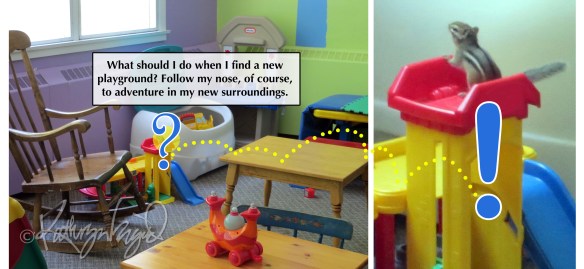
Like the chipmunk that found its way into the building when I was walking up the hallway toward it just the other day, by merely rambling aimlessly in an attempt to get myself oriented in unknown surroundings I sometimes discover I’m right in the middle of a fabulous new treasure-house of wonder.Digital illo from a photo: Intrepid as a Chipmunk

A Parenthetical Life

What exists between brackets is an odd collection of addenda and afterthoughts, of accidentals and coincidentals. Bookended by parentheses, em-dashes, and pages of drama and comedy in the history of the universe as it plays out are tiny dust-motes and cobwebs, and hidden in these, all of the second fiddles, bit players, and walk-ons who create the background of the scene almost without being noticed.

It’s that almost, though, through which we ‘members of the company’ enter into the action. We may sneak, erupt, or even fall backwards through the portals, but without us, the action can grind to a halt and intermission become interminable. If a night janitor doesn’t unlock the executive washroom when the evening’s repairs on it are finished, the dyspeptic CEO might be late to that morning meeting wherein he was supposed to sign papers finalizing the corporation’s lucrative sale. If the pest inspector doesn’t notice that one little corner of the house’s foundation has a few carpenter ants surveying it hungrily, in a short while the home will be in ruins. If the air traffic controller, invisible in her tower, delays the landing of a medivac helicopter for a moment too long, the patient waiting for his heart transplant dies. So much potential lies in the smallest acts or failures-to-act.

A tombstone or obituary won’t determine my worth. Headlines and spotlights won’t, either. Most of us crave a sense of being valued and wanted, even if we don’t desire fame—but many will never know what genuine impact they’ve had on others, or others on them, being unsung and unannounced. I am at peace with that. I firmly believe that if we are to be judged, it won’t fall to the people immediately around, to a popular vote, or to any authority present on the planet to determine our impact, or more specifically, our value.

I, for one, will keep lurking and living in the interstices between the stars, content in doing and being my generally invisible best, modest as that might be. When I’m gone, others will fill in the gaps. And probably do so with better style and grace, having learned from my traipsing across the stage, lines or no lines. That’s my role, to set the stage for the starring actors and support their grander parts in history.

(Yes, even if my character remains forever nameless on the marquee.)

Photo: Plumbing the Depths

Not needing to blow my own horn doesn’t mean I’m not a necessary part of the show.

Reflective Reverie

Photo: Reflective Reverie

Storied

The house on the lake, awake, asleep,

Has legends to tell, and secrets, keep,

Of seasons fled and of lives gone by,

In whispers, hushed, like the distant cry

Of an owl that’s flown on her muffled wing—

The house on the lake holds everything

Behind closed shutters and boarded doors,

As tightly as novels protect their stores

Of stories—the ghosts of bygone make

The pages turn in the house on the lake.

I’m Dying to Know

Do you dare to think about your own death in reasonable, detached terms? Do you think that’s morbid and grotesque to even consider, or do you find it easy? If you find it easy to contemplate in the abstract, is it because you suffer from depression or are suicidal, or is it simply that you recognize living as an inherently terminal condition?

This is big stuff. Even the clinically depressed are sometimes able to recognize, on those tiny instants of light in the midst of the abysmal dark, that their death, no matter how insignificant and unworthy they may think themselves, will affect others. I know this from experience, and from lots of reading and conversation and observation. I know that even when I was at my lowest—thankfully, not as hideously low as that reached by many, as I know in retrospect—my rational moments told me that no matter how they felt about me, or even if they didn’t notice me at all, when I was alive, everyone who was peripheral to me in any way would have some tidying-up to do after my death. Physical, perhaps, for those to whom body removal and disposal fell, but whatever tiny tasks I was not present to perform anymore would either default to another’s To Do list or leave a gap, incomplete. I realized that I am the butterfly effect, in human form. You are. Every living, breathing being has a space in the universe, a purpose, and however unnoticed in life, has an impact both by living and by dying.

All the same, I feel especially fortunate that in my family, talk about death and dying were far from taboo. It wasn’t all that uncommon to find the dinner table talk veering in that direction, if somebody we knew was unwell or had just died. We didn’t need euphemisms and pussy-footing to protect us from the reality of death. It’s nothing more or less than the inevitable cessation of life, and if we can’t talk about that, we’re stuck dealing with all kinds of petty and logistical nonsense just to get through the process when we’d rather be spending time living and loving each other and getting through the complexities of the occasion with a modicum of grace and humanity.

So my family already knows that I would prefer they donate what they can of my organs or remains to someone who has a better chance of survival and health if I give it to them, or to scientists who can learn how to give future patients that better chance. In fact, the government know this: I’m on the organ-donor registry, should I die unexpectedly or with usable parts intact. My loved ones also know that I’d prefer a minimum of fuss disposing of whatever remains of my physical shell after that, the cheapest and quickest cremation and scattering of my ashes being my top choice. I figure that any Supreme Being capable of inventing the human creature from scratch can easily put me into another, newer shell if and when it’s my turn to exist in any other form, and as for the current body, it’s a good source of recyclable carbon and nutrients to replenish any part of the earth that enjoys a good, tasty meal of ashes, say, my long-loved flowers the irises.

Those close to me also know that I have far less interest in what they do to celebrate or mourn my passing than the still-living will. If the occasion of my death can be used as an excuse for a marvelous concert to raise awareness or funds or mere pleasure for the sake of a musical group, whether my spouse is still alive to conduct or attend such an event or not, that would be lovely. But hey, I’ll still be dead, so y’all can do whatever it is that makes sense to you and I promise I won’t roll in my grave or be a pesky poltergeist or complain in any other way. Still dead, if you didn’t catch my drift.

And that, in fact, is a beautiful thing, and a great comfort to me. I don’t look forward to the actual process of dying or the moment of my death. I’d happily live a long, long life in great health and an approximation of sanity that seems cheery enough to me, before dying for real. But once I do, I feel genuinely confident that none of this worldly stuff will matter to me in the slightest, so as much as I like to “plan” ahead to keep my survivors from any terribly fussy practical matters in the event, I’m not worried. Go ahead and dance on my grave, if there is one. Keep on living. Don’t worry about me; I’ll be fine. Really.

Digital illo: Mine was a Death's Head