Foodie Tuesday: The Journey of a Thousand Meals begins with a Single Spoonful

It is my intention to have a far, far happier thousandth day than that poor Anne Boleyn apparently did, and since my thousandth post occurs on this, a Tuesday, I will enhance my happiness by thinking and writing about food. It’s such a reliable way to fill myself with good cheer, filling myself with good food, that—well, you all know by now that I can’t resist thinking and writing about it here at least once a week as well.

Am I insatiable? Perhaps. I am certainly mad for good food and drink. I’m kind of crazy for messing about with cookery trickery myself, and most certainly that feeds (both literally and metaphorically) my cravings. And you know that I’m happy to indulge at every turn in talking and/or writing about food and drink, making photos and artworks about them, and dreaming up ever more new ways to get ever more treats into my hands, my glass, my spoon and my stomach. That’s how I operate.

Naturally, the right thing to do in celebration of a thousand-day-versary would be to make some party treats. I have company coming over shortly, so I thought I really ought to make those dinner and lunch engagements into occasions for those goodies. Any excuse will do. The excuse of friends’ visits? Irresistible.

Dinner first, with a couple of friends on Monday. Starter: an appetizer of crackers topped with a nice Dutch gouda or brie, or spread with some homemade brandied beef pate and a little bit of fig jam. Roast beef, a nice chuck shoulder roast cooked simply sous vide with butter, salt and pepper, as the centerpiece. Mashed potatoes sauced with a bit of beurre rouge and pan juices. Tiny peas with mint butter. Sweet corn with crispy bacon. Some quick beet pickles. Chocolate mousse with apricot coulis spiked with homemade orange liqueur and topped with chopped dark chocolate bits for dessert.photoLunch on Thursday with another couple. Mint-apple-honeydew cooler to drink. Shrimp toasts as a starter: butter-fried slices of chewy French bread with spicy lime avocado spread and tiny sweet shrimp on top. Pasta with smoked salmon and langoustines in lemon cream for the entrée. Carrots and celery in cooked in white wine with snippets of dill. Ginger coleslaw with Bosc pears and toasted sliced almonds. Fresh strawberries and cardamom shortbread with salted caramel icing for the big finish.

I always hope that everyone lunching or dining with me will enjoy everything I’m feeding them, but I have to admit that it’s kind of a big deal that I like it all, too! How else will I get fat and sassy in my old age? I may be ahead of the curve on the Sassy part, but I’m still hoping to be somewhat moderate or at least slow about the fattening-up part. Not that you could tell by my eating meals like this whenever I can get my gnashers on ’em. But here we are and I haven’t ballooned out of existence quite yet, so no doubt I shall continue my food adoration for at the very least another thousand days. Or whatever…come back and ask me later; I’m heading to the kitchen. Recipes will undoubtedly follow….photo

Memories are Migratory

A flock of American Robins passing the area through may not seem especially worthy of note to some people. But if, like me, you remember them as one of the prevalent birds around you when you were growing up, you might notice it with a certain eager delight when several dozen of them descend on your holly tree and Indian Hawthorn hedge all of a sudden and dive on the berries like divas on diamonds. I noticed.photo

I had been seeing the signs of the early northward migration already, as the grackles that never entirely leave north-central Texas no matter what the season or weather were in ever larger clouds that swept from field to field and perched in growing masses at those points on the trees, hedges, bridges, billboards and power lines where we come to expect them to collect at dusk. It seems to me as though the sheer volume of grackles in the region means some have to migrate, however slightly, just to stay on the fringes of their preferred climate, so when the seasons change I do see even more than the typical congregation of those whistling, flitting avians hanging about on every corner and post.photo

But the robins, well, they are not so often seen in my own back garden. To be sitting at my desk and hear that familiar liquid warbling is to be transported to when I was climbing the backyard apple trees of my childhood. I looked up on that more recent afternoon from the predictable digital ‘pile’ of email and saw the unexpected flash of russet on a bird’s breast as it streaked by my window, then another and another, and suddenly felt I was in the midst of a happy storm of robins as they dashed and dove, a modest flock perhaps but enough in number to nearly strip the hedge and the little tree before retreating to the woods of the ravine behind for the evening. By next morning, there were fewer that came back for a final pit stop before the whole collective took wing to continue north. They came and went so fast, and moved so quickly and stealthily in the shrubbery in the meantime that I had no moment to grab a camera and commemorate the welcome moment.

The moment will, however, remain, just as the childhood pleasures were revived in the first chirruping calls and those quick glimpses of rosy feathers: robins will stay in my heart as long as the memories remain.

Out of Context, Out of Luck

digital illustrationIt’s no secret that I’m ‘bad with faces’. I struggle with what I know is only the mildest of cases of Prosopagnosia, but even my minor jot of that pestilential face-recognition inability causes me occasional discomfiture. More importantly, it has occasioned a moment or two of awkwardness for others when they approach me, knowing that I know or have at least met them, and I fail to recognize them or even register that I saw them quite recently.

I went to a family wedding once and, seeing a cousin I’d not seen often in our adulthood but knew very well in our youth, effused to her on reconnecting. And then I proceeded to do exactly the same with exactly the same cousin at the reception, not an hour later. I knew that I knew her and that she was my cousin, thanks to the occasion and other basic clues, but literally could not see that she was the same person with whom I’d just rejoiced in renewing contact. Even in this obvious setting I failed to see what was as plain as the nose on my face, never mind the should-be-familiar one on hers. My own cousin.

I am enormously thankful that there are people whom I have little or no difficulty identifying and recognizing no matter when or where, but they are not necessarily in the majority. Remove whatever clues to identity my peculiar mind relies upon for identifying a person—that distinctive mustache (especially reliable in the case of a woman!), a man’s unique carriage when walking, that heirloom necklace someone has worn since she inherited it at age twelve—and I am meeting the face attached to that person for the very first time once again. I suppose there might be a touch of the humorous in such a ridiculous predicament, if the person I fail to recognize knows about the situation and isn’t insecure about any failings on my part, but I would rather not have to muddle through the struggle of bridging that synaptical gap, especially in instances when I would rather be friendly and welcoming.

Even the fully operational brain doesn’t always work perfectly in this regard, as witness the lovely and very bright friend I encountered in the grocery store recently. We both took our time staring and sizing up whether the approaching person was indeed known as well as our brains were urging us to know. I, with my Prosopagnostic niggling sense that I needed to place her in a different context to recognize her as a friend from church, school and work paths crossing, was puzzled by my failure to connect the facial proportions and eye color and such with her identity; she, as it turned out, didn’t realize who I was because after knowing me only with my 20-years-established short haircut, she couldn’t place my features now that they’re set in this chin-length swath of hair. So many reasons we might struggle, and it’s rather common after all, but we still rail against the frustration.

But isn’t that just the way life works in general? Whatever our flaws and shortcomings, however valiant and well-meaning our attempts to ameliorate them and better ourselves and at least appear to be improving with age, there are bound to be gaps and mishaps. All I can say is that I’m mighty glad people are generally so patient and forgiving with me no matter what the situation or occasion, and I—well, I will just have to keep trying to put the best face on it.

Here I am. Now.

Honey Badger is not alone. Dead people don’t care, either. Even if they’re going to be reincarnated, they couldn’t possibly care less, I assume, about what anybody thought of them in life. The past is a lock.

What matters, if anything does, to the dead as much as to the living is what’s yet possible (if that includes reincarnation). The only way to get to the future, furthermore, is to be present in the present. All of the yesterdays that ever were can only be altered—at least without a time machine, which, of course, must be built in the present or future since there isn’t one yet, other than the hard to find Vernean one or the wonderful TARDIS of course—by improving the outcomes of those yesterdays in the present and future. Funny how that all works.

But what it tells me is that while I can (I very much hope) learn from the past, there’s no benefit in dwelling on it. And I don’t even think there’s much to be gained from living exclusively for the future. I’m not guaranteed one, after all. I could be caught unawares by a fatal disease, slip on a blot of mud and fall off a cliff, or be eaten by aliens tomorrow. And I can’t be sitting around knitting my brow and fretting over whether anyone will express admiration and gratitude for the wonderfulness of me after that happens.

I’d like to be way too busy until tomorrow, or whenever that cutoff time arrives, to expend any real energy conjuring up what grand eulogies I’ll get and what perfect art will be applied to my tomb, when I’ll be much too dead to care. Not to mention that whether I’m cremated [post-mortem, thankyouverymuch!] as I intend or it’s because there’s nothing left of me but my socks and hat after the aliens ingest me, there won’t be any need for a tomb. In any case, joy and contentment should be usurping all of the space that any such thoughts would aim to occupy. I prefer to think that I’m living out my eulogy, and lest it be of any interest to anyone but me, the most fitting one I can imagine would be that I was too busy living to sit around for a funerary portrait.

I know that I am loved. That is the best of all possible epitaphs I could possibly desire. And it’s a cheering enough thought to keep me occupied for as long as I get to be in the Here and Now. I guess my job is to pass it along to those in my immediate vicinity, my small orbit, so that they might be able to make the same claim.photo

Draw, Podnah!

I’m having some new kinds of fun, y’all. Several of you have inquired about my media and techniques in some of the more recent illustrations and images here, and it’s technology that’s getting me revved up these days. Who knew? I’m so dull-witted in electronic terms and yet here I am having a heyday with my new techie toys.

My dearest bought me a an iPad Air in January. I uploaded a handful of free drawing/art programs right away and have been playing with them all since. It’s fun to see what each offers in terms of virtual tools and media and techniques, how I can use them individually, what can be done by moving an image from one program to another in order to further manipulate it and alter its dependence on the potential of the first program in which it was developed. If that makes sense.

I am a newbie at this stuff. It’s kind of amazing to think that some of the early adopters have been at least beta testing this kind of thing for several decades already; me, I’m nearly always well behind the curve. But I’m having a great time drawing curves and any other thing I can think of at the moment as I get underway and strive to catch up a little.

Certainly one of the aspects of this techno-approach to drawing, painting or whatever one ought to call it is its wonderful malleability. I love that I can not only delete and erase marks without too much fuss and mess with my virtual erasers but also by removing entire layers. Even better is the ability to trade the order and placement of layers, so that I can begin with the top, outlined image and, like a kid with a coloring book, fill in the shapes and blanks with all sorts of color and texture, then move the layers around until I go from the upside-down or inside-out look of such operations to something that is closer to my original intent.

Best of all is that I am finding that digital media are just as serendipitous and cagey as concrete media: I’m just as unlikely to know from the beginning what the end result of my noodling and doodling is going to look like or what the final image(s) will be as I ever was when sitting down with pencil and paper. I don’t expect I’ll give up concrete media either, for that matter, because sometimes one just has to get grubby with silvery-grey graphite dust from elbow to fingertips in order to feel that Art is being made, but it sure does make it fun to gallop around this new frontier of mine with stylus in hand, too.digital illustration

Richly Deserved. Or Not

text layout

text layout

All Things in Due Season

digital illustrationBoon Companions

When shadow steals across my eyes, when chill sits in my soul, when cries

Of hopelessness and bitter cold would turn me hard, regretful, old,

I turn my memory to when I cradled happiness, and then

Remember that what shaped me so was love, the kind I came to know

From those great luminaries whose wisdom it was to seek and choose,

From the remotest needful place, pursuit of happiness and grace,

Who told in kindly, teaching voice that peace and joy are bought by choice,

That when the frozen dark descends, we’ll find our light

among our friends.digital illustration

Foodie Tuesday: Simple Sips & Snips

I do appreciate stuff that is not only easy to fix but lives on past the fixing. By that I mean the sort of kitchen trick that provides more than one episode of eating and/or drinking, and the more the merrier. It might be something that, while it can be somewhat time-consuming while in the process (I’m looking at you, lasagna!) can be portioned and frozen for multiple meals, so the subsequent preparations are ever so much easier and faster than the initial one.

Or it might be more like what I did the other day. It doesn’t take terribly long, and requires virtually no brilliance or skill on my part to do it, but when I expend the effort to chop and then puree a goodly quantity of fresh ginger root and preserve it in vodka, it keeps for ages in the refrigerator and the mash is instantly accessible for any of my myriad edible loves. If I manage to drain the puree slightly when using it I might even score a small quantity of high-octane ginger-infused vodka at the end to enhance a sauce or a party drink that will more deservedly gain the title of Punch.photo

On this particular occasion, it provided me with the reasonable excuse to do a quick side-by-side taste testing of two Texas vodkas, as I knew I had none either for drink mixing or for the ginger preservation, let alone for the second set of ‘preserves’ I intended to make that day. So I bought the two bottles, one of Tito’s (a brand I’ve mentioned here before as I had discovered it is quite smooth, mellow and even drinkable straight, which is saying some for vodka in my book) and one of Western Son (a brand I’d not tried, but since it’s produced less than half an hour from where I live I thought I ought to give it a fair shake). I found Tito’s still more to my taste and less hard-edged, but both were perfectly pleasant. It’s always interesting and informative to read others’ reviews of these or any other alcoholic drinks (see the links through their names above for just a quick example) to be reminded that everything has its fans and haters, and often the most extremely opposite opinions can be backed by the exact same characteristics.

My purpose in this was pretty uncomplicated, though: I only wanted to decide which I’d rather keep some of for making the occasional spiked drink and which I would put to use as the preservative in my day’s longterm mise en place prep. Tito’s stayed in the freezer for drinks; WS got voted into eau-de-vie duty. That title is apropos not only because it will lengthen the life of the two flavorings I was treating, but also because it may become a bit of ginger firewater if the use of the root leaves enough liquid behind, and it will certainly become some beautifully flavored stuff after a good long mingling with the other flavoring agent I paired it with this time.

That, my friends, is vanilla. Store-bought vanilla beans at the grocery are often tragically bad facsimiles of their former selves, being shriveled and dry and bland and pathetic from poor packaging and over-long sitting on grimly over-lit shelves. Real, well prepared vanilla bean pods, on the other hand, are as sleek and fat and glamorous and moist as the sweet orchids that bear such beautiful fruit. Buying in bulk, with the quick turnaround of today’s online ordering and shipping, can be a much more productive and cost-effective way to bring that beauty home. So I bought a handful of nice, heavy vanilla beans and, like Jack in the fairy tale, got instant bounty from them. All I had to do was to take the WS vodka bottle that had had some liquor removed for the blending of that ginger root (now safely tucked up in a clean jam jar in the refrigerator) and the bottle had, conveniently, just the right amount of space for me to spear all of the beans down its neck into the vodka for immersion. Now all that’s left is to wait while the vanilla steeps into its full glory.photo

I can, in the meantime, take out a bean or two to cut and scrape and otherwise use to infuse and flavor any number of kitchen wonders. I can, very shortly, use the booze as a perfectly unadulterated vanilla extract, knowing that a little proper cooking or baking will remove the alcohol and leave the voluptuous flavor in its wake. And last of all, I can look forward to using the heavily perfumed vodka to jazz up drinks of the adult variety if I should so desire.

All of this from a short stint at the chopping board with nothing more than a knife for peeling and chopping the ginger, a couple of little saucers for testing the vodkas’ smell and taste characteristics side by side, and a bag of magic beans. And so much good should come of it in the days and weeks ahead.photo

All Gardens should be Herb Gardens

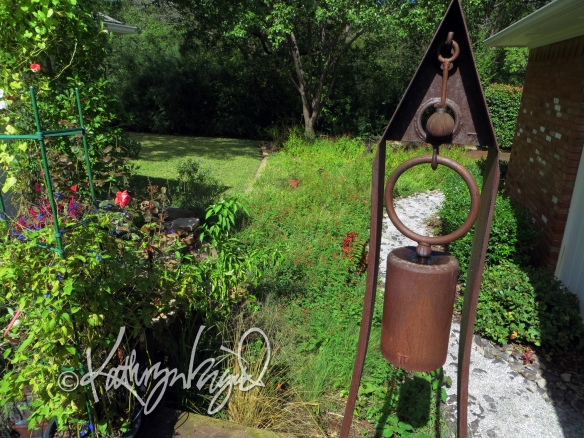
photoI am prejudiced. It seems logical to me that any garden grown for beauty should be grown for utility as well, and any garden grown for use ought to be pretty to look at and full of great sensory experiences well before it gets put to work. Why shouldn’t gloriously pretty edible and functional plants be shown off in all parts of the landscape, and why shouldn’t we take better advantage of what we have growing around us anyway?photo
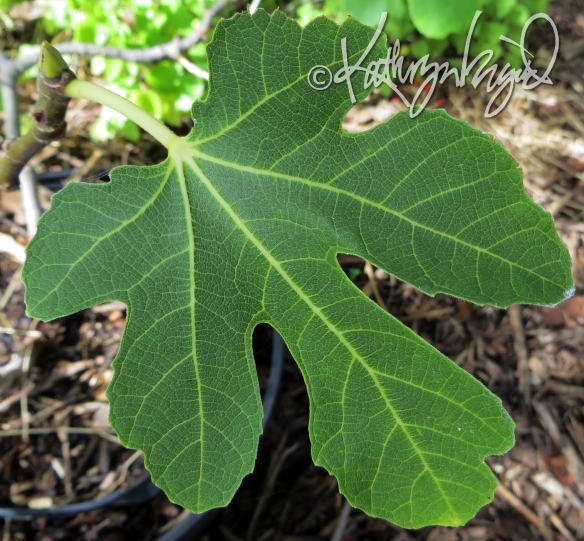
Thankfully, these biases of mine are becoming more widely put into practice all the time. While kitchen gardens have a grand tradition of being ornamental and landscape design has long had its elements of utility inserted, those approaches have tended to be rather exceptional than the norm. So I’m thrilled to see such a proliferation, a flowering, if you will, of the whole concept that these belong as integrated into a delightful whole.photo
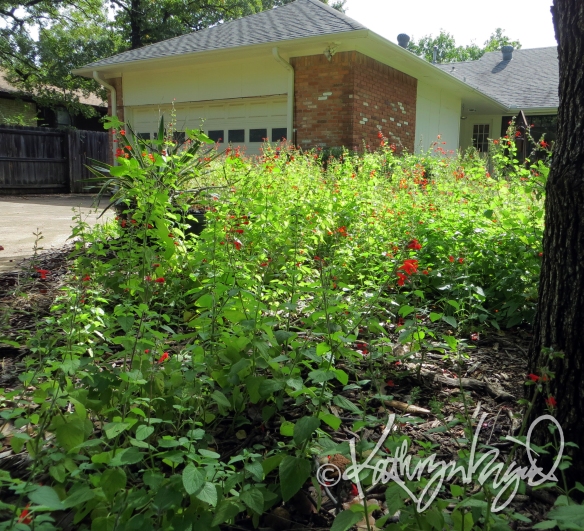
My friend Christopher’s interest in starting the garden personalization of his next home with herbal inclusions and infusions (not to mention his appreciation of adventuring in the kitchen) got me thinking about my own past and present herbal operations. What do I consider a good framework for inserting my own preferences, herbally speaking, into the garden nowadays? And what, in turn, is actually happening in that way here? Not surprisingly at all, this thinking turned into a lengthy exercise in list-making. Herewith, my mental inventory of herbal ideas. Foremost among them: that I plant every and anything in my garden where I think it will thrive best, then opt for where it will provide the most splash and panache in complement with the nearby plants, and finally, tuck in some elements of surprise wherever I think they can inspire even the casual visitor to the place. Herbs, fruit, vegetables, common or exotic. So long as I’m not trying to subvert the laws of nature too far, let alone encourage an invasive alien species anywhere, it’s all fun.

For the moment, though, I’m focused mainly on herbs and a few similar animal (human or otherwise) friendly options.photo montage

Easiest to keep as perennials or self-sowing annuals are some of the best kitchen basic herbs and also some of the prettiest flowering or border texture plants, so they’re what I’d call genuine bargains in the herb dept:

Parsley (curled and flat-leaf); both can get pretty large over time, but are also pretty easy to cut back if necessary. Be prepared for gigantism, since parsley can easily top two meters in height when it’s stretched out in bloom.
Chives (common and so-called Garlic Chives); both give that nice light oniony flavor, and of course the ‘garlic’ variety has a hint of garlic in it as well. The purple pompom-like head of the common chive is attractive in the garden or as garnish and also edible, but I’m especially fond of garlic chives as a garden plant–they don’t look at all like the common chive, having a flattened stem and clusters of tiny white lily-like flowers in place of the purple variety’s.
Rosemary comes in a wide variety of shapes, sizes and leaf lengths, most tasting similar. It’s a woody, shrubby plant in general, but some are upright, some trailing. The blooms vary: white, pink, lavender, purple, even quite blue, depending on the variety. Pretty and fragrant even while still in the yard, and bees and butterflies tend to like it too.
Thyme also comes in a ton of forms. Its types vary slightly in the pink-to-violet bloom range (quite tiny flowers) and quite a bit in the leaf type: white- or yellow-edged green, solid green, silvery; some, like Lemon Thyme, have mildly differing flavors as well, and some, like Woolly Thyme, are more strictly ornamental. Me, I’m quite happy with common thyme (Thymus vulgaris); it’s really quite easy to grow, even as a sort of ground-cover plant in borders, easy to control, has those cute little blooms, and is a very versatile herb for cookery. My favorite with chicken.
Sage is pretty easygoing, too, and also has numerous colors. I like growing the purple-leaf and variegated yellow- or lime-and-green varieties for what they bring to the flowerbeds. They can get big and leggy and woody, so sometimes sage plants require some good pruning, but it’s not hard to do with them, and sage is so lovely with poultry and winter vegetables, not to mention that their fried leaves are fabulous with lots of dishes!photo montage
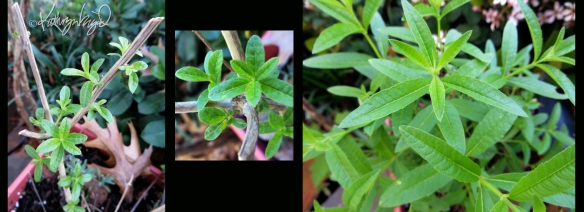
Some of the less common ones I love are well worth mentioning, too:

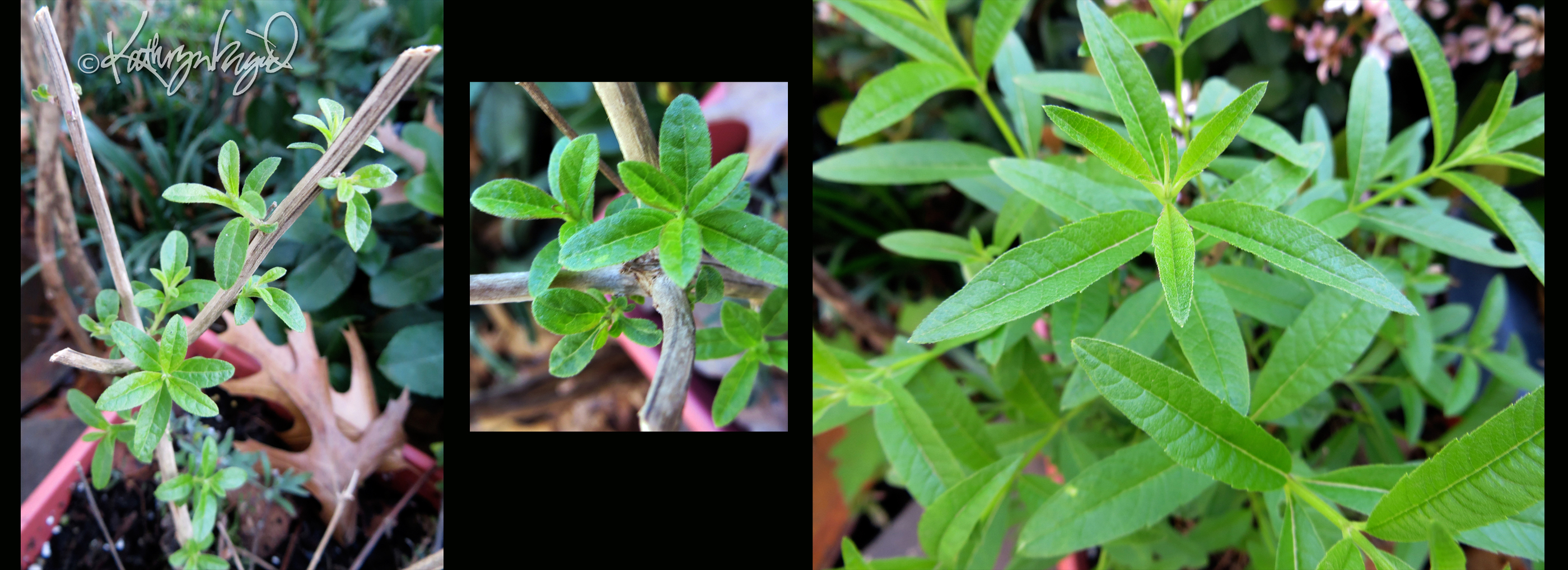
Lemon Verbena is better started from a live plant than seed and is fragile. I suspect it could work as a kitchen-window dweller for longer life, though I’ve not tried it indoors. I got lucky with it wintering over last year! As I said, great to add to tea (hot or iced), and would be dandy in anything where you want a less astringent lemony, kind of perfumy, flavor. There’s a lemon verbena ice cream recipe on epicurious.com that is sheer HEAVEN.
Borage is an annual, but I got lucky last year and it self-sowed from the previous season. It’s a kind of straggly and tall plant and has hairy, even lightly spiny, leaves and stems, but the hairs actually look kind of pretty in daylight, adding a lacy aura to the plant, and they don’t outright hurt when you touch them at all. Both leaves and flowers have a lightly cucumber-like flavor that’s nice in salads or cold drinks (chop the leaves finely or smash ’em to keep the fuzziness from being an off-putting texture in food), and the blooms are gorgeous, starry, true-blue dainties.

&    Sweet Bay, if you have the room for an actual tree, is a pretty one and exudes a faint resinous perfume on a windy day as well as providing bay leaves for all sorts of cookery. In a former home I had a 4 foot tall lollipop shaped semi-bonsai one I grew in a big galvanized tub and wish I could’ve taken it with me.
&    Saffron is both useful and a glorious choice for the garden, being the dried stigmas of a very pretty kind of crocus. These bulbs don’t naturalize readily like some crocus, but are of course worth the effort and expense if you can get them.
&    Sorrel‘s bright acidity makes it a welcome herb with which to spike a salad, my favorite use for it. The zippy sourness comes from oxalic acid, so it’s not something you want to eat by the bale, but it’s not so potent you can’t safely make soup or just eat it raw in small amounts. The flower stalk is slightly weedily aggressive, and the leaves are very popular with munching insects, but since it’s not a virulent spreader the flowering isn’t hard to nip, literally, in the bud, and those insects are often butterflies and moths, so I’m happy to share with them.

Some herbs are big on flavor but not worth trying to grow in the wrong climate or simply too short-lived for my lazy wishes:

&    Cilantro: I love it, but it bolts (goes to seed) so fast that unless I grew a huge patch of it for one-time harvest and freezing or kept planting it repeatedly through the season, it’d be sprouted and dead in no time, so I’m happy to pay farmers to grow it for me.
&    Kaffir lime leaves and lemongrass and ginger (okay, that’s a rhizome, not an herb) are exceedingly delish in all kinds of Asian foods but require more tropical conditions than I’ve lived in for their happiness!photo montage

Some annual herbs are worth the effort, even if they don’t tend to self-sow:

&    Basil is one that I have been known to plant in a couple of varieties a season for different purposes: the purple leafed types are pretty as well as decent tasting; Thai Basil gives a specific and welcome familiar spice to Thai and Vietnamese cookery; Sweet Basil is the most versatile flavor king among them. They all have nice blooms, though not showy; if you let them bloom, though, they tend to wind down as their work is done, so you want to keep beheading at least some if you plan to keep using it through the whole growing season. Then basil tends to keep proliferating. Cruelty pays! 😉
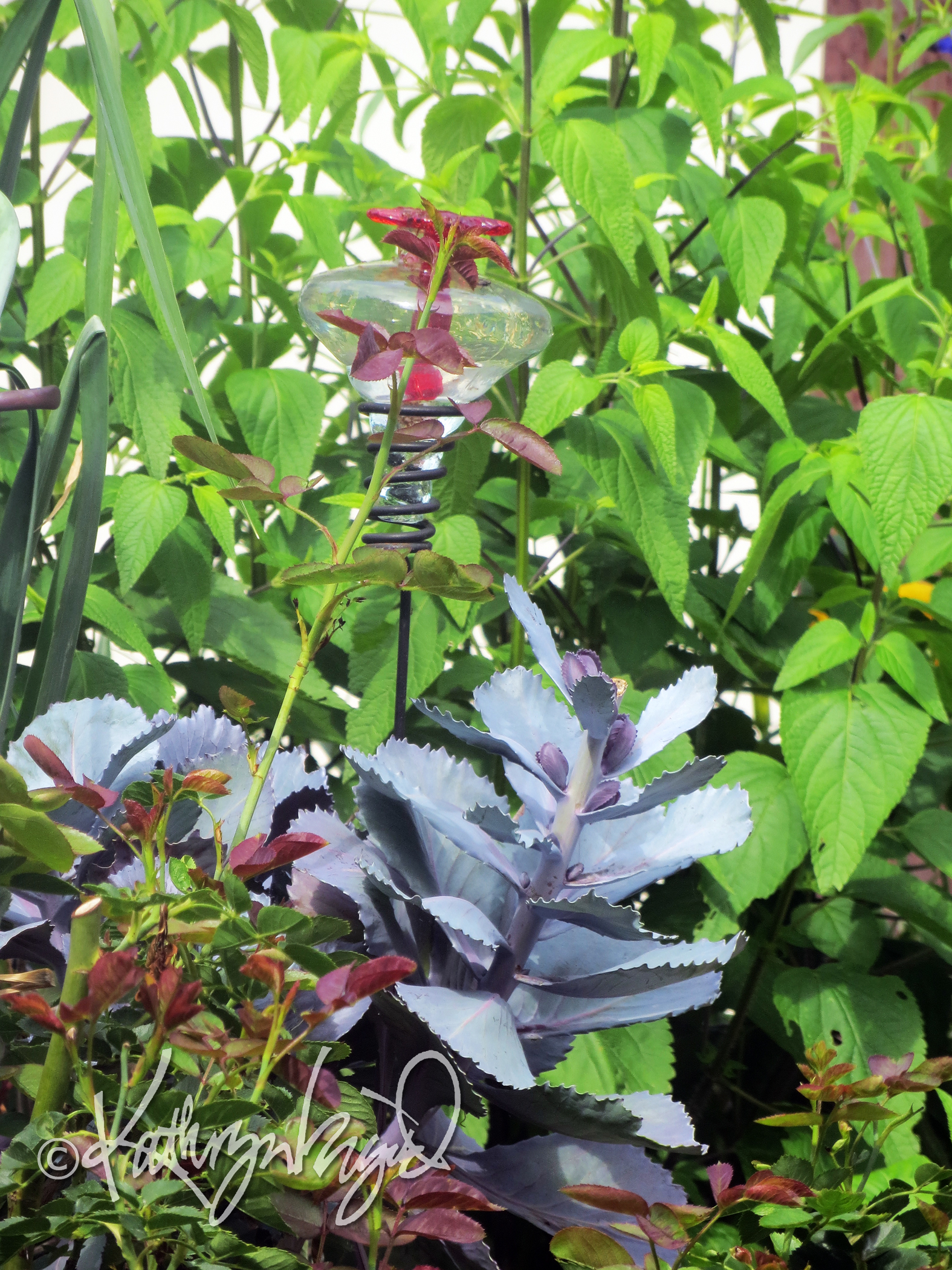
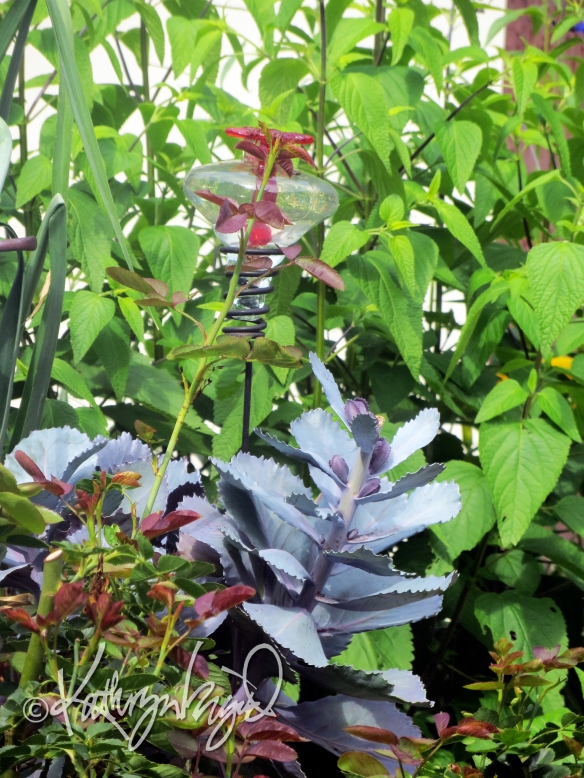
&    Lettuces are of course lovely, but cabbages too are often forgotten as ornamentals, but as you know, I like planting them for their leaf color and texture, can cut occasional leaves for food or garnish, and when I leave the rest to do so, they bloom in very hummingbird-friendly ways and are a fun novelty in the flowerbed as well. Another lettuce cousin I like a lot is chard (silverbeet), whose leaves are tasty spinach imitators (raw or cooked) and whose varieties include some with great colorful stems that make them look like rhubarb or Pop Art versions of it in yellow and orange. Mine wintered over this year in the front flowerbed, surprisingly. Radicchio is a great member of this whole group, too: edible and showy burgundy colored leaves, and if you let some or all of them go to flower, they’re tall blue daisy-like things. Quite delightful.
&    Shiso, or Perilla, is a less commonly used leafy herb in the US, but the popular Japanese treat comes in a number of often quite attractive leaf shapes, textures and colors. I grew a gorgeous one some years ago that had a slight scallop on the leaf edges, a gracefully veined texture, glorious purple and green-black hues, and a spectacular metallic sheen. I confess I didn’t use it much for food because I couldn’t bear to snip it.
&    Garlic and Onions, on the other hand, have distinctive and fun flora, and can survive longer term if you don’t choose to dig all of them up to eat.

Some herbs are potentially invasive pests but I still like them for their beauty and/or culinary gifts, so I’m willing to keep massacring them occasionally to keep them in check:

&    Oregano spreads fairly easily but is a pretty bloomer as well as a tasty leafy herb, and not awful to control.
&    Mint is a genuine monster that wants to take over the world, especially my favorite commonly named ‘apple mint’ (huh??? I’ve never figured out what’s apple-y about it) that’s so incredibly versatile, but I try to plant it in places where it can spread without turning into square-stemmed kudzu. There are a number of interesting and fun varieties of mint ‘flavors’ available, but I stick with my old reliable despite the allure of Chocolate Mint, Orange Mint, and even true Peppermint and Spearmint, since one aggressive invader variety is enough for me. Wintergreen is a beautiful plant but, besides not being a mint variety at all, is pretty hard to find. It’s a broad-leafed evergreen with small white flowers and big pinky-red berries, and the crushed leaf is wonderfully fragrant, but it’s not commonly found, isn’t a snap to prepare for edible uses like most of these others, and has a picky attitude in climate and growth requirements. Still, I did grow it once in Washington because of its peculiar attractions. Maybe I feel an affinity with it by virtue of my husband’s having chosen me for my peculiar attractions. Ha.
&    Dill is sometimes known as Dill Weed for good reason, as it can run rampant in friendly climates and it’s a large, blowsy plant despite its delicate thread-like leaves. But its starburst flora and subsequent seed heads are pretty among the leafy lace, and it’s so danged delicious in so many meals that even if your climate is conducive to such running amok it’s worth the trouble. Besides, in that case you can at least put in some of the dwarfish kinds of dill. Pretty unbeatable with fish, and indispensable in deli pickling!
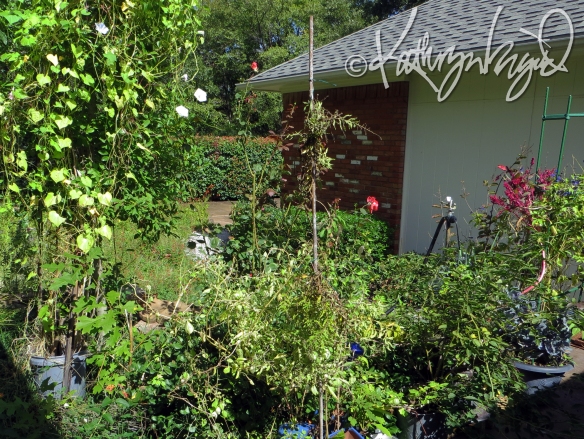
&    Fennel is similarly a member of the uncontrollable-toddler plant type, moving aimlessly but at speed all over the garden and being a big showoff of a thing, but even if you’re a little hesitant about the licorice-y hints it gives food, it too has a nicely delicate look for such a tall plant, and you can bring some nice color into the beds by planting bronze fennel. Just chop it ruthlessly when it wants to flower to keep it in check. I’ve never tried growing bulb fennel myself since as rarely as I use it, it’s easier to buy it and give the garden space to something else.photoClearly, I could wander on like this for ages. My experimental wildflower mini-meadow out back has behaved modestly well in its first half-season last year and appears to be letting a few sprouts emerge for a good beginning again now. I will go out in the next few days and give it a thorough haircut with the weed-cutter so that it has its own mulch through the remaining unreliable chills of late winter and early spring, and have been feeding it a kind of pre-compost over the winter by tossing the chopped and blended remains of the kitchen’s dregs in and letting them freeze and decay gradually as they would have in a regular garden, and will add to that with some other treats as the patch begins to revive. I am very curious to see what of the multitudinous kinds of seed I’ve planted out there now makes an appearance and what will take hold for the long term, as much of what I put in was intended to be naturalizing perennial feed for the birds and insects as well as soothing wildflower beauty. The bonus, if all goes well, will be lots of herbal fun for my dining companions and me. Only time and Mother Nature will tell.
photo

Let’s be a Toothsome Twosome

digital illustrationInssssssinuations

Don’t worry, Dear; take no alarm—
I’m just designed this way!
If my appearance threatens harm,
Don’t suffer such dismay!
You sense I’m glaring hate, perhaps?
Just something in my eye
That irritates me between naps—
Not meant to make you cry!
This whiplash tail so menacing
Waves only out of habit—
It really doesn’t mean a thing,
You silly rabbit—grab it!
Fear not my hiss or venom’s kiss:
They’re breath and smiling, merely—
There is no threat in all of this—
I would embrace you dearly!
Ignore my hard, ignoble sneer—
It’s just coincidental
That my dentition’s pinking shear
Does not appear more gentle!
So snuggle up among my curves
And let me hug you closely
And cuddle you to soothe your nerves—
You have misjudged me grossly!